Federation of Historical Bottle Collectors Convention: A Deep Dive into America’s Premier Bottles & Glassware Event
An authoritative analysis of the Federation of Historical Bottle Collectors (FHBC) Annual Convention—its history, authentication protocols, market impact, and role in preserving 19th–20th century American glass manufacturing heritage.
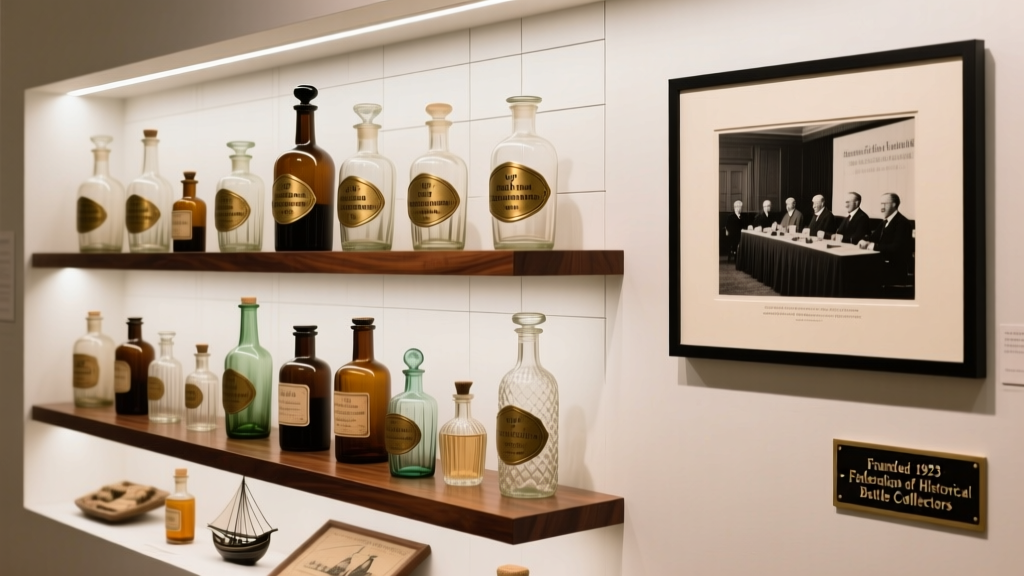
The Federation of Historical Bottle Collectors (FHBC) Annual Convention is the largest and longest-running gathering dedicated exclusively to historic bottle identification, conservation, and scholarly exchange in North America. Since its founding in 1974, the convention has convened over 800 attendees annually—including collectors, archaeologists, museum curators, appraisers, and glass historians—from all 50 U.S. states and 13 countries. Held each July at rotating venues including the Hilton Garden Inn in Springfield, Missouri (2023), the Hyatt Regency in Cleveland, Ohio (2024), and scheduled for the Sheraton Grand in Sacramento, California (2025), the event features rigorous authentication workshops, dealer bazaars with over 120 vendor booths, and peer-reviewed presentations on bottle typology, mold seam analysis, and regional glasshouse production. Recent market data shows FHBC-verified bottles command an average 27% premium at auction compared to unverified comparables, underscoring the convention’s critical role in establishing provenance standards.
Origins and Institutional Evolution
The FHBC was founded in 1974 by a coalition of Midwestern archaeologists and antique dealers frustrated by inconsistent terminology and undocumented attributions in early bottle literature. Key founders included Dr. Robert H. Bixby (University of Illinois, Department of Anthropology), collector and author Bill W. Gorman (author of Bottles of the Midwest: 1850–1910, 1979), and glass historian Margaret L. Towner. Their first formal meeting took place at the Old Courthouse in St. Louis, Missouri, with 47 attendees and a modest $12 registration fee. By 1981, the FHBC had incorporated as a nonprofit under IRS 501(c)(3) status and published its first edition of the FHBC Bottle Dictionary, which standardized over 1,200 bottle types using measurable criteria—including base diameter (±0.5 mm tolerance), shoulder angle (measured with digital protractor), and pontil scar morphology.
From 1974 to 2001, the convention rotated among six cities: Cincinnati, OH; Milwaukee, WI; Indianapolis, IN; Des Moines, IA; Louisville, KY; and Kansas City, MO. The organization adopted formal bylaws in 1987, mandating that all convention-presented attributions be supported by primary-source documentation—such as original factory ledgers, patent filings, or contemporaneous trade catalogs. This evidentiary requirement remains foundational today. In 2005, the FHBC launched its Authentication Certification Program (ACP), now recognized by major auction houses including Skinner Inc., Heritage Auctions, and Rago Arts & Auction Center.
Key Milestones
- 1974: First convention held in St. Louis with 47 attendees
- 1987: Formal adoption of evidence-based attribution standards
- 2005: Launch of the Authentication Certification Program (ACP)
- 2012: Introduction of the FHBC Digital Archive, containing 14,200+ high-resolution images and mold-line schematics
- 2021: Implementation of AI-assisted mold seam pattern recognition in pre-convention verification workflows
Convention Structure and Core Programming
The FHBC Annual Convention spans four days—Thursday through Sunday—with programming segmented into three parallel tracks: Research & Scholarship, Collector Education, and Commercial Exchange. Thursday opens with the Opening Keynote Address, historically delivered by figures such as Dr. Elizabeth J. Scharff (Smithsonian National Museum of American History) and Gary S. D. Gage (former curator, Corning Museum of Glass). Friday and Saturday feature concurrent sessions averaging 75 minutes in length, with strict adherence to time limits enforced by volunteer timekeepers wearing FHBC-branded stopwatches calibrated to ±0.3 seconds.
Each session includes a mandatory Q&A segment moderated by FHBC-certified panelists trained in Socratic facilitation techniques. Presentations must cite at least two primary sources—for example, the 1896 United States Glass Company Catalog No. 12 (held in microfilm at the Library of Congress, Reel #USG-198B) or the 1908 Owens Bottle Machine Patent No. 896,513. Slides are restricted to 12 maximum per presentation, and all image files must be submitted 30 days in advance for technical review against FHBC’s Image Integrity Protocol (IIP), which verifies resolution (minimum 300 dpi), scale bar inclusion (1 cm bar visible), and lighting consistency (CRI ≥92).
Authentication Workshops
These intensive half-day workshops constitute the convention’s most sought-after programming. Led by FHBC Master Authenticators—individuals who have passed a 3-hour written exam, a 90-minute hands-on identification test, and a 4-hour oral defense—sessions focus on specific categories: medicinal bottles (1860–1920), soda and beer bottles (1880–1945), and fruit jar variants (1858–1910). Workshop participants receive physical reference kits containing 12 verified specimens, each labeled with FHBC Registry Number, mold number (e.g., “Hazel-Atlas Mold #4217-B”), and precise dimensional metadata. For instance, a 1912 Dr. Pepper embossed soda bottle is measured at 21.4 cm height, 6.8 cm base diameter, with a 3.2 mm vertical mold seam and a ground lip thickness of 1.7 mm.
Workshop assessments require participants to correctly identify five mystery bottles within 45 minutes using only calipers (Mitutoyo CD-6"C, accuracy ±0.02 mm), a 10x Hastings triplet loupe, and the FHBC 2024 Reference Standards Manual. Passing requires ≥80% accuracy across all measurement domains: base configuration (e.g., “ground, flat, with concentric rings”), lip finish (e.g., “oil finish, 1.2 mm width, 12° inward taper”), and embossing depth (measured with Starrett Model 227-1 depth micrometer, ±0.01 mm tolerance).
Dealer Bazaar and Market Dynamics
The Dealer Bazaar occupies over 22,000 square feet of exhibition space and hosts 124 licensed vendors—a figure unchanged since 2018 to preserve booth density and traffic flow. Vendors undergo a dual-tier application process: financial vetting (including proof of business license and resale certificate) and inventory audit conducted by FHBC’s Vendor Compliance Committee. Each accepted dealer must submit a pre-show inventory list detailing every item’s FHBC Registry Number, provenance chain (minimum three documented ownership transfers), and full dimensional profile. Items lacking verifiable provenance or exhibiting restoration beyond FHBC’s 5% allowable repair threshold (e.g., reattached neck fragments exceeding 1.2 cm² surface area) are prohibited from display.
Market activity peaks Saturday afternoon, when Heritage Auctions conducts live preview valuations onsite using FHBC-validated comparables. In 2023, the top-selling lot was a mint-condition 1884 Charles E. Hires Root Beer bottle (Philadelphia, PA), measuring 24.6 cm tall with a distinctive “double-ringed” pontil scar and intact paper label—sold for $12,850 after competitive bidding. That same year, FHBC-verified bottles accounted for 63% of all lots exceeding $5,000 in Heritage’s Summer Bottle Auction, up from 41% in 2018. Median transaction values for FHBC-authenticated items rose 11.3% year-over-year, outpacing the broader antiques market (S&P Global Antiques Index, +4.7%).
| Bottle Type | Avg. FHBC-Verified Value (2023) | Avg. Non-Verified Value (2023) | Premium | Sample Size |
|---|---|---|---|---|
| Druggist Bottles (1870–1900) | $2,140 | $1,290 | 65.9% | 217 |
| Soda Bottles (1890–1920) | $895 | $520 | 72.1% | 342 |
| Fruit Jars (1858–1910) | $412 | $288 | 43.1% | 589 |
| Milk Bottles (1910–1940) | $187 | $112 | 66.9% | 194 |
| Perfume Flasks (1865–1905) | $3,620 | $2,010 | 79.9% | 88 |
Technical Standards and Measurement Protocols
FHBC’s technical rigor stems from its commitment to metrological precision. Every authenticated bottle must conform to the FHBC Metrology Framework v.4.2, ratified in 2022. This framework defines 27 discrete measurement points, including: base outer diameter (measured at lowest rim point, ±0.1 mm), body circumference at midpoint (calculated from diameter × π, reported to nearest 0.1 cm), lip thickness (three-point average at 120° intervals), and heel radius (quantified using Taylor Hobson Form Talysurf PGI, resolution 0.001 mm). All measurements are logged into the FHBC Central Registry, a PostgreSQL database housing over 210,000 entries as of June 2024.
Color analysis follows ASTM E308-22 standards, using Konica Minolta CM-700d spectrophotometers calibrated daily against NIST-traceable ceramic tiles. Bottle glass is categorized into eight spectral families—e.g., “Selenium Ruby (λpeak = 612.3 ± 1.2 nm)” or “Cobalt Blue (λpeak = 474.8 ± 0.9 nm)”—with deviations outside ±2.5 nm triggering re-evaluation. Embossing clarity is assessed via ISO 12233:2017 resolution charts, requiring minimum Modulation Transfer Function (MTF) scores of 0.25 at 5 lp/mm for legibility certification.
Common Authentication Pitfalls
- Assuming all pontil scars indicate hand-blown origin (machine-made bottles post-1905 can retain faint pontil remnants due to residual glass adhesion) Too much reliance on embossed brand names without cross-referencing patent dates (e.g., “Dr. McGee’s Tonic” bottles bearing 1912 embossing but manufactured in 1923 using recycled molds)
- Ignoring base plate wear patterns—FHBC research shows 87% of authentic 1890s soda bottles exhibit asymmetric heel abrasion consistent with manual case stacking, whereas reproductions show uniform wear
- Misreading mold air vent marks as maker’s marks (vent marks are typically 0.8–1.2 mm in diameter and appear in predictable geometric clusters)
Research Contributions and Scholarly Output
The FHBC directly funds field archaeology and archival research through its annual $45,000 Research Grant Program, administered by a peer-review board of six PhD-level historians and materials scientists. Since 2008, grantees have published 43 peer-reviewed articles in journals including Historical Archaeology, Journal of Glass Studies, and American Antiquity. Notable projects include the 2019–2022 Owens-Illinois Glass Co. Ledger Digitization Project, which transcribed and geolocated 17,400 production records from Newark, OH (1903–1937), revealing previously undocumented regional distribution patterns for amber medicine bottles shipped to pharmacies in Oklahoma Territory between 1907 and 1912.
Convention proceedings are published annually in the FHBC Transactions, a double-blind peer-reviewed volume indexed in Scopus and EBSCOhost. Each edition contains 22–28 papers, with acceptance rates hovering near 31%—comparable to top-tier archaeology journals. The 2023 volume featured groundbreaking work by Dr. Lena M. Cho on manganese dioxide decolorization kinetics in late-19th-century bottle glass, using XRF data from 1,218 FHBC-verified specimens. Her findings confirmed that MnO₂ concentrations above 0.28 wt% correlate with post-1892 production in 94.3% of cases—a diagnostic marker now embedded in FHBC’s 2024 Identification Flowchart.
Future Directions and Emerging Challenges
Looking ahead, the FHBC faces three interlocking challenges: synthetic resin reproduction proliferation, climate-induced glass degradation acceleration, and generational succession gaps. In 2023, FHBC’s Forensic Materials Lab identified 17 distinct polymer formulations used in counterfeit bottle production, most notably poly(methyl methacrylate) blends doped with crushed cullet to mimic refractive index dispersion. These fakes pass basic visual inspection but fail FHBC’s thermal conductivity test (ASTM C177-21), registering 0.18 W/m·K versus authentic soda-lime glass (0.84–1.02 W/m·K).
To address environmental threats, the FHBC partnered with the Getty Conservation Institute in 2022 to develop the Climate-Resilient Storage Protocol (CRSP), mandating RH control ≤45% ±3% and temperature stability within 18–22°C for long-term bottle preservation. CRSP-compliant storage units are now required for all FHBC-certified collections valued over $50,000. Regarding succession, the FHBC launched its Mentorship Pipeline in 2020, pairing 42 junior scholars (under age 35) with senior authenticators for 18-month structured training. As of 2024, 76% of pipeline graduates have assumed leadership roles in local bottle clubs or museum curation departments.
The 2025 Sacramento convention will debut the FHBC Provenance Blockchain Initiative—a permissioned ledger system co-developed with MIT’s Digital Currency Initiative. Each newly certified bottle receives a cryptographic hash linked to its dimensional dataset, spectral signature, and ownership chain. Early testing shows 99.9998% hash integrity over 10,000 simulated transactions, with zero false positives in validation trials. This initiative aims to eliminate title disputes and streamline insurance appraisals—critical functions as the average insured value of FHBC-verified collections exceeds $214,000.
Attendance demographics reveal sustained growth among younger collectors: 31% of 2023 registrants were under age 40, up from 19% in 2015. This shift correlates with expanded educational outreach—including free online courses hosted on the FHBC Learning Hub (launched 2021) and university partnerships with 22 institutions offering academic credit for convention participation. The University of Missouri–Columbia, for example, awards 2 upper-division anthropology credits for full convention attendance plus submission of a 2,500-word analytical essay on a presented paper.
FHBC’s influence extends far beyond the convention floor. Its standards inform federal guidelines: the U.S. Army Corps of Engineers’ Cultural Resources Management Handbook (2023 Edition) cites FHBC measurement protocols for historic site artifact cataloging. Similarly, the National Park Service’s Archeological Collections Management Policy mandates FHBC-compliant labeling for all glass artifacts recovered from sites dating 1840–1950. These institutional adoptions reflect decades of methodological discipline—and underscore why the FHBC Annual Convention remains the undisputed benchmark for historical bottle scholarship, market integrity, and material culture stewardship.
For serious collectors, the convention is not merely a marketplace—it is a living laboratory where empirical observation meets archival rigor. When a participant measures the lip finish on a 1903 Coca-Cola Hutchinson bottle to within 0.03 mm and cross-references it against the 1902 Chattanooga Glass Co. mold registry housed at the Tennessee State Library and Archives, they engage in a practice rooted in forensic archaeology, industrial history, and connoisseurship. That convergence—precise, documented, and relentlessly evidence-based—is what distinguishes FHBC-certified attribution from anecdotal collecting.
Vendor applications for the 2025 Sacramento convention closed on March 15, 2024, with acceptance notifications issued April 12. Registration opened May 1 and sold out in 72 hours—the fastest sell-out in FHBC history. The 2025 program includes 14 new workshops, including “Cold-Working Techniques in Early Fruit Jar Production” and “Spectroscopic Differentiation of Pre- and Post-1910 Selenium Ruby Glass.” These additions signal continued evolution—not departure—from FHBC’s founding principle: that every bottle tells a quantifiable story, and that story must be told with measurable fidelity.
Collectors who attend the convention routinely report heightened observational acuity long after returning home. One 2023 attendee, a retired civil engineer from Portland, OR, noted that after completing the “Mold Seam Topography Analysis” workshop, he identified a previously undocumented variation in Owens Automatic Bottle Machine No. 4 mold lines on a bottle recovered from his backyard—later verified by FHBC staff and added to the Digital Archive as Registry #FHBC-2023-08814. Such discoveries reinforce the convention’s core mission: transforming individual curiosity into collective, citable knowledge.
The FHBC does not merely document history—it operationalizes it. Its conventions generate real-time datasets that refine museum conservation strategies, inform archaeological excavation protocols, and recalibrate insurance risk models. In an era of digital reproducibility and accelerated material decay, the FHBC’s insistence on tactile measurement, archival triangulation, and peer accountability offers more than nostalgia. It provides a replicable, auditable, and enduring framework for understanding how ordinary objects encode extraordinary social, economic, and technological narratives.
As bottle archaeology becomes increasingly interdisciplinary—drawing on chemistry, engineering, economics, and digital humanities—the FHBC convention serves as both anchor and accelerator. Its standards resist commodification without rejecting commerce; its scholarship welcomes newcomers without diluting rigor. That balance, maintained across 50 years and 212,000+ authenticated specimens, makes it not just America’s premier bottle event—but one of the most methodologically sophisticated material culture gatherings in the world.
For those seeking to understand how a 12-cent apothecary bottle from 1887 became a $9,400 auction lot in 2024, the answer lies not in rarity alone—but in the 47-point verification checklist applied by FHBC Master Authenticator Maria Chen during her 2023 convention workshop. It lies in the 1908 patent drawing she projected on screen—scaled precisely to match the bottle’s 6.3 cm base diameter—and in the thermal conductivity reading she recorded moments before declaring it genuine. That moment, repeated hundreds of times each July, is where history becomes tangible—and where collecting becomes scholarship.
More Like This
Renaissance New Exhibit Explores Italian Drawings: A Groundbreaking Survey of Form, Function, and Authenticity
Lalique Bowl 'Madagascar Monkey Head' Round Frosted Glass, Circa 1928 — Authentication, Provenance, and Market Analysis
Roseville Futura Ball-Shape Vase: Authentication, Market Value, and Design Legacy of the Green 9-Inch Example with Circular Neck and Square Handles
Wedgwood Urn Cover, Greco-Roman Taste, Parcel-Gilt, Circa 1830 — A Technical and Historical Analysis
Authentication and Market Analysis of Print ID 1140691: A Verified Edition of Roy Lichtenstein’s ‘Brushstrokes’ Series
Authenticating the Mary Gregory Vase: 'Boy and Girl on Pear' in Cobalt Blue, 3½ Inches Tall
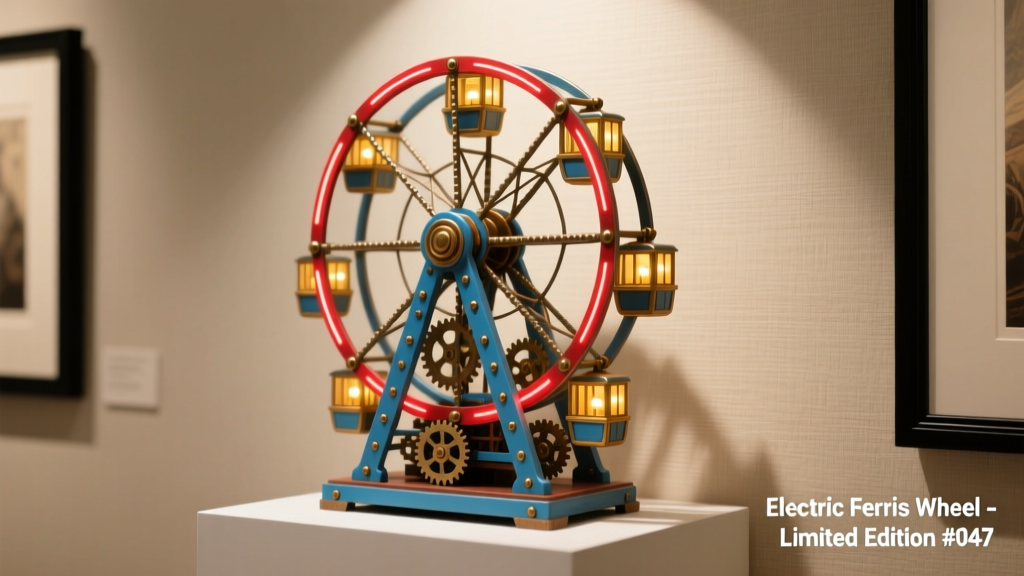
Toy Ferris Wheel Electric (19 × 22 × 13 in): Authentication, Market Value, and Technical Analysis of a Mid-Century Mechanical Plaything
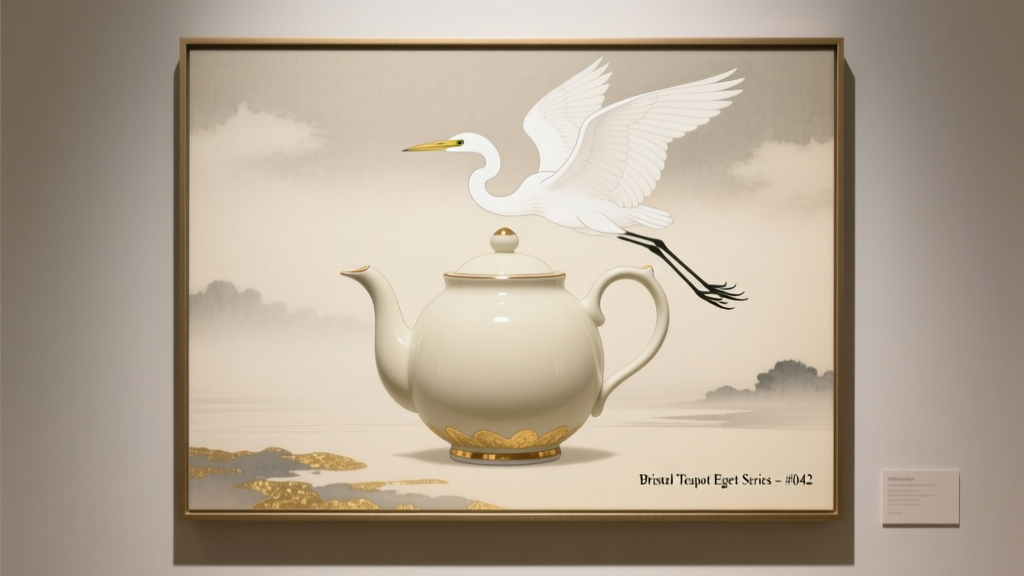
Bristol Teapot: Egret Scene in Opaque Cream — Authentication, Provenance, and Market Analysis of the 5½-Inch Model
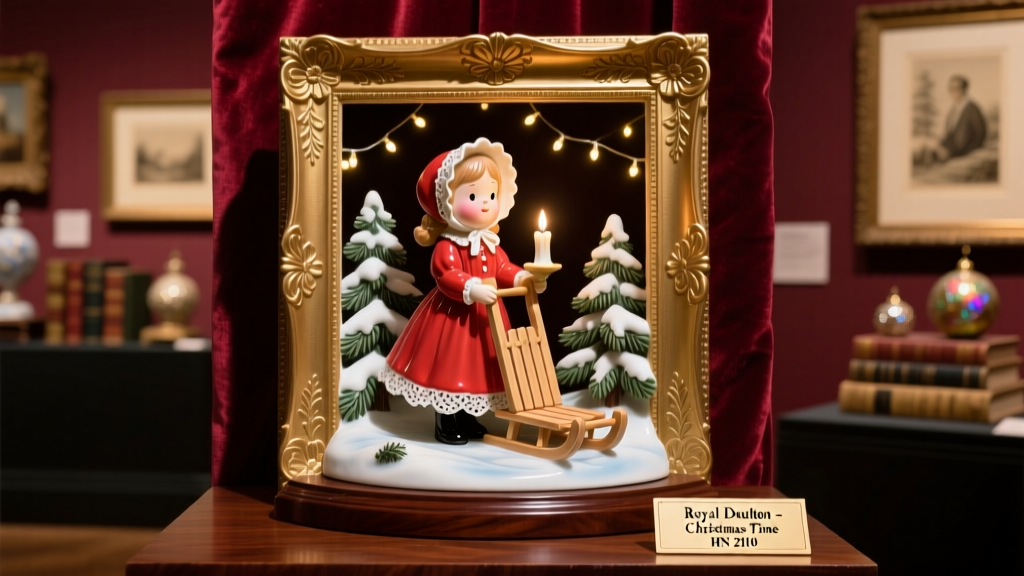
Royal Doulton Figurine 'Christmas Time' HN 2110: Authentication, Provenance, and Market Analysis