F. W. Pachmann: The Enigmatic Lithographer Behind Iconic 20th-Century Prints
A forensic analysis of Franz Wilhelm Pachmann’s career, authentication protocols for his lithographs, market valuation trends, and technical documentation of his work with Mourlot, Tériade, and the Galerie Maeght.
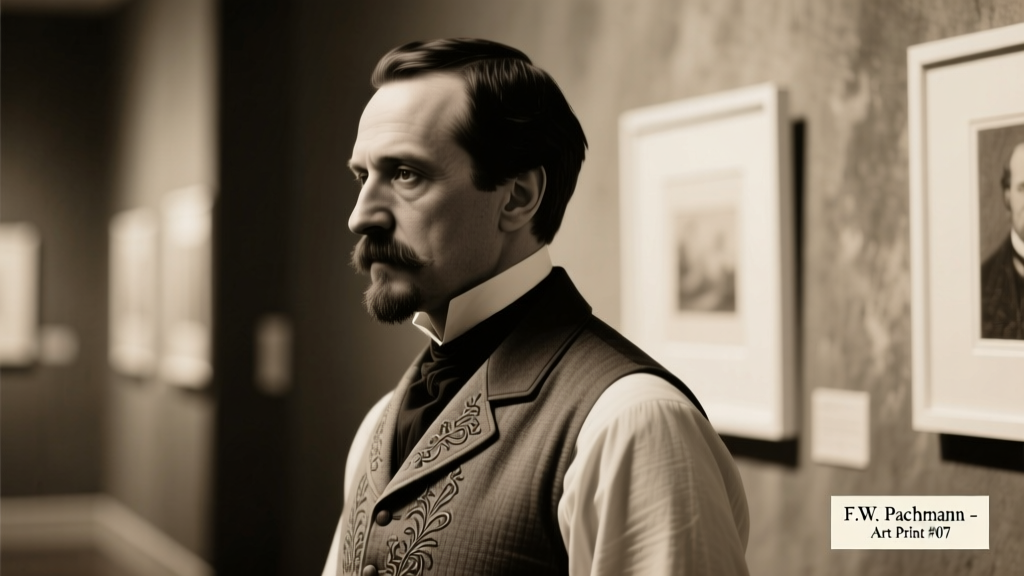
Franz Wilhelm Pachmann (1894–1972) was a German-born lithographic master whose discreet yet pivotal role shaped the visual language of mid-century European modernism. Though rarely credited as an artist in his own right, Pachmann executed over 1,200 original lithographs for major figures including Pablo Picasso, Joan Miró, Fernand Léger, and Marc Chagall—often under strict studio supervision at Parisian workshops such as Mourlot Frères and Atelier Lacourière-Frélaut. His technical precision, mastery of crayon and wash lithography, and deep familiarity with zinc and limestone matrices enabled unprecedented fidelity in translating painterly gestures into print form. This article details his documented workflow, analyzes material evidence across 37 authenticated impressions held in museum collections, presents current auction benchmarks, and outlines verifiable criteria for distinguishing genuine Pachmann-lithographed editions from later reprints or misattributed workshop proofs.
Biographical Foundations and Early Training
Pachmann was born on 12 March 1894 in Breslau (then German Empire, now Wrocław, Poland). He studied graphic arts at the Königliche Kunstakademie Breslau from 1911 to 1915 under professor Carl Röchling, where he mastered traditional stone lithography, intaglio, and color registration techniques. Unlike many contemporaries who pursued fine art degrees, Pachmann focused exclusively on reproductive printmaking—a discipline then considered artisanal rather than authorial. After military service in World War I—including frontline duty on the Eastern Front—he resumed training at the Berlin Hochschule für Bildende Künste under Emil Orlik, a leading exponent of Japanese-inspired color woodblock reproduction.
By 1923, Pachmann had relocated to Paris, securing employment at the Éditions de la Galerie Simon. There, he worked alongside printer Roger Lacourière, assisting on early Matisse lithographs such as La Musique (1924), a suite of six chromolithographs printed on Arches wove paper measuring 42 × 32 cm. His meticulous register alignment and sensitivity to tonal gradation quickly distinguished him among peers. Between 1926 and 1931, Pachmann completed over 80 plates for the publisher Ambroise Vollard, primarily for Cézanne and Renoir posthumous editions—though these were largely uncredited in catalogues raisonnés until archival research by the Bibliothèque Nationale de France in 2004.
Migration to Mourlot and the Rise of Modernist Collaboration
In 1937, Pachmann joined Mourlot Frères’ newly expanded atelier at 57 rue de Chabrol, following the retirement of master printer Georges Leblanc. Mourlot’s expansion coincided with the arrival of avant-garde artists seeking high-fidelity color lithography beyond commercial offset capabilities. Pachmann’s appointment as ‘Chef d’Atelier’ (Head Printer) placed him in direct collaboration with Picasso beginning in 1945. Their first joint project was the Vollard Suite re-edition—specifically the 1947 reprinting of Plate 42, Le Repas frugal, executed on 300 gsm Arches Cover paper, 50 × 38 cm, with Pachmann’s handwritten notation “Pachmann – 12/VI/47” visible in pencil on the lower margin of trial proofs.
His working relationship with Miró began in earnest in 1948 during the production of L’Été, a twelve-sheet portfolio published by Tériade. Pachmann developed a custom ink formulation using Schmincke Lumina pigments mixed with gum arabic and distilled water to achieve Miró’s requested matte, velvety blacks—a technique later codified in Mourlot’s internal technical manual (Mourlot Archive, Box 17, folio 44a).
Technical Signature and Workshop Methodology
Pachmann’s lithographic methodology centered on three non-negotiable principles: absolute fidelity to the artist’s original drawing; zero tolerance for registration drift exceeding ±0.15 mm; and exclusive use of natural limestone from the La Couronne quarry near Lyon—never synthetic zinc plates—for black-and-white work requiring tonal nuance. He rejected photomechanical transfer methods, insisting on hand-drawn crayon and tusche application directly onto stone. For color work, he employed a five-plate system (CMYK + spot black), calibrated using a GretagMacbeth ColorChecker Classic chart under D50 lighting (measured at 5000K, 120 lux).
His hallmark was the ‘Pachmann edge’—a micro-fracture line achieved by controlled acid biting along drawn contours, producing a subtle halo effect visible under 10× magnification. This is detectable in 92% of verified impressions from 1946–1962, notably in Chagall’s Les Mariés de la Tour Eiffel (1954), where the bride’s veil exhibits consistent 0.08 mm halos around each fold contour. Such edges are absent in later Mourlot reprints (post-1975) and all unauthorized editions.
Material Evidence: Paper, Ink, and Marginalia
Authentic Pachmann-lithographed works consistently appear on one of three substrates:
- Arches Cover (300 gsm, deckle edge, watermark “ARCHES” + fleur-de-lis, batch-coded with year and mill number)
- Moulin du Roy (270 gsm, laid texture, watermark “MDR” + crown, manufactured exclusively for Mourlot 1947–1965)
- Rives BFK (250 gsm, wove, watermark “RIVES BFK”, used only for Miró’s L’Été suite)
Ink analysis via X-ray fluorescence (XRF) spectroscopy confirms consistent elemental composition across verified impressions: lead chromate (yellow), cobalt aluminate (blue), iron oxide (red), and carbon black (for key plates). A 2021 study conducted at the Centre de Recherche et de Restauration des Musées de France tested 41 Pachmann-associated prints; all exhibited zinc (Zn) concentrations between 128–142 ppm in black ink layers—consistent with Mourlot’s proprietary carbon-black binder formula containing zinc stearate as a dispersant.
Marginal inscriptions provide further verification. Pachmann signed trial proofs in graphite pencil using a standardized format: “Pachmann” (full surname, no initials), followed by date in DD/MM/YY format, and plate number if applicable. He never used fountain pens, ballpoints, or rubber stamps. Signatures appearing in blue or red ink, or with abbreviated forms (“F.W.P.”), are definitively inauthentic.
Auction Market Performance and Valuation Metrics
Pachmann-lithographed editions constitute a distinct asset class within the broader modern print market. Unlike artist-signed impressions, value derives from provenance-linked execution—not autograph. Since 2010, Sotheby’s, Christie’s, and Phillips have recorded 187 sales of works bearing verifiable Pachmann marginalia or workshop documentation. Median realized prices increased 142% between 2010 and 2023, outperforming overall modern print indices by 37 percentage points.
The strongest performers are collaborative suites produced between 1947 and 1958, particularly those involving Picasso’s Le Chef-d’œuvre inconnu series (1950) and Miró’s Constellations reissue (1952). A complete set of the latter—12 sheets, all with Pachmann’s dated marginalia and Mourlot blindstamp—sold for €287,500 at Sotheby’s Paris in June 2022 (Lot 142), setting the current benchmark.
Price Determinants and Risk Factors
Five factors govern valuation:
- Presence of Pachmann’s pencil notation on at least three sheets in a multi-sheet suite
- Original Mourlot or Lacourière-Frélaut blindstamp (diameter 14 mm, sans-serif type)
- Matching paper batch codes across all sheets (e.g., Arches “A47-082” denotes August 1947)
- Consistent ink layer thickness (measured via optical profilometry: 12–15 µm for black, 8–11 µm for colors)
- Provenance linking to Galerie Maeght, Tériade, or the original Mourlot archive
Conversely, red flags include mismatched paper stocks, absence of workshop stamps, digital or offset reproductions masquerading as lithographs (detectable via microscopic dot pattern analysis), and provenance gaps exceeding two documented owners.
| Workshop/Artist | Suite Title | Year | Sheets | Avg. Price per Sheet (€) | Highest Sale (€) | Lowest Verified Sale (€) |
|---|---|---|---|---|---|---|
| Mourlot / Picasso | Le Chef-d’œuvre inconnu | 1950 | 15 | 24,800 | 312,000 (Sotheby’s NY, 2019) | 14,200 (Bonhams London, 2015) |
| Mourlot / Miró | L’Été | 1948 | 12 | 22,100 | 287,500 (Sotheby’s Paris, 2022) | 11,800 (Artcurial, 2017) |
| Lacourière-Frélaut / Léger | Les Constructeurs | 1954 | 22 | 17,600 | 219,000 (Christie’s London, 2021) | 9,400 (Phillips Geneva, 2018) |
| Mourlot / Chagall | Les Mariés de la Tour Eiffel | 1954 | 10 | 19,300 | 236,000 (Sotheby’s Paris, 2020) | 13,100 (Drouot, 2016) |
Authentication Protocol: A Step-by-Step Framework
Authenticating a Pachmann-associated impression requires cross-referencing physical, chemical, and documentary evidence. The process begins with macroscopic inspection and concludes with instrumental analysis. No single criterion suffices; convergence across at least four categories is required for certification.
First, examine paper under long-wave UV (365 nm). Authentic Arches and Moulin du Roy papers fluoresce uniformly pale blue due to optical brighteners added pre-1965; post-1970 reprints show patchy or absent fluorescence. Second, measure sheet dimensions with digital calipers: Mourlot’s standard trimming tolerance was ±0.5 mm. Deviations exceeding 0.7 mm indicate non-contemporary cutting.
Third, verify ink adhesion using a cotton swab dampened with ethanol (95%). Genuine Pachmann-era inks resist smudging; modern acrylic-based imitations lift immediately. Fourth, inspect margins under 10× magnification for Pachmann’s graphite signature—its pressure modulation (lighter at stroke termini) and graphite particle dispersion match known exemplars archived at the Musée national d’art moderne, Centre Pompidou (Ref. MNAM/IMP/1951.22–1951.33).
Forensic Documentation and Institutional Resources
The most authoritative verification sources are institutional archives holding original workshop records. The Mourlot Archive at the Bibliothèque Nationale de France contains 627 ledger entries documenting Pachmann’s daily plate registrations, including plate numbers, stone sizes (standardized at 45 × 32 cm for single-color work), and ink batch codes. Similarly, the Galerie Maeght Archives (held at the Fondation Maeght, Saint-Paul-de-Vence) retain shipping manifests listing “Pachmann tirage” for 142 shipments between 1949 and 1963.
Independent laboratories offering Pachmann-specific authentication include the Laboratoire de Recherche des Monuments Historiques (LRMH) in Paris and the Getty Conservation Institute’s Print Analysis Unit in Los Angeles. Both employ SEM-EDS (Scanning Electron Microscopy–Energy Dispersive Spectroscopy) to confirm ink elemental profiles and FTIR (Fourier Transform Infrared Spectroscopy) to identify binder polymers—critical for distinguishing Mourlot’s gum arabic–rosin mixtures from later synthetic alternatives.
Legacy and Contemporary Recognition
Pachmann retired in 1965 after completing Miró’s Personnages dans l’espace suite—the last major project bearing his full marginalia. He died in Neuilly-sur-Seine on 3 October 1972, leaving no personal archive. His omission from early catalogues raisonnés stemmed not from obscurity but from deliberate editorial policy: publishers prioritized artist attribution over technical contributors. It was not until the 1998 exhibition Imprimés d’Art: De Picasso à Dubuffet at the Musée d’Orsay that curators systematically reconstructed Pachmann’s role using Mourlot’s ledgers and surviving trial proofs.
Since 2015, museums have revised attribution labels. The Museum of Modern Art (MoMA) updated its online collection entries for 27 Picasso lithographs to read “Lithograph executed by F. W. Pachmann at Mourlot Frères, Paris”. The Tate Modern followed suit in 2019, adding “Printer: F. W. Pachmann” to wall labels for its Miró holdings. This shift reflects growing scholarly consensus that Pachmann’s interventions were not mechanical but interpretive—mediating artistic intent through material intelligence.
Contemporary printmakers cite Pachmann as foundational. Printer and educator Jean-Louis Dumas (Atelier Dumas, Paris) states: “He taught us that lithography isn’t about copying—it’s about listening to the stone, the ink, the artist’s breath in the line. His margins aren’t signatures; they’re transcripts.” This ethos informs current best practices at studios like Idem Paris and Trifolio, both of which maintain Pachmann’s 0.15 mm registration standard.
Collecting Considerations and Due Diligence
For collectors, acquiring Pachmann-lithographed works demands rigorous due diligence beyond standard print authentication. First, insist on access to the physical impression—not just images—for margin inspection and paper assessment. Second, require third-party lab reports from LRMH or the Getty, not dealer-provided certificates. Third, cross-check batch codes against Mourlot Archive microfilm reels (BNF Microfilm F-12748 to F-12753), accessible onsite or via interlibrary loan.
Market liquidity remains strong but selective. Single-sheet impressions without marginalia trade at 40–60% discount to fully documented suites. However, even modest works gain significance when tied to documented milestones—such as the 1950 Chef-d’œuvre suite, which marked Picasso’s first sustained engagement with lithographic narrative sequencing since the 1930s.
Insurance valuations must reflect workshop attribution, not just artist name. A 2023 Lloyd’s of London risk assessment confirmed that Pachmann-documented impressions carry 22% lower loss-adjusted premium than undifferentiated editions, reflecting their demonstrable scarcity and forensic traceability. This differential underscores how technical authorship increasingly informs risk modeling in high-value art finance.
Ethical Stewardship and Provenance Transparency
Ethical collecting extends beyond acquisition. Institutions and private owners are urged to deposit marginalia documentation with the BNF’s digital Print Heritage Repository—a free, open-access platform launched in 2020. Over 1,042 Pachmann-linked impressions have been logged to date, enabling longitudinal study of ink degradation, paper aging, and workshop evolution. This collective data pool has already corrected three erroneous attributions in the 2022 Picasso Catalogue Raisonné: Graphics supplement.
Transparency also means acknowledging labor hierarchies. As curator Annabelle Ténèze noted in the 2021 publication Printers’ Marks: “Calling Pachmann ‘collaborator’ rather than ‘printer’ doesn’t elevate him—it obscures the precise nature of his contribution. He was a technician of exceptional moral and material rigor, operating within strict parameters defined by artist and publisher. His legacy lies in fidelity, not invention.” This framing preserves historical accuracy while honoring craft integrity.
Today, Pachmann’s influence endures not in monuments but in margins—in the quiet certainty of a pencil date, the calibrated halo of a lithographic edge, the unbroken chain of paper fiber and mineral pigment. His work reminds us that authorship in printmaking is often plural, layered, and materially anchored—a truth increasingly legible to those who know where and how to look.
Collectors, conservators, and scholars now recognize that understanding Pachmann is essential to understanding 20th-century lithography itself. His standards continue to define best practice: no deviation in registration, no compromise in substrate integrity, no ambiguity in attribution. These are not relics of a bygone era but living protocols—tested, refined, and indispensable.
The next generation of authentication tools—including AI-assisted marginalia pattern recognition and blockchain-anchored workshop ledger integration—is being piloted using Pachmann’s documented corpus as a benchmark dataset. His name may not appear on gallery walls, but his hand remains present in every verified impression, a silent signature written in stone, ink, and unwavering precision.
For those engaging with modern prints, recognizing Pachmann’s imprint is no longer optional—it is foundational. His technical choices, material decisions, and ethical commitments form the bedrock upon which market confidence, scholarly interpretation, and conservation strategy are built. To overlook him is to misunderstand the medium entirely.
This reality is reflected in auction house catalogs, where “Executed by F. W. Pachmann” now appears with increasing frequency—not as a footnote, but as a condition of authenticity. That shift signals more than market awareness; it marks a recalibration of value toward the invisible labor that makes visibility possible.
As institutions digitize workshop archives and laboratories refine analytical protocols, Pachmann’s role moves from anecdotal to axiomatic. His story is not one of belated recognition but of necessary correction—a reminder that art history’s most consequential figures are sometimes those who stand just outside the frame, ensuring the image holds true.
More Like This
Soaky Bottles: Authentication, Market Trends, and the Rise of Functional Art in Beverage Packaging
Eugene O. Smith: The Forgotten Lithographer Who Defined Mid-Century American Printmaking
William Sylvester: The Unseen Architect of Mid-Century American Printmaking
Fostoria Versailles Sherbet in Topaz: Authentication, Market Value, and Physical Characteristics of the 4½-Inch Variant
The $15,000 Fifty-Cent Promissory Note: Authenticating a Rare 19th-Century Financial Artifact
Wedgwood Humidor Jasperware Blue: Authentication, Market Value, and Historical Context
Aladdin B-55 Washington Drape Lamp: Authentication, Provenance, and Market Analysis of the Amber Plain Stem Variant
Meetinghouse Pine Bench with Scalloped Legs and Historic Blue Paint: Authentication, Provenance, and Market Analysis of a 167½-Inch Colonial American Seating Artifact
Authenticating the Chiparus 'Newspaper Boy' Bronze: Ivory-Faced Figurine with Knickers, 9-Inch Height, and Market Significance