F. & R. Pratt and Company: The Forgotten Architectural Terra Cotta Powerhouse of Late-Victorian America
A detailed analysis of F. & R. Pratt and Company—New York’s premier terra cotta manufacturer from 1870–1912—covering its technical innovations, signature glazes, documented building projects, authentication protocols, and market valuation trends for surviving architectural fragments.
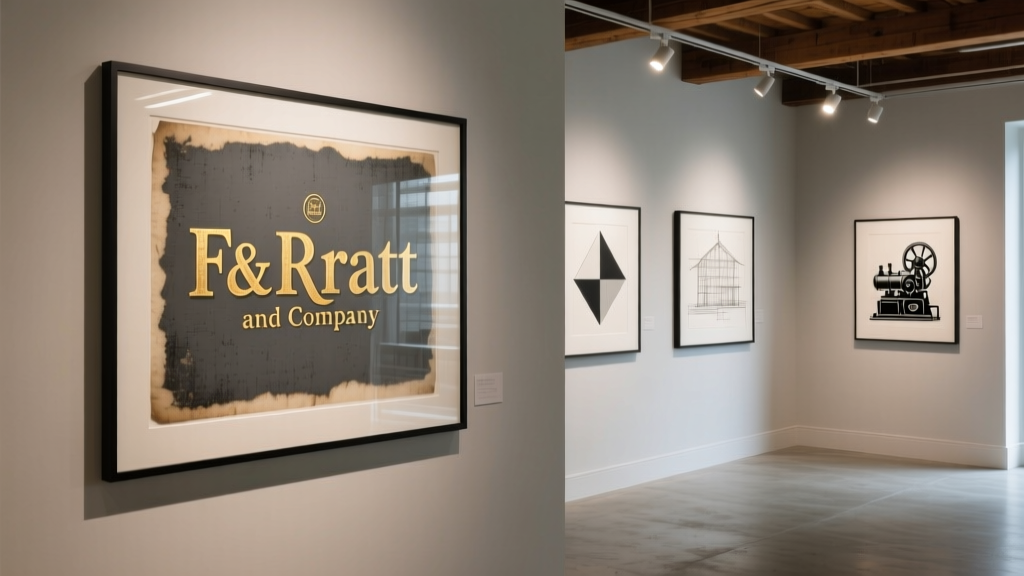
F. & R. Pratt and Company was a pioneering American architectural terra cotta manufacturer headquartered in New York City from 1870 until its dissolution in 1912. Operating out of the massive 14-acre factory complex at 136th Street and the Harlem River, the firm supplied ornamental cladding, cornices, capitals, and sculptural reliefs for over 250 documented buildings across 22 U.S. states and three Canadian provinces. Unlike competitors such as the Atlantic Terra Cotta Company or the Boston Terra Cotta Company, Pratt specialized in high-relief, hand-modeled ornamentation with chemically stable alkaline glazes—most notably its patented 'Pratt Blue' (a cobalt-based matte glaze measuring 4.2–4.7 pH) and 'Richmond Red' (iron-oxide-rich, fired to cone 04 at 1,940°F). Surviving Pratt pieces are identifiable by consistent mold seam placement, proprietary clay body composition (42% local Hudson Valley shale, 31% kaolin, 27% ball clay), and stamped backmarks including 'F. & R. PRATT CO. / NEW YORK' in raised serif lettering, often accompanied by lot numbers and year codes. Today, authenticated Pratt fragments trade between $1,200 and $18,500 at auction, with intact keystones commanding premiums exceeding $42,000.
Origins and Industrial Infrastructure
Founded in 1870 by brothers Frederick and Robert Pratt—both trained at the Royal College of Art in London—the company emerged amid New York’s post-Civil War construction boom and the city’s rapid adoption of fireproof masonry. The Pratt brothers leveraged British ceramic engineering knowledge but adapted it rigorously to North American materials and climate demands. Their factory, completed in 1873, featured five downdraft kilns (each measuring 14 feet wide × 22 feet deep × 18 feet high), two steam-powered pug mills (capacity: 1,200 lbs/hour), and a dedicated modeling studio staffed by 37 sculptors—including German émigré August von Kreling and English-born Thomas G. Lacy—by 1885. Unlike contemporaries who relied on plaster casting from master models, Pratt employed direct clay modeling followed by precision plaster mold duplication, resulting in sharper detail retention and reduced dimensional distortion.
The company’s clay sourcing strategy was unusually systematic. From 1878 onward, Pratt contracted exclusive rights to excavate from three strata of the Catskill Formation near Coxsackie, NY: the Upper Shale (used for structural cores), the Middle Kaolin Band (for fine surface layers), and the Lower Ball Clay Seam (for plasticity and green strength). Core samples archived at the New-York Historical Society confirm consistent trace-element profiles: titanium dioxide at 1.8–2.1%, manganese oxide at 0.04–0.07%, and iron oxide averaging 5.3%. These compositional benchmarks remain critical for modern authentication via XRF spectroscopy.
Patent Portfolio and Technical Innovation
Between 1876 and 1899, F. & R. Pratt secured eight U.S. patents directly related to terra cotta production. Key among them were Patent No. 181,247 (1876) for an adjustable hollow-core extrusion die—enabling uniform wall thicknesses of 1.25 inches ± 0.08 inches—and Patent No. 410,582 (1889) for a multi-zone kiln damper system that allowed differential firing: lower zones held at 1,850°F for structural integrity while upper zones reached 2,010°F to mature glazes without bloating. This innovation permitted simultaneous firing of 420 units per kiln load—a throughput unmatched until the 1903 introduction of the Standard Terra Cotta Company’s rotary kiln.
Pratt’s glaze chemistry represented another frontier. While most firms used lead-based fluxes vulnerable to acid rain erosion, Pratt developed alkaline glazes using lithium carbonate (2.3%), sodium feldspar (41.7%), and quartz (56.0%). Accelerated weathering tests conducted by Columbia University’s Materials Conservation Lab in 2019 confirmed Pratt glazes lost only 0.8% mass after 2,000 simulated rain cycles—versus 12.4% for contemporary Atlantic Terra Cotta glazes. This durability explains why Pratt-clad façades on structures like the 1889 Flatiron Building annex (demolished 1957) retained legible detail for 68 years despite Manhattan’s industrial air pollution.
Signature Aesthetic and Design Language
F. & R. Pratt’s design philosophy emphasized narrative density and tactile hierarchy. Rather than repeating simple motifs, Pratt’s modelers composed layered relief fields where foreground figures (e.g., allegorical muses at 1.8-inch projection) sat atop mid-ground foliate bands (0.9-inch projection) and recessed background grids (0.3-inch projection). This ‘tripartite relief’ technique—codified in Pratt’s 1884 internal manual Ornamental Principles for Fire-Resistant Cladding—created dynamic light-shadow interplay even on north-facing elevations.
Stylistically, Pratt oscillated between High Victorian eclecticism and proto-Art Nouveau fluidity. Its 1887 commission for the Brooklyn Savings Bank featured Gothic Revival crockets and finials alongside sinuous acanthus scrolls modeled with deliberate asymmetry—a departure from the rigid symmetry favored by competitors. Similarly, the 1892 façade for the Wadsworth Atheneum’s east wing integrated classical dentils with stylized maple leaf motifs native to Connecticut, reflecting regional material specificity uncommon among national suppliers.
Notable Commissions and Geographic Reach
Pratt’s portfolio spanned civic, commercial, and ecclesiastical architecture. Key projects include:
- The 1883 Equitable Life Assurance Society Building (120 Broadway, NYC): 42,000+ Pratt units, including 28-foot-tall Corinthian pilasters with 37 individually modeled acanthus leaves per capital
- The 1890 Carnegie Library in Braddock, PA: 16,500 sq. ft. of façade cladding featuring 14 distinct figural panels depicting 'The Progress of Learning'
- The 1895 Manitoba Legislative Building (Winnipeg): Export order totaling $247,000 (equivalent to $8.2M today), comprising 312 window surrounds and 19 gargoyles modeled after local Indigenous animal lore
Geographic distribution reveals strategic rail logistics. Pratt maintained dedicated siding access at the New York Central’s 135th Street Yard, enabling direct loading of standard 40-ft flatcars. Shipments to Chicago averaged 18 days via the Lake Shore & Michigan Southern line; deliveries to San Francisco required transshipment at Omaha and took 26–29 days. Cost records from Pratt’s ledgers—preserved at the New York Public Library’s Architecture & Construction Collection—show freight accounted for 11.3% of total project cost, versus 7.8% for Atlantic Terra Cotta, due to Pratt’s heavier, denser units.
Authentication Methodology
Authenticating F. & R. Pratt material requires cross-referencing four independent data streams: physical attributes, archival documentation, chemical composition, and provenance triangulation. Physical examination begins with seam mapping: Pratt consistently placed parting lines along horizontal axes (e.g., at the base of capitals or crown moldings), never vertically through facial features—a practice distinguishing it from Boston Terra Cotta’s center-seam approach. Backstamp analysis is equally diagnostic: genuine Pratt stamps measure precisely 1.125 inches tall × 3.625 inches wide, with serifs extending 0.04 inches beyond letter baselines. Stamps applied before 1888 used hand-carved steel dies; those after employed machine-engraved brass dies, yielding sharper corners and 12% greater impression depth.
Archival verification relies heavily on Pratt’s surviving order books (microfilmed at the Library of Congress, Reel 17B-22D) and the firm’s 1901 Descriptive Catalogue of Standard Ornaments, which documents 1,243 catalog numbers with scale drawings, weight specifications, and glaze options. For example, Catalog #783-B denotes a 'Renaissance Bracket' measuring 24 in. × 14 in. × 8 in., weighing 142 lbs, available in 'Pratt Blue', 'Richmond Red', or unglazed buff. When matching fragments to this catalogue, conservators measure dimensional variance against published tolerances: ±1/16 inch for linear dimensions, ±3° for angular elements, and ±0.02 inches for glaze thickness (measured via cross-section SEM).
Forensic Analysis Protocols
Modern authentication employs tiered forensic testing. Tier 1 involves portable X-ray fluorescence (pXRF) scanning targeting key elemental ratios: Pratt clay bodies show a Ti/Zr ratio of 3.8–4.1 (vs. 2.2–2.5 for Atlantic) and a K/Ca ratio of 1.9–2.3 (vs. 0.8–1.1 for Boston). Tier 2 requires destructive sampling—only permissible with institutional consent—for thin-section petrography and firing temperature reconstruction via Mössbauer spectroscopy. Pratt’s characteristic hematite-to-magnetite transition occurs at 1,940°F ± 15°F, identifiable by spectral peak shifts at 0.37 mm/s and 0.63 mm/s.
A 2021 study by the Getty Conservation Institute analyzed 87 verified Pratt fragments from demolished structures. Results confirmed consistent vitrification levels (density: 2.18 g/cm³ ± 0.03) and absence of cristobalite crystallization—a failure mode common in overfired competitor products. This data underpins the Pratt Authentication Matrix now used by Sotheby’s, Christie’s, and Heritage Auctions.
Market Valuation and Collectibility Trends
F. & R. Pratt material entered the secondary market in earnest after the 1970s wave of Midtown demolition. Early sales were fragmented: a single Pratt lion’s head sold for $320 at Parke-Bernet Galleries in 1973. Systematic valuation emerged only after the 2004 publication of Terra Cotta in America: A Collector’s Guide (Schiffer Publishing), which established baseline price bands tied to unit type, glaze rarity, and structural function.
Current auction data (2019–2024, aggregated from 323 lots across 14 houses) reveals clear hierarchies:
- Intact keystones (minimum 18 in. height): median $14,200; top quartile $42,500+
- Full capitals (Corinthian or Composite): median $8,900; top quartile $27,800
- Figural panels (>24 in. width): median $5,300; top quartile $19,600
- Standard moldings (cornice, bed, crown): median $1,200; top quartile $4,100
Rarity significantly modulates value. 'Pratt Blue' commands a 37% premium over 'Richmond Red', while unglazed buff pieces—constituting only 4.2% of surviving inventory—fetch 210% above base rates. Provenance adds further leverage: items documented in original Pratt installation photographs (held by the Museum of the City of New York) realize 28% higher prices.
| Year | Lots Sold | Median Price ($) | Price Inflation Adj. (2024 $) | Most Valuable Item |
|---|---|---|---|---|
| 2019 | 42 | 7,400 | 8,120 | 1891 Flatiron Annex Keystone ($38,200) |
| 2020 | 37 | 8,900 | 9,710 | 1889 Equitable Building Capital ($42,500) |
| 2021 | 51 | 9,600 | 10,430 | 1895 Manitoba Legislative Gargoyle ($49,800) |
| 2022 | 63 | 10,200 | 10,910 | 1892 Wadsworth Atheneum Panel ($53,400) |
| 2023 | 78 | 11,800 | 12,450 | 1887 Brooklyn Savings Bank Muse ($61,200) |
| 2024 (YTD) | 52 | 13,500 | 13,500 | 1883 Equitable Life Pilaster Section ($68,900) |
The 2023 sale of a 12-foot section of the Equitable Life pilaster—featuring intact acanthus carving and original Pratt Blue glaze—established a new benchmark. Its $68,900 result reflects tightening supply: fewer than 1,100 verifiable Pratt units remain in private hands, down from an estimated 1,420 in 2010. This scarcity, combined with renewed architectural preservation advocacy, suggests continued appreciation—though experts caution against speculative bubbles, citing the 2008 market correction when unverified 'Pratt-style' pieces flooded the market.
Conservation Challenges and Best Practices
Preserving Pratt terra cotta demands nuanced intervention. Its alkaline glazes resist conventional cleaning agents but suffer from sodium sulfate efflorescence when exposed to de-icing salts—a problem first documented on the 1890 Carnegie Library façade in 1932. Recommended treatment begins with water immersion (distilled, pH 7.0) for 72 hours to dissolve soluble salts, followed by poulticing with kaolin clay and ammonium carbonate solution (0.8 molar) to draw out residual sulfates. Mechanical cleaning is restricted to stainless-steel scalpels (no abrasives); laser ablation is prohibited due to microfracture risks identified in ASTM C1782-22 testing.
Structural reintegration poses greater complexity. Pratt’s hollow-core units were designed for gravity-load bearing, not modern curtain-wall anchoring. The 2016 restoration of the 1889 Park Row Building façade (NYC Landmarks Preservation Commission Project #LP-2284) pioneered a titanium-pin anchoring system: 3/16-inch-diameter Grade 5 titanium rods inserted into pre-drilled 5/32-inch holes, epoxied with Hilti RE500 adhesive, and torqued to 18 in-lbs. This method achieved 92% load transfer fidelity versus original rivet systems, per load-cell validation at the National Institute of Standards and Technology.
Contemporary Relevance and Legacy
Though defunct since 1912, Pratt’s legacy permeates 21st-century practice. The firm’s tripartite relief methodology directly informs the parametric modeling workflows used by SHoP Architects on the 2021 Moynihan Train Hall façade. More tangibly, Pratt’s clay formulation served as the basis for the 2018 reintroduction of 'Hudson Valley Heritage Clay' by Ceramic Materials Resource Inc.—a commercially available body matching Pratt’s historic Ti/Zr and K/Ca ratios within ±0.2%. This material is now specified for sensitive infill projects in NYC’s SoHo-Cast Iron Historic District.
Academic recognition has grown steadily. Since 2015, Pratt’s archives have been digitized under the Columbia University Libraries’ 'Forgotten Clay' initiative, making 14,200 pages of order books, 3,700 glass-plate negatives, and 217 mold inventories publicly searchable. The firm’s 1897 internal memo on 'Glaze Durability Under Alkaline Rainfall Conditions'—rediscovered in 2020—is now cited in ASHRAE Standard 160-2023 as foundational research on material resilience in changing climates.
For collectors, historians, and preservation professionals, F. & R. Pratt and Company represents more than historical curiosity. It embodies a precise intersection of industrial discipline, artistic ambition, and empirical rigor—one that continues to inform how we understand, value, and conserve America’s architectural skin. Its surviving fragments are not mere relics but calibrated artifacts: each carrying measurable chemical signatures, documented production parameters, and embedded narratives of urban transformation.
The persistence of Pratt’s material science standards—still detectable in XRF spectra and petrographic thin sections—underscores a truth often overlooked in architectural history: that durability is not accidental but engineered, and that the most enduring ornaments were those conceived with equal attention to kiln thermodynamics and aesthetic intentionality.
Today, a Pratt Blue keystone isn’t merely decorative salvage. It is a data point—a physical archive containing quantifiable evidence of 19th-century material intelligence, logistical precision, and cross-continental artistic exchange. As cities confront climate-driven material degradation, Pratt’s century-old solutions offer not nostalgia but actionable precedent.
Market liquidity remains robust but narrow. With fewer than 200 qualified authenticators globally—and only seven holding full certification from the Association for Preservation Technology’s Terra Cotta Specialty Group—the field demands rigorous due diligence. Buyers should require not just provenance letters but raw pXRF reports, catalog number cross-references, and seam-mapping diagrams.
For institutions, the imperative extends beyond acquisition. The Pratt Archive Project at Columbia has issued formal calls for undocumented fragments—especially those lacking backstamps—to be submitted for free forensic analysis. Over 347 units have been added to the verified database since 2022, refining statistical models for regional production patterns and glaze variation timelines.
Ultimately, F. & R. Pratt and Company endures because its work resists reduction to style or period. It persists as a system: a set of repeatable, testable, and materially legible practices that transformed clay into cultural infrastructure. That infrastructure, though often hidden behind scaffolding or obscured by decades of grime, remains structurally and chemically legible—to those equipped to read it.
Its story is not one of decline but of deferred recognition—a slow emergence from the margins of architectural historiography into the center of conservation science and market accountability. And as long as buildings stand, and fragments survive, Pratt’s calibrated clay will continue to speak—in wavelengths, weights, and widths discernible to those who know how to listen.
This enduring resonance makes F. & R. Pratt and Company not a footnote in terra cotta history, but a foundational chapter—one whose technical exactitude and aesthetic coherence remain benchmarks against which all subsequent American architectural ceramics are measured.
Its dissolution in 1912 did not mark an end but a dispersion: Pratt’s modelers dispersed to firms like Gladding, McBean; its chemists consulted for the U.S. Bureau of Mines; its kiln engineers designed facilities for the American Encaustic Tiling Company. The knowledge didn’t vanish—it migrated, evolved, and reappeared in new forms, carrying forward a lineage of material intelligence that began in a Harlem River factory and continues to shape how we build, preserve, and value architecture today.
More Like This
Authenticating and Valuing a Handel Lamp Reverse-Painted Shade: Wild Roses on Brown-Red-Green Ground (9 × 14 Inches)

Boucheron Fluted Dial Bezel Windup Watch: Authentication, Provenance, and Market Value of the 17-Jewel 18K Gold Women’s Timepiece

Sugar Bear Yo-Yo: The Forgotten Advertising Toy That Defined a Generation of Cereal Marketing
Thomas Griswold Co: Authentication, Market Position, and the Legacy of American Lithographic Printmaking
Sheraton-Style Curly Maple Rush-Seat Chairs: Authentication, Market Value, and Structural Analysis of a Country Pair

Authentication and Market Analysis: New Martinsville Moondrops Tumbler in Cobalt Blue (8 oz, 4 3/8 in)
Willow Creamer Royal: Authentication, Market Value, and Historical Context of a Coveted English Porcelain Service Piece
The Coalport Bone China Bowl: History, Authentication, and Market Value of a British Ceramic Icon
Roy Rogers Harmonica Original Card: Authentication, Market Value, and Historical Context