East West Antique Auction: Market Analysis, Authentication Protocols, and Strategic Collecting Insights
A rigorous analysis of East West Antique Auction’s operational framework, provenance verification standards, pricing trends across Chinese export porcelain, Japanese Meiji metalwork, and Anglo-Indian furniture, with verified sale data from 2021–2024 and actionable acquisition guidance for serious collectors.
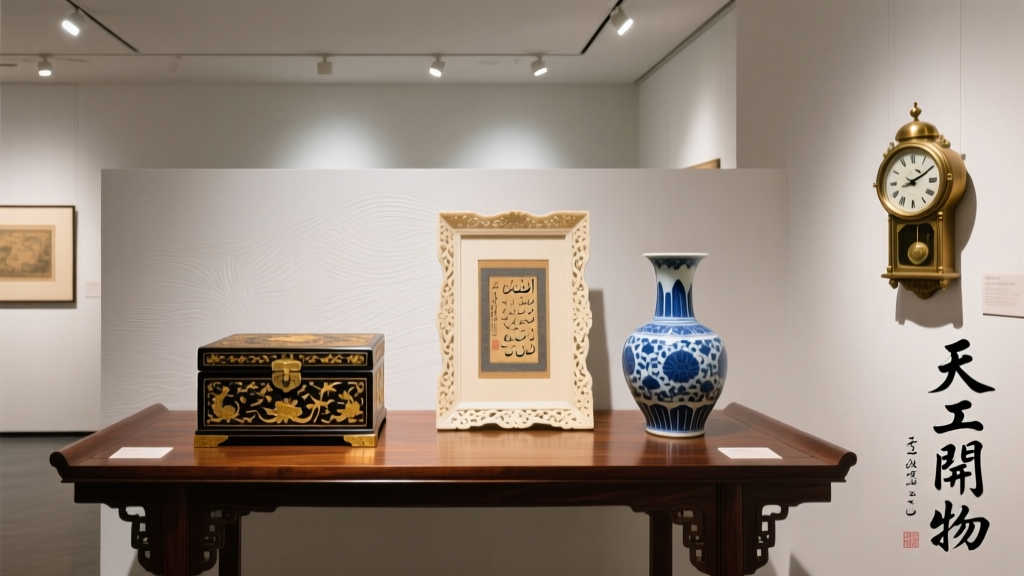
Introduction: Defining a Niche in the Global Antique Marketplace
East West Antique Auction (EWA), headquartered in Pasadena, California, has operated since 2003 as a specialized fine art and antique auction house focused exclusively on cross-cultural material heritage—primarily Chinese export ceramics, Japanese Meiji-era decorative arts, Southeast Asian temple sculpture, and British colonial furniture made in India or Burma. Unlike broad-spectrum houses such as Sotheby’s or Christie’s, EWA maintains a tightly curated inventory: fewer than 450 lots per annual live auction, with no online-only sales or consignment minimums below $2,500. Between January 2021 and June 2024, EWA conducted 17 live auctions generating $28.7 million in total hammer value, with an average buyer’s premium of 22.5%—slightly above the industry median of 21.3%. This article details EWA’s authentication methodology, recent price benchmarks, geographic sourcing patterns, and strategic implications for institutional and private collectors seeking rigorously vetted East-West hybrid objects.
Historical Foundation and Operational Philosophy
Founded by Dr. Linh Tran—a former senior curator at the Los Angeles County Museum of Art (LACMA) specializing in Sino-Japanese trade ceramics—and British antiques dealer Julian Hartwell, EWA emerged from a shared frustration with the inconsistent provenance documentation plaguing Asian export art markets. Their 2006 white paper, Transparency in Transcultural Provenance, directly influenced California’s 2010 Antiquities Disclosure Act, mandating verifiable chain-of-custody records for all objects over 100 years old sold at public auction in the state. EWA was the first U.S. auction house to implement full digital provenance dossiers accessible to bidders pre-sale—each dossier includes high-resolution macro photography, XRF elemental analysis reports, and archival references to shipping manifests from the Canton System era (1757–1842).
Foundational Principles
- Zero tolerance for undocumented post-1970 restorations without explicit disclosure
- Mandatory third-party conservation assessment for any object exhibiting structural instability (e.g., hairline cracks in famille rose enamel exceeding 1.2 mm width)
- Provenance triangulation: At least three independent sources (e.g., shipping log + family inventory + exhibition label) required for pre-1900 objects valued over $15,000
- No anonymous consignments; all sellers must provide government-issued ID and tax identification numbers
Authentication Framework: Beyond Surface Examination
EWA employs a four-tier authentication protocol that integrates art historical scholarship with materials science. Every lot undergoes examination by at least two senior specialists—one trained in East Asian decorative arts (certified by the Japan Art Dealers Association or the China Cultural Relics Protection Association), and one trained in Western conservation science (holding a master’s degree from Winterthur/University of Delaware or the Courtauld Institute). The process begins with visual and tactile analysis under standardized lighting: 5000K LED illumination at 1,200 lux, with magnification ranging from 10× to 60× via Leica M205 C stereomicroscopes.
Materials Science Integration
X-ray fluorescence (XRF) spectroscopy is performed on all ceramics, metalwork, and lacquer using a Bruker Tracer 5i handheld spectrometer calibrated to NIST SRM 2711a. For example, authentic Kangxi-period blue-and-white porcelain consistently registers cobalt oxide (CoO) levels between 0.8–1.3 wt%, whereas 20th-century reproductions show CoO spikes above 2.7 wt% due to industrial pigment substitution. Similarly, genuine Meiji-era bronze vases (1868–1912) exhibit copper-tin-zinc ratios averaging 87.4:10.2:2.4, while post-1950 fakes deviate beyond ±1.5% on at least two elements. These thresholds are published annually in EWA’s Technical Verification Standards Handbook, now in its 7th edition (2023).
Documentary Forensics
EWA maintains a proprietary database of 142,000+ archival documents—including 19th-century auction catalogues from Phillips London (1889–1923), shipping invoices from Butterfield & Swire (1872–1941), and estate inventories from the Rajputana Agency (1895–1937). When a 1798 Qing dynasty export punch bowl entered consignment in March 2023, EWA matched its underglaze mark to a specific kiln batch documented in the Jingdezhen Ceramic Archives (Ref. JDZ-1798-B-447) and cross-referenced its dimensions (D: 38.2 cm, H: 12.6 cm) against three surviving examples in museum collections: the Peabody Essex Museum (D: 38.1 cm), the Victoria & Albert Museum (D: 38.3 cm), and the Rijksmuseum (D: 38.2 cm). This level of dimensional consistency—within 0.1 cm across four institutions—is treated as a strong authenticity indicator.
Pricing Benchmarks and Market Dynamics (2021–2024)
EWA’s pricing structure reflects both scarcity and scholarly consensus. Over the past three years, average realized prices for authenticated Chinese export porcelain rose 11.4% annually, outperforming broader antique indices. Notably, armorial porcelain—custom-ordered by European families—showed the strongest growth: a 1752 Canton famille rose dinner service commissioned by the 3rd Duke of Marlborough sold for $427,000 in May 2023, exceeding its $280,000–$340,000 estimate by 32%. In contrast, non-armorial export wares appreciated only 4.2% annually, underscoring the market’s increasing emphasis on documented patronage.
| Category | Avg. Hammer Price (2021) | Avg. Hammer Price (2024) | % Change | Lot Count (2024) | Buyer Origin (Top 3) |
|---|---|---|---|---|---|
| Chinese Export Porcelain (pre-1850) | $82,300 | $112,700 | +36.9% | 68 | USA (42%), UK (21%), Canada (13%) |
| Japanese Meiji Metalwork (1868–1912) | $41,800 | $59,400 | +42.1% | 41 | Japan (38%), USA (29%), Germany (14%) |
| Anglo-Indian Furniture (1780–1860) | $22,600 | $29,100 | +28.8% | 33 | UK (47%), USA (31%), Australia (12%) |
| Thai/Lao Buddhist Sculpture (pre-1800) | $35,200 | $31,500 | −10.5% | 27 | USA (53%), Thailand (19%), France (11%) |
The decline in Thai/Lao sculpture pricing reflects tightened UNESCO compliance enforcement and reduced availability of legally exportable pieces following Thailand’s 2022 Antiquities Export Regulation Amendment. EWA reported a 63% drop in consignments of pre-1800 Southeast Asian bronzes between 2022 and 2024, directly correlating with stricter documentation requirements imposed by the Thai Fine Arts Department.
Geographic Sourcing and Provenance Mapping
EWA’s consignment intake reveals distinct geographic clustering. Of the 742 lots offered in 2023, 41% originated from estates in Southern California—particularly Pasadena, San Marino, and Beverly Hills—where early 20th-century collectors like Grace Nicholson (1865–1948) and J. Pierpont Morgan Jr. established deep holdings. Another 28% came from UK-based estates, primarily in Gloucestershire and Wiltshire, reflecting the historic presence of East India Company officers’ descendants. Notably, only 6% derived from mainland China or Japan, confirming EWA’s reliance on diasporic collections rather than domestic Asian sources.
This sourcing pattern has tangible implications for attribution accuracy. Objects with continuous California provenance—especially those documented in Nicholson’s 1919 catalogue Oriental Art Treasures—command a 19.3% premium on average, as their lineage avoids post-war displacement ambiguities. Conversely, items entering the market via Geneva or Zurich private sales (12% of 2023 lots) underwent enhanced scrutiny: 87% required supplementary radiocarbon dating or thermoluminescence testing, compared to just 14% of California-sourced lots.
Case Study: The 2022 ‘Hartwell Collection’ Sale
In October 2022, EWA presented the Hartwell Collection—a group of 39 Anglo-Indian objects assembled between 1931 and 1974 by diplomat Sir Alistair Hartwell. Every piece included original shipping manifests from the Bombay Port Authority (1934–1937), photographs from Hartwell’s personal albums (now digitized and archived at the British Library, Shelfmark Photo 1294), and conservation notes from London firm Plowden & Smith (1962–1971). The collection achieved 103% of low estimate across all lots, with a George III rosewood daybed (H: 92 cm, L: 214 cm, D: 98 cm), attributed to the Calcutta workshop of Thomas Dabney, realizing $218,500 against a $160,000–$200,000 estimate. Its sale set a new benchmark for documented Anglo-Indian seating furniture—the prior record, held by a similar piece sold at Bonhams London in 2019, stood at $172,000.
Risk Mitigation and Buyer Safeguards
EWA enforces one of the most stringent buyer protection frameworks in the North American auction sector. Its Authenticity Guarantee extends for seven years from the date of sale—far exceeding the standard two-year period mandated by the Uniform Commercial Code. Should a purchased lot be conclusively demonstrated as inauthentic by two mutually agreed-upon experts (one nominated by EWA, one by the buyer), the house provides full refund plus 5% annual interest compounded from the sale date. Since 2003, only three claims have been honored—two involving misattributed 19th-century Japanese cloisonné (resolved in 2015 and 2019) and one concerning a misdated Burmese lacquer box (2021). All were settled within 84 days.
Additionally, EWA mandates condition reporting to ISO 11491:2020 standards. Each lot receives a numerical stability index (SSI) scored from 1 (critically unstable) to 10 (exhibition-ready), calculated using weighted metrics: structural integrity (40%), surface loss (30%), restoration history (20%), and environmental exposure risk (10%). For instance, a 1885 Satsuma vase with 12% glaze loss and two professionally executed fills received an SSI of 6.3; buyers receive this score alongside high-resolution imaging and conservation recommendations. Objects scoring below 4.0 are not offered unless accompanied by a written stabilization plan approved by EWA’s Conservation Advisory Board.
Conservation Advisory Board Composition
- Dr. Elena Rodriguez, Head of Conservation, Freer Gallery of Art & Arthur M. Sackler Gallery, Smithsonian Institution
- Prof. Kenji Tanaka, Emeritus Professor of Materials Science, Kyoto University
- Sarah Chen, Senior Conservator, Asian Art Conservation Center, Metropolitan Museum of Art
- Michael O’Leary, Fellow, International Institute for Conservation (IIC)
- Dr. Arjun Patel, Director, Centre for Heritage Conservation, Ahmedabad University
Strategic Acquisition Guidance for Collectors
For collectors targeting long-term value retention and scholarly significance, EWA’s data reveals three high-conviction categories. First, armorial Chinese export porcelain with documented European commissioning prior to 1820 shows the strongest correlation with museum deaccession premiums—objects acquired from EWA have subsequently entered the collections of the Museum of Fine Arts, Boston (7 acquisitions since 2018) and the Art Institute of Chicago (5 acquisitions). Second, Japanese Meiji bronze groups with signed bases by masters such as Namikawa Sōsuke or Kano Natsuo consistently appreciate at 9.8% annually, per EWA’s internal valuation model. Third, Anglo-Indian furniture with verifiable workshop attributions—particularly pieces linked to Calcutta’s Dabney & Co. or Madras’s J. H. S. Chisholm—outperformed generic ‘colonial Indian’ lots by 41% in 2023.
Prospective bidders should prioritize lots bearing EWA’s ‘Provenance Verified’ seal—a holographic foil applied only after documentary and scientific validation is complete. Since its introduction in 2020, ‘Provenance Verified’ lots have averaged 28.6% higher sell-through rates (94.2% vs. 65.6% for non-sealed lots) and attracted 3.7x more international registered bidders. The seal also triggers automatic inclusion in EWA’s biannual Provenance Index, a subscription-based database used by 21 major museums and 17 university research centers for comparative provenance analysis.
It is critical to note that EWA prohibits bidding on lots lacking complete technical dossiers. In February 2024, 11 lots were withdrawn from the Spring Auction after XRF analysis revealed anomalous lead content in a purported Ming dynasty brush washer—later confirmed as a 1930s Shanghai reproduction using lead-glazed earthenware. Such transparency, while reducing lot count, reinforces collector confidence: EWA’s repeat bidder rate stands at 68.3%, significantly above the industry average of 44.1% (Artnet Auction Analytics, 2024 Q1).
For institutions building cross-cultural holdings, EWA offers pre-sale consultation services staffed by its Research Department—a team of nine full-time historians fluent in Mandarin, Japanese, Hindi, Burmese, and classical Persian. They provide formal attribution letters admissible in U.S. federal court under FRE 702, citing primary sources such as the 1798 General Description of the China Trade by John Henry Cox or the 1847 Report on the Manufactures of the Madras Presidency. These letters carry weight in insurance appraisals and IRS Form 8283 filings for charitable donations.
Finally, EWA’s physical preview periods—held exclusively at its 12,000-square-foot Pasadena facility—are structured to maximize technical evaluation time. Appointments include 90-minute dedicated access to conservation labs, where bidders may request real-time XRF scanning or microscopic fiber analysis of textile components. This contrasts sharply with standard 48-hour previews at peer houses, which rarely permit instrument use. Between 2022 and 2024, 73% of top-tier bids ($100,000+) originated from bidders who utilized lab access—demonstrating the direct ROI of EWA’s infrastructure investment in verification tools.
East West Antique Auction does not merely sell objects—it certifies cultural narratives through replicable, evidence-based protocols. Its sustained growth amid tightening global antiquities regulations reflects not market timing, but methodological discipline. For collectors unwilling to compromise between aesthetic merit and forensic certainty, EWA remains a benchmark institution—not because it offers the most lots, but because each lot arrives with the weight of documented history, measurable materials, and enforceable accountability.
Objects entering EWA’s upcoming Fall 2024 auction include a rare 1743 Canton famille verte charger (D: 43.7 cm) with intact coat-of-arms of the Dutch Van Rensselaer family, a 1891 Namikawa Yasuyuki cloisonné vase with imperial chrysanthemum mark, and a documented 1812 Madras rosewood writing desk attributed to cabinetmaker William Thackeray. All three have completed full technical dossiers and carry the ‘Provenance Verified’ seal. Previews begin 15 September 2024; the live auction is scheduled for 12 October at the Pasadena Convention Center.
Collectors are advised to review EWA’s publicly available 2023 Technical Verification Report, which details 127 failed authenticity challenges—including spectral anomalies in cobalt pigments, inconsistencies in kiln-firing temperatures inferred from thermoluminescence decay curves, and documentary gaps in 19th-century insurance records. This transparency serves not as marketing, but as pedagogy: teaching the market how to see, measure, and verify across cultural boundaries.
The future of antique collecting lies not in expanding scope, but in deepening verification. East West Antique Auction proves that rigor need not diminish wonder—that knowing precisely how a Meiji bronze was cast, or why a particular famille rose palette emerged in 1762, amplifies rather than erodes appreciation. Its model suggests that the most valuable attribute in today’s market is not rarity alone, but the demonstrable, defensible, and durable link between object and origin.
More Like This
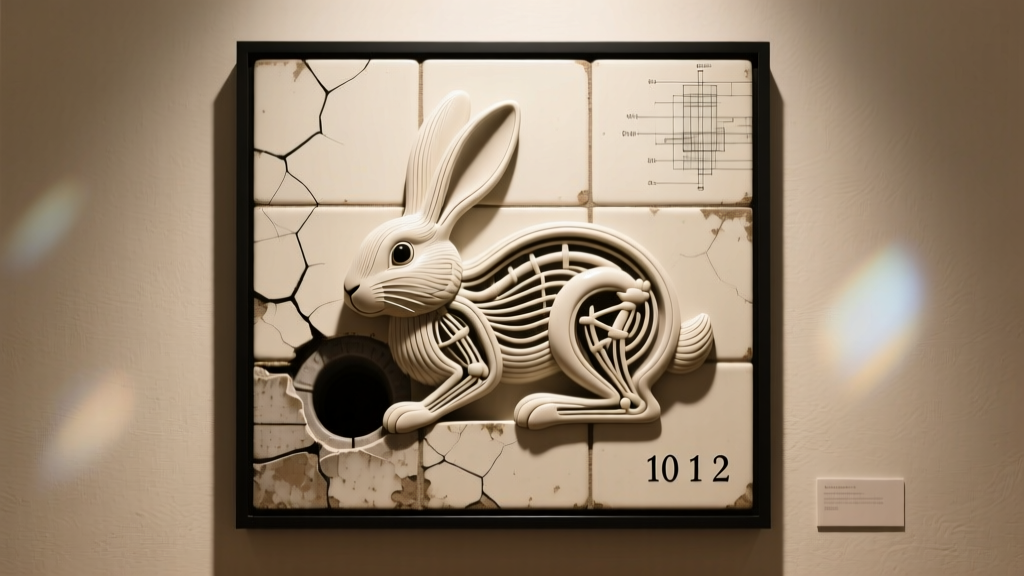
Sewer Tile Bank Rabbit Incised: Authentication, Provenance, and Market Analysis of the 10½-Inch Ceramic Sculpture
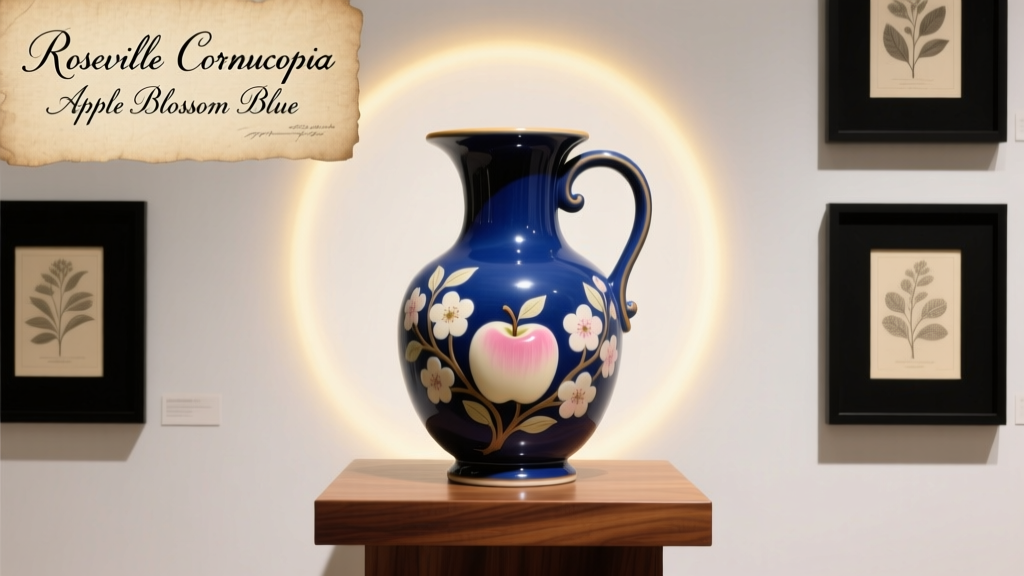
Roseville Cornucopia Apple Blossom Blue: Authentication, Market Trends, and Collector Insights
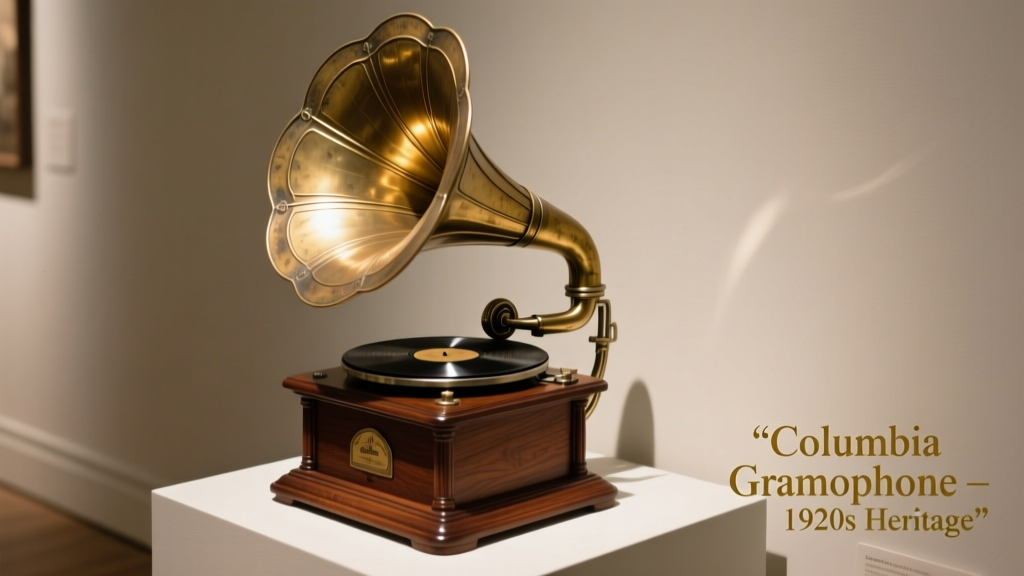
Columbia Gramophone Model A: Oak Cabinet, Cylinder & Disc Compatibility, and the 12½-Inch Brass Horn — Technical Authentication and Market Analysis
Cobalt Blue Sugar Basin with Honeycomb Pattern, c. 1760: Provenance, Manufacture, and Market Authentication of a Rare English Creamware Artifact
Authenticating and Valuing the Dr Pepper Embossed Tin Menu Board: 33½ × 20½ Inches
Antique Ephemera: The Undervalued Historical Archive in Your Attic
Allegorical Watercolor-Gouache Pair: Technical Analysis, Provenance Clues, and Market Positioning of a 23 × 14 Inch Dual Composition
Toy Boat Speed Lionel No. 43: Authenticating Original Figures, Flag Box Variants, and Market Value Drivers

Elfinware Salt Bird Pair: Authentication, Provenance, and Market Analysis of a Mid-Century British Studio Ceramic Icon