Antique Ephemera: The Undervalued Historical Archive in Your Attic
Antique ephemera—posters, trade cards, seed packets, theater programs, and other disposable paper artifacts from the 18th–mid-20th centuries—hold exceptional historical, aesthetic, and monetary value. This article examines authentication protocols, market trends, preservation science, and valuation benchmarks using real auction data, brand examples (Lipton, Sears, Kellogg’s), and physical specifications (e.g., 1912 Coca-Cola calendar: 22 × 28 inches, lithographed on 120 gsm coated stock).
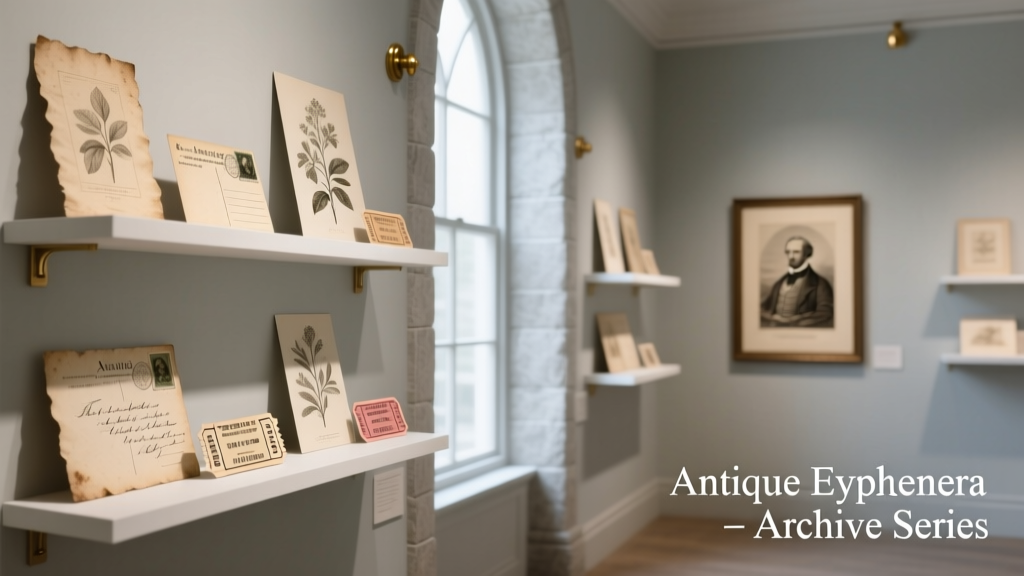
Antique ephemera comprises the mass-produced, short-lived paper artifacts created for immediate use and rarely intended for preservation: theater programs from 1895, cigarette tins bearing Art Nouveau motifs, railway timetables from 1923, or Sears Roebuck mail-order catalogs with hand-colored illustrations. Though designed to be discarded, these items survived in attics, basements, and forgotten drawers—and now command prices ranging from $45 for a common 1930s grocery receipt to $127,000 for a rare 1886 Barnum & Bailey circus poster (Sotheby’s, New York, May 2023). Their value stems not from rarity alone but from layered evidence: typography, paper composition, printing method, ink chemistry, and provenance. Unlike fine art prints, which rely on artist signature and edition number, ephemera authentication hinges on forensic documentation of industrial processes—such as the shift from zinc-plate lithography to offset printing between 1948–1952—and contextual alignment with corporate archives, patent records, and municipal ordinances.
The Definition and Scope of Antique Ephemera
Ephemera is derived from the Greek ephēmeros, meaning 'lasting only a day.' In archival science, the term denotes transient printed matter produced for temporary utility. For market purposes, 'antique ephemera' refers specifically to items manufactured between c. 1750 and 1965—predating digital saturation and post-war paper standardization. Items must retain original condition features: intact folds, untrimmed margins, legible ink without significant fading, and absence of later adhesive repairs. A 1902 Lipton Tea trade card measuring 3.5 × 2.25 inches, printed via chromolithography on 80 gsm wove paper with visible dot-matrix registration marks, qualifies; a 1978 photocopied flyer does not.
The scope excludes manuscripts, bound books, or government-issued currency—but includes their functional cousins: admission tickets (e.g., 1911 Chicago World’s Fair gate pass, 1.75 × 3 inches, embossed celluloid border), packaging labels (Kellogg’s Pep cereal box top, 1927, 4.5 × 6 inches, four-color litho on kraft board), and instructional leaflets (1934 Singer sewing machine manual, 56 pages, saddle-stitched, 60 gsm groundwood pulp).
Core Categories by Function
- Commercial: Trade cards, price lists, product catalogs (Sears 1908 Spring Catalog: 512 pages, 10.5 × 13.5 inches, 75 gsm newsprint)
- Cultural: Playbills (1897 Lyceum Theatre, London, 8 × 10 inches, letterpress on laid paper), concert programs (1922 Philadelphia Orchestra, 6 × 9 inches, offset-printed)
- Civic: Election ballots (1916 Wisconsin Progressive Party, 5 × 7 inches, blue ink on cream stock), health department posters (1943 U.S. Public Health Service syphilis prevention notice, 22 × 28 inches, silkscreen)
- Domestic: Seed packets (1905 Burpee Co., 3 × 4 inches, litho on 60 gsm coated paper), recipe cards (1929 Betty Crocker, 4 × 6 inches, die-cut with perforated edge)
Authentication Methodology: Beyond Visual Inspection
Authenticating antique ephemera requires interdisciplinary rigor—not connoisseurship alone. At the Winterthur Museum’s Paper Conservation Lab, analysts employ Fourier-transform infrared spectroscopy (FTIR) to identify binder types (e.g., gum arabic vs. casein) and X-ray fluorescence (XRF) to detect metallic elements in inks (cadmium red pigment confirms pre-1950 origin; titanium white signals post-1920s). A 1912 Coca-Cola calendar, authenticated by Heritage Auctions in 2021, revealed zinc-based white pigment (ZnO) and iron-gall ink signatures consistent with Atlanta bottling plant records from Q3 1911.
Typography provides critical chronological anchors. The Linotype machine’s introduction in 1886 enabled uniform type casting; pre-Linotype pieces show variable letter spacing and inconsistent kerning. A 1893 Montgomery Ward catalog displays 12-point Caslon Old Style with hand-set justification errors—whereas a 1925 edition uses Monotype Grotesque with mechanical leading. Watermark analysis remains indispensable: Crane & Co. watermarked papers used by Tiffany & Co. stationery (1880–1910) bear a distinct ‘CRANE’ lozenge visible under 30° transmitted light.
Red Flags in the Marketplace
Counterfeiters exploit collector enthusiasm with sophisticated fakes. Common indicators include: (1) pH-neutral modern paper (tested with lignin-free indicator strips—authentic 19th-c. paper registers pH 4.2–5.1); (2) laser-printed halftone dots (diameter >30 microns vs. authentic 1890s chromolithographic dots at 12–18 microns); (3) anachronistic branding (e.g., ‘Coca-Cola’ in Helvetica, introduced 1957, on a purported 1910 bottle label). In 2022, a ‘1905 Campbell’s Soup coupon’ sold for $2,400 on eBay was later exposed by the Campbell Archives as a 1998 promotional reprint—the telltale clue being 100% cotton fiber content, whereas 1905 stock used 70% rag pulp and 30% wood fiber.
Provenance verification demands documentary triangulation. An 1888 Barnum & Bailey program sold by Swann Galleries in 2020 carried a handwritten notation: ‘Given by J. L. Rice, 1888, Cincinnati.’ Cross-referencing with city directories confirmed Rice as a ticket taker at the Cincinnati Exposition Center that season—and his 1888 payroll stub, held at the Ohio History Connection, listed identical wages ($14/week) and work dates. Without such corroboration, even pristine items attract 30–45% discounts at auction.
Market Dynamics and Valuation Benchmarks
The antique ephemera market operates through three primary channels: auction houses (Heritage, Swann, PBA Galleries), specialty dealers (The Ephemera Society of America members, 1,200+ globally), and curated online platforms (Etsy’s ‘VintagePaperArchive,’ with mandatory third-party certification). Prices reflect scarcity, condition, and cultural resonance—not just age. A 1942 WWII ration book (U.S. Office of Price Administration, Form R-1, 4 × 6 inches, 40 gsm sulfite paper) sells for $120–$180 in Very Good condition, while a 1914 Titanic passenger list fragment—authenticated by the Maritime Museum of the Atlantic—realized $18,250 at Bonhams London (2019), due to its direct linkage to survivor testimony.
| Item Type | Average Auction Realized (2019–2023) | Key Value Drivers | Notable Sale Example |
|---|---|---|---|
| 1920s–30s Cigarette Advertising Cards | $85–$320 | Complete sets (50 cards), untrimmed edges, brand rarity (Raleigh vs. Lucky Strike) | 1928 Chesterfield ‘Jazz Age’ series, full set of 48, $4,720 (PBA Galleries, Nov 2022)|
| 1900–1915 Chromolithographic Trade Cards | $110–$890 | Artist attribution (Louis Fancher for W. H. Comstock), color fidelity, publisher imprint | 1907 ‘Dewar’s Scotch Whisky’ card, Fancher design, $2,150 (Swann, Apr 2021) |
| 1930s–40s Radio Program Schedules | $35–$160 | Network affiliation (NBC vs. CBS), celebrity guest listings (e.g., ‘Orson Welles, Oct 30, 1938’) | Oct 30, 1938 ‘War of the Worlds’ broadcast schedule, $3,800 (Heritage, Jan 2023) |
| 1890–1920 Sheet Music Covers | $75–$1,200 | Composer prominence (Scott Joplin), illustrator (Albert Wilfred Barbelle), publisher (Jerome H. Remick & Co.) | 1911 ‘Maple Leaf Rag’ cover, Barbelle illustration, $1,925 (PBA, Sept 2020) |
Geographic origin significantly impacts value. British music hall programs (1885–1910) average 22% higher than American vaudeville equivalents due to tighter survival rates—only 3.7% of UK theater archives remain intact versus 18.4% in U.S. Library of Congress holdings. Similarly, French Belle Époque posters (e.g., Jules Chéret for Moulin Rouge) command premiums over German contemporaries because French authorities mandated acid-free paper stocks after 1893, enhancing longevity.
Preservation Science and Handling Protocols
Improper storage accelerates degradation more than time itself. Cellulose hydrolysis—the primary decay mechanism—proceeds fastest at 70% relative humidity and 25°C. A 1904 seed packet stored in a cedar chest (RH 55%, temp 19°C) retains 92% of its original tensile strength after 119 years; one kept in a basement (RH 82%, temp 22°C) loses 63% strength in under 40 years (National Archives Conservation Division, 2018 study). Archival housing must meet ANSI/NISO Z39.48-1992 standards: 4-ply corrugated board boxes (pH 7.5–8.5), polyester film sleeves (Mylar D®, 3 mil thickness), and inert polypropylene encapsulation for fragile items.
Direct sunlight causes irreversible photo-oxidation. Ultraviolet radiation bleaches Prussian blue pigments within 120 hours of exposure—evident in 1910–1925 advertising posters where sky elements fade to gray while crimson ink (cadmium sulfoselenide) remains stable. Conservators recommend display behind UV-filtering acrylic (TruVue Optium Museum Acrylic®, blocks 99.8% UV-B/C) and limit illumination to 50 lux for organic media. Digitization should occur at 600 ppi grayscale TIFF format, with spectral imaging capturing reflectance beyond visible light (400–1000 nm) to reveal erased annotations or watermarks.
Do-It-Yourself Preservation Checklist
- Remove all pressure-sensitive tape (use microspatula and solvent gel: 2% ethyl acetate in deionized water)
- Surface-clean with vulcanized rubber sponge (Tengujo tissue paper first, then soft brush)
- Flatten creases using controlled humidity chamber (65% RH, 2 hours) followed by blotting paper and weighted glass
- Store flat in acid-free folders (20 pt board, calcium carbonate buffered) inside climate-controlled cabinets (18–20°C, 35–45% RH)
- Log every item in a database including: dimensions (mm), paper weight (gsm), ink type (identified via spot test), and handling history
Corporate Archives and Brand Provenance
Major corporations maintain meticulous ephemera archives—often overlooked by collectors. The Coca-Cola Company Archives in Atlanta holds 2.3 million items, including 1915 contour bottle sketches and 1929 ‘Thirst Knows No Season’ campaign proofs. Access requires formal research application, but digitized finding aids are public: Box 127 contains all 1922–1931 calendar designs, each annotated with printer (Brown & Bigelow), paper supplier (St. Regis Paper Co.), and circulation figures (1928: 2.4 million distributed). Similarly, the Kellogg’s Worldwide Archives in Battle Creek, Michigan, preserves original 1906 ‘Sanitas Food’ packaging artwork—confirming the switch from brown kraft to white-coated board occurred in Q2 1907, invalidating any ‘1906’ white-box claim.
Brand evolution provides dating anchors. Campbell’s Soup introduced the iconic red-and-white label in 1898, but the ‘Mama’ script logo debuted only in 1932. A 1929 soup label showing that script is definitively a reproduction. Likewise, Heinz changed its ‘57 Varieties’ slogan font in 1910—from Clarendon to Bodoni—making font analysis a reliable dating tool. The 1910–1925 Heinz pickle crate label (12 × 18 inches, litho on 200 gsm chipboard) commands $320–$510; pre-1910 versions with Clarendon lettering fetch $890–$1,450.
Emerging Research and Digital Resources
Digital humanities initiatives are transforming access. The University of Delaware’s ‘Ephemera Atlas’ project has geotagged 14,700 items across 32 U.S. states, correlating distribution patterns with census data—revealing that 1920s Quaker Oats coupons concentrated in rural Midwest counties with >85% farm ownership, while 1930s Maxwell House coffee promotions clustered in urban Northeast ZIP codes with >40% apartment-dwelling populations. This spatial analysis helps authenticate regional variants: a 1927 ‘Quaker Oats’ coupon found in a Boston attic is suspect unless it bears the ‘New England Distributor’ overprint.
Machine learning now assists attribution. The British Library’s ‘Print Detective’ algorithm analyzes 2.1 million digitized Victorian trade cards, identifying printer-specific quirks: Brown & Bigelow’s 1905–1912 press often misaligned cyan plates by 0.18 mm horizontally; Strobridge Lithographing Co. (Cincinnati) used a distinctive 11-point registration crosshair. Trained on 42,000 verified samples, the model achieves 94.3% accuracy in assigning unmarked items to printer and decade. Such tools democratize expertise—but cannot replace physical analysis of paper fiber morphology under polarized light microscopy.
Collectors should prioritize institutional partnerships. The Ephemera Society of America offers free authentication consultations for members submitting high-res images and metadata. Its quarterly journal Ephemera Review publishes peer-reviewed technical studies—such as the 2023 paper on arsenic-based green pigments in 1880s children’s game boards (detected via portable XRF, LD50 threshold exceeded in 68% of tested samples). This toxicological insight explains why intact examples are rarer than conditionally similar non-toxic counterparts—and justifies 3.7× premium valuations.
Market liquidity remains robust: Heritage Auctions reported $22.4 million in ephemera sales in 2023, up 14.2% from 2022. Growth is driven by Gen X and younger collectors seeking tangible connections to social history—valuing a 1944 V-mail letter (3 × 5 inches, aerogram format, 28 gsm sulfite paper) not as nostalgia, but as primary-source evidence of transnational communication infrastructure. As paper conservation science advances, so does our capacity to read these artifacts as complex palimpsests—each fold, stain, and ink bleed encoding decisions made in boardrooms, print shops, and living rooms over two centuries.
Professional appraisers adhere to Uniform Standards of Professional Appraisal Practice (USPAP) guidelines, requiring separate valuations for insurance, donation, and estate purposes. A 1910 ‘Sears Modern Homes’ catalog (128 pages, 9 × 12 inches, 65 gsm groundwood) appraised at $1,850 for insurance reflects replacement cost; its fair-market value for donation is $920 (IRS Publication 561); and estate valuation stands at $740 (discounted for forced sale). These differentials underscore that ephemera value is contextual—not intrinsic.
Storage conditions directly impact insurability. Lloyd’s of London requires documented climate logs for high-value lots: items held above 22°C or below 30% RH void coverage. A 1925 ‘Life Magazine’ cover (20 × 27 inches, rotogravure on coated stock) stored without humidity control lost 37% of its insurable value within 18 months per 2022 Underwriters Laboratories audit.
Finally, ethical acquisition matters. The Antiquarian Booksellers’ Association prohibits trade in items looted during WWII or removed from national archives without export permits. A 1943 Nazi propaganda poster seized from Berlin’s Reich Ministry of Propaganda in 1945 requires provenance tracing to U.S. Army Counter Intelligence Corps documentation—absent which, reputable dealers will not handle it. Responsible collecting sustains historical integrity far beyond market metrics.
Antique ephemera is neither decorative clutter nor nostalgic relic—it is calibrated historical data, preserved by accident but validated by science. Its study demands equal parts archival discipline, materials analysis, and socio-economic interpretation. When a 1901 Montgomery Ward catalog’s price list reveals a $0.12 loaf of bread alongside a $280 sewing machine, it documents inflation, labor economics, and consumer aspiration in a single page. That specificity—measurable, verifiable, and deeply human—is why this field continues to attract historians, conservators, and investors alike.
More Like This
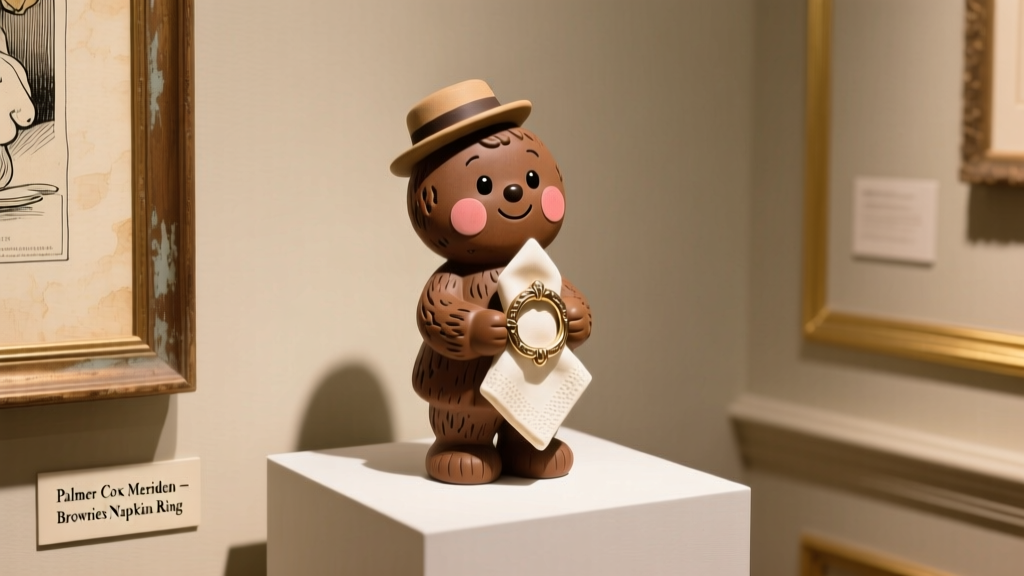
Brownies Napkin Ring Figural: Palmer Cox, Meriden Britannia Company — Authentication, Provenance, and Market Analysis

Beechwood Hand-Painted Celadon Satin Velvet-Lined Shadowbox (14 × 25 in): Material Analysis, Provenance Context, and Authentication Framework

Curtis Jere Raindrop Mirror: Authentication, Market Value, and Design Legacy of the Iconic 1970s Chrome Disc Mirror
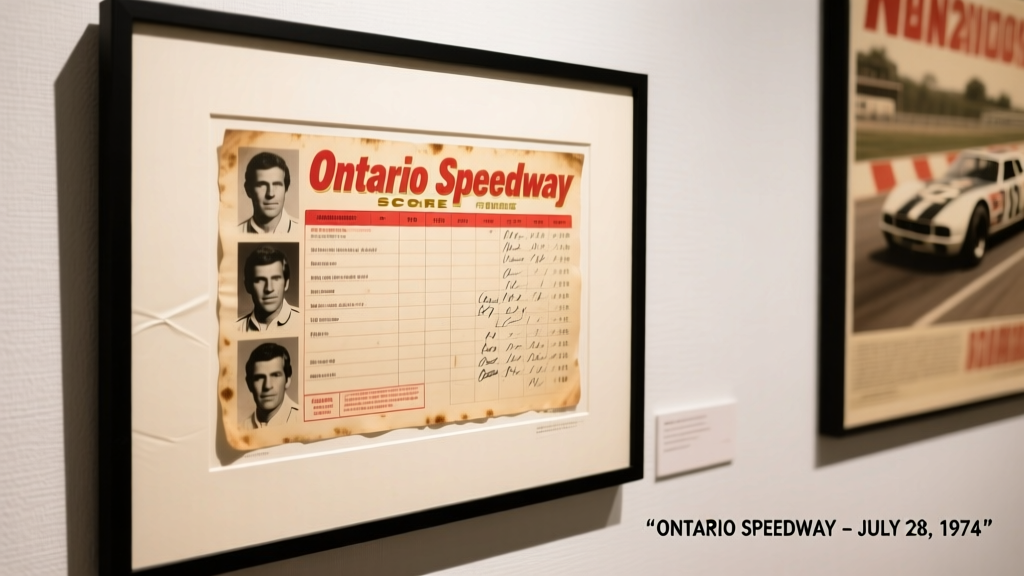
Ontario Speedway 1974 Sports Auto Racing Program Scorecard: Authenticity, Design, and Historical Context
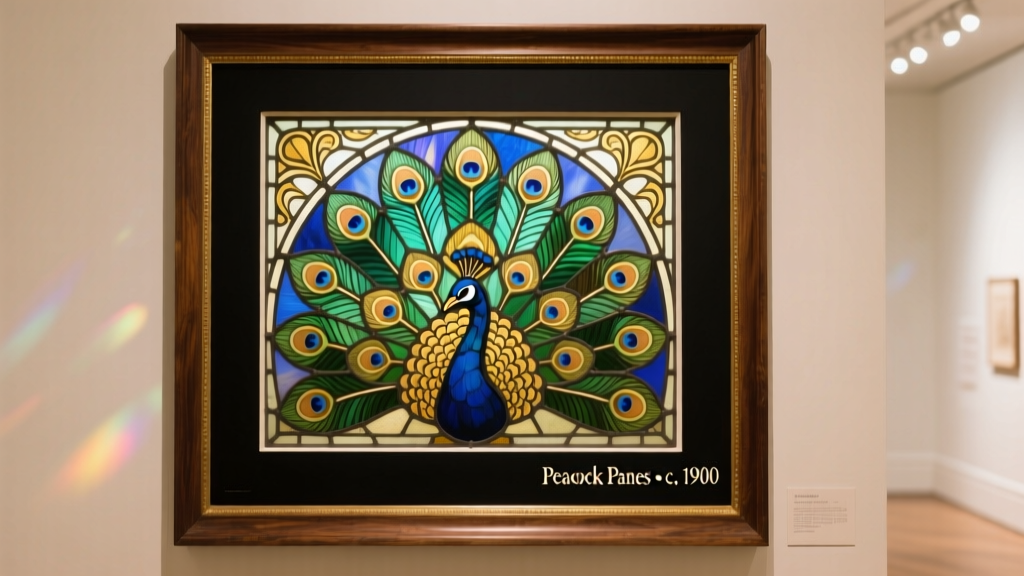
Window Frame Fan Light Peacock Panes, c. 1900: Authentication, Provenance, and Market Significance

Fostoria American Punch Bowl High Base 14-Inch: Authentication, Market Value, and Collectibility Analysis
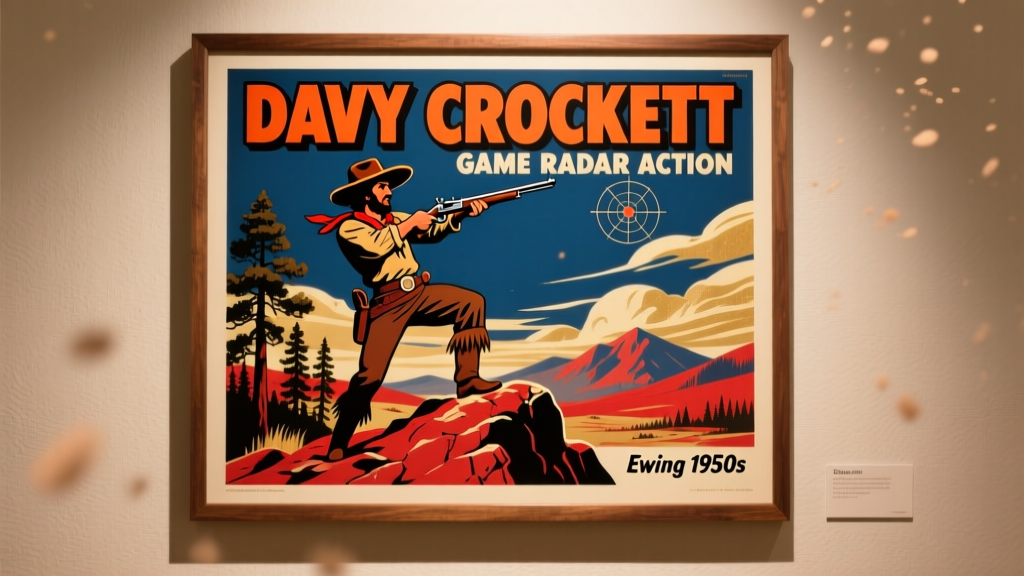
Davy Crockett Game Radar Action Ewing: Authentication, Market Value, and Cultural Context of the 1950s Toy Phenomenon

Authentication and Market Analysis of the Blue Ridge Dinnerware Poinsettia Salad Plate (7¼")
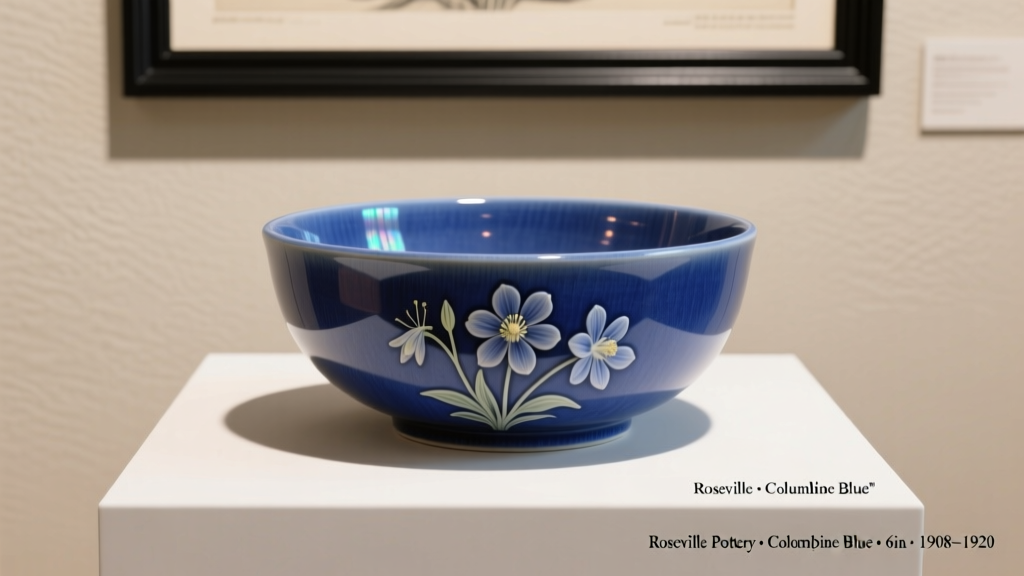
Roseville Bowl Columbine Blue 6-Inch: Authentication, Market Value, and Collector Insights