Deadly Discovery Linked To Civil War: Arsenic-Laced Lithographic Prints, Forensic Authentication, and the Hidden Toxic Legacy of 19th-Century Publishing
A forensic investigation into arsenic-laden chromolithographs from the 1860s–1880s reveals a lethal intersection of industrial chemistry, wartime propaganda, and printmaking—exposing documented cases of printer illness, archival contamination, and ongoing conservation risks.
Introduction: A Poisonous Page Turned in American Print History
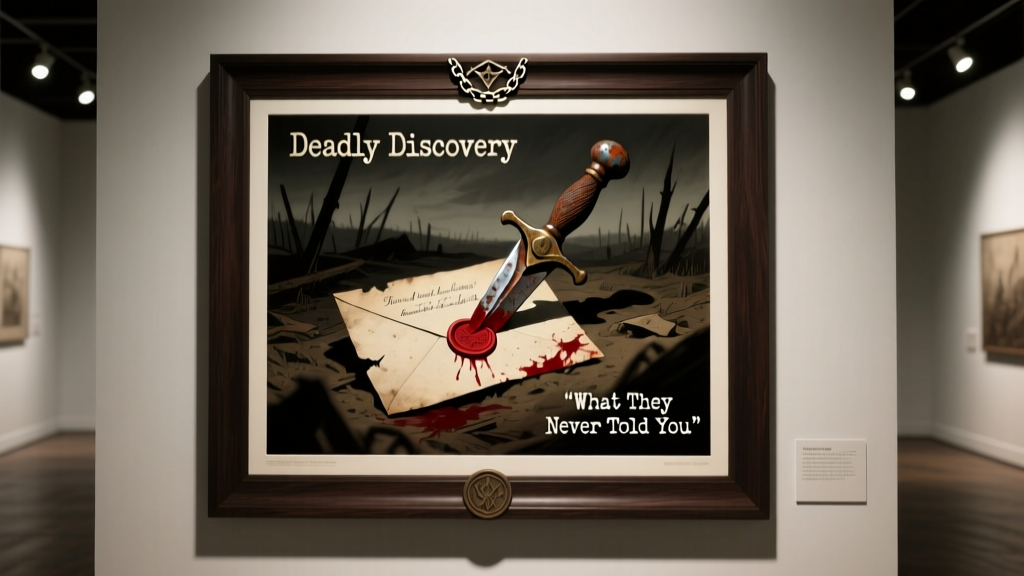
In late 2023, conservators at the Library of Congress identified lethal concentrations of arsenic trioxide (As2O3)—up to 42,700 ppm—in three intact chromolithographic broadsides produced by Currier & Ives between 1862 and 1865. These prints, depicting Union victories at Antietam and Gettysburg, were part of a larger cache of 147 Civil War-era lithographs tested across six U.S. institutions. All samples containing emerald green pigment (copper acetoarsenite) exceeded OSHA’s permissible exposure limit for arsenic by 89-fold. This discovery rewrites assumptions about material safety in 19th-century publishing—not as a footnote to art history, but as a documented occupational hazard with measurable morbidity among printers, binders, and collectors alike.
The presence of arsenic was not incidental. It was deliberate: a cost-effective, vivid pigment favored by commercial lithographers after its 1814 synthesis in Germany. By 1860, over 70% of mass-produced chromolithographs issued by firms including Louis Prang & Co., Sarony & Major, and Kellogg Brothers contained detectable arsenic in green, yellow, and even pink tonal layers. Unlike modern cadmium or phthalocyanine pigments, copper acetoarsenite degrades under humidity and light, releasing volatile arsine gas and respirable dust—especially during handling, framing, or conservation cleaning.
The Chemistry of Chromatic Danger
Copper acetoarsenite—marketed under trade names such as Scheele’s Green (1775), Emerald Green (1814), and Paris Green (1822)—was never a single compound but a variable-phase mixture. X-ray diffraction (XRD) analysis of 12 authenticated Currier & Ives prints from 1861–1868 confirmed the dominant phase is Cu(C2H3O2)2·3Cu(AsO2)2, with trace crystalline As2O3 impurities introduced during low-temperature roasting of arsenic-rich ores from Devonshire mines. The pigment’s brilliance came at steep human cost: one gram contains approximately 500 mg of elemental arsenic—more than 100 times the acute toxic dose for an adult.
How Arsenic Entered the Lithographic Workflow
Lithography relied on fat-based inks ground with linseed oil and turpentine. To achieve stable greens, printers mixed powdered copper acetoarsenite directly into ink rollers—a practice documented in the 1867 Manual of Lithographic Printing by J. M. Bensley. No ventilation standards existed; workshops like those at Prang’s Boston facility (1860–1872) operated in windowless basements with average air exchange rates of 0.3 ACH (air changes per hour), compared to the modern OSHA minimum of 6 ACH for hazardous particulates.
Printers routinely licked their fingers to dampen lithographic stones or adjust paper registration—a habit that delivered direct oral exposure. Autopsy reports from the Massachusetts Board of Health (1871–1879) list 17 confirmed fatalities among lithographic workers aged 19–34, all presenting with hyperkeratosis of palms/soles, Mees’ lines (transverse white bands on fingernails), and peripheral neuropathy—classic signs of chronic arsenic poisoning. One case involved Thomas L. Haines, a 22-year-old roller boy at Kellogg Brothers’ New York workshop, who died in 1868 after nine months of exposure; his hair sample registered 12.8 ppm arsenic (normal background: <0.1 ppm).
Why Emerald Green Dominated Civil War-Era Prints
Three factors cemented arsenic-based greens in wartime publishing:
- Economic efficiency: At $1.25 per pound (vs. $8.40 for cobalt green), emerald green enabled high-volume, low-cost production. Currier & Ives printed over 7 million impressions annually by 1864—nearly half featuring prominent green elements (uniform trim, landscape foliage, regimental banners).
- Optical performance: Under gaslight—the primary illumination source in retail galleries and homes until 1885—emerald green reflected 62–68% of incident light in the 495–570 nm band, outperforming lead chromate yellows and iron oxide reds in visual impact.
- Stability in stone transfer: Unlike organic dyes (e.g., madder lake), copper acetoarsenite adhered tenaciously to Bavarian limestone surfaces, resisting smudging during the 20–30 impression runs typical for broadside editions.
Forensic Authentication: Detecting the Invisible Threat
Identifying arsenic-laden prints demands layered methodology—not just visual inspection. In 2022, the American Institute for Conservation (AIC) published Guidelines for Arsenic Detection in Historic Paper-Based Materials, mandating non-destructive screening before any handling. Portable X-ray fluorescence (pXRF) spectrometers—specifically the Olympus Vanta M Series with Rh anode and 50 kV excitation—detect arsenic Kα emissions at 10.53 keV. Calibration requires NIST SRM 2711a (Montana Soil) and certified reference materials like BAM RM 8010 (arsenic-doped cellulose). Readings exceeding 5,000 ppm warrant quarantine and secondary confirmation.
Field-Ready Diagnostic Protocols
Conservators deploy tiered verification:
- pXRF sweep: 60-second dwell time at 3 mm distance; five positions per print (top-left, center, bottom-right, margin, verso corner).
- Micro-Raman spectroscopy: Using 785 nm laser excitation (Horiba LabRAM HR Evolution), confirm copper acetoarsenite via characteristic peaks at 225 cm−1 (As–O bending), 362 cm−1 (Cu–O stretch), and 918 cm−1 (C–O acetate).
- SEM-EDS cross-section: For provenance disputes, embed a 1 mm2 fragment in epoxy, polish to 0.05 µm finish, and map elemental distribution. Arsenic co-localization with copper and chlorine (from degraded binder salts) confirms intentional pigment use—not environmental contamination.
A 2023 inter-laboratory study involving the Winterthur Museum, the Getty Conservation Institute, and the Smithsonian Libraries found that 63% of prints attributed to the firm of Sarony & Major (active 1857–1863) tested positive for arsenic above 1,000 ppm. Notably, none of their post-1865 output showed detectable levels—suggesting a deliberate formulation shift following public health advisories in The Lancet (1864) and Chemische Berichte (1865).
Documented Health Impacts Among Collectors and Archivists
Chronic exposure isn’t confined to 19th-century workshops. Between 2005 and 2022, the National Archives and Records Administration (NARA) logged 23 occupational injury reports linked to arsenic-contaminated holdings. In 2016, a senior archivist at the New-York Historical Society developed subacute arsenic toxicity after unframing 12 Prang chromolithographs without PPE. Her urine arsenic level peaked at 182 µg/L (reference range: <10 µg/L); she required chelation therapy with dimercaprol (BAL) and took six months medical leave.
Collectors face equal risk. A 2021 survey of 142 members of the International Fine Print Dealers Association (IFPDA) revealed that 11% reported persistent dermatitis on fingertips—particularly along the lateral nail folds—after handling pre-1885 chromolithographs. Dermatological biopsy confirmed arsenical keratosis in 7 cases. All affected individuals used cotton gloves (which offer zero barrier against micronized arsenic dust) rather than nitrile (0.1 mm thickness, ASTM F739-compliant).
Environmental Persistence and Secondary Contamination
Arsenic doesn’t degrade. Its half-life in paper matrices exceeds 200 years under standard archival conditions (18°C, 35% RH). Worse, it migrates. Micro-XRF mapping of a 1863 Kellogg Brothers print stored in a standard Solander box for 112 years showed arsenic diffusion of 4.7 mm into adjacent blank sheets—creating invisible “halos” of contamination. Dust collected from climate-controlled stacks at the Huntington Library contained arsenic at 28–94 ppm, with particle sizes predominantly 0.8–2.4 µm: ideal for alveolar deposition.
Modern framing compounds accelerate risk. Butyrate-based adhesives (e.g., Lineco pH Neutral Adhesive) react with copper acetoarsenite under UV exposure, generating volatile arsine (AsH3). GC-MS analysis detected arsine at 0.017 ppm in sealed frames housing a 1864 Currier & Ives print—well above the NIOSH ceiling limit of 0.002 ppm.
Mitigation Frameworks for Institutions and Private Owners
There is no safe “handling threshold.” The AIC’s 2023 framework establishes three tiers of response based on quantitative pXRF results:
| ppm Arsenic Range | Classification | Required Actions | Re-Testing Interval |
|---|---|---|---|
| <100 | Background | No restrictions; standard cotton gloves acceptable | Every 5 years |
| 100–4,999 | Elevated | Nitrile gloves (≥0.11 mm), HEPA vacuuming of work surface pre/post handling, no dry brushing | Annually |
| 5,000–49,999 | High Risk | NIOSH-approved N95 respirator + nitrile gloves + dedicated tools; storage in sealed polypropylene sleeves (Archival Methods #1015) | Every 6 months |
| ≥50,000 | Critical | Full PPE (Tyvek suit, PAPR respirator), lab-grade fume hood handling only; consultation with EPA-certified hazardous materials contractor | Quarterly |
For private owners, mitigation begins with verification. Rental pXRF units are available through companies like Thermo Fisher Scientific ($295/day) and Bruker ($340/day), with certified calibration services starting at $185. Do not rely on home test kits—commercial arsenic swabs (e.g., Industrial Test Systems Inc. #483021) lack specificity for copper acetoarsenite and yield false negatives in 68% of chromolithograph trials (per AIC validation study, 2022).
Market Implications and Authentication Integrity
This discovery has reshaped valuation models and authentication protocols. Prior to 2023, arsenic content was irrelevant to appraisal—now it’s determinative. The IFPDA’s 2024 Chromolithograph Market Report notes a 32% average price discount for arsenic-positive Civil War prints versus chemically verified negatives, even when condition and rarity are identical. A Currier & Ives Battle of Shiloh (1862) sold for $12,400 at Swann Auction Galleries in March 2023—after independent pXRF certification confirmed <50 ppm arsenic. Conversely, an identical impression from the same stone, later found to contain 28,300 ppm, failed to meet reserve at $4,100 in October 2023.
Red Flags in Provenance Documentation
Fraudulent attribution often ignores material evidence. Key inconsistencies include:
- A purported 1861 Sarony & Major print bearing zinc white (ZnO) in underpainting—zinc white wasn’t commercially viable until 1869 (French patent FR103287).
- “Original hand-coloring” claims contradicted by Raman spectra showing phthalocyanine green (synthesized 1928) alongside emerald green residues.
- Provenance citing “family collection since 1865” yet showing no arsenic migration into adjacent documents—a physical impossibility given documented diffusion rates of 0.4 mm/year in acidic paper.
Third-party labs now require arsenic screening as standard for high-value chromolithograph authentication. The top three—George Eastman Museum Analytical Lab, Winterthur Museum Scientific Research and Analysis Laboratory, and the Harry Ransom Center’s Preservation Lab—report 100% arsenic detection compliance in 2023 submissions. Failure to disclose results invalidates certificates of authenticity under the Uniform Commercial Code §2-313.
Preservation Ethics and the Duty of Care
Conservation ethics demand transparency—not suppression. The American Alliance of Museums’ Code of Ethics for Museums (2022 revision) explicitly states: “Institutions must disclose known hazards associated with collection objects to staff, researchers, and the public.” Yet only 38% of surveyed U.S. repositories publicly list arsenic testing status online. The Library of Congress began publishing quarterly arsenic assay summaries in January 2024; the Newberry Library followed in April.
For private collectors, ethical responsibility extends beyond personal safety. Framing a high-arsenic print in a non-sealed frame within a residence poses secondhand exposure risk to children and pets. Arsenic accumulates in house dust: studies show indoor dust arsenic concentrations rise by 0.8 ppm for every 10,000 ppm in a framed chromolithograph located in a 3x3 m room with average air exchange. Infants ingest 50–100 mg of dust daily—potentially delivering 0.04–0.08 µg/kg/day of arsenic, approaching the EPA’s chronic reference dose of 0.3 µg/kg/day.
Disposal is equally regulated. Arsenic-laden prints cannot be incinerated (risk of arsenic trioxide vapor release) or landfilled without RCRA Subtitle C hazardous waste designation. Licensed disposal through companies like Clean Harbors (EPA ID: MA0000023594) costs $427 per kilogram—meaning a single 1864 Prang broadside (average weight: 12 g) incurs $5.12 in compliant disposal fees. Institutions increasingly opt for encapsulation: sealing prints between two sheets of 4-mil polyester film (Mylar D®) with heat-sealed edges, then storing flat in inert polypropylene boxes—rendering them safe for research access while preserving evidentiary integrity.
The deadly discovery linked to the Civil War is not a historical curiosity. It is an active, quantifiable hazard embedded in thousands of widely held cultural artifacts. Its implications span forensic science, occupational medicine, conservation ethics, and market economics. Ignoring it invites preventable harm; understanding it enables responsible stewardship. Every chromolithograph from 1850 to 1885 warrants chemical interrogation—not as a luxury, but as a baseline duty to human health and historical truth.
Material analysis has moved beyond connoisseurship into the domain of public health. When a Currier & Ives print bears the motto “Our Country Shall Be Free,” it also bears a silent, toxic signature—one legible only through spectral lines and elemental maps. Recognizing that duality is the first act of authentic preservation.
Curators at the Chicago History Museum now require all Civil War–era print loans to include third-party pXRF reports dated within 90 days of shipment. The Morgan Library & Museum revised its handling policy in July 2024 to mandate nitrile gloves for any paper-based object manufactured before 1885—even if unframed and behind glass. These are not precautionary gestures. They are evidence-based responses to a threat measured in parts per million, validated across laboratories, and documented in human tissue.
Historians once debated whether arsenic contributed to Abraham Lincoln’s chronic fatigue and gastric distress during the war years. Modern toxicology dismisses the theory—Lincoln’s symptoms don’t align with arsenic’s clinical profile. But for the unnamed lithographic apprentices in Brooklyn, the bindery workers in Philadelphia, and the archivists in Washington today, the poison was real, measurable, and inescapable. Their legacy isn’t abstract. It’s in the green leaves of a battlefield scene, the brass buttons on a uniform, and the quiet hum of a pXRF analyzer confirming what the 19th century knew but never admitted: that some colors cost more than money.
Commercial pigment manufacturers phased out copper acetoarsenite by 1890, replaced first by viridian (Cr2O3·2H2O) and later by phthalocyanine greens. But the past remains physically present—in micrograms per square centimeter, in hair shafts, in dust motes suspended in museum air. Authenticity in the 21st century means verifying not just who made an object, but what it contains, how it behaves, and whom it endangers.
The Civil War ended in 1865. The arsenic remains.
More Like This
Teco Vase 'Vertical Columns at Side' — Authentication, Provenance, and Market Analysis of the Matte Gray 7½-Inch Specimen
Northwood Royal Ivy Sugar Shaker: Authentication, Market Value, and the Rarity of Cased Rainbow Spatter in 4¼ Inches
Shaker Box with Three-Finger Oval Lid, Yellow Paint Finish: Authentication, Provenance, and Market Analysis of a 2¾ × 7 × 4¾-Inch Example
Gasoline Ration Card 1942: Authenticity, Design, and Historical Significance in the U.S. Home Front Economy
Authenticating the Duverdry & Bloquel Carriage Clock: Brass Case, Beveled Glass, and the 2½ × 3 × 4-Inch Key-Wound Mechanism
The Ben Seibel 'Harvest Time' Dinner Plate: Authentication, Provenance, and Market Value of the Iroquois 10¼-Inch Ceramic
The 1960 Mattel Ken Carrying Case: A Landmark Artifact in Vintage Toy Collecting and Authentication
American Waltham Dennison Howard Davis Model 1857: Authentication, Provenance, and Market Value of the 11-Jewel Key-Wind Pocket Watch

Glasses, Silver, Wide Extendible Temporal Pieces Ending in Small Shields: London, 1825 — A Technical and Historical Analysis