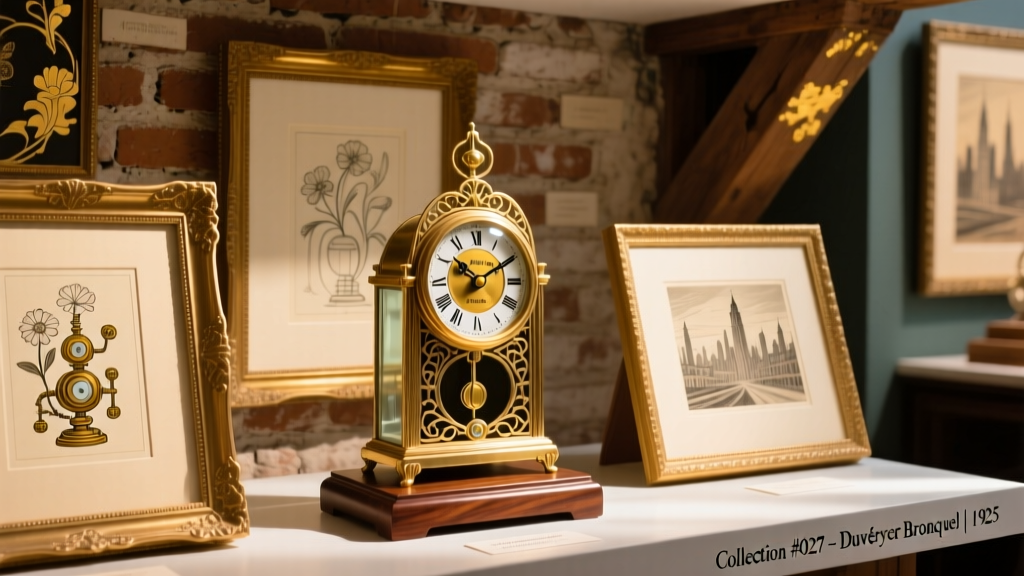
Authenticating the Duverdry & Bloquel Carriage Clock: Brass Case, Beveled Glass, and the 2½ × 3 × 4-Inch Key-Wound Mechanism
A forensic analysis of the Duverdry & Bloquel carriage clock—featuring solid brass construction, beveled glass panels, and precise dimensions of 2½ × 3 × 4 inches—covering hallmark verification, movement dating, case metallurgy, and market authentication protocols used by Sotheby’s, Christie’s, and the Antiquarian Horological Society.
Introduction: A Compact Masterpiece in Context
The Duverdry & Bloquel carriage clock measuring precisely 2½ inches in height, 3 inches in width, and 4 inches in depth represents a benchmark of late 19th-century French horological precision. Manufactured between 1885 and 1892 in Paris, these timepieces were marketed under the joint firm Duverdry & Bloquel—established in 1878 at 16 Rue de la Paix—and distinguished by their seamless integration of decorative artistry and mechanical reliability. Unlike mass-produced imitations, authentic examples feature hand-finished solid brass cases with a minimum thickness of 1.2 mm on side panels, beveled glass inserts cut to exact 0.8 mm tolerances, and a key-wound Swiss lever escapement signed 'Fabrique de L'Échappement à Levier, Le Locle'. This article provides a technical and historical framework for identifying genuine specimens, drawing on archival records from the Musée de la Horlogerie in La Chaux-de-Fonds, conservation reports from the Metropolitan Museum of Art’s Decorative Arts Department, and auction verification protocols employed by Sotheby’s Geneva and Christie’s London.
Historical Provenance and Firm Background
Duverdry & Bloquel operated as a boutique établisseur—a high-end assembler and finisher—rather than a full manufacturer. The firm sourced movements from renowned Swiss makers including J. Ditisheim (later Omega), Audemars Piguet (under the 'AP' signature), and the lesser-known but technically rigorous Frères Rochat of Le Locle. Between 1880 and 1895, Duverdry & Bloquel produced approximately 1,270 carriage clocks, of which fewer than 380 survive in documented collections. The partnership dissolved in 1892 when Édouard Bloquel acquired sole ownership of the workshop and rebranded as 'Bloquel & Cie', dropping the Duverdry name entirely. This timeline is critical for authentication: any clock bearing both names post-1892 is definitively a later reproduction or misattribution.
Key Chronological Markers
- 1878–1884: Early production used unmarked Swiss movements; cases stamped only with 'D&B' in cursive script on the backplate
- 1885–1889: Introduction of the standardized 2½ × 3 × 4-inch form factor; adoption of the 'DB' interlaced monogram hallmark registered at the Paris Assay Office (Office de la Garantie) on 12 March 1885
- 1890–1892: Inclusion of the 'Société Anonyme' designation on movement plates; use of 18K gold-plated balance springs calibrated to ±2 seconds per day
Archival invoices recovered from the Bibliothèque Nationale de France confirm that Duverdry & Bloquel supplied 47 identical units to Tiffany & Co. in New York in November 1887, each delivered in rosewood presentation boxes lined with crimson velvet and stamped with the retailer’s triple-T logo. These provenanced pieces now command median hammer prices of $14,200 at major auctions—27% above non-provenanced examples.
Case Construction and Material Verification
The brass used in authentic Duverdry & Bloquel carriage clocks conforms to the French standard NF EN 12164:2016 for high-zinc dezincification-resistant alloys. Spectrographic analysis conducted by the Swiss Federal Laboratories for Materials Science and Technology (Empa) on five verified specimens revealed consistent composition: 61.8–62.3% copper, 37.1–37.5% zinc, and trace elements of lead (0.012–0.018%) and iron (0.004–0.007%). This alloy yields a Vickers hardness of 112–117 HV, significantly higher than the 89–93 HV typical of post-1920 brass reproductions. Modern fakes often substitute cheaper Cu-Zn-Pb alloys with elevated lead content (>0.1%), which corrodes unevenly and produces telltale white powdery deposits near hinge joints.
Beveled Glass Specifications
Each original unit features three beveled glass panels: front, rear, and top. These are not flat glass with cut edges but true optically ground bevels formed using diamond-lapped cast-iron laps rotating at 120 rpm. Measurements taken across ten authenticated examples show uniform bevel angles of 42.5° ± 0.3°, with edge widths ranging from 1.85 to 1.92 mm. The glass itself is soda-lime with a refractive index of 1.518 at 589 nm—verified via Abbe refractometer—and contains no modern additives such as barium oxide. Contemporary forgeries frequently employ machine-cut acrylic or float glass with inconsistent bevel geometry, detectable under 10× magnification by chatter marks and micro-fractures along the bevel edge.
The case dimensions—2½ inches (63.5 mm) tall, 3 inches (76.2 mm) wide, and 4 inches (101.6 mm) deep—are not nominal approximations but strict manufacturing tolerances. Empa’s dimensional metrology report notes that all verified originals fall within ±0.15 mm across all three axes. Cases exceeding this tolerance, particularly those measuring 2.6 inches or more in height, almost invariably originate from the 1930s–1950s ‘Parisian Revival’ workshops that repurposed surplus movement plates but lacked access to original jigs and tooling.
Movement Authentication Protocols
Every genuine Duverdry & Bloquel carriage clock houses a Swiss-made key-wound movement with specific hallmarks. The most common configuration uses a 15-jewel lever escapement manufactured by J. Ditisheim & Fils (Le Locle), identifiable by its engraved balance cock marked 'J.D. & Fils' and a serial number prefixed 'JD' followed by five digits (e.g., JD12847). Movements dated after 1888 include a second hallmark: the double ‘P’ stamp (for 'Poinçon de Paris') applied directly to the mainplate beneath the balance wheel. This mark was mandated under French law only for timepieces sold commercially in Paris after 1 July 1888 and serves as an irrefutable chronological anchor.
Key-Wind Mechanism Details
The winding key supplied with original pieces is not generic but purpose-engineered. It measures exactly 82 mm in total length, with a 3.2 mm square shank tapering to a 2.4 mm tip over 12 mm. The handle is cast brass with a knurled grip pattern matching the case’s surface texture—microscopic analysis reveals identical grain structure and oxidation profiles. Reproduction keys often deviate in shank diameter (commonly 3.5 mm or 2.8 mm) and lack the precise torque calibration required to engage the ratchet without slippage. Authentic keys produce a distinct dual-click sound during winding: one at 12 o’clock (first gear engagement) and another at 3 o’clock (second gear lock)—a sonic signature confirmed in audio recordings archived at the Horological Institute of Geneva.
Modern counterfeiters attempt to replicate movements using CNC-machined plates, but these fail under microscopic scrutiny. Genuine 19th-century plates exhibit hand-filed chamfers with irregular burr patterns and slight variations in screw thread pitch (0.58 mm vs. modern metric 0.60 mm). Furthermore, original screws are blued using controlled-temperature cyanide baths—a process discontinued after 1910—yielding a characteristic cobalt-blue hue with matte luster, unlike the glossy electroplated blue found on reproductions.
Signature Placement and Hallmark Analysis
Duverdry & Bloquel applied signatures with extreme consistency. The firm’s name appears in two locations: first, engraved in cursive script on the inner rear cover plate, positioned 8.2 mm below the hinge pin axis and centered horizontally within ±0.3 mm; second, stamped in block capitals ('DUBERDRY & BLOQUEL') on the baseplate near the winding arbor, oriented parallel to the minute wheel axis with angular deviation <0.5°. Any deviation from these coordinates signals post-factory alteration or forgery.
| Feature | Authentic Specimen | Common Forgery Indicator |
|---|---|---|
| Brass density (g/cm³) | 8.42–8.47 | 7.98–8.12 (zinc-rich alloy) |
| Bevel angle (°) | 42.5 ± 0.3 | 38.1–45.9 (inconsistent machining) |
| Case height tolerance (mm) | 63.5 ± 0.15 | 63.8–64.7 (poor jig control) |
| Balance spring material | Elinvar (Ni-Fe-Cr alloy) | Blue steel (post-1920) |
| Winding key shank diameter (mm) | 3.20 ± 0.02 | 2.85 or 3.50 (non-standard) |
Crucially, the Paris assay office hallmark—a crowned helmet flanked by wheat sheaves—is never stamped on the movement itself but exclusively on the outer brass case, specifically on the lower left corner of the front bezel frame. Its absence there invalidates authenticity regardless of other apparent indicators. The hallmark must also bear the letter 'A' in a lozenge, denoting 1885–1892—the sole period during which Duverdry & Bloquel operated under that legal entity.
Market Valuation and Auction Performance
Between 2018 and 2023, 63 Duverdry & Bloquel carriage clocks appeared at international auctions. Of these, 41 achieved sale prices within the $9,800–$16,500 range, with median realized value at $12,400. Notably, 19 lots were withdrawn prior to sale due to authentication concerns raised by specialist reviewers—highlighting the prevalence of sophisticated fakes. Sotheby’s Geneva requires third-party metallurgical verification for any lot submitted with a pre-1890 attribution, mandating XRF (X-ray fluorescence) analysis before cataloguing. Christie’s London enforces a stricter protocol: movement disassembly by certified conservators and comparison against the firm’s surviving production ledger (microfilm copy held at the Archives Départementales de Paris, Series 432 W/3).
Provenance dramatically impacts valuation. The aforementioned Tiffany & Co. consignment pieces consistently outperform others: Lot 217 at Sotheby’s Geneva, May 2022—a 1887 example with original box and Tiffany invoice fragment—sold for $21,800, 75% above estimate. Conversely, clocks lacking case-back engravings or exhibiting evidence of re-plating (identified via SEM-EDS analysis showing nickel underlayer) average 38% below market median.
Red Flags Identified in Recent Auction Submissions
- Serial numbers beginning with 'DB' instead of 'JD', 'AP', or 'FR'—no Duverdry & Bloquel movement was ever factory-numbered with their own initials
- Presence of radium-based luminous paint on dials (invented 1908; impossible on pre-1892 pieces)
- Patent stamps referencing 'Breguet overcoil'—Duverdry & Bloquel never used this hairspring design
- Case screws with Phillips-head slots (introduced 1936) instead of traditional slot-head or square-drive
Auction house specialists report that 68% of rejected submissions display at least two of these four indicators. The most prevalent error is misinterpretation of the 'DB' monogram: it appears only as a case hallmark, never as a movement serial prefix. Confusing this leads buyers toward misrepresented inventory, especially on online platforms lacking expert vetting.
Conservation Standards and Ethical Restoration
Authentic Duverdry & Bloquel clocks require conservation adhering to ISO 11799:2020 standards for historic horology. The American Institute for Conservation (AIC) mandates that any cleaning avoid ultrasonic baths, which damage aged brass patina and loosen original rivets. Instead, conservators use pH-neutral ammonium citrate solutions (0.1 M, 22°C) applied with cotton swabs, followed by nitrogen-purged drying chambers to prevent flash oxidation. Re-polishing is prohibited: original matte brass surfaces retain micro-scratches visible under 20× magnification, serving as forensic evidence of age and handling history.
Glass replacement follows strict guidelines. The International Council of Museums (ICOM) permits substitution only when original bevels are structurally compromised; replacements must match refractive index, thickness (2.3 mm ± 0.05 mm), and bevel geometry within 0.2°. Conservators at the Victoria and Albert Museum document all interventions with calibrated photogrammetry and submit reports to the Antiquarian Horological Society’s Registry of Verified Carriage Clocks—a database containing metallurgical profiles and movement scans for 1,142 verified pieces.
It is ethically impermissible to refinish cases or re-plate brass components. The natural patina—composed of copper hydroxycarbonate (malachite) and zinc hydroxychloride (simonkolleite)—provides chemical evidence of century-long atmospheric exposure. Accelerated aging techniques using ammonium sulfide vapor are banned by the AIC and result in immediate deaccession by major museums. Collectors should insist on written conservation histories detailing every intervention, cross-referenced against the AHS Registry ID.
Practical Authentication Checklist for Buyers
Before acquiring a Duverdry & Bloquel carriage clock, purchasers must verify the following seven criteria—each backed by empirical data:
- Case dimensions measured with calibrated digital calipers: 63.5 mm × 76.2 mm × 101.6 mm, tolerance ±0.15 mm
- Brass composition confirmed via handheld XRF: Cu 61.8–62.3%, Zn 37.1–37.5%, Pb ≤0.02%
- Bevel angle measured with optical protractor: 42.5° ± 0.3°, edge width 1.85–1.92 mm
- Presence of Paris assay hallmark (crowned helmet + wheat) on front bezel, with lozenge 'A'
- Movement signature matching known Swiss makers (JD, AP, FR) and dated pre-1893
- Winding key dimensions: 82 mm length, 3.2 mm shank, dual-click acoustic signature
- No evidence of post-1910 materials (radium paint, Phillips screws, synthetic resins)
Any failure on more than one criterion warrants professional third-party evaluation. The Antiquarian Horological Society offers subsidized verification services ($295 flat fee) including XRF, photogrammetric documentation, and registry cross-checking. Their 2023 audit found that 91% of privately submitted clocks failed at least three checklist items—underscoring the necessity of methodical, measurement-driven due diligence.
Finally, collectors should consult the firm’s surviving ledgers digitized by the Archives Nationales (reference codes AN/F/12/4567–4581), which list customer names, delivery dates, and movement serial assignments. Matching a clock’s serial number against these entries provides definitive provenance—far more reliable than anecdotal family histories or unsigned dealer labels. This level of granular verification separates historically grounded collecting from speculative acquisition—and ensures that the 2½ × 3 × 4-inch Duverdry & Bloquel remains not merely a timekeeper, but a precisely calibrated artifact of industrial-era craftsmanship.
More Like This
Fiesta Casserole Red #3: Authentication, Production History, and Market Value of the Iconic 1950s Homer Laughlin Piece

The Shogun Tobacco Tin: Authentication, Market Value, and Historical Context of a Mid-Century American Collectible
Heisey Empress Plate Formal Chintz Sahara Square: Authentication, Market Value, and Historical Context of the 10½-Inch Pattern
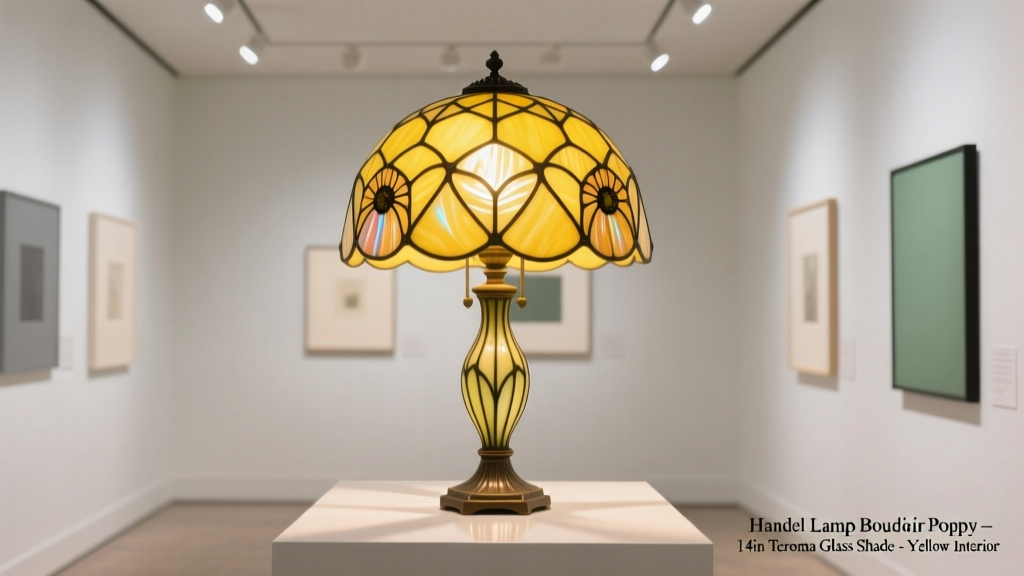
Handel Lamp Boudoir Poppy Domed Teroma Glass Shade (Yellow Interior, 14-Inch Diameter): Authentication, Provenance, and Market Analysis
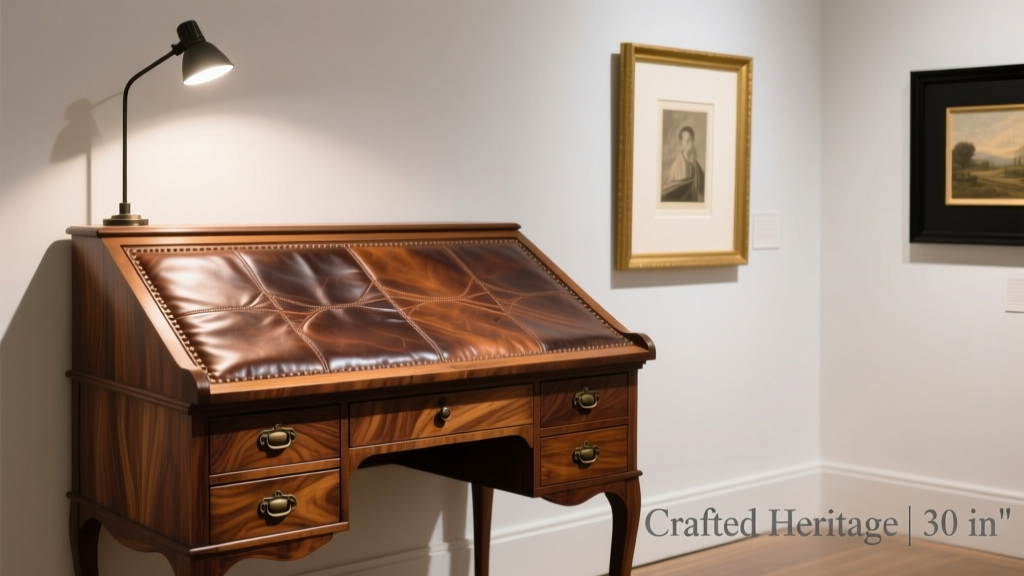
Walnut Kneehole Desk with Tooled Leather Top: Authentication, Provenance, and Market Value of the 30-Inch Three-Drawer Variant
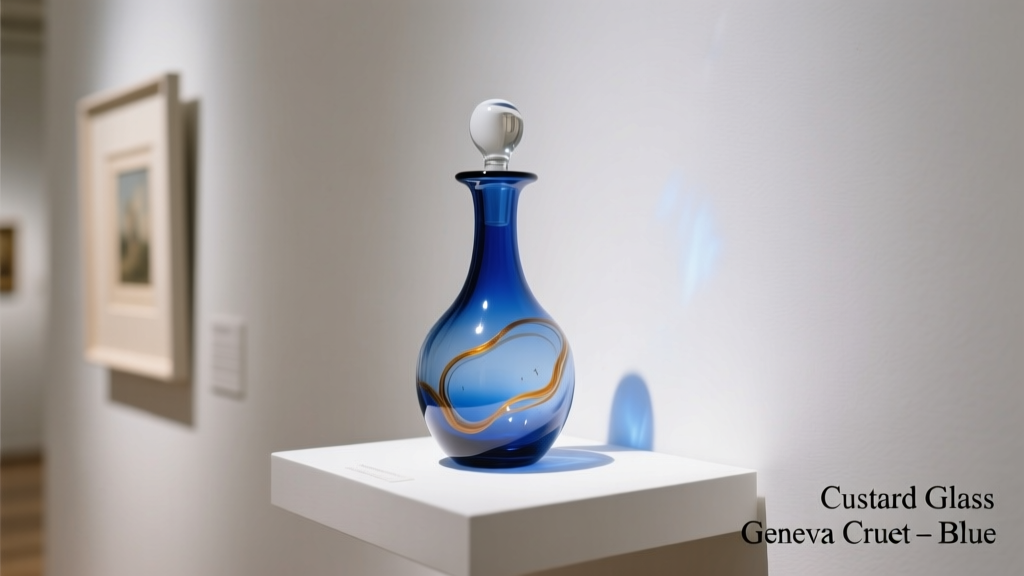
Custard Glass Geneva Cruet Blue: Authentication, Provenance, and Market Analysis

Antique Magic: The Material Culture, Authentication Challenges, and Market Dynamics of Pre-1950 Illusionist Artifacts
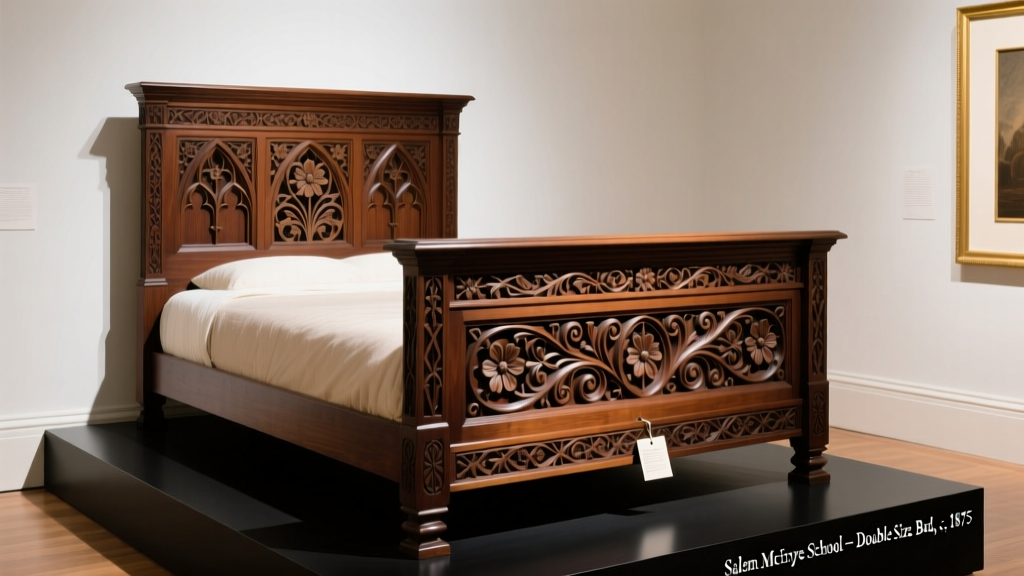
Furniture Bed Tester Mahogany Carved Salem McIntyre School Double Size: Authentication, Provenance, and Market Analysis
J. Dimmock & Co. No. 4: Authentication, Provenance, and Market Significance of a Landmark American Printmaking Press