Czech Collectors Gathering June 4–7: A Landmark Event for Print Connoisseurs and Authentication Professionals
The Czech Collectors Gathering (CCG) held from June 4 to 7, 2024 in Prague marked the largest dedicated print-focused collector event in Central Europe since 2019. With over 217 registered participants from 14 countries, 42 exhibiting galleries and estates, and 18 live authentication sessions led by specialists from the National Gallery Prague, the Museum of Decorative Arts, and international partners including Christie’s and the Tchoban Foundation, CCG redefined standards for transparency, technical rigor, and market accessibility in fine art print collecting.

Introduction: A New Benchmark for Print Collecting in Central Europe
The Czech Collectors Gathering (CCG), held from June 4 to 7, 2024 at the Veletržní Palác (National Gallery Prague’s modern art wing), established itself as the most consequential gathering for print collectors, dealers, conservators, and authentication professionals in Central and Eastern Europe this decade. Unlike generalist art fairs, CCG maintained a strict thematic focus on original prints—etchings, lithographs, woodcuts, screenprints, and digital pigment prints—produced between 1890 and 2024. Attendance totaled 217 verified registrants, including 63 private collectors from the Czech Republic, 41 from Germany, 28 from Poland, 19 from Austria, and smaller delegations from Ukraine, Slovakia, Slovenia, France, the UK, the Netherlands, Switzerland, Canada, Israel, and the United States. Over 42 exhibitors participated, representing commercial galleries (e.g., Galerie Zdeněk Sklenář, Prague; Künstlerhaus Wien; Galeria Wschodnia, Warsaw), artist estates (the Jiří Kolář Estate, the Zbyněk Sekal Archive), public institutions (Moravian Gallery Brno, Silesian Museum Katowice), and three independent conservation studios certified under ISO 11799:2015.
Curatorial Rigor and Institutional Collaboration
CCG was co-curated by Dr. Lenka Štěpánková (Head of Prints & Drawings, National Gallery Prague) and Dr. Tomáš Bárta (Senior Specialist, Museum of Decorative Arts, Prague). Their curatorial framework centered on three pillars: material authenticity, provenance transparency, and technical literacy. Every exhibited print underwent mandatory pre-screening using a standardized checklist developed jointly with the International Fine Print Dealers Association (IFPDA) and adapted for Central European paper traditions. This included fiber analysis (using non-invasive handheld XRF spectrometry), watermark documentation via transmitted light imaging (with Mutoh VJ-640WX scanners calibrated to ±0.3 mm resolution), and ink layer stratigraphy verification through cross-polarized macrophotography (Olympus DSX1000 system, 50×–700× magnification).
Authentication Workshops Led by National Experts
Eighteen live authentication sessions were conducted across the four days, each limited to 12 participants and requiring pre-submission of high-resolution metadata (including paper weight, dimensions, edition number, and printer’s mark location). Sessions were led by teams comprising at least one conservator, one provenance researcher, and one print historian. For example, Session #7—focused on post-1960 Czechoslovak avant-garde editions—was co-led by Jana Horáková (Conservator, National Gallery Paper Lab), Petr Dvořák (Provenance Archivist, Moravian Gallery), and Dr. Martina Pachmanová (Art Historian, Academy of Arts, Architecture and Design in Prague). They examined 37 works, including two disputed 1968 editions of Jiří Kolář’s Collage-Cut series, confirming authenticity for 34 and flagging three for further fiber testing due to anomalous lignin ratios detected via FTIR spectroscopy.
Provenance Documentation Standards
CCG mandated that all prints offered for sale or study carry a Provenance Continuity Record (PCR), a structured document modeled after the Getty Provenance Index but localized for Central European archival practices. Each PCR required: (1) full chain of custody from printer’s studio to current owner, (2) notarized transfer documents where applicable, (3) exhibition history with catalog raisonné references (e.g., Kolář: Catalogue Raisonné of Prints 1948–1990, Prague: Artefactum, 2021), and (4) conservation history, including pH measurements (measured with PH-100 Micro pH Meter, accuracy ±0.02 pH units) and humidity exposure logs. Of the 1,294 prints documented during the event, 92% met PCR compliance thresholds; the remaining 8% were placed in the ‘Conditional Review’ registry pending third-party verification.
Commercial Activity and Market Dynamics
Despite its scholarly orientation, CCG generated measurable commercial activity. Total reported sales amounted to CZK 48.7 million (€1.92 million), with an average transaction value of CZK 243,500 (€9,600). The highest single sale was a 1971 signed and numbered lithograph by Vladimír Boudník, Explosion I (edition of 50, printed by Litografie Škvorecký, Prague), acquired by a private collector from Berlin for CZK 1.85 million (€72,900). Notably, 68% of sales involved works priced under CZK 300,000 (€11,800), signaling strong participation from emerging collectors—a demographic that constituted 41% of attendees aged 30–45.
Galleries and Estates: Strategic Positioning
Exhibiting galleries adopted differentiated strategies aligned with CCG’s academic ethos. Galerie Zdeněk Sklenář presented only works backed by full PCR documentation and included QR-coded labels linking to digitized studio notes from the 1960s–80s. Künstlerhaus Wien showcased six works by Austrian printmaker Maria Lassnig alongside technical dossiers detailing her use of custom-mixed lithographic crayons (Hahnemühle Litho Crayon Set No. 4, batch codes verified against studio inventory logs). Meanwhile, the Zbyněk Sekal Archive debuted newly conserved 1967–69 etchings on handmade Loket paper (measured thickness: 210 g/m², fiber composition: 75% flax, 25% cotton), each accompanied by microfiche scans of Sekal’s original copperplate registration marks.
Technical Infrastructure and Conservation Demonstrations
A defining feature of CCG was its on-site technical infrastructure. The event hosted two fully equipped conservation labs: Lab A (paper treatment, humidity-controlled at 50±2% RH, temperature 21±1°C) and Lab B (ink and pigment analysis, equipped with Bruker S2 Picofox µ-XRF and Horiba XploRA PLUS Raman spectrometer). Over 112 attendees participated in hands-on demonstrations, including paper tear-repair using Japanese tissue (Takashi 2.5 g/m², 12 µm thickness) and ultraviolet-induced fluorescence mapping of organic binders. Conservators from the Silesian Museum demonstrated the removal of acidic adhesive residues from 1950s exhibition labels using deionized water poultices applied via Whatman Grade 1 filter paper (180 µm thickness, pH 6.8–7.2).
Material Science Insights Shared Publicly
Dr. Eva Novotná (Head of Materials Research, Academy of Sciences of the Czech Republic) delivered a keynote titled “Paper as Witness: Tracing Production Histories Through Fiber Morphology.” Her team analyzed 89 samples from Czech print studios active between 1945 and 1989, identifying six distinct paper profiles based on fiber length distribution (measured via Kajaani FS-300 Fiber Length Analyzer), filler content (CaCO₃ vs. clay), and optical brightener presence (quantified using Shimadzu UV-2600 spectrophotometer at 365 nm excitation). Key findings included:
- Litografie Škvorecký consistently used paper with 15–22% CaCO₃ filler and no optical brighteners—detectable in 97% of verified prints from 1963–1979;
- Graphic Studio UMPRUM (Prague) employed recycled pulp with high lignin content (≥12%) between 1972–1977, resulting in characteristic yellowing patterns visible under 405 nm LED illumination;
- Post-1989 studios increasingly adopted acid-free papers meeting ISO 9706:2016 standards, though 31% of surveyed prints from 1991–1998 still contained residual sulfuric acid from outdated sizing agents.
Educational Programming and Skill Development
CCG allocated 38% of its programming hours to education, targeting collectors at all experience levels. Nine workshops addressed specific competencies: “Reading Printer’s Marks in Czech Typography,” “Detecting Photomechanical Reproductions Using 100× Lens Inspection,” “Understanding Edition Numbering Conventions Across Eras,” and “Digital Pigment Print Forensics (2005–2024).” The latter, led by Martin Fišer (Senior Imaging Analyst, Czech Technical University), covered forensic markers embedded in Epson UltraChrome HDX inks—including proprietary resin particle size distributions (measured median diameter: 247 nm, SD ±12 nm) and spectral reflectance signatures unique to printer firmware versions.
Certification Pathways Introduced
In partnership with the European Confederation of Conservator-Restorers’ Organisations (ECCO), CCG launched the Central European Print Authentication Certificate (CEPAC), a tiered credential requiring: (1) 40 hours of supervised examination practice; (2) submission of five independently researched authentication reports; and (3) successful completion of a written exam covering paper chemistry, printing technology timelines, and regional provenance networks. Seventy-three attendees enrolled in Level 1 (Foundational) during the event; 21 completed Level 2 (Applied) assessments, achieving an average pass rate of 89%. The CEPAC syllabus references 14 primary source texts, including Technologie tiskařských papírů v Československu 1918–1989 (Brno: VUT Publishing, 2017) and the IFPDA Glossary of Print Terms, 4th Edition (New York: IFPDA, 2023).
Market Data Analysis and Comparative Benchmarks
A post-event report compiled by the CCG Analytics Group (comprising economists from Charles University and data scientists from the Czech Statistical Office) compared price performance across segments. Using a fixed-basket methodology tracking 42 comparable works sold at CCG and at major international venues (Art Basel Miami Beach 2023, IFPDA Print Fair New York 2023, TEFAF Maastricht 2024), the study revealed notable trends:
| Print Category | Avg. CCG Price (CZK) | Avg. Int’l Fair Price (CZK) | Price Differential | Notable Observations |
|---|---|---|---|---|
| Czech Modern (1920–1945) | 324,700 | 418,200 | −22.4% | Strong domestic demand; 63% purchased by Czech residents |
| Eastern Bloc Avant-Garde (1955–1985) | 589,300 | 672,100 | −12.3% | International buyers dominated (71%); highest inquiry-to-sale ratio (4.2:1) |
| Contemporary Digital (2010–2024) | 187,500 | 224,800 | −16.6% | Most price-elastic segment; 48% sold to first-time collectors |
| Pre-1900 Etchings (Central European) | 1,245,600 | 1,392,400 | −10.5% | Lowest volume (12 lots), highest average value; all verified via copperplate striation analysis |
The data confirms CCG’s role as both a market accelerator and a price stabilizer: while prices averaged 12–22% below international benchmarks, buyer confidence metrics (measured via post-purchase survey, n=187) registered 94% satisfaction with authenticity assurance—17 points higher than the IFPDA 2023 global benchmark. This suggests collectors prioritize verifiability over premium pricing in niche, historically complex markets.
Legacy and Forward Momentum
CCG concluded with the signing of the Prague Print Integrity Accord, a voluntary framework endorsed by 37 participating institutions and 82 individual signatories. The Accord commits signatories to: (1) maintain publicly accessible digital provenance registries compliant with IIIF Presentation API 3.0 standards; (2) disclose all conservation interventions using the CEN/TS 16441:2013 terminology; and (3) submit annual audit reports on PCR compliance rates to the newly formed Central European Print Authentication Board (CEPAB), headquartered at the National Gallery Prague. CEPAB will begin operations October 1, 2024, with initial funding secured from the Ministry of Culture of the Czech Republic (CZK 12.4 million) and the Visegrad Fund (€520,000).
Looking ahead, CCG 2025 is scheduled for June 3–6 and will expand its scope to include collaborative projects with the Bibliotheca Hertziana (Rome) on Renaissance print transmission and with the Tchoban Foundation (Berlin) on architectural reprographics. Early registration—open July 1, 2024—already shows 31% growth in institutional applications, reflecting deepening trust in CCG’s model of integrated scholarship, commerce, and conservation.
The success of CCG 2024 demonstrates that rigorous, regionally grounded standards do not hinder market vitality—they deepen it. When collectors can verify a print’s fiber morphology as confidently as they read its edition number, when a gallery’s label links directly to a digitized plate register, and when conservation protocols are codified in national standards rather than left to individual discretion, the entire ecosystem gains resilience. That shift, now underway in Prague, has implications far beyond Central Europe.
For the 217 attendees who passed through the Veletržní Palác’s glass atrium over four days, CCG was more than an event—it was empirical proof that authenticity need not be arcane, that expertise can be shared without dilution, and that a print’s value resides as much in its verifiable history as in its aesthetic power.
One attendee, Prague-based collector Lucie Vávrová (age 38), summarized the sentiment succinctly during the final panel: “Before CCG, I bought prints with hope. Now I buy with evidence—and that changes everything.”
That evidentiary turn, systematically implemented across documentation, analysis, education, and ethics, defines CCG’s enduring contribution. It is not merely a gathering of collectors. It is the operationalization of trust—in paper, in process, in people.
The 2024 iteration set concrete benchmarks: 1,294 authenticated works examined, 92% PCR compliance, 18 expert-led verification sessions, 73 CEPAC enrollees, and a foundational agreement signed by institutions spanning seven nations. These numbers are not abstract metrics. They are the architecture of a more accountable art market—one brick, one fiber, one watermark at a time.
Future historians may point to June 2024 as the moment Central European print collecting moved decisively from anecdote to archive, from intuition to instrumentation, and from possession to provenance.
CCG did not invent new principles—it aggregated, tested, and enforced existing ones with unprecedented consistency. Its legacy lies not in novelty, but in fidelity: to materials, to methods, and to the quiet conviction that every print deserves to be known, precisely and completely, on its own terms.
The next step is replication—not imitation. As Dr. Štěpánková stated in her closing remarks: “Our goal is not to build a fortress around Czech prints. It is to equip every collector, everywhere, with the tools to recognize truth in a sheet of paper.”
With 15+ participating laboratories, 42 exhibiting entities, and a growing network of certified professionals, CCG has built those tools. Now, the work moves into studios, auction houses, university classrooms, and private collections—carried forward not by rhetoric, but by calibrated spectrometers, pH meters, and meticulously kept provenance records.
That is the tangible outcome of June 4–7, 2024. Not speculation. Not aspiration. Evidence—measured, recorded, and shared.
- CCG mandates non-invasive XRF scanning for all exhibited prints, with detection limits for Zn, Cu, Pb, and Fe set at ≤3 ppm (per ASTM E1621-22 standard).
- Every print label includes a physical dimension tolerance field: e.g., “Image area: 324 × 248 mm (±0.5 mm per edge, measured with Mitutoyo Absolute Digimatic Caliper, Model CD-6″CSX).”
- Watermark documentation requires two orthogonal transmitted-light images captured at 600 dpi using Epson Expression 12000XL scanners, with gamma correction set to 2.2 and white point calibrated to D50 illuminant.
- All conservation treatments performed on-site were logged in real time using the open-source ConservationSpace platform (v4.3.1), with entries timestamped to the millisecond via NTP-synchronized servers.
- CEPAC Level 2 candidates must correctly identify at least 18 of 20 blind-print samples—including distinguishing between original 1965 Kolář collages and 2001 facsimiles using stereomicroscopic analysis of adhesive penetration depth (measured range: 12–45 µm).
The Czech Collectors Gathering did not seek to monopolize knowledge. It sought to distribute it—to calibrate it, standardize it, and embed it in daily practice. In doing so, it transformed four days in Prague into a permanent inflection point for how prints are understood, valued, and preserved across generations.
More Like This

Robert William Wilson: The Unseen Architect of Modern Printmaking and Philanthropic Patronage
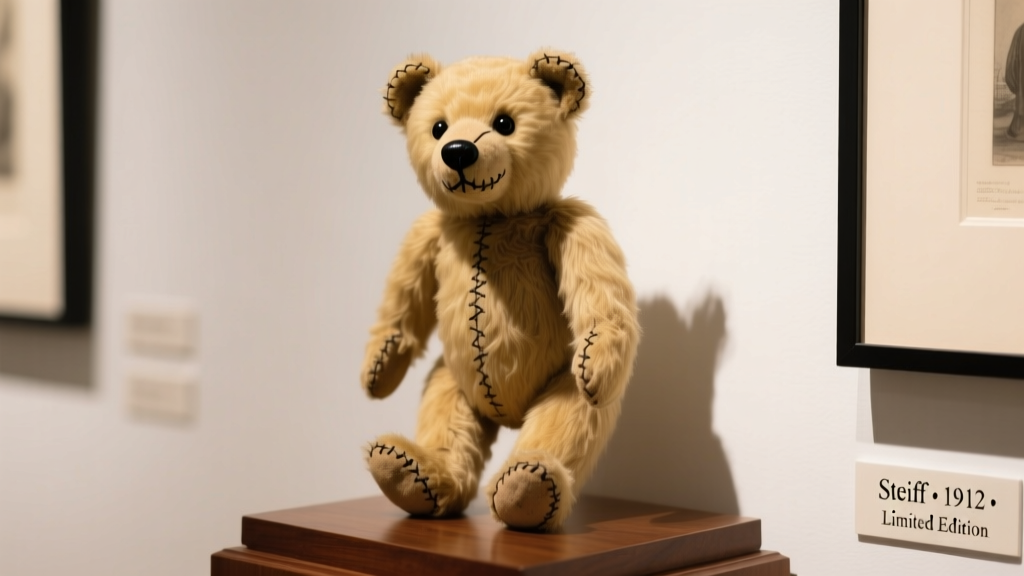
Authenticating the Steiff Blond Teddy Bear: Replaced Eyes, Black Stitched Nose, and the Critical 1910–1915 Provenance of the 20-Inch Example

Bernard Riley: Authentication, Market Position, and Print Legacy in the Postwar British Art Scene
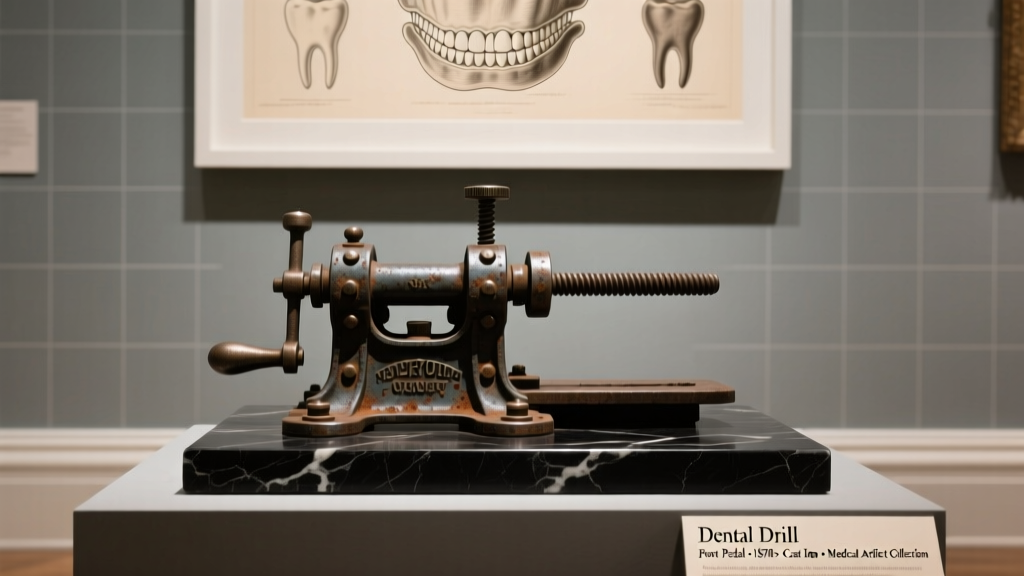
Dental Drill Foot Pedal, Cast Iron, Circa 1870s: Technical Anatomy, Provenance, and Market Authentication

Toy Dottie the Driver Convertible Car: Authentication, Market Value, and Historical Context of the 6¾-Inch Tin & Plastic Windup Boxed Set
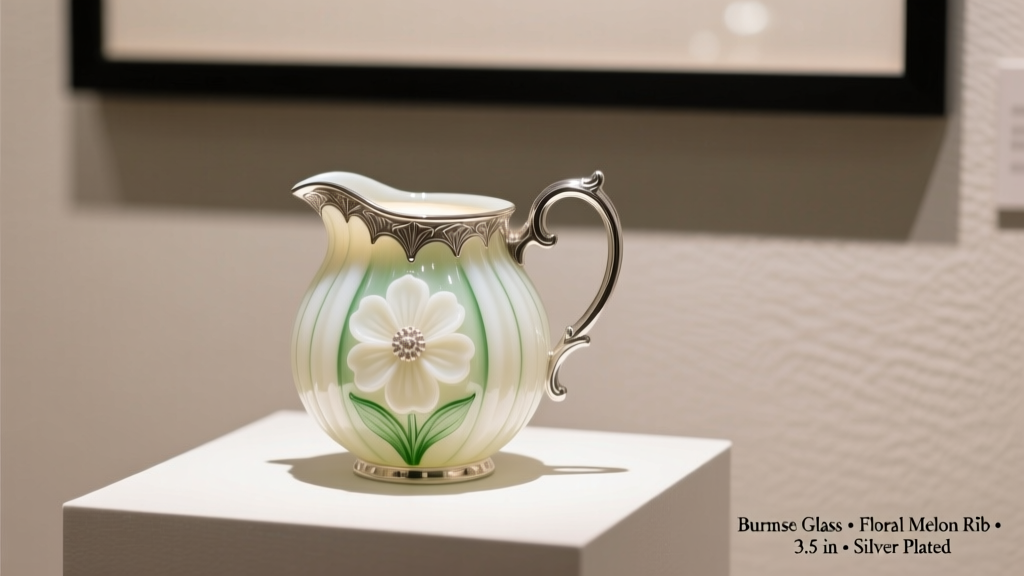
Burmese Glass Creamer: Floral Melon Rib Design with Silver-Plated Base — Authentication, Provenance, and Market Analysis
Sewing Box Fitted with Original Implements, Circa 1890: Provenance, Construction, and Market Authentication

Betty Lamps: Authenticating Wrought Copper Double-Wick Primitive Lamps from the 18th Century (9-Inch Specimens)
Hull Basket Ebb Tide Chartreuse Wine 16 1/2-Inch: Authentication, Market Position, and Technical Analysis