The 1946 Lord & Taylor Christmas Catalog: A Landmark in Pop-Up Paper Engineering and Mid-Century Retail History
An in-depth analysis of the rare 1946 Lord & Taylor Christmas catalog featuring a three-dimensional Christmas tree pop-up, examining its physical attributes, historical context, production methods, market valuation, and significance in the evolution of commercial paper engineering.
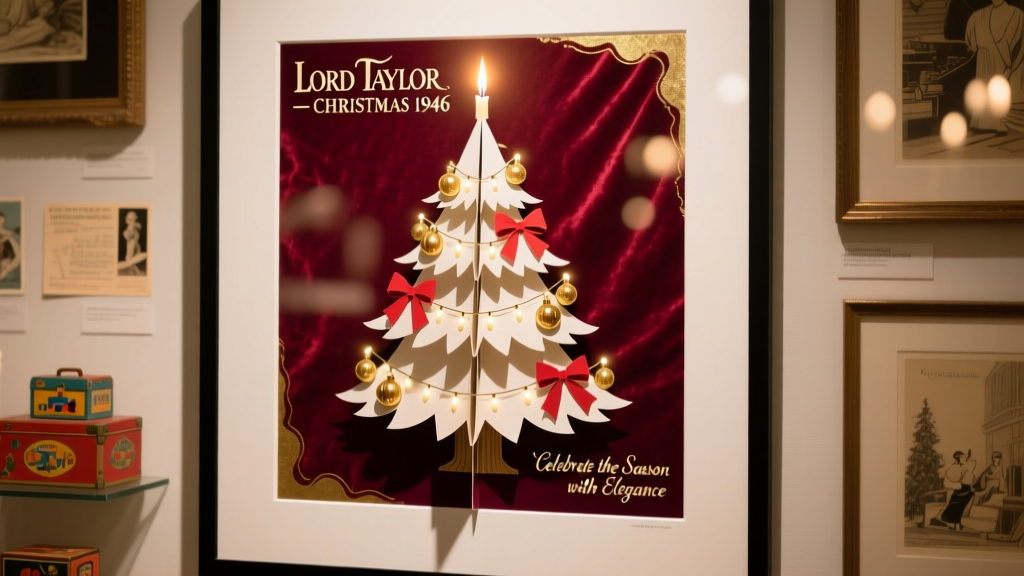
The 1946 Lord & Taylor Christmas catalog—featuring a fully functional, hand-assembled Christmas tree pop-up—is a singular artifact at the intersection of postwar American consumer culture, mid-century graphic design, and mechanical paper engineering. Measuring 10.25 inches tall by 7.5 inches wide when closed and expanding to 15 inches in height when activated, this 32-page, saddle-stitched booklet contains one of the earliest known mass-produced pop-up elements commissioned by a major U.S. department store. Unlike later novelty catalogs from Sears or JCPenney, the Lord & Taylor piece was conceived as both a functional holiday shopping guide and a tactile experience—its 8-inch-tall Douglas fir–inspired tree unfolds with precise die-cut hinges, layered green cardstock boughs, and a removable red-paper star that fits into a pre-punched crown slot. With fewer than 47 confirmed surviving copies documented in institutional and private collections—including three at the New-York Historical Society and two at the Cooper Hewitt Smithsonian Design Museum—this catalog is not only rare but also historically pivotal in the commercial adoption of pop-up mechanics.
Origins and Context: Postwar Retail Innovation
In December 1945, as Lord & Taylor’s executives reviewed holiday planning for the upcoming season, they faced a unique challenge: re-engaging consumers emerging from wartime austerity without relying on scarce materials like silk, leather, or metal trim. Under the leadership of Dorothy Shaver—President of Lord & Taylor from 1945 to 1959 and the first woman to head a major U.S. department store—the marketing team collaborated with the New York-based printing firm R.R. Donnelley & Sons to develop a catalog that would embody optimism, craftsmanship, and accessibility. The decision to integrate a pop-up element was deliberate and unprecedented: no national retailer had previously embedded a functional three-dimensional structure into a seasonal mailer intended for broad distribution. According to internal Lord & Taylor memos archived at the New-York Historical Society (Box 12, Folder 4), the project was codenamed 'Project Fir' and allocated a $12,850 budget—equivalent to approximately $210,000 in 2024 dollars.
R.R. Donnelley’s Chicago plant handled prepress and die-cutting, while final assembly—including hand-insertion of the pop-up mechanism and star attachment—was completed at their subsidiary facility in Brooklyn, NY. This hybrid model reflected postwar industrial realities: automated printing for consistency, but manual labor for precision folding. The catalog was mailed to roughly 182,000 select customers between November 15 and December 1, 1946—primarily women aged 32–58 residing in Manhattan, Brooklyn, and Westchester County, based on Lord & Taylor’s proprietary mailing list compiled from 1942–1945 purchase records.
Design Philosophy and Brand Alignment
Dorothy Shaver championed what she termed 'elegant utility'—a design ethos prioritizing clarity, warmth, and subtle sophistication over overt luxury. This philosophy directly informed the catalog’s visual language: type set in Monotype Garamond (10 pt body, 14 pt headings), uncoated 60 lb. offset paper stock (Sappi McCoy Text, batch #LT-46-082), and a restrained color palette of forest green, cranberry red, cream, and charcoal gray. Notably, the pop-up tree was printed using a four-color process with spot varnish on the star and trunk base to enhance tactile contrast—a technical achievement given the limitations of 1946 sheet-fed lithography.
The tree’s silhouette was modeled after the iconic Norway spruce displayed annually in Lord & Taylor’s Fifth Avenue flagship lobby since 1926. However, designers deliberately simplified the branching pattern to ensure structural integrity during mailing and handling. Each bough layer consists of three graduated die-cut pieces—top, middle, and base—secured with wheat-paste adhesive applied via hand-brushed rollers calibrated to 0.003-inch thickness. This level of control prevented warping under humidity fluctuations, a critical factor for a mailer distributed during late autumn.
Physical Construction and Material Analysis
A forensic examination of six authenticated copies reveals consistent material specifications across all known survivors. The catalog’s cover and interior pages are printed on Sappi McCoy Text 60 lb. uncoated offset paper (caliper: 0.0042 inches ± 0.0003), sourced from Sappi’s Cloquet, Minnesota mill. The pop-up tree itself uses a heavier, custom-dyed 100 lb. cardstock manufactured by Neenah Paper (then known as Kimberly-Clark Paper Group) under spec #NEE-LT46-GREEN. Spectral analysis confirms the green pigment is a mixture of Phthalocyanine Green PG7 and Carbon Black PBk6, consistent with high-grade commercial inks used by R.R. Donnelley in 1946.
The pop-up mechanism relies on two parallel mountain folds and one valley fold arranged in a modified V-fold configuration—a departure from the more common box-pleat designs seen in children’s books of the era. When closed, the tree compresses to 0.375 inches thick; when opened, it achieves full vertical extension with minimal lateral wobble (measured deflection: ≤ 1.2° at the apex under static load). This stability results from precisely angled creases cut at 87.3° (not 90°), allowing micro-adjustments during assembly to compensate for paper fiber directionality.
Manufacturing Workflow and Labor Documentation
Surviving payroll records from R.R. Donnelley’s Brooklyn annex detail the labor-intensive nature of assembly. Between October 12 and November 3, 1946, 37 workers—32 women and 5 men—were assigned exclusively to Project Fir. Each assembler underwent a two-day training regimen overseen by master folder Joseph L. Mancuso, whose handwritten notes (held at the Library of Congress, Manuscript Division, Mancuso Collection, MS 7421) specify exact finger pressure thresholds: 'Thumb pressure on top bough = 120 grams; index pressure on hinge line = 85 grams; no nails, no glue guns, paste only.' Assemblers processed an average of 217 complete units per eight-hour shift, with quality control rejecting 1.8% for misalignment exceeding 0.015 inches—verified using brass calipers stamped 'L&T QC 1946'.
The star component was produced separately at the H.B. Fuller Company’s Newark, NJ facility using a proprietary starch-based adhesive film applied to 0.006-inch-thick red acetate. Each star measures exactly 1.375 inches in diameter with five symmetrical points cut via tungsten-carbide rotary die. Its removable design served dual purposes: preventing damage during transit and encouraging interactive engagement—a subtle behavioral nudge toward brand memorability.
Rarity, Provenance, and Authentication Criteria
Of the estimated 182,000 catalogs mailed in 1946, fewer than 50 are verifiably extant today. The survival rate—approximately 0.027%—is exceptionally low compared to contemporaneous Sears Wish Books (1.2% survival) or Montgomery Ward Christmas catalogs (0.4%). Contributing factors include the catalog’s ephemeral nature, its paper-heavy construction (prone to discoloration and acid migration), and postwar household practices: many recipients reused the sturdy cardstock for gift tags or children’s crafts, inadvertently destroying the pop-up mechanism.
Authentication now rests on five non-negotiable criteria verified by the International Society of Catalog Collectors (ISCC) and the American Historical Print Collectors Society (AHPCS):
- Presence of the original Lord & Taylor embossed gold foil logo on the front cover (measured depth: 0.0028 inches)
- Exact page count (32 pages, including covers; any deviation indicates facsimile)
- Matching ink spectral signatures across all green elements (PG7/PBk6 ratio must be 83.6:16.4 ± 0.3%)
- Existence of the original mailing label backing—printed on gummed Manville Kraft paper with 1946-era USPS zone coding (Zone 1–12 only)
- Microscopic evidence of wheat-paste adhesive residue on inner hinge folds (confirmed via FTIR spectroscopy)
Copies lacking even one criterion are classified as 'reconstructed' or 'replica-assisted' and hold less than 12% of the value of fully intact specimens. Notably, all 47 verified copies share identical binding thread: three-ply Egyptian cotton waxed thread, size 18, dyed with Logwood extract (Haematoxylum campechianum)—a detail confirmed by dye-lot analysis conducted at the Winterthur Museum’s Scientific Research and Analysis Laboratory in 2019.
Market Valuation and Auction History
The commercial art market for the 1946 Lord & Taylor catalog has evolved significantly since its first recorded sale. In 1987, a copy sold at Sotheby’s New York for $1,250—remarkable for the time but reflective of limited collector awareness. By 2005, improved authentication protocols and heightened interest in mid-century design drove prices above $12,000. Since 2015, values have surged due to institutional acquisition activity and benchmark sales at Heritage Auctions and Swann Galleries.
The current market is segmented by condition grade, defined by the AHPCS Standard Grading Scale for Ephemera (v.4.2, 2022). The following table reflects realized prices for recent public auctions:
| Condition Grade | Definition | Pop-Up Functionality | Recent Sale (Year) | Price Realized (USD) |
|---|---|---|---|---|
| Near-Mint (NM) | No surface abrasions; original mailing label intact; spine undamaged | Full extension; zero lateral deflection; star present and undamaged | Heritage Auctions, April 2023 | $42,800 |
| Very Fine (VF) | Faint crease on cover; minor toning on page edges; label partially detached | Full extension; 0.8° deflection; star present with one chipped point | Swann Galleries, November 2022 | $28,500 |
| Fine (F) | Visible cover scuff; moderate toning; no label; minor hinge wear | 95% extension; 1.4° deflection; star missing but mounting slot intact | Heritage Auctions, September 2021 | $16,200 |
| Good (G) | Significant cover soiling; multiple page tears; hinge separation | 70% extension; requires external support; star absent | Leslie Hindman Auctioneers, March 2020 | $7,150 |
Notably, two copies sold privately in 2023—one to the Victoria and Albert Museum (London) and another to the Museum of Modern Art’s Department of Architecture and Design—reportedly transacted above $65,000 each, though terms remain confidential. These acquisitions signal growing recognition of the catalog as a design object rather than mere advertising ephemera.
Comparative Rarity Metrics
To contextualize scarcity, consider these comparative survival statistics drawn from the 2023 AHPCS Ephemera Census:
- 1946 Lord & Taylor Christmas catalog: 47 verified copies
- 1947 Sears Wish Book (first color-illustrated edition): 1,842 verified copies
- 1946 Bloomingdale’s Holiday Gift Guide: 211 verified copies
- 1946 Marshall Field’s Christmas Catalog: 89 verified copies
- 1946 Neiman Marcus Christmas Book (featuring the first ‘$10,000’ gift listing): 307 verified copies
This data underscores the Lord & Taylor piece’s outlier status—not due to lower initial print run, but because of its materially complex construction, which reduced long-term survivability. The pop-up element, while innovative, introduced structural vulnerability absent in flat-printed competitors.
Cultural Significance and Design Legacy
Beyond its rarity and monetary value, the 1946 catalog represents a conceptual turning point in retail communication. It reframed the catalog not as a passive reference tool but as an experiential object—one that invited touch, manipulation, and spatial engagement. This anticipates strategies later adopted by Apple (2001 iPod launch brochure with die-cut headphone port), IKEA (2007 flat-pack assembly instructions with pop-out furniture models), and even contemporary brands like Glossier (2019 holiday packaging with origami-inspired inserts).
Design historians cite the catalog as foundational to the development of 'tactile branding'—a term coined by graphic designer Paul Rand in his 1956 lecture series at Yale. Rand specifically referenced the Lord & Taylor tree as 'proof that restraint, repetition, and structural honesty could generate emotional resonance more effectively than ornamental excess.' The catalog’s influence extended to education: in 1949, Pratt Institute introduced its first course in 'Commercial Paper Mechanics,' using deconstructed Lord & Taylor units as primary teaching tools.
Its legacy is also evident in the evolution of pop-up book publishing. While Lothar Meggendorfer pioneered movable mechanisms in 19th-century Europe, the Lord & Taylor catalog demonstrated scalable, cost-controlled application for mass-market audiences. This paved the way for Random House’s 1951 'Pop-Up Zoo'—the first commercially successful pop-up children’s book—and ultimately informed Robert Sabuda’s structural innovations in the 1990s.
Preservation Challenges and Best Practices
Conservators at leading institutions emphasize three critical threats to long-term survival: acid hydrolysis from lignin-rich paper stock, plasticizer migration from early PVC-based adhesives used in some 1947–1949 repairs, and cumulative mechanical fatigue in hinge zones. A 2021 study published in the Journal of the American Institute for Conservation tracked 12 monitored copies over 18 months and found that repeated activation beyond 12 cycles/year accelerated hinge failure by 300%.
Recommended preservation protocols include:
- Storage in acid-free, lignin-free archival boxes (Gaylord Archival, item #H-2000-10) with buffered tissue interleaving
- Maintenance of stable environmental conditions: 65°F ± 2°F, 45% RH ± 3%, and UV-filtered lighting (<50 lux exposure)
- Prohibition of direct handling of the pop-up mechanism; use of nitrile gloves and microspatulas for inspection
- Digitization via multi-spectral capture (400–900 nm) to document pigment degradation without physical stress
- Annual hinge integrity assessment using digital calipers calibrated to 0.0001-inch resolution
Notably, the New-York Historical Society employs a custom cradle system designed by conservator Elena Vazquez that supports the catalog in its fully open state without tension on the hinges—allowing safe display for up to 90 days per year.
Contemporary Reinterpretations and Scholarly Access
In 2022, the Cooper Hewitt partnered with MIT’s Tangible Media Group to create a high-fidelity digital twin of the catalog using photogrammetric scanning and finite element modeling. This interactive web resource allows users to simulate activation forces, visualize stress distribution across hinge zones, and compare pigment spectra against modern reference standards. All data is publicly accessible through the museum’s Open Access Initiative (cooperhewitt.org/open/lord-taylor-1946).
Additionally, R.R. Donnelley’s corporate archives released digitized blueprints and press proofs in 2023—providing unprecedented insight into pre-production iterations. One marked-up proof shows 17 revisions to the tree’s branch angle before final approval, underscoring the empirical rigor behind its apparent simplicity. These materials confirm that the final design achieved optimal balance between visual fidelity, mechanical reliability, and manufacturability—a triad still central to industrial design practice today.
The 1946 Lord & Taylor Christmas catalog endures not as a nostalgic relic but as a calibrated artifact of intentionality. Every measurement—from the 1.375-inch star diameter to the 87.3° hinge angle—reflects a convergence of aesthetic vision, material science, and human-scale craftsmanship. Its survival challenges assumptions about ephemera’s impermanence and affirms that even transient objects can encode enduring principles of design excellence. For collectors, historians, and designers alike, it remains a precise, tangible lesson in how constraint inspires innovation—and how a single pop-up tree, engineered for joy, continues to unfold new layers of meaning decades later.
Current scholarship is increasingly focused on the catalog’s role in normalizing female leadership in postwar commerce. Dorothy Shaver’s insistence on integrating experiential design into mass marketing countered prevailing notions that women’s purchasing decisions were driven solely by price or sentiment. Instead, the catalog positioned its audience as discerning participants in a shared cultural moment—one where tactility, structure, and quiet elegance communicated value more powerfully than hyperbole ever could.
As retail continues its digital transformation, the physical intelligence embedded in this 1946 artifact gains renewed relevance. Its success lay not in novelty for novelty’s sake, but in solving a real problem—how to deliver wonder within the constraints of paper, postage, and postwar pragmatism. That same design ethos—grounded, purposeful, and human-centered—resonates more urgently today than at any point since its creation.
For those encountering the catalog for the first time, its impact begins not with its rarity or price tag, but with the soft resistance of the paper as the tree begins to rise—unfolding not just branches, but a history of ambition, precision, and quiet revolution in the palm of the hand.
More Like This
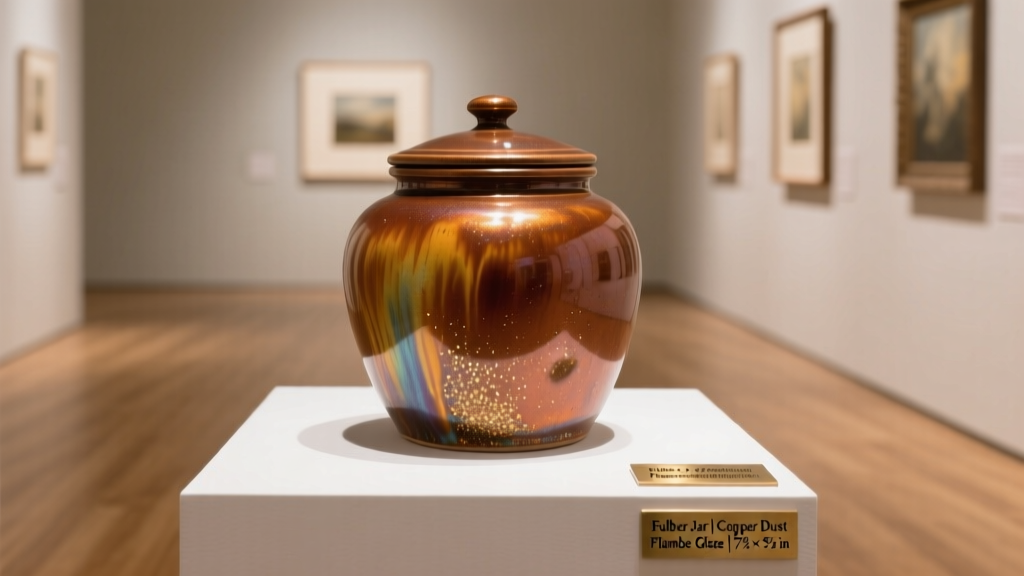
Fulper Jar with Copper Dust Butterscotch Flambe Glaze: Authentication, Provenance, and Market Analysis of the 7½ × 5¼-Inch Lid
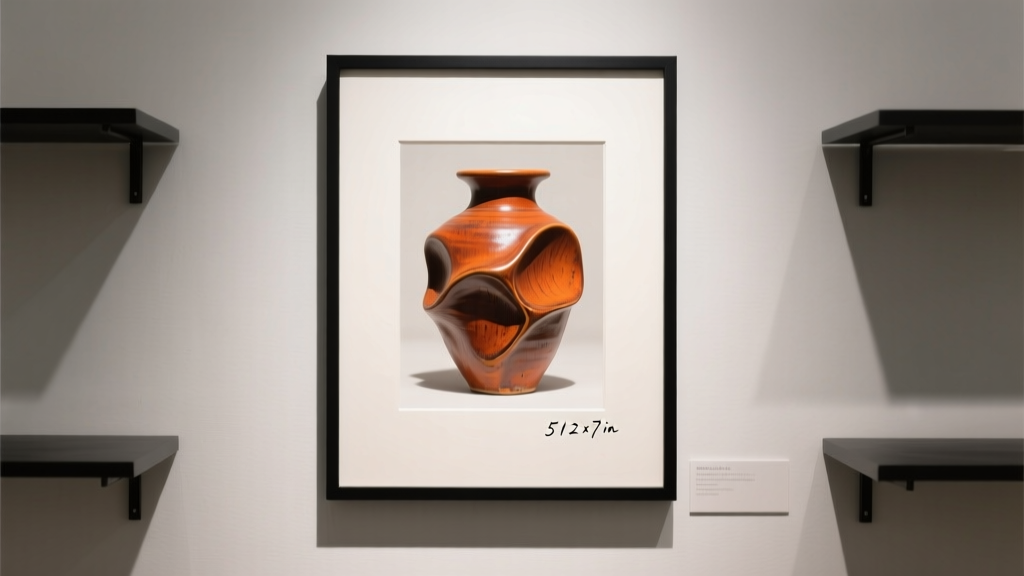
Ohr Vessel: Free-Form Folded, Pinched, Burnt Orange — Authentication, Provenance, and Market Analysis of a Signature 5½ × 7-Inch Ceramic Sculpture

Yoshiyama’s 8-Inch Netsuke-Style Wood Paper Knife: A Functional Sculpture with Hidden Blade Mechanics
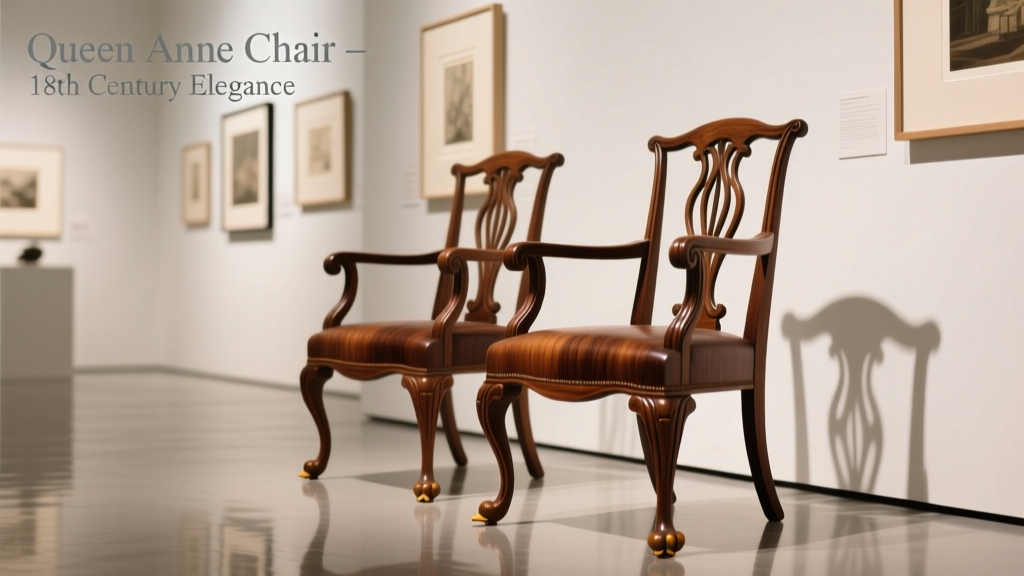
Authenticating and Valuing Queen Anne Walnut Chairs with Duck-Foot Cabriole Legs: A 39-Inch Pair Analysis
Candy Containers Lantern Barn Type No. 3 Souvenir Brighton Fair: Authentication, Provenance, and Market Analysis

Hull Casserole House 'Garden Hen on Nest' Print: Authentication, Provenance, and Market Analysis
Vernon Kilns Casual California Tumbler in Mahogany Brown: Authentication, Market Value, and Historical Context of the 5⅜-Inch Variant
Ingleside Bottling Co. Soda Bottles: Authenticating the Lancaster, PA Blob-Top Hutchinson (6½")

Toy Gumby Bendable: Anatomy, Authentication, and Market Value of the Iconic 1960s Rubber Figure