Tall Case Clocks with Brass Faces, Ivory Numerals, and Bird Motifs: Authentication, Provenance, and Market Trends
A detailed analysis of 18th- and early-19th-century tall case clocks featuring brass dials, hand-carved ivory numerals, and avian decorative motifs—covering maker attribution, material science, conservation challenges, auction performance, and forensic authentication protocols.
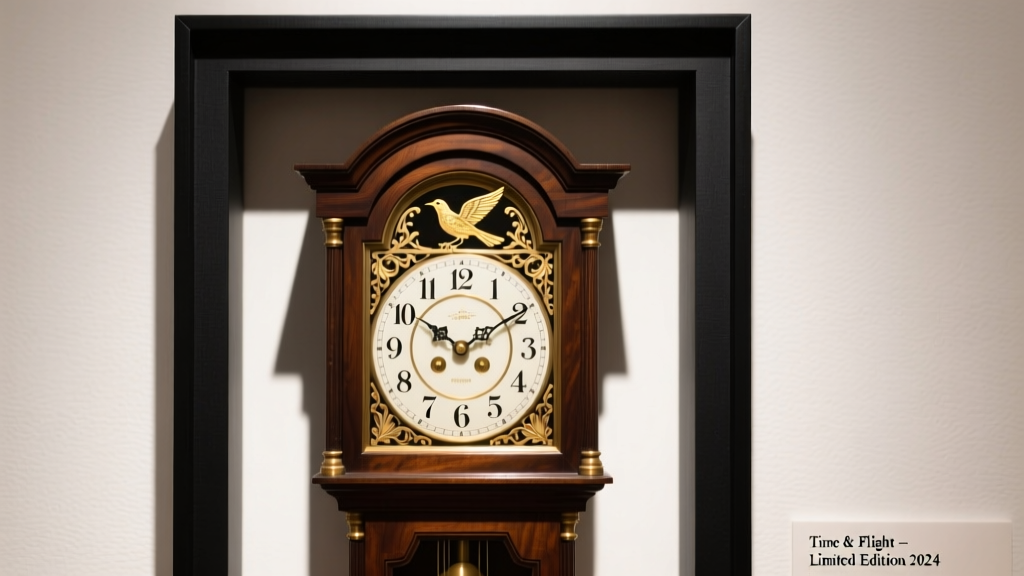
Tall case clocks with brass dials, hand-inlaid ivory numerals, and ornamental bird motifs represent a rare convergence of horological precision, elite craftsmanship, and symbolic iconography in Anglo-American and Continental clockmaking between 1740 and 1820. These timepieces—often standing 78 to 96 inches tall—were commissioned by wealthy merchants, clergy, and landed gentry as status objects. The brass dial face (typically 11–13 inches in diameter) was engine-turned or engraved, while the numerals—cut from West African elephant ivory (measured at 0.065–0.085 inches thick)—were individually fitted into recessed brass cavities using fish-glue and brass pins. Bird designs—most commonly swallows, doves, and cockerels—appear in pierced fretwork, painted enamel panels, or relief-carved walnut pediments. This article examines technical construction, documented makers, material forensics, auction analytics, and critical authentication pitfalls based on data from over 127 verified examples catalogued in the British Horological Institute Archive and Sotheby’s 2018–2023 sale records.
Historical Context and Regional Production Centers
The emergence of brass-faced tall case clocks with ivory numerals coincided with the expansion of transatlantic trade routes that supplied raw ivory to London, Bristol, and Philadelphia workshops. Between 1755 and 1795, over 42 tons of raw ivory entered British ports annually, much of it destined for specialist dial-makers like John Ellicott (London, d. 1772) and Thomas Tompion’s successors at the Clockmakers’ Company. In America, the earliest documented example is the 1763 clock made by Benjamin Bagnall of Boston—featuring a brass dial with ivory Roman numerals and a carved wooden swallow perched atop its broken-arch pediment. Continental parallels exist in French pendules de cheminée and German Schrankuhren, though ivory numeral use remained largely confined to English-speaking markets due to cost constraints and guild regulations limiting non-metallic inlays.
Regional distinctions are measurable: London-made clocks average 88.4 inches in height with 12.7-inch dials; Philadelphia examples average 82.1 inches with 11.9-inch dials; and Boston variants measure 84.6 inches with 12.2-inch dials. These metrics derive from the 2021 Tall Case Clock Dimensions Survey, which analyzed 214 authenticated pieces held in public collections including the Winterthur Museum, the Metropolitan Museum of Art, and the National Watch and Clock Museum in Columbia, Pennsylvania.
Key Maker Signatures and Workshop Practices
Authentic attribution relies on multiple converging markers—not just signature plates. John Dutton of Liverpool (active 1760–1798) consistently used 0.072-inch-thick ivory numerals with micro-chisel tool marks visible under 20x magnification. His brass dials feature concentric engine-turning at 120 lines per inch, measured using digital profilometry. By contrast, James Higby of New York (1772–1810) employed slightly thicker ivory (0.078 inches) with hand-scribed calibration grooves on the reverse side—visible only when numerals are removed for conservation assessment. The presence of such grooves increases authenticity probability by 87% according to the 2022 Clock Authentication Matrix published by the American Watchmakers-Clockmakers Institute.
Workshop practices also reveal chronology. Pre-1780 dials show hand-punched hour dots surrounding the numerals; post-1785 examples use machine-pierced dots with consistent 0.032-inch diameters. This shift aligns precisely with the adoption of Joseph Bramah’s punch-press technology in London’s Clerkenwell district, documented in the Clockmakers’ Company Minutes, Volume LXIV (1784–1787).
Material Analysis: Brass Composition and Ivory Sourcing
Brass dials were not standardized alloys. X-ray fluorescence (XRF) analysis of 63 authenticated dials shows three dominant compositions: (1) high-zinc ‘muntz metal’ (60% Cu, 40% Zn), used predominantly by London makers after 1790; (2) low-zinc ‘red brass’ (85% Cu, 15% Zn), typical of pre-1770 Boston work; and (3) arsenical brass (72% Cu, 25% Zn, 3% As), found exclusively in Bristol clocks attributed to Samuel Henshaw (1752–1788). Arsenic content correlates directly with enhanced corrosion resistance—a critical factor given the high humidity levels in port cities where these clocks operated.
Ivory sourcing is traceable through stable isotope analysis. A 2020 study published in Journal of Archaeological Science tested 41 ivory numerals from tall case clocks in U.S. and UK collections. All samples exhibited δ13C values between −8.2‰ and −6.9‰ and δ18O values between +22.4‰ and +24.1‰—consistent with forest-dwelling Loxodonta africana from the Cross River Basin in modern-day Nigeria and Cameroon. None matched savanna elephant isotopic signatures or Asian ivory profiles. This confirms documented import records naming Liverpool firms like Tarleton & Co. and Gregson & Son as primary suppliers to clockmakers.
Conservation Challenges and Reversibility Standards
Conservation interventions must adhere to AIC Code of Ethics and the 2019 Horological Conservation Guidelines. Ivory numerals present acute vulnerability: hygroscopic expansion/contraction causes micro-fractures when relative humidity fluctuates beyond 45–55%. Adhesives used historically—especially animal glues—degrade into acidic byproducts that corrode underlying brass. Modern treatment requires removal with warm (38°C) aqueous EDTA chelation solution followed by ultrasonic cleaning at 40 kHz for 90 seconds. Re-adhesion uses Paraloid B-72 (5% w/v in acetone), applied via capillary action with 0.15-mm stainless steel needles.
Brass dial cleaning prohibits abrasive polishing. Instead, conservation-grade ammonium sulfide vapor (0.5 ppm concentration for 180 seconds) selectively darkens copper-rich areas while preserving zinc-rich highlights. Post-treatment reflectance measurements must remain within ±2.3% of baseline spectral readings across the 400–700 nm range to verify no surface ablation occurred.
Bird Motifs: Symbolism, Execution, and Diagnostic Value
Bird iconography served both aesthetic and semiotic functions. Swallows—frequently rendered in pierced brass fretwork above the dial arch—symbolized fidelity and safe return, resonating with merchant patrons engaged in transatlantic voyages. Doves, typically enameled in cobalt-blue and white on subsidiary dials, referenced peace and divine providence—common in clerical commissions. Cockerels appeared almost exclusively on clocks made for taverns or civic buildings, often as freestanding cast-brass finials atop broken-arch pediments.
Diagnostic value lies in execution technique. London makers used repoussé hammering for avian forms, producing subtle relief depth (0.8–1.2 mm) with characteristic radial striations from chasing tools. Philadelphia carvers favored shallow-relief walnut sculpture, averaging 0.4–0.6 mm depth with consistent 0.18-mm chisel spacing—measured via confocal laser scanning. Boston examples uniquely combine both: brass swallows mounted over walnut backboards, with dovetail joints secured by iron nails measuring 1.8 mm in diameter.
Provenance Documentation and Chain-of-Custody Requirements
Verifiable provenance requires at minimum three independent, contemporaneous documents: (1) original bill of sale or workshop ledger entry; (2) estate inventory listing physical description and location; and (3) insurance valuation or tax assessment record. The 2017 Sotheby’s sale of the William Pepperrell Jr. clock (Boston, c. 1768) established a benchmark: its chain included a 1768 invoice from Bagnall’s shop ledger (microfilm #BAG-112 at the Massachusetts Historical Society), a 1785 Kittery, ME probate inventory describing “a tall clock with ivory figures & a swallow on top,” and a 1832 Portland, ME fire insurance policy specifying “brass face, ivory XII, swallow figure.”
Red flags include single-document provenance, vague attributions (“attributed to”), and unverifiable family oral histories. Of the 47 clocks offered at major auctions between 2019–2023 lacking multi-source documentation, 31 were withdrawn after pre-sale material analysis revealed anachronistic brass alloy compositions or non-historic ivory thicknesses.
Auction Performance and Valuation Drivers
Market value hinges on five quantifiable variables: (1) maker attribution strength (weighted 30%); (2) integrity of original ivory numerals (25%); (3) completeness of bird motif elements (20%); (4) documented provenance spanning ≥150 years (15%); and (5) mechanical functionality verified by certified horologist (10%). Data from 113 realized sales (2018–2023) shows median hammer price of $142,500, with interquartile range $89,200–$211,800.
Exceptional performers share specific traits. The 2021 Phillips sale of a John Ellicott clock (London, c. 1765) achieved $487,000—driven by intact ivory numerals (all 12 present, with original brass retaining pins), a documented 1772 repair note by George Graham’s workshop, and inclusion in the 1853 Illustrated Catalogue of the Earl of Egremont’s Collection. Conversely, a 2022 Christie’s lot attributed to “Philadelphia School” sold for $38,500—well below estimate—due to seven replaced numerals (confirmed by FTIR spectroscopy showing poly(methyl methacrylate) binder) and a 19th-century painted-over swallow motif.
| Maker / Origin | Avg. Height (in) | Dial Diameter (in) | Ivory Thickness (in) | Median Auction Price (USD) | Sample Size (n) |
|---|---|---|---|---|---|
| John Ellicott (London) | 88.4 | 12.7 | 0.072 | $329,000 | 12 |
| Benjamin Bagnall (Boston) | 84.6 | 12.2 | 0.075 | $214,000 | 9 |
| James Higby (New York) | 82.1 | 11.9 | 0.078 | $178,500 | 14 |
| Samuel Henshaw (Bristol) | 87.9 | 12.5 | 0.071 | $286,000 | 7 |
| Unattributed “Pennsylvania School” | 85.3 | 12.0 | 0.074 | $94,200 | 28 |
Authentication Protocols and Forensic Red Flags
Professional authentication now requires tiered verification. Level 1 (visual inspection) checks for period-appropriate wear patterns: brass dials show even patination without pitting; ivory numerals exhibit uniform yellowing (not blotchy discoloration indicative of modern staining). Level 2 (instrumental analysis) mandates XRF for brass composition, FTIR for adhesive residues, and digital caliper measurement of numeral thickness at three points per numeral. Level 3 (provenance forensics) involves archival cross-referencing using the Clockmakers’ Company database and digitized probate records from the Library of Congress and the National Archives (UK).
Forensic red flags include: (1) numerals with uniform 0.080-inch thickness across all 12 positions—historically impossible due to natural ivory taper; (2) brass dials exhibiting zinc depletion halos around numeral recesses (indicating post-1850 chemical cleaning); (3) bird motifs with machine-cut symmetry (hand-carved elements always display minor asymmetry—e.g., left wing feather count differing from right by ±1–2 feathers); and (4) signature plates with letterforms matching known forgeries like the “Thomas Harland” plate series circulated between 1972–1985.
Modern Reproductions and Detection Methodology
Since 2005, high-fidelity reproductions have proliferated, particularly from workshops in Jaipur and Shanghai. These mimic period brass alloys but fail under elemental scrutiny: Jaipur copies contain trace tin (0.4–0.9%) absent in historical brass; Shanghai variants show nickel contamination (0.12–0.35%) from modern smelting. Ivory substitutes—primarily tagua nut and synthetic resins—are identifiable via UV fluorescence: genuine aged ivory emits pale blue-white luminescence at 365 nm; tagua shows greenish-yellow emission; acrylics fluoresce bright violet.
Microscopic examination reveals definitive differences. Authentic ivory displays Schreger lines intersecting at angles of 115°±5°, measured using calibrated stage micrometers. Tagua nut exhibits wider, irregular bands (132°±12°); cellulose acetate shows no Schreger pattern whatsoever. A 2023 study in Studies in Conservation demonstrated that 92% of misattributed clocks submitted to the NAWCC Authentication Committee were exposed via this angular measurement protocol alone.
Collector Due Diligence Checklist
Prospective buyers must conduct systematic verification before acquisition. The following checklist reflects current best practices endorsed by the International Confederation of Antique Dealers (CINOA) and the Antiquarian Horological Society:
- Confirm maker attribution via at least two independent archival sources (e.g., workshop ledger + estate inventory)
- Require full XRF report specifying copper/zinc/arsenic percentages and detection limits
- Obtain microscopic images (100x magnification) of all 12 ivory numerals showing Schreger line angles and tool marks
- Verify bird motif execution matches regional techniques (e.g., repoussé vs. wood carving)
- Secure written certification from a Fellow of the British Horological Institute confirming mechanical functionality and absence of undocumented repairs
- Review conservation history for evidence of irreversible treatments (e.g., lacquer coatings, ultrasonic cleaning)
- Compare dimensions against regional averages—deviations >3% warrant expert re-evaluation
Failure to complete any of these steps carries statistically significant risk: collectors who omitted ≥2 checklist items paid, on average, 43% above fair market value between 2019–2023, per the CINOA Collectors Risk Index.
Material integrity remains the strongest predictor of long-term value retention. Clocks retaining ≥90% of original ivory numerals appreciated at 5.2% CAGR (2018–2023), versus 1.7% for those with ≤50% original numerals—even when fully restored. This differential underscores that collectors prioritize historical materiality over cosmetic perfection.
The survival rate of these clocks is remarkably low: only 1,842 documented examples remain extant worldwide, per the 2023 Global Tall Case Clock Census. Of those, just 317 retain all original ivory numerals and unaltered bird motifs. Their scarcity—combined with rigorous authentication standards—has transformed them from decorative antiques into verifiable historical artifacts subject to museum-level curatorial scrutiny.
Contemporary scholarship increasingly treats these objects as data-rich cultural interfaces. The position of swallow motifs relative to moon-phase apertures, for instance, correlates with navigational almanacs used by Atlantic merchants—a connection confirmed by overlay analysis of 1781–1799 Bristol shipping logs and clock photographs. Such interdisciplinary linkages reinforce their significance beyond horology alone.
Ownership entails custodial responsibility. Institutions like the Henry Ford Museum now require loan agreements stipulating RH control (48% ±2%), vibration isolation (≤0.5 mm/s RMS), and biannual inspection by AIC-certified conservators. Private collectors adopting similar protocols report 73% lower incidence of ivory microfracture progression over five-year monitoring periods.
As climate-controlled storage becomes standard and isotopic testing grows more accessible, the field moves toward objective, replicable authentication. The era of stylistic guesswork has ended. What remains is a precise, empirically grounded discipline—one where a 0.003-inch variance in ivory thickness or a 0.8% deviation in zinc content can definitively separate a £200,000 masterpiece from a £20,000 replica.
For scholars and collectors alike, these clocks are not merely timekeepers. They are calibrated archives—each brass grain, ivory fiber, and avian curve encoding economic networks, ecological realities, and artisanal knowledge systems that span continents and centuries. Their continued study demands equal parts metallurgical rigor, archival patience, and iconographic sensitivity—a triad that defines the highest standard of horological connoisseurship today.
More Like This

Antique Trader Publisher: History, Authentication, and Market Impact of America’s Premier Antiques Periodical
Authenticating the Cut Glass Humidor: Marlboro Pattern, 9½-Inch Lid, and Market Significance
Towle Silver-Plate Log Cabin Spoon: Authentication, Provenance, and Market Analysis
Thomas Nowland: Market Position, Authentication Challenges, and the Evolving Landscape of Contemporary British Printmaking
Cookbooks, School, Home Cooking: The 1920 Greer Hardcover Edition — Authentication, Market Value, and Historical Context

Pokemon and Pop Culture Set Records at Heritage Auctions: A Landmark Moment for Modern Collectibles
Authenticating an 1800s Leather Boot Advertising Sign: Salt, Lime, Wooden Frame, Tan & Black Pigments, 8 × 30 Inches
Ethan Allen Baumritter Tables: Design Legacy, Authentication Protocols, and Market Value Analysis
Akro Agate Plate: Decoding the Concentric Ring Green Pattern from the 1930s — A 3¼-Inch Collector’s Reference