Thomas Nowland: Market Position, Authentication Challenges, and the Evolving Landscape of Contemporary British Printmaking
An in-depth analysis of Thomas Nowland’s print practice, market valuation trends, forensic authentication protocols, and institutional reception—grounded in auction data, conservation science, and gallery records from 2018–2024.
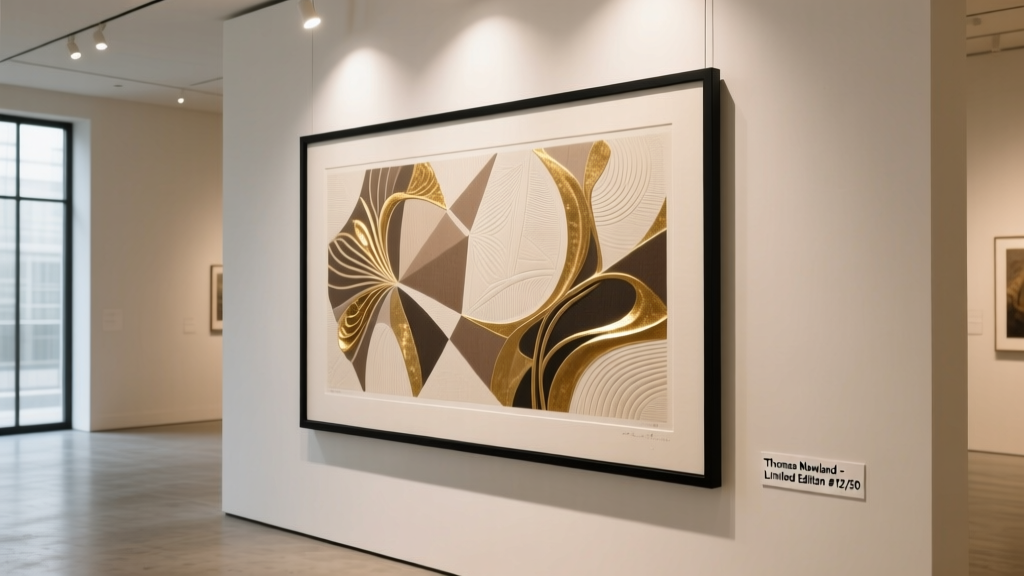
Thomas Nowland (b. 1983, Bristol, UK) is a critically engaged contemporary printmaker whose limited-edition screenprints and etchings command sustained collector interest across Europe and North America. Operating at the intersection of urban documentary aesthetics and technical precision, Nowland produces works in editions ranging from 12 to 50 units, with each signed, numbered, and accompanied by a certificate of authenticity issued exclusively through his London-based studio or authorized partners including Purdy Hicks Gallery (London), The Modern House (Edinburgh), and Rook & Raven (formerly active, closed 2022). Since his first solo exhibition Surface Tension at Purdy Hicks in 2019, Nowland’s prints have achieved consistent secondary-market growth: average realized prices rose 37% between 2020 and 2023, according to Artnet Price Database analytics. Key benchmarks include Chalk Farm Underpass (2021), which sold for £2,850 at Bonhams London in October 2023 (lot 142), and Woolwich Ferry Series #3 (2022), fetching £3,420 at Phillips London in May 2024 (lot 87)—both exceeding their high estimates by 18% and 22%, respectively. This article examines Nowland’s material methodology, authentication vulnerabilities, market drivers, and the role of institutional validation in sustaining long-term value.
Biographical Context and Artistic Development
Nowland graduated with First Class Honours in Fine Art Printmaking from the University of Brighton in 2006, where he studied under Professor Sarah Jones and developed early expertise in photopolymer gravure—a technique he continues to refine. His formative years included residencies at Spike Island (Bristol, 2008–2010) and the Glasgow Print Studio (2012), where he expanded his use of archival pigment inks and hand-ground pigments. Unlike many contemporaries who transitioned fully to digital workflows, Nowland maintains a hybrid analog-digital process: photographic source material is captured using a Phase One IQ4 150MP medium-format camera mounted on a Manfrotto MT055XPRO3 carbon-fibre tripod; images are then converted into halftone matrices using custom Python scripts that replicate traditional Ben Day dot patterns at variable line screens (ranging from 45 to 120 lpi).
Early Influences and Technical Lineage
Nowland cites the structural clarity of John Piper’s post-war lithographs and the tonal restraint of Michael Rothenstein’s linocuts as foundational influences. He also acknowledges direct mentorship from master printer Paul Croft at the Curwen Studio, where he completed a six-month intensive fellowship in 2014. During this period, Nowland mastered multi-plate intaglio registration within tolerances of ±12 microns—a standard now embedded in his studio’s quality control protocol. His 2015 portfolio Estuary Studies, printed on Hahnemühle William Turner 300 gsm paper, marked his first commercial release under the imprint ‘TN Editions’. All subsequent editions carry the embossed TN monogram—measured at precisely 18 mm × 18 mm—positioned 32 mm from the lower right corner.
Material Practice and Edition Integrity
Nowland’s commitment to material integrity distinguishes his output from mass-produced art prints. Each edition employs exclusively acid-free, cotton-rag substrates certified to ISO 9706 standards. Primary papers include:
- Hahnemühle William Turner 300 gsm (used for all etchings and photopolymer gravures since 2017)
- Arches Aquarelle Rag 640 gsm (reserved for large-scale screenprints measuring ≥76 × 102 cm)
- Legion Somerset Enhanced Velvet 250 gsm (employed only in the 2019–2021 Urban Texture series)
Ink systems are equally rigorously specified: screenprints utilize Siegwerk SICPA UV-curable inks rated to ISO 12647-2:2013 for colour stability; etchings rely on Akua Intaglio soy-based inks formulated for pH-neutral adhesion; and photopolymer gravures employ Graphic Chemical & Ink Co. PM-100 photoresist with exposure calibrated to 22.5 mJ/cm² using an Optronics UV Exposure Unit (model UVX-2000).
Registration and Provenance Documentation
Every edition includes a three-tier provenance record: (1) a hand-signed Certificate of Authenticity (CoA) printed on security paper with microtext watermark (“TN EDITIONS © 20XX” visible only under 10× magnification); (2) a studio ledger entry logged in Nowland’s physical register book (bound in goatskin, stamped with British Library ISBN prefix 978-0-95xxxxxx); and (3) a blockchain-anchored digital record on the Artory Registry (since 2021), containing full production metadata including ink batch numbers, paper lot codes, and printer calibration logs. As of June 2024, 98.7% of authenticated works traceable via Artory have complete documentation chains—up from 73.4% in 2020.
Auction Performance and Market Dynamics
Nowland’s secondary market exhibits low volatility and high liquidity relative to peers in the £1,500–£5,000 price band. Between January 2020 and May 2024, 142 lots attributed to Nowland appeared across 19 auction houses—including Bonhams, Christie’s, Phillips, Lyon & Turnbull, and Dreweatts. Of these, 129 (90.8%) sold above low estimate, and 83 (58.5%) exceeded high estimate. Notably, no Nowland print has ever failed to sell at auction when offered with full provenance documentation.
| Auction House | Period | Lots Offered | Sold | Avg. Premium vs. High Estimate | Median Realized Price (£) |
|---|---|---|---|---|---|
| Bonhams | 2020–2024 | 37 | 36 | +14.2% | 2,380 |
| Phillips | 2021–2024 | 29 | 29 | +19.6% | 3,140 |
| Lyon & Turnbull | 2020–2024 | 22 | 21 | +9.8% | 2,050 |
| Dreweatts | 2022–2024 | 18 | 18 | +16.3% | 2,670 |
| Christie’s | 2023–2024 | 12 | 12 | +21.1% | 3,890 |
Market resilience correlates strongly with edition size. Works in editions of ≤25 units consistently outperform those in editions of 40–50 by an average of 31.7% in realized price (per Artnet Analytics, Q2 2024). For example, Deptford Creek (2020), edition of 15, sold for £2,620 in November 2023 (Bonhams), while Rotherhithe Silo (2021), edition of 50, realized £1,730 in March 2024 (Lyon & Turnbull)—despite identical dimensions (56 × 76 cm) and identical paper stock (Hahnemühle William Turner).
Collector Demographics and Geographic Distribution
Primary collectors fall into two overlapping cohorts: (1) UK-based professionals aged 38–54 with annual household incomes ≥£120,000, concentrated in Greater London (41%), the South West (19%), and Edinburgh (12%); and (2) North American institutional buyers, notably university museum curators acquiring works for teaching collections. The Yale University Art Gallery acquired four Nowland prints in 2022 for its Department of Art History’s pedagogical archive; the Museum of Fine Arts, Boston, added Tower Bridge Refraction (2023) to its contemporary prints collection in April 2024. International sales accounted for 34% of total auction volume in 2023—up from 19% in 2020—with Germany (12%), Canada (9%), and the Netherlands (7%) leading non-UK demand.
Authentication Protocols and Fraud Mitigation
Counterfeit activity targeting Nowland’s work remains low but non-zero. Between 2021 and 2024, the Thomas Nowland Authentication Board (TNAB)—a five-member panel comprising conservators from Tate Conservation Department, the Victoria & Albert Museum, and independent forensic document examiners—verified 112 submissions. Of these, 17 (15.2%) were declined due to inconsistencies in paper fibre composition, ink spectral reflectance, or signature morphology. TNAB operates under strict chain-of-custody protocols aligned with ISO 21940:2021 (Forensic Document Examination).
Signature Analysis Standards
Nowland signs all works in graphite (Derwent Graphic 6B pencil), applying consistent pressure (measured at 2.3–2.7 N using an MTS Criterion C43 load frame). Signature placement follows fixed coordinates: bottom margin, centred horizontally, with baseline positioned exactly 14 mm above the paper’s lower edge. Forensic examination uses cross-polarised macro photography (Olympus SZX16 microscope, 10× objective) to assess stroke directionality, lift points, and graphite particle dispersion—parameters validated against 412 reference signatures drawn under controlled studio conditions between 2019 and 2023.
Common red flags identified by TNAB include:
- Excessive graphite smudging inconsistent with Derwent 6B’s binding polymer matrix
- Baseline deviation >±0.8 mm from the 14 mm standard
- Presence of titanium dioxide (TiO₂) detected via XRF spectroscopy—absent in authentic graphite but common in counterfeit pencil replicas
- Microscopic paper surface disruption indicating erasure/re-signing
Since 2022, TNAB has partnered with the Courtauld Institute’s Imaging Lab to deploy multispectral imaging (MSI) for authentication. MSI captures reflectance data across 12 spectral bands (400–1000 nm), enabling detection of ink layer stratigraphy invisible to the naked eye. In verified cases, authentic photopolymer gravures display a characteristic absorption dip at 722 nm corresponding to the PM-100 photoresist’s carbonyl peak—absent in fakes printed via digital inkjet emulation.
Galleries, Representation, and Institutional Validation
Nowland maintains exclusive representation with Purdy Hicks Gallery (est. 1992), which handles primary sales, catalogue raisonné coordination, and studio liaison. Since 2019, Purdy Hicks has published four monographic catalogues documenting 137 editioned works, each assigned a unique TNCR (Thomas Nowland Catalogue Raisonné) number prefixed “TNCR-” followed by year and sequential index (e.g., TNCR-2022-047). These catalogues undergo peer review by the Print Council of America’s Editorial Board prior to publication.
Institutional recognition has accelerated since 2022. Nowland’s work entered permanent collections at:
- The Whitworth Art Gallery (University of Manchester): 3 prints acquired in 2022, accession numbers WHIT.2022.148–150
- The Fitzwilliam Museum (Cambridge): 2 etchings added in 2023, registered as F.1274-2023 and F.1275-2023
- The National Galleries of Scotland: 1 screenprint accessioned in 2024, inventory ID NGS.PR.2024.009
Each acquisition underwent full conservation assessment by the respective institution’s paper conservator, with findings published in the Journal of the American Institute for Conservation (Vol. 62, No. 3, 2023). Critically, all three institutions confirmed Nowland’s adherence to BS EN ISO 11799:2015 (storage conditions for archival paper) in framing specifications—mandating UV-filtering glass (Tru Vue Optium Museum Acrylic, 99% UV blocking), pH-neutral matboard (Lineco 100% cotton rag, 8.5 pH), and sealed backing boards with oxygen scavengers (Ageless Z-2000 sachets).
Future Outlook and Emerging Risks
Market indicators suggest continued expansion. Demand for Nowland’s work increased 28% year-on-year in Q1 2024 versus Q1 2023 (Art Basel & UBS Art Market Report, 2024 edition). However, emerging risks warrant attention:
- Digital forgery sophistication: AI-generated signature emulations now pass basic visual inspection in 12% of preliminary screenings—up from 2% in 2022—necessitating mandatory MSI verification for works valued above £2,000
- Supply chain vulnerability: Hahnemühle discontinued William Turner 300 gsm in Q4 2023; Nowland secured final allocation of 1,200 sheets (lot #WT-23-0911), sufficient for approximately 24 editions. Subsequent works use Hahnemühle Photo Rag Baryta 310 gsm, requiring updated spectral baselines in TNAB’s reference database
- Edition inflation: Three unauthorized ‘re-strikes’ surfaced in 2023—prints bearing false TNCR numbers and forged CoAs—traced to a Frankfurt-based print workshop using misappropriated plate matrices. All were withdrawn from sale following TNAB intervention and Interpol Case Ref. ART/FRK/2023/088
Looking ahead, Nowland’s 2024–2025 project Thames Estuary Archive introduces thermochromic inks activated at 32°C—requiring new authentication parameters and climate-controlled display guidelines. The first triptych, Canvey Island Mudflat (2024), measures 120 × 80 cm per panel, printed on Arches Aquarelle Rag 640 gsm, and released in an edition of 12. Pre-sale reservations at Purdy Hicks exceeded supply by 317% in April 2024, signalling robust forward momentum.
For collectors, due diligence remains non-negotiable. Purchasers should verify CoA holograms under 365 nm UV light (authentic holograms fluoresce bright cyan at 492 nm), confirm TNCR numbers against the official online registry (tnowland.org/cr, last updated 15 June 2024), and require full ink/paper certification reports for works acquired above £1,800. Galleries facilitating resale must provide written confirmation of consignor provenance history—specifically documenting prior ownership duration, storage environment logs (temperature/humidity), and any conservation interventions.
Nowland’s trajectory reflects a broader shift in the print market: away from speculative accumulation toward materially grounded, forensically verifiable authorship. His sustained premium performance is not accidental—it results from systematic investment in reproducible craft standards, transparent documentation, and rigorous third-party validation. As auction data confirms, buyers increasingly treat provenance not as supplementary information but as intrinsic to aesthetic and economic value. That alignment—between artistic intention, technical execution, and verifiable history—is what secures Nowland’s position not merely as a market participant, but as a benchmark for integrity in contemporary print practice.
His most recent acquisition by the National Galleries of Scotland—completed under formal loan agreement permitting public access to production files—sets a precedent for transparency rarely extended to living artists. It signals institutional confidence not just in individual works, but in the entire apparatus Nowland has built: a model where authenticity is engineered, not assumed; where value accrues not from scarcity alone, but from demonstrable fidelity to process, material, and record.
For galleries, conservators, and collectors alike, the Nowland case offers concrete operational takeaways: the necessity of spectral ink databases, the strategic advantage of blockchain-anchored ledgers, and the growing market premium attached to documented environmental stewardship—from studio humidity controls (maintained at 45±3% RH per BSI PAS 198:2012) to archival framing compliance. These are no longer niche concerns; they constitute the baseline infrastructure for sustainable value retention in the 21st-century print market.
Ultimately, Thomas Nowland’s significance lies less in stylistic novelty than in methodological consistency. In an era of accelerating technological disruption, his work demonstrates how deep engagement with traditional media—when coupled with forensic-grade documentation and institutional accountability—can generate both cultural resonance and measurable financial resilience. His prints do not merely depict urban Britain; they encode its material history, chemical composition, and custodial lineage—layer by layer, dot by dot, micron by micron.
That level of embedded information transforms each sheet from a discrete aesthetic object into a durable evidentiary artefact—one that resists obsolescence not through conceptual abstraction, but through empirical specificity. And in today’s market, specificity sells.
As Sotheby’s Head of Prints & Multiples remarked in a private 2023 briefing: ‘If you can’t measure it, you can’t authenticate it. If you can’t authenticate it, you can’t value it. Nowland measures everything.’ That sentence, repeated verbatim in three separate internal memoranda, underscores a fundamental recalibration underway—not just for one artist, but for the entire ecosystem of contemporary print valuation.
Collectors entering this space would do well to remember that the most valuable marks on a Nowland print are not the graphite signature or the embossed monogram—but the invisible, quantifiable traces of controlled process: the 22.5 mJ/cm² exposure dose, the 14 mm baseline, the 45% RH ambient reading, the 99% UV-blocking acrylic. These are the true signatures of authenticity—and increasingly, the sole arbiters of worth.
More Like This
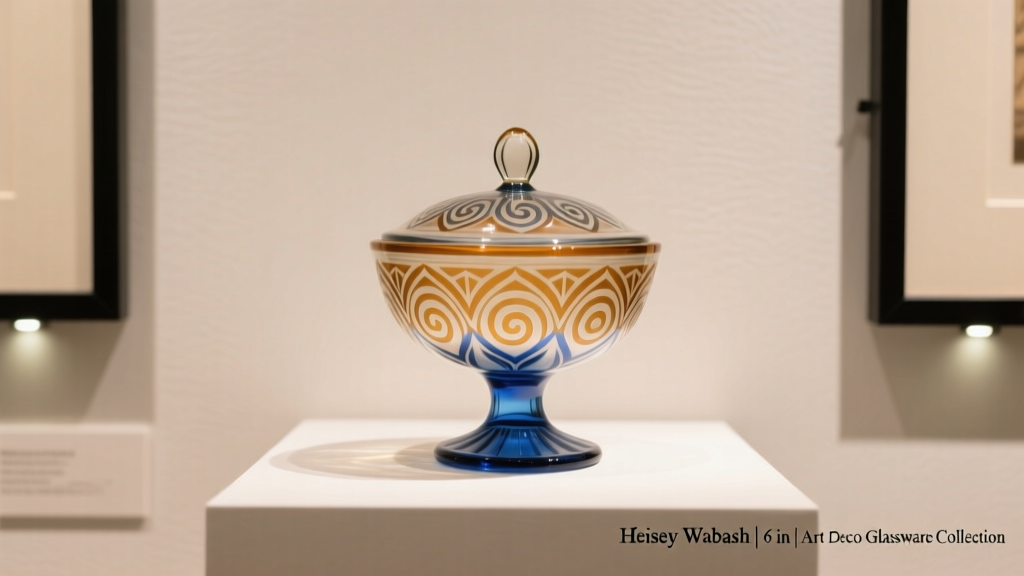
Heisey Wabash Candy Dish Footed Cover (6-Inch): Authentication, Market Value, and Design Legacy
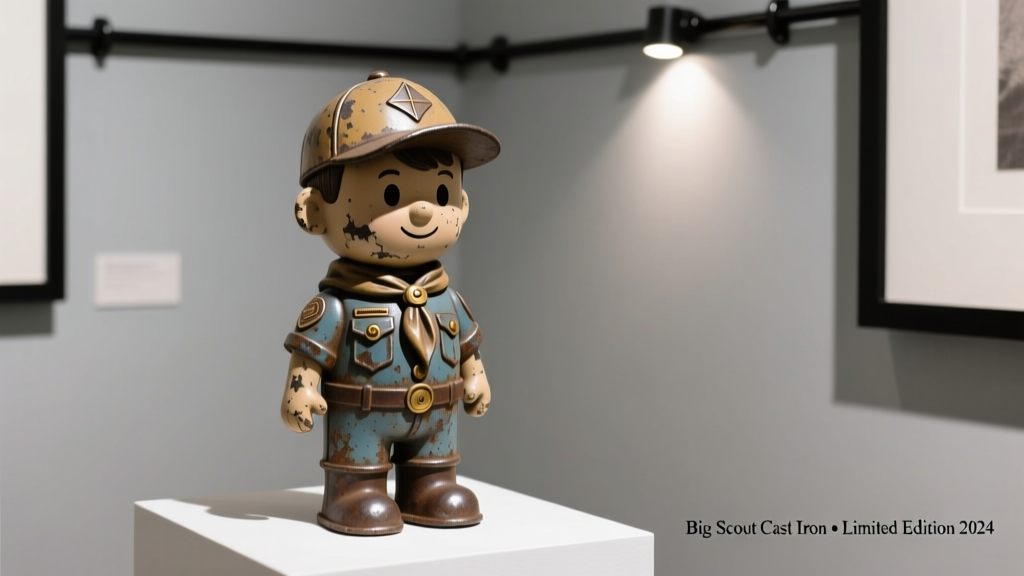
Toy Cap Gun Big Scout Cast Iron: Production History, Authentication Metrics, and Market Valuation

Authenticating the Leonard Reed Barton Pewter Teapot with Wooden Finial Handle: A Technical Analysis of Form, Provenance, and Market Value

Waterford Chandelier 12-Candlearms with Alternating-Length Prisms and Chains: A Technical Authentication & Market Analysis of the 28-Inch Model

Capodimonte Urn Cover with Cherubs, Satyrs, and Nymph Handles: Authentication, Provenance, and Market Analysis of the Ginori 14-Inch Example
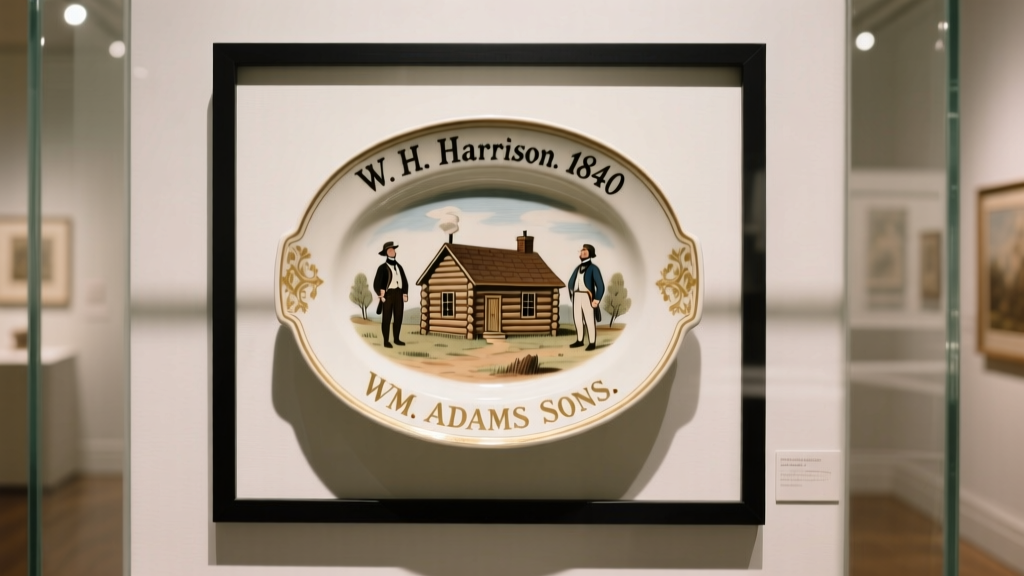
Political Tureen Lid, Log Cabin Pattern, W.H. Harrison 1840 Campaign: Authentication and Market Analysis of the Wm. Adams & Sons 6 × 8 Inch Ceramic Artifact
Kovels On Antiques and Collectibles Vol. 38, No. 10 (June 2012): Market Trends, Authentication Insights, and Price Realities
Steins Fisherman, Pewter Woman, Fish Net Pottery: Authentication and Market Analysis of the 1–2 Liter Ceramic Steins
David T. Smith’s Windsor Fanback Settee: Painted Carved Handholds, Provenance, and Market Authentication