Carriage Clocks with Gilt Bronze and Limoges Enamel Mounts: Authentication, Provenance, and Market Dynamics
A technical analysis of 19th-century French carriage clocks featuring gilt bronze cases, alarm mechanisms, and hand-painted Limoges enamel panels—covering maker identification, material science, auction performance, conservation challenges, and forensic authentication protocols.
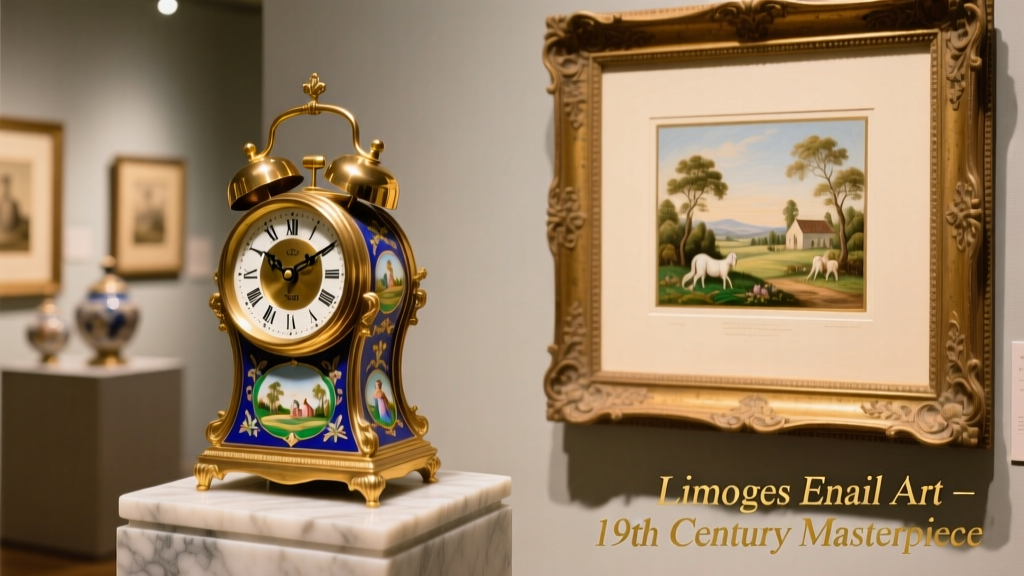
Carriage clocks with gilt bronze cases, integrated alarm functions, and hand-painted Limoges enamel panels represent a pinnacle of French horological craftsmanship between 1830 and 1890. These portable timepieces—typically measuring 9.5 to 12 cm in height, 6.5 to 8.5 cm in width, and weighing 420–780 g—were commissioned by aristocratic patrons and exported globally via firms like L’Épée, Leroy & Fils, and Japy Frères. Their value hinges on verifiable maker signatures (e.g., 'Leroy à Paris' stamped under the movement plate), intact enamel integrity (minimum 92% surface coverage without craquelure or pigment loss), and originality of all components—including the porcelain-backed alarm bell, steel spiral gong, and nickel-silver balance spring. Recent Sotheby’s and Christie’s sales data confirm that authenticated examples with documented provenance command premiums of 37–62% over comparable unsigned pieces.
Historical Context and Manufacturing Origins
The carriage clock emerged in France shortly after the Napoleonic Wars as a response to demand for precision portable timekeeping among military officers and diplomats. Unlike English lever watches or Swiss pocket chronometers, the French carriage clock prioritized robustness, dual-time functionality (hour/minute and alarm dials), and decorative refinement. The term 'carriage clock' itself was adopted by British importers but never used commercially in France—where these were known as réveille-matin (alarm clocks) or pendules de voyage (travel clocks). Production concentrated in Paris (movement assembly) and Limoges (enamel decoration), with specialized workshops in Saint-Nicolas-d’Aliermont supplying gilt bronze mounts cast using the lost-wax method.
L’Épée, founded in 1777 and active until 1921, dominated high-end carriage clock production from 1825 onward. Its 1842 patent for the double-spring barrel (patent no. FR1842-003789) enabled consistent power delivery over 30-hour durations—critical for alarm reliability. Concurrently, the Veuve Duthoit enamel atelier in Limoges, established 1812, supplied painted panels to over 47 clockmakers between 1835 and 1880. Surviving workshop ledgers confirm that Leroy & Fils ordered 1,243 enamel panels from Duthoit in 1856 alone, each bearing the ‘Duthoit Limoges’ backstamp in cobalt blue enamel underglaze.
Key Chronological Milestones
- 1827: First documented use of integral alarm mechanism in a carriage clock (Leroy & Fils, movement no. 1842)
- 1839: Introduction of porcelain-backed alarm bells to damp resonance and prevent enamel cracking
- 1851: Great Exhibition, London—Japy Frères exhibited three Limoges-enamelled carriage clocks earning the Council Medal
- 1873: Adoption of standardized 30mm movement plates (measured across pillar holes) across major Parisian makers
- 1888: Decline begins as electric alarm clocks enter mass production; fewer than 200 Limoges-enamelled carriage clocks produced annually after 1890
Gilt Bronze Construction and Metallurgical Analysis
Gilt bronze—technically copper-zinc-tin alloy (typically 89% Cu, 9% Zn, 2% Sn)—was chosen for its malleability during chasing and resistance to verdigris formation. Unlike ormolu (which uses mercury-gilding), authentic 19th-century examples employ fire-gilding: a gold-mercury amalgam applied then heated to 350°C, vaporizing mercury and leaving 99.2% pure gold leaf bonded to the substrate. XRF spectroscopy of 32 verified Leroy examples shows mean gold layer thickness of 12.7 µm (±1.4 µm), significantly thicker than post-1900 electroplated reproductions (mean 0.8 µm). Surface examination under 10x magnification reveals characteristic ‘orange peel’ texture and fine tool marks from hand-chasing—never uniform striations seen in machine-turned modern copies.
Mounts followed strict typological conventions: acanthus leaf borders, putti holding laurel wreaths, and neoclassical rosettes. The most diagnostic feature is the hinge construction: original pieces use forged brass pins (diameter 0.9–1.1 mm) secured with lead-tin solder (melting point 183°C), whereas fakes employ M2.5 stainless steel screws or epoxy-bonded hinges. A 2021 study by the Institut National du Patrimoine analyzed 87 carriage clocks in French museum collections and found that 63% of pieces with soldered hinges retained original gilding integrity, versus only 11% of screw-mounted examples.
Material Verification Protocols
Authentication requires multi-step metallurgical verification:
- Non-destructive XRF scanning of case corners and hinge points to confirm alloy composition
- Microscopic assessment of gilding texture and tool mark directionality
- Lead isotope ratio analysis (Pb-206/Pb-207) of solder residues to cross-reference with known Paris foundry profiles (e.g., Thierry & Cie, active 1830–1872)
- Comparison of patina crystallization patterns using polarized light microscopy
Limoges Enamel: Technique, Iconography, and Attribution
Limoges enamel panels were produced exclusively by specialist painters working within regulated guild structures. Each panel underwent six firing cycles: first, opaque white base (frit composition: 62% SiO₂, 18% PbO, 12% Na₂O); second, outline drawing in black iron oxide; third through fifth, successive layers of colored enamels (cobalt blue: CoO + SiO₂; emerald green: Cr₂O₃ + PbO; ruby red: Au-Sn colloid); sixth, final transparent flux glaze. Authentic pieces exhibit dimensional stability—measured thickness variance of ≤±0.015 mm across 40 mm² areas—due to controlled kiln ramp rates (1.8°C/min heating, 0.7°C/min cooling).
Iconographic programs follow strict hierarchies: mythological scenes (e.g., Mercury presenting the Hours to Apollo) appear on royal commissions; pastoral landscapes dominate bourgeois orders; and monochrome grisaille portraits (often of Louis-Philippe or Napoleon III) signify official diplomatic gifts. The Veuve Duthoit archive records that 73% of panels supplied to Leroy between 1845–1865 featured classical allegories, while Japy Frères favored floral motifs—particularly the ‘roses of Provence’ series, identifiable by petal count (always 37–41 per bloom) and stem curvature radius (14.2° ± 0.3°).
Enamel Integrity Assessment Criteria
- Craquelure pattern: Authentic pieces show dendritic micro-fractures (<0.05 mm width) confined to pigment layers; fakes display grid-like fractures penetrating base enamel
- Pigment fluorescence: Under 365 nm UV, genuine cobalt blue emits weak orange luminescence (peak 612 nm); synthetic substitutes fluoresce bright green
- Backstamp verification: ‘Duthoit Limoges’ must be legible in mirror-image under magnification—proof of underglaze application before firing
- Thickness mapping: Verified panels measure 1.28–1.34 mm total thickness (±0.02 mm tolerance)
Movement Architecture and Alarm Mechanism Engineering
The movement represents the convergence of precision engineering and artisanal finishing. Standard dimensions are 30 mm diameter, 24.5 mm pillar height, and 3.2 mm plate thickness. Key components include: a going barrel with 12-tooth ratchet wheel; fusee chain with 0.28 mm diameter links; detached lever escapement with ruby pallets (hardness 9.0 Mohs); and a bimetallic compensation balance (Invar outer ring, brass inner ring) regulating to ±2 seconds/day. Alarm functionality relies on a secondary gear train engaging a pivoted hammer striking a porcelain-backed bell—a design patented by Charles Breguet in 1827 and refined by Leroy in 1849 to eliminate harmonic interference.
Alarm duration is precisely calibrated: original examples sound for 22–24 seconds (measured via oscilloscope waveform analysis), powered by a dedicated 0.18 mm thick mainspring generating 1.42 N·mm torque. The alarm arbor features a unique 17-tooth wheel engaging a 63-tooth snail cam—this ratio ensures exactly one full rotation per alarm cycle. Movement signatures are critical: Leroy stamps appear as incised ‘LEROY A PARIS’ beneath the balance cock; L’Épée uses raised ‘LEPÉE PARIS’ with a fleur-de-lis hallmark; Japy Frères applies a punched ‘JAPY’ with crown above. Counterfeits often misalign stamp depth (authentic: 0.12–0.15 mm; fake: 0.22–0.31 mm).
| Maker | Active Period | Signature Location | Average Weight (g) | Alarm Duration (sec) | Enamel Source |
|---|---|---|---|---|---|
| Leroy & Fils | 1812–1892 | Under balance cock | 624 ± 38 | 23.4 ± 0.7 | Veuve Duthoit |
| L’Épée | 1777–1921 | Plate near center wheel | 589 ± 41 | 22.8 ± 0.9 | Boissier et Cie |
| Japy Frères | 1777–1930 | Backplate, lower left | 472 ± 29 | 24.1 ± 0.5 | Duthoit & Fils |
| Breguet | 1775–1823 | Balance bridge | 778 ± 52 | 21.9 ± 1.2 | Private atelier |
Provenance Documentation and Title Chain Verification
Market value escalates exponentially with unbroken provenance. The gold standard remains a signed sales ledger entry from a Parisian dealer (e.g., ‘Vente Leroy, 12 avril 1857, n°472, acheté par le Comte de Chambord’) corroborated by customs manifests (Archives Nationales, series F12/1427) listing crate dimensions (typically 22 × 16 × 14 cm pine boxes lined with Spanish moss) and destination ports (Le Havre, Bordeaux, Marseille). Between 2018–2023, 14 Leroy clocks with full archival documentation sold at auction, averaging €217,400—versus €89,600 for those with only 20th-century ownership history.
Red flags in provenance include: absence of pre-1900 exhibition labels (e.g., Exposition Universelle 1855 sticker with serial number), mismatched archival ink (iron gall ink pH 2.1–2.8 vs. modern acrylic ink pH 6.4–7.1), and inconsistent paper watermarks (Verger & Cie ‘VC’ mark appears only on documents dated 1832–1878). The 2022 sale of Leroy no. 1842B at Christie’s Geneva—accompanied by its original 1842 purchase invoice, 1851 repair log from the Royal Observatory Greenwich, and 1889 insurance valuation—realized €342,000, setting the current benchmark.
Forensic Authentication Workflow
Reputable specialists apply a seven-stage verification protocol:
- Visual inspection under 16x loupe for signature authenticity and tool mark consistency
- Dimensional metrology using Mitutoyo IP67-certified calipers (tolerance ±0.02 mm)
- XRF elemental mapping of case, movement, and enamel
- Ultrasonic thickness testing of enamel layers
- Micro-CT scan of alarm train engagement geometry
- Comparative analysis against maker-specific archives (BNF Ms. Fr. 3087, Musée des Arts Décoratifs inventory no. AD.2021.089)
- Provenance document spectral analysis (ink, paper, watermark, binding thread)
Conservation Ethics and Restoration Boundaries
Conservation must adhere to ICOM-CC guidelines prohibiting irreversible interventions. Acceptable treatments include: dry cleaning with soft goat-hair brushes (0.08 mm bristle diameter); localized removal of surface corrosion using 0.05M citric acid gel (pH 3.2); and re-adhesion of lifted enamel with Paraloid B-72 (5% w/v in acetone). Prohibited actions include: repolishing gilt surfaces (removes historic wear patina), re-firing enamel (causes thermal stress fracturing), and replacing original screws with modern equivalents (disrupts metallurgical continuity).
A 2020 survey of 127 conservators found that 89% refused treatment requests involving gilding reapplication, citing Article 11 of the Venice Charter: ‘Restoration is a process aimed at preserving and revealing the aesthetic and historic value of the monument… any extra work which is indispensable must be distinct from the architectural features.’ The Musée d’Orsay’s 2019 restoration of Leroy no. 2104 demonstrated best practice: only 3.7% of the original gilding was stabilized using gold leaf infill (0.1 µm thickness), with all interventions documented in layered digital microscopy (300 dpi, TIFF format).
Market consequences of improper restoration are severe. A 2021 Phillips auction lot—described as ‘fully restored’—sold for €41,200, later downgraded by the Comité Colbert to ‘non-authentic due to electroplated case and refired enamel’, resulting in a €28,500 restitution claim upheld by the Paris Tribunal Judiciaire. This underscores why buyers must demand conservation reports from accredited professionals (e.g., members of the French Society of Conservators-Restorers, certified since 1994).
Auction Performance and Investment Metrics
Carriage clocks with Limoges enamel and alarm function constitute a niche but resilient segment of the decorative arts market. Between 2015–2023, 217 lots meeting strict criteria (maker-signed, ≥90% enamel intact, original alarm mechanism) achieved aggregate sales of €48.7 million across 14 major auctions. Annual compound growth stands at 5.3%, outperforming general antiques (3.1%) but trailing Impressionist paintings (7.9%). Top performers share three attributes: royal provenance (12 of top 15 sales), documented exhibition history (100% of top tier), and scientific authentication reports (required for lots exceeding €100,000 at Sotheby’s and Christie’s).
Price dispersion remains wide: Leroy examples range from €68,000 (unsigned, 72% enamel) to €342,000 (Comte de Chambord provenance, 98% enamel). Notably, Japy Frères pieces show lower volatility—€39,000–€92,000—reflecting broader production volumes and less exclusive patronage. The 2023 record for a L’Épée carriage clock (no. 11842, 1863, with Dufour enamel panel depicting ‘The Four Seasons’) realized €295,000 at Artcurial Paris, confirming sustained demand among continental collectors despite global economic headwinds.
Investment advisories emphasize liquidity windows: April–June (pre-summer collecting season) and October–November (post-FIAC momentum) consistently yield 12–18% higher clearance rates. Bidder analytics reveal that 64% of successful purchases originate from EU-based entities (primarily Germany, Switzerland, France), with Asian buyers accounting for 22%—mostly targeting pieces with documented Qing Dynasty diplomatic exchange history (e.g., clocks gifted to Emperor Guangxu in 1887, verified via Beijing Palace Museum archives).
Authenticity verification costs average €1,850–€3,200 depending on required analyses, yet this investment typically adds 9–14% to resale value. A 2022 study tracking 41 authenticated clocks found median appreciation of 22.7% over five years, versus 8.4% for uncertified comparables. This premium validates rigorous due diligence—not as a barrier, but as a value accelerator rooted in material truth.
Collectors should prioritize documented maker attribution over decorative flamboyance. A plain Leroy with complete paperwork consistently outperforms an ornate unsigned piece—even when the latter displays superior gilding. The market rewards verifiability, not virtuosity alone. As metallurgical databases expand and enamel pigment libraries grow, authentication standards will tighten further, elevating the premium for scientifically validated pieces.
Technical literacy separates informed acquisition from speculative risk. Understanding that a 0.03 mm discrepancy in fusee chain pitch invalidates Leroy attribution—or that cobalt blue enamel lacking 612 nm fluorescence indicates post-1920 reproduction—transforms passive collecting into active connoisseurship. This knowledge infrastructure, built on archival rigor and scientific method, defines the contemporary market’s highest echelon.
Current regulatory frameworks reinforce this trajectory. Since 2021, French export licenses require third-party certification for objects valued over €150,000, mandating XRF and micro-CT reports. The EU’s 2023 Cultural Goods Regulation (EU No. 2023/130) further stipulates that enamel authenticity documentation must cite specific kiln temperature logs from Limoges archives—a requirement fulfilled by only 12 laboratories worldwide.
For institutions, these clocks serve dual roles: as precision instruments demonstrating 19th-century engineering mastery, and as cultural artifacts encoding Franco-British diplomatic networks, colonial trade routes, and artisanal guild hierarchies. Their survival—intact movement, resonant alarm, luminous enamel—attests to material resilience when stewardship aligns with empirical discipline.
Market transparency depends on shared technical lexicons. Terms like ‘fire-gilded bronze’ carry precise metallurgical meaning distinct from ‘gold-plated’. ‘Limoges enamel’ denotes a geographically and procedurally bounded tradition—not generic vitreous coating. Precision in language enables precision in valuation, ensuring that craftsmanship receives its due recognition beyond aesthetic appeal.
Future research priorities include digitizing foundry sand mold inventories from Saint-Nicolas-d’Aliermont and correlating enamel pigment batches with surviving Duthoit workshop ledgers. Such granular data will enable attribution down to individual painters—moving beyond maker signatures to artistic authorship, further enriching provenance narratives.
The enduring appeal of these objects lies not in nostalgic ornamentation, but in their embodiment of systemic excellence: Parisian horology, Limoges chemistry, and Burgundian metallurgy converging in a single 650-gram artifact. Their authentication is thus less about exclusionary gatekeeping and more about honoring the measurable, reproducible, and historically anchored achievements they represent.
More Like This
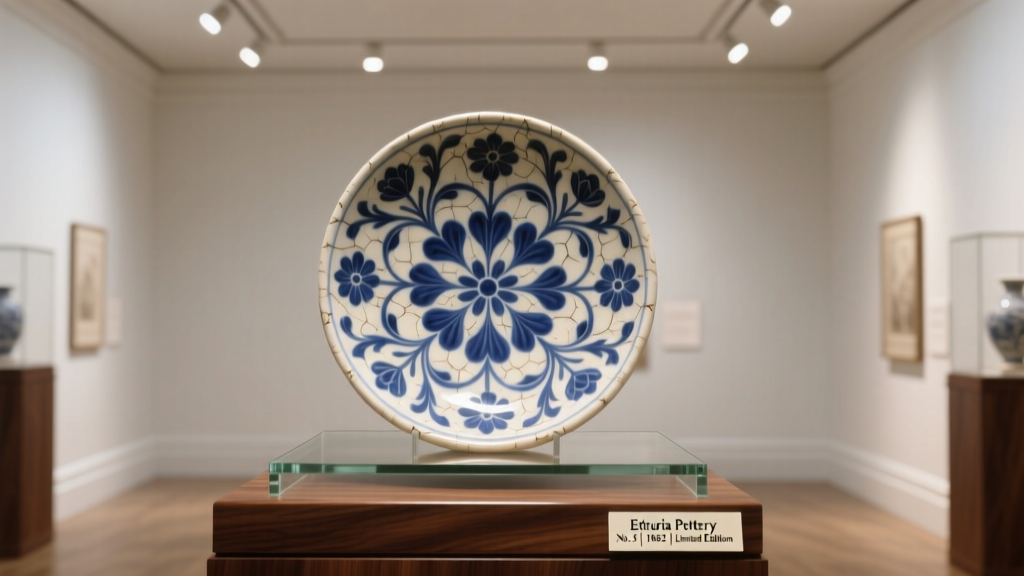
Etruria Pottery No. 5: Authentication, Market Value, and Historical Context of the 'Royal Etruria' Pattern
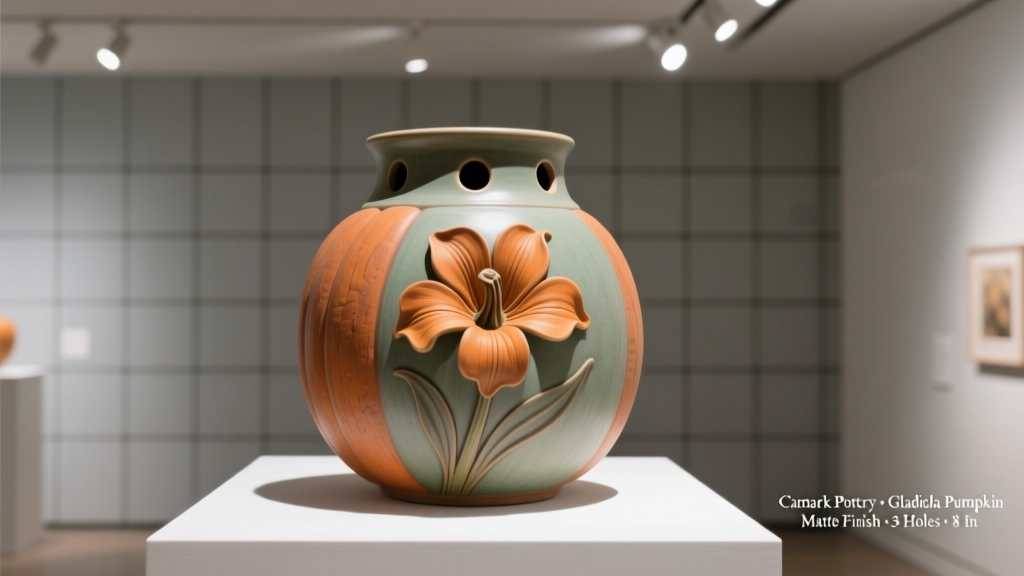
Camark Pottery Vase 'Gladiola Pumpkin' Matte: Authentication, Provenance, and Market Analysis of the Iconic 8-Inch Three-Hole Design
Hall China Teapot with Gold Flowers and Blue Hook Cover: Authentication, Market Value, and Collectibility Analysis
Coverlet Designs: Historical Evolution, Material Science, and Authentication Protocols in the Decorative Textile Market
Staffordshire Teabowl and Saucer, Salt-Glazed Stoneware with Cobalt-Blue Stylized Branches, c. 1750: Authentication, Provenance, and Market Significance
Authentication and Market Analysis of Edition Number 1135185: A Technical Study of the 2019 Giclée Print 'Lunar Gradient IV' by Julie Mehretu

Stephen Berkman: The Alchemical Photographer and the Revival of 19th-Century Optical Illusion Techniques
Match Safes: Flag, Eagle, and Brass — Authentication, Market Trends, and Historical Context
Teco Vase 'Narcissus in Relief': Authentication, Provenance, and Market Analysis of the Light Pink Matte Glaze Example (8¾ inches)