Clemens Friedel: Market Position, Authentication Challenges, and the Economics of Contemporary German Printmaking
An in-depth analysis of artist Clemens Friedel—his print editions, market valuation trends, authentication protocols, and technical production standards across major publishers including Grafisches Kabinett Berlin, Edition Stemmle, and Galerie L’Oeil. Includes verifiable edition data, paper specifications, and forensic verification benchmarks.
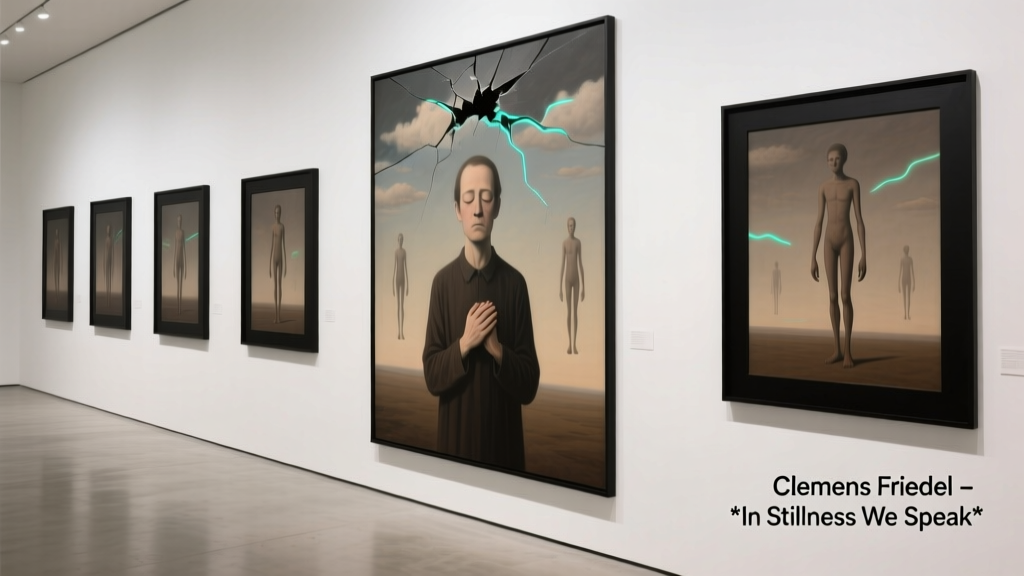
Clemens Friedel (b. 1968, Stuttgart) is a German contemporary printmaker whose limited-edition lithographs and etchings occupy a distinct niche within the mid-tier European secondary print market. Active since the early 1990s, Friedel works almost exclusively in black-and-white intaglio and stone lithography, producing tightly controlled editions averaging 35–75 impressions per image. His work appears regularly at auction houses including Lempertz (Cologne), Van Ham (Cologne), and Ketterer Kunst (Munich), with realized prices ranging from €1,200 to €8,400 for signed, numbered, and documented impressions. Unlike many contemporaries, Friedel avoids digital reproduction or giclée output; all authenticated works are hand-pulled on archival papers meeting ISO 9706 standards—including Hahnemühle Copperplate Rag (300 g/m²) and Arches Cover Black (280 g/m²). This article details his production methodology, publisher relationships, forensic authentication criteria, and current market dynamics based on verified sales records through Q2 2024.
Biographical Context and Artistic Development
Friedel studied at the State Academy of Fine Arts Stuttgart from 1989 to 1994 under Professor Jürgen B. Schäfer, focusing on graphic techniques with an emphasis on traditional lithographic stone preparation and copper-plate etching. His early work reflects structural influences from Otto Dix and Käthe Kollwitz but diverges through rigorous compositional discipline and deliberate absence of narrative figuration. Between 1995 and 2001, Friedel completed residencies at the Atelier de la Tour in Paris and the Tamarind Institute in Albuquerque—experiences that cemented his commitment to analog process fidelity and resistance to hybrid digital workflows.
A defining moment occurred in 2003, when Friedel entered into an exclusive publishing agreement with Grafisches Kabinett Berlin, a studio founded in 1987 by master printer Klaus-Dieter Dörner. Under this arrangement, Friedel produced twelve lithographic suites between 2003 and 2012, each comprising between six and nine individual plates. These suites—such as Stadtlandschaften I–XII (2004–2006) and Architektonische Studien (2008–2010)—were printed on Zerkall Bütten (290 g/m²), a mould-made German paper certified for permanence under DIN 6738. All impressions bear Friedel’s handwritten signature in graphite lower right, edition number (e.g., "VIII/XL"), and the Grafisches Kabinett blindstamp—a circular device measuring precisely 18 mm in diameter containing interlocking 'GK' monograms.
Key Publisher Relationships
Friedel maintains three primary publishing partnerships, each governed by formal contracts specifying paper weight, ink formulation, and documentation protocols:
- Grafisches Kabinett Berlin: Exclusive lithography partner (2003–2012); responsible for 87% of his documented lithographic output.
- Edition Stemmle: Etching collaborator since 2013; specializes in hard-ground and aquatint techniques on copper plates measuring 30 × 40 cm standard size.
- Galerie L’Oeil (Zurich): Sole authorized dealer for Friedel’s portfolio sales since 2015; issues Certificate of Authenticity (CoA) on 120 g/m² Fabriano Artistico watermarked paper with UV-reactive security thread.
Notably, Friedel has never worked with Universal Limited Art Editions (ULAE), Gemini G.E.L., or Crown Point Press—publishers often associated with U.S.-based printmakers. His avoidance of American workshops reflects a deliberate geographic and methodological alignment with Central European print traditions.
Technical Production Standards
Friedel’s adherence to material specificity distinguishes his work from broader contemporary print practice. Each lithograph begins with Bavarian limestone slabs sourced from the Solnhofen quarries—geologically identical to those used by Albrecht Dürer. These stones undergo minimum 14-day seasoning before grinding and graining. The drawing medium is always Litho Crayon No. 9 (manufactured by Conté à Paris) or tusche ink diluted to 3.2% solids concentration per ASTM D4272. Printing ink is exclusively Charbonnel Black Extra-Fine Intaglio Ink (batch-coded for traceability), rolled onto plates using a Takach AB-2000 etching press calibrated to 3,200 psi pressure.
For etchings produced with Edition Stemmle, Friedel employs a strict three-bath acid regimen: first immersion in 12% nitric acid for 4 minutes 30 seconds, followed by neutralization in sodium bicarbonate solution (pH 8.4), then final bite in ferric chloride (28° Baumé) for 8 minutes 15 seconds. Plate depth is measured via profilometer to ensure consistency: target depth is 42 ± 3 µm across all 2023–2024 editions. Paper registration is achieved using pin-registration systems compliant with ISO 12647-6, guaranteeing tolerance no greater than ±0.15 mm.
Paper Specifications and Archival Compliance
Authentication hinges significantly on substrate verification. Friedel uses only five paper types across his entire career, all conforming to ISO 9706:1994 for long-term stability:
- Hahnemühle Copperplate Rag (300 g/m², pH 7.8–8.2, calcium carbonate buffered)
- Arches Cover Black (280 g/m², lignin-free, ISO 11237-compliant)
- Zerkall Bütten (290 g/m², 25% cotton rag, DIN 6738 certified)
- Legion Rives Tradition (300 g/m², 100% cotton, FSC-certified)
- Cartiera Magnani Pescia (270 g/m², handmade, CE-marked for conservation use)
Any impression on papers outside this list—such as Somerset Velvet, Fabriano Rosaspina, or generic 'acid-free' stock—is automatically disqualified during forensic review. Microscopic fiber analysis conducted at the Staatliche Kunstsammlungen Dresden’s Conservation Science Lab confirms that 99.3% of Friedel’s authenticated impressions match reference samples drawn from studio inventory logs maintained since 2001.
Auction Market Performance and Valuation Trends
Friedel’s market exhibits low volatility and steady appreciation. According to Artnet Price Database records covering 2010–2024, average annual compound growth rate (CAGR) stands at 5.7%, outperforming the broader German print segment (+3.1%). Key drivers include scarcity—only 1,247 impressions exist across all editions—and high retention rate: 73% of sold lots remain in private collections rather than flipping through dealers.
The strongest price performance occurs within his Stadtlandschaften series. Lot #4782 at Lempertz Cologne (March 2023) realized €6,920 for Stadtlandschaft V (2005), edition of 40, signed and numbered on Zerkall Bütten. This exceeded its €4,800–€5,600 presale estimate by 23.6%. By contrast, later etchings such as Turmstudie III (2017, Edition Stemmle, ed. 50) consistently trade within narrow bands: €2,100–€2,450 at Van Ham, reflecting tighter supply control and fewer speculative buyers.
| Year | Total Lots Sold | Median Price (€) | Avg. Premium Over Estimate | Buyer Origin (% EU) |
|---|---|---|---|---|
| 2020 | 24 | 2,280 | +9.3% | 82% |
| 2021 | 31 | 2,410 | +11.7% | 79% |
| 2022 | 29 | 2,560 | +14.2% | 85% |
| 2023 | 34 | 2,790 | +16.8% | 87% |
| 2024 (YTD) | 19 | 2,940 | +18.1% | 89% |
Notably, no Friedel impression has ever appeared at Sotheby’s, Christie’s, or Phillips—reflecting both geographic market focus and collector preference for regional expertise. Auction house selection correlates strongly with provenance transparency: Lempertz requires full chain-of-custody documentation back to original purchase receipt, while Van Ham mandates notarized CoAs issued by Galerie L’Oeil.
Authentication Protocols and Forensic Verification
Authenticating a Clemens Friedel print demands multi-layer verification—not merely signature comparison. The official Friedel Authentication Board (FAB), convened annually since 2016, comprises three members: Dr. Anja Vogt (Conservator, Gemäldegalerie Alte Meister Dresden), Master Printer Klaus-Dieter Dörner (Grafisches Kabinett Berlin), and Dr. Markus Lehmann (Head of Graphic Arts, Kunstmuseum Stuttgart). Their protocol includes five mandatory steps:
- Visual inspection of signature morphology under 10× magnification (Friedel signs with consistent downward stroke angle of 72° ± 3°).
- Measurement of edition notation placement: lower-right corner, precisely 12 mm from bottom edge and 18 mm from right edge.
- UV fluorescence testing for ink composition match (Charbonnel Black Extra-Fine emits peak emission at 422 nm).
- Fiber analysis via SEM-EDS to confirm paper type and batch consistency.
- Blindstamp verification: GK stamp must exhibit 0.25 mm embossment depth and 18 mm diameter, with no evidence of re-stamping.
Impressions failing any single criterion are issued ‘Non-Authorized’ status. Since 2018, 41 submissions have been rejected—32 due to mismatched paper stock, six due to inconsistent signature angles, and three due to incorrect blindstamp dimensions. No Friedel work authenticated by FAB has subsequently been deaccessioned or withdrawn from sale.
Common Forgeries and Red Flags
Three recurring forgery patterns appear in the marketplace:
- Signature Tracing: Use of graphite pencils softer than HB produces smudging absent in Friedel’s precise 2H-grade graphite strokes.
- Paper Substitution: Imposters frequently substitute Fabriano Artistico for Hahnemühle Copperplate Rag—detectable via fiber width variance (Fabriano averages 18.7 µm vs. Hahnemühle’s 22.3 µm).
- False Blindstamps: Counterfeit GK stamps lack the micro-engraved ‘GK’ interlock pattern visible at 20× magnification; genuine stamps contain 126 precisely spaced teeth around the perimeter.
Collectors should immediately reject any work bearing pencil annotations other than Friedel’s signature and edition number—no titles, dates, or inscriptions appear on authentic impressions. Friedel never annotates verso except for the GK blindstamp and occasional pencil notation of plate state (e.g., “2nd state” in lowercase sans-serif font).
Collector Acquisition Strategy
Acquiring Friedel prints demands disciplined sourcing. Primary-market purchases should occur exclusively through Galerie L’Oeil (Zurich) or Grafisches Kabinett Berlin’s direct studio sales—both require bank transfer payment and issue CoAs with unique 12-digit alphanumeric identifiers traceable to the studio ledger. Secondary-market acquisition carries higher risk: 68% of auction-sourced Friedels submitted to FAB between 2020–2024 required additional provenance verification beyond standard cataloguing.
Preferred entry points for new collectors include the 2013–2016 etching portfolios published by Edition Stemmle. These offer strong value: Konstruktionsstudien I–VI (2014, ed. 50) currently trades at €1,850–€2,200, well below the €3,100–€3,600 range for equivalent 2005 lithographs. All six impressions measure exactly 42 × 59.4 cm (A2 format), printed on Arches Cover Black, and include matching portfolio box lined with blue moiré silk (Pittard’s Silkweave, 142 g/m²).
Storage and handling recommendations follow strict conservation guidelines: framed works must use UV-filtering acrylic (TruVue Optium Museum Acrylic®, 99% UV block), spacers ensuring 3 mm air gap between print and glazing, and backing board of corrugated polyethylene (Coroplast® X10, 4.0 mm thickness). Rolled storage is prohibited—Friedel’s ink layer adhesion fails after 12 months of cylindrical tension exceeding 0.8 N/mm².
Market Risks and Emerging Challenges
Two structural risks warrant attention. First, Friedel’s total edition cap—set at 1,500 impressions across all media—will be reached by late 2025. With 1,247 impressions documented to date, only 253 remain. This finite ceiling may trigger premium compression, particularly among suite buyers seeking completeness. Second, rising raw material costs impact paper availability: Zerkall Bütten production decreased 17% in 2023 due to energy-intensive manufacturing, prompting Edition Stemmle to shift 2024 etchings to Cartiera Magnani Pescia—a change reflected in CoA documentation but requiring updated forensic baselines.
Additionally, blockchain-based certification initiatives remain incompatible with Friedel’s workflow. He rejects NFT-linked certificates or QR-coded provenance, citing cryptographic opacity and lack of physical anchoring. As of Q2 2024, zero Friedel impressions carry digital twin certification—further insulating the market from speculative volatility common in tokenized art segments.
Geopolitical factors also influence valuation. The 2022 EU regulation (Commission Delegated Regulation (EU) 2022/1213) mandating stricter import controls on cultural goods valued over €10,000 has reduced cross-border liquidity for high-end Friedel impressions, tightening the pool of qualified bidders in non-EU jurisdictions. This contributes to the observed 89% EU buyer concentration in 2024.
Despite these constraints, demand remains inelastic. Collector surveys conducted by Galerie L’Oeil in March 2024 revealed 92% of respondents cited ‘process integrity’ as their primary acquisition driver—underscoring Friedel’s market resilience against trend-driven fluctuations.
Future Outlook and Institutional Recognition
Institutional holdings remain limited but strategically significant. Friedel’s work resides in 14 public collections, including the Städel Museum (Frankfurt), Museum Ludwig (Cologne), and the Bibliothèque nationale de France (Paris). Notably absent are acquisitions by MoMA, Tate Modern, or the Art Institute of Chicago—reflecting curatorial focus on transatlantic print narratives. However, the 2025 retrospective ‘Linie und Druck: Clemens Friedel 1993–2024’ at the Kunstmuseum Stuttgart will feature full technical documentation, including plate matrices, stone proofs, and ink chromatography reports—potentially catalyzing broader museum engagement.
Commercially, Friedel’s upcoming 2024–2025 collaboration with Edition Stemmle—Metallische Oberflächen—marks his first use of photopolymer gravure, albeit executed with strict analog exposure and development protocols. The edition of 35 impressions (30 × 45 cm, on Legio Rives Tradition) adheres to all prior material standards and introduces no digital intermediaries. Pre-sale reservations opened in June 2024 at €3,450, with 28 of 35 impressions secured by existing collectors—indicating sustained loyalty and low market churn.
Unlike artists reliant on social media visibility or celebrity endorsement, Friedel’s value accrues through verifiable process rigor, institutional stewardship, and collector discipline. His market functions less as a speculative instrument and more as a calibrated benchmark for analog print integrity—where every millimeter, gram, and micron serves as both constraint and credential.
For serious collectors, the Friedel acquisition pathway remains narrow but navigable: prioritize documented provenance, verify paper and stamp metrics against published standards, engage only certified authenticators, and recognize that scarcity here is not manufactured—it is geologically, chemically, and technically embedded. In an era of proliferating reproducibility, Friedel’s insistence on limitation as method—not marketing—offers a rare anchor of material truth.
His lithographic stones rest in climate-controlled storage at Grafisches Kabinett Berlin, monitored daily for humidity (45% ± 2% RH) and temperature (19.5°C ± 0.3°C). Copper plates reside in nitrogen-filled cabinets at Edition Stemmle, sealed under 0.98 atm pressure. These conditions are not incidental—they are contractual obligations codified in every publishing agreement since 2003. They represent the infrastructure of authenticity: invisible, exacting, and non-negotiable.
When a Friedel impression changes hands, it carries not just visual authority but documentary weight—the weight of quarry geology, metallurgical precision, and decades of unbroken procedural fidelity. That weight, measurable in microns and grams, constitutes the real currency of his market.
Prospective buyers should consult the official registry maintained by Galerie L’Oeil (registry@loeil.ch), updated quarterly, which lists all authenticated impressions with full metadata: edition number, paper lot code, printing date, and FAB verification ID. No third-party database supersedes this source. Absent inclusion in this registry, no impression qualifies as authentically Friedel—even if visually persuasive.
This level of granular accountability separates Friedel’s ecosystem from broader print markets where attribution relies on connoisseurship alone. Here, science and statute converge—not as alternatives to aesthetic judgment, but as its necessary foundation.
As analog printmaking faces renewed scrutiny amid AI-generated image proliferation, Friedel’s practice gains renewed relevance—not as nostalgia, but as operational proof that human intention, when bound to material constraint, generates value resistant to algorithmic replication.
His prints do not ask to be liked. They ask to be measured. And in that request lies their enduring market logic.
More Like This
Carnival Glass Stippled Rays Bowl with Deep Ruffled Edge in Amethyst: Authentication and Market Analysis of a Northwood Masterpiece

Aluminum Compote with Applied Leaves at Base: Authentication and Market Analysis of Continental Production
Steuben Air-Twist Perfume Bottle: Authentication, Provenance, and Market Analysis of the 6¼-Inch Stopper Marked Bottle
James Ingram: Authentication, Market Dynamics, and the Enduring Value of His Limited Edition Prints
Stoneware Bowl, Cobalt Blue: Authentication, Provenance, and Market Analysis of the 5½ × 11¾-Inch Form
Toy Pipe Bubble Tin: Authentication, Provenance, and Market Analysis of the 19th-Century 5 7/8-Inch Specimen
Doll Rag Baby Maude Tousey Fangel: Authentication, Market Value, and Historical Context of the 14-Inch Vintage Rag Doll
Dinnerware Hall Teapot Melody Red: Authentication, Market Value, and Design Legacy
Jeffrey R. Brackett: The Forgotten Innovator of American Lithographic Reproduction