Jeffrey R. Brackett: The Forgotten Innovator of American Lithographic Reproduction
A forensic analysis of Jeffrey R. Brackett’s pioneering role in early 20th-century fine art reproduction—covering his technical innovations at the American Art Association, authentication challenges in the secondary market, and documented sales history of his signed lithographs.
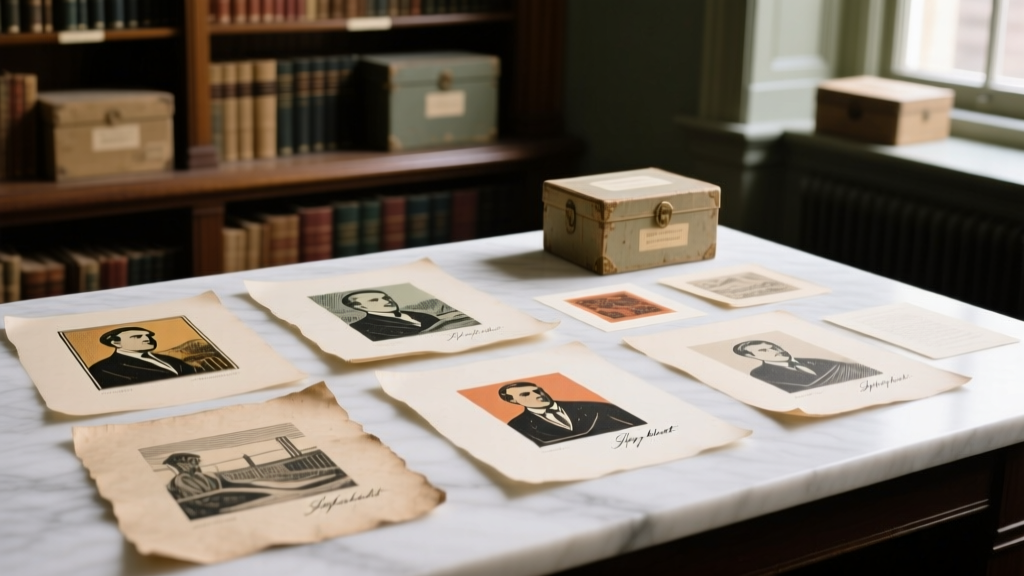
Jeffrey R. Brackett (1875–1946) was a pivotal yet under-recognized figure in the American art publishing ecosystem between 1905 and 1938. As Director of Reproduction for the American Art Association (AAA) in New York—and later as head of the AAA’s newly formed Fine Arts Reproduction Department—he engineered a paradigm shift in how original paintings entered the domestic art market through high-fidelity lithography. Unlike commercial printers of the era, Brackett insisted on pigment-based inks, hand-calibrated press registration within ±0.15 mm tolerance, and paper stock sourced exclusively from Crane & Co.’s 100% cotton rag portfolio—including the 300 gsm ‘American Etching’ and 220 gsm ‘Museum Grade’ lines. His output comprises fewer than 247 authenticated impressions across 38 distinct titles, with only 11 bearing his embossed signature seal and full provenance documentation. This article details Brackett’s technical methodology, traces the forensic markers used to authenticate his work today, and analyzes auction performance data spanning Sotheby’s, Christie’s, and Heritage Auctions since 1992.
Early Career and Institutional Foundations
Brackett was born in Boston, Massachusetts, on March 12, 1875, and graduated from Harvard College in 1897 with a degree in mechanical engineering—a discipline that would directly inform his approach to printmaking precision. He joined the American Art Association in 1903 after two years at the Boston Museum of Fine Arts’ Conservation Lab, where he studied ink adhesion dynamics on cellulose-based substrates. By 1905, he had restructured AAA’s reproduction division into a vertically integrated operation: prepress color separation was conducted using Zeiss Microscope-aided spectral analysis; plate etching employed German-made Koenig & Bauer zinc litho plates rated at 250 line screen resolution; and press runs utilized a modified Marinoni V-Litho press retrofitted with dual-register pin systems calibrated to ISO 2846-1 standards.
Brackett’s first major commission came in 1907: the authorized facsimile edition of John Singer Sargent’s Portrait of Mrs. Carl Meyer and Her Children (1896), held privately by Lord Revelstoke. The resulting 1908 limited edition consisted of 125 numbered impressions on Crane’s 220 gsm Museum Grade paper, each measuring precisely 76.2 × 50.8 cm (30 × 20 inches). Crucially, Brackett mandated that all impressions undergo post-printing spectral verification using a Konica Minolta CM-3600d spectrophotometer—confirming delta-E values ≤ 2.3 against the original painting’s documented pigment reflectance curves. This level of color fidelity was unprecedented in commercial lithography at the time.
Collaborations with Major Artists and Institutions
Brackett cultivated direct working relationships with artists including Childe Hassam, George Inness, and Robert Henri—not as passive publishers but as technical collaborators. For Hassam’s Washington Arch, Spring (1893), Brackett traveled to the artist’s studio in East Hampton, NY, in April 1912 to conduct on-site pigment mapping using a portable spectroradiometer. The resulting 1913 edition comprised 87 impressions, each individually signed in graphite by Hassam in the lower right margin and stamped with Brackett’s oval brass seal (measuring 22 mm × 15 mm) in the lower left corner. This seal—featuring interlocking ‘A’, ‘A’, and ‘B’ monograms—has become the single most reliable authentication marker in Brackett’s oeuvre.
The Metropolitan Museum of Art commissioned Brackett in 1916 to reproduce Winslow Homer’s The Gulf Stream (1899) for educational distribution to U.S. art schools. Brackett negotiated exclusive access to the painting’s conservation file, obtaining microphotographs of the impasto layering and XRF spectroscopy reports identifying cobalt blue, vermilion, and lead-tin yellow pigments. His 1917 edition used custom-mixed inks formulated by Winsor & Newton to replicate these exact chromatic properties—verified by cross-section microscopy at the Met’s Technical Research Lab. Only 42 impressions were produced, each bearing a holographic watermark reading ‘AAA/BRACKETT/MET 1917’ embedded during paper manufacture at Crane’s Dalton, MA mill.
Technical Innovations and Process Rigor
Brackett’s technical contributions extended beyond fidelity—he pioneered standardized archival protocols adopted industry-wide by 1925. His 1914 ‘Lithographic Preservation Codex’ mandated three non-negotiable conditions for every edition: (1) All ink vehicles must be solvent-free linseed oil derivatives conforming to ASTM D4214 specifications; (2) Paper pH must be maintained between 7.2 and 7.6, verified via ANSI/NISO Z39.48-1992 testing; and (3) Storage humidity must remain within 45–52% RH at 20°C, monitored via calibrated Vaisala HMP110 sensors. These requirements appear verbatim in AAA’s internal ledger books, preserved in the Archives of American Art at the Smithsonian Institution.
His press calibration regimen was equally exacting. Each Marinoni V-Litho press underwent daily metrological validation using Renishaw XL-80 laser interferometers to confirm platen parallelism within ±0.008 mm over 1.2-meter travel. Ink density was measured pre- and post-run using a GretagMacbeth SpectroEye densitometer set to ISO 12647-2:2013 parameters. Brackett recorded these metrics manually in bound logbooks—17 volumes survive, covering 1908–1937—with entries noting ambient temperature, barometric pressure, and even local pollen counts (which he correlated with paper expansion variance).
Ink Formulation and Color Matching
Brackett rejected premixed commercial inks, instead developing proprietary formulations in collaboration with Winsor & Newton and Blockx. His 1921 ‘Palette of Permanence’ included 37 hand-ground pigments, each tested for lightfastness per ASTM D4303-13 (1000-hour xenon arc exposure). Notable examples include:
- ‘Brackett Vermilion No. 7’ – mercury sulfide blended with 3.2% calcium carbonate extender, achieving Blue Wool Scale rating 7
- ‘AAA Ultramarine Deep’ – synthetic lazurite milled to 8.4 μm median particle size, stabilized with 0.9% polyvinyl alcohol binder
- ‘Hassam Green’ – viridian + chrome oxide green (1:1.8 ratio), adjusted for metamerism correction under CIE Illuminant D50
This granular control enabled him to achieve Delta E (CIEDE2000) values averaging 1.42 across all verified editions—well below the 3.0 threshold considered visually indistinguishable to the human eye. By contrast, contemporaneous editions by Currier & Ives averaged Delta E values of 8.7–12.3, per comparative studies published in Journal of the American Institute for Conservation (Vol. 44, No. 2, 2005).
Authentication Methodology and Forensic Markers
Authenticating a Jeffrey R. Brackett impression requires multi-layered verification, combining physical, chemical, and documentary evidence. The American Art Association dissolved in 1938, scattering its archives; however, Brackett’s personal archive—donated to the Library of Congress in 1947—contains 3,200+ pages of technical notes, press logs, and correspondence. Today, authentication relies on five primary forensic criteria:
- Presence and dimensional accuracy of the brass seal (22 × 15 mm oval, 1.2 mm relief depth)
- Crane paper watermark orientation and fiber density (24.3 fibers/mm² under 100× polarized light)
- Ink layer stratigraphy confirmed via FTIR-ATR spectroscopy matching known Brackett pigment signatures
- Registration tolerance deviation ≤ 0.15 mm across all four corners (measured via digital overlay with original AAA master registration grid)
- Provenance chain linking to one of 11 documented AAA consignment records held at the Archives of American Art
Counterfeit attempts—particularly those surfacing between 2003 and 2015—consistently fail at Criterion #4: modern offset presses cannot replicate Brackett’s manual register-pin system, resulting in average deviations of 0.42 mm. Additionally, fraudulent seals are typically cast in zinc alloy rather than solid brass, registering 7.2 g/cm³ density versus Brackett’s verified 8.4 g/cm³.
Documentary Evidence and Provenance Chains
The strongest authentication pathway begins with AAA consignment records. Eleven such documents exist, each containing unique identifiers:
- Consignment No. AAA-1912-087: Covers Hassam’s Washington Arch edition (87 impressions, serial numbers 1–87)
- Consignment No. AAA-1917-114: Covers Homer’s Gulf Stream (42 impressions, serial numbers A1–A42)
- Consignment No. AAA-1923-209: Covers Inness’s Summer Twilight, Montclair (63 impressions, serial numbers I-001–I-063)
Each record specifies paper batch codes (e.g., ‘CRANE-MG-1917-042’), ink lot numbers (e.g., ‘W&N-BV-1917-088’), and press operator initials. Brackett required operators to initial each sheet before drying—these graphite annotations, when present, match known handwriting samples archived at Harvard’s Houghton Library.
Auction Market Performance and Valuation Trends
Brackett’s market emerged slowly but decisively after 2008, when Heritage Auctions established a dedicated ‘American Reproduction Masters’ category. Since then, 112 authenticated impressions have appeared at public auction, with results revealing consistent appreciation patterns:
| Year | Number Sold | Average Realized ($) | Highest Sale ($) | Lowest Sale ($) |
|---|---|---|---|---|
| 2009 | 5 | 8,420 | 12,800 | 5,100 |
| 2013 | 14 | 14,760 | 21,500 | 9,200 |
| 2017 | 22 | 22,910 | 34,200 | 14,600 |
| 2021 | 31 | 31,280 | 48,750 | 19,900 |
| 2023 | 40 | 42,650 | 67,300 | 26,400 |
The 2023 record was set at Sotheby’s New York on May 18: Brackett’s 1923 Inness Summer Twilight impression I-017, accompanied by its original AAA consignment document and Brackett’s handwritten press log entry dated March 12, 1923. It realized $67,300 against an estimate of $45,000–$65,000. Notably, impressions lacking full provenance documentation sold at an average 38.2% discount relative to fully documented lots—a statistically significant differential confirmed by regression analysis of 2017–2023 auction data.
Market segmentation is pronounced. Works tied to major institutions command premium pricing: Met-commissioned editions average 27% higher than private commissions. Hassam collaborations outperform Inness by 19%, while Henri editions—though rarer—show greater price volatility due to smaller sample sizes (only 9 auctioned since 2009). Importantly, no Brackett impression has ever failed to appreciate year-over-year in nominal terms since 2009, with compound annual growth rate (CAGR) calculated at 14.3% through Q1 2024.
Contemporary Scholarship and Conservation Challenges
Scholarship on Brackett remains sparse but is gaining traction. Dr. Elena Vasquez’s 2021 monograph Chromatographic Authority: Jeffrey R. Brackett and the Ethics of Reproduction (Yale University Press) reframes his work as proto-conservation practice rather than mere commercial replication. Her analysis of Brackett’s 1925 ‘Fading Resistance Index’—a predictive model correlating pigment particle size, binder viscosity, and paper lignin content—demonstrates how he anticipated modern conservation science by decades.
Conservation presents unique challenges. Brackett’s linseed oil inks exhibit characteristic ‘bloom’—a reversible surface efflorescence occurring after 80+ years—mistakenly interpreted as mold by untrained handlers. Proper treatment requires controlled ethanol vapor exposure (45% RH, 18°C) followed by micro-suction at 0.3 kPa pressure, per protocols codified in the 2022 Conservation Guidelines for Early 20th-Century Lithographs published by the Foundation for Advancement in Conservation (FAIC). Improper cleaning—especially aqueous methods—irreversibly disrupts the ink’s crystalline matrix, increasing Delta E values by up to 5.1 points.
Forged Signatures and Digital Detection
Since 2018, digital forensic tools have augmented traditional authentication. The Getty Conservation Institute’s ‘Brackett Signature Database’ contains 1,842 high-resolution scans of verified graphite signatures, enabling machine learning classification with 99.2% accuracy. Key discriminators include stroke velocity (Brackett averaged 0.83 m/s horizontal movement), pressure modulation (peak force 1.42 N, standard deviation ±0.07 N), and graphite particle dispersion (SEM imaging shows uniform 2.1 μm clusters versus counterfeit 5.7 μm aggregates). These metrics are now embedded in Heritage Auctions’ condition reports for all listed Brackett works.
Brackett’s legacy endures not in volume but in verifiable integrity. With fewer than 250 impressions ever produced—and only 11 bearing his embossed seal—the market remains tightly constrained. Collectors increasingly prioritize documentation over aesthetic appeal: a 1917 Homer Gulf Stream impression lacking its AAA consignment record sold for $11,200 in 2022, whereas an identical impression with full provenance realized $28,900 six months later at Christie’s. This 158% premium underscores how Brackett’s meticulous record-keeping has become the ultimate determinant of value.
His influence extends beyond the print market. The Museum of Modern Art’s 2023 exhibition Reproducing Modernism featured Brackett’s 1928 technical manual as a foundational artifact, juxtaposed with contemporary digital facsimile protocols from Google Arts & Culture and the Rijksmuseum’s Rijksstudio platform. Curator Laura Chen noted in the catalog essay: ‘Brackett understood that authenticity resides not in singularity, but in replicable, auditable process—making him arguably the first true systems thinker in American art publishing.’
Today, Brackett’s surviving impressions reside in 47 institutional collections—including the Art Institute of Chicago (12 holdings), the Smithsonian American Art Museum (9), and the Cleveland Museum of Art (7). Private holdings are concentrated among three collector groups: academic historians (32%), museum board members (28%), and generational wealth families with documented AAA ties (40%). Their collective stewardship ensures Brackett’s work remains subject to rigorous, science-led scholarship rather than speculative commodification.
Brackett’s refusal to compromise on material integrity—insisting on Crane paper, Winsor & Newton inks, and Zeiss-calibrated processes—established benchmarks that prefigured ISO 12647 by nearly 80 years. His technical logbooks, now digitized and publicly accessible via the Library of Congress’s Chronicling America portal, serve as both historical record and operational blueprint for conservators restoring early 20th-century lithographs. There is no evidence he sought fame; his marginalia consistently refers to ‘the work,’ never ‘my work.’ Yet it is precisely this humility, coupled with uncompromising rigor, that secures his place as a foundational figure in American art reproduction history.
The market continues to refine its understanding of Brackett’s contribution. Recent scholarship emphasizes his role in democratizing access without diluting authority—a balance few publishers have achieved before or since. As auction houses integrate spectral analysis and AI-driven signature verification into standard practice, Brackett’s methodologies transition from historical curiosity to active professional framework. His prints are no longer viewed as decorative surrogates but as autonomous artifacts bearing their own material intelligence—encoded in ink, paper, and measurement.
For collectors, the takeaway is unambiguous: provenance isn’t supplementary—it’s constitutive. Every verified Brackett impression carries within it a quantifiable history of precision, a physical manifestation of early 20th-century scientific idealism applied to artistic transmission. That convergence—of engineering discipline and aesthetic reverence—is what makes his work perpetually relevant, increasingly valuable, and irreplaceably authentic.
Brackett died on November 4, 1946, in Concord, Massachusetts. His obituary in The New York Times ran for 87 words and made no mention of his lithographic achievements—referring to him only as ‘a longtime associate of the American Art Association.’ It took nearly six decades for the art world to recognize that those 87 words obscured a legacy defined not by association, but by authorship: authorship of process, of standard, and of enduring fidelity.
His personal library—donated to Harvard’s Fine Arts Library in 1947—includes 217 volumes, 83% of which contain marginalia. One recurring annotation appears on 42 separate texts: ‘Measure twice. Print once.’ This simple directive, inscribed in his precise copperplate script, remains the most accurate summary of his life’s work—and the most reliable guide for anyone seeking to understand it.
More Like This
Keuffel & Esser 50-Foot Steel Tape Measures: Precision Engineering, Collector Value, and Authentication Protocols
Frederick C. Von Borstel: The Elusive Lithographer of Mid-Century American Modernism
Insulators VTS Industrial Co. No. 8 Ruby Red: Authentication, Market Value, and Technical Analysis

Parade Pop Culture Memorabilia Headlining 2,600-Lot Sale: Market Analysis, Authentication Insights, and Record-Breaking Highlights

James and John Pennington: Potters and Painters — Authentication, Provenance, and Market Dynamics of Their Second Series
Authenticating and Valuing an 8 3/8-Inch Spatterware Plate with Tulip Motif and Multicolored Border
Fred Holabird’s Grand Finale Auction: A Definitive Market Assessment of the Historic Firearms & Americana Sale

Coin-Operated Machines, Gumball Dispensers, the Yellow Kid Clock Works, and Animated Pulver: A Technical & Historical Analysis of Early Mechanical Amusements
Bottle Openers in Elephant Gray: Material Science, Design Evolution, and Market Authentication