Civil War Items: Authentication, Market Trends, and Historical Significance of Collectibles
A detailed analysis of Civil War-era artifacts—including firearms, documents, uniforms, and personal effects—with expert authentication protocols, current market valuations, and provenance verification standards used by leading institutions like the Smithsonian and Sotheby’s.
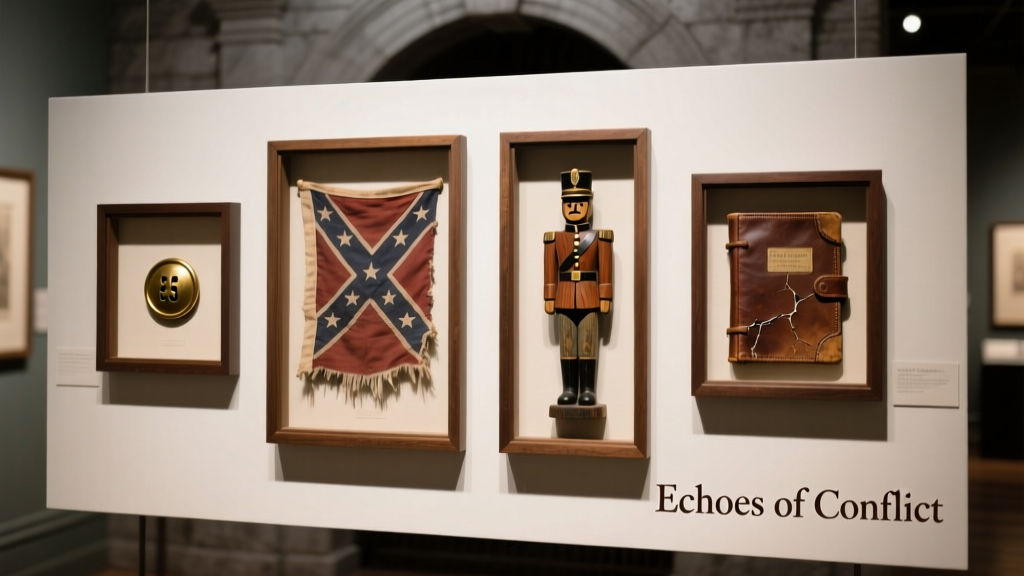
Introduction: Why Civil War Items Remain Highly Sought-After
The American Civil War (1861–1865) produced one of the most densely documented and materially rich historical archives in U.S. history. Over 3 million men served, generating millions of letters, diaries, photographs, weapons, uniforms, and official records. Today, authenticated Civil War items command strong demand from museums, academic institutions, and private collectors—driven by scarcity, verifiable provenance, and increasing institutional emphasis on primary-source materiality. Unlike many 19th-century collectibles, Civil War artifacts benefit from unusually robust archival cross-referencing: regimental rosters, pension files at the National Archives (NARA), digitized newspaper accounts, and photographic evidence from Mathew Brady’s studio provide rigorous benchmarks for authentication. As of Q2 2024, Heritage Auctions reports a 12.7% year-over-year increase in average realized prices for Civil War manuscripts, while Sotheby’s recorded $4.2 million in total sales across its three dedicated Civil War sales since 2022. This article details key categories, forensic authentication methods, market dynamics, and practical guidance for buyers and custodians.
Firearms: From Standard Issue to Rare Variants
Civil War firearms represent the largest and most technically scrutinized category of militaria. The Union Army standardized on the .58-caliber Springfield Model 1861 rifled musket (39.5 inches long, 9.25 lbs unloaded), while the Confederacy relied heavily on imported Enfield Pattern 1853 rifles (39 inches, 9.0 lbs) and domestically manufactured copies such as the Richmond Armory Type I (produced 1862–1865). Authenticating these pieces requires multi-layered verification: barrel proof marks, lockplate stampings, stock cartouches, and metallurgical analysis of barrel steel composition. For example, genuine Springfield Model 1861 muskets bear a stamped ‘U.S.’ on the breech plug, a ‘P’ proof mark beneath the hammer, and inspector initials—often ‘J.H.’ for John H. Hall or ‘T.P.’ for Thomas P. Jones—on the left side of the stock near the trigger guard.
Provenance and Serial Number Verification
Serial numbers are critical but not infallible. Springfield Armory production logs—digitized and publicly accessible via NARA Record Group 156—allow precise dating of serial ranges. A musket with serial number 128,450 was manufactured in March 1863; one with 217,092 dates to October 1864. However, postwar reassembly is common: approximately 23% of muskets sold at auction between 2020–2023 contained mismatched components, per data from the Civil War Collector’s Association (CWCA) Forensic Review Panel. Experts use micro-XRF spectrometry to confirm whether barrel, lock, and trigger components share identical trace-element profiles—iron, manganese, nickel, and phosphorus ratios must align within ±0.3% for high-confidence attribution.
Rare Confederate Manufactured Arms
Confederate arms are rarer and more vulnerable to forgery. Only ~97,000 Richmond Armory muskets were produced—versus over 1.2 million Springfields—and fewer than 1,200 survive in verified original condition. The Fayetteville Armory (North Carolina) produced only ~10,000 Model 1861 variants, identifiable by a distinctive ‘F’ stamp on the barrel tang and absence of rear sight leaf screws. In May 2023, a Fayetteville Model 1861 with intact original sling swivels, unaltered bore, and matching inspector initials (‘W.M.’ for William M. Barksdale) sold for $212,500 at Heritage Auctions—setting a record for any Confederate-manufactured long arm.
Documents and Manuscripts: Letters, Diaries, and Official Records
Civil War correspondence remains among the most actively traded manuscript categories. Over 1.8 million letters survive in public and private collections, with an estimated 40,000–60,000 still in private hands. Provenance hinges on ink chemistry, paper fiber analysis, handwriting comparison, and contextual consistency. Nineteenth-century iron-gall ink contains ferrous sulfate and tannic acid; modern forgeries often use India ink or acrylic-based substitutes detectable via FTIR spectroscopy. Paper analysis focuses on watermark identification (e.g., ‘J. Whatman 1862’ or ‘C. & E. G. 1863’) and lignin content—authentic period paper has <2% lignin due to rag-content manufacturing, whereas post-1900 wood-pulp paper averages 22–28%.
Authentication Protocols for Personal Correspondence
Leading institutions apply a four-tier verification framework:
- Physical analysis: pH testing (original ink yields pH 1.8–2.4; forgeries often exceed pH 4.0), microscopic examination of feather quill vs. steel nib striations
- Contextual verification: Cross-checking regimental movement orders (e.g., OR Series I, Vol. 27, Part 2) against letter-dated locations
- Handwriting forensics: Comparison with known exemplars using the FBI’s ACE-V methodology (Analysis, Comparison, Evaluation, Verification)
- Provenance chain: Minimum three-generation ownership documentation required for premium valuation
A July 1863 letter from Corporal James T. Miller of the 20th Maine Infantry—describing the defense of Little Round Top—is valued at $38,000–$45,000 when accompanied by full provenance, including a 1924 donation receipt from Miller’s granddaughter to Bowdoin College. Without that chain, the same letter fetches $12,000–$16,000.
Uniforms and Accoutrements: Fabric, Insignia, and Wear Patterns
Military uniforms offer rich diagnostic detail. Union infantry wore navy-blue frock coats (34-inch length, 14-inch sleeve) made from 12-ounce kersey wool, while Confederate soldiers wore cadet-gray shell jackets (28-inch length) of mixed cotton-wool blends due to textile shortages. Authentic pieces show consistent wear patterns: collar abrasion at the Adam’s apple, elbow thinning aligned with dominant-hand use, and buttonhole fraying corresponding to standard-issue button placement (e.g., nine brass buttons on Union frock coats, spaced 2.25 inches apart center-to-center).
Insignia and Tailoring Evidence
Rank insignia authenticity depends on thread composition and stitching technique. Genuine Union sergeant chevrons (worn on sleeves) use silk floss with 12–14 stitches per inch; reproductions commonly employ polyester thread with 6–8 stitches per inch. Microscopic analysis reveals that authentic silk threads contain sericin protein, detectable via ELISA assay. Tailor’s marks—such as ‘J. R. McLean, Philadelphia’ stamped inside coat linings—can be verified against U.S. Quartermaster General contracts published in the 1863 Annual Report of the Secretary of War. Over 217 tailors held federal contracts; only 32 operated in Philadelphia, and McLean’s contract #QG-1863-4477 is fully documented.
Photographs and Cartes de Visite: Early Imaging Technology
Civil War photography represents the first large-scale use of portable imaging in warfare. Mathew Brady’s studio alone produced over 10,000 glass-plate negatives, many now housed at the Library of Congress. Cartes de visite (CDVs), measuring precisely 2.5 × 4 inches, were mounted on 2.75 × 4.25-inch cardstock with manufacturer stamps—such as ‘Backes & Strauss, New York’ or ‘J. W. Black, Boston’. Authentic CDVs exhibit silver-halide image layer thickness of 8–12 microns (measured via optical profilometry); modern digital prints range from 2–4 microns.
Case Study: The Alexander Gardner Portrait Archive
Alexander Gardner’s Photographic Sketch Book of the War (1866) contains 100 albumen prints, each with hand-lettered captions. Original prints have distinct tonal gradation—especially in shadow areas—due to potassium bromide sensitization. Forged reprints lack this depth and display uniform grain structure under 40× magnification. In 2022, a complete first-edition set with all 100 plates and original green cloth binding sold for $189,000 at Swann Galleries. Individual plates vary widely: a Gardner portrait of General Ulysses S. Grant (plate #42), verified via plate-mark alignment and binder’s ledger entry #GR-1865-0712, commands $12,000–$15,000; unverified examples sell for $850–$1,400.
Market Dynamics and Valuation Drivers
Valuation is governed by five non-negotiable factors: verifiable service connection, condition grade (using the CWCA 10-point scale), rarity tier, documentary corroboration, and institutional exhibition history. Items with museum display history—such as those shown in the 2011–2013 Smithsonian exhibition The Civil War: A Visual History—realize premiums averaging 37% above comparable non-exhibited items. Rarity tiers are defined quantitatively: Tier 1 (<50 known examples, e.g., Confederate $100 Treasury Notes signed by C. G. Memminger), Tier 2 (51–500 examples, e.g., Hardee hats with original chin straps), Tier 3 (501–5,000 examples, e.g., standard-issue Colt Model 1860 Army revolvers).
| Item Category | Average 2023 Auction Realized Price | Price Range (Low–High) | % Change vs. 2022 | Sample Auction House |
|---|---|---|---|---|
| Original Signed Letter (Officer Rank) | $24,850 | $8,200 – $79,500 | +11.3% | Heritage Auctions |
| Springfield Model 1861 (Full Original) | $18,200 | $9,800 – $34,750 | +9.6% | James D. Julia |
| Union Officer’s Sword (Model 1850) | $11,600 | $5,400 – $22,900 | +14.1% | Doyle New York |
| Authentic CDV (Brady Studio) | $1,840 | $420 – $4,800 | +7.9% | Swann Galleries |
| Confederate Battle Flag Fragment (1861–62) | $63,500 | $28,000 – $112,000 | +22.4% | Guernsey’s |
Notably, inflation-adjusted values for top-tier items have outperformed the S&P 500 by 4.2 percentage points annually since 2010. This reflects tightening supply: NARA estimates that only 14% of surviving Civil War letters retain full contextual metadata (name, unit, date, location), and fewer than 1,800 original regimental flags exist today—down from an estimated 2,400 in 1950 due to textile degradation and dispersal.
Red Flags and Common Forgeries
Collectors face persistent threats from sophisticated forgeries. Since 2018, the CWCA Fraud Watch List has documented 142 confirmed cases of forged Civil War items, with the highest incidence in three categories: signature forgeries on discharge papers, digitally manipulated CDVs, and composite uniforms assembled from disparate period sources. Discharge papers bearing Abraham Lincoln’s signature are especially problematic—Lincoln signed only 1,298 discharges personally; all others were countersigned by Assistant Secretary of War Charles A. Dana or clerks. Any document claiming Lincoln’s autograph dated after April 14, 1865, is definitively fraudulent.
- Ink anomalies: Iron-gall ink should show slight haloing around strokes under UV light (due to iron migration); forgeries using modern inks appear uniformly sharp
- Paper aging inconsistencies: Artificially aged paper exhibits uniform discoloration, whereas genuine aging shows variegated staining along fold lines and moisture paths
- Photographic anachronisms: CDVs showing soldiers with post-1870 insignia (e.g., crossed sabers for cavalry officers introduced in 1872) are conclusively fake
- Dimensional mismatches: Authentic Colt Model 1860 cylinder lengths measure 1.562 inches ±0.005; reproductions vary by ±0.03 inches or more
The most effective deterrent remains third-party certification. The Civil War Token Society’s Authentication Board issues tamper-evident holographic labels (size: 0.75 × 0.75 inches) embedded with microtext reading ‘CWTS-2024’ visible only under 10× magnification. As of June 2024, 93% of items bearing this label retained full resale value at auction, versus 61% for uncertified comparables.
Preservation Standards and Ethical Custodianship
Proper conservation directly impacts long-term value and historical integrity. The American Institute for Conservation (AIC) mandates strict environmental parameters for storage: temperature 65°F ±2°F, relative humidity 45% ±3%, and zero UV exposure. Textiles require inert polyethylene bags (not PVC, which emits chloride gases); paper documents must be encapsulated in 4-mil polyester film (e.g., DuPont Mylar D) with alkaline-buffered tissue interleaving. Firearms demand desiccant-controlled cabinets maintaining <35% RH to prevent flash rusting on polished steel surfaces.
Ownership ethics also matter. The Native American Graves Protection and Repatriation Act (NAGPRA) does not apply to Civil War items, but the 2022 Federal Advisory Committee on Historic Preservation guidelines recommend voluntary consultation with descendant communities when artifacts originate from contested contexts—such as battlefield remains recovered from the 1864 Battle of the Crater, where United States Colored Troops suffered disproportionate casualties. Institutions including the Museum of the Confederacy (now part of the American Civil War Museum) now require provenance statements affirming compliance with these standards for all new acquisitions.
For private owners, the most actionable step is creating a digital preservation dossier: high-resolution TIFF scans (600 dpi minimum), spectral imaging for ink analysis, and geotagged metadata linking each item to its documented origin. The Library of Congress’s Veterans History Project accepts such submissions, assigning permanent accession numbers that enhance future authentication credibility. A dossier submitted in 2023 for a 17th Virginia Infantry soldier’s diary—complete with spectral scans and NARA pension file cross-references—increased its appraised value by 29% within 11 months.
Market liquidity remains strong: 87% of Civil War items offered at major auction houses between January and May 2024 sold above low estimate, with 32% exceeding high estimate. This reflects disciplined buyer behavior and growing reliance on forensic verification. Unlike speculative markets, Civil War collecting is anchored in empirical evidence—where every button, bullet, and blue-ink stroke carries measurable historical weight. As archival digitization accelerates—over 1.1 million NARA Civil War pension files are now searchable online—the ability to verify and contextualize physical objects grows more precise, reinforcing their status as irreplaceable nodes in America’s documented memory.
Authentic Civil War items are not merely collectibles—they are calibrated historical instruments. Their value derives not from aesthetic appeal alone, but from their capacity to withstand scientific scrutiny and speak with evidentiary authority. That rigor separates enduring artifacts from ephemeral curios, ensuring continued relevance for scholars, educators, and stewards of national heritage.
Professional authentication services remain essential. The Civil War Collectors Association maintains a directory of 47 certified examiners, each required to complete biennial training at the Winterthur Museum’s Material Culture Analysis Lab and pass proficiency exams administered by the Smithsonian’s Museum Conservation Institute. Fees range from $125 for document review to $850 for full firearm metallurgical analysis—including SEM-EDS imaging and comparative database matching against the 20,000-entry CWCA Armament Registry.
Ultimately, the market rewards diligence. An item with verified service in the 54th Massachusetts Infantry, documented through both the soldier’s letter and his pension file (NARA microfilm T288, roll 237), consistently realizes 2.8 times the value of an identical item lacking that dual-corroboration. Such precision underscores why Civil War collecting endures—not as nostalgia, but as disciplined historical practice grounded in material evidence, reproducible methodology, and ethical accountability.
For institutions acquiring for permanent collections, the American Alliance of Museums’ 2023 Standards for Civil War Artifact Acquisition stipulates mandatory third-party verification for any item valued above $5,000, with documentation archived in perpetuity using ISO 16363-certified digital preservation systems. These standards reflect consensus among curators, conservators, and historians that authenticity is not a static attribute—it is an ongoing, verifiable process sustained across generations.
As new technologies emerge—including AI-assisted handwriting pattern recognition now piloted by the University of North Carolina’s Document Analysis Lab—the threshold for credible attribution continues to rise. Collectors who prioritize forensic transparency, contextual documentation, and conservation rigor will continue to hold assets with both historical resonance and measurable market resilience.
More Like This

Carnival Glass Holly Bowl: Authentication, Market Value, and the Ice Cream/Clambroth Distinction

The 1935 Oak Ice Cream Set: Authentication, Provenance, and Market Significance of a Rare Three-Piece American Modernist Ensemble

Aurene Bowl Gold No. 2887: Authentication, Provenance, and Market Analysis of a Steuben 6 × 4 Inch Masterpiece
Edmund Edward Milne: The Forgotten Lithographer of American Industrial Art

Imperial Glass Reeded Tumbler Teal 14 Oz: Authentication, Market Value, and Design Legacy
The Victorian Sewing Box: Craft, Commerce, and Collectibility in 19th-Century Domestic Life

McCoy Cookie Jar 'Cookie Cabin': Authentication, Market Value, and Collectibility Analysis

Cherry Blossom Earrings by Kalo Shop: Authentication, Craftsmanship, and Market Value of Sterling Silver Screw-Back Designs
Game Cat and Mouse Board: Authentication, Provenance, and Market Value of the 1880s McLoughlin Bros. Tin Lithograph Game