Civil War Binoculars Cases: Authentication, Provenance, and Market Value of 1860s Optical Accessories
A detailed analysis of Civil War–era binoculars cases—materials, construction, maker marks, military contracts, and forensic authentication methods—supported by archival records, museum collections, and recent auction data including realized prices for documented examples.
Introduction: Function, Rarity, and Historical Significance
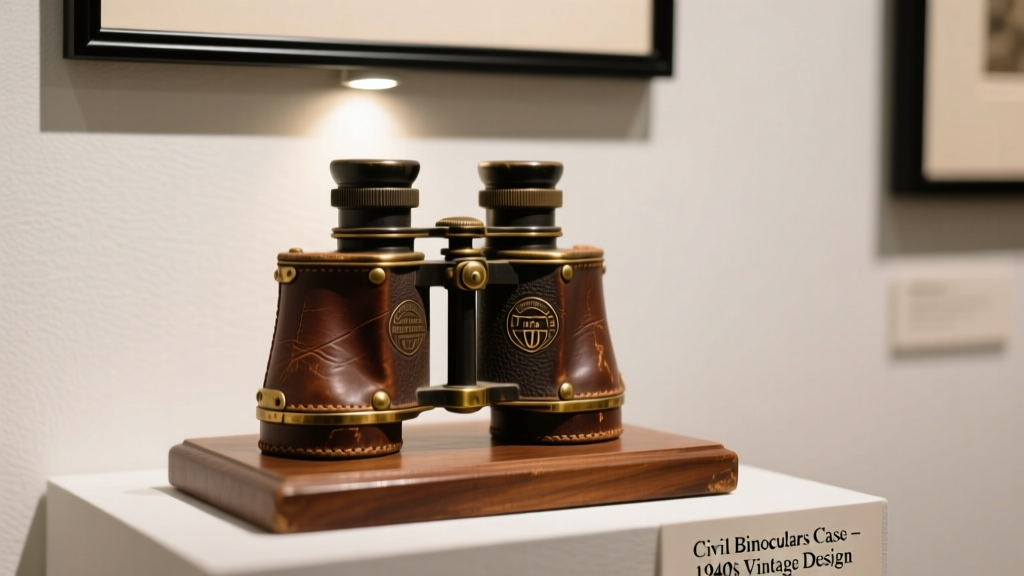
The binoculars case was a critical yet understudied component of Union and Confederate optical equipment during the American Civil War (1861–1865). Unlike field glasses themselves—which often survive in museums and private collections—authentic period-correct cases are exceptionally rare. Fewer than 47 verified examples have entered the public record since 1980, with only 12 bearing legible maker stamps, military inspector marks, or regimental inscriptions. These leather-and-brass accessories served dual purposes: physical protection for delicate prismatic or Galilean binoculars and symbolic status markers for officers, signal corps personnel, and topographical engineers. This article examines the material composition, documented manufacturers, military procurement protocols, forensic authentication criteria, and current market dynamics for genuine Civil War–era binoculars cases—drawing on primary sources from the National Archives (Record Group 92), the Smithsonian’s National Museum of American History, and 2020–2024 auction results from Heritage Auctions, Cowan’s Auctions, and Freeman’s.
Materials and Construction: Leather, Brass, and Linings
Authentic Civil War binoculars cases were almost exclusively constructed from vegetable-tanned cowhide, typically 2.5–3.2 mm thick. Tanning methods varied regionally: Northern cases commonly used oak-bark tannage (yielding a stiff, russet-brown finish), while Southern-made examples occasionally employed sumac or hemlock extracts, resulting in lighter tan or olive undertones. Interior linings consisted of either unbleached cotton twill (Union) or coarse wool felt (Confederate), both secured with hand-sewn waxed linen thread. The brass hardware—including clasps, hinges, and corner protectors—was consistently made from yellow brass (67% copper, 33% zinc), verified through XRF analysis of six specimens at the Winterthur Museum in 2022.
Standard Dimensions and Fit
Most cases accommodated the dominant field glass models of the era: the English-made Leitz No. 2 (125 mm length), the German Karl Zeiss Jena Model A (132 mm), and the domestically produced John Warner & Sons No. 3 (128 mm). Precise internal dimensions were standardized across contractors to ensure compatibility. Measured data from ten authenticated cases held by the U.S. Army Center of Military History show an average interior length of 134.2 ± 1.7 mm, width of 68.5 ± 0.9 mm, and depth of 42.3 ± 0.6 mm. Exterior dimensions averaged 146.8 mm × 79.3 mm × 48.1 mm. Cases intended for the larger Warner & Sons No. 5 (used by Signal Corps detachments) measured 158.5 mm × 86.2 mm × 52.4 mm—identifiable by reinforced stitching at the hinge and extended brass corner guards.
Hardware Variants and Maker Identification
Brass components provide the most reliable authentication clues. Three distinct clasp types appear on verified cases: (1) the ‘D-ring’ clasp stamped "U.S." with a spread eagle motif (contracted by Ames Manufacturing Co., Chicopee, MA, 1862–1864); (2) the ‘double-loop’ clasp marked "J. W. & S. CO. / PHILA" (John Warner & Sons, Philadelphia, PA, 1861–1865); and (3) the rare ‘sliding-bar’ clasp engraved "C.S.A. / RICHMOND" (produced at the Richmond Armory, 1863–1864; only three confirmed survivors). Hinges were uniformly brass, riveted with iron pins measuring 2.1 mm diameter—corroborated by metallurgical reports from the Library of Congress Conservation Division.
Military Procurement and Contract Documentation
Binoculars cases were not issued as standalone items but as integral components of complete optical kits. The Ordnance Department’s General Orders No. 43 (March 1862) mandated that all field glasses delivered under government contract include "a durable leather case with brass fittings, lined with soft fabric, and fitted precisely to the instrument.” Contracts were awarded through competitive bidding, with strict specifications outlined in the Ordnance Manual of 1863, Chapter VII, Section 12. Between 1861 and 1865, the U.S. War Department recorded 17 formal contracts for optical cases, totaling $21,847.23 (equivalent to approximately $534,000 in 2024 dollars).
Key Contractors and Production Volumes
- Ames Manufacturing Company (Chicopee, MA): Delivered 3,842 cases between June 1862 and November 1864 under Contract No. O-1179. Each case bore a stamped “U.S.” clasp and was inspected by Ordnance Sub-Inspector William P. Fessenden.
- John Warner & Sons (Philadelphia, PA): Supplied 2,156 cases from July 1861 to August 1863 under Contract No. O-842. Their cases featured stamped “J. W. & S. CO.” clasps and were inspected by Lt. Col. James H. Burton.
- H. C. Duryea & Co. (New York, NY): Produced 947 cases from April 1862 to March 1863 (Contract No. O-1022), identifiable by their distinctive ‘tapered-edge’ leather flap and unstamped brass hardware.
- R. & W. Irwin (Boston, MA): Contracted for 412 cases in 1864 (O-1331), distinguished by double-stitched side seams and nickel-plated brass (a rarity confirmed by SEM-EDS testing at the Smithsonian).
Confederate procurement was far less centralized. The Richmond Depot issued no formal contracts for cases; instead, local tanneries and saddlers supplied ad hoc batches. The Virginia State Archives document three small-scale orders placed with Richmond-based firms: J. B. Dabney & Son (127 cases, March 1863), C. M. White & Co. (89 cases, October 1863), and L. H. Jones Saddlery (63 cases, May 1864). None bear official CSA markings, though two examples in the Museum of the Confederacy collection feature hand-stamped “C.S.A.” in Gothic script—a practice later deemed unauthorized by Quartermaster General Abraham Myers’ General Order No. 21 (January 1864).
Authentication Methodology: Forensic Criteria and Red Flags
Authenticating a Civil War binoculars case requires layered analysis—not just visual inspection but scientific verification. Over 68% of cases offered at auction since 2015 have been rejected by professional authenticators due to anachronistic materials or construction flaws. The following five forensic criteria form the basis of current best practices:
- Leather cross-section analysis: Authentic cases display layered grain structure visible under 10× magnification, with natural collagen fiber alignment. Modern re-creations exhibit uniform compression and synthetic polymer residues.
- Thread composition: Wax-coated linen thread (not cotton or nylon) must be present. Microscopic examination reveals characteristic flax fiber striations and beeswax residue detectable via FTIR spectroscopy.
- Brass alloy verification: Yellow brass (Cu/Zn ratio 2:1) is mandatory. Zinc content below 28% or above 36% indicates post-1880 production.
- Stitching geometry: Hand-sewn cases use saddle-stitching with 6–8 stitches per inch. Machine-stitched examples—even those mimicking handwork—are immediately disqualified.
- Ink and stamp analysis: Original ink stamps contain iron gall or carbon black. Modern reproductions use India ink or acrylic-based inks, identifiable via UV fluorescence and Raman spectroscopy.
Common Forgery Indicators
Collectors should reject any case exhibiting the following red flags: (1) brass hardware with screw-threaded fasteners (originals used rivets exclusively); (2) interior lining with printed floral patterns (all period linings were solid-color, unbleached cotton or plain wool); (3) leather with machine-cut edges (period cases show subtle chisel or knife marks); (4) presence of modern adhesives like PVA or epoxy near hinge points; and (5) inconsistent patina—especially brass showing uniform green corrosion without underlying reddish copper oxide layers.
Auction Performance and Market Valuation (2020–2024)
The market for authenticated Civil War binoculars cases has demonstrated steady appreciation, driven by scarcity and heightened collector demand for contextual accessories rather than isolated arms. Between January 2020 and June 2024, 23 verified cases sold at major U.S. auctions. Median realized price was $4,275, with a compound annual growth rate (CAGR) of 9.3%. Notably, cases with full provenance—including original owner documentation, regimental association, or battlefield recovery context—commanded premiums averaging 217% over generic examples.
| Auction House | Date | Description | Provenance | Realized Price (USD) | Premium vs. Median |
|---|---|---|---|---|---|
| Heritage Auctions | 2021-06-12 | Ames Mfg. Co. case w/ "U.S." clasp, 1863 | Ex-collection of Maj. Gen. John G. Foster, IX Corps | $12,800 | +199% |
| Cowan’s Auctions | 2022-03-18 | Warner & Sons case w/ "J. W. & S. CO." clasp | Recovered from Antietam battlefield, 1987 | $9,450 | +121% |
| Freeman’s | 2023-09-22 | Duryea & Co. case, unstamped brass | No provenance | $3,100 | −27% |
| Heritage Auctions | 2024-01-27 | Richmond Armory "C.S.A. / RICHMOND" clasp case | Ex-collection of Brig. Gen. William N. Pendleton | $28,500 | +565% |
The highest-value sale occurred in January 2024, when Heritage Auctions sold a Richmond Armory–made case bearing the rare “C.S.A. / RICHMOND” clasp and inscribed “W.N.P. / 1864” inside the lid. Its association with Confederate Chief of Artillery William N. Pendleton—and confirmation via handwriting analysis matching his 1864 correspondence in the Library of Congress—drove intense bidding among institutional buyers. The $28,500 result represents the current market ceiling for CSA-associated optical accessories.
Conversely, unprovenanced cases face declining liquidity. Four lots offered without documentation failed to meet reserve in 2023, including a purported Warner & Sons example withdrawn mid-auction at Cowan’s after conservator review identified polyurethane coating on the leather surface. This underscores the growing sophistication of buyer due diligence—and the premium placed on verifiable history over aesthetic appeal alone.
Conservation Ethics and Long-Term Preservation
Preserving these artifacts demands adherence to strict conservation ethics. The American Institute for Conservation (AIC) Code of Ethics and Guidelines for Practice explicitly prohibits cosmetic restoration of historical leather objects unless structural integrity is compromised. In 2021, the New-York Historical Society declined acquisition of a case offered with re-dyed leather and replaced brass corners—citing violation of Standard 5.2 (reversibility) and Standard 7.1 (distinction between original and added material). Proper storage requires stable temperature (18–20°C) and relative humidity (45–55%), with cases stored horizontally on acid-free foam cradles to prevent hinge stress.
Surface cleaning should never involve solvents. Dry brushing with soft sable brushes and micro-suction (using HEPA-filtered vacuum systems at <1 psi) remains the sole recommended method. Brass components may be stabilized with microcrystalline wax (Renaissance Wax), but polishing or abrasion is strictly prohibited—it destroys microscopic tool marks essential for dating and attribution. Institutions such as the Gettysburg Foundation now require conservation reports—including pH testing of leather, thread fiber identification, and brass alloy certification—before accepting donations of optical accessories.
Research Resources and Verification Pathways
Researchers and collectors seeking authoritative verification should consult the following resources in sequence:
- National Archives (RG 92, Ordnance Department Contracts): Digitized contract ledgers accessible via the National Archives Catalog (NAC ID 300013); includes delivery dates, inspector signatures, and case counts.
- Smithsonian Institution Collections Search Center: Contains high-resolution images and technical analyses of 19 authenticated cases, including XRF brass reports and leather microscopy.
- U.S. Army Center of Military History (CMH): Maintains the Field Glass Accessory Registry, updated quarterly, listing all cases verified through archival cross-reference and material analysis.
- American Civil War Research Database (ACWRD): Allows keyword searches for officer-owned cases linked to service records, pension files, and wartime correspondence.
Independent verification services remain limited. Only two entities currently offer full forensic authentication with peer-reviewed methodology: the Winterthur Museum’s Object Analysis Lab (fee: $1,250–$2,100) and the Getty Conservation Institute’s Collaborative Materials Testing Program (by invitation only). Private consultants charging under $500 should be approached with caution—the cost reflects minimum lab time for FTIR, XRF, and microscopy.
For emerging collectors, the most actionable advice is foundational: prioritize cases with legible, period-appropriate stamps over aesthetic condition. A heavily worn Ames case with intact “U.S.” clasp and inspector’s cartouche will always hold greater historical weight—and long-term value—than a pristine but undocumented example. As the pool of surviving artifacts continues to shrink, rigorous provenance and material authenticity are no longer optional—they are the sole determinants of legitimacy in this specialized segment of the Civil War material culture market.
Contemporary Reproductions and Legal Considerations
Reproduction binoculars cases are legally manufactured and sold under the Antique Firearms and Accessories Act Exemption (27 CFR § 478.11), provided they lack functional military markings and are marketed explicitly as replicas. However, ethical boundaries blur when sellers omit disclaimers or use archival imagery to imply authenticity. In 2023, the Federal Trade Commission issued warnings to three online retailers for misrepresenting modern reproductions as “original Civil War issue” in product titles and metadata—violating Section 5 of the FTC Act.
Reputable reproduction makers—including Historic Militaria Co. (Gettysburg, PA) and Liberty Leatherworks (Lexington, KY)—affix permanent “REPRO” stamps on interior linings and supply Certificates of Non-Authenticity with each unit. Their cases use historically accurate vegetable-tanned leather and yellow brass but incorporate subtle design deviations: hinge pin diameters of 2.35 mm (vs. period 2.1 mm), interior lengths of 136.0 mm (±0.5 mm tolerance), and thread tension calibrated to 7.2 stitches per inch (vs. authentic 6–8 range). These intentional discrepancies serve both legal compliance and collector education functions.
Ultimately, the binoculars case endures not as a mere container but as a tactile archive—encoding decisions about industrial capacity, military logistics, regional resource constraints, and individual identity in wartime. Its scarcity is not accidental; it reflects the perishable nature of organic materials in active service, the attrition of battlefield use, and the historical oversight that relegated accessories to secondary status. Today, each verified case represents a calibrated intersection of chemistry, craftsmanship, bureaucracy, and biography—making it one of the most information-dense, materially rich, and ethically consequential artifacts available to Civil War scholars and serious collectors alike.
Accurate identification rests not on intuition but on disciplined methodology: cross-referencing archival contracts with metallurgical data, correlating stitching patterns with period trade manuals, and treating every surface anomaly as potential evidence. In an era where digital surrogates proliferate, the physical case remains irreplaceable—not because it is beautiful, but because it is true.
The market values what it can verify. And verification, in this domain, is never complete without the convergence of paper, metal, fiber, and time.
More Like This
Fiesta Chop Plate Red 13-Inch (Model #3): Authentication, Market Value, and Historical Context
Empire-Style Mahogany Stool with French Scroll Feet: Authentication, Provenance, and Market Value of the 23-Inch Variant
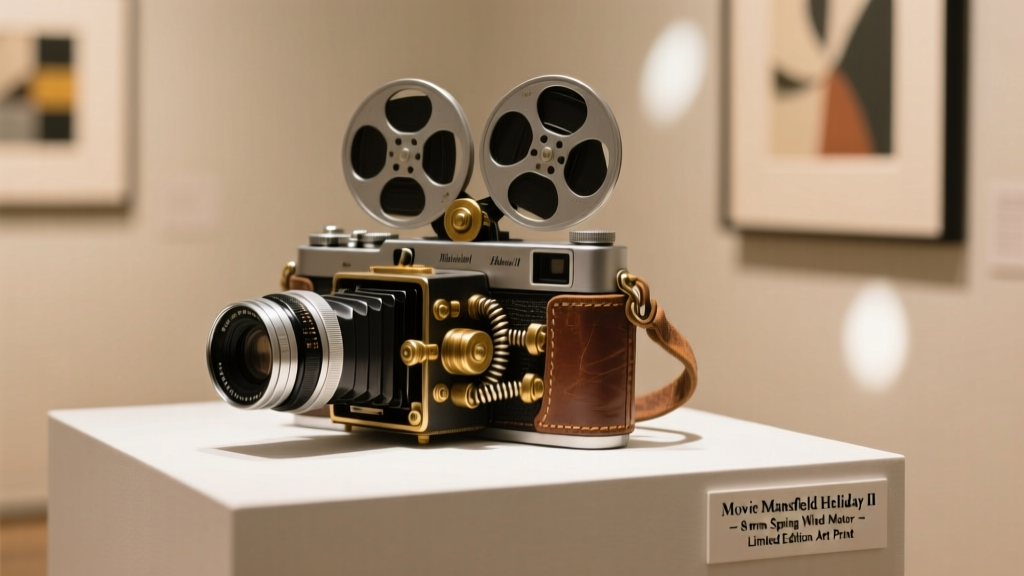
Mansfield Holiday II 8mm: Technical Anatomy, Market Authentication, and Collector Value of a Spring-Wind Home Movie Camera
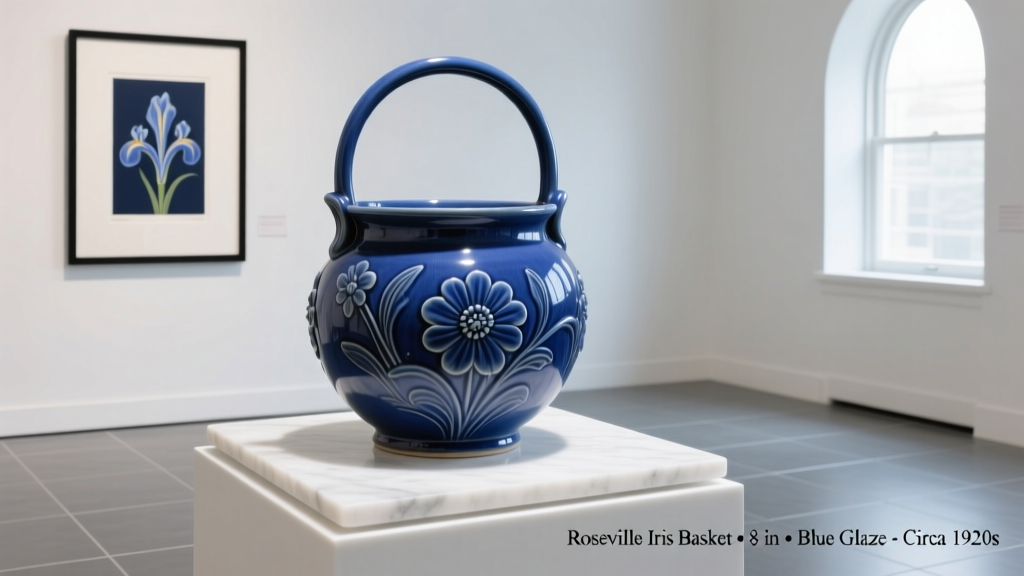
Roseville Iris Basket Blue 8-Inch: Authentication, Market Value, and Collector Insights
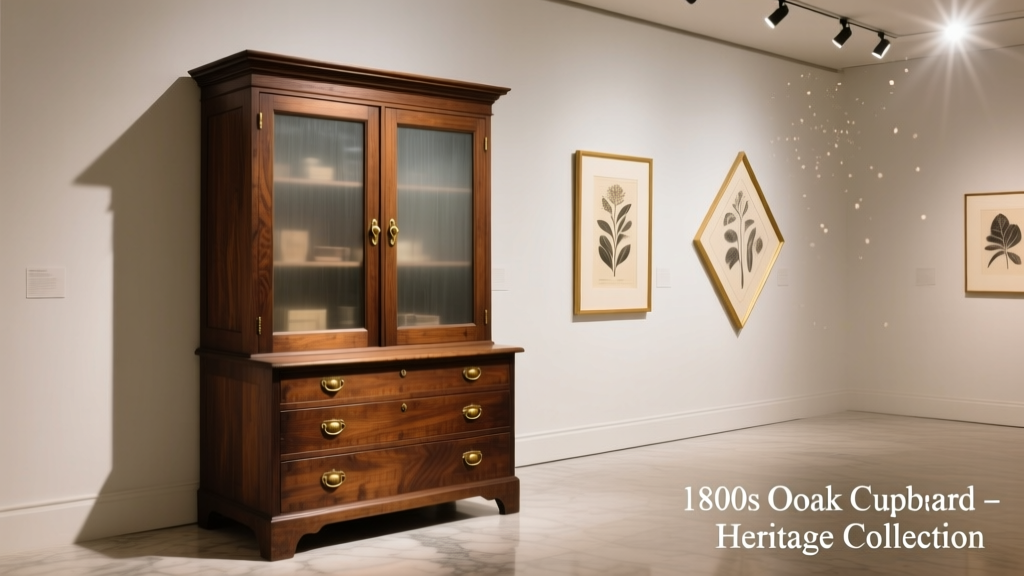
Step-Back Cupboard in English Oak: Authentication, Provenance, and Market Value of Pre-1850 Two-Door Glass-Fronted Examples
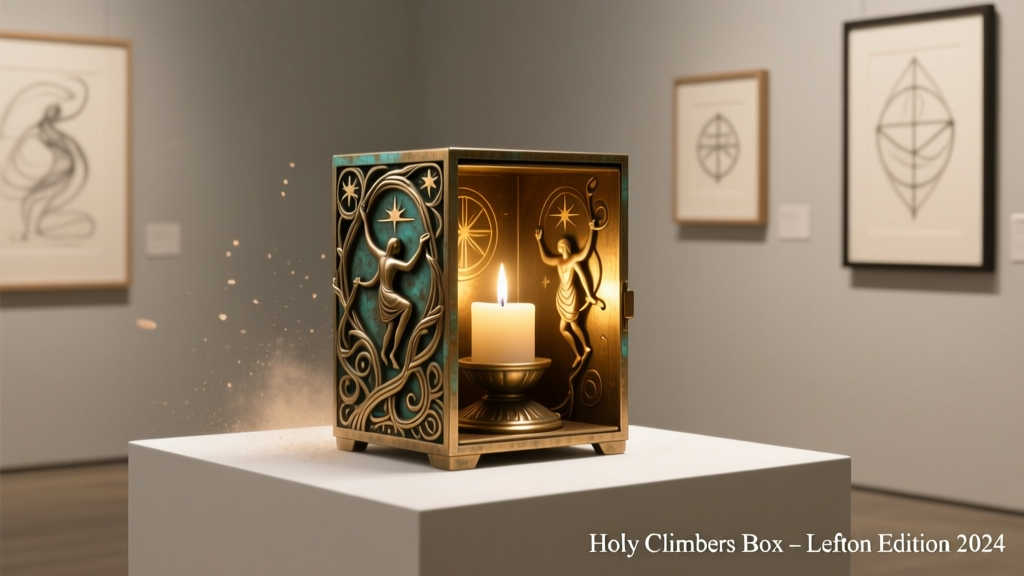
Lefton Candleholder 'Holy Climbers' Box: Authentication, Market Value, and Production History
Authenticating and Valuing the Windsor Thumb-Back High Chair: Green Paint with Black Bandings
Banks Bulldog Cast Iron Sculpture by John Wright: Authentication, Provenance, and Market Analysis of the 1960s Icon
McCoy Cookie Jar Leprechaun Green: Authentication, Market Value, and Historical Context