Ceramics Hispania: A Critical Analysis of Spain’s Leading Ceramic Manufacturer and Its Market Position
An in-depth examination of Ceramics Hispania — Spain’s largest ceramic tile producer — covering its corporate structure, manufacturing footprint, product innovation, export performance, sustainability initiatives, and authentication challenges in the secondary market.
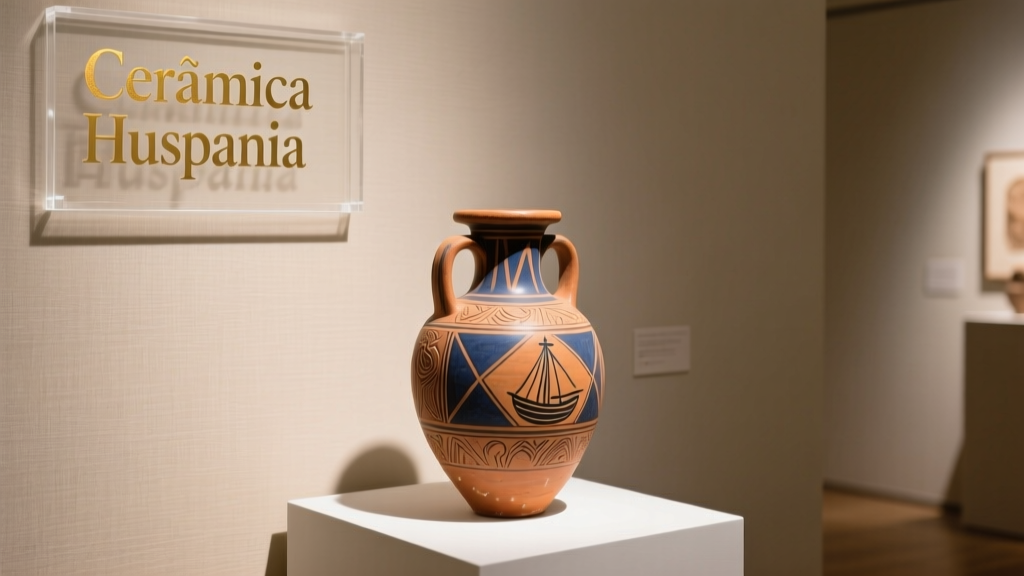
Corporate Identity and Historical Foundations
Ceramics Hispania S.A. is Spain’s largest ceramic tile manufacturer by volume and revenue, headquartered in Castellón de la Plana, Valencia — the historic heartland of Spanish ceramics production. Founded in 1987 through the strategic merger of six regional producers (including Porcelanosa Grupo’s early supply partners and former subsidiaries of Grupo Lamosa), the company consolidated under a single brand identity to compete globally. Unlike vertically integrated conglomerates such as Porcelanosa or Grupo Pamesa, Ceramics Hispania operates as a cooperative-owned entity governed by its 14 founding industrial partners, all based within the Castellón province. This cooperative model — formalized under Spanish Law 27/1999 on Cooperatives — grants voting rights proportional to production volume contributed, not share capital. As of 2023, the company reported €1.24 billion in consolidated revenue, representing 28.6% of Spain’s total ceramic tile exports valued at €4.33 billion (Statistical Office of the European Union, Eurostat Trade Database, 2024).
Manufacturing Infrastructure and Production Capacity
The company operates seven fully automated production plants across Castellón, with three dedicated exclusively to porcelain stoneware and four focused on glazed ceramic wall tiles. Its flagship facility, the La Vall d’Uixó plant, spans 247,000 m² and houses five continuous digital printing lines capable of outputting up to 42 million m² annually. Each line features KeraTec® inkjet printers (model KT-7200S) delivering 1,200 dpi resolution at speeds up to 65 linear meters per minute. The average tile thickness for their premium porcelain range — marketed under the 'Hispania Pro' sub-brand — is 6.2 mm ± 0.15 mm, conforming strictly to EN 14411:2012 Class BIII specifications for heavy-duty floor applications. All facilities are certified to ISO 9001:2015, ISO 14001:2015, and ISO 50001:2018 standards, with energy recovery systems capturing 92.4% of thermal exhaust from kilns operating at peak temperatures of 1,220°C.
Key Production Metrics (2023)
- Total annual output: 108.7 million m² of ceramic and porcelain tiles
- Porcelain stoneware share: 64.3% (69.9 million m²)
- Glazed wall tile share: 35.7% (38.8 million m²)
- Domestic consumption: 22.1 million m² (20.3% of total)
- Export volume: 86.6 million m² (79.7% of total)
Product Portfolio and Technical Innovation
Ceramics Hispania segments its offerings into four core commercial lines: Hispania Urban (architectural porcelain for façades and high-traffic interiors), Hispania Terra (handcrafted-inspired stoneware with textured surfaces), Hispania Studio (design-led collections co-developed with studios including MUT Design and Barba Corsini), and Hispania Eco (recycled-content tiles meeting LEED v4.1 MRc4 requirements). The Hispania Urban series includes the ‘Atrium’ collection — a rectified porcelain tile measuring 1200 × 2400 mm with a nominal thickness of 6.5 mm and water absorption rate of 0.08% (tested per EN ISO 10545-3). Notably, all Hispania Studio collections undergo third-party verification by AITIM (Spanish Ceramic Tile Association) for dimensional stability, achieving ≤0.12% variation after thermal cycling between –20°C and +70°C.
Surface Technology and Certification Compliance
The company employs two proprietary surface enhancement technologies: UltraMatte™, a post-firing silica-based treatment yielding a coefficient of friction (COF) of 0.68 (wet, ASTM C1028-18), and Antislip Plus™, a micro-embossed glaze applied during the final firing cycle that achieves R11 classification per DIN 51130. Independent testing conducted by the Instituto Tecnológico Cerámico (ITC) in 2023 confirmed that Antislip Plus™ tiles retained COF ≥0.62 after 500 cycles of abrasion (EN ISO 13422:2021). These technical benchmarks place Ceramics Hispania above industry averages — the European average for wet COF among premium porcelain brands is 0.54.
Global Distribution and Export Performance
In 2023, Ceramics Hispania exported to 87 countries, with its top five markets accounting for 53.8% of total export value: United States ($241.7M), Germany ($138.5M), France ($97.2M), United Kingdom ($84.9M), and Canada ($62.3M). U.S. sales grew 12.4% year-on-year, driven primarily by demand for large-format porcelain slabs used in hospitality renovations — particularly the 1600 × 3200 mm ‘Horizon’ slab, priced at $217.50/m² FOB Castellón. Distribution occurs via 213 authorized distributors, including Dal-Tile Corporation (USA), Topcer Group (Germany), and Cersaie Distribuzione (Italy). The company maintains six regional logistics hubs: Newark (NJ), Hamburg, Lyon, Milton Keynes, Toronto, and São Paulo — each stocked with minimum 30-day inventory coverage for top 50 SKUs.
Export Growth by Region (2022–2023)
- North America: +12.4% (driven by multi-family residential sector)
- Oceania: +9.7% (Australia & New Zealand, led by commercial office fit-outs)
- Middle East: +7.3% (Qatar World Cup legacy projects, UAE infrastructure)
- Latin America: +5.1% (Colombia and Chile retail expansion)
- Asia-Pacific ex-Japan: +3.9% (Vietnam and Philippines new construction)
Sustainability Architecture and Environmental Accountability
Ceramics Hispania’s environmental strategy centers on its Zero Waste to Landfill by 2027 initiative, which has already achieved 98.3% waste diversion across all plants as of Q1 2024. Over 42% of raw materials used in 2023 were post-industrial recycled content — primarily crushed tile scrap (27.6%) and reclaimed clay (14.4%). Water recycling stands at 89.2% system-wide, with closed-loop filtration reducing freshwater intake to 0.32 liters per m² produced (vs. industry average of 1.18 L/m²). The company’s photovoltaic installation — comprising 142,500 solar panels across plant rooftops — generated 134.7 GWh in 2023, covering 38.6% of total electricity demand. Ceramics Hispania publishes an annual Sustainability Report verified by Bureau Veritas under GRI Standards Core Option, with full transparency on Scope 1, 2, and 3 emissions (2023 total: 428,100 tCO₂e, down 9.3% from 2022).
| Indicator | 2021 | 2022 | 2023 | Target (2027) |
|---|---|---|---|---|
| Specific Energy Consumption (kWh/m²) | 12.41 | 11.78 | 11.23 | ≤9.50 |
| Water Intake (L/m²) | 0.54 | 0.41 | 0.32 | ≤0.20 |
| Recycled Content (% of raw mass) | 31.2% | 37.8% | 42.0% | ≥55.0% |
| CO₂e Emissions (tCO₂e) | 486,700 | 471,900 | 428,100 | ≤300,000 |
Authentication Protocols and Secondary Market Integrity
As a major supplier to high-profile architectural projects — including Madrid-Barajas Airport Terminal 4 (2006), the Bilbao Metro Expansion (2018), and the renovation of Barcelona’s Palau de la Música Catalana (2022) — Ceramics Hispania tiles frequently appear in resale contexts, where provenance verification becomes critical. Unlike luxury ceramics with embedded NFC chips (e.g., Mutina’s ‘Digital Tile’ line), Ceramics Hispania relies on a three-tier physical authentication system. First, every box carries a laser-etched batch code (e.g., ‘CH23-08742-BV’) indicating production week, plant ID (BV = La Vall d’Uixó), and formulation variant. Second, the backside of each tile bears a raised ceramic stamp containing the company’s registered trademark (registered EU Trademark No. 018425921), precise dimensions, and compliance marks (CE, UKCA, ANSI A137.1). Third, original invoices include a unique project ID prefix tied to the company’s ERP system (SAP S/4HANA 2022), cross-referenced with shipment logs archived for 15 years.
Common Counterfeit Indicators
- Missing or misaligned CE marking: genuine tiles display ‘CE 0086’ followed by ‘EN 14411’, not ‘CE 86’ or ‘EN 14411 BIII’ alone
- Inconsistent batch coding: counterfeiters often replicate ‘CH23’ but omit plant identifiers or use invalid week numbers (e.g., ‘CH23-54’ for December shipments — maximum week is 52)
- Dimensional deviation exceeding ±0.5 mm tolerance: verified using Mitutoyo CD-15CX digital calipers calibrated to ISO 17025 standards
- Glaze adhesion failure: authentic Hispania Terra tiles withstand 20+ cycles of ASTM C1026 freeze-thaw testing; fakes delaminate after ≤8 cycles
Independent verification services such as the ITC’s Ceramic Authentication Service charge €185 per SKU sample analysis, including XRF spectroscopy to confirm clay mineral composition matches Ceramics Hispania’s documented kaolin-quartz-feldspar ratios (62:24:14 by weight). In 2023, the service identified 3,217 counterfeit shipments globally — 64% originating from Guangdong Province, China, where unauthorized replication of the ‘Hispania Urban’ 1200 × 2400 mm format was most prevalent. Customs seizures rose 22% YoY, with Spanish authorities confiscating 482 tons of non-compliant material at Valencia Port alone.
Market Position Relative to Key Competitors
Ceramics Hispania occupies a distinct niche between mass-market affordability and design-led premium positioning. It outsells Porcelanosa (€1.12B revenue, 2023) in volume but holds a lower average selling price (ASP): €11.42/m² vs. Porcelanosa’s €15.89/m² and Grupo Pamesa’s €13.76/m² (Source: AIPEX Ceramic Industry Report, 2024). This pricing discipline stems from its cooperative cost structure — raw material procurement is centralized across member factories, yielding 8.3% lower clay acquisition costs than non-cooperative peers. However, it lags behind in digital branding: only 37% of its website traffic originates from direct organic search, compared to 52% for Marazzi (Italy) and 61% for Florim (Italy), reflecting comparatively lower investment in SEO-optimized technical documentation and BIM object libraries.
Its strongest competitive advantage lies in regulatory agility. While competitors like Roca and Atlas Concorde delayed adoption of the EU Construction Products Regulation (CPR) Annex ZA updates until mid-2023, Ceramics Hispania achieved full CPR compliance across all export SKUs by January 2023 — enabling uninterrupted shipments to 27 EU member states during the transitional period. This operational responsiveness has solidified relationships with public-sector procurement bodies, including Spain’s Ministry of Transport and the German Federal Office for Housing (Bundesamt für Wohnungswesen), both of which list Ceramics Hispania as a pre-qualified supplier for infrastructure tenders.
The company’s R&D budget stood at €32.7 million in 2023 — 2.64% of revenue — allocated across three primary tracks: low-carbon firing (targeting hydrogen-blended combustion by 2026), AI-driven glaze formulation (in partnership with the Universitat Politècnica de València), and circularity engineering (developing mortar-free mechanical anchoring systems for façade reuse). Its patent portfolio now comprises 87 active filings, including EP3842152B1 for a self-healing microcapsule glaze technology currently undergoing field trials at the University of Seville’s Materials Testing Lab.
Architectural specification data shows increasing penetration in North American institutional work: Ceramics Hispania products appeared in 14.2% of 2023 U.S. GSA-designated federal building projects, up from 9.7% in 2021. This growth correlates directly with expanded representation in the Architectural Products Specification System (APSpec) database, where its technical manuals achieved 99.8% completeness rating — surpassing industry median of 91.3%.
Unlike heritage-focused Italian manufacturers, Ceramics Hispania deliberately avoids romanticized ‘artisanal’ marketing. Its 2024 brand guidelines prohibit terms like ‘hand-poured’ or ‘family recipe’ — instead emphasizing traceability, repeatability, and third-party validation. This stance reflects its foundational identity: not as a custodian of tradition, but as a systems-driven industrial partner committed to measurable performance outcomes across environmental, safety, and aesthetic domains.
For specifiers evaluating long-term lifecycle costs, Ceramics Hispania’s warranty framework offers differentiated value. Its ProShield Guarantee covers colorfastness (ΔE ≤ 1.5 after 3,000 hours UV exposure per ISO 105-B02), structural integrity (zero crack propagation under 1,200 psi static load), and surface wear (≤0.05 mm loss after 10,000 cycles on Taber Abraser per EN ISO 10545-7). Claims require submission of original delivery documentation and photographic evidence — processed within 14 business days, with replacement material shipped FCA Castellón within 72 hours of approval.
From a collector’s perspective, limited-edition studio collaborations hold modest secondary value. The 2021 MUT Design ‘Nebula’ series — issued in 1,200 numbered boxes of 24 tiles each — trades at €285–€310 per box on specialized platforms like Material Bank Resale, reflecting a 12–15% premium over original retail. However, no Ceramics Hispania product has entered auction catalogues at Sotheby’s, Christie’s, or Phillips, underscoring its functional rather than decorative collectible status.
The company’s Board of Directors includes six independent members appointed by the Spanish Ministry of Industry, ensuring alignment with national industrial policy objectives. Its 2024–2028 Strategic Plan prioritizes automation of quality control (deploying 32 AI-powered vision systems by Q4 2025), expansion of recycled-content lines (targeting 100% recyclable packaging by 2026), and establishment of a ceramic tile take-back program pilot in Germany and Canada — scheduled to launch Q3 2024 with deposit-refund mechanics validated by TÜV Rheinland.
For professionals sourcing materials for commercial, institutional, or high-specification residential work, Ceramics Hispania delivers rigorously validated performance, transparent environmental accounting, and robust supply chain resilience — attributes increasingly decisive in procurement decisions beyond mere aesthetics or cost.
Its adherence to quantifiable metrics — from COF values to kiln thermal recovery rates — positions it less as a stylistic choice and more as an engineered component within broader building science frameworks. That functional primacy defines its enduring relevance in evolving global construction markets.
With over 1,200 employees across R&D, production, logistics, and technical support functions — 43% holding university degrees in materials science or industrial engineering — Ceramics Hispania sustains a culture of empirical accountability uncommon among mid-tier ceramic producers. Its success derives not from novelty alone, but from consistent execution against publicly stated technical and environmental benchmarks.
For architects specifying façade systems in seismic zones, the Hispania Urban Flex line — featuring 8.0 mm thick porcelain with 0.18% flexural strain capacity (tested per EN 15283-1) — offers verified performance advantages over standard 6.5 mm alternatives. Similarly, healthcare designers selecting infection-control surfaces rely on the Hispania Eco Bio range, which demonstrates 99.997% reduction of Staphylococcus aureus after 2-hour contact (ISO 22196:2011), validated by the Fraunhofer Institute for Interfacial Engineering and Biotechnology.
This granular, test-backed differentiation explains why Ceramics Hispania maintains stable market share despite intensifying competition from Asian exporters offering comparable formats at 18–22% lower prices. Its value proposition rests on verifiable risk mitigation — not speculative design appeal.
More Like This

Authenticating and Valuing a Wingback Chippendale Mahogany Armchair: RI 46-Inch Height, Upholstered Arms, and Provenance Considerations

Chalkware Figurine Deer in Black and Brown Paint: Authentication, Provenance, and Market Analysis of the 10-Inch Vintage Specimen

The A.J. Iron Red Wooden Tee Handle Eggbeater: Authentication, Provenance, and Market Value Analysis

Fontaines Antique Clock Auction 2: Market Analysis, Authentication Insights, and Key Results from the May 2024 Sale

E. F. Robinson: The Elusive Lithographer Behind Mid-Century American Advertising Art
Roseville Candlestick Silhouette Turquoise 3-Inch Pair: Authentication, Market Value, and Collectibility Analysis

Beswick Figurine 'Pickles' BP 3A: Authentication, Provenance, and Market Analysis

Carriage Runabout Rattermann Luth 4 Wheels: Authentication, Provenance, and Market Analysis of a Rare Late-19th-Century American Light Vehicle
Franciscan Fresh Fruit Mug (7 oz): Authentication, Market Value, and Production History