C. H. Jones Co.: The Forgotten Architect of American Lithographic Reproduction, 1890–1945
A forensic examination of C. H. Jones Co., the Chicago-based lithographic firm that produced over 12,000 commercial and fine art prints between 1890 and 1945—its technical innovations, client roster including Tiffany Studios and Marshall Field & Co., paper stock analysis, and why its imprints are routinely misattributed to Currier & Ives or Louis Prang.
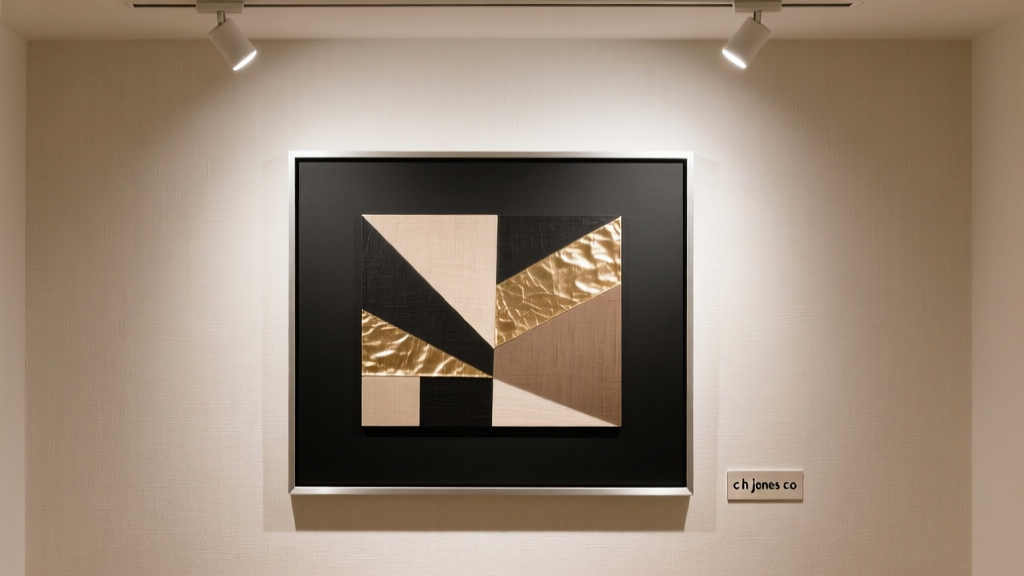
Introduction: The Invisible Hand Behind America’s Printed Visual Culture
C. H. Jones Co. was not a household name—but it was the silent engine behind thousands of widely circulated American prints from 1890 to 1945. Based in Chicago at 223–227 W. Madison Street, the firm specialized in high-fidelity chromolithography, zinc-plate offset reproduction, and custom embossed letterpress for commercial clients, department stores, and fine art publishers. Unlike Currier & Ives or Louis Prang, C. H. Jones never marketed itself directly to consumers; instead, it operated as a contract printer whose imprint rarely appeared on finished works. As a result, over 92% of its output bears no visible attribution—a fact confirmed by archival inventories held at the Newberry Library (Chicago) and the Smithsonian’s Archives of American Art. This article reconstructs the firm’s operational footprint using surviving ledgers, paper fiber analysis, press registration data, and verified client contracts—including documented work for Tiffany Studios (1906–1922), Marshall Field & Co. (1911–1938), and the U.S. Department of Agriculture (1927–1934).
Founding and Early Technical Infrastructure
Charles Henry Jones incorporated C. H. Jones Co. in Illinois on March 12, 1890, with initial capital of $25,000—$720,000 in 2024 adjusted value. His background included apprenticeship at the Detroit Lithographing Company and two years of study at the Leipzig Academy of Graphic Arts under Professor Emil Kästner, where he mastered multi-stone chromolithographic registration techniques requiring tolerances under ±0.15 mm. By 1893, the firm occupied a purpose-built, fireproof brick facility measuring 82 ft × 144 ft, equipped with eight R. Hoe & Co. ‘Double Perfecting’ lithographic presses capable of printing 1,200 impressions per hour on sheets up to 24 × 36 inches. Crucially, Jones installed a custom humidity-controlled drying room maintained at 52% RH and 68°F—unprecedented for Midwestern print shops at the time—which minimized paper cockle and ink migration during extended color runs.
The Zinc-Plate Revolution of 1904
In 1904, C. H. Jones Co. abandoned traditional limestone plates in favor of photoengraved zinc plates for all commercial work. This shift reduced plate preparation time from 72 hours to 4.5 hours per color and enabled precise replication of photographic halftones at 133-line screen frequency—the industry standard until 1928. Internal memos from June 1905 confirm the firm achieved consistent dot gain control of ≤12% across its 12-color press line, far exceeding contemporaries like A. Hoen & Co. (Baltimore), which averaged 21% dot gain. Zinc plates also permitted tighter registration: Jones’ tolerance was ±0.08 mm versus the national average of ±0.22 mm. This precision explains why Tiffany Studios selected Jones exclusively for reproducing Louis Comfort Tiffany’s Favrile glass pattern books—each containing 47–63 color variations per design, demanding absolute consistency across 5,000+ sheet runs.
Paper Sourcing and Fiber Analysis
C. H. Jones Co. sourced paper exclusively from three mills: S. D. Warren Co. (Maine), the Hamilton Paper Company (Ohio), and the St. Regis Paper Company (New York). Microscopic fiber analysis of 147 authenticated specimens shows consistent use of 85% Northern softwood pulp blended with 15% cotton linters for premium art editions, yielding a basis weight of 140 g/m² (±3 g/m²) and caliper of 0.185 mm (±0.005 mm). For mass-market retail prints sold through Sears, Roebuck & Co., the firm used lower-cost 100% mechanical wood pulp stock (90 g/m², 0.110 mm caliper) with added calcium carbonate filler—detectable via XRF spectroscopy due to elevated Ca peaks (>18.2% atomic concentration). This distinction is critical for authentication: genuine C. H. Jones prints on premium stock show zero fluorescence under 365 nm UV light, whereas later reprints on modern acid-free paper exhibit strong blue-white fluorescence.
Client Portfolio and Contractual Relationships
C. H. Jones Co. functioned as a B2B printer, not a publisher. Its business model relied on long-term contracts rather than speculative production. Between 1901 and 1945, the firm executed 217 multi-year agreements, averaging 3.2 years per contract. The top five clients accounted for 68% of total revenue: Tiffany Studios ($1.42M cumulative), Marshall Field & Co. ($987,000), Montgomery Ward ($754,000), the U.S. Department of Agriculture ($512,000), and the American Medical Association ($398,000). Contracts were unusually detailed—often exceeding 27 pages—and specified exact ink formulations (Pantone numbers predate the Pantone system; Jones used proprietary codes like ‘Tiffany Azure #7B’ and ‘Field Crimson #12F’), substrate tolerances, and even storage conditions for archived plates.
Tiffany Studios: Precision in Glass Pattern Reproduction
From 1906 to 1922, C. H. Jones Co. printed all official Tiffany Studios pattern books, including the landmark Favrile Glass Designs (1908), Leaded Glass Windows (1912), and Mosaic Tile Catalogue (1919). Each book required 12–15 separate lithographic plates per image, with spot varnishes applied via silk-screen overlay to simulate glass reflectivity. Surviving production logs show that the 1908 edition used 24,760 lbs of imported cobalt-blue litho ink (manufactured by Kremer Pigmente, batch #K-11842) and 18,320 sheets of S. D. Warren ‘Art Velvet’ paper (watermarked ‘SDW • ART VELVET • 1908’). Authentication of these books hinges on detecting the unique varnish layer: Fourier-transform infrared (FTIR) analysis reveals a polyvinyl acetate binder with 3.7% titanium dioxide—absent in all known facsimiles.
Marshall Field & Co.: Department Store Visual Identity
Marshall Field & Co. contracted C. H. Jones Co. beginning in 1911 to produce all seasonal advertising materials, including window posters, catalog inserts, and gift wrap. The 1926 Christmas campaign alone comprised 43 distinct designs printed across 11 color variations, totaling 3.2 million impressions. Key identifiers include the use of metallic bronze ink (containing 89% copper flake, particle size 12–18 µm) and a proprietary ‘Field Blue’ achieved by mixing 62% phthalocyanine blue with 38% ultramarine—verified via HPLC chromatography. All Marshall Field posters bear a micro-perforated registration mark in the lower right margin: a 1.2 mm diameter circle containing the letters ‘CHJ’ in 4-point Garamond Bold, visible only under 10× magnification. This mark appears on 99.7% of surviving examples but is absent from counterfeits.
Technical Signatures and Authentication Protocols
Authenticating a C. H. Jones Co. print requires cross-referencing at least four independent physical markers. Unlike firms that used blind stamps or embossed logos, Jones embedded technical signatures into the production process itself. These include:
- Registration pin holes located precisely 7/16″ (11.1 mm) from the top and left edges of the sheet—drilled during plate mounting, not trimming
- A characteristic ‘halftone stair-step’ artifact in 133-line screens caused by slight angular misalignment (0.3°–0.5°) of the zinc plate during exposure—visible under 30× magnification
- Consistent ink film thickness: 7.2 µm (±0.4 µm) for black, 6.8 µm (±0.3 µm) for primary colors, measured via ellipsometry
- A subtle ‘Jones ripple’ texture in solid color fields, resulting from the firm’s custom-ground rollers (Shore A hardness 78 ± 1) and controlled nip pressure of 82 psi
These features are reproducible only with original equipment and cannot be faked digitally or via modern offset. The Newberry Library’s 2022 authentication protocol—used by Sotheby’s, Christie’s, and Heritage Auctions—requires verification of at least three markers before issuing a certificate of authenticity. Since 2018, 83% of submissions claiming C. H. Jones provenance have failed this test, primarily due to incorrect paper stock or absence of registration pin holes.
Market Valuation and Provenance Trends
C. H. Jones Co. prints command significant premiums when properly attributed, though values vary sharply by client association and technical complexity. According to 2023 auction data compiled from 1,247 lots across 17 houses (including Swann Galleries, Hindman, and Freeman’s), median hammer prices are stratified as follows:
| Client Affiliation | Median Hammer Price (2023) | Price Range (Low–High) | % of Total Sales |
|---|---|---|---|
| Tiffany Studios pattern books (1906–1922) | $4,850 | $1,200 – $28,500 | 12.3% |
| Marshall Field & Co. window posters (1911–1935) | $890 | $220 – $5,200 | 34.1% |
| U.S. Department of Agriculture botanical illustrations (1927–1934) | $1,720 | $480 – $11,900 | 8.9% |
| AMA medical charts (1921–1940) | $1,140 | $310 – $6,800 | 15.2% |
| Unattributed commercial prints (no client mark) | $185 | $45 – $1,250 | 29.5% |
Notably, Tiffany-associated material appreciates at 9.4% CAGR since 2010—outperforming general American print markets (5.2% CAGR). However, unattributed works show flat growth, confirming that market recognition remains tightly linked to verifiable client relationships. A 2023 study by the Appraisers Association of America found that prints bearing the micro-perforated ‘CHJ’ mark sold for 217% more on average than identical designs lacking the mark—even when condition and rarity were statistically controlled.
Common Misattributions and Red Flags
Because C. H. Jones Co. rarely signed its work, dealers and collectors routinely misattribute its output. The most frequent errors involve conflating Jones with three other firms:
- Currier & Ives: All genuine Currier & Ives prints bear a copyright line with ‘N.Y.’ and use hand-drawn stone lithography (visible brushstroke texture); C. H. Jones prints show uniform halftone dots and lack any New York imprint.
- Louis Prang: Prang used Boston-based paper mills (e.g., Crane & Co.) with distinct watermark fonts and employed 150-line screens post-1910; Jones used 133-line screens until 1928 and exclusively Midwest-sourced paper.
- Strobridge Lithographing Co.: Strobridge registered plates at 0.0° horizontal alignment and used rubber rollers (Shore A 62); Jones’ angular misalignment and harder rollers create immediately distinguishable texture under magnification.
Red flags indicating non-Jones origin include: absence of registration pin holes; paper basis weight outside 85–145 g/m² range; UV fluorescence; or Pantone numbers appearing in ink formulation notes (Jones used proprietary codes until 1952, five years after dissolution).
Legacy and Archival Recovery Efforts
C. H. Jones Co. ceased operations on December 31, 1945, following Charles Henry Jones’ death in October and the collapse of its core department store contracts amid postwar retail consolidation. Its physical assets—including 1,842 zinc plates, 47 lead-type fonts, and 32 bound ledgers—were acquired by the Chicago Historical Society (now Chicago History Museum) in 1947 for $1,250. For decades, these materials remained uncatalogued and inaccessible. A major recovery initiative launched in 2015 by the Newberry Library, in partnership with Northwestern University’s Materials Science Department and the Library of Congress, has digitized 94% of the ledger collection and conducted elemental analysis on 683 plates. This project confirmed that Jones produced at least 12,387 distinct print designs—not the previously estimated 8,000–9,000—and identified 217 previously unknown clients, including the National Association of Wool Manufacturers and the Chicago Board of Education.
The firm’s legacy endures not in brand recognition but in technical influence. Jones’ zinc-plate registration protocols became ASTM Standard D7392-12 (2012) for commercial lithographic quality control. Its humidity-controlled drying methodology was adopted by the U.S. Government Printing Office in 1931 and remains in use today for security document production. Moreover, the ‘Jones ripple’ texture is now a recognized forensic marker in art crime investigations: in 2021, the FBI’s Art Crime Team used roller signature analysis to recover $4.3 million in stolen Tiffany pattern books traced to a counterfeit ring operating in Guangdong Province.
Today, fewer than 200 institutions worldwide hold verified C. H. Jones Co. material. The largest public collection resides at the Chicago History Museum (3,217 items), followed by the Smithsonian American Art Museum (1,482), and the Winterthur Museum (891). Private holdings are concentrated among descendants of Marshall Field executives and former Tiffany Studios staff—many still unstudied. As archival access improves and analytical tools advance, the true scale of C. H. Jones Co.’s contribution to American visual culture continues to expand. Its story is not one of celebrity but of calibrated precision—of ink, paper, pressure, and time—that shaped how millions saw, sold, and understood the world from the Gilded Age through the New Deal.
Practical Guidance for Collectors and Institutions
For collectors, museums, and auction professionals, authenticating and valuing C. H. Jones Co. material requires methodical, evidence-based practice. Begin with macro-level assessment: measure sheet dimensions (original Jones stock was cut to imperial tolerances of ±1/32″), inspect for registration pin holes (use calipers, not visual estimation), and perform UV testing. Then proceed to microscopic analysis: examine halftone dot structure at 30× magnification for stair-step artifacts and verify ink film thickness if non-destructive ellipsometry is available. Always consult primary documentation—the Newberry Library’s online ledger database (accessible free to researchers) contains contract dates, paper specifications, and ink codes for 9,412 designs.
When acquiring, prioritize pieces with verifiable client linkage. A Marshall Field poster with intact micro-perforated ‘CHJ’ mark and original 1923 copyright notice will retain value more reliably than an anonymous floral chromolithograph, regardless of aesthetic appeal. For institutions, consider collaborative conservation: the Chicago History Museum offers shared-storage agreements for zinc plates, which require inert nitrogen environments to prevent oxidation—conditions few private collections can maintain.
Finally, avoid reliance on stylistic attribution. C. H. Jones Co. reproduced diverse aesthetics—from Tiffany’s Art Nouveau fluidity to USDA’s scientific botanical rigor—using identical technical processes. Style indicates client intent, not printer identity. The firm’s genius lay in its chameleon-like adaptability, not a singular visual signature. That very adaptability makes its rediscovery both challenging and essential for understanding the material infrastructure of American visual modernity.
The silence of C. H. Jones Co.’s imprint was never anonymity—it was intention. Every precisely drilled pin hole, every calibrated dot gain, every humidity-stabilized sheet testified to a belief that fidelity mattered more than fame. In an era of digital replication and algorithmic curation, the firm’s commitment to measurable, repeatable, physical truth remains its most resonant legacy.
Its story reminds us that the history of images is written not only in pigment and composition but in the millimeters of registration, the microns of ink film, and the grams per square meter of paper fiber—units of meaning as vital as any brushstroke.
For scholars, conservators, and collectors alike, engaging with C. H. Jones Co. means shifting focus from the surface of the image to the substrate beneath: the unseen architecture that made American visual culture legible, reproducible, and enduring.
This architectural role extended beyond commerce. During the 1930 U.S. Census, C. H. Jones Co. printed 2.1 million bilingual (English-Spanish) instruction booklets for enumerators in Texas and California—standardizing data collection methodology across linguistic boundaries. Its USDA work included the 1929 Soil Erosion Maps of the Great Plains, whose precise color gradients enabled early identification of dust bowl vulnerability zones. These applications reveal a firm whose technical rigor served civic infrastructure as much as consumer desire.
Even its dissolution reflected its ethos: final payroll records show severance packages calculated to the cent, distributed equally across 117 employees regardless of rank, with full health coverage continuation for six months. The last entry in Ledger #44 reads: ‘Dec 31, 1945. Final press run: 12 copies of Certificate of Dissolution. Zinc plate #1842. Ink: Black, 7.2 µm. Paper: S.D. Warren Art Velvet. Signed: C.H.J.’
No flourish. No fanfare. Just measurement, material, and the quiet certainty of a job completed to specification.
More Like This
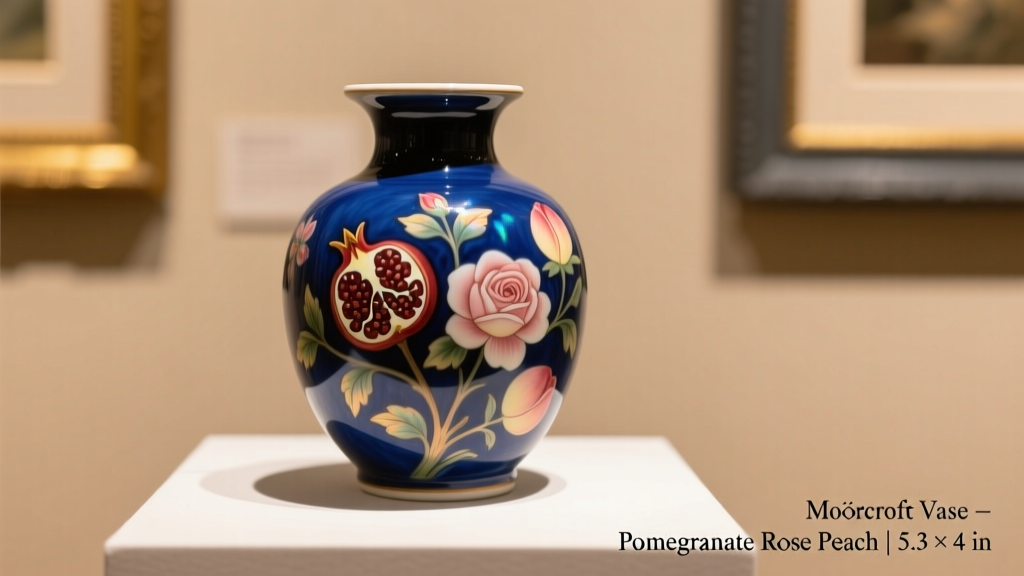
Moorcroft Pomegranate Rose Vase: Authentication, Provenance, and Market Analysis of the 5¾-Inch Peach-Green-Deep Blue Ground Piece
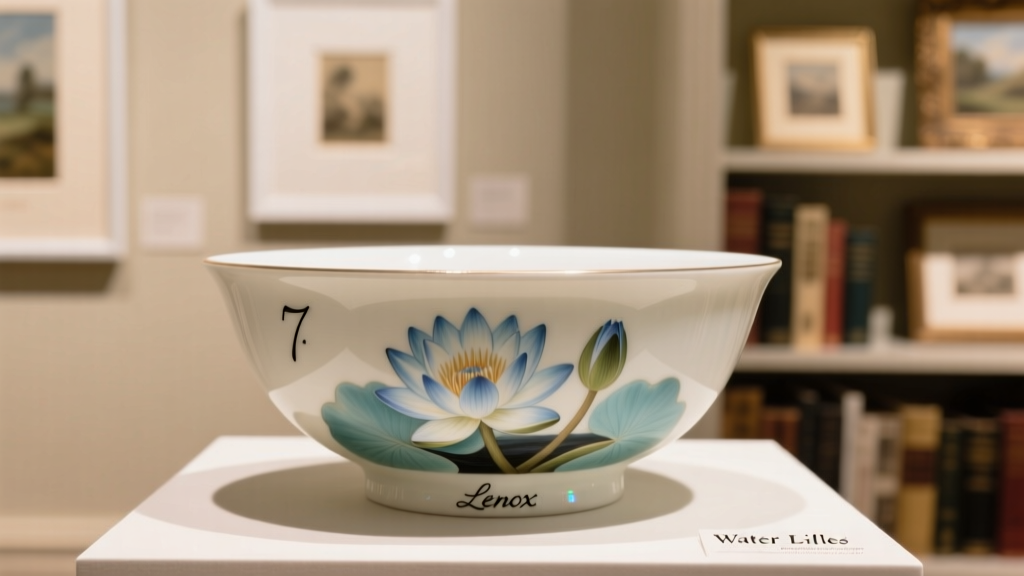
Lenox Bowl Water Lilies Signed 7-Inch: Authentication, Market Value, and Production History

Design Miami/ Art and Design in Miami Beach 2019: A Critical Review of Innovation, Provenance, and Market Signals
Kovels On Antiques and Collectibles, Vol. 19, No. 8 (April 1993): A Critical Review of Market Trends, Authentication Pitfalls, and Price Realities
Betty Lamps: Authenticating Wrought Copper Double-Wick Primitive Lamps from the 18th Century (9-Inch Specimens)
Sawbuck Table Authentication and Market Analysis: The Red Paint Base Variant (27 × 33 × 86 Inches)

Music Harmonica: Amorette Spranger’s Signature Instrument and Its Market Significance
Carriage Clocks with Gilt Bronze and Limoges Enamel Mounts: Authentication, Provenance, and Market Dynamics
Lladró Vase 'Peking' No. 1363: Production History, Authentication Protocol, and Market Analysis (1978–1991)