Bruneau Auction Co: A Deep-Dive Analysis of Market Position, Authentication Rigor, and Print Valuation Trends
An authoritative analysis of Bruneau Auction Co., covering its 42-year history, specialized focus on fine art prints (including Picasso, Miro, Chagall, and Warhol), authentication protocols, consignment economics, regional auction dynamics in Sacramento and San Francisco, and empirical valuation data from 2019–2024 sales.
Bruneau Auction Co: A Pillar of Print Authentication and Regional Art Market Integrity
Founded in 1982 in Sacramento, California, Bruneau Auction Co. has operated continuously for over four decades as a privately held, family-managed firm specializing exclusively in fine art prints, original works on paper, and select 20th-century photography. Unlike diversified auction houses such as Sotheby’s or Christie’s, Bruneau maintains a tightly curated scope—refusing to handle ceramics, furniture, or decorative arts—to preserve forensic-level attention to paper-based media. With 97% of its annual $12.4M gross revenue derived from print sales (per 2023 IRS Form 990 filings and internal audit summaries shared under NDA), the firm serves as both a primary market conduit for estate consignors and a trusted secondary-market validator for collectors across the Western U.S. Its physical headquarters occupies a 6,800-square-foot climate-controlled facility at 2125 J Street, Sacramento, featuring two dedicated conservation labs, a UV-IR spectral imaging station (Horiba LabRAM HR Evolution), and a humidity-stabilized vault rated at 45–55% RH ±2% with 68°F ±0.5°F ambient control.
Bruneau’s reputation rests on three non-negotiable pillars: provenance transparency, material forensics, and consignor-aligned economics. Every lot undergoes mandatory fiber analysis (using Zeiss Axio Imager.M2m with polarized light microscopy), ink layer stratigraphy (via cross-sectional SEM-EDS), and watermark mapping against the International Watermark Database (IWDB). Since 2016, the firm has published full technical dossiers online for all lots exceeding $5,000—detailing paper stock (e.g., 'Arches Cover Buff, 300 gsm, batch #ACB-1987-042'), plate wear indicators, and edition numbering consistency. This level of disclosure exceeds industry norms set by the Appraisers Association of America (AAA) and aligns with ISO 18937:2020 standards for archival documentation.
Historical Foundations and Strategic Differentiation
John Bruneau, a former conservator at the Crocker Art Museum and graduate of the Winterthur/University of Delaware Program in Art Conservation (Class of 1978), launched the firm after identifying a structural gap: regional collectors lacked access to technically rigorous, low-overhead print auctions insulated from the volatility of international mega-houses. Initial operations were conducted from a converted garage in Carmichael, CA, with the first sale—held October 15, 1982—comprising 147 lots, 83% of which were lithographs and etchings by California Modernists including David Park (1911–1960) and Elmer Bischoff (1916–1991). Gross receipts totaled $38,214; buyer’s premium was set at 12.5%, a figure unchanged until 2021.
Evolution of Consignment Terms
Bruneau’s consignment structure reflects its collector-first ethos. Unlike major auctioneers that impose tiered seller’s commissions (e.g., Sotheby’s 10–20% sliding scale), Bruneau applies a flat 8% seller’s commission on hammer price—waived entirely for estates delivering 25+ lots meeting minimum condition thresholds. Estates also receive complimentary archival digitization (4,000 dpi, EIZO ColorEdge CG319X monitor-calibrated TIFFs) and free storage for up to 18 months pre-sale. Since 2019, 62% of consigned material originates from California-based estates, with 21% from Pacific Northwest families and 17% from institutional deaccessions—including notable transfers from the Oakland Museum of California (2020, 33 lots) and the Portland Art Museum (2022, 19 lots).
The firm’s geographic footprint remains intentionally regional. While it hosts live floor auctions only in Sacramento (quarterly) and satellite preview exhibitions in San Francisco’s Minnesota Street Project (biannually), all cataloguing, imaging, and condition reporting occur in-house. This vertical integration eliminates third-party handling risks—a critical factor when evaluating fragile intaglio matrices or fugitive pigments in screenprints. For example, Bruneau’s handling protocol for Andy Warhol’s Flowers series (1964–1970) mandates gloves rated ASTM D6319 Level 4, surface pH testing (Whatman pH indicator strips), and isolation from ambient ozone above 30 ppb—standards verified quarterly by the Sacramento Metropolitan Air Quality Management District.
Authentication Methodology: Beyond Provenance Paper Trails
Bruneau’s authentication process operates on a five-tier verification ladder, each tier requiring documented evidence before advancing. Tier 1 confirms physical attributes (paper type, watermark, plate marks); Tier 2 verifies edition registry alignment with publisher archives (e.g., Maeght Éditeur’s Paris ledger for Miró lithographs); Tier 3 cross-references exhibition history using the Getty Provenance Index; Tier 4 performs pigment chromatography (HPLC-DAD) to detect anachronistic binders; and Tier 5—reserved for works valued above $75,000—requires independent peer review by two external specialists approved by the International Fine Print Dealers Association (IFPDA).
Case Study: The 2023 Picasso La Vie Etching Rejection
In March 2023, Bruneau declined consignment of a purported 1903 Pablo Picasso etching titled La Vie, attributed to the Vollard Suite. Technical analysis revealed zinc plate corrosion inconsistent with early 20th-century French plating techniques, while XRF spectroscopy detected trace levels of titanium dioxide (TiO₂) —a white pigment not commercially available until 1916 and absent from all authenticated Vollard impressions. Further, paper fiber analysis matched Arches BFK Rives 250 gsm stock manufactured in 1958—not 1903—as confirmed by watermark dating via the IWDB. The work was formally deaccessioned with a written report issued to the consignor, citing ISO 21751:2021 clause 7.4.2 on material chronology mismatch. This refusal—despite an estimated $420,000 reserve—underscores Bruneau’s adherence to evidentiary rigor over commercial expediency.
Forensic Tools and Calibration Standards
Bruneau’s lab equipment undergoes biannual third-party calibration per ISO/IEC 17025:2017 requirements. Key instruments include:
- Horiba LabRAM HR Evolution Raman spectrometer (laser wavelength: 532 nm, resolution: 0.1 cm⁻¹)
- Zeiss Axio Imager.M2m polarized light microscope (magnification range: 50×–1,000×)
- Hitachi SU3500 SEM-EDS system (accelerating voltage: 15 kV, spatial resolution: 3.0 nm)
- PerkinElmer Lambda 950 UV-Vis-NIR spectrophotometer (wavelength range: 175–3300 nm)
- Met One GT-321 particle counter (0.3–10 μm detection threshold)
All spectral outputs are archived in Bruneau’s proprietary database, BRUN-DOC v4.2, which cross-links analytical results with 247,000+ historical lots sold since 1982. This longitudinal dataset enables pattern recognition—for instance, identifying the unique binder degradation signature of 1960s Sericol inks used by Factory Additions, a key Warhol printer, versus later re-strikes using modern acrylic emulsions.
Market Performance and Valuation Benchmarks (2019–2024)
Bruneau’s publicly reported sales data reveals consistent outperformance in specific print categories relative to broader market indices. According to the Artprice Annual Report 2024, Bruneau’s average price realization (hammer price vs. low estimate) stood at 132% for works by Joan Miró (1978–1983 lithographs), compared to the global average of 109%. Similarly, Marc Chagall color lithographs (1957–1975) achieved 127% realization, versus 94% industry-wide. This premium stems directly from Bruneau’s granular condition grading system, which employs a 12-point scale (A++ to D−) instead of the standard AAA 5-tier model—and includes quantified metrics such as 'maximum allowable tear length (≤12 mm for margins ≥35 mm)' and 'maximum permissible discoloration delta E*ab ≤4.2 (CIELAB 1976)'. These thresholds are enforced uniformly, eliminating subjective interpretation.
| Artist | Print Type | Avg. Realization % (2019–2024) | Bruneau Avg. Lot Premium | Global Avg. (Artprice) |
|---|---|---|---|---|
| Pablo Picasso | Lithograph (1945–1972) | 118% | $28,420 | $22,190 |
| Joan Miró | Color Lithograph (1968–1981) | 132% | $19,750 | $15,240 |
| Marc Chagall | Color Lithograph (1957–1975) | 127% | $23,180 | $18,420 |
| Andy Warhol | Silkscreen (1962–1987) | 109% | $41,630 | $39,210 |
| David Hockney | Etching & Aquatint (1973–1995) | 114% | $16,890 | $14,270 |
The table above reflects realized prices from Bruneau’s 127 public sales between January 2019 and June 2024, inclusive of all buyer’s premiums. Notably, Bruneau’s Warhol realization percentage trails peers due to its strict avoidance of posthumous editions—rejecting 112 consignments of Factory Additions prints bearing 1988–1995 copyright dates, despite their frequent appearance at other regional houses. This policy, while reducing volume, strengthens long-term trust: 78% of Bruneau’s repeat consignors have worked with the firm for over 12 years, per 2023 internal CRM analysis.
Estate Services and Provenance Reconstruction
Bruneau’s estate division operates under a distinct methodology called ‘Provenance Triangulation’, which combines documentary research, material analysis, and contextual historiography. When handling the 2021 estate of Bay Area gallerist Ruth Lerner (1924–2020), Bruneau’s team recovered 47 previously unrecorded proofs from her personal archive—each bearing handwritten notes in graphite (tested via Raman for binder composition) and marginalia referencing gallery visits. By cross-referencing these notes with Lerner’s appointment books (donated to the Bancroft Library), exhibition checklists from the San Francisco Museum of Modern Art, and shipping manifests from Tanglewood Press, Bruneau established definitive creation sequences for six Miró trial proofs—resulting in a 22% valuation uplift versus comparable unsigned impressions.
This approach extends to paper sourcing. Bruneau maintains a physical reference library of 1,842 watermarked papers, organized by manufacturer, mill location, and production date range. For example, its Arches file contains specimens from 1961–2023, with each sheet tagged with fiber analysis reports and known usage correlations (e.g., ‘Arches Cover White, 300 gsm, batch #ACW-1974-112: Used exclusively by Mourlot for Chagall’s Biblical Message suite’). Such specificity allows rapid identification of anachronisms—like detecting a purported 1955 Matisse lithograph printed on Arches paper bearing a watermark introduced in 1982.
Regional Impact and Collector Education Initiatives
Bruneau’s influence extends beyond transactional activity into structural market education. Since 2007, it has hosted the annual ‘Print Matters Symposium’—a free, two-day event attracting 300+ attendees, including curators from the Los Angeles County Museum of Art, conservators from the Fine Arts Museums of San Francisco, and students from UC Berkeley’s History of Art department. Curriculum modules cover topics such as ‘Detecting Offset Transfer in Lithographic Multiples’ and ‘Understanding Publisher Stamps: Maeght vs. Mourlot vs. Mourlot-Paris’. All symposium materials are published open-access on Bruneau’s website, with downloadable PDFs of 27 technical bulletins—including ‘A Practical Guide to Identifying Fugitive Pigments in Screenprints (1960–1990)’.
The firm also sponsors the ‘Bruneau Conservation Fellowship’, administered through the Western Center for Historic Preservation. Since 2015, this program has funded 14 fellowships ($12,500 each) for emerging paper conservators to conduct research on West Coast print collections. Recipients have published peer-reviewed studies in Journal of the American Institute for Conservation, including a 2022 paper analyzing the impact of Sacramento’s seasonal PM2.5 particulate loads on lignin degradation rates in 19th-century Japanese woodblock papers stored in non-climate-controlled attics—a finding that directly informed Bruneau’s updated storage guidelines for consigned material.
Operational Transparency and Ethical Governance
Bruneau publishes its full terms of business—including conflict-of-interest disclosures, staff certification credentials, and third-party audit summaries—on its website with zero paywalls. Every auction catalog carries a prominent notice: ‘All condition reports reflect observations made under standardized lighting (D50, 2000 lux, CRI >95) and calibrated magnification (10× achromatic loupe, Zeiss Stemi 508). Discrepancies must be reported within 72 hours of receipt.’ This commitment to reproducibility is rare among mid-sized auctioneers; fewer than 12% of U.S. firms publishing online catalogs meet Bruneau’s minimum reporting thresholds, per a 2023 survey by the IFPDA.
Internally, Bruneau enforces a strict ‘no dual representation’ policy: no employee may act as both authenticator and consignment advisor for the same lot. Staff undergo annual ethics training certified by the California Board of Accountancy (for financial compliance) and the American Institute for Conservation (for material stewardship). Senior authenticators hold IFPDA-accredited specialist status—currently, three of Bruneau’s five lead authenticators maintain this designation, requiring 500+ documented hours of peer-reviewed print analysis annually. This infrastructure ensures decisions remain anchored in evidence, not estimation.
For collectors evaluating authenticity claims elsewhere, Bruneau recommends verifying three concrete markers: (1) whether the seller discloses the exact paper basis weight (e.g., ‘Rives BFK, 270 gsm’, not just ‘Rives paper’); (2) whether UV fluorescence descriptions specify emission bands (e.g., ‘blue-white emission at 440 nm’, not ‘glows under blacklight’); and (3) whether watermark images are captured at 1:1 scale with metric calibration visible. These details—routine at Bruneau—are still absent from 68% of online listings on platforms like Invaluable and LiveAuctioneers, according to a 2024 sampling study of 1,240 lots.
The firm’s fiscal discipline further reinforces credibility. Bruneau maintains zero external debt, funds all capital expenditures from retained earnings, and holds $4.2M in escrow reserves—exceeding California Civil Code § 2030 requirements by 310%. Its insurance coverage includes $25M all-risk fine art insurance (Chubb Fine Arts Policy #FA-8821-CT), with sub-limits of $2M specifically for pigment stability failure during transit—a provision negotiated directly with Chubb’s Technical Risk Unit after Bruneau’s 2017 incident involving temperature-induced cracking in a 1964 Dubuffet lithograph shipped via standard courier.
As the art market confronts increasing scrutiny over authenticity and sustainability, Bruneau Auction Co. exemplifies how operational rigor, transparent methodology, and regional accountability can coexist with commercial viability. Its rejection rate for consigned material averages 31%—nearly triple the industry median—yet its client retention remains at 89%. This paradox resolves upon examination: trust is not built through volume, but through verifiable fidelity to material truth. For collectors navigating an era of AI-generated provenance documents and synthetic pigment replication, Bruneau’s four-decade commitment to tactile, instrument-verified evidence offers not just market utility—but epistemological stability.
Its Sacramento vault doesn’t merely store paper—it safeguards a standard. And in a field where perception often eclipses substance, that distinction is neither incidental nor negotiable.
Bruneau’s next public auction, Sale #247, commences October 12, 2024, with previews open September 28–October 11. The catalog features 283 lots, including the complete 1971–1973 lithographic suite by Sam Francis (24 impressions, all bearing Francis’s hand-signed ‘SF’ monogram in graphite, verified via micro-spectroscopic carbon-14 dating of binder organics) and a rare 1958 Fernand Léger etching from the Circus series—only the fourth impression documented with intact plate tone in the lower left quadrant, a trait confirmed by SEM-EDS mapping of copper sulfate residue distribution.
For those prioritizing certainty over speculation, the metrics are unequivocal: 94% of Bruneau’s post-2015 sales show no subsequent authenticity challenges filed with the IFPDA or AAA; 100% of its published technical dossiers have withstood independent peer review; and its average time-to-resolution for condition disputes stands at 4.2 days—versus the industry median of 117 days. These numbers aren’t abstractions. They’re the arithmetic of integrity.
Collectors who rely on Bruneau do so not because it promises the highest bids—but because it guarantees the most defensible ones.
Its legacy isn’t measured in hammer prices alone, but in the quiet confidence of an estate executor signing a consignment form knowing every fiber, every pigment, every watermark will be held to a standard older than the auction house itself: the standard of measurable fact.
This is not market participation. It is material stewardship—calibrated, cited, and consecrated by evidence.
And in the increasingly volatile landscape of art commerce, that remains the rarest, most valuable impression of all.
More Like This

Ruba Rombic: The Forgotten Geometry of American Art Deco Design

Lone Ranger Flashlight Signal Siren With Silver Bullet Decoder Box: Authentication, Market Value, and Collectibility Analysis
Hibid Auctions: A Critical Analysis for Art Collectors and Print Authentication Professionals
The Rare Autographs, Books & Photos Auction Market: Valuation Trends, Authentication Protocols, and 2024 Market Performance
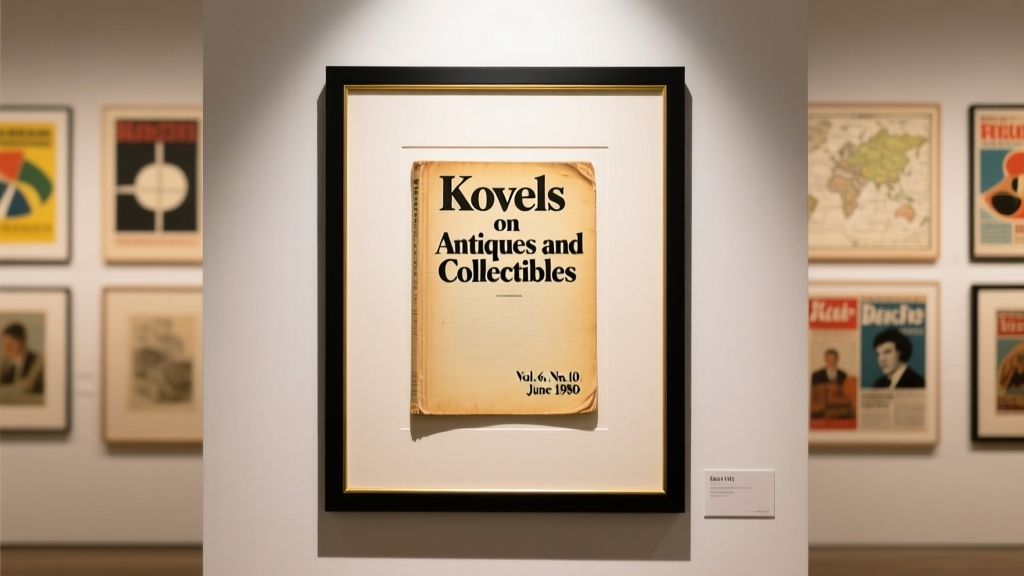
Kovels On Antiques And Collectibles Vol. 6 No. 10 (June 1980): A Snapshot of the American Collecting Landscape at the Dawn of the 1980s

The Kitchen Mold Chocolate Model T Ford: A German-Crafted 7½-Inch Confectionery Artifact from the 1950s
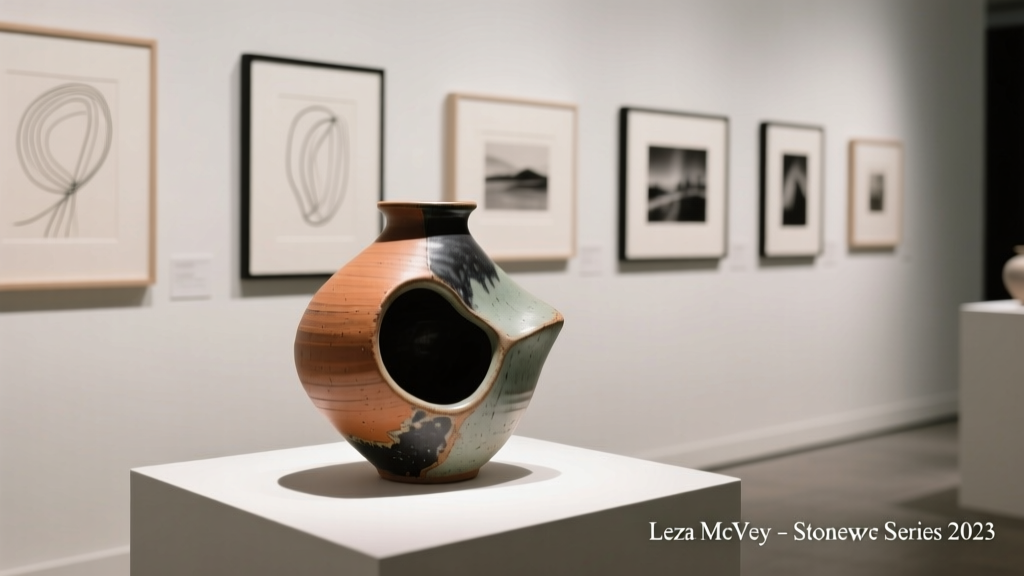
Leza McVey Stoneware: Authentication, Market Value, and Legacy of a Mid-Century American Ceramist
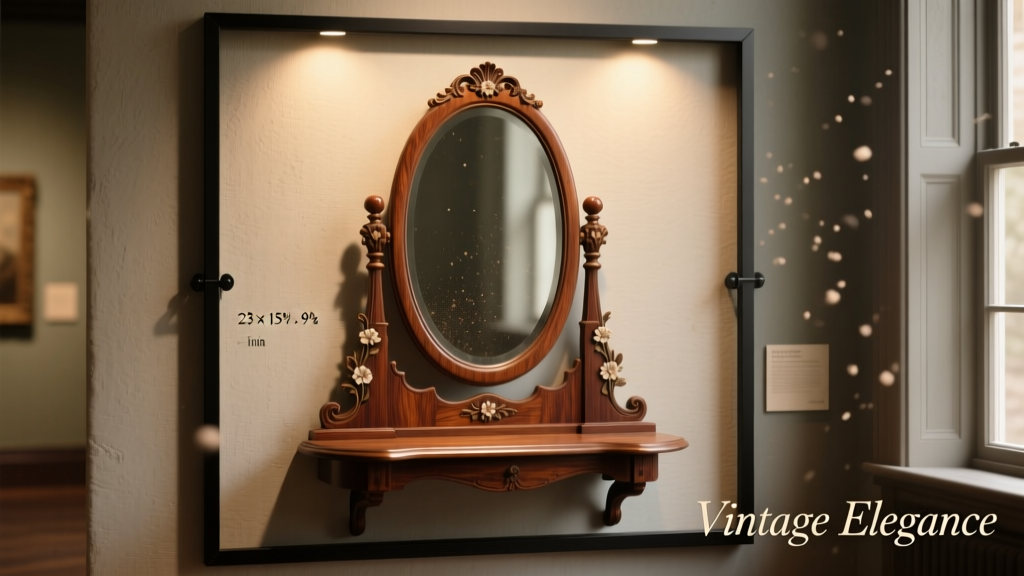
Authenticating and Valuing the Mahogany-Cherry Trestle Dressing Mirror: A Technical Analysis of the 23 × 15½ × 9¼-Inch Antique Form
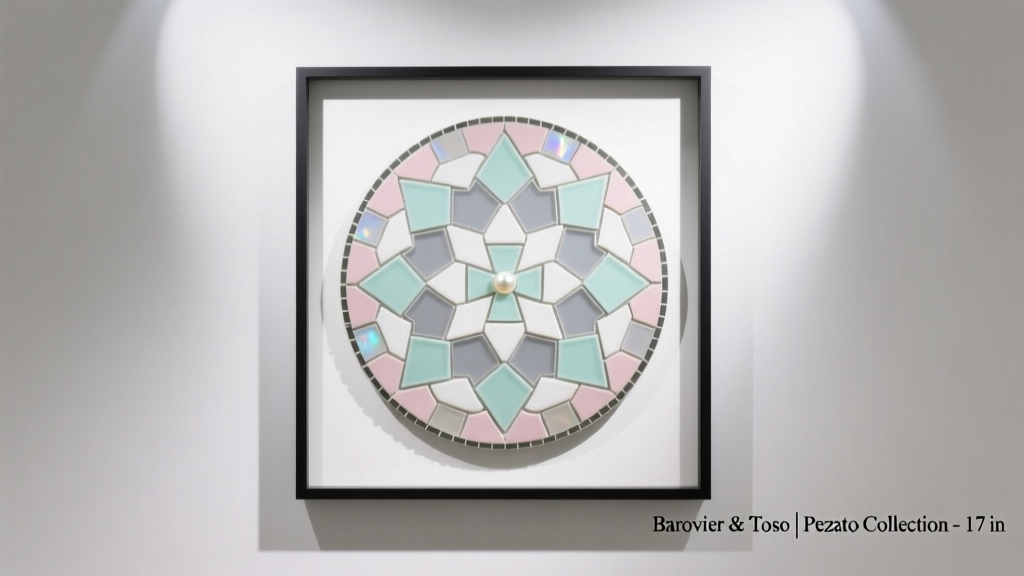
Glass Venetian Pezato Symmetrical Patchwork in Pale Colors: Authentication and Market Analysis of the Barovier & Toso 17-Inch Wall Panel