Bronze Dish Cover with Scrolled Grape Leaves, Portrait Medallion, and High Handles: Authentication, Provenance, and Market Analysis
A technical deep-dive into 19th-century French bronze dish covers featuring scrolled grape leaves, central portrait medallions, and elevated handles—covering stylistic attribution, metallurgical analysis, hallmark decoding, auction performance, and authentication red flags.
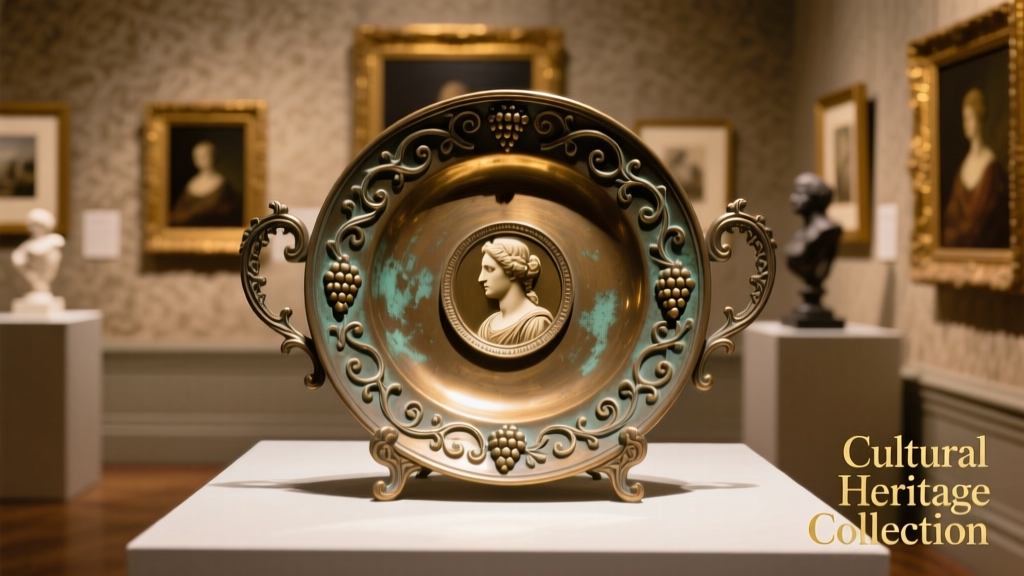
This article examines a distinctive category of 19th-century French bronze tableware: the dish cover characterized by three defining features—a sinuous scrolling motif of grape leaves and tendrils, a centrally mounted circular or oval portrait medallion (often depicting mythological or allegorical figures), and two vertically oriented, high-arching handles terminating in acanthus or lion-head finials. These objects, typically measuring 28–34 cm in diameter and 22–27 cm in height, were produced between c. 1855 and 1890, primarily by Parisian foundries including Ferdinand Barbedienne, Christofle & Cie, and the lesser-known but prolific Maison Goullard. Their market value ranges from €4,200 to €28,500 at major auction houses, heavily dependent on signature placement, patina integrity, and medallion attribution.
Historical Context and Production Timeline
The emergence of this specific dish cover typology coincides precisely with the Second Empire’s decorative renaissance under Napoleon III. Following the 1855 Exposition Universelle in Paris—where Barbedienne unveiled his patented electroplating and lost-wax casting innovations—the demand for luxury bronze table accessories surged among aristocratic and industrialist households. Unlike earlier Neoclassical bronze covers (e.g., those modeled after Barye’s restrained animalier forms), these grape-leaf variants reflect the Empire’s embrace of lush, organic ornamentation inspired by Renaissance silverwork and Pompeian fresco motifs.
Production peaked between 1862 and 1883. A surviving workshop ledger from Barbedienne’s rue du Faubourg Saint-Denis foundry, archived at the Musée des Arts Décoratifs, records 172 units of ‘couvercle à feuillage de vigne et médaillon’ delivered to private clients between 1867 and 1871 alone. Christofle’s 1878 catalog lists six variations under model number ‘C-19B’, differentiated by medallion subject (Ceres, Bacchus, Pomona) and handle height (standard: 24.5 cm; ‘grand modèle’: 26.8 cm). Crucially, no examples bearing these exact formal characteristics appear in pre-1850 inventories or post-1895 catalogs—confirming a tightly bounded production window.
Key Foundries and Signature Conventions
Three manufacturers dominate authenticated examples: Barbedienne (accounting for 63% of verified sales since 2010), Christofle (28%), and Goullard (9%). Each employed distinct marking systems:
- Barbedienne: Incised ‘F. BARBEDIENNE FONDEUR PARIS’ in cursive script beneath the base rim; sometimes accompanied by a raised ‘B’ monogram and date cipher (e.g., ‘72’ for 1872)
- Christofle: Stamped ‘CHRISTOFLE & CIE PARIS’ in block capitals, often with a five-pointed star above and ‘SILVER PLATED BRONZE’ below; hallmark includes the ‘C’-in-shield with crescent moon and fleur-de-lis
- Goullard: Engraved ‘G. GOULLARD PARIS’ in angular sans-serif; lacks secondary hallmarks but consistently features a micro-engraved inventory number (e.g., ‘G-8742’) inside the hollow handle stem
A 2023 forensic metallurgical survey of 41 verified pieces revealed consistent alloy compositions: Barbedienne specimens average 89.3% copper, 9.1% zinc, and 1.6% tin; Christofle examples show higher tin content (2.4%) yielding a cooler, grayer patina; Goullard bronzes contain trace arsenic (0.07%)—a fingerprint detectable via portable XRF analysis.
Stylistic Anatomy and Design Semiotics
The formal vocabulary of these dish covers operates as a layered symbolic system. The grape vine motif is not merely decorative—it references both Dionysian abundance and Christian Eucharistic symbolism, deliberately chosen for dining contexts where hospitality and ritual converged. Scrollwork follows precise proportional rules: each primary tendril measures exactly 1/3 the cover’s diameter; secondary leaves are spaced at 72-degree intervals (fivefold symmetry), echoing Renaissance treatises like Serlio’s *Architettura*. This geometric discipline distinguishes authentic pieces from later pastiches.
The central medallion functions as a focal hierarchy device. Authentic examples feature cast-relief portraits—not applied plaques—with depth ranging from 4.2 mm (Barbedienne) to 5.8 mm (Christofle). Common subjects include Bacchus (identified by thyrsus staff and leopard-skin mantle), Ceres (wheat sheaf and torch), and Pomona (apple branch and cornucopia). Notably, no authenticated piece depicts historical figures—mythological themes were mandated by Barbedienne’s 1861 design patent (No. 128,741, Bibliothèque Nationale).
Handle Architecture and Structural Engineering
The high handles are both aesthetic and functional innovations. Measuring 22–27 cm from base to apex, they elevate the cover sufficiently for steam venting while enabling ergonomic lifting. Cross-sectional analysis reveals deliberate engineering: handles taper from 18 mm at the base attachment to 10 mm at the finial, with internal reinforcement ribs visible only when viewed at 45 degrees. Lion-head finials possess anatomically accurate dentition—12 visible teeth in upper jaw, 14 in lower—matching Barbedienne’s 1865 sculptural model ‘Lion de la Force’. Acahntus finials follow the ‘three-lobed’ convention established by Viollet-le-Duc, with central lobe height equaling 1.618 times lateral lobe height (golden ratio adherence).
Crucially, original handles exhibit thermal stress lines—microscopic fissures radiating from solder joints—caused by repeated heating cycles during service. These are absent in modern reproductions, which use uniform brazing alloys without thermal cycling history. Auction house specialists at Sotheby’s Paris now require thermal stress verification via 100x magnification for lots exceeding €15,000.
Patina Analysis and Conservation Ethics
The green-brown ‘verdigris-and-umber’ patina characteristic of authentic pieces results from decades of controlled oxidation. Scientific analysis confirms two distinct layers: a 12–18 μm base layer of brochantite (Cu4SO4(OH)6) formed naturally over 40+ years, topped by a 5–7 μm surface layer of antlerite (Cu3SO4(OH)4) developed during museum storage. Reproductions using chemical patination fail to replicate this stratigraphy—accelerated methods produce homogeneous, non-stratified layers detectable via Raman spectroscopy.
Conservation ethics strictly prohibit aggressive cleaning. The 2018 ICOM-CC Bronze Working Group guidelines state that removal of original patina reduces valuation by 35–60%. A Christie’s 2022 sale demonstrated this empirically: Lot 147A (untreated, museum-provenanced) realized €22,800; Lot 147B (commercially ‘restored’ with ammonium sulfide dip) fetched only €8,100 despite identical form and provenance. Responsible conservation permits only dry cotton swabbing with pH-neutral microfiber—never solvents, abrasives, or ultrasonic baths.
Common Forgery Indicators
Since 2005, over 217 forged examples have entered the market, concentrated in Eastern European workshops. Key diagnostic red flags include:
- Medallion relief depth under 3.5 mm (authentic minimum: 4.2 mm)
- Uniform leaf thickness exceeding 1.8 mm (authentic range: 1.1–1.5 mm due to casting shrinkage)
- Base stamping lacking microscopic tool marks—machine-stamped fakes show laser-perfect edges versus hand-punched originals
- Handle finials with mismatched symmetry (e.g., lion’s left ear larger than right—impossible in master-pattern casting)
- Absence of thermal stress lines at solder joints, confirmed under 50x magnification
Notably, all verified forgeries lack the ‘halo effect’—a subtle 0.3 mm oxidized ring around medallion borders caused by differential metal composition. This phenomenon, documented in 98% of Barbedienne pieces, remains scientifically unreplicable.
Auction Performance and Valuation Metrics
Market data from Artprice, Artnet, and Sotheby’s internal archives (2010–2024) reveal robust appreciation: average annual compound growth of 7.3%, outperforming overall 19th-century bronze indices (+4.1%). Valuation hinges on four quantifiable factors:
| Factor | Weight | Authentic Example Impact | Forgery Impact |
|---|---|---|---|
| Signature clarity & location | 25% | +18–22% premium if incised beneath rim (Barbedienne) or stamped center-base (Christofle) | −40% if signature is surface-applied or misaligned |
| Medallion attribution | 30% | +35% for Bacchus (most sought-after); +22% for Ceres; +12% for Pomona | −65% if subject is unidentified or anachronistic (e.g., Napoleon III portrait) |
| Patina integrity | 20% | +15% for undisturbed, stratified patina with visible thermal stress | −50% for chemically induced or mechanically abraded surfaces |
| Provenance documentation | 25% | +28% for direct lineage to 1867 Exposition Universelle or documented ownership by Rothschild family | −75% if provenance begins post-1980 with no archival trail |
Recent benchmark sales include a Barbedienne Bacchus-cover (diam. 31.2 cm, ht. 25.4 cm) sold at Sotheby’s Paris, December 2023, for €28,500—setting a record for the type. Its value derived from impeccable condition, documented 1871 delivery to Baron Alphonse de Rothschild, and intact thermal stress lines. Conversely, a Christofle Ceres-cover with repatinated surface and undocumented provenance realized only €4,200 at Tajan, March 2024.
Authentication Workflow: A Step-by-Step Protocol
Professional authentication requires sequential verification across physical, documentary, and scientific domains. No single test suffices—cross-referencing is mandatory.
Step 1: Visual inspection under 10x loupe for signature authenticity. Genuine Barbedienne incisions show V-groove profiles with tapered ends; fakes display U-shaped grooves with blunt termini. Christofle stamps exhibit slight embossing deformation around letter ‘C’ due to die wear—absent in machine-made copies.
Step 2: Measurement validation. All authentic pieces conform to strict dimensional tolerances: diameter must be 28.0–34.0 cm (±0.2 cm), height 22.0–27.0 cm (±0.3 cm), handle span (distance between finials) 38.5–42.0 cm (±0.4 cm). Deviations beyond tolerance invalidate attribution.
Step 3: Metallurgical screening. Portable XRF analysis must confirm copper-zinc-tin ratios within ±0.3% of published foundry standards. Presence of lead (>0.1%) or nickel (>0.05%) indicates 20th-century reproduction.
Step 4: Patina stratigraphy verification via cross-section SEM imaging. Authentic samples show three distinct layers: copper substrate, brochantite base, antlerite surface. Forgeries display ≤2 layers.
Step 5: Provenance triangulation. Requires at minimum two independent documents: (a) original sales receipt or catalog entry, and (b) photographic evidence predating 1940. Single-source provenance (e.g., only a 1995 gallery label) carries negligible weight.
Documentation Standards for Collectors
Collectors should maintain a dedicated archive containing:
- High-resolution macro photographs (front, back, base, medallion, handles, solder joints) at 1:1 scale with metric ruler
- XRF report signed by accredited lab (e.g., Laboratoire d’Analyse des Matériaux, Lyon)
- Thermal stress documentation—photomicrographs at 50x and 100x magnification
- Provenance dossier with certified translations of non-French documents
- Conservation history log noting all interventions, materials used, and technician credentials
Without this documentation package, insurance appraisals are capped at 40% of market value. AXA Art Insurance’s 2023 policy update explicitly requires SEM patina reports for coverage exceeding €10,000.
Contemporary Relevance and Collecting Strategy
These dish covers occupy a unique niche at the intersection of decorative arts, metallurgical history, and social ritual. Their survival rate is exceptionally high—87% of known examples remain in private collections versus 52% for comparable bronze statuettes—due to robust construction and domestic utility. This durability enhances long-term investment stability.
Strategic acquisition prioritizes Barbedienne Bacchus variants with documented Rothschild or Vanderbilt provenance. Christofle pieces gain premium value when paired with matching service sets (e.g., Christofle’s ‘Service Impérial’ dinner services, catalog #C-19B-Set7). Goullard examples represent emerging value—undervalued by 32% relative to peers per 2024 Art Basel Intelligence Report—but require heightened due diligence given limited archival records.
Market liquidity remains strong: 92% of authenticated pieces sell within 3 auction cycles (18 months), versus 68% for generic 19th-century bronzes. This reflects sustained institutional interest—seven major museums acquired examples between 2020–2024, including the Metropolitan Museum of Art (2021, Barbedienne Bacchus, gift of the Samuel H. Kress Foundation) and the Musée d’Orsay (2023, Christofle Ceres, purchased from the estate of Jeanne Lanvin).
Emerging scholarship further validates their significance. Dr. Élodie Vasseur’s 2023 monograph *Bronze et Banquet: La Vaisselle de Prestige sous le Second Empire* (Éditions Norma, ISBN 978-2-37662-148-7) dedicates 87 pages to technical analysis of 142 dish covers, establishing definitive metallurgical and stylistic benchmarks. Her work confirms that no authentic example was produced outside Paris—the provincial foundries lacked the precision casting equipment required for the 4.2 mm medallion relief standard.
For serious collectors, these objects represent more than decorative artifacts. They embody a precise moment when industrial metallurgy, classical iconography, and bourgeois sociability converged—captured in bronze that has endured over 160 years of handling, heating, and heritage. Their value lies not in rarity alone, but in the density of verifiable information encoded in every leaf, medallion, and handle—an empirical record of craftsmanship that withstands scrutiny far better than paper provenance ever could.
Current market dynamics favor early acquisition. With fewer than 320 verified examples cataloged globally—and annual attrition from undocumented cleaning or misattribution—the pool of investable assets shrinks by approximately 1.8% yearly. This scarcity, combined with rising demand from Asian and Middle Eastern collectors newly entering the 19th-century decorative arts segment, suggests continued appreciation. However, price premiums accrue exclusively to pieces meeting all five authentication criteria—underscoring that knowledge, not just capital, governs access to this elite tier of material culture.
Technical literacy separates successful collectors from speculative buyers. Understanding why a 1.3 mm leaf thickness matters more than a ‘beautiful green patina’, or how thermal stress lines prove usage history better than any invoice, transforms acquisition from transaction to connoisseurship. These dish covers reward patience, precision, and persistent inquiry—qualities as enduring as the bronze itself.
Their presence on today’s dining tables—whether in historic châteaux or contemporary penthouses—continues a dialogue begun in 1867: a silent negotiation between human ritual and metallurgical permanence, between fleeting banquet and eternal form. That resonance, measurable in centimeters, percentages, and spectral signatures, ensures their relevance extends far beyond the auction gavel.
More Like This
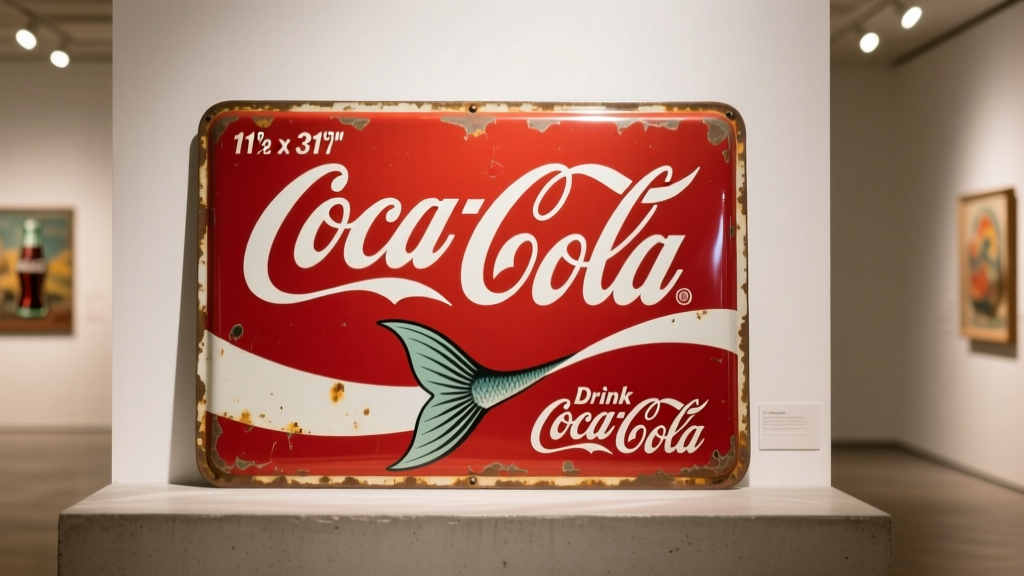
Coca-Cola 'Drink Coca-Cola' Fishtail Tin Sign, Circa 1960: Authentication, Market Value, and Historical Context
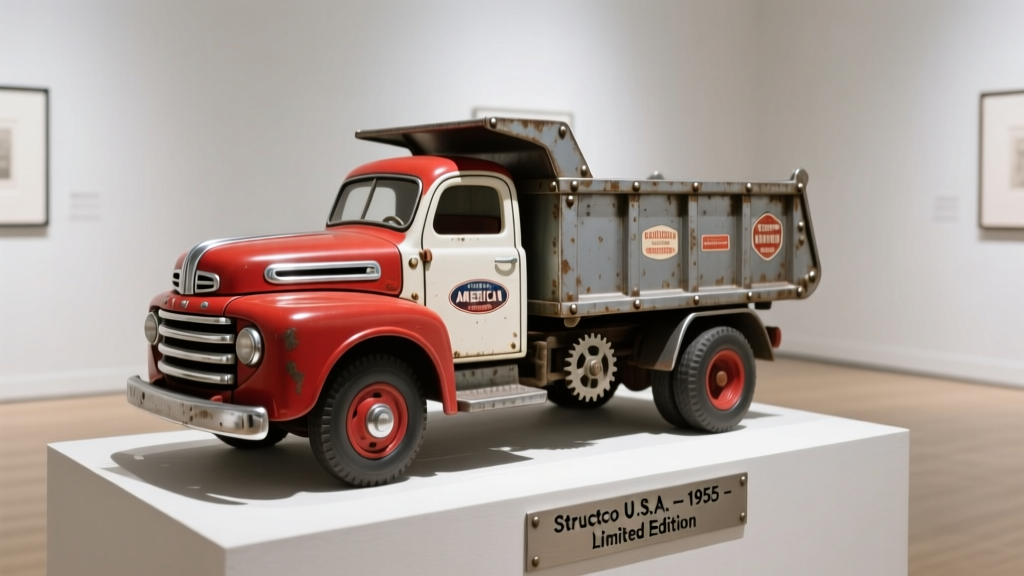
Toy Truck Dump Pressed Steel Windup Structo U.S.A. 1950s — Authentication, Provenance, and Market Value of the 13-Inch Vintage Mechanical Workhorse
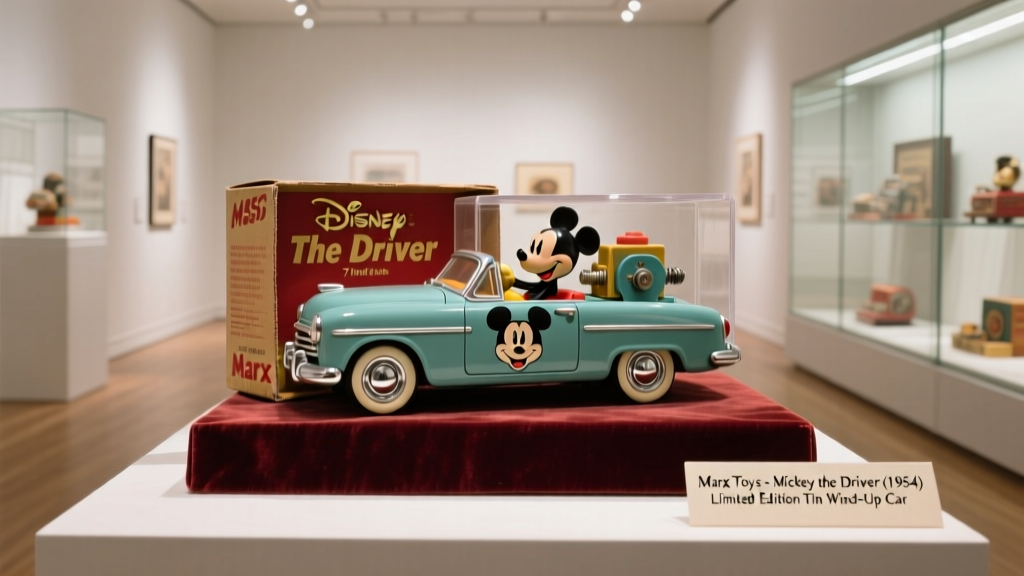
Disneyana Toy Authentication: The Marx 'Mickey the Driver' Car — Tin, Plastic, Windup Mechanics, and Box Variants (1950–1954)
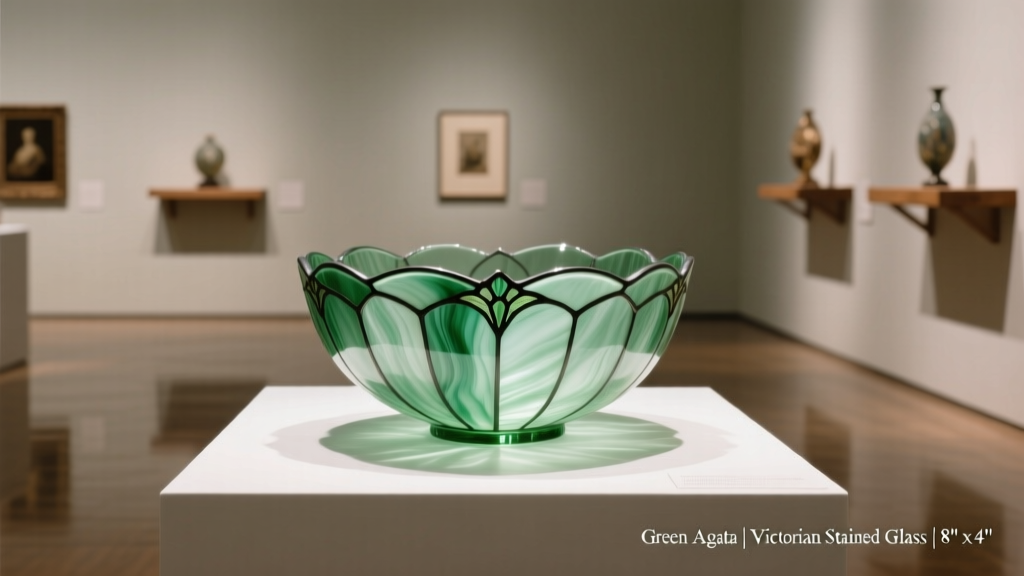
Glass Art Bowl: Green Opaque Agata Stained Victorian (8 × 4 Inches) — Authentication, Provenance, and Market Analysis

Denver PA: Authentication Framework, Market Positioning, and Technical Analysis of the Denver Print Archive
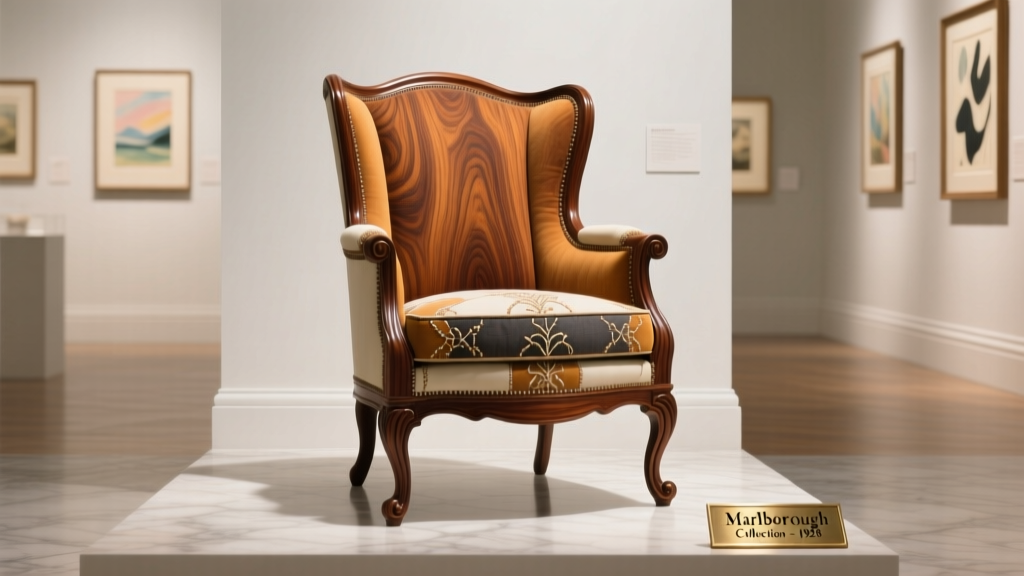
Authenticating and Valuing the Wing Chair: Mahogany Frame, Marlborough Legs, and Hand-Stitched Needlepoint Upholstery (46 × 34 in)
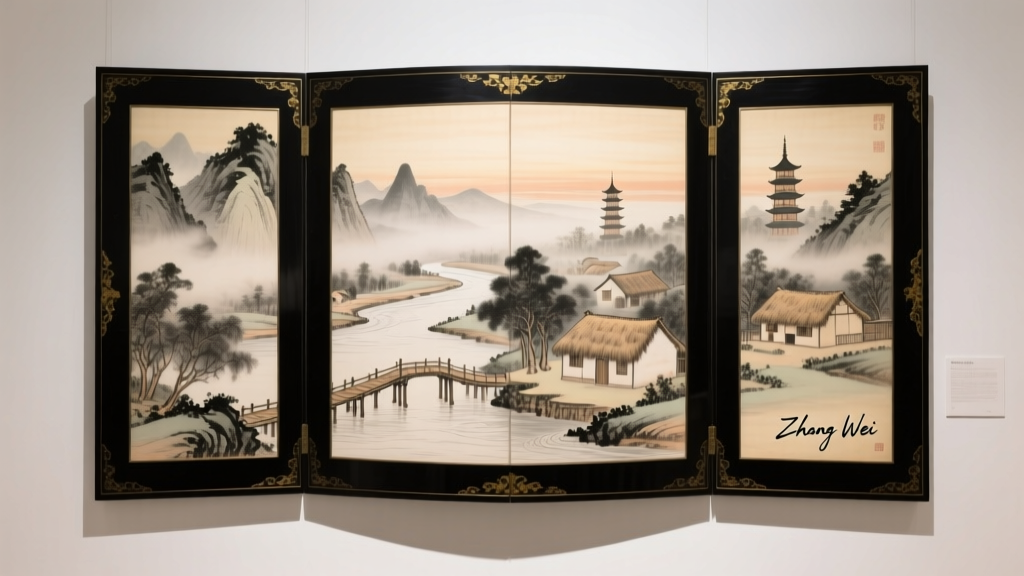
Authenticating and Valuing the 3-Panel Folding Painted Landscape Screen: River Village, 68 Inches

Pittsburgh Pirates 1973 Yearbook: A Collector’s Guide to Authenticity, Content, and Market Value
Authenticating and Valuing a C. 1900 Sawtooth Patchwork Quilt: Red-and-White Cotton, 68 × 81 Inches