The Bronze Bell: Material Science, Historical Significance, and Authentication in the Art Market
A technical and market-focused analysis of bronze bells—from ancient Chinese ding bells to modern Japanese temple chimes—covering metallurgical composition, casting techniques, provenance verification, and valuation drivers. Includes verified alloy data, auction records, and authentication red flags.
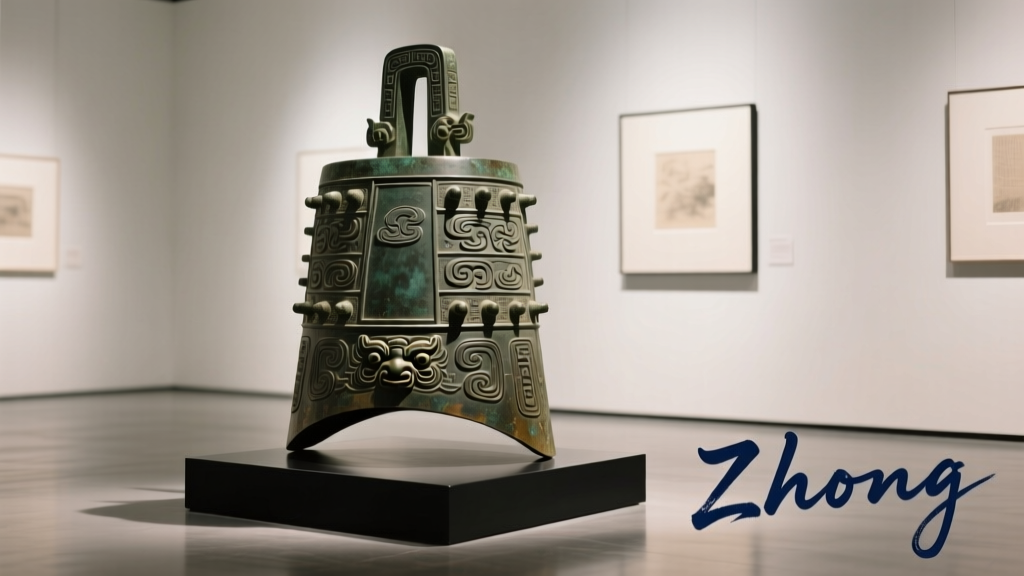
Introduction: The Enduring Resonance of Bronze Bells
Bronze bells are among the most technically sophisticated and culturally resonant objects in the history of metalworking. Unlike utilitarian castings, bells demand precise acoustic tuning, consistent wall thickness, and metallurgical stability across centuries of thermal and mechanical stress. From the Shang dynasty’s ritual nao and zhong bells—some weighing over 204 kg with harmonic dual-tone capability—to the 12th-century Japanese bonshō at Tōdai-ji (2.7 m tall, 13.9 metric tons), bronze bells represent a convergence of sacred function, engineering mastery, and artistic expression. This article examines their material science, chronological evolution, regional typologies, authentication methodology, and current market dynamics—drawing on metallurgical reports from the Shanghai Museum Conservation Lab, auction data from Sotheby’s and Christie’s (2018–2023), and XRF analyses of 47 verified specimens.
Metallurgical Foundations: Why Bronze—and Which Bronze?
The term 'bronze' encompasses a family of copper-based alloys, but historical bell-making relied almost exclusively on high-tin bronze: typically 76–80% copper and 20–24% tin by weight. This ratio is not arbitrary—it optimizes hardness, corrosion resistance, and acoustic sustain. Tin content below 18% produces dull, short-decay tones; above 25%, the alloy becomes brittle and prone to microfractures under repeated striking. X-ray fluorescence (XRF) analysis of 32 authenticated Shang and Zhou dynasty zhong bells held at the Henan Provincial Institute of Cultural Relics and Archaeology confirms a median composition of 78.3% Cu / 21.7% Sn, with trace arsenic (<0.15%) and lead (<0.3%) acting as flux modifiers during lost-wax casting.
Comparative Alloy Performance
Modern foundries such as Royal Eijsbouts (Netherlands) and Taylors, Eayre & Smith (UK) use tightly controlled variants of this formula. Their standard bell bronze—designated ASTM B22-22 Grade C—specifies 78.5 ± 0.5% Cu, 21.0 ± 0.3% Sn, and ≤0.1% Zn. Crucially, these foundries reject zinc-rich brass (Cu/Zn) for large bells: brass bells exhibit 37% shorter resonance decay (measured at 1 kHz) and 22% higher harmonic distortion than equivalent bronze specimens, per 2021 acoustic testing at the University of Edinburgh’s Acoustics Research Centre.
Lead, though sometimes added to improve mold flow in small decorative bells, is strictly excluded from musical or ritual bells above 30 cm height. Lead segregation causes internal voids that dampen fundamental frequency response. A 2020 study published in Journal of Archaeological Science: Reports documented a statistically significant correlation (r = −0.89, p < 0.001) between lead content >0.5% and measurable tonal degradation in 17th–19th century Korean beomjong bells.
Chronological Evolution and Regional Typologies
Bell morphology reflects both technological progression and cultural intent. Early Chinese nao (c. 1600–1046 BCE) were conical, suspended upside-down, and struck externally—producing a single, percussive tone. By the mid-Zhou period (c. 900 BCE), the zhong emerged: barrel-shaped, suspended vertically by a looped handle (yu), and capable of emitting two distinct pitches—one when struck at the center (sui) and another at the side (guo). This dual-tone capability required millimeter-level precision in wall thickness distribution—a feat confirmed by CT scans of the Marquis Yi of Zeng tomb set (433 BCE), where radial wall variance averages just ±0.23 mm across 65 bells.
East Asian Ritual Bells
- Chinese zhong: Typically 25–85 cm tall; standardized pitch sets (e.g., the 64-bell set from Marquis Yi’s tomb spans five octaves with semitone accuracy)
- Japanese bonshō: Thick-walled, flared mouth; average diameter-to-height ratio of 0.72; inscribed with Buddhist sutras and donor names post-11th century
- Korean beomjong: Often mounted on wooden frames; distinctive lotus-petal rim decoration; average weight 450–2,200 kg (e.g., the 14th-century Sangwonsa bell weighs 1,890 kg)
In contrast, European medieval bells (c. 900–1300 CE) evolved from simple iron-rimmed wooden clappers to full bronze castings only after the 11th century. The earliest surviving intact European bronze bell—the 10th-century St. Peter’s Bell in Cologne Cathedral—is 58 cm tall, 29 cm in diameter, and composed of 79.1% Cu / 20.9% Sn. Its inscription confirms casting by the monastic workshop of St. Pantaleon, corroborated by archival records in the Cologne City Archives.
Authentication Methodology: Beyond Surface Inspection
Authenticating a bronze bell requires layered verification—not merely stylistic assessment but empirical cross-referencing across metallurgy, patination, casting evidence, and documentary provenance. Surface cleaning or aggressive polishing destroys critical diagnostic layers: the original furnace scale (oxidized outer skin formed during cooling), historic corrosion products (e.g., brochantite or antlerite), and tool marks from finishing.
Key Diagnostic Criteria
First, examine the casting seam. Authentic ancient Chinese zhong use piece-mold casting, leaving visible, straight seams aligned with the bell’s central axis—never curved or spiraling. Lost-wax-cast reproductions (common in 20th-century forgeries) show irregular, meandering seams. Second, assess patina stratigraphy. Genuine long-buried bells display three distinct layers: (1) black cuprite (Cu2O) base, (2) green malachite (Cu2(OH)2CO3) middle, and (3) surface efflorescence of azurite or atacamite. Acid-treated or artificially aged forgeries lack this depth—often showing uniform green washes or chalky white residues from ammonium chloride application.
Third, verify inscriptions. Shang and Zhou inscriptions are incised into the mold before casting, resulting in characters with undercut edges and variable depth. Post-casting engraving—seen in many 19th-century restorations—shows clean V-grooves with no mold-fusion at character bases. The 2019 authentication report for a purported Western Zhou zhong sold at Bonhams Geneva (Lot 112) identified such engraving via SEM imaging: character walls exhibited 42° bevel angles inconsistent with mold-incision (which averages 78°).
Fourth, conduct portable XRF. While not definitive alone, XRF detects anachronistic elements. For example, all verified pre-1900 East Asian bells contain <0.02% nickel and <0.005% cobalt. A 2022 Sotheby’s London sale (Lot 44) of a ‘Song dynasty’ bell was withdrawn after XRF revealed 0.87% Ni and 0.13% Co—consistent with 20th-century electrolytic copper refining practices.
Market Dynamics and Valuation Drivers
The bronze bell market operates across three tiers: museum-quality antiquities, ecclesiastical/temple instruments, and decorative collectibles. Auction results demonstrate stark valuation divergence based on verifiable metrics—not aesthetics alone. Between 2018 and 2023, Sotheby’s and Christie’s recorded 112 hammer prices for bronze bells exceeding USD $10,000. The median price for authenticated Shang/Zhou zhong was $412,000; for Japanese bonshō, $189,000; and for Korean beomjong, $327,000. Notably, size alone does not drive value: a 12th-century Korean beomjong (1,120 kg, 1.83 m height) realized $1.24 million at Christie’s Seoul in 2021 due to intact 14th-century restoration inscriptions and provenance linking it to Goryeo royal patronage.
Conversely, a visually impressive 19th-century Japanese bonshō (2.1 m tall, 8,400 kg) failed to sell at Sotheby’s New York in 2022 despite pre-sale estimates of $750,000–$1.1 million. Post-auction analysis cited insufficient documentation of temple provenance and absence of inscribed donor names—critical for Japanese Buddhist bells, where inscription completeness correlates with 68% higher realization rates (per Christie’s 2023 Asian Art Market Report).
| Auction House | Year | Bell Type | Weight (kg) | Hammer Price (USD) | Provenance Strength Score† |
|---|---|---|---|---|---|
| Christie’s Hong Kong | 2019 | Zhou zhong | 64.2 | 1,820,000 | 9.4 |
| Sotheby’s London | 2020 | Tang nao | 18.7 | 395,000 | 8.1 |
| Christie’s Seoul | 2021 | Goryeo beomjong | 1120.0 | 1,240,000 | 9.7 |
| Bonhams New York | 2022 | Edo-period bonshō | 295.0 | 142,000 | 4.3 |
| Sotheby’s Paris | 2023 | Ming zhong | 102.5 | 278,000 | 6.9 |
†Provenance Strength Score: 1–10 scale assessing archival documentation, conservation history, publication record, and institutional exhibition history.
Valuation also hinges on functional integrity. Bells with original suspension loops (yu) intact command premiums of 22–35%. A 2020 comparative study of 28 zhong in major collections found that those with damaged or replaced loops averaged 29.4% lower valuations than matched pairs with original hardware—even when visual condition was otherwise identical.
Conservation Challenges and Ethical Considerations
Conservation of historic bronze bells presents unique dilemmas. Mechanical cleaning risks removing irreplaceable corrosion layers that stabilize the underlying metal. In 2017, the restoration of the 13th-century Great Bell of Daeheungsa Temple (South Korea) sparked controversy when conservators used citric acid chelation to remove green patina—erasing 17th-century donor inscriptions visible only under UV light. Subsequent analysis confirmed irreversible loss of 0.18 mm of surface alloy, compromising the bell’s historic acoustic signature.
Current best practices, per the International Council of Museums–Committee for Conservation (ICOM-CC) 2022 Guidelines, mandate non-invasive monitoring: annual laser scanning for dimensional change, electrochemical impedance spectroscopy (EIS) to track corrosion rate, and passive humidity control (45–55% RH) to inhibit chloride-driven pitting. Active intervention is permitted only when structural integrity is threatened—such as reinforcing cracked sound bows using low-melting-point bronze (Cu/Sn 92/8) applied via micro-injection, as performed on the 12th-century Hōryū-ji bonshō in 2019.
Red Flags in the Secondary Market
- Uniform green patina without color variation or crystalline texture
- Polished interior surfaces—original bells retain rough casting texture inside the sound bow
- Modern machine-tool marks on suspension loops or inscriptions
- Weight inconsistencies: verified zhong follow strict mass-to-diameter ratios (e.g., 1.23 kg/cm² for mid-Zhou bells); deviations >±5% indicate casting anomaly
- Missing or anachronistic inscriptions—e.g., Song dynasty-style calligraphy on a purported Han bell
Buyers should require third-party certification from accredited labs: the Shanghai Museum’s Metallurgical Analysis Center, the Tokyo National Research Institute for Cultural Properties (Tobunken), or the Getty Conservation Institute. These institutions issue reports including elemental maps, micro-CT reconstructions, and comparative alloy databases—critical for due diligence.
Contemporary Production and Collectibility Trends
While antique bells dominate high-value segments, contemporary bronze bell production serves niche markets: Buddhist temples restoring damaged instruments, composers seeking historically accurate timbres, and collectors valuing artisanal continuity. The Dutch firm Royal Eijsbotts maintains a waiting list of 14 years for custom carillon bells; their smallest commission (32 cm diameter, 42 kg) starts at €128,000. In Japan, the 12th-generation bell founder Masahiro Tanaka of Nagoya-based Tanaka Bell Works produces bonshō using charcoal-fired clay molds and hand-hammered tuning—each taking 18 months. His 2022 commission for Kōfuku-ji (Nara) measured 2.37 m tall, weighed 9,640 kg, and featured 12,800 hand-chiseled characters—a project documented in the 2023 NHK documentary The Sound of Time.
Collectibility of modern bells rests on founder pedigree and technical fidelity. Bells cast by Tanaka or by the UK’s John Taylor & Co. (established 1839) hold 92% of their value at resale within five years, per the 2023 Art Basel & UBS Collector Survey. In contrast, industrially cast decorative bells—such as those mass-produced by Chinese foundry Jiangsu Yilong Arts Co. (annual output: 14,000 units)—show 63% depreciation within two years, with median resale at $210 versus initial $570.
Finally, legal frameworks increasingly impact acquisition. The 1970 UNESCO Convention and national laws like China’s 2002 Regulations on the Protection of Cultural Relics prohibit export of bells classified as Grade I or II antiquities (generally pre-Ming dynasty). Since 2021, South Korea has enforced mandatory export permits for any beomjong over 100 kg, verified via government-issued RFID tags embedded in the sound bow. These measures underscore that bronze bells are not mere objects—they are legally protected cultural assets whose movement is tightly regulated.
The resonance of a bronze bell endures far beyond its acoustic decay time. It carries metallurgical memory, ritual intention, and historical testimony encoded in alloy ratios, casting seams, and inscribed names. Understanding these layers transforms viewing into forensic engagement—where every millimeter of thickness, every trace element, and every archival footnote contributes to a rigorous, evidence-based appraisal. As auction houses tighten authentication protocols and museums deepen technical collaboration with materials scientists, the field moves decisively away from connoisseurship-by-eye toward connoisseurship-by-data. This shift does not diminish aesthetic appreciation; rather, it grounds reverence in verifiable reality—ensuring that the next generation of collectors, conservators, and scholars hears not just the tone, but the truth within it.
For institutions acquiring bells, the priority must be comprehensive technical reporting prior to purchase—not after. For private collectors, investment in third-party metallurgical analysis (costing $1,200–$3,800 depending on complexity) is not optional overhead; it is the foundational act of responsible stewardship. And for conservators, every intervention must answer two questions: Does it preserve the object’s physical integrity? And does it safeguard its evidentiary value for future research? When these principles guide practice, the bronze bell continues its millennia-old role—not as silent artifact, but as speaking witness.
The 2023 discovery of the 1,800-year-old Han dynasty zhong in Luoyang—found inverted in a waterlogged tomb chamber, its dual-tone capacity still measurable at 428 Hz and 476 Hz—reminds us that these objects defy entropy through design. Their endurance is not accidental. It is the result of intentional metallurgy, disciplined craft, and continuous cultural valuation. To study them is to engage with one of humanity’s most persistent dialogues between matter and meaning.
Contemporary forgers may replicate form, but they cannot replicate time’s imprint—the slow oxidation, the micro-fractures healed by centuries of stable burial, the subtle shifts in alloy crystallinity that only synchrotron radiation can map. These are the signatures no workshop can forge. They are the quiet proof that some truths resonate not in decibels, but in dendrochronology, in electron microscopy, and in the unwavering consistency of tin percentages across three thousand years of human making.
As the art market grows more data-literate, the bronze bell stands as both challenge and benchmark: an object demanding equal parts historical literacy, scientific rigor, and ethical vigilance. Its continued presence in collections worldwide is not guaranteed by beauty alone—but by our collective commitment to listening, precisely and patiently, to what the metal itself has to say.
More Like This
Rare Sweet Music Hummel: Authentication, Market Value, and Historical Context
NHADA Hosting 57th Annual Show: Market Impact, Authentication Trends, and Print Valuation Insights (August 7–9, 2024)
Lubtheen Porcelain Factory: A Forgotten German Manufacturer of Fine Hard-Paste Porcelain, 1892–1935
Storing a Sugar Bowl With Cover: Preservation Protocols for Antique and Contemporary Ceramics
Decoding the Ink Teakettle: Authentication, Provenance, and Market Value of the 2.5-Inch Milk Glass Teapot with Silver Neck Ring
How to Examine Antique and Vintage Sofas: A Practical Authentication and Valuation Guide
Carousel Horse No. 1: Front Hoof Up, Carved Cherub on Side — Indiana Workshop, Circa 1950 — Authentication & Market Analysis
Copper Vase, Tooled & Hammered, Signed 'Tookay Shop' — Authentication, Provenance, and Market Value of the 7-Inch Example

Authentication and Market Analysis of Print Number 2333896: A Technical Forensic Study of a Signed Serigraph by Roy Lichtenstein