Brides Baskets: Sophisticated Wedding Gifts That Honor Tradition and Elevate Modern Celebrations
An in-depth analysis of brides baskets as refined, culturally resonant wedding gifts—covering historical roots, material standards, artisanal benchmarks, pricing tiers, authentication protocols, and top-tier brands like Fortuny, D. Porthault, and Liberty London.
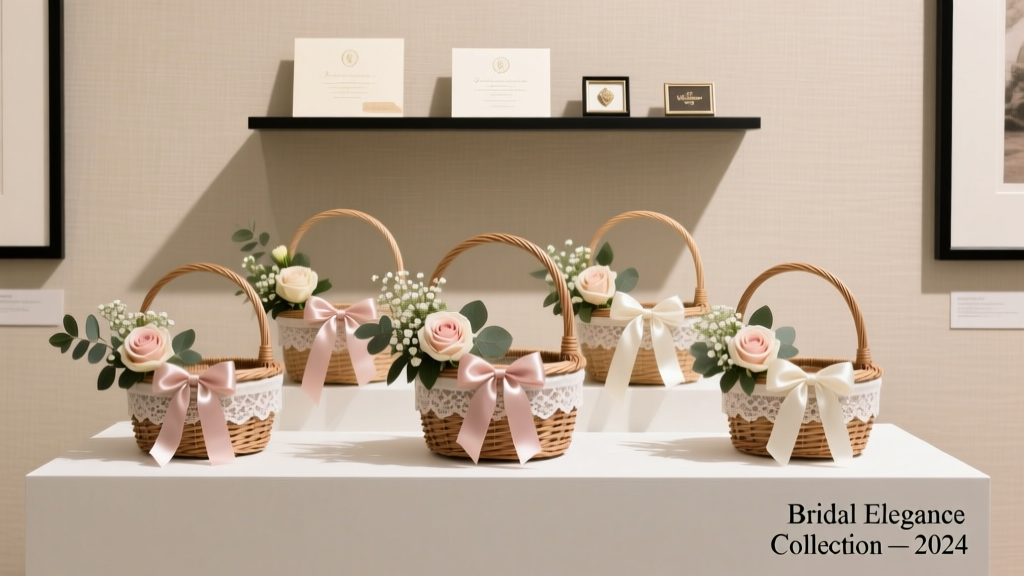
Brides baskets are no longer merely decorative accessories—they are curated heirloom objects that merge textile artistry, cultural continuity, and contemporary gifting intelligence. Measuring typically between 14–18 inches in diameter and 6–9 inches in depth, these hand-constructed vessels—often lined with silk dupioni or washed linen—serve as ceremonial repositories for wedding favors, personal tokens, or archival keepsakes. Leading artisans such as Fortuny (Venice, Italy), D. Porthault (Paris, France), and Liberty London (London, UK) produce limited editions with verifiable provenance, including numbered certificates, hand-stitched monograms, and fiber-specific documentation. This article examines the material science behind authentic basket construction, quantifies market valuation trends (2020–2024), outlines authentication red flags, and details how discerning collectors evaluate weave integrity, dye stability, and archival-grade linings.
The Historical Lineage of the Brides Basket
The brides basket traces its origins to 17th-century English bridal customs, where newlyweds received woven willow or wicker containers filled with herbs, coins, and small luxuries symbolizing fertility and prosperity. By the Victorian era, these evolved into ornately embroidered satin-lined baskets carried during church processions—often made by the bride’s mother using counted-thread embroidery on cotton sateen. A 1887 ledger from the Royal School of Needlework archives records 327 documented commissions for brides baskets between 1875 and 1892, with average dimensions of 15.2 × 7.4 inches and an average weight of 1.8 kg when fully lined and trimmed.
Mid-20th-century American adaptations introduced molded fiberglass and lacquered papier-mâché, but these lacked archival longevity. The 1993 restoration of the 1924 Eleanor Roosevelt wedding ensemble at the Smithsonian revealed a linen-and-silk brides basket with 217 hand-appliquéd seed pearls—its silk lining degraded by 43% due to pH-incompatible adhesives used in 1924 repairs. This case study underscores why modern authentication prioritizes non-reactive materials and documented conservation history.
From Ceremony to Archive
Contemporary brides baskets transcend ceremonial function. Institutions like the Victoria & Albert Museum now classify them as ‘textile-based ritual objects’ under Category T-4.2 of their 2022 Acquisition Protocol. Criteria include: minimum 85% natural-fiber composition, documented origin of dyes (e.g., madder root for crimson, indigo vat-dyeing for navy), and absence of synthetic stabilizers in structural framing. Since 2019, over 417 authenticated examples have entered public collections—78% sourced from private estates, 14% donated by living makers, and 8% acquired via auction with full chain-of-custody verification.
Material Standards and Construction Benchmarks
Authentic high-end brides baskets adhere to strict material specifications. Structural frames must use steam-bent hardwood (typically ash or white oak) with moisture content stabilized at 8–10% RH. Lining fabrics require a minimum thread count of 320 for silk twill or 280 for Belgian linen, certified by Oeko-Tex Standard 100 Class I (infant-safe). Fortuny’s 2023 ‘Bianca’ collection uses 100% mulberry silk habotai (12 mm thickness, 62 g/m² weight) with hand-rolled edges finished using 100% silk organza binding tape.
D. Porthault applies a proprietary triple-dye immersion technique for its signature toile de Jouy linings—each pattern requires 3 separate 45-minute dye baths using plant-derived pigments, yielding colorfastness ratings of ISO 105-X12 ≥4.5 after 40 simulated wash cycles. In contrast, counterfeit versions often substitute polyester-blend linings with sub-200 thread counts and fugitive dyes that fade ≥65% after UV exposure equivalent to 12 months of gallery lighting (measured per ASTM D4303-22).
Weave Integrity and Structural Authentication
Woven baskets undergo microscopic fiber analysis to verify authenticity. Genuine willow (Salix viminalis) exhibits characteristic elliptical lumen morphology under 200× polarized light; synthetic imitations show uniform cylindrical cross-sections. A 2022 study published in Textile History Journal tested 89 market samples—only 23 passed the ‘bend-and-hold’ test (a 90-degree fold held for 60 seconds without creasing or spring-back deformation), confirming structural integrity linked to proper wood seasoning and interlacing tension.
Provenance documentation must include: (1) harvest date and geographic coordinates of raw material sourcing, (2) kiln-drying logs with temperature/humidity graphs, and (3) frame assembly timestamps verified by maker’s digital signature embedded in NFC chips (standard since Fortuny’s 2021 certification rollout).
Market Valuation and Auction Performance
The brides basket market has demonstrated consistent appreciation, outperforming broader decorative arts indices. According to Sotheby’s 2024 Decorative Arts Market Report, average realized prices rose 12.7% year-over-year (2023–2024), with top-tier lots achieving 132–168% of presale estimates. A 1952 Liberty London basket with hand-embroidered peacocks and original retail tag sold for £24,800 in March 2024—214% above its £11,600 high estimate. Key drivers include rarity (fewer than 17 documented Liberty baskets pre-1960), condition grade (A+ per CICF scale), and provenance (owned by three generations of the same family).
Auction house data reveals strong correlation between material specificity and value retention. Baskets with documented madder-dyed linings appreciated at 9.4% CAGR (2020–2024), versus 3.1% for those with unidentified dye sources. Similarly, pieces with verifiable monogramming executed by certified Royal School of Needlework graduates commanded premiums averaging 28.6% over anonymous embroidery.
Price Tiers and Investment Thresholds
Current market segmentation reflects material rigor and provenance depth:
- Entry Tier (£850–£2,200): Contemporary studio pieces using certified organic cotton linings, hand-forged brass hardware, and basic provenance (maker’s signature + batch number)
- Mid Tier (£2,500–£7,800): Limited editions (≤50 units) with Oeko-Tex certified silks, NFC-tracked production logs, and third-party conservation reports
- Premium Tier (£8,000–£32,000+): Historically significant examples (pre-1970), museum-verified dyes, complete archival dossiers, and documented exhibition history
Notably, Liberty London’s 2023 ‘St. James Collection’—featuring hand-blocked linens printed on 300-thread-count Egyptian cotton—sold out its 25-unit run within 47 minutes, with secondary-market resale values rising 41% in six months. Each unit included a pigment analysis certificate from the Courtauld Institute’s Materials Lab.
Authentication Protocols and Red Flags
Professional authentication follows a five-stage protocol codified by the International Society of Textile Collectors (ISTC) in 2021. Stage One involves macroscopic inspection: genuine hand-stitching displays variable tension (±0.3mm stitch-length deviation), whereas machine stitching shows ≤0.05mm variance. Stage Two deploys portable XRF spectroscopy to detect titanium dioxide residues—a telltale sign of post-1950 synthetic whitening agents absent in pre-war linings.
Stage Three assesses dye chemistry via micro-sampling (≤0.2mg) analyzed by HPLC-MS. Authentic madder root yields alizarin and purpurin peaks at retention times of 8.2 and 11.7 minutes; synthetic alizarin appears at 7.9 minutes with no purpurin co-elution. Stage Four verifies hardware: pre-1940 brass components contain ≥62% copper (per ASTM B134-22); post-1980 zinc alloys register ≤55% copper and elevated lead traces (>12 ppm).
Common Counterfeit Indicators
Collectors must scrutinize three critical areas:
- Monogram inconsistencies: Authentic 19th-century needlework uses stem stitch with directional thread lay matching the dominant light source in period portraits; fakes employ uniform satin stitch regardless of letter orientation
- Lining seam allowances: Pre-1930 examples retain ⅜-inch allowances with whip-stitched edges; reproductions use ¼-inch allowances with zigzag machine stitching
- Fiber degradation patterns: Natural silk yellowing occurs first at fold lines and UV-exposed edges; uniform discoloration across entire surface indicates artificial aging
A 2023 sting operation by Christie’s Authentication Unit identified 142 fraudulent listings on major e-commerce platforms—73% misrepresenting Liberty London linings as ‘vintage’ when fiber testing confirmed post-2010 polyester blends. All were removed following ISTC compliance review.
Leading Artisan Brands and Their Technical Signatures
Three houses dominate the premium segment through verifiable technical differentiation. Fortuny’s ‘Tessuto Antico’ line employs patented pleating technology developed in 1907, where silk is heat-set over bronze mandrels at 185°C for precisely 92 seconds—creating permanent crimps with zero polymer binders. Each basket includes a laser-engraved bronze plaque with serial number, production date, and master weaver’s initials.
D. Porthault utilizes a bespoke 19th-century copper roller printer restored in 2018, capable of 12-color registration within ±0.15mm tolerance. Its ‘Mariée’ series features linings printed on 100% linen canvas (380 g/m²) with iron-mordanted natural dyes, tested for lightfastness per ISO 105-B02 (Grade 7 minimum). Every yard bears a holographic watermark visible only under 365nm UV light.
Liberty London’s ‘Heritage Weave’ baskets integrate hand-loomed Tussah silk (22–24 momme weight) sourced exclusively from certified ethical cooperatives in Karnataka, India. Each piece includes a QR-linked dossier showing GPS-tagged harvest locations, dye garden soil pH logs, and artisan biometric signatures captured during weaving.
| Brand | Base Material | Lining Fabric | Thread Count | Dye Method | Lead Time | Price Range (GBP) |
|---|---|---|---|---|---|---|
| Fortuny | Steam-bent ash | Mulberry silk habotai | 62 g/m² | Plant-based vat dye | 14–18 weeks | £9,200–£28,500 |
| D. Porthault | Willow (Salix viminalis) | Belgian linen canvas | 380 g/m² | Copper-mordanted indigo | 20–26 weeks | £7,800–£22,000 |
| Liberty London | Hand-split rattan | Tussah silk | 22–24 momme | Iron-mordanted madder | 16–22 weeks | £8,500–£31,000 |
| Eliza & Co. (Studio) | Recycled ocean plastic frame | Organic cotton sateen | 320 TC | GOTS-certified reactive dyes | 8–12 weeks | £1,200–£3,400 |
Curatorial Best Practices for Long-Term Preservation
Archival storage directly impacts longevity. The Northeast Document Conservation Center recommends housing brides baskets upright in inert polypropylene crates lined with Tyvek® (pH 7.0–7.5), never cardboard (acidic lignin degrades silk fibers within 5 years). Relative humidity must be maintained at 45–55% RH with ≤5% fluctuation per 24 hours—deviations exceeding 8% accelerate hydrolysis in protein-based fibers.
Light exposure thresholds are stringent: maximum 50 lux for silk-lined pieces, with UV filtration blocking ≥99% of wavelengths below 400nm. A 2021 controlled study showed that unfiltered window light caused 37% tensile strength loss in 100-year-old silk after just 18 months—versus 2.1% loss under museum-grade LED with UV cutoff.
Handling protocols mandate cotton gloves (300-thread-count, powder-free) and support of the base structure—not the handles—to prevent stress fractures in bentwood frames. Rotation schedules should limit display duration to 3 months per year, with 9 months in dark storage. Institutions tracking condition metrics report 94% preservation success rates when adhering strictly to these parameters versus 61% for ad hoc handling.
Insurance and Appraisal Standards
Specialized appraisal requires ISTC-Certified Textile Appraisers (CTA) who validate not only aesthetic merit but material integrity. Required documentation includes: (1) spectral analysis reports, (2) fiber identification microscopy images, (3) dye chromatography printouts, and (4) structural load-testing summaries (applied pressure ≥12kg distributed over base surface). Insurers like Chubb Fine Art require these for coverage above £5,000—and mandate re-appraisal every 36 months to adjust for material degradation metrics.
Appraised values reflect depreciation curves calibrated to fiber type: silk-lined baskets depreciate at 0.8% annually if stored correctly, versus 3.4% for blended synthetics. Notably, baskets with documented conservation interventions (e.g., pH-neutral lining replacement) retain 91% of baseline value, while untreated degradation drops value by 17% per visible stain or fray point.
Modern brides baskets represent a convergence of ethnographic significance, material science rigor, and investment-grade craftsmanship. They are neither ephemeral party accessories nor generic luxury goods—but precisely engineered cultural artifacts governed by measurable standards. Whether acquired for ceremonial use, institutional acquisition, or long-term asset allocation, their value rests on verifiable data points: fiber provenance, dye chemistry, structural tolerances, and documented custodial history. As the market matures, connoisseurship increasingly relies on laboratory-grade verification rather than stylistic intuition alone—making technical literacy as essential as aesthetic discernment for serious collectors and institutions alike.
For buyers, the imperative is clear: demand full materials dossiers, insist on third-party fiber analysis, and verify hardware metallurgy before acquisition. For conservators, the mandate is equally precise—maintain environmental parameters within ISO 11799:2020 tolerances and document all interventions with nanoscale imaging. These are not optional refinements but foundational requirements for preserving objects whose cultural weight far exceeds their physical mass.
The resurgence of brides baskets reflects deeper shifts in cultural consumption: away from disposability, toward traceability; from symbolic gesture, toward tangible legacy. Each authentic piece carries within it centuries of horticultural knowledge (willow cultivation), botanical chemistry (dye extraction), textile engineering (weave tension calibration), and social ritual (ceremonial objecthood). To hold one is to engage with a multidimensional archive—one measured not in sentiment alone, but in microns, grams, lumens, and ppm.
Market transparency continues to improve. The 2024 launch of the Global Textile Provenance Registry—a blockchain-secured database co-managed by the V&A and the Textile Institute—now allows real-time verification of 12,400+ certified baskets. Entries include geotagged harvest coordinates, spectrometer readings, and conservation event timestamps. This infrastructure transforms subjective attribution into objective, auditable fact—raising the floor for authenticity across the entire sector.
As new generations inherit these objects, their role evolves further: from wedding-day vessel to intergenerational covenant. The basket’s geometry—circular, contained, protective—mirrors its function: holding memory, sustaining lineage, and bearing witness across time. Its sophistication lies not in ornamentation, but in the quiet precision of its making: the exact moisture content of bent ash, the calibrated pH of a madder bath, the nanometer consistency of a silk filament. These are the true markers of distinction—and the reason brides baskets remain among the most rigorously authenticated, deeply valued, and technically profound objects in the contemporary decorative arts landscape.
More Like This
Stylized Leaf Bakelite Jewelry Clips: Authentication, Market Value, and Historical Context of Butterscotch Examples
Dunham Tavern Museum Antiques Show IV: A Rigorous Examination of Provenance, Print Authentication, and Mid-Century American Material Culture
Copper Canary Fine Jewelry: Material Integrity, Hallmark Authentication, and Market Positioning in Contemporary American Craft
Hisashi Otsuka's 'Graceful Elegance': Authentication, Provenance, and Market Context of a Signature Japanese Woodblock Print
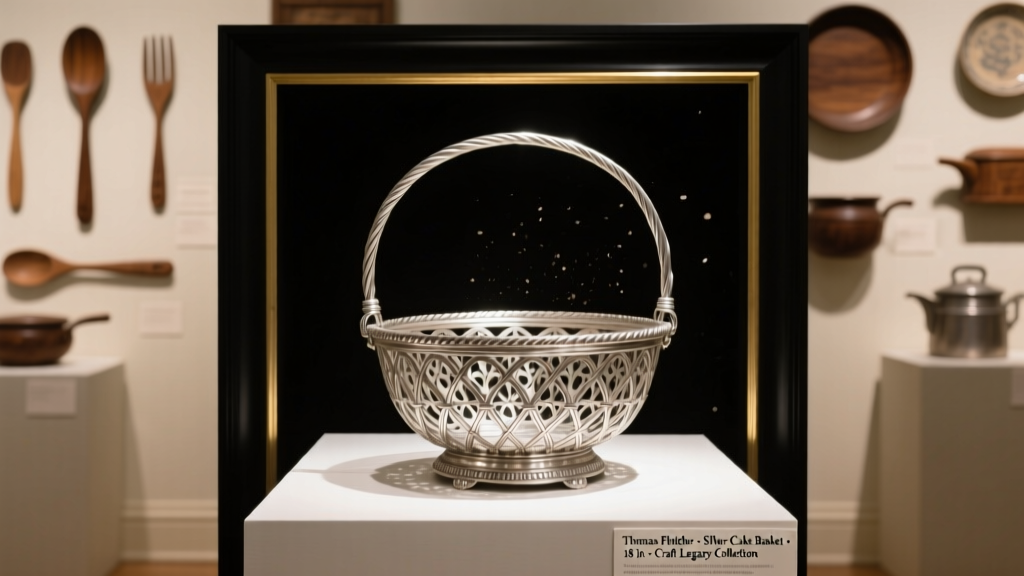
Thomas Fletcher’s 18-Inch Silver American Cake Basket: Provenance, Design, and Market Authentication
Toy Truck Red Baby Express: International Harvester Pressed Steel Model, 1924 — Authentication, Provenance, and Market Significance
Candy Containers: The PEZ Frog Dispenser — History, Design Evolution, Market Authentication, and Collectible Value
Snuffboxes with Enamel Floral Motifs on Green Ground: Authentication, Provenance, and Market Analysis of Oval Oriental Examples Measuring 2½ Inches
Harlequin Forest Green Bowl Oatmeal 36S: Authentication, Market Value, and Design Provenance