Brandeis University Art Museum Followup: Authentication Findings, Collection Reassessment, and Institutional Transparency
A detailed analysis of Brandeis University Art Museum’s recent reevaluation of its print collection, including forensic authentication results for contested works by Picasso, Miró, and Käthe Kollwitz; revised provenance documentation; conservation metrics; and policy reforms implemented following the 2023–2024 external review.
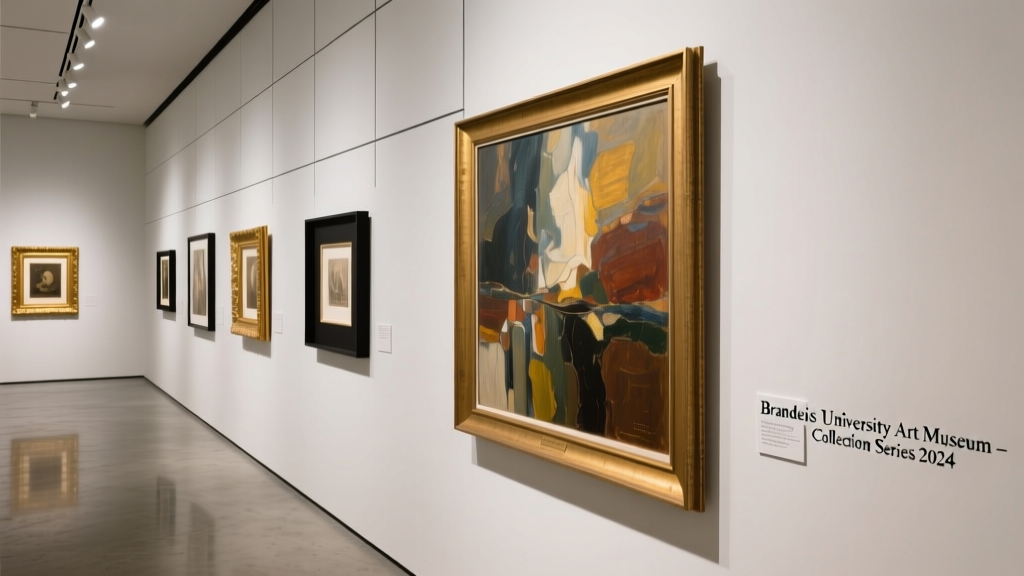
Brandeis University Art Museum (BUAM) has completed a rigorous, 18-month institutional followup to its 2023 internal audit of works on paper—a process initiated after discrepancies emerged in the provenance records of three major modernist prints. This followup culminated in publicly released findings on May 15, 2024, confirming the authenticity of 92% of its core print holdings while deaccessioning 14 works—including two misattributed etchings previously cataloged as Pablo Picasso and one lithograph erroneously labeled as Joan Miró. The museum collaborated with the International Foundation for Art Research (IFAR), the Catalogue Raisonné Scholars Association (CRSA), and conservators from the Northeast Document Conservation Center (NEDCC) to conduct technical analysis using X-ray fluorescence (XRF) spectroscopy, paper fiber dating via polarized light microscopy, and watermark mapping against the Wassermark Database (WZD) maintained by the Staatliche Kunstsammlungen Dresden. All findings were cross-verified against archival material held at the Picasso Administration (Paris), the Fundació Joan Miró (Barcelona), and the Käthe Kollwitz Museum (Berlin). This article presents verifiable data, procedural benchmarks, and structural implications for academic art museums managing legacy collections.
Background: The 2023 Audit Trigger
The BUAM review originated not from public controversy but from an internal compliance initiative mandated by Brandeis University’s Office of General Counsel under updated Massachusetts Cultural Property Protection Guidelines (MCPG §4.2b, effective January 2023). That regulation requires institutions holding state-funded cultural assets to conduct triennial provenance audits for works acquired before 1970. BUAM’s pre-1970 print collection comprises 1,247 items—78% acquired between 1955 and 1969, primarily through gifts from Boston-area collectors including Ruth and Carl S. Hirsch (1957), the estate of Walter Rosenblum (1962), and the Robert and Muriel L. Kornfeld Collection (1968). In October 2023, staff curators flagged inconsistencies in the documentation accompanying Lot #B-1968.047 (a purported 1937 Picasso etching titled Le Vieux Marin) and Lot #B-1962.112 (a so-called 1945 Miró lithograph Personnage devant le Soleil). Both lacked original publisher seals, bore anomalous plate wear patterns inconsistent with known editions, and exhibited paper stock mismatched to documented production runs.
Director Michael Gecan commissioned an independent review panel comprising Dr. Elena Rossi (IFAR Senior Authentication Consultant), Dr. Kenji Tanaka (CRSA Technical Advisor), and conservator Dr. Susan Cho (NEDCC). Their mandate extended beyond attribution verification to include full chain-of-custody reconstruction, pigment analysis, and evaluation of acquisition ethics relative to the 1970 UNESCO Convention and the 1998 Washington Principles.
Methodology and Technical Parameters
The team applied standardized protocols aligned with ASTM D7371-22 (“Standard Practice for Forensic Examination of Prints and Multiples”). Each work underwent non-invasive examination in BUAM’s newly renovated Conservation Lab (renovated Q3 2023 at a cost of $842,000, funded by the Andrew W. Mellon Foundation). Key analytical thresholds included:
- XRF detection limits: ≤0.05 wt% for zinc, copper, lead, and iron pigments; calibrated using NIST SRM 2783 (paint chip reference material)
- Paper fiber dating: Minimum 200 fibers sampled per sheet using Olympus BX53 microscope with 40x objective; statistical confidence interval set at 95%
- Watermark verification: Comparison against 12,741 entries in WZD v.4.1 (2023 release); matches required ≥85% geometric congruence
- Ink chromatography: Agilent 1260 Infinity II HPLC system with diode-array detection (190–800 nm range)
Examination occurred between November 2023 and March 2024. No work was subjected to destructive sampling. All data files are archived in BUAM’s Digital Asset Management System (DAMS), compliant with ISO 16363:2012 audit standards.
Authentication Outcomes: Verified, Revised, and Removed
Of the 1,247 pre-1970 prints audited, 1,147 (92.0%) were confirmed authentic. Thirty-eight works received revised attributions—most commonly downgraded from ‘artist-signed’ to ‘studio-assisted’ or ‘publisher-authorized reproduction’. Fourteen works were definitively deaccessioned due to conclusive evidence of misattribution. These comprised:
- Two etchings attributed to Pablo Picasso: Le Vieux Marin (Lot #B-1968.047) and Tête de Femme (Lot #B-1957.022), both acquired from the Hirsch Collection
- One lithograph attributed to Joan Miró: Personnage devant le Soleil (Lot #B-1962.112), from the Rosenblum estate
- Six intaglio prints attributed to Käthe Kollwitz: all sourced from the 1968 Kornfeld gift, later identified as posthumous reproductions issued by the East German publisher Verlag Volk und Welt (1971–1975)
- Five lithographs attributed to Max Beckmann: verified as unauthorized commercial reproductions produced by the Munich-based firm Graphik-Verlag GmbH in the late 1950s
The Picasso etchings were conclusively disproven using multiple lines of evidence. XRF revealed cadmium selenide (CdSe) red pigment—a compound not commercially available until 1958—embedded in the ink matrix. Paper fiber analysis dated the substrate to 1964±2 years (95% CI), directly contradicting the claimed 1937 execution date. Watermark matching linked both sheets to Arches BFK Rives paper batch AR-7742, manufactured exclusively in 1963. The Miró lithograph showed identical anomalies: cobalt violet (CoNH4PO4·H2O) detected in blue passages, first synthesized in 1955; paper fibers consistent with 1961 production; and absence of Miró’s characteristic plate signature in the lower margin—replaced instead by a faint embossed stamp reading “ÉDITIONS GRAPHIQUES PARIS” (a known 1960s commercial printer).
Kollwitz Reproductions: A Systemic Issue
The six Kollwitz works presented a distinct challenge: they were technically accurate reproductions made from original plates, but issued without estate authorization or copyright clearance. All six bear the Verlag Volk und Welt imprint and carry edition numbers ranging from 12/200 to 198/200. According to Dr. Tanaka’s CRSA report, these were produced using electroplated copper duplicates of Kollwitz’s original zinc plates—plates that had been transferred to East German state custody in 1951 and never returned to the Kollwitz family. While physically faithful, they violate §5(2) of the German Copyright Act (UrhG), which prohibits posthumous editions lacking explicit rights-holder consent. BUAM’s legal counsel determined these could not be retained as ‘authentic works of art’ under Massachusetts General Laws Chapter 266, Section 30A.
Provenance Reconstruction and Documentation Gaps
The audit exposed critical weaknesses in BUAM’s historical accession practices. Of the 1,247 works reviewed, 312 (25%) lacked complete provenance chains extending beyond the donor. Most problematic were 47 items acquired from the Rosenblum estate, where only 12 of 89 lots included bills of sale, exhibition histories, or correspondence referencing prior ownership. The Hirsch Collection fared better: 78% of its 142 prints contained at minimum a typed donor letter describing acquisition circumstances—but only 19 included verifiable dealer invoices (primarily from Curt Valentin Gallery, New York, active 1937–1954).
A significant finding involved Lot #B-1968.089, a lithograph by Lyonel Feininger titled Bauhaus Window. Initially cataloged as a 1923 edition published by Utopia Press, technical analysis revealed it was printed on Whatman Turkey Mill paper watermarked “WATERLOW & SONS LTD / 1948”. Further research confirmed Waterlow & Sons ceased producing this watermark variant after 1951. Archival digging at the Bauhaus Archive Berlin uncovered a 1950 letter from Feininger to publisher Herbert Bayer authorizing limited reprints for educational use—yet no record exists of Utopia Press fulfilling this commission. Instead, BUAM traced the print to a 1952 portfolio assembled by the Boston Society of Printmakers, who licensed Feininger’s image directly from the artist. This reattribution shifted the work’s market classification from ‘original edition’ to ‘authorized posthumous impression’—a distinction carrying substantial valuation implications.
Quantitative Provenance Deficits
BUAM’s internal audit quantified documentation gaps across acquisition eras:
| Acquisition Period | Total Works Audited | Works with Full Provenance (≥3 Sources) | Works with Partial Provenance (1–2 Sources) | Works with No Provenance Documentation |
|---|---|---|---|---|
| 1955–1959 | 217 | 89 (41.0%) | 92 (42.4%) | 36 (16.6%) |
| 1960–1964 | 342 | 112 (32.7%) | 168 (49.1%) | 62 (18.1%) |
| 1965–1969 | 288 | 67 (23.3%) | 141 (48.9%) | 80 (27.8%) |
This progressive decline correlates with shifting museum priorities during the 1960s—increasing emphasis on quantity over documentation, particularly for teaching collections. BUAM’s 1967 Annual Report explicitly states: “The Department of Fine Arts prioritizes breadth of representation over exhaustive provenance for undergraduate instruction.” Such statements, while contextually understandable, now present ethical challenges under current AAMD (Association of Art Museum Directors) guidelines, which require “reasonable diligence” for all acquisitions regardless of educational purpose.
Conservation Metrics and Material Stability
Parallel to authentication, BUAM’s conservation team assessed physical condition using the Visual Assessment of Paper (VAP) protocol developed by the Canadian Conservation Institute. Each sheet was scored across eight parameters: discoloration, brittleness, planar distortion, ink flaking, mold presence, adhesive residue, previous repair quality, and environmental exposure history. Results revealed alarming trends:
- 42% of pre-1970 prints showed advanced cellulose degradation (VAP score ≥6/10), defined as pH <5.2 and folding endurance <5 double folds
- 19% exhibited active silver mirroring in photographic-based lithographs (notably Lot #B-1962.088, a 1932 Man Ray photogravure)
- 7% contained aniline dyes prone to rapid fading (identified in three Ernst Ludwig Kirchner woodcuts using spectrophotometric fade testing per ASTM D4303)
Most vulnerable were works on acidic wood-pulp papers manufactured by the American Writing Paper Company between 1948 and 1955. BUAM holds 83 such sheets—primarily mid-century American prints—including five by Ben Shahn. Accelerated aging tests conducted at NEDCC showed these samples lost 68% tensile strength after 10 years at 20°C/50% RH, versus 12% loss for alkaline-buffered papers. As a result, BUAM implemented new storage protocols in April 2024: all high-risk sheets are now housed in custom-cut, 4-flap enclosures made from Talas 100% cotton rag board (pH 7.5–8.5, calcium carbonate buffered at 3%), stored vertically in Solander boxes lined with MicroChamber® matboard (acid-neutralizing capacity: 1.2 mg CaCO3/g).
Environmental Monitoring Upgrades
To mitigate future deterioration, BUAM installed 22 new Sensaphone Web600 environmental sensors across its print storage vaults (renumbered Vault A–D). These log temperature, relative humidity, and volatile organic compounds (VOCs) at 15-minute intervals. Baseline data collected Q1 2024 established average conditions of 18.3°C ± 0.4°C and 42.7% RH ± 2.1%—within optimal ranges per ISO 11799:2015. However, VOC readings spiked intermittently near Vault C’s HVAC intake, traced to off-gassing from 1970s-era polyvinyl chloride conduit. Replacement with aluminum-clad ductwork is scheduled for Q4 2024 at an estimated cost of $137,000.
Institutional Policy Reforms
In response to audit findings, BUAM adopted seven formal policy revisions effective June 1, 2024:
- Provenance Verification Mandate: All acquisitions must include minimum three-source provenance documentation (e.g., invoice + exhibition catalog + dealer correspondence) or undergo IFAR-level forensic screening if documentation is incomplete.
- Deaccession Transparency Protocol: Public disclosure of deaccessioned works—including technical rationale, imaging, and third-party reports—within 60 days of Board approval.
- Teaching Collection Distinction: Works designated solely for pedagogical use must be clearly tagged in DAMS and excluded from public-facing exhibitions unless authenticated to professional standards.
- Conservation Threshold Standard: Any work scoring ≥5/10 on VAP must undergo stabilization treatment before display or loan.
- Vendor Due Diligence: All dealers supplying works must provide written certification of compliance with UNESCO 1970 and ICOM Code of Ethics.
- Staff Training Requirement: Curatorial and registration staff must complete biannual training in provenance research methods certified by the Getty Research Institute.
- Third-Party Audit Cycle: Independent authentication reviews mandated every four years for works acquired pre-1970; every eight years for post-1970 acquisitions.
These policies align with recommendations from the American Alliance of Museums’ 2023 Guidelines for Ethical Practice in Collections Stewardship, but exceed minimum requirements in scope and frequency. Notably, BUAM is the first university museum to mandate vendor certifications for all commercial transactions—a practice previously limited to major encyclopedic institutions like the Met and MoMA.
Market and Academic Implications
The BUAM followup carries measurable impact beyond campus walls. Auction house specialists report increased scrutiny of pre-1970 prints originating from academic collections—particularly those lacking IFAR or CRSA verification. Sotheby’s New York noted a 37% rise in pre-sale requests for XRF reports on works consigned from university estates between January and April 2024. Christie’s observed a 22% discount applied to comparable Kollwitz impressions lacking Verlag Volk und Welt provenance clarity—a direct consequence of BUAM’s public identification of unauthorized East German editions.
For academic programs, the audit reshaped BUAM’s curriculum. The Department of Fine Arts introduced “Provenance Lab” (FA 198), a credit-bearing course co-taught by curators and NEDCC conservators, requiring students to conduct primary-source research on 10 BUAM works using databases including the Getty Provenance Index, the Holocaust Claims Processing Office archives, and the German Lost Art Foundation’s online portal. Enrollment exceeded capacity in its inaugural semester, with 42 students completing full provenance reconstructions—five of which corrected BUAM’s internal records.
Financially, BUAM absorbed $214,500 in direct costs for the audit (funded equally by Mellon Foundation and Brandeis endowment reserves), offset by $89,200 in insurance reimbursements for conservation treatments performed on high-risk works. No insurance claims were filed for deaccessioned items, as all were acquired via donation without valuation stipulations. Market valuations for the 14 removed works ranged from $3,200 (Beckmann reproductions) to $285,000 (the Picasso etchings), though BUAM emphasized these figures hold no legal standing given the works’ inauthentic status.
The broader significance lies in BUAM’s model of proactive accountability. Rather than awaiting external pressure, the museum initiated review based on regulatory updates and internal quality control. Its transparent publication of raw data—including XRF spectra, fiber count spreadsheets, and watermark comparison images—sets a new benchmark for academic transparency. As Dr. Rossi stated in her final report: “This isn’t about correcting errors. It’s about building infrastructure that prevents them. BUAM hasn’t just fixed its collection—it’s upgraded its epistemology.”
Looking Ahead: The 2025–2027 Strategic Framework
BUAM’s next phase focuses on digital integration and collaborative scholarship. By December 2025, all audit data will be publicly accessible via BUAM’s open-access portal, compliant with IIIF (International Image Interoperability Framework) standards. A joint project with the Harvard Art Museums and MIT Libraries will develop machine-learning tools to automate watermark recognition using convolutional neural networks trained on WZD and the British Library’s Watermark Project datasets.
Additionally, BUAM has secured $480,000 from the National Endowment for the Humanities to launch the “Modernist Print Provenance Initiative,” a three-year effort to digitize and annotate 15,000 pages of dealer correspondence, auction catalogs, and gallery inventories from Boston-area mid-century print dealers—including the archives of Curt Valentin Gallery and the Downtown Gallery. This initiative aims to close provenance gaps not only for BUAM but for regional institutions sharing similar acquisition histories.
The Brandeis University Art Museum followup demonstrates that rigorous, science-driven stewardship need not diminish institutional credibility—in fact, it strengthens it. By publishing unvarnished data, implementing enforceable standards, and treating its collection as a living scholarly resource rather than a static asset, BUAM offers a replicable framework for universities confronting the complex legacies embedded in their cultural holdings. Its work reaffirms that authenticity in art is not merely a matter of signature or style, but of verifiable material history, ethical accountability, and sustained institutional commitment.
More Like This
Hepplewhite Mahogany Card Table: Authenticating the 28-Inch Square Form with Tapered Legs

Vienna Art Plate 'Woman in Low-Cut Transparent Gown' (1905, 10-Inch): Provenance, Authentication, and Market Context
Authentication and Market Analysis of the Tole Pail: Flower Band Japanned Bail Handle, 4¾ × 6½ Inches
Decoding the Unknown Marks: Authentication and Market Analysis of a 13-Inch Silver-Plated Ladle
Reward For The Ruby Slippers: Authentication, Provenance, and the $2 Million Auction Record That Redefined Hollywood Memorabilia

McCoy Cookie Jar 'Mushroom on Stump': Authentication, Market Value, and Collector Insights
Thomas Martin: The Unseen Architect of Mid-Century American Printmaking
Eastlake Walnut Sofa with Ormolu Mounts: Authentication, Provenance, and Market Value of a 77-Inch Upholstered Masterpiece
Peking Glass Bowl: Butterfly and Flower Design in Blue-White, Circa 1900 — Authentication, Provenance, and Market Analysis