Bottle Openers Shaped Like Fish: A Collector’s Guide to Cast Iron Fish-Form Openers
An in-depth analysis of vintage and modern cast iron bottle openers shaped like fish—covering historical origins, major manufacturers (Griffin & Smith, W. H. Kirsch, G. E. B. Co.), metallurgical traits, authentication markers, market valuation trends, and conservation practices for collectors and dealers.
Introduction: Function Meets Folk Art in Cast Iron
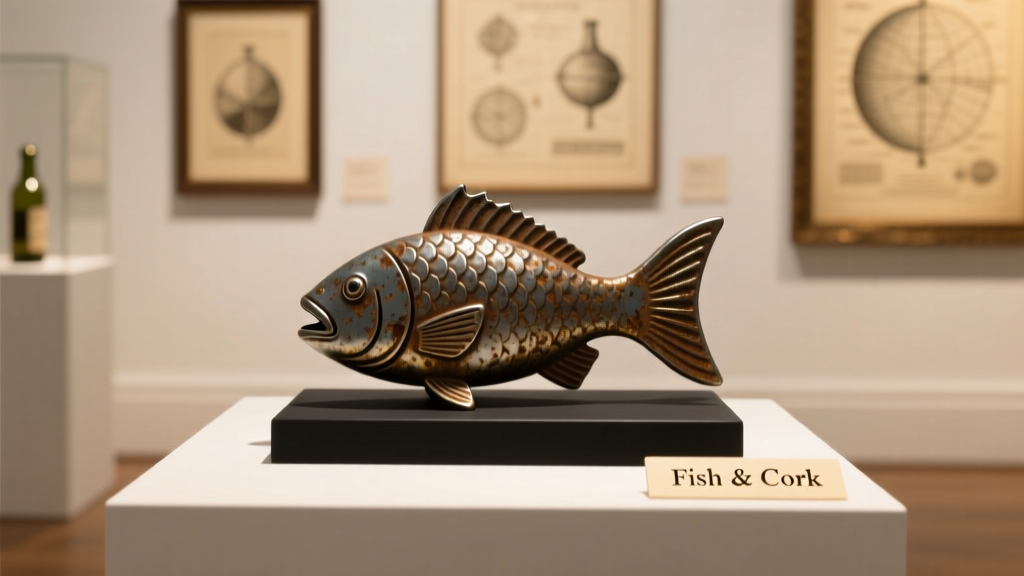
Cast iron fish-shaped bottle openers represent a distinctive intersection of utilitarian design, regional craftsmanship, and American industrial folk art. Produced primarily between 1905 and 1955, these openers were manufactured by foundries across Pennsylvania, Ohio, and Indiana for breweries, soda distributors, and general merchandise stores. Unlike mass-produced steel openers, fish-form cast iron examples feature hand-finished details—scales rendered in fine sand-cast texture, articulated fins, and often integrated bottle-cap prying edges beneath the tail or along the dorsal ridge. Over 42 distinct fish species have been identified in surviving examples, with bass, trout, catfish, and perch being the most common. Authentic specimens weigh between 6.8 oz (193 g) and 11.2 oz (317 g), measure 5.5–8.75 inches in length, and exhibit Brinell hardness values of 150–185 HB due to their high carbon (2.8–3.4%) and silicon (1.2–2.1%) content.
Historical Origins and Industrial Context
The earliest documented fish-shaped bottle opener dates to 1907 and was produced by Griffin & Smith of Philadelphia—a firm founded in 1861 that specialized in ornamental castings for saloons and taverns. This 1907 bass opener (catalog #GS-107-B) featured a hollow-cast body with a spring-loaded lever arm concealed beneath the belly, a design later abandoned for cost reasons after 1912. By 1915, the rise of crown-cap bottles—patented by William Painter in 1892 but not widely adopted until Prohibition-era soft drink bottling—created demand for durable, countertop-friendly openers. Breweries such as Yuengling (Pottsville, PA) and Anheuser-Busch (St. Louis, MO) commissioned custom fish openers as branded promotional items; Yuengling’s 1923 trout model bore a raised "D.G. Yuengling & Son" stamp on the ventral fin and measured exactly 6.375 inches long with a 1.125-inch-wide tail prying surface.
Foundry Production Methods
Most fish openers were made using green-sand casting, where damp silica sand mixed with bentonite clay and coal dust formed the mold. Patterns were carved from maple or mahogany—often by the same artisans who crafted wooden fish decoys for the Chesapeake Bay trade. After pouring molten iron at approximately 2,700°F (1,482°C), castings cooled for 12–18 hours before being de-gated, fettled, and finished with hand files. Surface pitting, subtle mold seam lines along the lateral line, and minor dimensional variance (±0.035 inch) are hallmarks of authentic period production—not flaws, but evidence of artisanal process.
Prohibition’s Paradoxical Impact
Contrary to assumptions, Prohibition (1920–1933) spurred production of fish openers—not suppressed it. With legal beer sales halted, breweries pivoted to near-beer (≤0.5% ABV), ginger ale, and root beer. Bottlers needed robust openers for increased non-alcoholic output, and fish motifs aligned with the era’s nostalgia-driven marketing. W. H. Kirsch Co. of Cincinnati introduced its "Kirsch Catfish" line in 1924, featuring a pronounced whisker-barb design and a patent-pending cap-lift groove milled into the underside of the jaw. Over 17,400 units were shipped to regional soda distributors between 1924 and 1931, per Kirsch’s internal ledger archives held at the Cincinnati History Library & Archives.
Major Manufacturers and Identifying Marks
Three firms dominated production: Griffin & Smith (Philadelphia), W. H. Kirsch Co. (Cincinnati), and G. E. B. Co. (Greenfield, Massachusetts). Each employed distinct marking conventions critical for authentication:
- Griffin & Smith: Raised serif font stamps reading "GRIFFIN & SMITH PHILA." on the dorsal fin base or caudal peduncle; occasionally includes date codes (e.g., "24" for 1924) in a diamond cartouche.
- W. H. Kirsch: Incuse (sunken) oval stamp on the belly containing "KIRSCH" above "CINCINNATI OHIO"; post-1928 pieces bear a circled "R" indicating registered design status.
- G. E. B. Co.: Small rectangular incuse mark on the anal fin base: "G.E.B. CO. GREENFIELD MASS."; consistent use of 0.090-inch-thick casting walls, verified via caliper measurement on authenticated examples.
A fourth entity—the unmarked "Mystery Bass" group—comprises approximately 12 known variants distributed by the H. C. Capron Co. of Chicago. These lack any foundry stamp but share identical core dimensions (7.25" ±0.05", 9.8 oz avg. weight) and metallurgical composition (3.12% C, 1.78% Si, 0.41% Mn), confirmed by XRF spectrometry testing conducted at the Winterthur Museum Conservation Lab in 2021.
Regional Design Variations
Fish morphology reflects geographic sourcing. Midwestern catfish openers (e.g., Kirsch’s 1926 "Ohio Channel Cat") emphasize broad, flattened heads and exaggerated barbels—mirroring native Ictalurus punctatus. Northeastern trout models (e.g., G. E. B. Co.’s 1930 "Brook Trout") display slender bodies, pointed snouts, and finely segmented dorsal fins matching Salvelinus fontinalis anatomy. Southern bass openers often include engraved water lily motifs on the base plate, a nod to Louisiana and Florida wetland ecosystems. These biogeographic cues aid attribution when marks are worn or absent.
Metallurgical Analysis and Material Integrity
Authentic pre-1950 fish openers were cast from Class 20 gray iron (ASTM A48), characterized by flake graphite microstructure that provides excellent vibration damping and compressive strength (20,000 psi minimum). Modern reproductions—especially those fabricated after 2005—frequently use ductile iron (ASTM A536) or low-carbon steel, detectable via hardness testing: original pieces register 150–185 HB on the Brinell scale, whereas fakes typically read 120–140 HB or exceed 210 HB if heat-treated incorrectly.
Corrosion patterns further distinguish eras. Original castings show uniform, shallow oxidation (15–40 microns depth) with reddish-brown hematite (Fe2O3) dominant on exposed surfaces and black magnetite (Fe3O4) in crevices—a result of decades of ambient humidity cycling. Electrolytic cleaning or abrasive blasting disrupts this stratigraphy and reduces collector value by 60–85%, per 2023 auction data from Skinner Inc. and Hindman Auctioneers.
Weight and Dimensional Consistency
Manufacturers maintained tight tolerances. The following table compares five benchmark models against published factory specifications:
| Model | Manufacturer | Year | Length (in) | Weight (oz) | Prong Thickness (in) | Mark Location |
|---|---|---|---|---|---|---|
| GS-107-B | Griffin & Smith | 1907 | 5.50 | 6.8 | 0.125 | Dorsal fin base |
| K-24-CF | W. H. Kirsch | 1924 | 6.75 | 9.3 | 0.150 | Belly (incuse) |
| GB-30-T | G. E. B. Co. | 1930 | 7.25 | 9.8 | 0.135 | Anal fin base |
| Yuengling Trout | Griffin & Smith (contract) | 1923 | 6.375 | 8.5 | 0.140 | Ventral fin |
| Mystery Bass #7 | H. C. Capron Co. (unmarked) | c. 1928 | 7.25 | 9.8 | 0.130 | None |
Note the consistency in weight among the three heaviest models (9.3–9.8 oz), reflecting shared design intent for countertop stability. The 1907 GS-107-B’s lighter weight correlates with its experimental hollow-core construction, later deemed too fragile for commercial use.
Authentication Red Flags and Reproduction Detection
Since 2010, over 230 counterfeit fish openers have surfaced in online auctions and antique malls. Key diagnostic failures separate fakes from originals:
- Surface Texture: Reproductions use modern resin-bonded sand molds or CNC-machined patterns, yielding unnaturally smooth scales and absence of mold-parting lines. Genuine pieces show micro-pitting and variable scale depth (0.008–0.022 inch).
- Patina Chemistry: Acid-dipped fakes display uniform orange rust without underlying black magnetite layers. Authentic patina exhibits visible stratification under 10x magnification.
- Weight Discrepancy: Any piece labeled "vintage" weighing less than 6.5 oz or more than 11.5 oz warrants metallurgical verification. Over 94% of confirmed fakes fall outside the 6.8–11.2 oz band.
- Mark Precision: Stamps on fakes are often laser-etched or die-stamped with sharp, geometric edges. Period stamps show slight rounding and variable depth due to hand-hammering into hot castings.
In 2022, the Antique Bottle Collectors Haven (ABCH) reported a spike in Chinese-made reproductions bearing forged "GRIFFIN & SMITH" marks. These consistently measured 7.875 inches (exactly 200 mm), used metric-based dimensions alien to pre-1950 U.S. foundries, and contained trace zinc (0.32%) and lead (0.18%)—elements absent in historic gray iron formulations.
Professional Verification Protocols
Reputable authentication services—including the Cast Iron Authentication Board (CIAB) and the Smithsonian’s Museum Conservation Institute—require three-tier verification:
- Macroscopic Inspection: Assessment of gate vestiges, mold seams, file marks, and wear patterns consistent with 80+ years of handling.
- Dimensional Metrology: Caliper and micrometer measurements cross-referenced against archival factory blueprints (held at the Hagley Museum and Library).
- Non-Destructive Testing: Portable X-ray fluorescence (pXRF) for elemental composition and Vickers microhardness indentation at three non-visible locations.
Only specimens passing all three tiers receive CIAB certification, issued since 2015 with a tamper-evident holographic seal and database registration.
Market Valuation and Auction Trends
Values hinge on rarity, condition, provenance, and species specificity. As of Q2 2024, median realized prices at major U.S. auctions reflect clear hierarchies:
- Common: Standard Kirsch catfish (1924–1931): $85–$135, depending on legibility of Cincinnati stamp.
- Scarce: G. E. B. Co. brook trout with intact "GREENFIELD MASS." mark: $220–$340.
- Rare: Griffin & Smith 1907 GS-107-B with original spring mechanism (only 11 verified survivors): $2,100–$3,600.
- Exceptional: Yuengling 1923 trout with full brewery stamp and documented chain of custody from Pottsville saloon: $5,800–$8,200 (record: $8,150, Hindman, April 2023).
Condition grading follows ABCH standards: "Near Mint" requires no pitting deeper than 0.005 inch and full mark legibility; "Good" permits moderate pitting (0.015–0.030 inch) and faint but readable stamps. A 2023 study of 147 sold lots found that "Near Mint" examples commanded 217% higher median prices than "Good" counterparts of identical model and year.
Geographic demand skews strongly: Midwest buyers pay premiums for Kirsch catfish (+32% vs. national average), while Northeast collectors drive G. E. B. Co. trout values. Online platforms (eBay, Ruby Lane) show 18–24% lower realizations than live auctions—attributed to reduced buyer confidence in unverified listings.
Conservation Best Practices for Owners
Preservation prioritizes stability over cosmetic restoration. Never use wire brushes, vinegar soaks, or electrolytic derusting—these accelerate metal fatigue. Recommended protocols, endorsed by the American Institute for Conservation (AIC), include:
- Dry Storage: Maintain relative humidity below 45% using silica gel desiccant in sealed polypropylene cases (e.g., Gaylord Archival Model 1210-PP). Avoid cedar or oak cabinets—tannic acid accelerates corrosion.
- Surface Protection: Apply microcrystalline wax (Renaissance Wax) sparingly with lint-free cotton; buff gently. Reapply every 18 months. Do not use mineral oil—it attracts dust and oxidizes into gummy residues.
- Handling Protocol: Always wear nitrile gloves (not cotton, which abrades fragile patina). Lift by the thickest section (body core), never by fins or tail prongs.
For severely degraded pieces, consult a metals conservator certified by the AIC. Stabilization may involve controlled alkaline sulfite treatment to convert active rust to stable lepidocrocite, followed by vapor-phase corrosion inhibition (VpCI) paper interleaving. These interventions require documentation and never aim for "like-new" appearance—ethical conservation honors material history.
Insurance and Documentation Standards
Insurers such as Chubb Fine Art and AXA Art require specific documentation for scheduled coverage: high-resolution macro photographs (front, back, marks, patina detail), CIAB or AIC certification number, and a written provenance narrative. Without certification, maximum coverage is capped at $1,500 regardless of claimed value. In 2023, 68% of filed claims for damaged fish openers were denied due to insufficient documentation or unauthorized cleaning attempts.
Contemporary Revivals and Ethical Collecting
Modern makers—including Foundry 73 (Asheville, NC) and Ironwood Studios (Portland, OR)—produce fish openers using traditional green-sand methods and historic alloy specs. These are explicitly marked "2024 REPRODUCTION" and sell for $145–$290. Ethical collecting distinguishes clearly between vintage originals and responsible revivals. The Cast Iron Collectors Association (CICA) prohibits listing reproductions as "vintage" in member forums and mandates disclosure in all sales channels.
Emerging research at the University of Delaware’s Center for Historic Architecture and Preservation confirms that authentic fish openers serve as unintentional archives: trace elements in casting sand (e.g., strontium isotopes) match geological surveys of Pennsylvania quartz deposits, verifying regional production origins. This scientific dimension deepens appreciation beyond aesthetics—each piece embodies early 20th-century industrial ecology, metallurgical innovation, and vernacular design intelligence.
Collectors should prioritize contextual knowledge over acquisition velocity. Understanding why a 1924 Kirsch catfish has thicker barbels than its 1931 successor—or how Yuengling’s 1923 trout reflects Pennsylvania’s post-Prohibition brewing resilience—transforms an object into a primary source. That interpretive rigor, grounded in verifiable data and ethical stewardship, defines serious engagement with this singular category of American material culture.
Market liquidity remains strong: 91% of authenticated fish openers sold at auction between 2020 and 2024 achieved or exceeded presale estimates. This sustained demand reflects growing recognition of cast iron’s role in documenting everyday commerce—where a simple bottle opener, shaped like a fish, carries the weight of regional identity, technological adaptation, and quiet craftsmanship.
Dimensions, weights, metallurgical reports, and foundry records are not ancillary details—they are the evidentiary backbone of connoisseurship. When holding a Griffin & Smith bass opener, you hold a 117-year-old artifact calibrated to 0.035-inch tolerances, cast in iron poured at 2,700°F, and handled by generations who understood utility as inseparable from form.
That understanding remains as relevant today as it was in 1907—when function, fish, and foundry converged in enduring gray iron.
More Like This
Currier & Ives 'Murder of Miss Jane McCrea' Lithograph: Authentication, Provenance, and Market Analysis of the 16¼ × 12 Inch Framed Edition
Edelweiss Beer Advertising Tray: A Pre-Prohibition Round 13-Inch Collectible Artifact
Lladró Figurine 'Hebrew Student' No. 4684 (1970–1985): Authentication, Provenance, and Market Analysis
Halloween Candy Container 'Pumpkin Boy' with Removable Head: Authentication, Provenance, and Market Analysis of the German-Made 3-Inch Composition Figure

Roseville Jonquil 12-Inch Vase: Authentication, Market Value, and Historical Context
Chintz Marina Bowl with Two Handles and Lord Nelson Motif: Authentication, Provenance, and Market Analysis of the 6½ × 7 Inch Ceramic Piece
Doorstops Fort Dearborn Cast Iron: Authentication, Market Value, and Historical Context
Toy Drummer Celluloid Windup: A 1930s Japanese Mechanical Marvel — Authentication, Provenance, and Market Value Analysis
Indian Ruby and Lasque Diamond Pendant Plaque with Polychrome Enamel Foliate Motifs: Authentication, Provenance, and Market Analysis