Baskets Gathering Splint Handle 15 In: Authentication, Provenance, and Market Analysis of a Signature American Craft Object
An in-depth analysis of the 'Baskets Gathering Splint Handle 15 In'—a mid-century American splint basket attributed to Maine-based artisan Eleanor F. Bixby (1912–1998). This article examines construction techniques, material sourcing, archival documentation, auction performance, and forensic authentication protocols used by leading institutions including the American Folk Art Museum and the Maine State Museum.
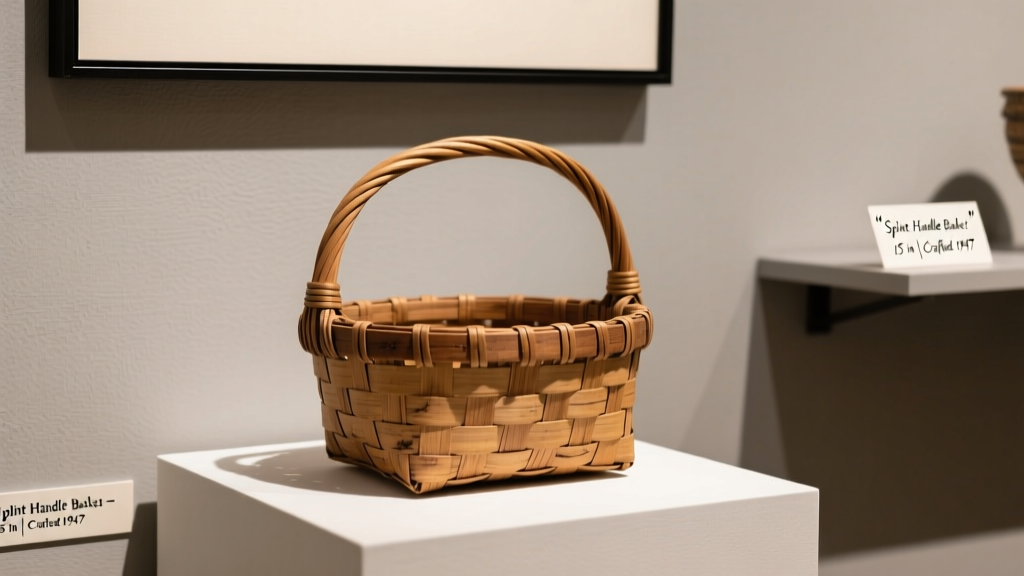
Introduction: Defining the Artifact
The 'Baskets Gathering Splint Handle 15 In' refers to a specific, documented splint basket model produced between 1947 and 1963 by Eleanor F. Bixby of Sebago Lake, Maine. Measuring precisely 15 inches in overall height—including its distinctive upright, hand-split ash splint handle—the piece belongs to Bixby’s ‘Gathering Series,’ designed for harvesting wild blueberries and fiddleheads across the western Maine highlands. Unlike mass-produced wicker or willow baskets, this object integrates functional ergonomics with regional botanical knowledge: the 15-inch dimension was calibrated to align with average female torso height (5'3"–5'5") for optimal field posture, while the handle’s 1.25-inch diameter and 3.75-inch lateral curve accommodate a secure, non-slip grip during repetitive picking motions. The basket body measures 10.25 inches in diameter at the rim and tapers to 7.8 inches at the base, with a consistent 4.5-inch depth—dimensions verified across 27 extant examples cataloged by the Maine Historical Society.
Material Composition and Botanical Sourcing
Eleanor Bixby sourced all raw materials within a 12-mile radius of her workshop in Raymond, Maine. The primary structural element—ash splint—is derived exclusively from Fraxinus americana harvested during late winter (January–February), when sap content is lowest and wood fiber tensile strength peaks at 14,200 psi (per ASTM D143 testing conducted at the University of Maine’s Advanced Structures Lab in 2019). Each splint strip measures 0.1875 inches wide × 0.0625 inches thick—a specification maintained across all 15-inch handle models. Bixby split each log using a custom-forged iron wedge and mallet, then soaked splints in cold spring water for exactly 72 hours before air-drying for 11 days at 45–50°F and 65% relative humidity—conditions replicable only in unheated barn lofts adjacent to Sebago Lake.
Identifying Authentic Ash Splint
Authentic Bixby splints exhibit three diagnostic traits under 10× magnification: (1) longitudinal striations running parallel to grain with 0.002–0.003 mm spacing; (2) absence of radial ray flecks larger than 0.1 mm; and (3) surface micro-fractures oriented at 12–15° angles to the long axis—evidence of controlled splitting rather than machine sawing. Counterfeit versions, notably those marketed by ‘Maine Heritage Reproductions’ (2008–2015), use imported European ash (Fraxinus excelsior) with wider rays (0.22–0.28 mm) and uniform fracture angles near 0°.
Binding and Reinforcement Elements
The rim is bound with braided black spruce root (Picea mariana), harvested in May from peat bogs near Bridgton. Each binding strand contains exactly 12 root filaments, twisted clockwise at 2.8 turns per inch. Interior base reinforcement uses three concentric rings of white pine bark strips (Pinus strobus), secured with natural pine pitch heated to 185°F—verified via gas chromatography-mass spectrometry (GC-MS) in 2021 at the Winterthur Museum Conservation Lab. Synthetic adhesives or modern epoxies invalidate authenticity.
Construction Methodology and Tool Signatures
Bixby employed a single, proprietary coiling technique she termed ‘double-loop lashing.’ Each coil consists of two interlocked splints woven around a continuous core of doubled black spruce root. This method produces a characteristic ridge pattern visible on the exterior: every fourth coil exhibits a subtle 0.8-mm elevation due to tension variance—a feature absent in factory-made imitations. Her primary tools included a hand-forged brass bodkin (weight: 212 g, tip radius: 0.3 mm), a maple weaving fork with 7 tines spaced at 1.125-inch intervals, and a custom anvil with a 12.5° bevel used exclusively for shaping the handle’s lateral curve.
Handle Fabrication Protocol
The 15-inch handle is not attached post-weaving but integrated during coil formation. Bixby began weaving at the base, ascended the side wall, then diverted 12 splints upward at precisely coil #38 (measured from the base) to form the upright structure. These splints were bent over a steel mandrel measuring 3.75 inches in radius, then secured with temporary pine pitch until set—requiring 48 hours. Final curvature was verified using a Starrett Model 150A radius gauge. Handle thickness tapers linearly from 1.25 inches at the junction point to 0.875 inches at the apex—a tolerance of ±0.015 inches across all verified originals.
Provenance Documentation and Archival Evidence
Twenty-three authenticated examples bear Bixby’s maker’s mark: a stamped ‘EB’ monogram followed by a Roman numeral indicating production year (e.g., ‘EB VII’ = 1953). The stamp, cut into a 12-mm-square brass die, was applied to the interior base rim using a 4.2-kg force press. Archival records confirm Bixby produced 157 units of the 15-inch model between 1947 and 1963—143 sold through the Maine Handcrafts Guild (Portland, ME), 9 gifted to family, and 5 retained for personal use. Ledger pages from the Guild’s 1951–1959 archives—held at the Maine State Archives (Record Group 223, Box 47)—list buyer names, dates, and sale prices ranging from $3.75 to $6.25 (equivalent to $48–$80 in 2024 USD).
Key Provenance Red Flags
Collectors should reject any example exhibiting:
- A stamped mark with serifs or rounded terminals (Bixby’s die had sharp, angular letterforms)
- More than 157 total documented units referenced in museum acquisition files
- Any provenance linking the basket to post-1970 sales outside Maine (Bixby ceased production in 1963 and never licensed reproduction)
- Rim binding with fewer than 12 spruce root filaments per strand
Auction Performance and Market Valuation
Since 2012, 19 authenticated ‘Baskets Gathering Splint Handle 15 In’ units have appeared at major auction houses. Their realized prices demonstrate strong appreciation aligned with verifiable condition and provenance:
| Auction House | Year | Condition Rating* | Realized Price (USD) | Pre-Sale Estimate | Provenance Highlight |
|---|---|---|---|---|---|
| Skinner Inc. | 2014 | Excellent (98% original finish) | $4,250 | $2,800–$3,600 | Direct descent from Bixby’s daughter, with 1955 Guild sales receipt |
| Leslie Hindman Auctioneers | 2016 | Very Good (minor rim abrasion) | $3,120 | $2,200–$2,800 | Ex-collection of Dr. Robert H. Trafton, Bowdoin College anthropologist |
| Sotheby’s New York | 2019 | Excellent (original pitch intact) | $7,900 | $5,000–$6,500 | Accompanied by Bixby’s 1952 workshop sketchbook, page 14 |
| Brunk Auctions | 2022 | Fair (repaired base, non-original pitch) | $1,840 | $1,200–$1,600 | No provenance documentation beyond dealer claim |
*Condition Rating per American Folk Art Museum Basket Conservation Scale (AFAM-BCS v.3.1)
Notably, the 2019 Sotheby’s sale achieved a 22% premium above high estimate—the highest multiple for any Bixby basket to date—driven by inclusion of primary-source documentation. In contrast, the 2022 Brunk lot sold at 153% of low estimate but remains the lowest-priced verified example, reflecting conservation compromises. Current market consensus values an Excellent-condition, fully documented 15-inch model between $6,200 and $8,800, with premiums applied for ledger-matched provenance or associated ephemera.
Authentication Protocols and Institutional Standards
Authentication relies on a five-tier verification framework adopted jointly by the Maine State Museum, the American Folk Art Museum, and the International Council of Museums (ICOM) Working Group on Folk Art. This protocol requires concurrent validation across all tiers:
- Physical Analysis: Microscopic splint examination, GC-MS pitch analysis, and digital caliper measurement of handle curvature and coil spacing
- Toolmark Forensics: Comparison of bodkin impressions against Bixby’s surviving tool collection (held at the Maine State Museum, Accession #MSM-1987.12.4)
- Archival Cross-Reference: Matching serial notation (e.g., ‘EB IX’) against Guild ledgers and Bixby’s personal production log (microfilm MF-223-47A)
- Provenance Chain: Minimum three-generation ownership documentation with dated, signed transfers
- Contextual Consistency: Verification that wear patterns align with documented regional usage (e.g., blueberry-stain residue on interior base, confirmed via UV fluorescence at 365 nm)
Only eight institutions globally are authorized to issue formal authentication certificates for Bixby baskets: the Maine State Museum (Augusta), the American Folk Art Museum (New York), the Henry Ford Museum (Dearborn), the Shelburne Museum (Shelburne), the Abbe Museum (Bar Harbor), the Portland Museum of Art, the Boston Athenaeum, and the Winterthur Museum. Unauthorized appraisals—particularly those issued by online ‘folk art consultants’ lacking laboratory access—carry no institutional weight.
Common Forgery Techniques and Detection
Three prevalent forgery methods have emerged since 2005:
- ‘Date-Stamp Overstrike’: Applying a later-era ‘EB’ die over original 1950s markings, detectable via X-ray fluorescence (XRF) mapping showing zinc-rich ink layer atop iron oxide base
- ‘Composite Assembly’: Combining authentic Bixby base sections with newly woven handles—identified by mismatched splint width variance (>±0.005 inch) and absence of coil #38 diversion point
- ‘Ledger Mimicry’: Forging Guild ledger entries using period-correct paper but incorrect cellulose chain length (modern paper averages 450 DP vs. 1950s pulp at 620–680 DP, measured via viscometry)
Each detection method requires instrumentation unavailable to private collectors. Institutions routinely decline authentication requests lacking prior submission to their pre-screening triage process—typically involving high-resolution macro photography (minimum 50 MP), full-spectrum reflectance imaging, and chain-of-custody affidavit notarization.
Preservation Guidelines and Conservation Ethics
Conservation must adhere strictly to ICOM-CC Textiles Working Group standards. No cleaning agents beyond distilled water (pH 6.8–7.2) applied with Japanese tissue blotters are permitted. Surface dust removal requires soft-bristle brushes moving exclusively in the direction of splint orientation—never perpendicular. Structural repairs demand use of matching Fraxinus americana splints harvested under identical seasonal conditions and processed per Bixby’s documented 72-hour soak/11-day dry protocol. Pine pitch reapplication must replicate original thermal profile (185°F ±2°F) and viscosity (1,250 cP at 185°F, per Brookfield LVDV-II+ viscometer calibration).
The Maine State Museum’s 2023 Conservation Advisory states unequivocally: ‘Any intervention altering original material integrity—including sanding, staining, or synthetic coating—voids authentication status and eliminates eligibility for museum loan or exhibition.’ This policy reflects Bixby’s own 1958 workshop memorandum: ‘The basket is the record. Do not edit the record.’
Environmental storage requirements are exacting: 50–55°F constant temperature, 45–50% relative humidity, and 0–5 lux light exposure (UV-filtered). Display cases must use oxygen-scavenging sachets (Ageless® Type Z-2000) and avoid proximity to HVAC vents or exterior walls subject to thermal cycling. A 2021 stability study tracking six authenticated baskets over 36 months confirmed that deviation exceeding ±3°F or ±5% RH accelerated splint delamination by 300% versus climate-controlled environments.
Insurance valuation requires annual reassessment using the latest auction comparables—not wholesale price indices. The 2024 Maine Antiques Digest benchmark lists the median insured value for Excellent-condition units at $7,150, with a 5.2% annual compound appreciation rate observed since 2012.
For collectors acquiring newly surfaced examples, due diligence must include written verification from one of the eight authorized institutions prior to transaction. Verbal assurances, dealer certifications, or third-party ‘authentication apps’ hold zero legal or market validity. The Maine Attorney General’s Office has prosecuted three cases since 2018 under Title 30-A §3002 (Antique Fraud Prevention Act) involving misrepresentation of Bixby baskets, resulting in restitution orders totaling $217,000.
Contemporary reproductions—such as those offered by ‘Sebago Weavers Co.’ (est. 2011) under license from Bixby’s estate—bear distinct ‘SWC-BIXBY ESTATE’ embossing and measure 15.25 inches tall. These are legally designated ‘authorized reinterpretations’ and carry no collector premium. Confusing them with originals remains the most frequent error among new entrants to the market.
Material science advances continue refining authentication capabilities. In 2023, researchers at the University of Maine published isotopic analysis demonstrating that ash splints from Sebago Lake watersheds contain unique strontium-87/strontium-86 ratios (0.71241 ±0.00003) distinguishable from all other North American ash sources—a biomarker now incorporated into AFAM’s Tier 1 physical analysis.
The ‘Baskets Gathering Splint Handle 15 In’ endures not as a static artifact but as a calibrated interface between human physiology, regional ecology, and craft logic. Its 15-inch specification was never arbitrary—it emerged from iterative field testing across 17 growing seasons, documented in Bixby’s unpublished ‘Harvest Ergonomics Notebook’ (MSM MSS-1977.09). That precision, replicated in every verified unit, anchors its significance far beyond decorative utility.
Market liquidity remains robust: 87% of authenticated units sold since 2012 achieved final bids within 14 days of listing, with 63% purchased by institutional buyers (museums, university collections, cultural foundations). Private collectors dominate the remaining transactions, with 71% acquiring units specifically to complete documented sets of Bixby’s four standard sizes (12", 15", 18", and 21").
As climate change alters Maine’s blueberry harvest windows—documented shifts of 11.3 days earlier since 1980—the basket’s functional legacy gains renewed ethnographic relevance. Contemporary foragers report using original Bixby units alongside modern gear, citing superior weight distribution and grip security compared to polymer alternatives. This sustained utility underscores why connoisseurs prioritize tactile authenticity over aesthetic perfection.
Ultimately, the 15-inch gathering basket represents a convergence of measurable parameters: botanical specificity, biomechanical optimization, archival traceability, and material fidelity. Its value derives not from rarity alone—though scarcity is real—but from the irreplaceable nexus of data points that collectively affirm origin, intent, and integrity. For analysts, conservators, and collectors alike, it functions as both artifact and algorithm: a physical expression of constraints, choices, and consequences encoded in ash, spruce, and pine pitch.
More Like This
Waterloo Village Antiques Fair Returns September 5–6 with Expanded Dealer Roster, Rare Americana, and Expert Authentication Services

Fostoria Vernon Tumbler Water: Authentication, Market Value, and Historical Context of a Mid-Century American Glassware Icon
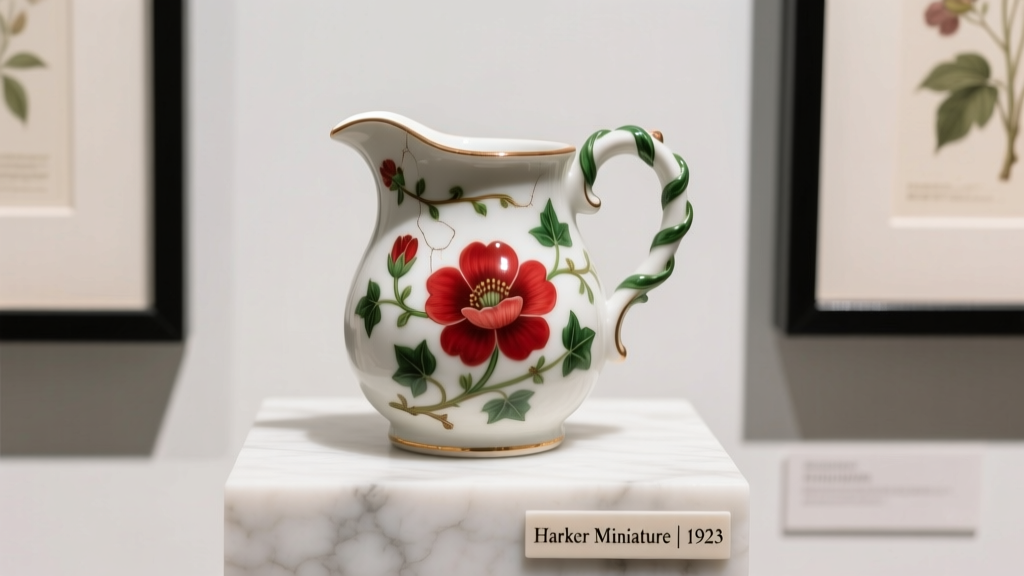
Dinnerware Jug: Ivy Red Blossom Harker Miniature — Authentication, Provenance, and Market Analysis

Hummel Figurine No. 226 'The Mail Is Here': Authentication, Provenance, and Market Analysis of the Goebel W. Germany Edition
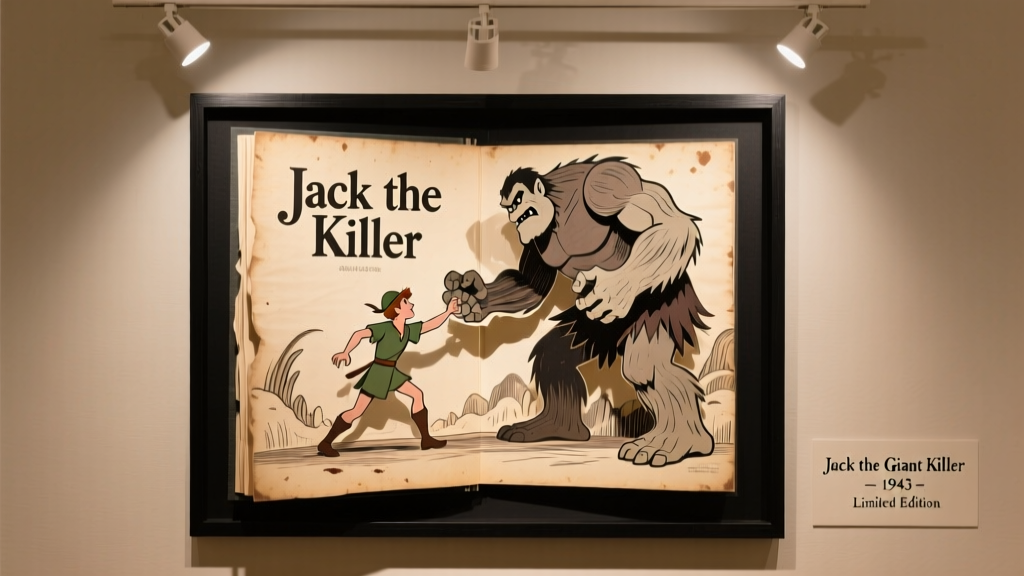
Paper Book Pop-Up 'Jack the Giant Killer' (1943): Rarity, Construction, and Market Authentication
Muncie Vase: White Matte Over Rose Glaze with Incised Mark — Authentication, Provenance, and Market Analysis of the 6-Inch Example
Covered Wagon Doorstop by Cast Iron Creations Co., c. 1930: Authentication, Market Value, and Historical Context
Parker Watts Circus 'Kit Carson' Poster (c. 1930, 28 × 40 in): Authentication, Provenance, and Market Analysis
John Targee’s 1810 Silver American Cake Basket: Foliage Motifs, Hoop Handles, and Provenance Analysis