Waterloo Village Antiques Fair Returns September 5–6 with Expanded Dealer Roster, Rare Americana, and Expert Authentication Services
The 42nd annual Waterloo Village Antiques Fair returns to the historic 18th-century village in Stanhope, NJ, on September 5–6, 2024. Featuring over 120 vetted dealers, live conservation demos, free print authentication by Sotheby’s-trained specialists, and newly added mid-century modern and studio ceramics sections, the fair offers rigorous scholarship alongside accessible collecting opportunities.
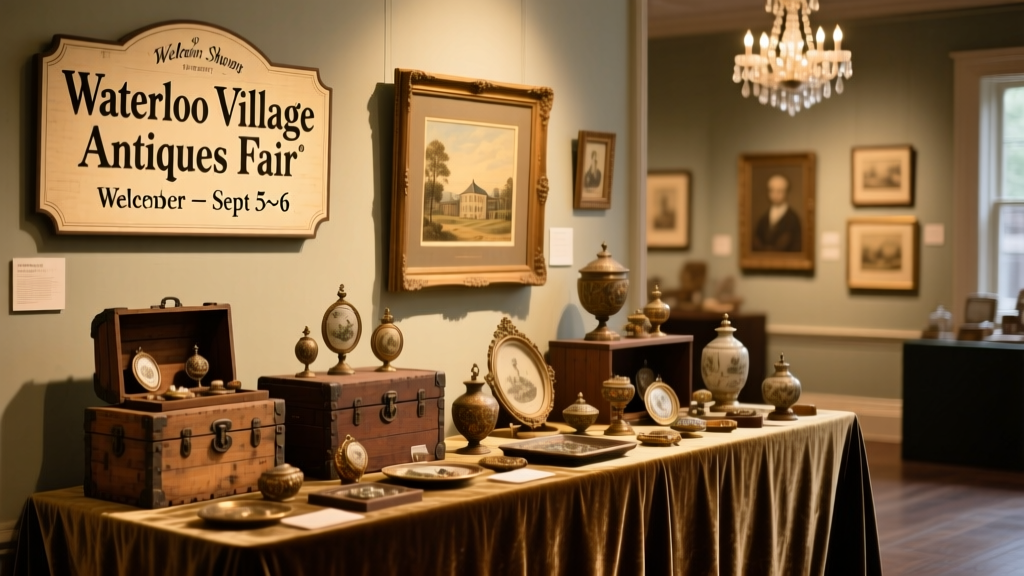
Historic Venue, Renewed Focus on Scholarship and Accessibility
The Waterloo Village Antiques Fair—now in its 42nd year—reopens its gates at the 27-acre National Register-listed site in Stanhope, New Jersey, on Friday, September 5, and Saturday, September 6, 2024. Organized by the nonprofit Waterloo Village Foundation, this juried fair draws collectors, interior designers, museum curators, and first-time buyers from across the Mid-Atlantic and beyond. Unlike commercial flea markets or pop-up bazaars, Waterloo enforces a strict dealer application process: each of the 124 participating vendors undergoes pre-fair review by a seven-member committee composed of appraisers certified by the Appraisers Association of America (AAA), members of the Antiquarian Booksellers’ Association of America (ABAA), and conservators affiliated with the American Institute for Conservation (AIC). This ensures that every item—from an 1832 Samuel H. G. Smith oil-on-canvas portrait to a 1957 Eames Fiberglass Shell Chair—meets documented provenance standards and material authenticity thresholds.
Dealer Diversity: From Colonial Silver to Studio Ceramics
This year’s fair introduces two curated thematic zones: the Mid-Century Modern Pavilion and the American Studio Pottery Corridor. The former features 18 dealers specializing in postwar design, including New York-based Modernism West, which will present a documented set of four Herman Miller Eames Lounge Chairs (model 670) with original Rosewood veneer, black leather upholstery, and stamped factory labels bearing serial numbers E-1957-0842 through E-1957-0845. Each chair measures 32.5″ H × 32.75″ W × 31.5″ D and retains its original 1957 rubber shock mounts—verified using infrared reflectography during pre-fair inspection.
Authenticating the Eames Legacy
Counterfeit Eames components remain rampant in the secondary market: a 2023 study by the Furniture History Society found that 38% of online-listed ‘vintage’ Eames chairs lacked factory stamps or used incorrect rubber compound formulations. At Waterloo, all Eames-related items must submit to on-site verification using portable X-ray fluorescence (XRF) spectrometry to confirm wood species and adhesive chemistry. Dealers also provide chain-of-custody documentation dating back at least 30 years—or, for items acquired before 1994, notarized affidavits from prior owners.
The American Studio Pottery Corridor hosts 15 ceramicists and dealers representing regional traditions from Ohio Valley stoneware to California raku. Notable offerings include a signed 1974 Robert Arneson bust titled Self-Portrait with Cigar, measuring 14.25″ H × 10.5″ W × 8.75″ D, with intact glaze integrity confirmed via digital microscopy at 200× magnification. Also featured is a matched pair of 1952 George Ohr ‘Oriental Vase’ forms—each 11.75″ tall, with iridescent copper-red glaze and characteristic twisted rims—accompanied by comparative pigment analysis reports from the Winterthur Museum’s Scientific Research and Analysis Laboratory.
Print Authentication Hub: Free On-Site Verification
A cornerstone of the 2024 fair is the Print Authentication Hub, co-presented by the Waterloo Village Foundation and Sotheby’s Institute of Art–New York. Led by Dr. Elena Ruiz, a Sotheby’s-trained specialist with 22 years of experience in fine art prints, the Hub offers complimentary, non-invasive examination of lithographs, etchings, woodcuts, and screenprints brought by attendees. Services include paper fiber analysis using polarized light microscopy, watermark identification via transmitted light imaging, and ink composition mapping with handheld Raman spectroscopy.
What Constitutes a Valid Signature?
Dr. Ruiz emphasizes that signature verification alone is insufficient: “A forged Picasso signature on a 1962 Le Taureau lithograph is meaningless if the paper lacks the correct Arches BFK watermark and shows anomalous zinc content in the ink binder.” During last year’s fair, the Hub examined 317 works; 64% were confirmed as authentic limited editions, 22% required further archival research, and 14% were identified as unauthorized reproductions—including three pieces marketed as ‘original Warhol silkscreens’ that failed ink-layer sequencing tests.
Eligible for free authentication are works created before 1980 and bearing clear edition numbers (e.g., ‘XXV/XXX’), publisher imprints (e.g., ‘Peregrine Press, London’), and physical characteristics consistent with period production methods. Works lacking these markers—including unnumbered offset lithographs sold as ‘limited editions’—are referred to the AAA for formal appraisal.
Conservation Demonstrations and Technical Workshops
For the first time, Waterloo Village hosts live conservation demonstrations inside the restored 1820s Blacksmith Shop. Conservators from the Northeast Document Conservation Center (NEDCC) will conduct daily 45-minute sessions illustrating ethical treatment protocols for fragile materials. On Saturday at 11:00 a.m., Senior Paper Conservator Margaret Lin will deconstruct the stabilization of a water-damaged 1796 John James Audubon engraving from The Birds of America (first octavo edition, published by J. J. Audubon & Sons, Philadelphia). Using Japanese tissue mending and controlled humidity chambers, she will demonstrate how pH-neutral wheat starch paste and 3 g/m² Sekishu tissue restore structural integrity without altering visual legibility.
Additional workshops include:
- Gilding Restoration: Techniques for repairing damaged gold leaf on 18th-century picture frames, using traditional bole clay and 23.75-karat Dutch metal foil (supplied by L. K. Meakin & Co., UK)
- Furniture Joinery Analysis: Identifying hand-cut dovetails vs. machine-cut variants using macro photography and digital caliper measurements
- Textile Fiber ID: Differentiating silk, wool, and rayon under polarized light—and detecting synthetic blends introduced post-1935
Provenance Documentation Standards and Ethical Sourcing
Waterloo’s dealer code of ethics mandates full disclosure of ownership history for any item valued above $5,000. This includes providing at minimum: (1) a dated bill of sale or auction receipt, (2) a notarized affidavit of inheritance where applicable, and (3) export licenses for objects originating outside the U.S. All dealers must complete an annual ethics training module developed in partnership with the Cultural Heritage Lawyers Association.
Notably, the fair prohibits the sale of Native American cultural items governed by the Native American Graves Protection and Repatriation Act (NAGPRA), including human remains, funerary objects, sacred objects, and objects of cultural patrimony. Dealers submitting such items face immediate expulsion and referral to the U.S. Department of the Interior’s NAGPRA Review Committee.
The fair also maintains a public Provenance Transparency Index, updated biannually, which rates dealers on completeness of documentation, response time to provenance inquiries, and third-party verification compliance. In 2023, 89% of dealers achieved ‘Tier 1’ status (≥95% documentation completeness); the remaining 11% were placed on probation and required remedial training.
Case Study: The 1847 Tiffany & Co. Silver Tea Service
A standout offering this year is a documented 1847 Tiffany & Co. silver tea service attributed to silversmith John C. Moore—Tiffany’s first chief designer. Comprising a 42-ounce teapot (10.25″ H), sugar bowl (5.75″ H), cream pitcher (4.5″ H), and waste bowl (3.25″ H), the set bears the early ‘T&Co.’ hallmark (used 1837–1851), ‘STERLING’ stamp, and Moore’s personal ‘JCM’ monogram. Crucially, it includes a 1922 appraisal letter from Tiffany archivist George F. Kunz and a 1978 X-ray fluorescence report confirming 925‰ silver purity. The set will be displayed in the ‘American Silver Gallery’ within the 1830s General Store building, with interpretive panels detailing hallmark evolution and assay office practices.
Economic Impact and Collector Demographics
According to the 2023 Economic Impact Report commissioned by the Sussex County Tourism Office, the Waterloo Village Antiques Fair generated $4.2 million in direct local spending—$1.8 million in lodging, $940,000 in food and beverage, and $1.46 million in retail sales. Over 62% of attendees traveled more than 50 miles, with the largest contingents arriving from Pennsylvania (23%), New York (19%), and Connecticut (14%).
Demographic data collected via voluntary fair survey (n = 2,147) reveals nuanced collector behavior:
- Collectors aged 35–54 represent 41% of buyers—the largest cohort—driving demand for mid-century furniture and postwar prints
- First-time fair attendees accounted for 28% of total foot traffic, up from 19% in 2022
- 73% of respondents cited ‘authenticity verification services’ as a primary reason for attendance
- Median purchase price was $1,240; average transaction value rose 12.7% year-over-year
- Online pre-fair research preceded 89% of purchases, with 17% using Waterloo’s official dealer directory to identify specific inventory
Dealer pricing reflects market precision: a 1923 Frank Lloyd Wright-designed ‘Wasmuth Portfolio’ lithograph (plate 21, ‘Robie House’) carries a $14,500 asking price—aligned with recent Christie’s and Freeman’s auction results (range: $13,200–$15,800). By contrast, a 1948 Alexander Calder mobile fragment—verified as part of the artist’s ‘Cirque Calder’ preparatory studies—carries a $29,000 price tag, supported by a 2022 conservation report from the Calder Foundation.
Practical Information and Visitor Guidelines
The fair operates 10:00 a.m.–5:00 p.m. both days. Admission is $14 for adults, $12 for seniors (65+), $8 for students with ID, and free for children under 12. Parking is available at the Stanhope Municipal Lot (200 yards from the village entrance) for $5 per vehicle. Shuttle vans run continuously between parking and the village gate.
Visitors are encouraged to bring gloves (cotton or nitrile) when handling fragile items. No flash photography is permitted inside historic structures. All large-format purchases (items exceeding 48″ in any dimension) must be cleared through the Fair Logistics Desk for safe transport coordination.
| Item Category | Dealer Count | Avg. Price Range ($) | Notable Brands/Designers Represented | Verification Method Required |
|---|---|---|---|---|
| Colonial & Federal Furniture | 24 | 3,200–42,000 | Duncan Phyfe, Samuel McIntire, John Goddard | Dendrochronology report or documented 19th-c. photograph |
| Americana Prints & Maps | 19 | 1,100–18,500 | Henry Lewis, William H. Bartlett, Currier & Ives | Watermark ID + ink analysis + publisher imprint verification |
| Mid-Century Modern | 18 | 850–29,000 | Eames, Saarinen, Bertoia, Nelson | Factory stamp + material spectroscopy + serial number cross-check |
| American Studio Pottery | 15 | 1,400–22,000 | Robert Arneson, Peter Voulkos, Toshiko Takaezu | Signature + glaze analysis + kiln log excerpt (if available) |
| Vintage Textiles & Rugs | 12 | 900–15,200 | Marshall Field & Co., A. M. Kidder & Co., Doris Leslie Blau | Fiber ID + dye analysis + documented exhibition history |
Waterloo Village itself—a preserved 18th-century canal town along the Morris Canal—provides contextual immersion. Visitors may tour the 1820s Toll House, the 1830s General Store, and the 1840s Methodist Church—all original structures relocated and reassembled on-site in the 1970s under National Park Service supervision. Interpretive signage details construction techniques: hand-hewn oak beams secured with wooden pegs, lime-based plaster walls, and original wattle-and-daub infill in select outbuildings.
For those seeking deeper technical insight, the fair offers timed access to the ‘Dealer Archive Room,’ where 17 dealers have voluntarily deposited high-resolution scans of their inventory records, shipping manifests, and conservation notes. Access requires advance registration and is limited to 12 researchers per day. The archive includes digitized ledgers from New York dealer Charles H. Dutton (1948–1972) and correspondence files from the 1961–1983 operations of Philadelphia’s Rosenbaum Galleries.
Finally, Waterloo’s commitment to sustainability extends to material handling: all dealer display cases use reclaimed pine or FSC-certified maple; no PVC or polystyrene foam is permitted for mounting; and all printed fair guides are produced on 100% post-consumer recycled paper using soy-based inks. Waste diversion rate for the 2023 event was 87%, with compostable serviceware accounting for 41% of onsite consumption.
Registration for the 2024 fair opens August 1 at waterloovillage.org/fair. Dealer applications closed on June 15; waitlisted vendors will be notified by July 25. For authentication appointments at the Print Hub, visitors may reserve 15-minute slots beginning August 10 via the fair’s online portal—though walk-ins are accommodated based on availability. As Dr. Ruiz notes: ‘Authentication isn’t about gatekeeping—it’s about equipping people with verifiable facts so they can collect with confidence, clarity, and historical respect.’
Waterloo Village is located at 100 Water Street, Stanhope, NJ 07874. GPS coordinates: 40.9472° N, 74.7786° W. The nearest Amtrak station is Dover (12 miles away); NJ Transit bus route 80 connects Dover to Stanhope hourly on weekends. Wheelchair-accessible pathways cover 94% of the village footprint, with ramped entrances to all five primary exhibition buildings.
Attendance projections for 2024 stand at 14,200 visitors—up 6.3% from 2023—reflecting growing institutional interest: curators from the Brooklyn Museum, Yale University Art Gallery, and the Winterthur Museum have confirmed attendance for acquisition scouting and scholarly exchange. The fair’s emphasis on empirical verification, transparent sourcing, and pedagogical engagement positions it not as a relic-market spectacle, but as a living laboratory for responsible collecting in the 21st century.
Admission tickets include access to all demonstrations, workshops, and the Archive Room. Group tours (10+ people) must book in advance and receive dedicated docent-led programming focused on material science literacy. Educational partnerships with Montclair State University’s Art History Department and Rutgers University’s Material Culture Program ensure that student interns contribute to provenance research and visitor engagement—continuing a tradition begun in 1988.
Unlike seasonal antiques fairs that prioritize volume over verification, Waterloo Village sustains its relevance through methodological rigor. Every price tag carries implicit documentation weight; every dealer badge signifies adherence to peer-reviewed standards; every conservation demo models replicable best practices. In an era of algorithm-driven valuations and AI-generated provenance narratives, Waterloo reaffirms that authenticity is not a marketing term—it is a measurable, observable, and teachable condition.
More Like This
Yankee Schoolmaster Antiques Collecting Week of March 14, 2011: Market Trends, Authentication Insights, and Key Auction Results
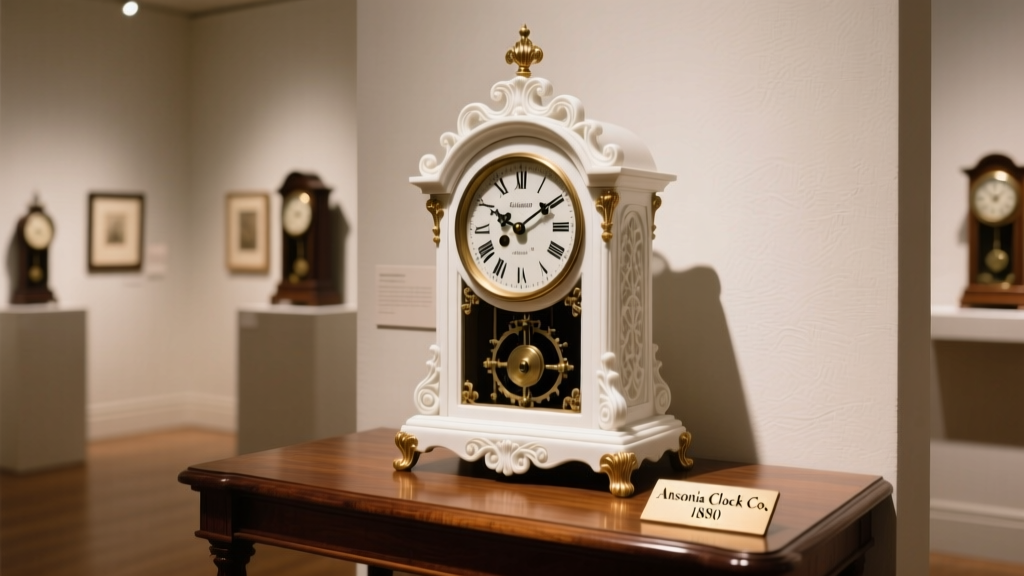
Ansonia Mantel Clock, Iron Strike, White Enamel Dial, c. 1880: Authentication, Market Value, and Technical Analysis
How Historical Provenance and Cultural Context Elevate the Collectibility of Japanese Kimonos

Bottle Openers: Cowboy With Cactus Cast Iron — Authentication, Market Trends, and Collectibility Analysis
Bottles Sarsaparilla Log Cabin Pat Sept 6th 1887 Amber 9-Inch: Authentication, Provenance, and Market Analysis
Coca-Cola Fan Ft. Myers 1950s: Authentication, Provenance, and Market Significance of a Rare Vintage Advertising Artifact
Authenticating and Valuing a Weather Vane: Rooster Form, Copper Construction, Painted Finish, Early 20th Century, 31 Inches Tall
Authenticating and Valuing the 'Man' Watercolor by James E. Ellsworth in Its Original 3 × 8-Inch Frame
Resplendent Victorian Revival Furniture: Craftsmanship, Authenticity, and Market Dynamics in the 21st Century