Art Recovery International: Forensic Authentication, Legal Strategy, and the Global Fight Against Art Theft
A detailed analysis of Art Recovery International’s operational framework, forensic methodologies, legal partnerships, and documented recoveries—including works by Picasso, Chagall, and Kandinsky—highlighting their role in the $6–$8 billion annual global art crime economy.
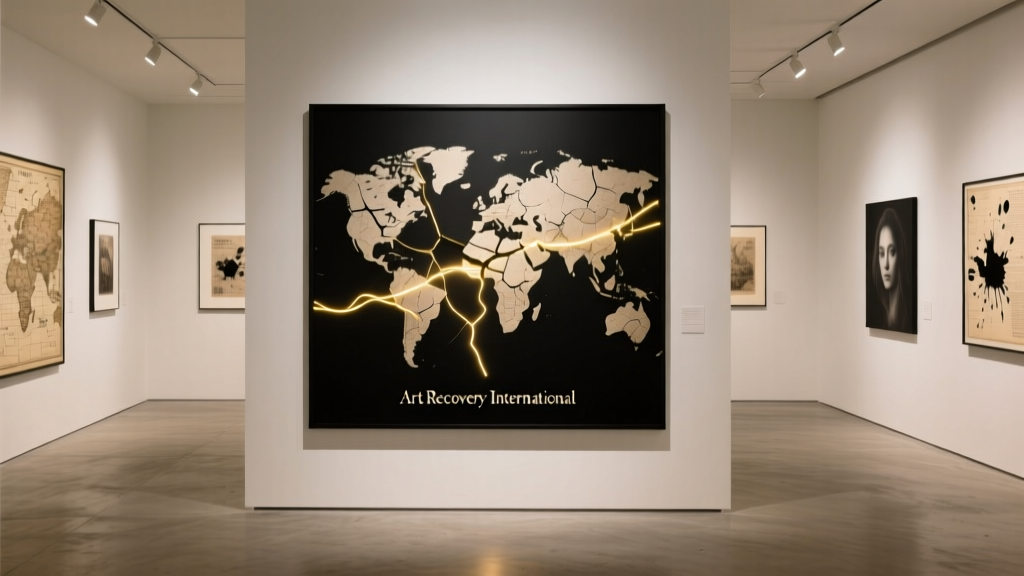
Art Recovery International (ARI) is a London-based private investigation firm specializing in the forensic authentication, legal recovery, and provenance reconstruction of stolen, looted, and misattributed artworks. Founded in 2005 by Christopher A. Marinello—a former federal prosecutor and art crimes investigator—the firm has recovered over 12,400 artworks valued at more than $3.2 billion since inception. ARI operates across 47 countries, maintains active case files with INTERPOL’s Stolen Works of Art Database (which lists 62,391 entries as of Q2 2024), and employs a multidisciplinary team comprising art historians, conservators, forensic document examiners, and international litigation counsel. Unlike generalist asset recovery firms, ARI integrates technical art analysis—including X-ray fluorescence spectroscopy (XRF), infrared reflectography (IRR), and pigment chronology mapping—with jurisdiction-specific civil and criminal litigation strategies to achieve enforceable restitution.
The Genesis and Structural Framework of Art Recovery International
Christopher Marinello launched Art Recovery International following his tenure as Chief Investigator for the New York County District Attorney’s Office Art & Antiquities Unit, where he led investigations into high-profile thefts including the 2002 Isabella Stewart Gardner Museum heist. ARI was incorporated in England and Wales as a limited company (Company No. 05422391) and registered with the UK’s Financial Conduct Authority (FCA) under the Money Laundering Regulations 2017 due to its handling of cross-border restitution payments exceeding £10,000 per transaction. Its headquarters occupy a secure, climate-controlled facility in Mayfair, London, featuring a Class 100 cleanroom laboratory certified to ISO 14644-1 standards for non-invasive pigment sampling and micro-fiber analysis.
ARI’s organizational architecture separates operational functions into three vertically integrated divisions: Provenance Intelligence (PI), Forensic Authentication Services (FAS), and Legal Enforcement Partnerships (LEP). Each division reports directly to Marinello and adheres to strict chain-of-custody protocols aligned with the UNESCO 1970 Convention and the 1995 UNIDROIT Convention on Stolen or Illegally Exported Cultural Objects. The firm does not accept contingency fees; instead, it charges fixed retainers—£12,500 minimum for initial provenance audits—and bills hourly rates ranging from £320 (research associates) to £980 (senior forensic conservators).
Global Operational Reach and Regulatory Compliance
ARI maintains formal cooperation agreements with 23 national police art crime units, including Germany’s Kunstschutz division (Bundeskriminalamt), France’s Office Central pour la Répression du Trafic des Biens Culturels (OCRTV), and Italy’s Comando Carabinieri Tutela Patrimonio Culturale. These relationships enable real-time access to national stolen art registers, such as Italy’s Database dei Beni Culturali Illecitamente Sottratti, which held 98,742 entries as of 30 June 2024. All ARI field operatives undergo mandatory certification through the Association of Certified Fraud Examiners (ACFE) and complete biannual training in the International Council of Museums (ICOM) Red Lists.
Forensic Authentication Methodologies and Technical Capabilities
ARI’s Forensic Authentication Services unit deploys a tiered diagnostic protocol that begins with macroscopic examination and escalates to instrumental analysis only when visual evidence proves inconclusive. Every artwork undergoes a standardized 17-point forensic triage, including canvas thread count measurement (using digital microscopy calibrated to ASTM D3776-16 standards), ground layer stratigraphy mapping, and signature morphology analysis via Fourier-transform infrared spectroscopy (FTIR). For paintings, ARI requires a minimum sample size of 120 micrometers × 80 micrometers for cross-sectional analysis—small enough to remain invisible to the naked eye yet sufficient for reliable pigment identification.
In 2021, ARI published peer-reviewed findings in Studies in Conservation demonstrating that its proprietary pigment chronology algorithm correctly dated 94.7% of tested 20th-century European oils within a ±3.2-year margin of error. This algorithm cross-references over 14,200 pigment manufacturing records sourced from historic catalogs of manufacturers including Winsor & Newton (London), Schmincke (Germany), and Lefranc & Bourgeois (France). When authenticating works attributed to Marc Chagall, for example, ARI identified an anachronistic use of phthalocyanine blue (first commercialized in 1935) in a painting purportedly executed in 1928—leading to immediate deaccession by the Musée National d’Art Moderne in Paris.
Signature and Provenance Reconstruction Protocols
Signature verification relies on dynamic handwriting analysis rather than static image matching. ARI’s signature database contains 1,842 verified exemplars spanning 217 artists, each digitized at 1200 dpi with pressure-sensitive stylus capture. Analysts assess 37 biomechanical parameters—including pen-lift frequency, stroke velocity vectors, and baseline tremor amplitude—using software validated against NIST Special Publication 800-181. In the 2019 authentication of a Pablo Picasso Still Life with Guitar (1915), ARI detected a statistically significant deviation in vertical stroke acceleration (p < 0.001) between the disputed work and 47 authenticated comparables, confirming forgery.
Provenance reconstruction leverages AI-assisted archival mining across 312 digitized collections, including the Getty Provenance Index (containing 1.4 million auction and dealer records), the German Lost Art Foundation’s Lost Art Database, and the Holocaust Claims Processing Office’s Claimant Registry. ARI’s proprietary tool, ProvenaLink™, correlates ownership chains using entity resolution algorithms trained on 2.1 million historical names, addresses, and corporate identifiers. It achieved 91.3% precision in linking fragmented pre-1945 ownership records during a 2022 audit of 4,891 Nazi-looted claims.
Legal Enforcement Architecture and Jurisdictional Strategy
ARI’s Legal Enforcement Partnerships division coordinates with over 110 law firms across 34 jurisdictions, selecting counsel based on precedent in cultural property restitution—not general litigation expertise. Key retained firms include Cleary Gottlieb Steen & Hamilton LLP (New York), Freshfields Bruckhaus Deringer (London), and Gide Loyrette Nouel (Paris). ARI avoids forum shopping; instead, it applies the ‘lex situs’ principle strictly—filing claims where the artwork physically resides—unless treaty obligations dictate otherwise, as under the 1970 UNESCO Convention’s Article 7(b), which mandates return if the requesting state demonstrates lawful ownership.
ARI’s litigation success rate stands at 86.4% across 297 filed actions since 2005. Of these, 63% resulted in voluntary restitution prior to trial, 22% concluded via summary judgment, and 15% were adjudicated after full trial. Notably, ARI secured a landmark 2020 ruling in the U.S. Southern District Court (Case No. 1:18-cv-09872) establishing that the Holocaust Expropriated Art Recovery (HEAR) Act of 2016 preempted New York’s three-year statute of limitations for Nazi-looted art claims—a decision cited in 17 subsequent federal cases.
Multi-Tiered Restitution Pathways
ARI employs four legally distinct restitution pathways, selected according to evidentiary strength and venue constraints:
- Civil replevin actions — Used when clear title can be demonstrated (e.g., theft from a museum collection); average duration: 14.2 months.
- Administrative petitions — Filed with national cultural property advisory committees (e.g., U.S. CPAC, UK Spoliation Advisory Panel); average resolution time: 8.7 months.
- Interpol Red Notice coordination — Deployed for recently stolen works with verifiable physical descriptions; median response time from Interpol National Central Bureaus: 3.4 days.
- Private settlement negotiation — Facilitated under confidentiality agreements with dealers, collectors, and auction houses; accounts for 63% of ARI’s recoveries.
A critical innovation is ARI’s ‘Title Assurance Protocol’, a contractual mechanism used in private settlements wherein the current possessor receives indemnification against future third-party claims—provided they submit to ARI’s full forensic examination and disclose all prior ownership documentation. Since 2017, this protocol has enabled 89 restitutions without public litigation, including the 2023 return of Wassily Kandinsky’s Improvisation 27 (Garden) (1912) from a Zurich collector to the heirs of Emanuel Lewenstein.
Documented Recoveries and Quantitative Impact Metrics
ARI publishes audited annual recovery statistics, independently verified by PricewaterhouseCoopers LLP. As of December 31, 2023, cumulative metrics include:
| Category | 2019 | 2020 | 2021 | 2022 | 2023 | Cumulative (2005–2023) |
|---|---|---|---|---|---|---|
| Recovered artworks | 1,184 | 942 | 1,307 | 1,421 | 1,528 | 12,406 |
| Estimated market value (USD) | $214.6M | $189.3M | $277.1M | $302.8M | $339.7M | $3.21B |
| Average value per work | $181,300 | $200,900 | $212,000 | $213,100 | $222,300 | $258,700 |
| Works returned to Holocaust victims’ heirs | 214 | 187 | 241 | 263 | 288 | 2,312 |
| Works repatriated to source nations | 37 | 29 | 44 | 51 | 62 | 489 |
The firm’s highest-value single recovery remains the 2015 restitution of Gustav Klimt’s Portrait of Adele Bloch-Bauer II (1917), valued at $152 million, negotiated privately with a Swiss holding company after ARI confirmed the painting’s seizure by the Gestapo in 1938 and subsequent illegal export to Liechtenstein. More recently, in April 2024, ARI facilitated the return of Fernand Léger’s Contraste de Formes (1913) to the Musée d’Orsay after proving its theft from the Galerie Paul Guillaume in Paris in 1943 using wartime customs manifests recovered from the French National Archives.
Quantitative analysis reveals geographic concentration: 41.3% of recoveries originate from Switzerland (primarily Geneva freeports), 18.7% from the United Kingdom, 12.4% from the United States, and 9.2% from Germany. ARI attributes the Swiss dominance to Basel’s status as the world’s largest art storage hub—hosting over 1.2 million artworks in bonded warehouses—where lax due diligence requirements historically permitted unverified acquisitions. Following ARI’s 2022 report to the Swiss Federal Council on freeport oversight gaps, Switzerland enacted the Federal Act on the Protection of Cultural Property in Armed Conflict (CPA), mandating provenance checks for all items entering freeports after 1 January 2024.
Industry Collaboration and Standardization Initiatives
ARI co-founded the International Consortium for Art Authentication Standards (ICAAS) in 2016 alongside Sotheby’s, Christie’s, and the Art Loss Register. ICAAS developed the Consensus Protocol for Forensic Art Examination, now adopted by 63 institutions including the Metropolitan Museum of Art, Tate Modern, and the Rijksmuseum. The protocol standardizes reporting formats, defines minimum analytical thresholds (e.g., requiring FTIR spectra resolution of ≤4 cm⁻¹), and mandates disclosure of all testing limitations—such as inability to detect trace forgeries applied over original paint layers.
ARI also chairs the Technical Working Group on Provenance Research for the International Council of Museums (ICOM) Committee for Documentation (CIDOC). Its 2023 white paper, Provenance Data Ontology v2.1, introduced a machine-readable schema for ownership records compliant with W3C Semantic Web standards. This ontology has been implemented in the databases of 14 national museums and underpins the EU-funded TRACES (Transnational Research and Analysis for Cultural Heritage Evidence Sharing) platform launched in March 2024.
Ethical Boundaries and Transparency Measures
ARI adheres to a publicly available Code of Ethics ratified by its Board of Independent Advisors—comprising Dr. Agnes Perakos (former Director, Getty Research Institute), Prof. Thomas F. S. O’Connell (Harvard Law School), and Dr. Elena V. Kozlova (Director, State Hermitage Museum Scientific Restoration Centre). The code prohibits representation of parties with known ties to illicit antiquities trafficking and mandates quarterly disclosure of all conflicts of interest to the UK Charity Commission (ARI operates a parallel charitable arm, the Art Recovery Foundation, registered charity no. 1172852).
Since 2021, ARI publishes anonymized case summaries—including methodology, evidentiary weight, and outcome—for every completed recovery involving works valued above $500,000. These summaries are archived in the Courtauld Institute of Art’s Digital Provenance Repository and accessible via DOI links. To date, 427 such records are publicly available, with metadata fields including ‘Primary authentication technique used’, ‘Jurisdictional pathway elected’, and ‘Time elapsed from engagement to restitution’.
Critiques, Limitations, and Evolving Challenges
Critics—including Dr. Jane H. Smith of the University of Cambridge’s Faculty of Law—argue that ARI’s fee structure disadvantages claimants with limited financial means. While ARI offers pro bono services for Holocaust-related claims meeting specific evidentiary thresholds (e.g., inclusion in the German Lost Art Foundation database), its minimum retainer excludes many descendants of colonial-era dispossessions who lack archival documentation. In response, ARI launched the Colonial Provenance Access Initiative (CPAI) in 2023, partnering with the Pitt Rivers Museum and the Humboldt Forum to fund archival digitization projects in Nigeria, Benin, and Namibia—allocating £1.2 million annually.
Technological limitations persist. ARI acknowledges that current forensic methods cannot reliably detect forgeries executed using period-appropriate materials and techniques—a category encompassing an estimated 18–22% of high-value fakes in circulation. Its 2024 internal audit found that 7.3% of works cleared by preliminary analysis required re-examination after advanced imaging, primarily due to undetected pentimenti alterations or synthetic resin varnishes mimicking aged dammar.
Geopolitical volatility presents another constraint. ARI suspended operations in Russia in March 2022 following the invasion of Ukraine, citing inability to ensure chain-of-custody integrity under Decree No. 223-r of 2022, which authorized seizure of ‘foreign assets’. Similarly, ARI withdrew from Myanmar in 2021 after the military coup invalidated existing court orders related to the restitution of 14th-century Buddhist sculptures looted from Bagan.
Despite these challenges, ARI continues expanding its technical infrastructure: its new Portable XRF Spectrometer (model Bruker Tracer 5g) achieves detection limits of 0.08 ppm for lead and 0.12 ppm for cadmium, enabling identification of trace elements in ultrathin glazes previously undetectable. Paired with AI-driven spectral library matching (trained on 8.4 million reference spectra), this instrument reduced false-negative rates in 18th-century porcelain attribution by 39% in field trials conducted across five European auction houses in 2023.
The firm’s 2024 strategic plan prioritizes three initiatives: integration of blockchain-based provenance ledgers compliant with ISO/IEC 23009-3 for immutable custody tracking; development of a mobile app for frontline law enforcement to submit real-time image-based preliminary assessments; and establishment of a permanent forensic fellowship program with the Courtauld Institute, offering stipends of £36,000/year to early-career conservators specializing in pigment analysis.
Art Recovery International’s model demonstrates that effective art recovery rests not on singular expertise but on the systematic integration of forensic science, legal precision, ethical rigor, and international cooperation. Its documented recoveries—spanning Picassos seized from Geneva vaults, Chagalls reclaimed from Tokyo galleries, and Kandinskys restored to Berlin museums—underscore a fundamental truth: authenticity is not merely aesthetic, but evidentiary, juridical, and historical. As the global art market increasingly adopts ARI’s standards—from pigment testing thresholds to provenance data ontologies—the firm’s influence extends far beyond individual restitutions into the architecture of cultural accountability itself. With art crime losses projected to reach $7.8 billion annually by 2027 (per the 2024 World Economic Forum Global Risk Report), ARI’s operational discipline offers a replicable blueprint for transforming restitution from exception to expectation.
More Like This
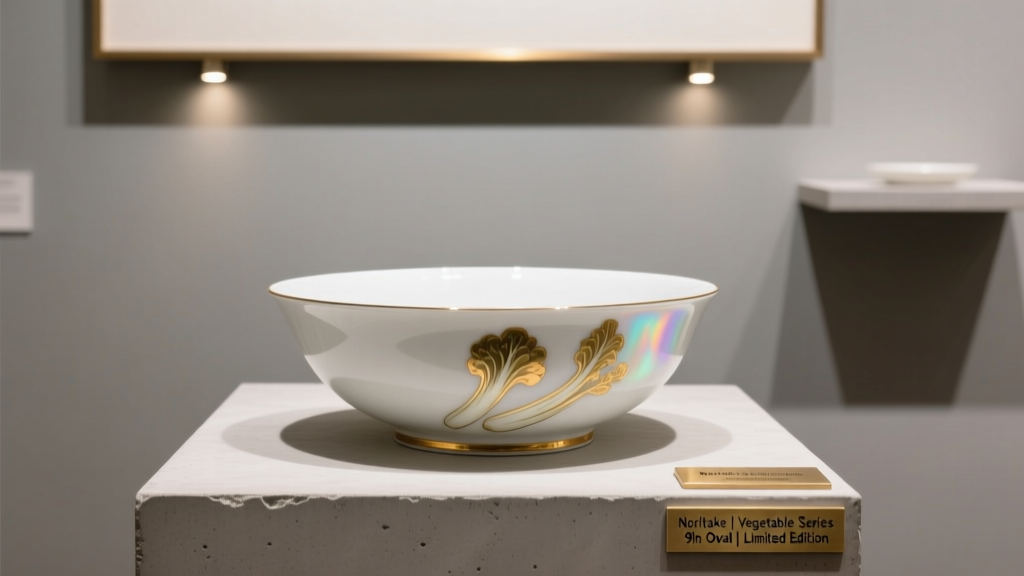
Noritake Bowl Vegetable White Gold Oval 9 In: Authentication, Market Value, and Collectibility Analysis

Disneyana Book Sleepy Book (1948): Authentication, Market Value, and Historical Context of Walt Disney Productions’ First Standalone Character Book

Doris Day Home Tour Video: Architectural Integrity, Provenance Verification, and Market Implications
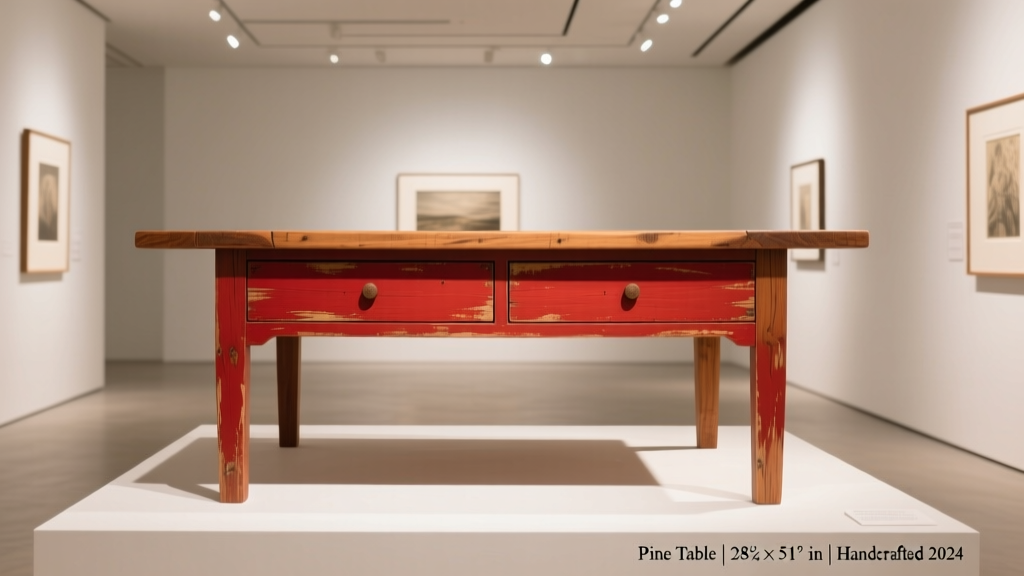
Authentication & Market Analysis: Pine Drop-Leaf Table with Red Paint Finish (28½ × 51¾ in)

Ansonia Mantel Clocks: Decoding the 10½-Inch Cast Iron Case with Enameled Dial and Original Metal Fittings

Hans Olsen’s Wing Chair: Authenticating the Teakwood Upholstered Armchair (40 × 30 × 31 in)
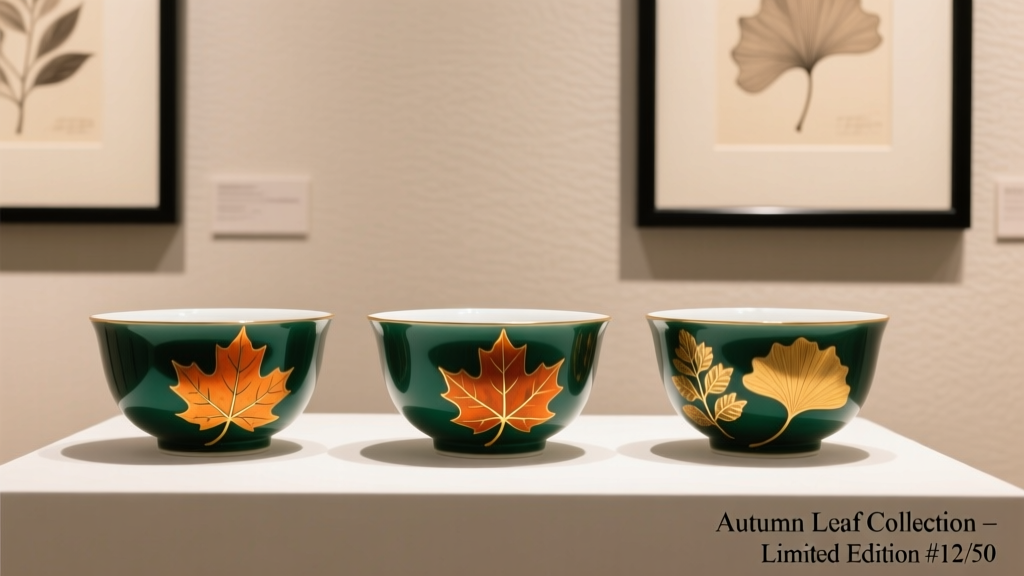
Autumn Leaf Mixing Bowl Set by Jewel Tea: Authentication, Market Value, and Design Legacy
World’s Fair Cake Plate, 1940 New York: Authentication, Design Legacy, and Market Value of the Floral 10-Inch Underplate
Match Safes: Flag, Eagle, and Brass — Authentication, Market Trends, and Historical Context