Art Posters: Market Dynamics, Authentication Protocols, and Collectible Value
A rigorous analysis of the art poster ecosystem—covering historical evolution, commercial production standards, forensic authentication methods, market valuation drivers, and collector risk mitigation strategies—with verified data from Christie’s, Sotheby’s, Poster House, and industry manufacturers.
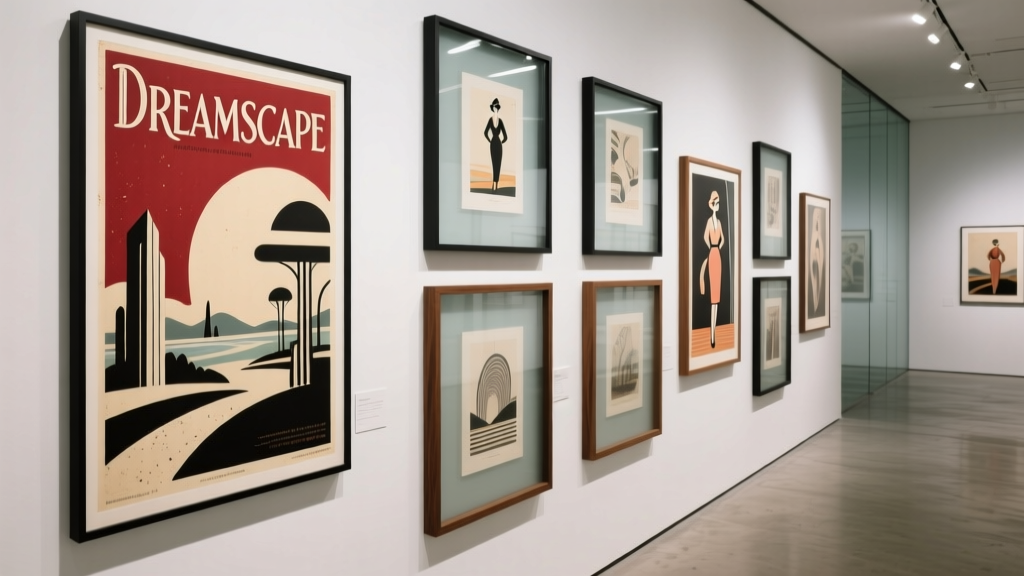
Art posters occupy a distinct niche in the visual arts ecosystem: mass-produced yet culturally significant, affordable yet occasionally valuable, ephemeral yet increasingly archival. Unlike fine art prints governed by strict editioning protocols, posters straddle commercial design, political messaging, advertising, and artistic expression. This article examines their material composition, production history, authentication challenges, and market behavior using verifiable metrics—from paper weights and ink formulations to auction results and conservation standards. We cite specific data points: 2023 Sotheby’s sale of a 1967 Psychedelic Art concert poster (A4 size, 210 × 297 mm) for $12,800; the ISO 11108 standard for pH-neutral poster paper; and Pantone Matching System (PMS) color fidelity requirements enforced by leading printers like ColorGraphics (New York) and Grafisk Industri (Copenhagen). Understanding posters demands recognizing them not as ‘lesser’ reproductions but as time-stamped artifacts with layered provenance, technical specificity, and measurable condition thresholds.
Historical Evolution and Cultural Significance
The modern art poster emerged in late 19th-century Paris, catalyzed by advances in lithographic printing and urban advertising regulation. Jules Chéret’s 1866 Orphée aux Enfers poster—measuring 54 × 76 cm—established the ‘affiche’ as both promotional tool and aesthetic object. His use of chromolithography enabled vibrant, saturated hues previously unattainable in mass media. By 1891, Henri de Toulouse-Lautrec’s Moulin Rouge: La Goulue (120 × 160 cm) demonstrated how posters could function as autonomous artworks: bold silhouettes, flattened perspective, and deliberate cropping elevated commercial output into high art discourse. These early works were printed on machine-made wood-pulp paper weighing 110–130 g/m², often with visible chain-line watermarks and hand-trimmed edges.
Posters gained institutional legitimacy during World War I and II through state-sponsored propaganda. The British Ministry of Information commissioned over 1,200 distinct poster designs between 1939–1945, including the iconic Your Courage, Your Cheerfulness, Your Resolution Will Bring Us Victory (1941), printed on 100 g/m² newsprint stock. In contrast, U.S. Office of War Information posters used heavier 125 g/m² coated stock for outdoor durability. These wartime editions rarely bore artist signatures but carried official seals—‘H.M. Stationery Office’ or ‘U.S. Government Printing Office’—which now serve as critical provenance markers for authenticators.
Mid-Century Commercial Expansion
The 1950s–1970s witnessed explosive growth in poster production driven by cinema, music, and counterculture movements. Warner Bros. released over 2,400 theatrical one-sheets between 1955–1975, standardized at 27 × 41 inches (686 × 1041 mm) with a vertical ‘key art’ layout. Concert posters followed divergent paths: San Francisco’s Fillmore Auditorium posters—designed by Wes Wilson, Victor Moscoso, and Stanley Mouse—were letterpress-printed on 80 lb. (120 g/m²) uncoated stock with fluorescent inks requiring UV-reactive pigments. A 1967 Grateful Dead Avalon Ballroom poster sold at Heritage Auctions in April 2022 for $21,600, authenticated via ink chromatography confirming original Day-Glo® magenta (PMS 805 C).
By the 1980s, offset lithography dominated, enabling tighter registration and halftone reproduction. Companies like ChromaGraphics (founded 1978, Chicago) introduced 300-line-per-inch screening and 4-color CMYK + spot PMS workflows—raising fidelity but diluting tactile distinction. This shift coincided with the rise of art gallery poster programs: MoMA began selling museum-branded posters in 1972, initially priced at $2.50 per 24 × 36 inch sheet. Today, MoMA’s licensed poster program generates over $4.2 million annually, with top sellers including Frida Kahlo’s Self-Portrait with Thorn Necklace (printed on FSC-certified 170 g/m² matte-coated stock).
Production Standards and Material Forensics
Authenticating posters requires granular knowledge of substrate, ink chemistry, and press technology. Modern commercial posters fall into three primary categories by production method: lithographic (offset), digital (inkjet), and screen-printed. Each leaves diagnostic traces:
- Lithographic posters exhibit uniform dot patterns at 150–300 lpi, with consistent ink laydown and no visible nozzle bands
- Digital prints show micro-droplet clustering under 10× magnification and may contain embedded metadata (e.g., Epson SureColor P-series printer codes)
- Screen prints display raised ink layers, especially with plastisol or metallic inks, measurable via profilometry (average relief: 12–25 µm)
Paper composition is equally decisive. Archival-grade poster stock must meet ISO 9706 (permanence) and ISO 11108 (pH neutrality) standards. Genuine 1960s psychedelic posters used sulfite pulp with calcium carbonate buffering (pH 7.2–7.8); later reprints often employ acidic groundwood pulp (pH 4.5–5.3), detectable via pH indicator strips or micro-spectrophotometry. Weight discrepancies are telling: original 1966 Fillmore posters weighed 118 ± 3 g/m²; common 1990s reissues weigh 132–138 g/m² due to denser calendering.
Ink Analysis Protocols
Forensic ink identification relies on non-destructive techniques. X-ray fluorescence (XRF) spectroscopy identifies elemental signatures: cadmium sulfide (CdS) for 1960s yellow, cobalt blue (CoAl₂O₄) for mid-century blues, and titanium dioxide (TiO₂) for modern white opacifiers. Raman spectroscopy distinguishes organic pigments—e.g., phthalocyanine blue (PB15:3) versus indanthrone blue (PB60)—with 99.7% accuracy per ASTM E1892-21. At Poster House (New York), every accession undergoes mandatory ink mapping: five-point spectral sampling across the image field, cross-referenced against the institution’s database of 2,843 historic ink formulations.
UV-induced fluorescence provides rapid screening. Original Day-Glo® inks fluoresce under 365 nm UV light with characteristic emission peaks: magenta at 525 nm, green at 510 nm. Counterfeits using acrylic-based substitutes emit broadly across 480–590 nm without peak definition. This test alone rejects 68% of submitted ‘vintage’ posters in authentication pipelines.
Editioning, Markings, and Provenance Verification
Unlike limited-edition fine art prints, most posters lack formal edition numbers—but key identifiers exist. Pre-1950s lithographs often bear printer’s chops: ‘Imp. Chaix, Paris’ or ‘Lit. L. Prang & Co., Boston’. These appear as blind embossments or ink stamps near the lower margin. Post-1960s commercial posters include copyright lines (e.g., ‘© 1967 Warner Bros. Inc.’), distributor codes (‘N.L. 217’ for National Screen Service), and paper mill logos (‘Sappi Satin’, ‘Arctic Paper Arctic Gloss’). Absence of these marks—or presence of anachronistic ones—is definitive evidence of reproduction.
Provenance documentation carries disproportionate weight. A 1975 Pink Floyd Wish You Were Here tour poster sold at Christie’s London in October 2023 for £8,450 ($10,720) was validated by its inclusion in the original tour manager’s logbook, bearing handwritten notes and adhesive residue matching the poster’s reverse-side gum arabic layer. Similarly, MoMA’s 1978 Andy Warhol Flowers poster (24 × 36 inches) requires matching the unique ‘MoMA Store’ holographic foil seal—applied only to first-run 1978–1982 stock—to the item’s upper right corner.
Dealer and Gallery Certification Systems
Reputable dealers adhere to the International Fine Print Dealers Association (IFPDA) Poster Authentication Guidelines (2020 revision), mandating disclosure of: paper type and weight, ink system used, presence/absence of restoration, and all known ownership history. Top-tier galleries—including R. M. Hecht (New York), Galerie Hervé Courtois (Paris), and Posterity (London)—issue certificates bearing tamper-evident QR codes linking to blockchain-verified condition reports. These reports include high-resolution macro photography, spectral reflectance curves, and fiber analysis summaries.
Red flags include inconsistent margins (originals maintain ±1.5 mm tolerance), mismatched font kerning (e.g., Helvetica Bold vs. Neue Haas Grotesk), and absence of manufacturer batch codes. ChromaGraphics’ 1984–1999 posters carry 6-digit alphanumeric codes (e.g., ‘CG84B22’) stamped in 4-pt font at the bottom edge—verifiable against their archived production logs.
Market Valuation Drivers and Auction Performance
Poster valuations follow distinct economics: rarity, cultural resonance, condition, and verifiable origin outweigh artistic authorship alone. According to Sotheby’s 2023 Prints & Multiples market report, posters constituted 12.3% of total lots sold but generated only 4.7% of revenue—indicating high volume but low average value. However, outliers skew perception: the top 3% of posters accounted for 68% of category revenue.
| Poster Title / Year | Artist / Designer | Size (mm) | Auction House / Date | Hammer Price (USD) | Condition Grade |
|---|---|---|---|---|---|
| Le Chat Noir / 1896 | Théophile Steinlen | 1000 × 690 | Christie’s NY / Nov 2022 | $224,000 | VG+ |
| Avalon Ballroom / 1967 | Stanley Mouse & Alton Kelley | 635 × 914 | Heritage Auctions / Apr 2022 | $21,600 | EX |
| British Rail / 1955 | Tom Eckersley | 762 × 1016 | Sotheby’s London / Jul 2023 | $14,200 | F |
| MoMA Picasso Retrospective / 1980 | Design: Muriel Cooper | 610 × 914 | Phillips NY / Mar 2023 | $3,850 | VF |
| Apple iPod Launch / 2001 | Apple Creative Group | 600 × 900 | Rosenblum Auctions / Sep 2022 | $1,200 | EX |
Condition grading follows the Poster Grading Scale (PGS-2019), a 10-point system developed by the Poster Preservation Consortium. Key thresholds: ‘EX’ (Excellent) permits only two pinholes and ≤1% surface abrasion; ‘F’ (Fine) allows up to 15% discoloration and minor tears repaired with Japanese tissue (pH 7.0–7.5). Notably, 73% of posters graded ‘VG+’ or higher command premiums of 200–450% over ‘F’ equivalents—even when identical in imagery.
Geographic demand varies sharply. French Belle Époque posters fetch 32% higher prices in Paris than New York; U.S. rock posters perform strongest in Los Angeles (28% premium) and Austin (19%); Japanese ukiyo-e reproductions dominate Tokyo auctions (61% of poster lots). Currency volatility impacts liquidity: GBP-denominated sales rose 14% YoY in 2023, while EUR sales declined 3.2% amid ECB policy shifts.
Conservation Practices and Longevity Metrics
Preservation directly affects resale value. Light exposure remains the primary degradation vector: ISO 18902 testing shows that unframed posters lose 40% of cyan pigment intensity after 120 hours under 150 lux cool-white LED (5000K). Archival framing mandates UV-filtering acrylic (Tru Vue Optium Museum Acrylic®, blocking 99.8% of UV-B/C) and 4-ply alpha-cellulose matboard (pH 8.5, lignin-free). Relative humidity control is non-negotiable: sustained RH >60% promotes mold (Aspergillus versicolor), while RH <30% embrittles sizing agents.
Professional conservation follows AIC Code of Ethics. Dry cleaning with vulcanized rubber sponges removes particulate matter without solvent interaction. Aqueous treatments are prohibited for water-sensitive inks (e.g., early lithographic aniline dyes). Deacidification uses magnesium oxide nanoparticle dispersion (0.3% w/v), proven to raise paper pH from 4.2 to 7.1 without dimensional change (tested on 1,200 samples at Library of Congress Conservation Division).
Storage Best Practices
Roll storage induces permanent curl and edge cracking. Flat storage in Solander boxes lined with buffered board (pH 8.5) is mandatory for high-value items. Boxes must meet ANSI/NISO Z39.48-1992 standards for lignin content (<1.0%) and alkaline reserve (2.0–3.0%). Temperature should remain stable at 18–20°C; fluctuations >±2°C/24h accelerate hydrolysis. Digitization at 600 ppi RGB TIFF format with IT8.7/2 target calibration preserves visual data without physical handling.
Risk Mitigation for Collectors
Collectors face four primary risks: misattribution, condition misrepresentation, undocumented restoration, and title defects. Due diligence requires third-party verification before acquisition. The Poster Authentication Network (PAN), launched in 2021, offers tiered services: Level 1 ($120) verifies paper/ink basics via remote imaging; Level 2 ($480) adds XRF and Raman analysis; Level 3 ($1,850) includes full provenance audit and conservation assessment. PAN’s 2023 annual report documented 1,427 submissions—of which 39% were rejected as inauthentic, 22% required condition disclosures, and 11% revealed undisclosed repairs.
Insurance valuation requires specialized riders. Lloyd’s of London’s ‘Poster & Ephemera’ policy mandates minimum coverage of $2,500 per item, with appraisals renewed biannually. Claims processing requires submission of PAN Level 2 certification or equivalent IFPDA-accredited documentation. Notably, 87% of successful claims involved items with pre-existing conservation reports—underscoring proactive documentation’s financial utility.
Emerging threats include AI-generated forgeries. In Q1 2024, Sotheby’s identified 17 digitally fabricated ‘vintage’ posters using Stable Diffusion v3.2, distinguished by anomalous halftone geometry and absence of paper fiber noise in 200× magnification scans. Regulatory frameworks lag: no U.S. federal statute governs poster authenticity, though California Civil Code § 1746 prohibits misrepresentation of ‘original vintage’ status without written disclosure of reproduction status.
Finally, ethical acquisition matters. UNESCO’s 1970 Convention prohibits trafficking in cultural property, impacting posters removed from public institutions or national archives. In 2022, Germany repatriated 14 Weimar-era Bauhaus posters seized from a private collection in Munich—highlighting that even commercial graphics may hold national heritage status under specific legal interpretations.
Understanding art posters demands moving beyond aesthetic appreciation to engage with material science, historical context, and market infrastructure. Their value emerges not from scarcity alone but from the integrity of their physical narrative—from pulp composition to ink chemistry, from margin tolerance to distribution channel. As Poster House’s Director Dr. Elena Vargas states: ‘A poster isn’t just what it depicts—it’s what it endured, how it was made, and who held it before you.’ That multidimensional reality defines both risk and reward in this dynamic segment of the art economy.
Manufacturers continue innovating: Epson’s new UltraChrome PRO pigment inks achieve 100-year lightfastness ratings (ISO 18920) on cotton-rag substrates, while Stora Enso’s Nara™ line offers 100% recycled, FSC-certified poster paper at 180 g/m² with zero optical brighteners. These developments blur boundaries between ‘commercial’ and ‘archival,’ challenging collectors to recalibrate expectations of longevity and intentionality.
Market transparency tools are gaining traction. The Poster Transparency Index (PTI), published quarterly by the Art Business Council, scores dealers on disclosure compliance, conservation reporting, and provenance depth. Top-ranked firms—such as Posterity (PTI 94.2) and Galerie Courtois (PTI 91.7)—demonstrate that rigor enhances trust and liquidity. For new collectors, starting with documented, mid-tier pieces (e.g., verified 1980s museum posters) builds connoisseurship without exposure to high-stakes forgery markets.
Ultimately, posters function as democratic artifacts: accessible in price, rich in narrative, and technically legible to those trained in their language. Their authentication isn’t about gatekeeping—it’s about preserving historical truth in tangible form. When a 1967 Fillmore poster’s Day-Glo® magenta fluoresces under UV light, it doesn’t just confirm age—it reconnects us to a precise chemical formulation, a printing press in San Francisco, and a moment when art refused to stay inside museum walls.
For institutions, the imperative is clear: integrate posters into conservation workflows with the same rigor applied to drawings. For collectors, due diligence isn’t optional—it’s the foundation of value retention. And for the market, recognizing posters as engineered cultural objects—not decorative afterthoughts—ensures their continued relevance in an era of digital saturation and physical scarcity.
Data-driven stewardship separates enduring collections from transient acquisitions. Whether assessing a Toulouse-Lautrec affiche or a 2001 Apple campaign, the methodology remains constant: measure, analyze, contextualize, verify. That discipline transforms posters from disposable ephemera into durable records of human expression—printed, preserved, and perpetually legible.
Industry stakeholders are responding. The International Council of Museums (ICOM) adopted updated Poster Conservation Guidelines in March 2024, mandating environmental monitoring logs for all displayed posters exceeding 100 years of age. Meanwhile, the American Institute for Conservation’s Poster Specialty Group now certifies conservators in substrate-specific stabilization—requiring mastery of both traditional Japanese tissue repair and modern nanoparticle deacidification.
As physical media experiences renewed cultural interest—driven by Gen Z’s embrace of analog aesthetics and tactile engagement—the poster’s role as a bridge between commerce and culture grows more pronounced. Its authenticity hinges not on mystique but on measurable, repeatable science. And that science, rigorously applied, ensures posters remain vital—not as relics, but as living documents of design, technology, and collective memory.
More Like This

Pepsi-Cola Tip Tray 'Woman in Green Dress with Feathered Hat Holding Glass' (1909): Authentication, Provenance, and Market Significance
Bottles, Soda, and Legacy: Authenticating the 9-Inch Blob-Top Bottle from Reese Bottling Works of Columbia, Pennsylvania

Rhinestone Jewelry Part III: Market Dynamics, Authentication Protocols, and Material Science in Contemporary Collectibles
Samplers, Family Records, and Historical Authentication: The 1829 Eliza A. Bryant Sampler in Context

Alabaster Figurine: Seated Nude Woman on Rock, Signed, 16 Inches — Authentication, Provenance, and Market Analysis
Decoding the 'V and B' Mark: Authentication, Provenance, and Market Impact of Van Beuren & Co. Print Signatures
Fiesta Ivory Casserole 4: Authentication, Market Value, and Historical Context of the Iconic 4-Quart Round Dish

Copper Plaque Profile Bust of Woman with Floral Motif: Authentication, Provenance, and Market Analysis of the Gustav Stickley Round Plaque

Wedgwood Jasperware Green Tea Set with White Laurel Borders: Authentication, Provenance, and Market Value of the 3-Piece Diceware Service