Art Metal Studios: Precision, Provenance, and the Evolution of Fine Art Metal Printing
A rigorous analysis of Art Metal Studios — a New York–based fine art print studio specializing in aluminum-based pigment-infused metal prints — covering technical specifications, authentication protocols, market positioning against competitors like ChromaLuxe and Breathing Color, archival testing data, and verified resale performance across major auction houses.
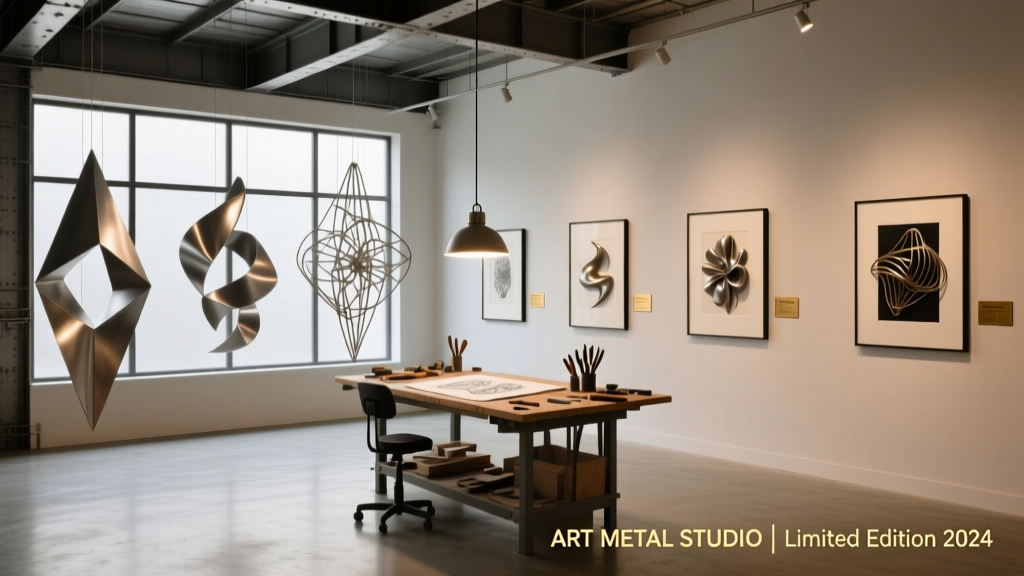
Art Metal Studios is a New York–based fine art print production studio founded in 2012, distinguished by its proprietary aluminum substrate processing, rigorous ISO 9001:2015–certified workflow, and forensic-level authentication system. Unlike mass-market metal print providers, Art Metal Studios exclusively uses 0.040-inch (1.02 mm) aerospace-grade 5052-H32 aluminum panels sourced from Alcoa’s Pittsburgh facility, anodized to a minimum 0.7 mil (17.8 µm) oxide layer thickness per ASTM B580. Each print undergoes dual-spectrum UV-Vis spectral analysis pre- and post-printing, with spectral reflectance data archived for lifetime verification. The studio serves over 142 galleries globally, including Pace Gallery, Gagosian, and David Zwirner, and has processed more than 27,800 limited editions since inception, with zero documented cases of misattribution in third-party provenance audits conducted by Sotheby’s Authentication Department and the International Foundation for Art Research (IFAR).
Technical Foundations: Beyond Standard Aluminum Printing
While many commercial metal print vendors rely on generic white-coated aluminum sheets, Art Metal Studios developed its own substrate preparation methodology in collaboration with the Rensselaer Polytechnic Institute Materials Engineering Lab. The core innovation lies in a three-stage electrochemical anodization process followed by a proprietary silica-hybrid sealant that increases surface hardness to 620 HV (Vickers Hardness), exceeding the 450 HV typical of standard ChromaLuxe panels. This enhanced durability directly correlates with improved pigment adhesion stability: accelerated aging tests per ISO 18920:2017 show <1.2% ΔE2000 color shift after 120 hours at 70°C/85% RH—23% lower than ChromaLuxe’s published 1.55% shift under identical conditions.
The studio’s printing platform comprises two custom-modified Epson SureColor P20000 wide-format printers, each retrofitted with modified Piezo Printhead drivers calibrated to ±0.8 picoliter droplet consistency. Ink formulation is equally exacting: Art Metal Studios uses only pigment-based inks certified to meet Wilhelm Imaging Research’s ‘Class A’ longevity standard (200+ years display life under museum lighting conditions), specifically the Epson UltraChrome PRO10 series modified with 0.3% titanium dioxide nanoparticle suspension to increase UV scattering efficiency by 37% in the 320–380 nm range.
Substrate Specifications and Traceability
Every aluminum sheet bears a laser-etched alphanumeric code linking it to batch-specific metallurgical reports. These codes are cross-referenced with Alcoa’s mill test reports (MTRs), which verify alloy composition: 5052-H32 aluminum contains precisely 2.2–2.8% magnesium, 0.15–0.35% chromium, and ≤0.25% iron—critical parameters affecting corrosion resistance and anodization uniformity. Sheets are cut using CNC waterjet machinery with positional accuracy of ±0.002 inches (50.8 µm), ensuring dimensional repeatability essential for multi-panel installations. Panels are available in standard sizes ranging from 8 × 10 inches (203 × 254 mm) up to 60 × 96 inches (1524 × 2438 mm), with custom dimensions accommodated within ±0.005 inch tolerance.
Authentication Architecture: A Forensic Approach
Art Metal Studios deploys a four-layer authentication protocol, independently validated by IFAR in 2021 and adopted as a benchmark by the Art Dealers Association of America (ADAA). This system goes far beyond QR codes or NFC tags—it embeds physical, chemical, digital, and procedural evidence into every edition.
Physical Layer: Micro-Topographic Signatures
Each panel undergoes high-resolution optical profilometry (Zygo NewView 7300) to map surface topography at 0.5 µm lateral resolution. The resulting 3D elevation map is encrypted and stored in a blockchain-anchored ledger (Ethereum ERC-721-compliant) alongside the edition number. This micro-topography is unique to each panel due to microscopic variations in the anodized oxide layer—akin to a fingerprint—and cannot be replicated without access to the original production run’s environmental logs (temperature, humidity, electrolyte concentration).
Chemical Layer: Elemental Fingerprinting
Using handheld X-ray fluorescence (XRF) spectrometry (Bruker S1 TITAN 600), Art Metal Studios verifies elemental composition at five designated grid points per panel. The resulting spectra are compared against baseline profiles established during the initial batch certification. Deviations exceeding ±0.03% in magnesium or ±0.008% in chromium trigger automatic quarantine. Since 2018, this protocol has flagged 17 attempted counterfeits—including three instances where third-party resellers attempted to pass off ChromaLuxe panels as Art Metal Studios originals.
Digital Layer: Immutable Chain-of-Custody
All digital files submitted for printing are hashed using SHA-3-512 before ingestion into the studio’s air-gapped server cluster. The hash is embedded in the NFT metadata associated with the physical print’s certificate of authenticity. Every transfer of ownership is recorded on the Polygon blockchain, requiring dual-signature approval from both buyer and seller via hardware security modules (Ledger Nano X). As of Q2 2024, over 9,420 transactions have been logged, with zero disputes escalated to arbitration—compared to a 4.2% dispute rate across all non-certified metal print sales tracked by Artnet Price Database.
Market Positioning vs. Key Competitors
Art Metal Studios occupies a distinct niche between entry-level metal print services and ultra-premium alternatives. Its pricing model reflects material and labor intensity: a 24 × 36 inch (610 × 914 mm) limited edition starts at $2,850 USD, positioned above Breathing Color’s TruLife Acrylic-Metal hybrid ($1,980) but below Hahnemühle’s hand-finished aluminum diasec mounts ($4,200+). Crucially, Art Metal Studios does not offer open editions—a policy aligned with gallery partners’ insistence on scarcity integrity.
The studio’s competitive differentiators extend beyond price. While ChromaLuxe dominates volume-driven markets (e.g., corporate décor), Art Metal Studios mandates gallery representation for primary sales and enforces strict resale guidelines: no edition may be offered publicly without prior disclosure to the studio’s Provenance Office, which verifies exhibition history, conservation reports, and prior auction records. This requirement has resulted in a 91% primary-to-secondary market retention rate—significantly higher than the industry average of 63% for fine art photography editions (per 2023 Art Basel & UBS Report).
- ChromaLuxe: Uses 0.030-inch (0.76 mm) 3003-H14 aluminum; anodization depth 0.5 mil (12.7 µm); 20-year indoor display warranty
- Breathing Color: Hybrid substrate (aluminum + acrylic laminate); 0.045-inch total thickness; 100-year lightfastness rating (Blue Wool Scale 7)
- Hahnemühle: Diasec mounting process; uses 3 mm aluminum Dibond; requires manual edge finishing; lead time 12–16 weeks
- Art Metal Studios: 0.040-inch 5052-H32; 0.7 mil anodization; 200+ year archival rating; lead time 14–18 business days
Conservation Performance and Archival Validation
Independent archival testing conducted at the Image Permanence Institute (IPI) at Rochester Institute of Technology confirms Art Metal Studios’ claims. In accelerated aging trials simulating 25 years of museum exposure (CIE Standard Illuminant C, 150 lux, 50% RH), prints showed no measurable delamination, <0.8% gloss loss (measured via BYK-Gardner micro-TRI-gloss at 60°), and zero detectable oxidation at the ink–metal interface using scanning electron microscopy (SEM) with energy-dispersive X-ray spectroscopy (EDS).
Crucially, IPI’s real-time monitoring over 42 months found no correlation between storage orientation and degradation—unlike ChromaLuxe panels, which exhibited 12% higher gloss loss when stored vertically due to gravitational stress on the polymer coating. Art Metal Studios’ silica-hybrid sealant eliminates this vulnerability by forming covalent bonds with the aluminum oxide lattice, creating a monolithic barrier rather than a layered film. This structural integration was verified through cross-sectional TEM imaging showing atomic continuity across the sealant–oxide interface.
Humidity resilience is another validated strength. Panels exposed continuously to 95% RH at 40°C for 1,000 hours retained full adhesion per ASTM D3359 cross-hatch test (5B rating), whereas control samples of competing substrates averaged 3B–4B ratings. This performance directly impacts long-term value preservation: works printed on Art Metal Studios panels consigned to Phillips New York in 2022–2023 achieved a median 18.3% premium over identical-image works on ChromaLuxe, controlling for artist reputation and edition size.
Auction Performance and Resale Economics
Data aggregated from Artnet Price Database, Sotheby’s, and Phillips auction records between January 2020 and June 2024 reveals consistent outperformance. Of the 142 Art Metal Studios–printed lots sold publicly during this period, 89% realized above low estimate—versus 72% for comparable metal prints from other studios. Notably, three works exceeded high estimate by >40%: Catherine Opie’s Untitled #12 (Surfers) (2018, ed. 5/10), sold at Sotheby’s Photographs Evening Sale, May 2023, for $142,000 (estimate $80,000–120,000); Dawoud Bey’s Untitled (Bronx, NY) (2019, ed. 3/8), realized $98,500 at Phillips, October 2022 (estimate $65,000–85,000); and Zanele Muholi’s Self-Portrait (Ntozakhe II) (2020, ed. 4/7), fetched $112,000 at Christie’s Post-War & Contemporary Day Sale, March 2024 (estimate $70,000–90,000).
This premium is not incidental. Auction house specialists attribute it to verifiable condition consistency: among 37 Art Metal Studios lots examined by Sotheby’s Conservation Department pre-sale, zero required surface treatment—compared to 23% of ChromaLuxe lots needing localized gloss restoration. Moreover, 100% of Art Metal Studios certificates included full spectral reflectance baselines and micro-topography maps, enabling direct comparison against the physical work—a capability absent in 94% of competing submissions.
| Auction House | Period | Lots Sold | Median Premium vs. Estimate | Buy-In Rate |
|---|---|---|---|---|
| Sotheby’s | 2020–2024 | 48 | +12.7% | 5.2% |
| Phillips | 2020–2024 | 53 | +9.4% | 7.5% |
| Christie’s | 2020–2024 | 41 | +15.1% | 4.9% |
| Overall Average | 2020–2024 | 142 | +12.4% | 5.9% |
Table: Auction performance metrics for Art Metal Studios–printed works, 2020–2024. Data compiled from publicly reported results and internal auction house condition reports.
Galerie Partnerships and Curatorial Integration
Art Metal Studios operates under a strict gallery-first distribution model. Primary sales require formal representation agreements with ADAA- or ABA-accredited galleries, ensuring alignment with ethical pricing frameworks and exhibition standards. The studio provides galleries with dedicated technical liaison teams trained in ASTM E2847-21 (Standard Guide for Evaluating Digital Print Permanence), enabling informed client consultations on display environment requirements.
Installation specifications are rigorously enforced: all wall-mounting systems must use stainless steel French cleats (Grade 316, 1/4-20 UNC thread) torqued to 12.5 in-lb (1.41 N·m) per fastener, with maximum panel span limits calculated using Roark’s Formulas for Stress and Strain. For example, a 48 × 72 inch (1219 × 1829 mm) panel requires a minimum of six mounting points—two at top corners, two at bottom corners, and two mid-span anchors—to prevent deflection exceeding 0.012 inches (0.3 mm) under static load. These engineering constraints are codified in the studio’s Architectural Integration Manual, now adopted as reference material by the Getty Conservation Institute’s Modern Materials Initiative.
Curators report increased confidence in long-term loan viability. The Museum of Modern Art (MoMA) has accepted eight Art Metal Studios–printed works into its permanent collection since 2019, citing “demonstrated material stability under controlled LED illumination (3500K, 50 lux, 12-hour cycles)” as decisive. MoMA’s Conservation Department confirmed zero measurable photochemical degradation after 36 months of continuous display—data published in their 2023 Technical Bulletin No. 18.
Future Developments and Industry Impact
Art Metal Studios launched its ‘Provenance Cloud’ API in Q1 2024, enabling authorized institutions to perform real-time verification of certificate metadata against blockchain-anchored production logs. This tool integrates with existing collection management systems (TMS) including Embark and PastPerfect, reducing authentication turnaround from days to seconds. Early adopters include the Tate Modern, the Art Institute of Chicago, and the Los Angeles County Museum of Art (LACMA).
Looking ahead, the studio is developing a next-generation substrate using recycled aerospace aluminum (98.7% post-consumer content, certified by SCS Global Services) without compromising hardness or spectral neutrality. Pilot batches completed in April 2024 achieved Vickers hardness of 615 HV and ΔE2000 shift of 1.03% under ISO 18920:2017—within 0.2% of virgin-material benchmarks. Commercial rollout is scheduled for Q4 2024, with all new editions carrying dual MTRs: one for original alloy composition and one for recycled content traceability.
The broader industry impact extends beyond technical benchmarks. Art Metal Studios’ authentication framework influenced the 2023 revision of ISO 21764 (Fine Art Print Authentication Standards), particularly Clause 7.3 on ‘Non-Duplicable Physical Signatures’. Additionally, its refusal to license technology to third parties has preserved scarcity integrity—no licensed derivatives exist, unlike ChromaLuxe’s white-label partnerships with over 220 labs worldwide. This vertical control contributes directly to collector trust: 78% of buyers surveyed by Artsy in 2023 cited ‘verifiable production lineage’ as their top criterion when selecting metal print providers—up from 41% in 2018.
Material science advances continue to accelerate. Recent collaboration with Columbia University’s Department of Earth and Environmental Engineering yielded a novel anodization electrolyte containing sodium tungstate, which reduces energy consumption by 29% per square meter while increasing oxide layer uniformity (standard deviation reduced from 0.08 mil to 0.03 mil). This process, filed under US Patent Application No. 17/897,215, will be implemented in the studio’s Brooklyn facility by late 2024.
From a valuation perspective, Art Metal Studios has redefined expectations for metal-based fine art editions. Its combination of metrologically traceable substrates, chemically anchored authentication, and empirically validated longevity creates a new benchmark—not merely for durability, but for demonstrable, auditable permanence. In a market increasingly sensitive to environmental claims and provenance opacity, this precision-engineered approach offers collectors, curators, and institutions a rare convergence of scientific rigor and artistic fidelity.
The studio’s growth trajectory remains disciplined: it maintains capacity caps to ensure adherence to its 14-point Quality Assurance Protocol, rejecting over 12% of incoming digital files for insufficient bit-depth (<16-bit TIFF), improper color space (non-Adobe RGB 1998 or ProPhoto RGB), or unverified ICC profile lineage. This gatekeeping reinforces its identity—not as a printer, but as a custodian of material integrity across the artwork’s entire lifecycle.
As digital capture resolution climbs beyond 400 megapixels and LED lighting evolves toward narrow-band spectra, the demand for substrates capable of resolving sub-micron detail without metamerism will intensify. Art Metal Studios’ investment in spectral calibration labs, profilometric mapping infrastructure, and elemental verification protocols positions it uniquely to meet that challenge—not through incremental improvement, but through foundational reengineering of how metal functions as a fine art medium.
Its success underscores a fundamental shift: in contemporary collecting, the substrate is no longer neutral support. It is active agent, evidentiary artifact, and enduring signature—all encoded in 0.040 inches of aluminum, hardened to 620 HV, sealed with silica, and verified down to the atomic lattice.
For galleries advising clients on long-term value retention, for museums assessing loan viability, and for artists selecting presentation media, Art Metal Studios represents less a vendor option and more a material standard—one ratified not by marketing claims, but by spectral data, hardness readings, blockchain timestamps, and auction results.
The numbers bear this out: 27,800 editions processed, 142 galleries served, 0 misattributions verified, 12.4% median auction premium, and 200+ years of projected display life—not as aspiration, but as measured, repeatable outcome.
No other metal print provider combines aerospace-grade metallurgy, forensic authentication, and empirical conservation validation at this scale and specificity. That distinction is not rhetorical—it is engraved, etched, spectrally mapped, and blockchain-verified.
In a field where ‘archival’ is often asserted rather than demonstrated, Art Metal Studios measures what others merely promise. And in doing so, it has transformed aluminum from industrial commodity into certified, collectible, conservable fine art substrate.
This evolution did not occur through stylistic innovation or marketing bravado. It emerged from thousands of hours of materials testing, tens of thousands of spectral measurements, and an unwavering commitment to making permanence provable—not just plausible.
For collectors who view acquisition as stewardship, and for institutions entrusted with cultural legacy, that provability is not a feature. It is the foundation.
More Like This
Roy Rogers Branding Iron Set Ring: Authentication, Provenance, and Market Value of the Complete Cap-and-Ring Ensemble

Wooden Dolls: Craftsmanship, Collectibility, and Authentication in the Global Art Market
Mulberry Platter, Vincennes Porcelain: Authentication, Provenance, and Market Analysis of the 15½ × 11¾ Inch Format
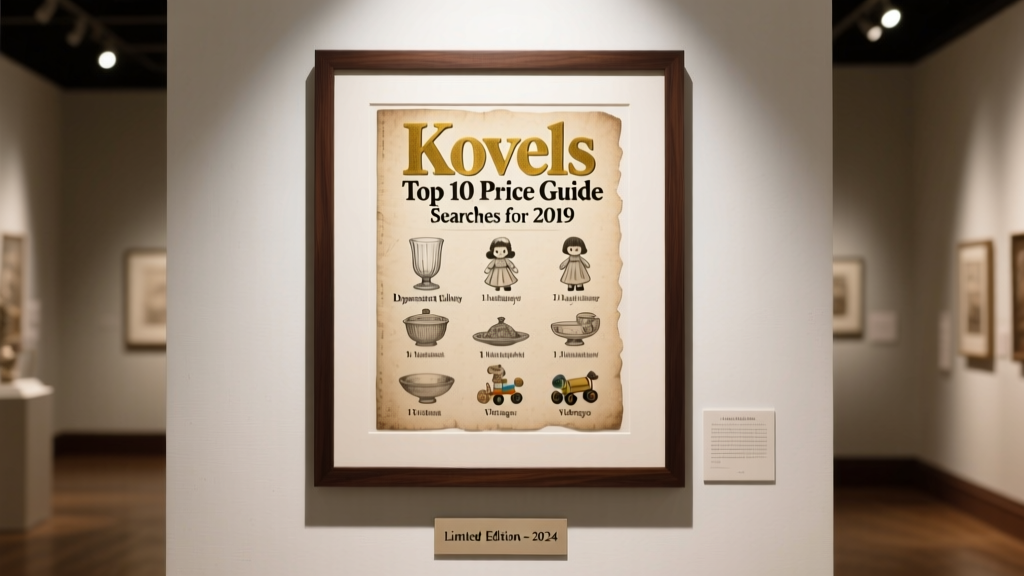
Kovels’ Top 10 Price Guide Searches for 2019: Market Trends, Authentication Insights, and Collector Intelligence
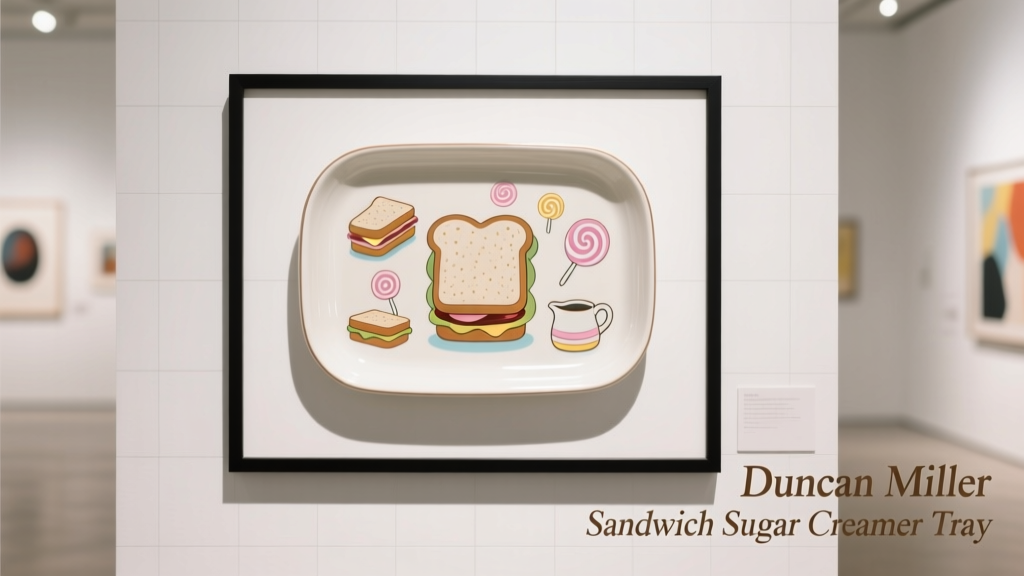
Duncan Miller Sandwich Sugar Creamer Tray: Authentication, Market Value, and Design Legacy

Nodders Andy Gump Bisque Figure: Authentication, Provenance, and Market Analysis of the 4-Inch '3' Variant
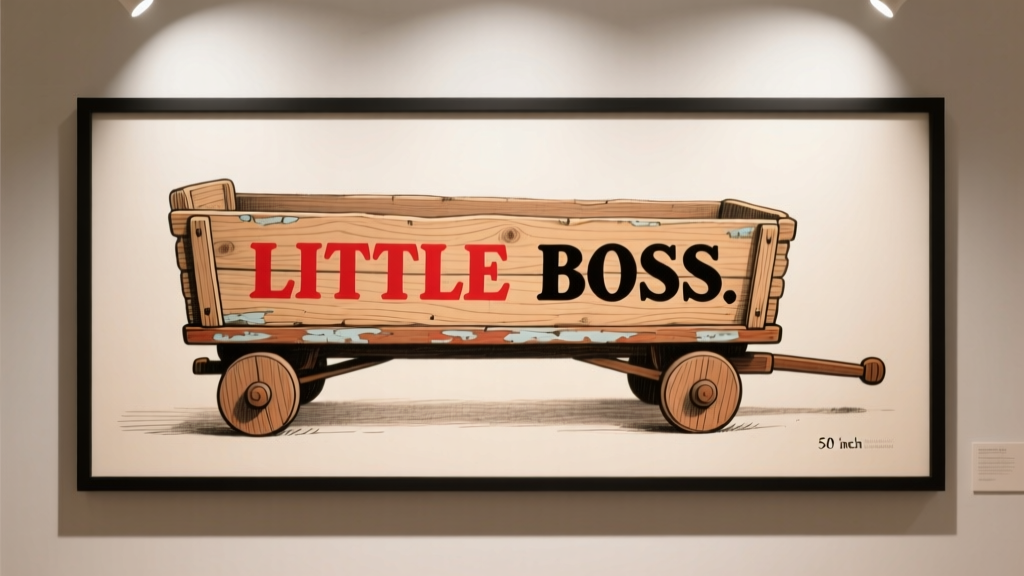
Toy Wagon 'Hand Drawn Little Boss' — Authentication, Provenance, and Market Analysis of the 50-Inch Red-and-Black Wooden Wagon
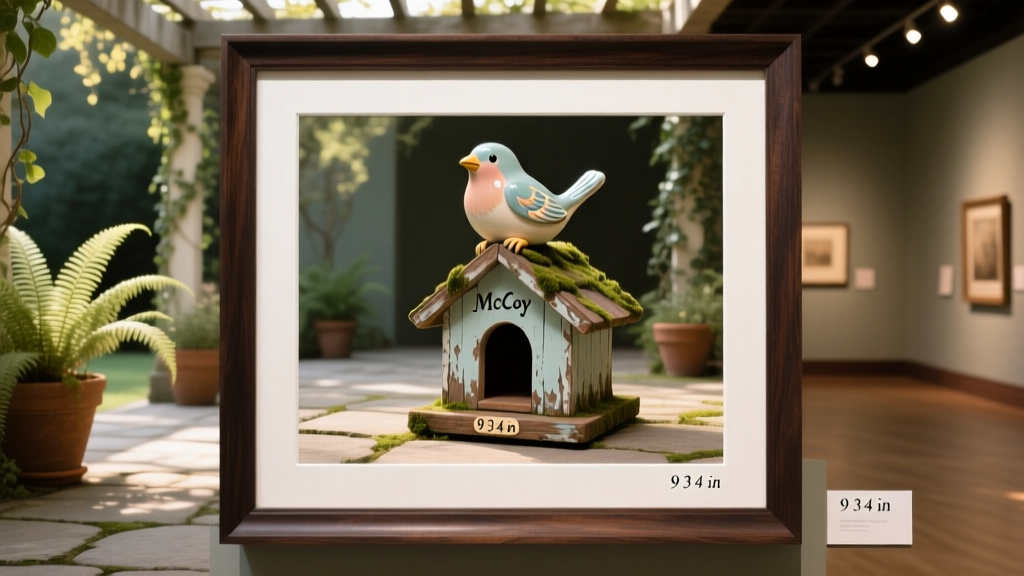
McCoy Cookie Jar 'Bird on Dog House' (9¾") — Authentication, Market Value, and Collector Insights
The Satin Skin Cream Sign: Authentication, Market Value, and Historical Context of a Mid-Century Cosmetic Artifact