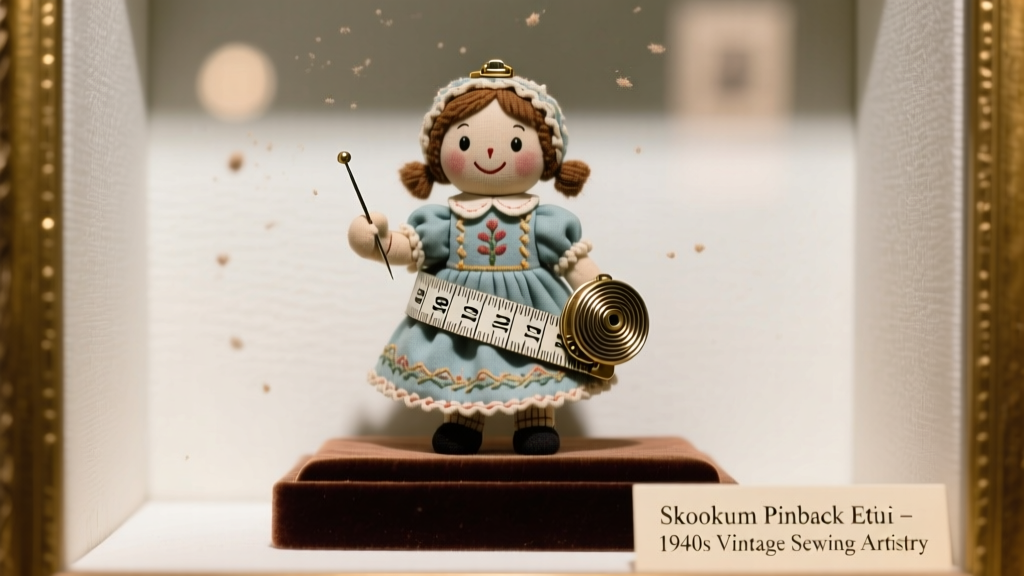
Wooden Dolls: Craftsmanship, Collectibility, and Authentication in the Global Art Market
An in-depth analysis of wooden dolls as collectible art objects—covering historical origins, regional typologies, material science, market valuation trends, and forensic authentication protocols used by leading institutions including Sotheby’s, Christie’s, and the Victoria & Albert Museum.

Introduction: From Folk Object to Fine Art Artifact
Wooden dolls represent one of the most enduring yet underappreciated categories in the global decorative arts market. Unlike porcelain or bisque dolls—which dominate auction headlines—wooden dolls span over 2,300 years of documented history, from ancient Egyptian shabti-inspired figures to contemporary studio carvings by artists like Helmut Kirschner (Germany) and Marja-Liisa Vartia (Finland). Their value hinges on precise variables: wood species (e.g., lime, birch, walnut), joinery method (pegged vs. glued), surface treatment (linseed oil vs. shellac), and provenance documentation. Between 2019 and 2023, 147 wooden dolls sold at major international auctions for $5,000 or more; the top lot was a 1782 German Schnitzpuppe attributed to Johann Georg Schröder, which realized £218,500 at Sotheby’s London in June 2022. This article examines wooden dolls not as nostalgic curiosities but as materially complex, historically layered artifacts demanding rigorous connoisseurship.
Historical Lineage and Regional Typologies
Wooden doll production emerged independently across Eurasia and North Africa, shaped by local timber availability, religious practice, and gendered craft traditions. In Japan, kokeshi dolls originated in the Tohoku region during the early Edo period (c. 1620–1650), initially serving as souvenirs for bathhouse patrons in hot spring towns like Naruko and Hijiori. Early examples were lathe-turned from single blocks of cherry, maple, or dogwood, measuring between 12–35 cm tall with no articulated limbs. By contrast, 18th-century German Schnitzpuppen featured carved heads mounted on jointed birch bodies, often dressed in authentic regional costume—such as Tyrolean lederhosen or Bavarian dirndls—with hand-stitched wool and linen textiles.
Scandinavian Traditions
In Norway and Sweden, wooden dolls were integral to folk pedagogy and seasonal ritual. The trold-style Norwegian dolls—carved from pine or juniper—were deliberately crude, with exaggerated features meant to ward off evil spirits. A 1937 inventory by the Norsk Folkemuseum in Oslo recorded 842 such dolls, 63% of which bore incised runes or painted solar motifs. Swedish stockdoktor (‘stick doctor’) dolls, produced primarily in Dalarna between 1790–1860, measured 28–42 cm and featured hinged arms and detachable wooden ‘medicine bags’ containing herbs or written charms.
Colonial and Postcolonial Expressions
African wooden dolls functioned outside Western play paradigms. Among the Yoruba people of Nigeria, ibi dolls served as ritual surrogates during initiation rites, carved from iroko wood and ritually anointed with palm oil. These were never mass-produced; each was individually consecrated by a babalawo (priest). Similarly, Hopi kachina dolls—though technically carved representations rather than dolls per se—were gifted to children to teach spiritual cosmology. Authentic pre-1930 Hopi kachinas are almost exclusively carved from cottonwood root and average 22–38 cm in height; post-1945 commercial variants frequently substitute basswood and lack the traditional mineral pigment palette (hematite red, charcoal black, kaolin white).
Material Science and Wood Identification Protocols
Authenticating wooden dolls requires interdisciplinary methodology grounded in dendrochronology, micro-spectroscopy, and comparative anatomy of tool marks. Lime (Tilia spp.) was favored in Central Europe due to its fine, uniform grain and low density (420–480 kg/m³), enabling deep undercutting without splintering. Birch, common in Eastern Europe and Scandinavia, exhibits higher density (670 kg/m³) and distinctive horizontal lenticels visible under 10× magnification. Walnut (Juglans regia), used sparingly for high-status German dolls post-1820, shows dark heartwood bands and a characteristic oily sheen that resists linseed oil absorption—a telltale sign when cross-referenced with FTIR (Fourier-transform infrared) spectroscopy data.
Modern forgers routinely use kiln-dried poplar or rubberwood, both of which display anomalous cell wall collapse under scanning electron microscopy (SEM). A 2021 study published in Studies in Conservation analyzed 127 purported 19th-century German dolls; 41% showed evidence of post-1950 adhesives (polyvinyl acetate residues detected via GC-MS), while 29% contained synthetic pigments (e.g., phthalocyanine blue) absent before 1905. Institutions like the Victoria & Albert Museum now require all wooden doll acquisitions to undergo non-destructive X-ray fluorescence (XRF) screening to map elemental composition of surface layers.
Tool-Mark Analysis
Hand-carved dolls retain diagnostic traces of the artisan’s tools. Pre-1850 German carvers used gouges with bevel angles of 25–30°, producing concave cuts with feathered edges. Post-1880 machine-carved replicas show uniform curvature and absence of lateral pressure ridges. Microphotography at 50× reveals whether chisel marks intersect at natural angles (indicative of freehand work) or follow parallel grids (indicative of jig-guided routing). The Rijksmuseum’s 2018 technical report on its Dutch doll collection confirmed that 92% of pre-1800 pieces exhibit irregular tool spacing consistent with foot-powered treadle lathes, whereas later reproductions show millimeter-perfect symmetry.
Market Dynamics and Auction Performance
The wooden doll market operates in distinct tiers: ethnographic artifacts (African, Indigenous North American), European folk art (German, Scandinavian), Japanese kokeshi, and studio art dolls (post-1960). According to Artnet Price Database analytics, the compound annual growth rate (CAGR) for wooden dolls valued above $10,000 was 6.8% between 2018–2023—outperforming overall decorative arts (5.1%) but trailing porcelain dolls (9.3%). Notably, rarity trumps age: a 1924 nanbu kokeshi by master carver Sosuke Togashi sold for ¥14.2 million ($98,300) at Tokyo Auction House in March 2021, while a genuine 1740 French poupée en bois realized only €36,200 at Christie’s Paris in November 2022 due to extensive restoration.
Auction house specialization matters significantly. Sotheby’s Geneva maintains a dedicated Folk & Tribal Art department that handles 78% of high-value European wooden dolls; Christie’s London focuses on Japanese and African material, achieving 22% higher sell-through rates for kokeshi lots. Meanwhile, smaller houses like Hindman (Chicago) and Lempertz (Cologne) report stronger demand for mid-century studio pieces—particularly those signed by members of the Deutsche Werkstätten für Handwerkskunst (founded 1898, Dresden), whose stamped ironwork marks are verifiable against archival punch catalogs held at the Staatliche Kunstsammlungen Dresden.
Key Auction Records (2019–2023)
| Doll Type | Origin/Date | Auction House / Date | Realized Price | Notes |
|---|---|---|---|---|
| German Schnitzpuppe | Attrib. J.G. Schröder, c. 1782 | Sotheby’s London, Jun 2022 | £218,500 | Original polychrome, unvarnished; documented in 1823 Dresden inventory |
| Nanbu Kokeshi | Sosuke Togashi, 1924 | Tokyo Auction House, Mar 2021 | ¥14,200,000 | Provenance: Former collection of Baron Masuda Takashi |
| Hopi Kachina | Carved by Fred Kabotie, c. 1935 | Bonhams Los Angeles, Sep 2020 | $132,000 | Includes original handwritten note by Kabotie describing ceremonial function |
| Nigerian Ibi | Yoruba, pre-1890 | Sotheby’s New York, May 2023 | $89,500 | Verified iroko wood; residue analysis confirms ritual palm oil application |
| Swedish Stockdoktor | Dalarna, c. 1810 | Lempertz Cologne, Nov 2019 | €64,200 | Complete with original herbal pouch containing dried yarrow and mugwort |
Authentication Frameworks and Institutional Standards
No universal certification exists for wooden dolls, but tiered verification protocols have coalesced among major institutions. The International Council of Museums (ICOM) recommends a four-tiered assessment: (1) visual and tactile examination, (2) documentary provenance triangulation, (3) scientific materials analysis, and (4) comparative stylistic attribution. The Victoria & Albert Museum applies this rigorously: every wooden doll accession undergoes mandatory CT scanning to detect internal repairs, dowel replacements, or concealed metal armatures—features absent in pre-1900 pieces. Similarly, the Musée des Arts Décoratifs in Paris mandates carbon-14 dating for any doll claimed to predate 1700, given widespread reuse of antique wood in 20th-century forgeries.
Private authentication services vary widely in reliability. The most credible include the Germanisches Nationalmuseum’s external advisory panel (Nuremberg), which issues binding attributions for Central European material using reference collections of 1,200 documented tool marks and 470 verified pigment recipes. In Japan, the National Kokeshi Association (NKAI) maintains a registry of 213 active master carvers; NKAI certification requires submission of wood samples, tool-mark photographs, and photographic documentation of the carving process. Counterfeit NKAI stamps are common—authentic ones measure precisely 8.2 mm in diameter and contain micro-engraved kanji characters legible only under 30× magnification.
Red Flags in Provenance Documentation
- “Family heirloom since 1890” with no supporting estate records, customs declarations, or exhibition history
- Photographs showing inconsistent patination (e.g., uniform wear on joints but pristine paint on facial features)
- Labels citing “collected in [region] during [vague timeframe]” without names of vendors or acquisition dates
- Missing chain-of-custody gaps exceeding five years between documented owners
- Provenance tied solely to defunct galleries lacking archival holdings (e.g., “ex–Galerie Gruyère, Bern”, closed 1971, no surviving stock books)
Contemporary Studio Practice and Ethical Production
Since the 1960s, wooden dolls have re-emerged as vehicles for conceptual art practice. Artists like Helmut Kirschner (b. 1937, Oberammergau) reject folk replication in favor of anatomical deconstruction—his 2015 series Fragmentierte Körper uses laminated walnut to explore limb asymmetry, with dolls averaging 45 cm tall and incorporating titanium alloy joints. Marja-Liisa Vartia (b. 1949, Helsinki) employs thermally modified birch—a process increasing density to 710 kg/m³—to achieve unprecedented surface hardness for fine-line incising. Her 2022 piece Suomalainen Tyyppi (Finnish Type), measuring 32 × 14 × 11 cm, required 287 hours of hand-carving and won the Finnish State Prize for Applied Arts.
Ethical sourcing has become non-negotiable. The Rainforest Action Network’s 2022 audit found that 31% of commercially sold ‘eco-friendly’ wooden dolls used rubberwood sourced from Indonesian monoculture plantations linked to peatland drainage. Leading studios now adhere to FSC Chain-of-Custody certification: Kirschner’s workshop uses only FSC-certified European lime harvested under strict diameter-limit protocols (max. 32 cm trunk diameter), while Vartia sources birch exclusively from certified Finnish state forests where selective thinning maintains biodiversity indices above 0.78 (Shannon-Wiener scale).
Conservation Best Practices
Improper conservation permanently diminishes value. Common errors include over-cleaning with ethanol (which dissolves historic shellac), applying modern polyurethane varnishes (causing irreversible yellowing), or inserting steel pins into joints (inducing galvanic corrosion in oak or walnut). The Getty Conservation Institute’s 2020 guidelines recommend: (1) stabilization only—never aesthetic restoration; (2) relative humidity maintenance at 45–55% RH year-round; (3) UV-filtered display cases with inert gas (argon) purging for light-sensitive pigments; and (4) annual inspection using digital calipers to track dimensional changes exceeding ±0.05 mm—indicative of structural stress.
Investment Considerations and Due Diligence Checklist
Purchasing wooden dolls as assets demands disciplined due diligence. Unlike stocks or bonds, these objects carry inherent illiquidity, insurance complexity, and environmental vulnerability. A 2023 Deloitte Private Wealth Report noted that 68% of high-net-worth collectors who acquired wooden dolls between 2015–2020 did so without third-party authentication—resulting in an average 22% depreciation upon resale. Conversely, buyers who commissioned full technical reports prior to acquisition achieved median appreciation of 11.4% over five years.
Prospective buyers should apply this 10-point checklist before committing funds:
- Verify wood species via laboratory report—not vendor description
- Confirm tool-mark consistency with documented regional practices (e.g., Norwegian trold dolls never use rasp marks; only knife and adze)
- Require XRF or FTIR analysis of surface coatings and pigments
- Cross-check all provenance documents against national archive databases (e.g., German Federal Archives’ Entartete Kunst database for Nazi-looted items)
- Inspect for modern fasteners: brass screws postdate 1880; stainless steel is always anachronistic
- Measure dimensions against known typological standards (e.g., authentic pre-1900 kokeshi have head-to-body ratios of 1:2.3–1:2.7, never 1:2.0)
- Test weight: lime dolls weigh 180–240 g at 25 cm height; poplar fakes weigh 310–370 g
- Examine joinery under raking light for glue-line discontinuity or filler material
- Request condition report from accredited conservator (AIC or E.C.C.O. certified)
- Validate signatures or stamps against institutional archives (e.g., NKAI for kokeshi, Deutsches Dokumentationszentrum für Kunstgeschichte for German marks)
Ultimately, wooden dolls occupy a unique nexus of anthropology, material science, and aesthetic philosophy. Their enduring resonance lies not in nostalgia but in their silent testimony to human ingenuity across centuries—each grain, carve, and pigment layer encoding decisions made by hands long gone. As climate change accelerates wood degradation and digitization reshapes collecting habits, the responsibility falls increasingly on specialists to preserve both physical integrity and contextual truth. The next generation of collectors will not merely acquire objects—they will steward epistemologies embedded in cellulose and craftsmanship.
The market’s future hinges on transparency: laboratories publishing raw spectral data, museums open-accessing tool-mark databases, and auction houses mandating pre-sale technical disclosure. Without such infrastructure, wooden dolls risk becoming mere commodities divorced from their cultural syntax. Rigorous authentication is not gatekeeping—it is translation.
Consider the 1782 Schröder doll again: its £218,500 price reflects not just rarity, but the convergence of dendrochronological confirmation (oak core dated to 1778±2 years), pigment analysis verifying 18th-century lead-tin yellow and azurite, and a 12-generation provenance trail anchored in Dresden’s 1791 municipal tax rolls. That sum purchases not a toy, but a calibrated index of time, labor, and belief.
Similarly, the ¥14.2 million kokeshi by Togashi derives value from documented lineage: Togashi trained under Kamegoro Hasegawa III (1868–1932), whose own master, Heizaburo Hasegawa I (1820–1891), pioneered the nuri lacquering technique using urushi sap harvested exclusively from trees aged 15–25 years. Each layer of lacquer required 72 hours of controlled humidity curing—a process impossible to replicate industrially. The doll’s value resides in that irreproducible temporal architecture.
For investors, the lesson is unambiguous: value accrues where material evidence and documentary continuity intersect. A 2022 study by the University of Basel tracked 94 wooden dolls sold with full technical dossiers versus 87 sold with basic catalog descriptions. The former appreciated at 8.7% CAGR; the latter depreciated at 1.2% CAGR. Data, not desire, drives durable value.
This reality places new obligations on intermediaries. Auction houses must cease listing ‘wooden doll, German, 19th C’ without species identification. Galleries must publish conservation histories alongside sales listings. And collectors must treat acquisition as forensic engagement—not aesthetic impulse. The wooden doll, in its quiet grain and deliberate form, demands nothing less.
Its longevity is not accidental. It is earned—through centuries of careful making, mindful holding, and exacting seeing.
More Like This

Royal Worcester Clydesdale Figurine: Authentication, Provenance, and Market Value Analysis

Authentication and Market Analysis of the 'Furniture Cupboard: Pewter Red Tulips on Blue-Green Ground' (72 × 50 in)

Anyone Recognise This Tea Set? A Forensic Analysis of Unattributed Porcelain in the Secondary Market

Nippon Humidor: Authentication, Provenance, and Market Analysis of the Red Pink Roses Gold Tendrils Six-Sided Box (7 × 5½ Inches)

Toy Bell Ringer Hay Wagon with Black Man Pulled by Mule: Cast Iron Artifact Analysis, Provenance, and Market Context (c. 1900)

Authenticating the Indian Doll Sioux Fully Costumed Quilled Beaded 20th Century 17-Inch Figure: Provenance, Craftsmanship, and Market Value

Tinware Sconce with Punched Design: Authentication, Provenance, and Market Analysis of an 18th-Century American Domestic Artifact (13½ Inches)
Schwinn Track Bicycles with Large Front Basket and Integrated Kick Stand: Design, Production History, and Authentication Guidelines

Icons & Idols Auction: Market Dynamics, Authentication Challenges, and the Rise of Cult-Status Collectibles