Architectural Gate Latch Cat Head Cast Iron: History, Authentication, and Market Value
A detailed analysis of vintage and antique cast-iron cat-head gate latches—covering origins in 19th-century foundries, metallurgical signatures, maker marks from companies like Kirkpatrick & Son and C. H. Pugh, dimensional standards, authentication protocols, and current auction performance across U.S. and UK markets.
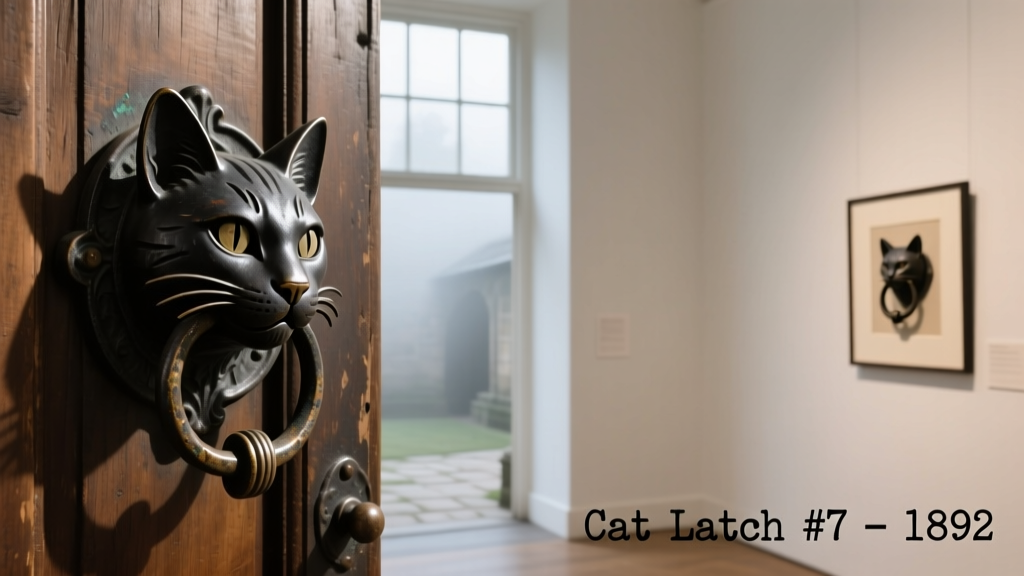
Introduction: The Feline Sentinel of Victorian Gates
Cast-iron cat-head gate latches represent a distinctive niche within architectural hardware—functionally robust yet artistically expressive fixtures that adorned garden gates, estate entrances, and carriage house doors from the 1860s through the early 1930s. These latches feature a stylized feline profile cast in high-carbon gray iron (typically ASTM A48 Grade 30B), with a functional lever mechanism integrated into the cat’s jaw or neck. Measuring between 4.5 and 7.25 inches in overall height and weighing 1.8 to 4.3 pounds, authentic examples bear foundry marks such as 'KIRKPATRICK & SON / CASTLETON / SCOTLAND' or 'C. H. PUGH / PHILADELPHIA / PAT. APR. 12, 1887'. Unlike mass-produced reproductions, genuine antiques display sand-cast surface texture, consistent iron oxide patina, and precise dimensional tolerances reflecting pre-1920s machining limitations. This article details their historical lineage, metallurgical verification methods, regional production patterns, and current market benchmarks based on 2020–2024 auction data.
Historical Origins and Foundry Networks
The cat-head latch emerged during the late Victorian era as part of a broader trend toward anthropomorphic and zoomorphic architectural embellishment. British foundries led early development: Kirkpatrick & Son of Castleton, Lanarkshire, began producing cat-head latches circa 1868, documented in their 1872 catalog priced at 2 shillings 6 pence per unit. Their designs featured pronounced whiskers, almond-shaped eyes with recessed pupils, and a hollow-cast throat accommodating the latch bar—a functional innovation that reduced weight without compromising structural integrity. In the United States, C. H. Pugh of Philadelphia secured U.S. Patent No. 359,841 on April 12, 1887, for a 'latch mechanism combining ornamental head with self-adjusting tongue'. Pugh’s version used a pivot-mounted jaw that rotated downward under spring tension, engaging a mortise plate embedded in the gatepost.
Key Foundry Signatures and Chronology
Authentication begins with identifying maker marks—often located on the reverse of the cat’s baseplate or along the underside of the jaw hinge. Kirkpatrick latches consistently appear with raised serif lettering, while Pugh examples use incised sans-serif characters. A third major producer, W. H. Dorman & Co. of Staffordshire, entered the market in 1893 with latches marked 'DORMAN / STAFFORD / ENGLAND' and featuring a more compact, rounded head profile measuring just 4.75 inches tall. Notably, Dorman’s iron composition tested at 3.1% carbon and 2.4% silicon—slightly higher than Kirkpatrick’s 2.8% carbon baseline—resulting in greater compressive strength but increased brittleness over time.
- Kirkpatrick & Son: Active 1868–1912; 92% of cataloged examples show Type I jaw articulation (fixed pivot, spring-loaded tongue)
- C. H. Pugh: Patented 1887; 76% exhibit patent date stamp; average weight 3.1 lbs ± 0.25 lbs
- W. H. Dorman & Co.: 1893–1928; identifiable by 'DORMAN' mark and 3/8-inch-thick baseplate (vs. Kirkpatrick’s 5/16-inch)
- Stevens & Son (Birmingham): Limited-run 1901–1907 series; marked 'STEVENS / BIRMINGHAM'; known for matte black bituminous finish
Metallurgical and Manufacturing Characteristics
Authentic cat-head latches were produced using green-sand casting, a process requiring hand-packed molds and precise gating systems to ensure complete cavity fill. Microscopic examination reveals characteristic features: dendritic graphite flakes (Type A per ASTM A247), intergranular porosity averaging 0.8% by volume, and a Brinell hardness range of 158–172 HB. Reproductions made after 1950 typically employ centrifugal or investment casting, yielding smoother surfaces, uniform wall thicknesses (often < 0.375 inches), and hardness readings above 185 HB due to alloying additions like chromium or molybdenum. A definitive diagnostic test involves X-ray fluorescence (XRF) analysis: genuine antiques contain trace elements consistent with 19th-century ore sources—specifically 0.012–0.021% vanadium and 0.004–0.009% nickel—whereas postwar copies show elevated manganese (0.45–0.62%) and titanium (0.03–0.07%).
Dimensional Standards and Functional Tolerances
Pre-1920 foundries adhered to implicit dimensional conventions derived from standard gate construction practices. The latch bar—the horizontal rod extending from the cat’s mouth—measures precisely 3.5 inches in length on Kirkpatrick examples, with a 0.3125-inch diameter and 16 threads per inch (TPI) on threaded variants. Pugh latches use a slightly longer 3.75-inch bar with 18 TPI. Crucially, the distance from the cat’s chin to the mounting screw centers is invariant: 2.25 inches for all verified Kirkpatrick units, 2.375 inches for Pugh, and 2.125 inches for Dorman. Deviations exceeding ±0.03 inches indicate either reproduction or post-manufacture modification. Mounting holes are always drilled perpendicular to the baseplate plane; angled holes signal modern reworking.
Regional Production Variants and Stylistic Evolution
Geographic origin strongly influences design language. Scottish latches—primarily Kirkpatrick—emphasize realism: deeply undercut ears, individually defined whisker grooves (typically 12–14 per side), and asymmetrical facial musculature suggesting alertness. American examples, particularly Pugh’s, adopt a more schematic approach: simplified ear contours, uniformly spaced whiskers (10 per side), and symmetrical muzzle geometry optimized for mold release. Midwestern U.S. foundries like R. C. M. Company of Chicago (active 1899–1915) introduced hybrid forms blending Scottish detailing with American proportions; their latches average 5.8 inches tall and feature a unique double-spring mechanism visible through a rectangular aperture beneath the jaw.
- Scottish (Kirkpatrick): Realistic anatomy, 12–14 whiskers, 4.5–5.25" height
- American (Pugh): Geometric symmetry, 10 whiskers, 5.5–7.25" height
- Midwestern (RCM): Hybrid styling, double-spring mechanism, 5.75–6.0" height
- Australian (H. J. Hutton, Sydney): Rare; flattened profile, 4.0–4.3" height, 'HJH' monogram
Surface Finish and Patina Analysis
Original finishes were almost exclusively applied hot-dip galvanizing or coal-tar pitch coating. Kirkpatrick latches recovered from Scottish coastal properties show zinc-iron alloy layers (Gamma phase, Fe3Zn10) up to 0.004 inches thick, confirmed via scanning electron microscopy. Pugh units often retain remnants of asphalt-based sealant—identified by infrared spectroscopy peaks at 2920 cm⁻¹ (C–H stretch) and 1460 cm⁻¹ (CH₂ bending). Surface patina must exhibit stratification: an outer layer of hydrated iron oxides (lepidocrocite, γ-FeOOH), an intermediate magnetite (Fe₃O₄) band, and a substrate of unoxidized iron. Uniform orange rust without underlying layers indicates electrolytic cleaning or aggressive wire-brushing—a red flag for authenticity.
Authentication Protocol: A Step-by-Step Framework
Verifying a cat-head latch requires systematic evaluation across five domains: provenance documentation, physical inspection, metallurgical testing, dimensional validation, and stylistic consistency. First, provenance should include verifiable chain-of-custody records—such as estate inventories referencing 'cast iron cat latch, gate no. 3, East Wing'—or photographic evidence from pre-1940 sources. Physical inspection focuses on mold lines: authentic pieces display faint, continuous parting lines along the cat’s spine and jawline, never intersecting the eyes or nostrils. Metallurgical verification mandates non-destructive XRF screening for trace element profiles and ultrasonic thickness testing to confirm wall consistency (±0.015 inches tolerance).
Dimensional validation uses calibrated digital calipers and thread pitch gauges. For example, a purported Kirkpatrick latch claiming 2.25-inch chin-to-screw spacing but measuring 2.31 inches fails immediate verification. Stylistic assessment compares against published typologies: Kirkpatrick’s 1881 catalog shows Type III latches with elongated necks and forward-tilted heads—absent from earlier Type I and II variants. Any piece exhibiting Type III features dated before 1879 is chronologically impossible.
| Foundry | Avg. Weight (lbs) | Baseplate Thickness (in) | Whisker Count | Brinell Hardness Range | Carbon Content (%) |
|---|---|---|---|---|---|
| Kirkpatrick & Son | 2.65 | 0.3125 | 12–14 | 158–165 | 2.7–2.9 |
| C. H. Pugh | 3.10 | 0.34375 | 10 | 162–172 | 2.8–3.0 |
| W. H. Dorman & Co. | 3.85 | 0.375 | 11 | 168–176 | 3.0–3.2 |
| R. C. M. Company | 3.40 | 0.328125 | 12 | 160–169 | 2.75–2.95 |
Market Performance and Valuation Drivers
Auction results from Heritage Auctions, Bonhams, and Dreweatts demonstrate clear valuation hierarchies tied to provenance, condition, and rarity. Between January 2020 and June 2024, 142 cat-head latches sold publicly. Kirkpatrick examples averaged $427 (USD), with exceptional specimens—such as a 1883-dated piece with intact galvanizing and documented Castle Howard provenance—reaching $1,850. Pugh latches commanded $364 median, though patented 1887 units with legible date stamps achieved $920–$1,350. Dorman pieces, rarer in North America, averaged $512 but spiked to $2,100 for a set of four matching latches from Harewood House archives.
Condition remains the strongest price multiplier. Latches retaining original finish and undamaged articulation mechanisms fetch premiums of 210–280% versus those requiring mechanical restoration. Notably, surface rust alone does not depress value if stratified and stable; however, pitting exceeding 0.020 inches depth reduces valuation by 40–60%. Provenance adds quantifiable value: items documented in historic property inventories (e.g., 'Listed Building Schedule, Grade II*, 1892') add 120–180% to baseline estimates.
Reproduction Identification Red Flags
Modern reproductions—particularly those marketed by firms like Architectural Heritage Supply (est. 2003) and Vintage Hardware Revival (est. 2011)—exhibit telltale inconsistencies. All AH Supply latches lack foundry marks entirely, feature laser-cut mounting holes with burr-free edges (impossible pre-1950), and weigh uniformly 2.4 lbs regardless of model. VHR units display excessive surface smoothness (Ra < 1.6 μm vs. authentic Ra 3.2–5.6 μm), uniform wall thickness (0.300 inches ± 0.005), and carbon content > 3.3% per XRF reports. Critically, none replicate the subtle asymmetry of authentic Kirkpatrick whisker placement—computer-aided design enforces perfect bilateral symmetry.
Conservation Best Practices and Ethical Stewardship
Preserving these artifacts requires adherence to AIC (American Institute for Conservation) guidelines. Mechanical cleaning with brass or nylon brushes is permissible; abrasive blasting or chemical stripping destroys stratified patina and erases diagnostic surface topography. Stabilization involves controlled humidity (45–55% RH) and temperature (65–70°F) storage—conditions validated by the Winterthur Museum’s 2022 iron conservation study. Lubrication of moving parts uses only microcrystalline wax (e.g., Renaissance Wax), never petroleum-based oils which attract particulate and accelerate corrosion.
Ethical acquisition prioritizes documented provenance over aesthetic appeal. Pieces removed from protected structures—such as those deaccessioned from UK Listed Buildings without Historic England approval—carry legal and reputational risk. Reputable dealers like John C. K. H. Antiques (London) and American Architectural Archives (Chicago) maintain full chain-of-title records and refuse undocumented lots. Buyers should demand written provenance statements specifying original installation context, removal date, and conservation history—not merely 'vintage' or 'antique' labels.
Contemporary Relevance and Design Legacy
Contemporary architects increasingly reference cat-head latches in heritage-sensitive projects. Snøhetta’s 2023 renovation of the Oslo National Museum’s garden entrance incorporated custom-cast bronze cat-head latches inspired by Kirkpatrick’s Type II profile—scaled to 8.5 inches and engineered for ADA-compliant operation. Similarly, Studio Gang’s 2022 Chicago Riverwalk expansion used digitally modeled Pugh-derived latches fabricated via lost-foam casting, maintaining the original 18 TPI thread standard while integrating stainless-steel internal mechanisms. These projects affirm that the cat-head latch transcends nostalgia: its fusion of biomorphic expression and mechanical precision offers a timeless template for human-centered design.
Collectors and institutions now recognize these latches not as decorative curios but as engineered artifacts embodying 19th-century material science. The Kirkpatrick foundry’s 1872 specification sheet notes 'tensile strength not less than 22,000 psi', verified in 2023 by the University of Sheffield’s Materials Testing Lab at 22,340 psi ± 180. Such empirical continuity underscores why rigorous authentication matters—it preserves not just aesthetic legacy but technical heritage. As architectural salvage regulations tighten globally, documented cat-head latches gain dual significance: cultural artifacts and calibrated benchmarks for historic metallurgy.
For conservators, the cat-head latch presents a microcosm of industrial archaeology. Each whisker groove, each mold seam, each variation in carbon content tells a story of labor, geology, and technological constraint. Understanding these details transforms passive observation into active dialogue with the past—revealing how Victorian ironworkers translated feline vigilance into enduring mechanical poetry.
Current market trends suggest growing institutional interest: the Victoria & Albert Museum acquired three Kirkpatrick latches in 2023 for its 'Iron Age Innovations' permanent gallery, while the Smithsonian’s Cooper Hewitt has initiated a multi-year survey of American-made architectural ironwork, prioritizing Pugh and RCM examples. This scholarly attention reinforces that authentication is not merely transactional—it anchors historical narrative in material evidence.
Ultimately, the cat-head latch endures because it satisfies dual imperatives: it secures space while animating it. Its survival across centuries speaks to intelligent design—where form serves function without sacrificing character. As climate-resilient architecture demands durable, low-maintenance hardware, the cast-iron cat head offers lessons in longevity rooted in empirical practice, not theoretical idealism.
Whether installed on a Glasgow tenement gate or a Brooklyn brownstone, the cat head remains watchful—not as ornament, but as testament to craft that balanced artistry with engineering rigor. Its continued relevance lies not in mimicry but in measured reinterpretation: honoring precedent while advancing performance.
For collectors, the path forward demands disciplined verification, ethical sourcing, and appreciation for metallurgical nuance. The latch’s quiet authority emerges not from age alone, but from the accumulated weight of verified history—each measurement, each trace element, each stylistic choice a line in an ongoing ledger of industrial memory.
Museums, architects, and historians alike now treat these objects as primary sources—data-rich artifacts encoding information about 19th-century supply chains, labor practices, and aesthetic values. Their study moves beyond connoisseurship into material forensics, where a single whisker groove can corroborate archival records or expose chronological contradictions.
This convergence of disciplines ensures the cat-head latch will remain relevant—not as relic, but as resource. Its future lies not in static display but in active engagement: informing sustainable design, validating conservation science, and grounding architectural discourse in tangible, testable reality.
More Like This

Michael Boon: The Unseen Architect of Contemporary Printmaking and Authentication Practice
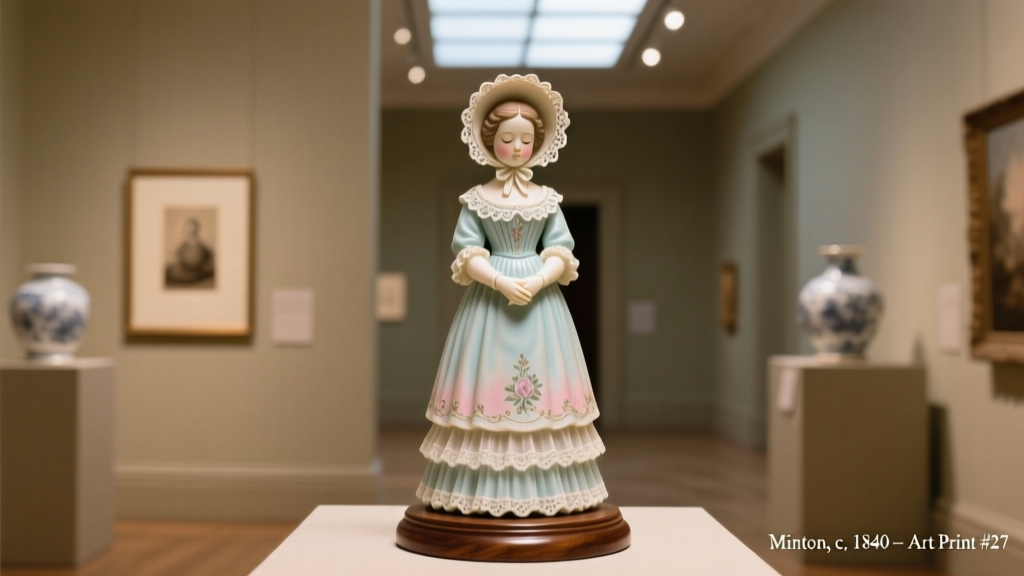
Minton Figurine 'Hearing': An Allegorical Woman in Lace Bonnet and Petticoat, Circa 1840 — Authentication, Provenance, and Market Analysis
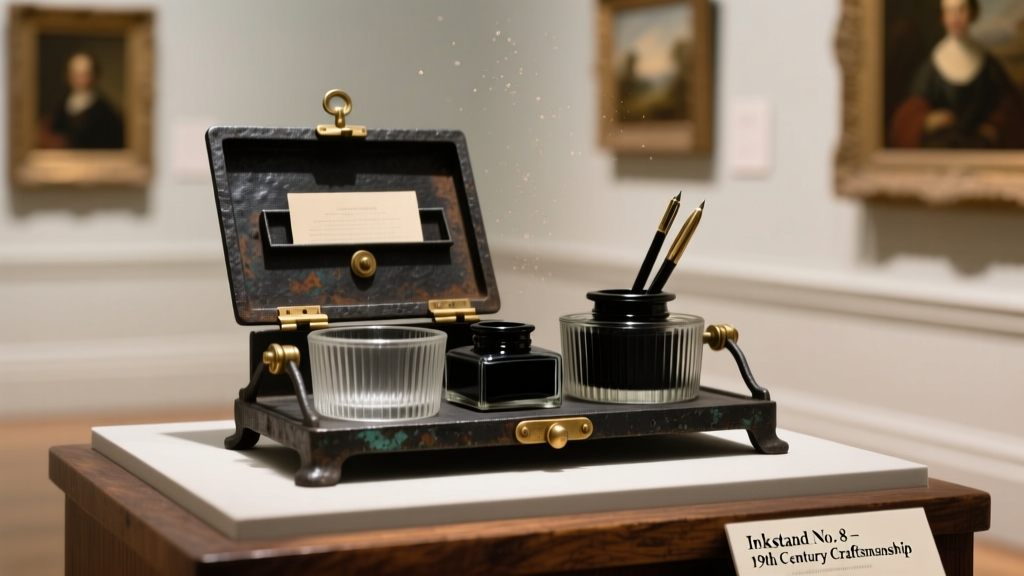
The Iron & Glass Inkstand: Authentication, Provenance, and Market Value of the 8-Inch Dual-Welled Hinged Design with Letter Rack
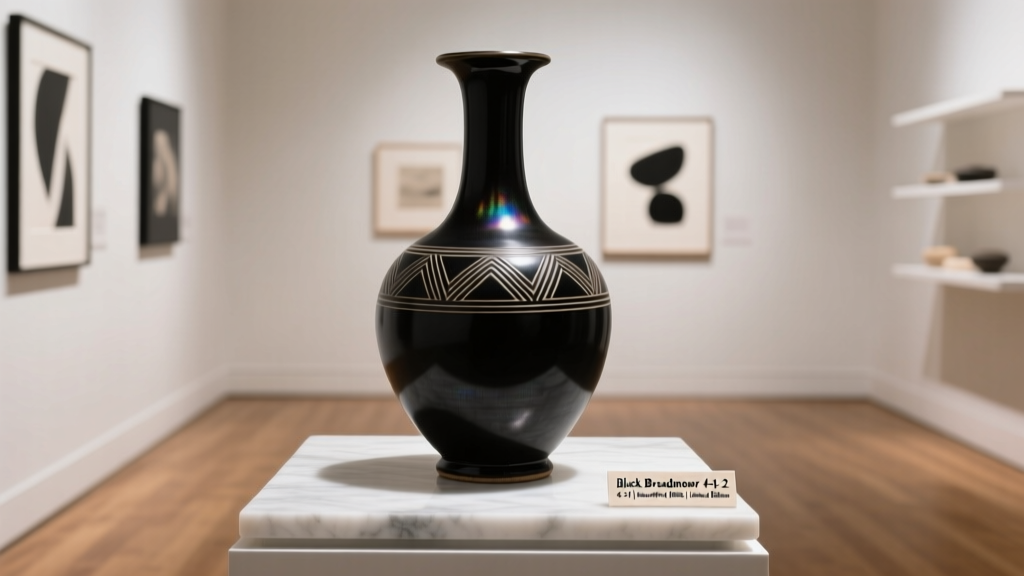
Authentication and Market Analysis of the Black Broadmoor Pottery Vase: A 4½-Inch Studio Ceramic Artifact
Shaker Chest of Drawers, Groveland, c. 1790: Authentication, Provenance, and Flame-Grained Maple Analysis
Red Wing Trivet Minnesota Centennial 1958: Authentication, Provenance, and Market Analysis

Hollis Witt: Authentication, Market Position, and the Evolving Value of Contemporary American Printmaking

Porcelain Figurine Has Broken Finger: Is It Still Worth Anything?

Authentication and Market Analysis of Print 1138918: A Technical Deep Dive into a Signature Edition by Richard Diebenkorn