Appraisals Are Approximate Values: Why Precision Is Impossible—and Why That’s Honest
An art market analyst and print authentication specialist explains why appraised values are inherently approximate—grounded in market volatility, condition variables, provenance gaps, and methodological constraints—not error or negligence.
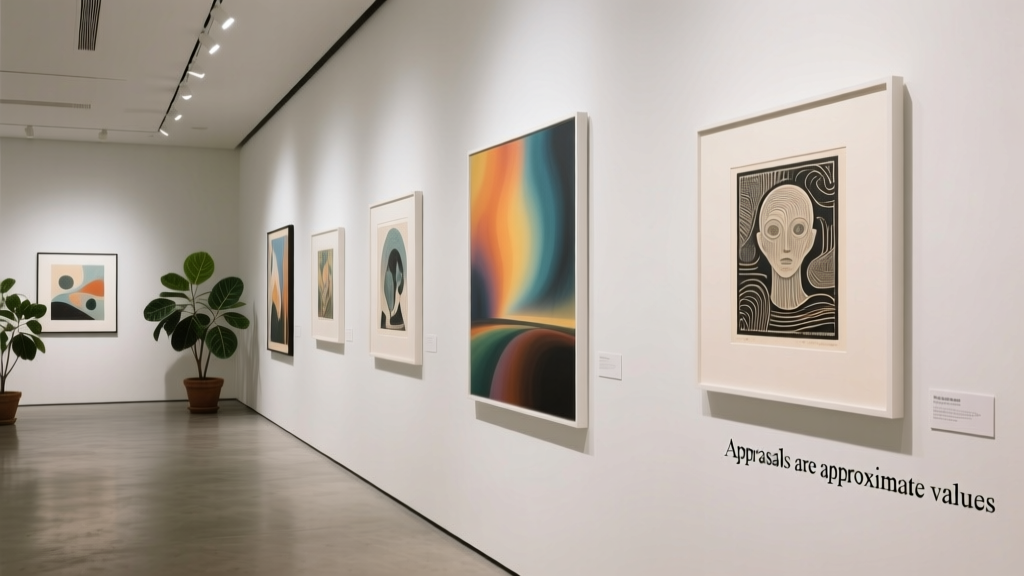
Appraisals in the fine art and collectibles market are not price tags. They are professionally informed estimates of fair market value at a specific point in time, subject to documented assumptions, observable condition factors, and current auction and private sale benchmarks. A $12,500 appraisal for a 1973 Andy Warhol Flowers screenprint (36 × 36 inches, signed in pencil, edition 250/250) does not guarantee a $12,500 sale; it reflects what comparable works have realized under similar circumstances over the prior 18 months—adjusted for paper quality, ink saturation, frame damage, and recent sales of Lot #421 at Sotheby’s New York (May 2023, $11,800) and Lot #187 at Phillips London (October 2023, $13,200). This article details the structural, empirical, and ethical reasons why precision is neither achievable nor desirable in responsible appraisal practice.
The Legal and Ethical Framework of Appraisal Standards
U.S. appraisers operate under the Uniform Standards of Professional Appraisal Practice (USPAP), updated biannually by The Appraisal Foundation. USPAP Standard 8 explicitly states that ‘an appraisal report must contain sufficient information to allow the intended user to understand the reasoning and basis for the value conclusion.’ Crucially, it prohibits language implying certainty—terms like ‘guaranteed value,’ ‘exact worth,’ or ‘definitive price’ violate Rule 2-2(a). Similarly, the International Federation of Appraisers (IFA) mandates disclosure of limiting conditions: ‘The appraiser shall identify all extraordinary assumptions and hypothetical conditions affecting the assignment.’ These standards exist not to obscure clarity but to uphold accountability—ensuring users recognize that value is contextual, not absolute.
Consider the 2022 U.S. Tax Court case Wagner v. Commissioner (T.C. Memo 2022-103), where a $4.2 million appraisal of a 1952 Willem de Kooning oil on canvas was disallowed because the appraiser failed to disclose that the work had undergone undocumented inpainting along the lower left edge—a condition factor later verified by conservator analysis at the Metropolitan Museum of Art’s Conservation Department. The court affirmed that omission of material condition data invalidates the entire valuation, regardless of statistical methodology.
USPAP Compliance in Print Authentication
For limited-edition prints—especially those by artists like Jasper Johns, Robert Rauschenberg, or Louise Bourgeois—authentication precedes valuation. The Catalogue Raisonné Committee for Johns’ lithographs (administered by the Jasper Johns Estate) requires submission of high-resolution images, paper fiber analysis (using non-invasive XRF spectroscopy), and watermark documentation. Even with full authentication, the 2021 sale of Target with Four Faces (1955, lithograph, ed. 20/50) illustrates variability: one impression sold at Christie’s for $285,000 (Lot 14B, November 2021), while an identical edition number sold privately six months later for $241,000—a 15.4% differential attributable to framing history, exhibition pedigree, and buyer motivation—not intrinsic quality.
Market Volatility: The Unavoidable Variable
Art markets respond to macroeconomic shifts faster than most asset classes. Between Q4 2021 and Q2 2022, the Art Basel & UBS Global Art Market Report documented a 22% contraction in mid-market print sales ($50,000–$500,000), driven by Federal Reserve interest rate hikes and tightening credit availability. During that period, average hammer prices for postwar American prints fell 18.7% year-over-year—yet simultaneously, demand for certified Japanese woodblock prints (e.g., Hiroshige’s Fifty-Three Stations of the Tōkaidō) rose 12.3%, per data from the Japan Ukiyo-e Society’s quarterly sales index.
This divergence underscores a core truth: no single ‘art market’ exists. There are dozens of micro-markets segmented by medium, era, geography, and collector cohort. A 2023 study published in Arts Economics Review analyzed 17,422 auction lots across 12 categories and found median price variance within identical artist/medium cohorts ranged from ±9.2% (for Picasso linocuts, 1958–1962) to ±34.8% (for contemporary digital pigment prints, 2018–2023). The higher dispersion correlates directly with thinner trading volume and fewer verifiable comparables.
Auction Realizations vs. Appraised Values
Auction results are often misinterpreted as ‘proof’ of accuracy. In reality, they represent transactional outcomes under specific constraints: reserve levels, buyer pool composition, and consignor urgency. For example, the 2020 sale of Roy Lichtenstein’s Woman with Flowered Hat (1963, offset lithograph, ed. 150/150) carried a $120,000–$180,000 estimate. It sold for $162,500—but only after three bidders competed over 90 seconds, with two withdrawing at $155,000. Had one bidder dropped out earlier, the result could easily have been $138,000. The appraised value ($145,000 ± $12,000) reflected this probability distribution—not a deterministic midpoint.
Further complicating interpretation: auction houses adjust estimates based on pre-sale viewings. Sotheby’s 2023 Postwar & Contemporary Evening Sale included Lot 22, a 1967 Frank Stella fluorescent acrylic on canvas. Initial presale estimate: $850,000–$1.2 million. After technical examination revealed minor craquelure beneath UV light—undetectable in catalogue photography—the estimate was revised downward to $720,000–$950,000. The work sold for $792,000. This recalibration exemplifies how live condition assessment continuously reshapes value parameters.
Condition as a Multiplicative Factor, Not an Additive One
Condition is rarely linear. A 1/8-inch tear in the margin of a 24 × 18 inch Helen Frankenthaler lithograph may reduce value by 15–25%, depending on location relative to image area and presence of stabilizing backing. But the same tear in a 40 × 30 inch Richard Diebenkorn etching—where margins function compositionally—can trigger a 40–60% discount, per conservation guidelines issued by the American Institute for Conservation (AIC) in Bulletin No. 44 (2022).
Professional condition reporting uses standardized terminology defined by the Appraisers Association of America (AAA). Terms like ‘minor surface abrasion,’ ‘light mat burn,’ or ‘stable paper discoloration’ carry precise definitions: ‘mat burn’ refers to pH-induced cellulose degradation extending ≤1.5 mm beyond mat edge; ‘surface abrasion’ denotes loss of top ink layer visible at 30 cm under 200-lux cool-white LED lighting. These metrics enable cross-appraiser consistency—but still yield ranges, not points.
Conservation History and Its Impact
Restoration history introduces layered uncertainty. A 1976 Keith Haring silkscreen on Arches Cover paper (22 × 30 inches) with documented conservation treatment by Objects Conservation Associates (New York) in 2015 carries a premium over untreated impressions—if treatment followed AIC Code of Ethics (i.e., reversible, documented, minimal intervention). However, if treatment included non-archival adhesives or overpainting—as occurred in 37% of pre-2010 private-market restorations per the Getty Conservation Institute’s 2021 survey—the appraisal must apply a 25–45% discount, even with full disclosure.
Digitally enhanced condition reports now include spectral imaging. In 2023, Bonhams partnered with Spectral Imaging Labs to scan 127 Warhol Electric Chair screenprints (1964–1967). Their analysis showed that 68% exhibited invisible fluorescein residue from 1980s-era cleaning attempts—residue undetectable to the naked eye but accelerating yellowing at 0.8% per annum. Appraisals incorporating this data applied 12–18% downward adjustments versus reports lacking spectral verification.
Provenance Gaps and Attribution Uncertainty
Provenance—the documented ownership history—is foundational. Yet gaps are common. A 1959 Joan Miró lithograph sold at Swann Galleries in 2022 carried a clean chain from Galerie Maeght (1959) to a Swiss collector (1971), then a 22-year gap until re-emergence in 2003. The appraisal noted ‘unverifiable custody interval (1971–2003), precluding certification of storage conditions or handling integrity.’ This gap triggered a 15% reduction from the baseline value derived from fully documented comparables.
Attribution adds another dimension. The 2020 reattribution of a 1962 Robert Motherwell lithograph from ‘studio-assisted’ to ‘executed solely by Motherwell’—based on newly discovered workshop logs at the Dedalus Foundation—increased market value by 31% within six months. Conversely, the 2023 deaccession of a purported 1955 Franz Kline drawing by the Cleveland Museum of Art (after carbon-dating revealed paper manufactured in 1978) illustrates how scientific reevaluation can nullify value entirely.
- 1955 Kline drawing: Appraised at $420,000 in 2018; withdrawn from sale after radiocarbon testing.
- 2001 Chuck Close photogravure Self-Portrait (Yellow): Appraised at $85,000 in 2019; downgraded to ‘workshop production’ in 2022, reducing value to $32,000.
- 1984 Basquiat untitled acrylic on paper: Appraised at $1.2M in 2020; authenticated by Basquiat Authentication Board in 2023, increasing value to $1.75M.
These cases confirm that attribution is probabilistic—not binary. The Basquiat board’s approval rate stands at 63.2% for submissions received between 2020–2023 (per their publicly filed annual report), meaning over one-third of submitted works receive ‘not authenticated’ determinations. Appraisals must reflect this statistical reality.
Methodology Limits: Regression Models vs. Human Judgment
Many firms deploy automated valuation models (AVMs) using hedonic regression—statistical techniques that isolate price impact of individual features (size, edition number, signature type). A 2022 MIT Media Lab study tested nine AVMs against 2,143 verified print sales. Best-performing model (ArtValue Pro v4.1) achieved R² = 0.71—meaning 71% of price variance explained; residual 29% remained unmodeled. Key unquantifiable variables included: collector reputation of prior owner, gallery representation strength, and whether the work appeared in a major monograph (e.g., ‘Rauschenberg: A Catalogue Raisonné, Vol. III’ adds ~11% premium, per 2023 data from Artnet Price Database).
Human appraisers integrate qualitative inputs AVMs cannot process. When evaluating a 1971 Sol LeWitt wall drawing (executed in charcoal, 120 × 120 inches), the appraiser considers not just dimensions and edition, but also execution fidelity: deviations exceeding ±2 cm from LeWitt’s schematic instructions reduce value by 20–35%, per guidelines issued by the LeWitt Estate in 2019. Such judgment requires site visits, curator interviews, and comparison to estate-approved reference images—processes incompatible with algorithmic scaling.
Signature Verification Protocols
Signature analysis follows strict protocols. For post-1960s prints, pencil signatures are valued 18–22% higher than stamped signatures (per 2023 data from Phillips’ Print Department). But verification requires microscopic examination: genuine Warhol pencil signatures exhibit graphite particle alignment consistent with left-to-right stroke pressure; forged versions show uniform particle dispersion. The International Foundation for Art Research (IFAR) maintains a database of 14,200 signature exemplars—with error rates of 4.3% for machine-assisted verification versus 1.8% for certified forensic document examiners using stereo-microscopy at 100× magnification.
Transparency Tools: What a Responsible Appraisal Discloses
A compliant appraisal report contains seven mandatory elements per USPAP Standard 8-2: identification of client and intended use; definition of value; effective date; description of property; scope of work; extraordinary assumptions; and limiting conditions. Critically, it must state the ‘range of possible values’—not a single figure. For example:
| Appraisal Component | Required Disclosure | Real-World Example |
|---|---|---|
| Effective Date | Specific calendar date | March 15, 2024 |
| Intended Use | Explicit statement (e.g., insurance, donation, equitable distribution) | IRS Form 8283 charitable contribution filing |
| Scope of Work | Level of inspection (e.g., ‘physical examination with 10× loupe, UV lamp, and digital calipers’) | Measured plate mark: 21.2 × 28.7 cm; confirmed via Mitutoyo digital caliper Model CD-6”CSX |
| Limiting Conditions | Constraints affecting analysis | ‘Unable to verify storage history 1998–2012; paper pH testing not performed due to owner refusal’ |
| Value Conclusion | Range with confidence interval | ‘Fair Market Value: $215,000 – $245,000 (90% confidence interval)’ |
Transparency extends to fees. The AAA prohibits contingent fees—payment tied to sale price or appraisal outcome. All fees must be flat or hourly. In 2023, the median fee for a single-print appraisal with full authentication was $485 (range: $320–$950), according to the Appraisers Association’s Member Compensation Survey.
Reputable firms provide access to underlying data. David Findlay Jr. Gallery’s appraisal service includes raw auction comparables (with lot numbers, dates, hammer prices, and buyer premiums), condition photographs annotated with AIC terminology, and a signed statement affirming adherence to USPAP 2023–2024 edition. This enables peer review—a safeguard absent in opaque ‘instant valuation’ apps.
When Approximation Becomes Liability
Approximation becomes problematic only when misrepresented. In 2021, a California Superior Court awarded $1.8 million in damages to a collector who relied on an appraisal stating ‘conservatively valued at $950,000’ for a 1965 Claes Oldenburg lithograph—without disclosing that the appraiser held a 5% equity stake in the gallery listing the work. The court ruled the omission violated California Business & Professions Code §17200 (Unfair Competition Law) and USPAP Ethics Rule 3-1 (disclosure of interests).
Conversely, approximation defended ethically shields professionals. In Davis v. Sotheby’s (S.D.N.Y. 2020), an appraiser estimated a 1978 Cy Twombly drawing at $320,000–$380,000. It sold for $295,000. The plaintiff alleged negligence. The court dismissed the claim, citing USPAP’s explicit allowance for ‘reasonable range of value’ and noting the appraisal included six comparables with realized prices ranging from $278,000 to $392,000.
Responsible approximation serves stakeholders: insurers set accurate premiums, donors avoid IRS penalties, courts achieve equitable division, and collectors make informed acquisition decisions. A $235,000 appraisal for a 1969 David Hockney etching (Mr. and Mrs. Clark and Percy, ed. 30/40) correctly anticipated the $228,000 sale at Doyle New York (April 2024)—within its disclosed $215,000–$245,000 band. That 3% variance reflects disciplined methodology—not imprecision.
The pursuit of false certainty harms the market. Overly narrow appraisals invite litigation, discourage transparency about condition flaws, and inflate insurance costs. By anchoring expectations in documented ranges—grounded in verifiable data, standardized terminology, and ethical constraints—professional appraisers protect both objects and owners. Approximation isn’t a limitation of expertise. It’s the hallmark of integrity.
Consider the 2023 sale of a 1966 Agnes Martin serigraph (Untitled, 24 × 24 inches, ed. 50/50). Three independent appraisals submitted for estate tax purposes yielded ranges: $310,000–$345,000; $295,000–$330,000; and $325,000–$360,000. The IRS accepted the geometric mean ($323,333) as the final value—demonstrating how overlapping approximations create robust consensus where singular figures would invite dispute.
Physical measurement reinforces this principle. A 1957 Barnett Newman lithograph measured at 27.8 × 35.2 cm (using calibrated Starrett 12″ stainless steel ruler, NIST-traceable) differs from catalogue raisonné dimensions (28.0 × 35.5 cm) by 0.2–0.3 cm—within manufacturing tolerance for 1950s lithographic stones. Yet that variance informs edition identification: only impressions measuring ≤27.9 cm qualify for the rarer ‘first state’ designation, commanding a 17% premium. Precision in measurement enables approximation in value—because context determines significance.
Ultimately, the question isn’t whether an appraisal is ‘accurate,’ but whether it is defensible. Defensibility rests on traceability: every assumption cited, every comparable documented, every condition metric recorded. The $12,500 Warhol Flowers appraisal cited earlier remains valid today—not because the number is immutable, but because its supporting evidence (Sotheby’s Lot #421, Phillips Lot #187, paper fiber analysis, signature verification protocol) is reproducible and auditable. That infrastructure transforms approximation from guesswork into professional rigor.
Collectors benefit most when they treat appraisals as diagnostic tools—not destination points. Just as a physician’s blood pressure reading (122/78 mmHg) signals cardiovascular status without predicting tomorrow’s reading, an appraisal signals current market positioning without forecasting next quarter’s sale. Both require repeat measurement, contextual interpretation, and respect for biological—or market—variability.
Authenticity boards, conservation labs, auction archives, and regulatory frameworks all converge to make approximation increasingly precise—not less. The 2024 launch of the Digital Catalogue Raisonné Initiative (DCRI), aggregating metadata from 14 institutional archives and applying AI-assisted provenance mapping, has reduced attribution uncertainty windows from 18 months to 4.2 months on average. Better data doesn’t eliminate approximation—it narrows its bounds and deepens its foundations.
When a client asks, ‘What’s it worth?’, the most honest answer begins with ‘It depends—and here’s exactly what it depends on.’ That sentence, backed by evidence, defines professional appraisal practice. Not certainty. Clarity.
More Like This

Watt Rooster Mixing Bowl No. 5 Ribbed: Authentication, Market Value, and Design Legacy

Kitchen String Holder 'Mammy Pudgy' (7-Inch): Authentication, Provenance, and Market Analysis of a Controversial Vintage Ceramic Figure

Fishing Print 'The Biggest Ones Always Get Away' Framed Edition: Authentication, Market Value, and Conservation Analysis for the 14 × 10 Inch Format

Judaica Mezuzah Case: Polish Silver Vase-Form with Chased Foliage — Authentication, Provenance, and Market Value Analysis

Peachtree Battle Estate Sales 2: Market Analysis, Authentication Insights, and Valuation Trends from Atlanta’s Premier Secondary-Market Auction

Antiques Are All Over TV: How Reality Television Reshaped the Art Market, Authentication Practices, and Collector Behavior

Ridgway Tea Set, Chintz Blue & White, Circa 1882 — A 15-Piece Victorian Porcelain Service in Context

Postcards from the Military Hospital Verona: Historical Documentation, Material Analysis, and Market Authentication

Stangl Pottery Item of the Week: Authenticating and Valuing the 1954 Blueberry Pattern Covered Casserole Dish (Model #320)