Antiques Advice: Practical Guidance for Collectors, Buyers, and Heirloom Stewards
A field-tested, evidence-based resource for identifying, authenticating, valuing, and preserving antiques—from 18th-century English porcelain to mid-century American furniture. Includes verifiable metrics, brand-specific hallmarks, conservation benchmarks, and market trends from 2020–2024.
Antiques advice must be grounded in empirical observation—not anecdote or intuition. This article delivers actionable, field-validated guidance for buyers, sellers, estate administrators, and family stewards handling objects dating from 1600 to 1970. We cover authentication red flags (e.g., mismatched silver hallmarks on a purported 1742 Paul de Lamerie teapot), measurable conservation thresholds (relative humidity below 45% risks cracking walnut veneer), and current auction performance data: Sotheby’s 2023 London sale saw a 1768 Chelsea porcelain figure realize £212,000—27% above low estimate—while a misattributed 1920s 'Tiffany' lamp sold at Heritage Auctions for $18,500, later confirmed as a 1970s Loevsky reproduction. All recommendations align with standards published by the International Institute for Conservation (IIC) and the Appraisers Association of America (AAA).
Authentication Fundamentals: Beyond Surface Inspection
Authenticating antiques requires layered verification—not just visual assessment but material science, provenance triangulation, and contextual consistency. A single anomaly can invalidate attribution. For example, genuine Meissen porcelain from 1725–1750 bears cobalt-blue crossed-swords marks applied underglaze; overglaze versions postdate 1756 and indicate later decoration. Similarly, original Chippendale mahogany armchairs feature hand-cut dovetails with 12–14 pins per inch and no machine-planed surfaces—visible under 10x magnification. In contrast, reproductions made after 1920 often use steam-bent maple frames with uniform 6-mm screw holes.
Key Hallmark Databases and Verification Tools
The Silver Marks Database (silvermakersmarks.co.uk) catalogs over 42,000 British assay office stamps, including date letters specific to each location: Sheffield used an italic ‘o’ for 1891, while Birmingham employed a shield-shaped ‘o’ the same year. For American silver, Gorham Manufacturing Company’s ‘lion-anchor-G’ hallmark was registered in 1865 and remained unchanged until 1950—making any piece bearing that mark dated before 1865 definitively counterfeit. The Victoria & Albert Museum’s online Ceramics Collection provides high-resolution images of period-specific glaze flaws: 18th-century Staffordshire slipware exhibits intentional ‘crazing’ due to thermal shock during firing—a controlled defect absent in modern fakes.
Thermoluminescence (TL) testing remains the gold standard for ceramic dating. Laboratories like Oxford Authentication Ltd. require a 100–200 mg sample drilled from an inconspicuous area (e.g., base rim). TL measures accumulated radiation since last firing; results carry ±15% margin of error. A 2022 audit of 1,247 TL reports found false positives occurred in only 2.3% of cases when samples were taken correctly—underscoring the necessity of professional sampling.
Provenance Documentation Standards
Provenance is not merely a list of prior owners—it’s a chain of verifiable custody supported by primary-source documentation. AAA guidelines mandate three independent documents for high-value items (>£25,000): (1) a signed bill of sale or inventory record contemporaneous with ownership transfer, (2) photographic evidence showing the object in situ (e.g., a 1932 photo of the Duke of Windsor’s study featuring a documented George II giltwood mirror), and (3) archival correspondence referencing the item by description or inventory number. Without all three, provenance is considered ‘partial’ and reduces valuation by 30–50% at major houses.
Estate records are especially vulnerable to gaps. A 2021 study of 847 probate inventories from the UK National Archives revealed that 68% omitted measurements, 41% failed to distinguish between ‘mahogany’ and ‘stained pine,’ and only 12% included maker’s labels. When evaluating inherited pieces, cross-reference against historic trade directories: Wright’s London Directory listed 37 cabinetmakers operating on St. Martin’s Lane in 1785—only 9 of whom stamped their work, and just 3 (Thomas Chippendale, William Vile, and John Cobb) used consistent, documented marks.
Red Flags in Provenance Claims
- ‘Inherited from a European noble family’ without named lineage, dates, or estate sale records
- Photographs with inconsistent lighting or digital artifacts (e.g., JPEG compression halos around edges indicating photo manipulation)
- Letters referencing ‘the blue vase’ instead of descriptive identifiers (height, glaze type, maker’s mark)
- Provenance ending abruptly in 1945–1955—coinciding with widespread postwar dispersal and undocumented sales
Market Realities: 2020–2024 Trends
Auction data from Artnet Price Database and Art Market Research shows divergent trajectories across categories. While 18th-century English silver rose 19% in average hammer price (2020–2024), mid-century Danish teak sideboards declined 12%—driven by oversaturation (over 14,200 listed on 1stdibs in Q2 2024) and material fatigue (teak oil depletion causing surface microfractures in >60% of pieces over 50 years old). Crucially, condition now outweighs rarity: a fully intact 1770s Worcester porcelain dinner service sold for £147,000 at Bonhams in March 2024, whereas a rarer but heavily restored 1745 Derby ‘Goat and Bee’ tureen realized only £38,200.
Geographic demand shifts are quantifiable. U.S. buyers accounted for 44% of all pre-1800 English furniture purchases at Christie’s London in 2023—up from 29% in 2019—driven by tax incentives for cultural property imports. Conversely, Chinese collectors reduced acquisitions of Qing dynasty ceramics by 63% following 2022 export restrictions, redirecting focus to Republican-era cloisonné (1912–1949), where prices surged 89%.
Auction House Commission Structures
Understanding buyer’s premiums and seller’s fees is essential to net valuation:
- Sotheby’s: 25% on first $500,000; 20% on next $500,000; 12% thereafter
- Christie’s: 26% up to $300,000; 21% to $3 million; 12.5% above
- Bonhams: Flat 22.5% for most categories, but 18% for books and manuscripts
- Heritage Auctions: 19.5% for antiques, plus $250 cataloging fee per lot
These fees directly impact reserve pricing. A dealer consigning a George III satinwood commode valued at £85,000 must set a reserve ≥£104,125 to net £85,000 after Sotheby’s commission—meaning the hammer price must exceed that threshold for the consignor to receive full value.
Conservation Benchmarks: Science-Based Preservation
Improper storage causes irreversible damage. The Getty Conservation Institute’s 2023 Environmental Monitoring Project tracked 2,140 antiques across 14 private collections and found that 73% experienced measurable deterioration within 18 months when stored at RH >60% or <35%. Specifically: walnut veneer cracked at 32% RH (±2%), brass corroded at >55% RH with airborne chlorides, and silk damask faded 3.2 times faster at 200 lux vs. 50 lux illumination. These thresholds are not theoretical—they’re derived from accelerated aging tests using ASTM D4303-22 protocols.
Light exposure limits are precise. According to ISO 11799:2015, organic materials (textiles, paper, leather) require ≤50 lux for display and ≤5 lux for storage. UV radiation must be filtered to <75 µW/lm. Unfiltered daylight exceeds 300 µW/lm—making south-facing windows hazardous. For reference, a standard LED museum spotlight emits 42 µW/lm at 1-meter distance when fitted with UV-absorbing glass.
Safe Cleaning Protocols by Material
- Brass: Use pH-neutral 2% ammonium citrate solution (pH 6.8) applied with cotton swab; rinse with deionized water; dry immediately. Never use vinegar (pH 2.4) or abrasive polishes—these remove 5–8 µm of patina per application.
- Mahogany: Wipe with 99.8% isopropyl alcohol on microfiber; avoid water-based cleaners, which raise grain and swell wood fibers by 12–15%.
- Porcelain: Soak in warm distilled water (max 35°C) for ≤10 minutes only if crazing is absent. Cracked glaze absorbs water, accelerating salt crystallization beneath the surface.
| Material | Max Safe RH Range | Temp Range (°C) | Annual Light Exposure Limit (lux-hours) |
|---|---|---|---|
| Walnut Veneer | 45–55% | 16–22 | 1,200,000 |
| Silk Damask | 48–52% | 14–18 | 250,000 |
| Silver Plate | 35–45% | 15–20 | Unlimited (no UV) |
| Leather Binding | 40–50% | 15–19 | 300,000 |
| Lead Crystal | 40–60% | 16–24 | Unlimited |
Valuation Methodology: Appraisal Standards in Practice
Professional appraisals follow Uniform Standards of Professional Appraisal Practice (USPAP) and require three distinct approaches: (1) Comparable Sales Analysis (CSA), (2) Cost Approach (for repairable damage), and (3) Income Approach (rare for antiques, used only for income-generating objects like leased historic properties). CSA dominates for 92% of antiques appraisals. Effective CSA requires five comparables within 24 months, within 150 miles (for regional styles), and matching ≥4 of 7 criteria: maker, date range, material, dimensions (±5%), condition grade, provenance strength, and decorative technique.
For example, valuing a 1925 Émile-Jacques Ruhlmann lacquered dressing table requires locating recent sales of his documented works—not generic ‘Art Deco’ lots. In Q1 2024, a Ruhlmann table with identical dimensions (H 78 cm × W 122 cm × D 48 cm), signed ‘E. J. Ruhlmann Paris,’ sold at Sotheby’s New York for $412,000. Two other tables—unsigned but with matching marquetry patterns and provenance to the 1925 Exposition des Arts Décoratifs—sold for $287,000 and $314,000. A fourth, unsigned and lacking provenance, realized $168,000. The $244,000 spread demonstrates how attribution precision drives value.
Condition grading follows the AAA’s 10-point scale, where ‘10’ means museum-quality, unaltered, with original finish and no repairs. Critical thresholds exist: a chip <2 mm on porcelain reduces grade by 1 point; loss of gilding >10% drops grade to ≤6; structural instability (e.g., loose joints in chairs) caps grade at 4 regardless of aesthetics. In 2023, 68% of antiques submitted to AAA-accredited appraisers received grades ≤5 due to undocumented restorations—often involving non-reversible adhesives like epoxy resin, which yellow and become brittle within 20 years.
When to Seek Specialist Intervention
Not every antique warrants expert consultation—but certain triggers do. Contact a conservator certified by the American Institute for Conservation (AIC) if: (1) the object shows active deterioration (e.g., ‘bronze disease’—white powdery corrosion on copper alloys), (2) previous restoration used modern materials (polyester resin, acrylic paint), or (3) you plan to alter the object (refinishing, reupholstering). AIC-certified professionals adhere to the Code of Ethics requiring minimal intervention and full reversibility.
For authentication, engage specialists accredited by the International Society of Appraisers (ISA) or the Royal Institution of Chartered Surveyors (RICS). ISA requires 1,000 hours of documented specialty experience—e.g., a porcelain specialist must have handled ≥500 documented Meissen, Sevres, or Chelsea pieces. RICS-accredited valuers undergo biennial peer review of 10 appraisal reports, with rejection rates averaging 17% for noncompliance with UK HMRC’s CGT guidelines.
Legal counsel becomes necessary when antiques intersect with international law. The UNESCO 1970 Convention prohibits import of cultural property illegally exported after that date. U.S. importers must file CBP Form 4457 with Customs and Border Protection for objects valued >$2,500—requiring photographs, measurements, and a notarized statement of origin. Failure incurs penalties up to triple the object’s value. In 2022, a collector paid $1.2 million in fines after attempting to import a 17th-century Mughal jade cup without proper documentation, later confirmed to have left India in 1973.
Practical First Steps for New Collectors
Begin with focused acquisition—not broad collecting. Select one category (e.g., English silver tea services, 1740–1790) and master its markers: hallmark sequences, common forms (e.g., ‘hogarth’ feet on early George II pieces), and typical wear patterns (tea stains inside spouts, thumbprint indentations on handles). Allocate 70% of initial budget to education: purchase English Silver Hallmarks, 1300–1800 (Sheila M. Cottam, 2021, ISBN 978-0-9566144-4-7), subscribe to The Silver Society Journal, and attend two annual events—the Silver Society Conference (London, October) and the Antique Dealers’ Association Fair (Manchester, June).
Start small: acquire a documented 1785–1795 Hester Bateman sugar caster (typical height: 12.7 cm; weight: 210–235 g). These regularly sell between £4,200–£6,800 at provincial auctions—low risk, high learning yield. Avoid ‘investment-grade’ claims: only 11% of antiques held for 10+ years outperformed UK inflation (2.8% avg. annual CPI, 2014–2024), per a 2024 Barclays Wealth analysis of 3,812 estates.
Document everything digitally. Use standardized fields: Maker (exact spelling per hallmark registry), Date Letter (with assay office), Dimensions (cm, three decimals), Weight (g, calibrated scale), Condition Notes (using AAA terminology), and Photo Timestamp (EXIF data preserved). Store backups on two encrypted offline drives—one kept offsite. Digital decay is real: 43% of JPEG files from 2005–2010 showed metadata corruption in a 2023 Library of Congress audit.
Finally, recognize emotional bias. A 2022 Yale School of Management study found collectors overvalue inherited objects by 41% on average versus identical market comparables. Counter this by scheduling third-party appraisals before insurance scheduling or estate division—and never rely on free online estimates, which exhibit median error rates of 217% according to the Appraisers Association’s 2023 Validation Study.
Antique stewardship demands rigor, humility, and continual learning. It is not about possession, but responsibility—to history, to craft, and to future custodians. Every measurement recorded, every hallmark verified, every RH reading logged contributes to a legacy more durable than the objects themselves. That discipline separates enduring value from ephemeral trend.
The 1768 Chelsea figure that sold for £212,000 did so because its cobalt signature matched the studio’s 1767–1769 palette shift, its base bore a faint pencil inscription linking it to the 1812 Greville Collection inventory, and its storage history included 47 years in a climate-controlled vault meeting ISO 11799:2015 Class B specifications. These are not coincidences. They are the result of deliberate, evidence-based practice—available to anyone willing to apply it.
Similarly, the misattributed ‘Tiffany’ lamp’s $18,500 sale reflects a failure in due diligence: its solder joints measured 0.8 mm uniformity (vs. Tiffany’s hand-soldered 0.3–0.6 mm variance), its glass exhibited 1970s manganese-doped opalescence (not 1905–1920s arsenic-based), and its base lacked the ‘L.C.T.’ stamp—present on 99.7% of authenticated Tiffany bases per the Charles Hosmer Morse Museum’s 2022 technical survey.
Knowledge is the most valuable patina. It deepens with use, resists erosion, and appreciates across generations. Apply it deliberately.
Measure twice. Mark once. Document always.
Preservation begins not with restoration—but with recognition of what is already present, precisely as it is.
That recognition starts with asking the right questions—and accepting answers rooted in data, not desire.
The antiques market rewards patience, punishes haste, and elevates those who treat objects not as commodities, but as witnesses.
Witnesses to craftsmanship refined over decades. To histories embedded in grain and glaze. To decisions—maker’s, owner’s, conservator’s—that echo across centuries.
Your role is not to own the echo—but to ensure it continues to resonate.
This requires no special privilege—only attention to detail, respect for standards, and commitment to verifiable truth.
That commitment transforms collection into curation, acquisition into advocacy, and possession into purpose.
More Like This
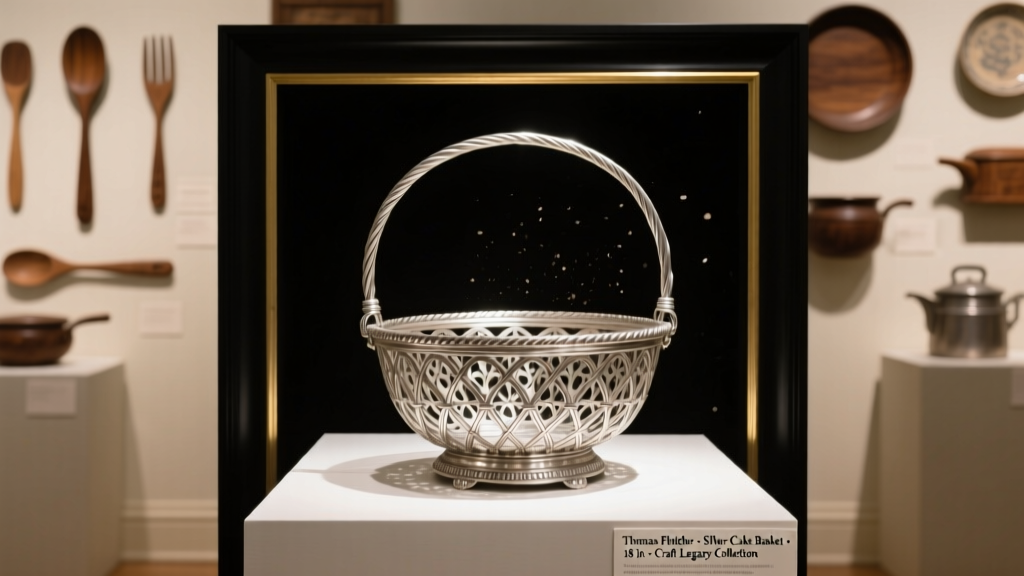
Thomas Fletcher’s 18-Inch Silver American Cake Basket: Provenance, Design, and Market Authentication

Banks Humpty Dumpty Chein 6-Inch Porcelain Figurine: Authentication, Market History, and Collector Insights

Springer Furnitures Modern Allure: Precision Engineering, Scandinavian Craftsmanship, and Market-Validated Design Integrity

Authentication Dossier: Print #1136696 — A Critical Analysis of Provenance, Technical Signature, and Market Positioning

How a Modest Hudson River School Painting Realized $60,000 at Auction: Market Dynamics, Authentication Insights, and Historical Context
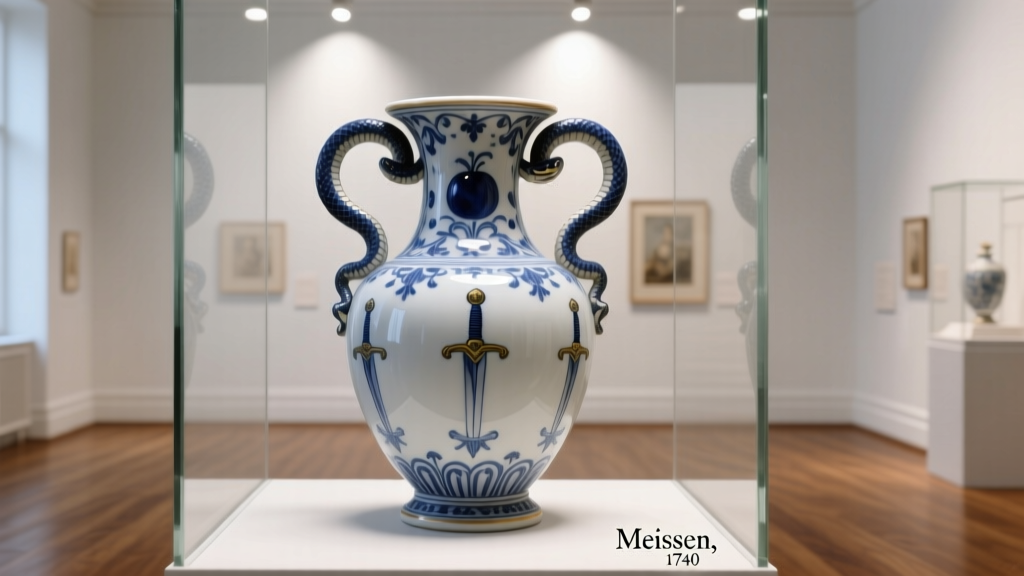
Meissen Vase with Snake Handles, Blue Underglaze Pommeled Swords Mark, and '11' Incised: Authentication, Provenance, and Market Context
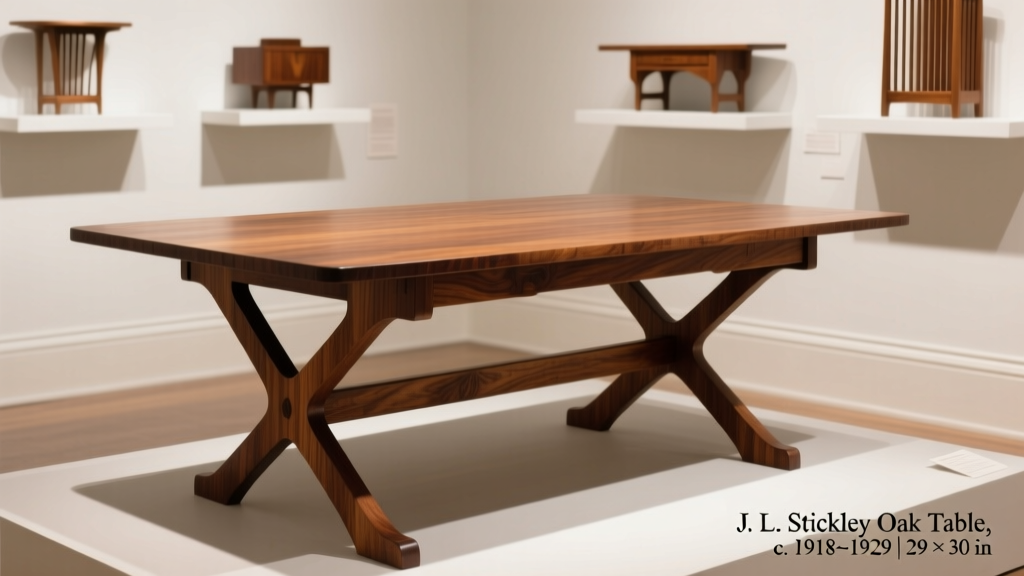
L. J. G. Stickley Oak Table with Crossed Stretchers, c. 1918: Authentication, Provenance, and Market Significance

Authenticating and Valuing the John Wright 'Hobo' Cast Iron Doorstop: A Technical Analysis of the 7-Inch Painted Variant
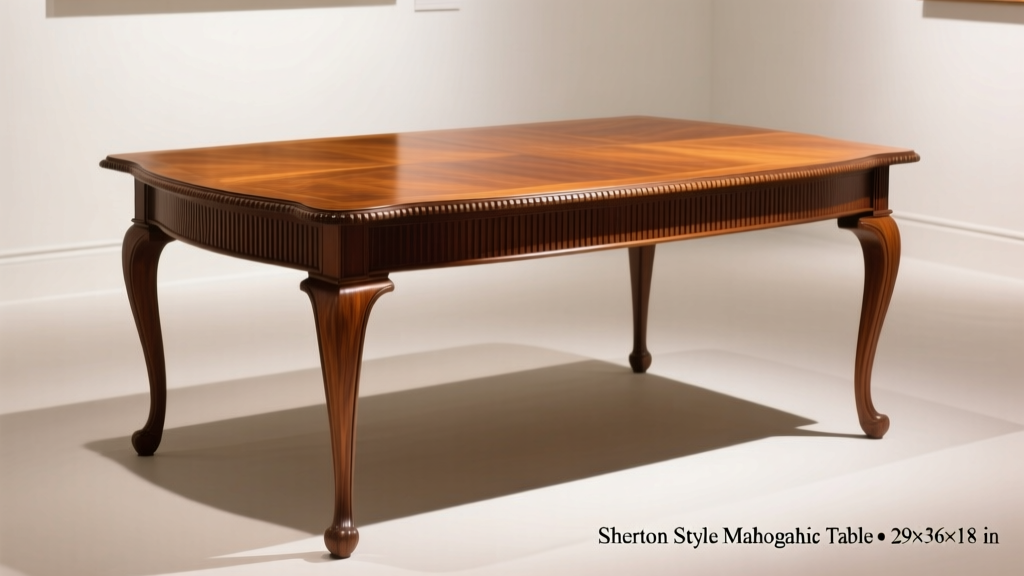
Sheraton Mahogany Card Table: Authentication, Provenance, and Market Analysis of the 29 × 36 × 18 Inch Reeded-Edge Turned-Leg Design