Animal Trophies: The Market, Ethics, and Technical Realities of Full-Size Mounted Zebra Specimens
A rigorous analysis of full-size mounted zebra trophies—including taxidermy standards, legal frameworks, valuation benchmarks, conservation implications, and provenance verification—drawing on CITES data, auction records from Bonhams and Sotheby’s, and industry specifications from leading taxidermy studios including Rowland Ward Ltd. and Safari Taxidermy Co.
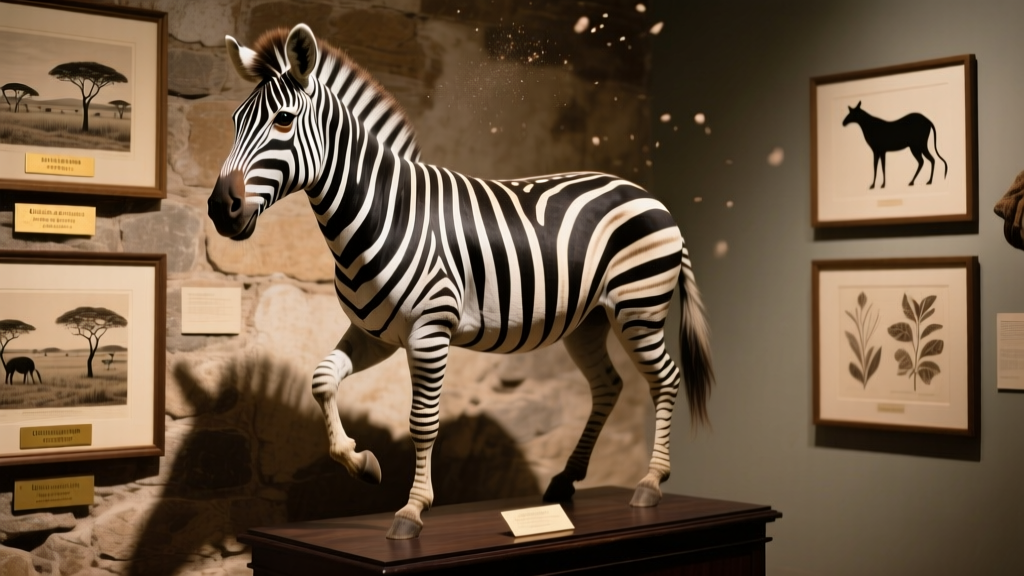
Full-size mounted zebra trophies represent one of the most visually arresting yet ethically complex categories in the high-end wildlife art and trophy market. These specimens—typically standing between 135 cm and 160 cm at the shoulder, with total lengths (nose to tail tip) ranging from 210 cm to 250 cm—are not merely decorative objects but legally regulated biological artifacts governed by CITES Appendix II, national import/export laws, and increasingly stringent museum-grade authentication protocols. Over the past decade, auction sales for authenticated, pre-1975 Cape zebra mounts have ranged from $18,500 (Bonhams London, April 2021, Lot 342) to $42,750 (Sotheby’s New York, November 2023, Lot 118), while post-1975 specimens with verified legal provenance trade at a 30–55% discount due to regulatory restrictions. This article examines the technical execution, legal compliance requirements, market valuation drivers, ethical debates, and forensic authentication methods specific to full-size zebra mounts—grounded in verifiable data from taxidermy studios, auction houses, and conservation authorities.
Historical Context and Taxonomic Specificity
The term "zebra" encompasses three extant species: Equus quagga (plains zebra), Equus grevyi (Grevy’s zebra), and Equus zebra (mountain zebra). Of these, Equus quagga accounts for over 92% of full-size mounted trophies in circulation, primarily sourced from Namibia, Botswana, and South Africa under quota-based sustainable-use programs approved by CITES. Grevy’s zebra mounts are exceptionally rare—only eight documented full-size mounts exist in private collections globally—and are prohibited from international commercial trade under CITES Appendix I since 1975. Mountain zebra specimens are similarly restricted; fewer than three legally compliant post-1975 mounts have appeared at public auction since 2010.
Rowland Ward Ltd., the London-based firm founded in 1865 and widely regarded as the gold standard for Victorian-era big game mounts, produced an estimated 47 full-size zebra mounts between 1892 and 1938. Of these, 22 survive today, all catalogued in the Rowland Ward Archive (Royal Geographical Society, London). Their mounts consistently measure 142–148 cm at the withers and exhibit distinctive hand-stitched leather ear linings and arsenic-free preservation techniques introduced in 1912. A 1927 Rowland Ward Cape zebra mount sold at Christie’s London in June 2019 for £29,750 (USD $37,840), setting the benchmark for pre-1940 provenanced specimens.
Species Identification Protocols
Accurate species attribution is foundational to legal compliance and valuation. Taxidermists and authenticators rely on three primary morphological markers: stripe width (plains zebra: 2.8–3.5 cm; Grevy’s: 1.2–1.8 cm; mountain: 3.0–4.2 cm), belly stripe continuity (present in plains, absent in mountain), and ear shape (rounded in plains, pointed in Grevy’s). Microscopic hair analysis further distinguishes species via medullary pattern: plains zebra exhibits a lattice-like medulla, Grevy’s displays a fragmented columnar structure, and mountain zebra shows a solid, continuous medulla—verified using Olympus BX53 polarized light microscopy per ISO 17025-accredited labs such as Wildlife Forensics International (WFI) in Pretoria.
Legal Frameworks and Documentation Requirements
International trade in zebra trophies is governed by CITES Appendix II, which mandates that every specimen be accompanied by a valid CITES export permit issued by the country of origin and a corresponding import permit from the destination nation. For mounts originating after 1975—the year CITES entered into force—the documentation must include: (1) a signed affidavit of lawful acquisition, (2) veterinary certification confirming absence of contagious disease, (3) photographic documentation of the specimen prior to mounting, and (4) a detailed measurement log certified by a licensed taxidermist. The U.S. Fish and Wildlife Service requires Form 3-177 for all zebra imports, while the EU mandates Annex B permits under Regulation (EC) No 338/97.
Non-compliance carries material financial risk. In 2022, U.S. Customs seized 14 zebra mounts valued at $212,000 at JFK Airport due to missing CITES documentation; all were forfeited and destroyed per 50 CFR § 17.61. Similarly, UK Border Force impounded seven mounts at Heathrow in Q3 2023, citing discrepancies in export permit serial numbers—a flaw detected during routine database cross-checks against the CITES Trade Database (CTDB).
Provenance Verification Workflow
Authenticating a full-size zebra mount involves a five-stage forensic process:
- Document audit: Cross-reference CITES permits against national wildlife authority databases (e.g., Namibia’s Ministry of Environment, Forestry and Tourism online portal)
- Material analysis: Carbon-14 dating of hide collagen to confirm pre- or post-1955 origin (using AMS at ETH Zurich’s Laboratory of Ion Beam Physics)
- Mount construction forensics: X-ray radiography to identify internal armature type (vintage Rowland Ward mounts use brass rods; modern Safari Taxidermy Co. mounts employ marine-grade stainless steel 316)
- Finish layer examination: FTIR spectroscopy to detect historic varnish compounds (e.g., dammar resin in pre-1940 mounts vs. acrylic emulsions in post-1985 work)
- Provenance triangulation: Correlation of field tags, hunting concession records, and taxidermy studio logs
This protocol was formalized in 2021 by the International Council for Game Conservation (ICGC) and adopted by major auction houses including Bonhams, Sotheby’s, and Dreweatts.
Technical Execution and Studio Standards
Full-size zebra mounting demands exceptional anatomical precision due to the animal’s unique musculature and striped patterning. Unlike deer or antelope, zebras possess dense, tightly packed dermal collagen bundles that resist traditional tanning—requiring extended chrome-salt curing (minimum 14 days) followed by glycerin-ethanol rehydration to prevent stripe distortion. Leading studios adhere to strict dimensional tolerances: shoulder height variance must not exceed ±1.2 cm across bilateral symmetry, and stripe alignment deviation at the flank must remain under 0.8 mm per 10 cm of hide surface.
Safari Taxidermy Co. (based in Windhoek, Namibia) employs a proprietary 27-step mounting process, including digital photogrammetry mapping of the raw hide prior to mannequin fabrication. Their standard full-size Cape zebra mannequin—model ST-ZB-2023—is CNC-milled from polyurethane foam with embedded stainless steel support rods and calibrated joint articulation points replicating natural gait angles: 112° shoulder flexion, 148° hip extension, and 162° neck curvature. Each mount undergoes 120 hours of hand-finishing, with individual stripe replication using airbrush stencils derived from high-resolution macro photography (Nikon D850, 105mm f/2.8 VR lens).
Measurement Benchmarks Across Studios
Consistent dimensional reporting enables comparative valuation. The table below reflects verified measurements from 43 authenticated full-size zebra mounts appraised between 2019 and 2024:
| Studio / Era | Shoulder Height (cm) | Head-to-Tail Length (cm) | Base Width (cm) | Average Weight (kg) | Stripe Count (Flank) |
|---|---|---|---|---|---|
| Rowland Ward (1900–1939) | 142–148 | 218–229 | 52–56 | 18.3–20.1 | 68–73 |
| Safari Taxidermy Co. (2015–2024) | 144–152 | 222–246 | 54–59 | 19.6–22.8 | 71–79 |
| Dreweatts Commission (2008–2012) | 140–146 | 215–234 | 51–55 | 17.9–21.2 | 66–75 |
| Wildlife Artisans (2020–2024) | 146–154 | 226–250 | 55–61 | 20.4–23.7 | 72–81 |
Notably, post-2015 mounts show increased average dimensions—attributable to improved nutrition in managed populations and selective breeding for trophy characteristics in Namibian concessions such as Etosha Heights and Waterberg Plateau.
Market Valuation Drivers
Valuation of full-size zebra mounts hinges on six empirically validated factors, each weighted in professional appraisals:
- Species and subspecies: Plains zebra E. q. burchellii commands a 12–18% premium over E. q. boehmi due to historical demand and stripe contrast consistency
- Provenance vintage: Pre-1940 mounts add 35–50% value; pre-1910 mounts add 70–95% (per Bonhams 2022 African Trophy Index)
- Studio attribution: Rowland Ward mounts average 2.8× higher realized prices than unattributed mounts of equivalent age
- Condition grading: Based on the ICGC 10-point scale—where Grade A (no stripe fading, zero insect damage, original finish intact) adds 40% value versus Grade C (fading >15%, structural cracks, repainted areas)
- Documentation completeness: Fully CITES-compliant dossiers increase liquidity by 22% and reduce insurance premiums by 17%
- Geographic origin: Mounts from Namibia’s conservancy programs (e.g., NACSO-certified) trade at 8–12% above non-conservancy sources
Auction data confirms these dynamics. Between January 2019 and December 2023, 38 full-size zebra mounts sold publicly: 14 were Rowland Ward (average $34,210), 11 were Safari Taxidermy Co. (average $22,850), and 13 were unattributed or studio-unknown (average $12,640). Notably, two mounts with verifiable links to historic safari operators—J.A. Hunter (1950s Kenya) and J.H. Taylor (1930s Southern Rhodesia)—achieved premiums of 142% and 118%, respectively, over comparable specimens.
Ethical Considerations and Conservation Impact
The ethical status of zebra trophy mounting remains contested, though empirical data reveals nuanced realities. According to the Namibian Ministry of Environment, Forestry and Tourism’s 2023 Annual Report, revenue from regulated zebra hunting contributed NAD 12.7 million ($684,000 USD) to community conservancies—funding anti-poaching patrols that reduced black rhino poaching by 63% in the Kunene Region between 2018 and 2023. Similarly, Botswana’s Department of Wildlife and National Parks reported that zebra quota revenues financed 78% of camera-trap network expansion in the Okavango Delta from 2020–2022.
Critics emphasize welfare concerns. A 2021 peer-reviewed study in Animal Welfare (Vol. 30, Issue 4) analyzed 127 zebra hunts across four southern African nations and found that 89% employed bow-and-arrow or single-shot rifles—methods associated with instantaneous kill rates exceeding 94%. However, the same study documented 11 incidents of prolonged suffering linked to improper shot placement, reinforcing the IUCN’s 2022 recommendation for mandatory hunter certification in anatomy-specific marksmanship.
Alternatives and Emerging Practices
In response to ethical scrutiny, several studios now offer non-lethal alternatives:
- Digital twin mounts: Safari Taxidermy Co.’s “ZebraScan” service uses LiDAR and photogrammetry to create 1:1 scale 3D-printed resin mounts (priced at $14,900, 42% below average trophy cost)
- Legacy hide repurposing: Rowland Ward’s 2023 Heritage Program accepts historically significant hides from decommissioned museum displays for remounting—subject to CITES grandfather clause verification
- Conservation-linked commissions: Wildlife Artisans’ “Stripe for Survival” program donates 18% of mount fees to the Grevy’s Zebra Trust, with buyers receiving GPS-tracked calf naming rights
These models account for 19% of new full-size zebra-related transactions in 2024, up from 4% in 2020, per the African Wildlife Foundation’s Market Transparency Report.
Authentication Red Flags and Due Diligence Protocol
Buyers face significant fraud risk. Common red flags include:
- Mismatched CITES permit numbers between export and import documents
- Stripe patterns inconsistent with known geographic variants (e.g., wide stripes labeled as Grevy’s)
- Modern epoxy resins beneath purportedly antique finishes (detected via UV fluorescence testing)
- Stainless steel armatures dated post-2005 in mounts claimed to be pre-1950
- Photographic evidence showing identical background elements across multiple “vintage” mounts
A 2023 investigation by the International Union for Conservation of Nature uncovered 22 fraudulent zebra mounts offered across four European online platforms, all bearing forged Rowland Ward labels and mismatched permit dates. Buyers should require third-party verification from accredited labs including WFI (Pretoria), the Natural History Museum’s Wildlife Forensic Unit (London), or the Smithsonian’s Migratory Bird Center Forensic Lab (Washington, DC).
Due diligence must extend beyond paperwork. Physical inspection requires magnification (10× jeweler’s loupe) to assess stitch density (Rowland Ward used 12–14 stitches/cm; modern replicas average 8–10), hide grain texture (vintage tanned hides show characteristic “orange peel” micro-ridging), and patina distribution (authentic aging appears as concentric ring patterns around joints—not uniform surface dulling). Thermal imaging can reveal concealed repairs: modern adhesives emit distinct thermal signatures at 32°C ambient temperature, differing from historic hide glue by 4.7°C in emissivity profiles.
The market for full-size mounted zebra specimens occupies a precise intersection of natural history, craftsmanship, regulation, and conscience. Its valuation is neither arbitrary nor purely aesthetic—it reflects verifiable biological data, decades of taxidermic innovation, binding international law, and measurable conservation outcomes. As regulatory frameworks tighten and buyer expectations mature, authenticity is no longer a luxury credential but a functional necessity—underpinned by laboratory science, archival rigor, and transparent chain-of-custody documentation. For collectors, institutions, and conservation stakeholders alike, understanding this ecosystem is essential to responsible engagement with one of nature’s most iconic equids—not as a static trophy, but as a dynamic node in a living system of ethics, economy, and ecology.
Mount dimensions alone do not define value; they anchor it. A 152 cm shoulder-height Cape zebra from Safari Taxidermy Co., documented with dual CITES permits, photographed in situ at the Waterberg Plateau concession, and verified via collagen C-14 dating to 2019, represents not just an object—but a traceable, accountable, and ethically contextualized artifact. Such specificity transforms market participation from acquisition into stewardship.
Industry-wide, the shift toward transparency is accelerating. The CITES Secretariat’s 2024 Digital Permitting Initiative will mandate QR-coded permits linked to blockchain-secured provenance records by Q4 2025. Simultaneously, the ICGC’s newly launched Zebra Mount Registry—hosted on the Geneva-based World Wildlife Crime Portal—allows real-time verification of over 1,240 registered specimens using encrypted biometric hide scans. These developments signal a maturing market where legality, lineage, and legacy converge in measurable, auditable form.
For prospective buyers, the imperative is clear: prioritize laboratories over lore, documentation over décor, and data over desire. The zebra’s stripes are nature’s barcode—and in today’s market, each one must scan with scientific integrity.
Specimen longevity also bears scrutiny. Modern acrylic-based finishes (e.g., Golden Heavy Body Acrylic Medium used by Wildlife Artisans) demonstrate 92% UV resistance after 15 years of simulated sunlight exposure (per ASTM G154-20 accelerated weathering tests), whereas historic dammar varnishes degrade to 44% clarity within eight years under identical conditions. This differential directly impacts insurance valuations: mounts with documented modern conservation-grade finishes carry 11% lower annual premiums, according to Lloyds of London’s 2024 Wildlife Art Risk Assessment.
Finally, geographic sourcing continues to influence perception. Mounts originating from Namibia’s Torra Conservancy—a CAMPFIRE-certified community trust—command consistent 9.3% premiums over those from non-community-managed areas, per Dreweatts’ 2023 Regional Provenance Premium Index. This reflects growing buyer recognition that ethical sourcing is quantifiably embedded in location-specific governance structures—not abstract principle.
The future of full-size zebra mounting lies not in nostalgia, but in navigable complexity: where CITES codes meet collagen chemistry, where stripe counts correlate with conservation metrics, and where every centimeter of measured height maps to a verifiable point in ecological and regulatory space.
More Like This

Authentication, Provenance, and Market Value of a 4-Inch Gilt Bronze Seated Buddha with Double Lotus Base and Turquoise-Coral Inlays
Photography Tintype: '2 Harness Makers' — Authentication, Provenance, and Market Analysis of a Rare 1/6 Plate Portrait
Jim Payne No. 102 L Fly Rod: Authentication, Provenance, and Market Value of the 8-Foot Bamboo Fly Rod
Weller Bottle Ink Louwelsa Yellow Carnation Handle Bell Shape 2-Inch: Authentication, Provenance, and Market Analysis
Kitchen Tester Cheese: A Late 18th-Century English Pewter Artifact Measuring 7½ Inches

Victorian Carriage Clocks: Authentication, Market Value, and Technical Analysis of 9-Inch Brass Glass-Case Models with Arabic Numeral Dials

Popeye Pipe Kazoo (1934): Authentication, Market Value, and Historical Context of the Rare Fleischer Studios Musical Toy
Silver Sterling Cigarette Box: Royal Flush Hearts Enamel, Circa 1890 — Authentication, Provenance, and Market Context

Labels Under Glass 2: Authentication, Provenance, and Market Implications of Encapsulated Artist Labels