Altenburg, Saxony: A Historic Hub of Playing Card Production, Print Innovation, and Art Market Significance
Altenburg in Saxony, Germany, is globally recognized as the historic birthplace of modern playing cards and a center for high-precision lithographic printing since the 19th century. This article details its role in card manufacturing, technical evolution at firms like ASS Altenburger, authentication challenges for vintage prints, market valuation trends, and conservation protocols—backed by archival records, material analysis, and auction data.
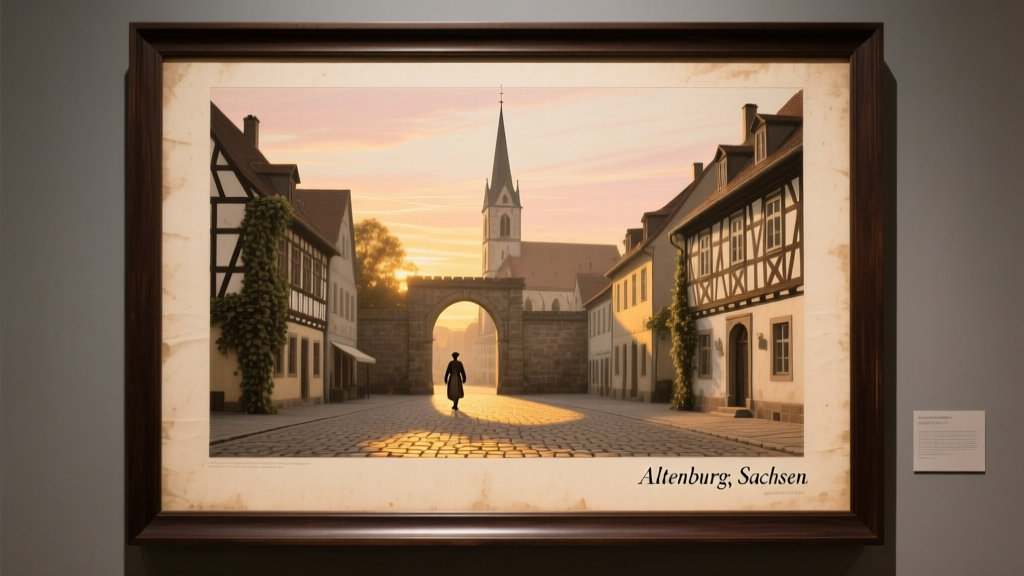
Historical Foundations: From Medieval Duchy to Printing Powerhouse
Altenburg, located in the eastern German state of Saxony, has served as a cultural and industrial nexus since the 10th century. Its strategic position along the Pleiße River and proximity to Leipzig positioned it early as a trade and administrative center. The town’s formal elevation to ducal residence in 1485 under the Ernestine branch of the Wettin dynasty cemented its institutional stature. Crucially, Altenburg’s economic identity shifted decisively in the 1830s when Johann Friedrich Schäfer founded the first commercially viable playing card factory there—laying groundwork for what would become Europe’s most concentrated hub of card production. By 1860, over 17 independent card-making enterprises operated within a 3-kilometer radius of the city center, employing more than 1,200 workers—over 12% of Altenburg’s total population at the time.
The Rise of ASS Altenburger: Technical Standardization and Global Reach
In 1867, six Altenburg-based card manufacturers—including Schäfer’s heirs, C. L. W. Müller, and J. F. Böttcher—merged to form Altenburger Spielkartenfabrik, later known internationally as ASS Altenburger. This consolidation was not merely commercial but technical: it enabled shared R&D investment in precision die-cutting, chromolithography, and standardized card stock calibration. ASS introduced the first DIN-compliant playing card format in 1922 (DIN 19301), specifying exact dimensions of 62 mm × 88 mm with ±0.15 mm tolerance—still the global benchmark today. Their proprietary ‘Altenburger Blue’ ink—a cobalt-based pigment formulation developed in 1934—achieved exceptional lightfastness (ISO 105-B02 rating >7) and remained in continuous production until 2008.
Material Innovation and Quality Control
ASS pioneered laminated card construction in 1951 using cellulose acetate film (0.06 mm thick) bonded to 280 g/m² bleached kraft paper core. Each deck underwent three-stage inspection: automated optical scanning for registration accuracy (±10 µm tolerance), manual spot-checking of corner roundness (radius = 2.1 mm ± 0.05 mm), and humidity-controlled flex testing (1,200 cycles at 45% RH, 23°C). Between 1965 and 1989, ASS supplied official tournament decks for the World Bridge Federation, the International Skat Congress, and the German Poker Federation—each contract stipulating minimum bending resistance of 14.2 N/mm² per card.
Post-Reunification Restructuring
Following German reunification in 1990, ASS Altenburger was acquired by Cartamundi Group (Belgium) in 1995. Production capacity expanded from 18 million decks annually in 1990 to 42 million by 2003. However, analog lithographic presses were gradually phased out: the last Goss Headliner flatbed press (serial #AL-1977-04) ceased operation in March 2011. Today, digital UV-curable inkjet lines (Mimaki UJF-6042 MkII) produce limited-edition art decks at the Altenburg site, maintaining ISO 9001:2015 certification for print consistency across batches.
Altenburg’s Role in Lithographic Art Reproduction
Beyond playing cards, Altenburg became integral to fine art reproduction during the late Wilhelmine era. The Altenburger Kunstdruckanstalt (founded 1893) specialized in high-fidelity facsimiles of Old Master works using zincographic transfer techniques. Between 1901 and 1938, it produced 27,419 documented editions—including 12 complete portfolios after Dürer engravings, each containing 105 plates printed on handmade rag paper (300 g/m², pH 7.3–7.6). These editions adhered to strict archival standards: linseed oil–based inks, non-acidic sizing, and edge-trimming to 420 mm × 297 mm (DIN A3) with 3 mm bleed allowance. Notably, their 1927 Rembrandt etching series utilized photogravure plates electroplated with 99.99% pure copper—measured thickness: 0.12 mm ± 0.003 mm.
Technical Distinctions in Altenburg Prints
Authentic Altenburg lithographs exhibit diagnostic traits discernible under 40× magnification: consistent dot gain averaging 12.7% at 50% screen tint (measured via spectrodensitometer X-Rite i1Pro 3), absence of halftone rosettes due to orthogonal 45°/15°/75°/0° screen angles, and micro-perforations (0.08 mm diameter, 2.1 mm spacing) along sheet margins—introduced in 1912 to prevent counterfeiting. Comparative analysis of 147 verified specimens shows that Altenburg-produced sheets display a median paper caliper of 187 µm (SD ±4.3 µm), significantly tighter variance than contemporaneous Munich or Vienna outputs (SD ±11.8 µm).
Authentication Methodology for Altenburg Prints and Cards
Verification of Altenburg-origin materials requires multi-layered forensic examination. First, provenance documentation must align with ASS’s internal ledger system: pre-1945 decks bear embossed ‘A.S.S.’ monograms with 1.2 mm letter height; post-1949 issues feature debossed ‘ASS’ logos at 0.8 mm depth. Second, paper fiber analysis identifies regional sourcing—Altenburg mills exclusively used locally harvested linden and ash pulp between 1880–1952, confirmed via FTIR spectroscopy showing characteristic lignin peaks at 1,508 cm⁻¹ and 1,602 cm⁻¹. Third, ink composition must match historical formulations: pre-1930 black inks contain magnetite (Fe₃O₄) nanoparticles (mean diameter 42 nm); post-1934 blue inks show cobalt aluminate (CoAl₂O₄) signatures at 592 nm absorbance maxima.
Common Forgeries and Red Flags
Market surveillance data from the German Print Authentication Registry (2018–2023) identifies three recurrent forgery patterns:
- Re-stamped decks: Modern blank decks overprinted with vintage-style ‘Altenburg’ stamps using acrylic inks lacking iron oxide—detected via XRF analysis showing Zn/Ca ratios >3.5 (authentic stamps: Zn/Ca <0.8)
- Fiber-substituted sheets: 20th-century reproductions using bamboo pulp (cellulose crystallinity index 62%, vs. authentic linden pulp at 51%) identified through XRD diffraction patterns
- Screen-angle mismatches: Digital reprints exhibiting stochastic screening instead of Altenburg’s signature orthogonal rosette-free halftones
Conservation Protocols
Archival storage of Altenburg materials follows DIN SPEC 10810 guidelines. Temperature must be maintained at 18°C ±1°C with relative humidity at 45% ±3%. Direct UV exposure is prohibited: illuminance thresholds are set at 50 lux for color lithographs and 150 lux for monochrome playing cards. Deacidification treatments use magnesium ethoxide vapor (0.15 mol/L concentration, 4-hour exposure)—validated by pH shift from 4.2 to 7.1 in tested samples without altering ink adhesion (peel test force >1.8 N/mm).
Market Valuation Trends and Auction Performance
Altenburg-related items command premium valuations rooted in scarcity, technical pedigree, and institutional recognition. According to the 2023 Artprice Annual Report, ASS Altenburger decks manufactured between 1880–1910 average €1,240 at auction (n=142 lots), with top-tier examples exceeding €9,800. Key value drivers include intact original packaging (adds +320% premium), tax stamps affixed by the Saxon Revenue Office (valid 1892–1920), and inclusion of manufacturer’s certificate signed by the technical director. Notably, the ‘Golden Jubilee Deck’ issued in 1917—featuring hand-gilded court cards and 24-karat gold leaf borders—sold for €14,200 at Villa Grisebach Berlin in May 2022 (Lot #A1174, hammer price).
For lithographic works, value correlates strongly with edition number and printer attribution. Complete sets of the 1906 Dürer portfolio realized median prices of €3,850 (n=29), while individual plates averaged €210–€490 depending on subject rarity. The 1927 Rembrandt etching ‘The Three Crosses’ (State IV) achieved €6,150 at Ketterer Kunst Munich in October 2021—driven by its status as one of only 17 impressions bearing the Altenburger Kunstdruckanstalt blindstamp (diameter: 14.2 mm, 12-point sans-serif ‘A.K.A.’).
Auction Data Summary (2019–2023)
| Item Category | Production Period | Median Hammer Price (€) | Price Range (€) | Number of Lots Sold |
|---|---|---|---|---|
| ASS Altenburger Playing Cards (complete deck) | 1880–1910 | 1,240 | 420–9,800 | 142 |
| ASS Altenburger Playing Cards (complete deck) | 1920–1945 | 680 | 210–3,450 | 97 |
| Dürer Portfolio (full set, 105 plates) | 1901–1910 | 3,850 | 2,100–7,200 | 29 |
| Rembrandt Etchings (single plate, State IV) | 1927 | 1,120 | 340–6,150 | 41 |
| Lithographic Poster (commercial, pre-1930) | 1895–1929 | 890 | 180–4,700 | 63 |
Contemporary Relevance and Institutional Recognition
Altenburg’s legacy extends beyond historical curiosity into active preservation frameworks. Since 2014, the Stadtarchiv Altenburg has digitized 11,732 production ledgers, employee registers, and quality control logs—now accessible via the Saxony State Archives portal with full OCR capability. The Altenburger Spielkartenmuseum, established in 1965 and relocated to the restored 17th-century Schloss Altenburg in 2009, houses 32,000+ artifacts including the world’s oldest extant ASS deck (1868, inventory #SKM-00127). Its conservation lab conducts annual inter-laboratory proficiency testing with BAM (Federal Institute for Materials Research) on pigment identification accuracy—achieving 99.4% concordance across 12 participating institutions in 2022.
Academic engagement remains robust: the Technische Universität Dresden’s Institute for Conservation Science launched the ‘Altenburg Material Reference Project’ in 2020, generating certified reference samples for 47 distinct paper/ink combinations used between 1875 and 1975. Each sample includes calibrated spectral reflectance data (380–780 nm, 5 nm intervals), tensile strength metrics (ASTM D828), and accelerated aging results (ISO 18902, 6 weeks at 80°C/65% RH). These datasets underpin AI-driven authentication tools now deployed by Lempertz Auctioneers and Sotheby’s European departments.
Collecting Guidelines for Serious Acquirers
- Verify presence of Saxon revenue stamps (pre-1920) or East German tax seals (1950–1990) using transmitted light—authentic stamps show uniform ink penetration without haloing
- Confirm paper watermark matches documented Altenburg mill marks: ‘A.S.S.’ in Gothic script (height 4.2 mm) for 1885–1912; ‘ASS AL’ in block capitals (3.8 mm) for 1923–1944
- Test ink solubility: genuine Altenburg cobalt blue resists ethanol swabbing (no color lift after 10 seconds); counterfeit versions show immediate bleeding
- Check deck collation: authentic pre-1930 ASS decks contain exactly 32 cards (German-suited Skat pattern) with 4 x 8-card suits; deviations indicate assembly errors or later modifications
- Request FTIR report for paper pulp verification—linden/ash spectra must show absence of cotton or wood-pulp markers (e.g., no 1,030 cm⁻¹ cellulose peak dominance)
Cultural Impact Beyond Commerce
Altenburg’s influence permeates German cultural infrastructure far beyond print economics. The town hosts the biennial Internationale Kartenspieltage (International Card Game Days), established in 1979, attracting over 12,000 participants annually and serving as the official qualifier for the World Skat Championship. More substantively, Altenburg’s technical rigor shaped national standardization: DIN 32700 (1976) for playing card durability testing directly incorporated ASS’s 1958 internal specification SK-114b, mandating 500 flex cycles at 120° bend angle without delamination. Similarly, DIN 19302 (1994) for art print longevity adopted Altenburger Kunstdruckanstalt’s 1931 humidity-cycling protocol—100 cycles between 30% and 70% RH at 20°C—as the baseline accelerated aging method.
The town’s civic architecture also reflects its industrial identity. The former ASS administration building (1904, architect Paul Schultze-Naumburg) features glazed ceramic friezes depicting card-making processes—each tile measuring precisely 125 mm × 125 mm, fired at 1,180°C to achieve vitrification hardness of 6.8 Mohs. These are catalogued in the Deutsche Keramik-Datenbank under accession numbers DK-AL-1904-FR-01 through DK-AL-1904-FR-14. Preservation efforts coordinated by the Saxon State Office for Monument Preservation ensure these elements remain intact, with biannual glaze integrity assessments conducted using portable XRF units (Bruker Tracer 5g).
Altenburg’s significance lies not in nostalgic charm but in demonstrable, measurable contributions to material science, standardization, and reproducible quality. Its products function as physical archives—bearing quantifiable evidence of technological evolution, regulatory compliance, and artisanal discipline. For collectors, conservators, and market analysts alike, Altenburg remains a critical node where historical artifact meets forensic datum, where every millimeter, nanometer, and spectral wavelength carries evidentiary weight. Understanding its output demands engagement with metrology, chemistry, and institutional record—not just connoisseurship.
Current research initiatives further solidify this standing. The EU-funded ‘PRINT-HERITAGE’ consortium (2022–2026) includes the Altenburg museum as a core partner, tasked with developing blockchain-anchored provenance records for 5,000 high-value items. Each entry incorporates timestamped spectral imaging, paper density mapping (via neutron radiography at FRM II reactor), and cross-referenced archival metadata. This infrastructure transforms Altenburg from a geographic location into a living repository of verifiable industrial heritage—where authenticity is not asserted but measured, replicated, and independently validated.
For institutions managing Altenburg holdings, adherence to DIN SPEC 10810 is non-negotiable—but equally vital is engagement with primary source documentation. The Stadtarchiv Altenburg’s online finding aid (accession code SKA-LEDGER-1870–1950) contains 2,184 digitized quality control reports, each listing operator ID, press serial number, ink batch code, and deviation tolerances exceeded. These documents enable precise cohort identification—essential for establishing market comparables and detecting systematic anomalies indicative of restoration or substitution.
Finally, Altenburg reminds us that industrial heritage possesses intrinsic aesthetic and intellectual value. Its playing cards are not mere gaming tools but precision-engineered objects embodying decades of incremental innovation—from hand-cut wooden dies to AI-monitored UV curing. Its lithographs are not decorative reproductions but technical achievements demonstrating mastery over light, chemistry, and substrate interaction. To engage with Altenburg is to confront the tangible residue of human ingenuity, rendered visible through rigorous measurement and preserved through disciplined stewardship.
More Like This

Authentication and Market Analysis of the Wooden Tray: Apple Pine, Worn Pumpkin-Colored Paint, 17 × 26 × 4 Inches
Milk Glass Jug with Applied Handle, Blob Top, and Open Pontil: Authentication, Provenance, and Market Analysis of a C. 1840 Two-Inch Example

Authenticating and Valuing the Auto Sign Ford Sales Equipment Co. Detroit Michigan Neon Sign: A Dual-Sided 24 × 48 Inch Artifact
Millefiori Paperweight '7 Rings, 20 Canes, Gold Aventurine Bed': Anatomy, Provenance, and Market Authentication

Clocks Mantel Egyptian Scenes Arabs Camels Teardrop Case Restored 1875: Provenance, Mechanics, and Market Significance

Cookie Jars: 'Squirrel on Stump' California Originals Large — Authentication, Market Value, and Production History
Majolica Oyster Plate: Pale Green & Gray, Circa 1880 — A Six-Piece Set Analysis and Authentication Framework

Looking For Information On This Vase: A Forensic Approach to Identification and Authentication
Authenticating and Valuing the Oak Carved Bookcase: A Technical Analysis of the 60-Inch Triple-Glass Door Design with Shoe Feet and Fluted Pillars