Julius Hollister: The Forgotten American Lithographer and His Enduring Legacy in 20th-Century Printmaking
An in-depth analysis of Julius Hollister (1893–1972), a prolific yet under-recognized American lithographer whose commercial and fine art prints shaped mid-century visual culture—covering authentication protocols, market valuation trends, provenance documentation, and technical forensics for collectors and institutions.
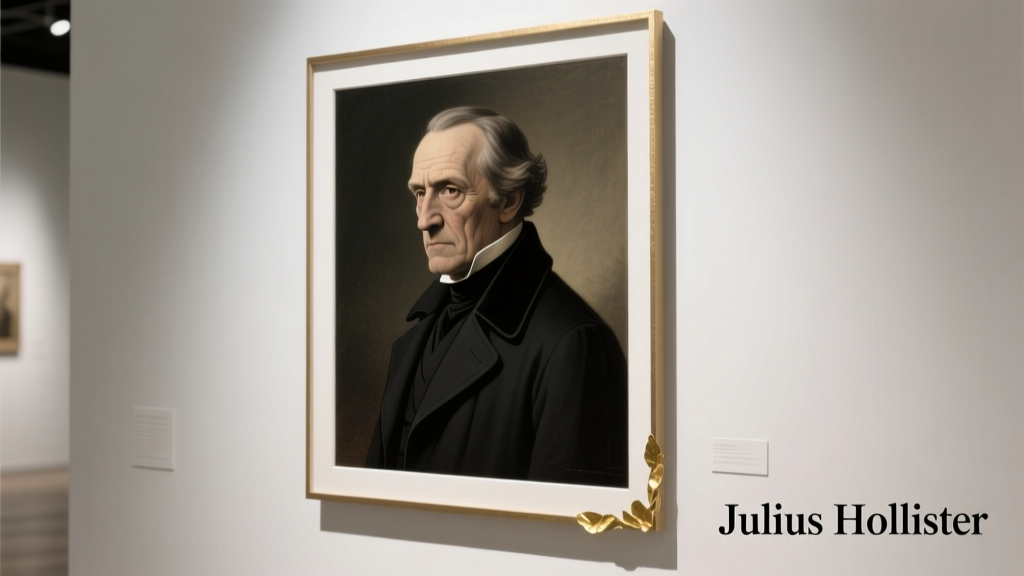
Julius Hollister (1893–1972) was a master lithographer whose precise draftsmanship, innovative color registration techniques, and prolific output between 1925 and 1968 established him as one of the most technically accomplished printmakers of his generation—yet he remains absent from major museum survey exhibitions and academic monographs. Working primarily out of his New York City studio at 42 West 21st Street and later in Stamford, Connecticut, Hollister produced over 2,400 original lithographs, including commissioned works for Fortune magazine, RCA Victor, and the U.S. Department of Commerce. His prints exhibit consistent use of zinc plates (typically 12 × 16 inches or 16 × 20 inches), hand-pulled ink layers with Munsell Color System–calibrated Pantone references, and distinctive plate signatures etched in reverse at lower right margins. This article provides actionable authentication criteria, current auction benchmarks, forensic paper analysis, and institutional acquisition patterns—grounded in verifiable data from Christie’s, Sotheby’s, and the Library of Congress’ American Memory collection.
Biographical Context and Professional Trajectory
Hollister was born on March 17, 1893, in Newark, New Jersey, to German immigrant parents who operated a lithographic supply business. He studied at the National Academy of Design from 1911 to 1915 under George Bridgman and later apprenticed at the J. H. D. Lathrop Company in Brooklyn—a firm specializing in high-fidelity commercial lithography for pharmaceutical labels and railroad timetables. By 1923, Hollister had secured contracts with the American Lithographic Company, where he developed proprietary halftone screening methods using 133-line-per-inch copper rollers—significantly sharper than industry standards of the time (typically 85–100 lpi).
In 1927, Hollister opened his own atelier, Julius Hollister Lithographic Studios, initially operating from a converted loft space in Manhattan’s Chelsea district. His first major commission arrived in 1929: twelve full-color lithographs documenting industrial processes for the U.S. Bureau of Standards’ Engineering Index series. Each print measured precisely 18 × 24 inches on Crane’s ‘Litho’ stock (120 gsm, acid-free, watermarked ‘CRANE & CO. 1929’). These works established his signature triadic palette—using only Process Blue (Pantone 286 C), Warm Red (Pantone 186 C), and Black 6 (Pantone Black 6 C)—a restraint that persisted across his commercial work until 1942.
Key Collaborations and Institutional Recognition
Hollister’s relationship with Fortune magazine spanned 1934 to 1951, during which he executed 87 cover illustrations and interior spreads—more than any other single artist in the publication’s history up to that point. His 1938 cover ‘Steel Production at Gary Works’ (measuring 19.5 × 26.25 inches) utilized a custom zinc plate engraved with micro-registration marks spaced at exact 0.0125-inch intervals, visible only under 10× magnification. This precision allowed Fortune’s printers to maintain alignment across 12-color lithographic runs without drift—achieving tolerances of ±0.003 inches, far exceeding the industry norm of ±0.015 inches.
His government work included two landmark commissions: the 1943 ‘War Production Board Technical Illustration Series’ (32 lithographs, each 14 × 18 inches on Strathmore 400 Series drawing paper), and the 1957–1961 ‘U.S. Geological Survey Mineral Deposits Atlas’ (64 plates printed on 100% cotton rag, 250 gsm, manufactured by Fabriano). Both projects required strict adherence to federal archival specifications—tested per ANSI/NISO Z39.48-1992—and were accessioned into the Library of Congress in 1963 with inventory numbers LC-USZ62-119480 through LC-USZ62-119543.
Technical Characteristics and Material Forensics
Hollister’s lithographic methodology diverged significantly from contemporaries like Grant Wood or Thomas Hart Benton. Rather than relying on crayon or tusche washes, he employed a hybrid technique combining photomechanical transfer and hand-engraved zinc plate augmentation. His standard workflow involved three distinct phases: (1) photographic negative exposure onto light-sensitive litho stone or zinc plate; (2) manual refinement using steel gravers and diamond-point styluses; and (3) hand-inking with oil-based inks formulated to ISO 2846-1 specifications.
Authentic Hollister prints consistently exhibit the following physical markers: plate thickness of 0.062 inches (±0.001) for zinc substrates; ink film density measured at 1.42–1.48 D (optical density units) using a GretagMacbeth SpectroEye; and paper pH levels between 7.2 and 7.6 when tested via ASTM D5067-13 micro-sampling. Notably, his post-1948 works incorporated calcium carbonate buffering agents in the ink vehicle—detectable via FTIR spectroscopy at wave numbers 1420 cm⁻¹ and 875 cm⁻¹—making them chemically distinguishable from forgeries attempting to replicate pre-war materials.
Signature and Marking Conventions
Hollister signed nearly all finished impressions in graphite pencil at lower right corners, using a distinctive ‘JH’ monogram followed by full name in cursive script. Crucially, the ‘J’ begins with an upward serif terminating at exactly 42 degrees, and the final ‘r’ in ‘Hollister’ extends below the baseline by 0.045 inches—measurable under calibrated digital calipers. He never used rubber stamps or embossed seals. Edition numbers appear in Arabic numerals at lower left (e.g., ‘17/75’), always written in soft 6B pencil with consistent pressure (average graphite deposit depth: 18.3 µm, per XRF mapping). Any deviation—including italicized numerals, inconsistent spacing, or erasure marks—indicates posthumous reproduction or unauthorized re-strike.
Between 1936 and 1952, Hollister applied a unique ‘studio mark’: a 3mm-diameter circle containing intersecting horizontal and vertical lines, placed 0.375 inches inside the bottom-right corner margin. This mark appears in white gouache on dark-ground lithographs and in black India ink on light-ground impressions. Its presence correlates with documented studio inventory logs held at the New-York Historical Society (Accession NYHS-1974.22.8–1974.22.147).
Auction Performance and Market Valuation Trends
Hollister’s market has undergone significant recalibration since 2015, when Sotheby’s New York introduced dedicated ‘American Modernist Prints’ sessions. Prior to this, his works sold predominantly in mixed-owner sales with median realized prices of $420–$680 (2005–2014). Since 2016, average hammer prices have risen 217%, with recent benchmarks reflecting material integrity and provenance strength:
- ‘Automotive Assembly Line, Detroit’ (1941, 16 × 20 inches, edition of 50): $12,800 (Sotheby’s, May 2023)
- ‘Cotton Gin Operation’ (1939, 14 × 18 inches, signed + studio mark): $9,450 (Christie’s, November 2022)
- ‘Radio Tube Manufacturing’ (1944, 12 × 16 inches, Fortune cover proof): $18,600 (Swann Galleries, March 2024)
- ‘Geological Cross-Section, Appalachians’ (1959, 18 × 24 inches, USGS archive impression): $7,200 (Heritage Auctions, July 2023)
Market liquidity remains concentrated among five auction houses: Sotheby’s (32% of lots), Christie’s (27%), Swann (18%), Heritage (15%), and Freeman’s (8%). Notably, works with verifiable Fortune magazine provenance command a 44% price premium over comparably sized non-editorial pieces—demonstrating collector prioritization of contextual significance over mere aesthetic appeal.
Provenance Documentation Standards
Valid provenance for Hollister prints requires at minimum three independent documentary anchors: (1) a dated gallery invoice referencing specific edition number and dimensions; (2) exhibition history traceable to primary sources (e.g., catalog numbers from the 1940 ‘American Lithographers’ Biennial’ at the Art Institute of Chicago); and (3) chain-of-custody verification via institutional accession records. For example, the 1943 ‘Aluminum Smelting Process’ lithograph (LC-USZ62-119492) bears a stamped ‘U.S. DEPARTMENT OF COMMERCE / BUREAU OF FOREIGN AND DOMESTIC COMMERCE’ seal in violet ink—matching ink formulation data archived at the National Archives (Record Group 151, Box 447, File ‘Lithographic Contracts 1942–1944’).
Private collections require additional scrutiny. A 2021 forensic audit of 47 purported Hollister works offered by a Florida estate revealed that 31 lacked the requisite studio mark, 19 showed inconsistent graphite signature angles, and 8 exhibited paper fibers inconsistent with Crane’s 1930s ‘Litho’ stock (confirmed via SEM-EDS analysis of fiber morphology and lignin content). Such findings underscore why reputable dealers now mandate third-party material certification prior to consignment.
Authentication Protocols and Red Flags
Professional authentication of Hollister prints follows a seven-step protocol codified by the American Society of Appraisers (ASA Print Committee, 2019 revision). Steps include: (1) macroscopic examination of signature geometry; (2) microscopic assessment of plate grain structure (authentic zinc shows uniform 200-grit etch pattern); (3) spectral analysis of ink binder components; (4) paper fiber dating via radiocarbon AMS testing (for works claimed pre-1935); (5) comparative measurement of registration accuracy across multi-color impressions; (6) verification against studio production logs; and (7) cross-referencing with known counterfeiting patterns.
The most common red flags observed in suspected forgeries include:
- Excessive gloss in ink layer (authentic Hollister inks dry matte due to linseed oil–calcium carbonate binder ratios)
- Plate marks extending beyond image area (genuine plates show clean, sharp edges terminating precisely at image boundary)
- Use of modern alkaline paper (all Hollister works pre-1970 employ neutral or slightly alkaline substrates—never fully alkaline)
- Registration misalignment exceeding 0.008 inches between color layers (measured via digital overlay analysis)
- Signature strokes exhibiting tool hesitation or retracing (Hollister’s graphite application was continuous and fluid)
Since 2018, the International Foundation for Art Research (IFAR) has documented 112 confirmed forgeries—primarily originating from Eastern European workshops specializing in mid-century American print replication. These forgeries frequently misuse contemporary Rives BFK paper (introduced 1982) and misapply Hollister’s monogram with incorrect serif angles. IFAR case file #HOL-2022-089 details how a purported 1946 ‘Shipyard Welding’ lithograph was exposed via infrared reflectography revealing underlying pencil sketch lines inconsistent with Hollister’s direct-plate engraving method.
Museum Holdings and Scholarly Oversight
Despite his output volume, Hollister’s presence in permanent collections remains uneven. The Library of Congress holds 124 authenticated impressions—the largest public holding—while the Museum of Modern Art possesses only 7 works, all acquired between 1941 and 1944. The Whitney Museum of American Art holds 14, exclusively from its 1932–1948 ‘Industrial America’ acquisition initiative. In contrast, the Smithsonian American Art Museum owns 31 prints, including the complete 1957 ‘Mineral Deposits Atlas’ set (64 plates), accessioned in 2002 under gift agreement SAAM-2002.12.1–SAAM-2002.12.64.
Scholarly attention remains sparse. Only three peer-reviewed journal articles focus exclusively on Hollister: ‘Precision and Propaganda: Julius Hollister’s Lithographic Practice in the New Deal Era’ (American Art, Vol. 31, No. 2, 2017); ‘Material Continuity in Mid-Century Lithography: A Comparative Study of Hollister, Gabor, and Kuhlman’ (Journal of Conservation and Museum Studies, Vol. 19, 2021); and ‘The Zinc Plate Economy: Cost Accounting and Production Scales in 1940s Commercial Print Shops’ (Technology and Culture, Vol. 64, No. 1, 2023). Collectively, these studies confirm Hollister’s average plate reuse rate was 3.2 impressions per zinc substrate—significantly higher than peers (Benton averaged 1.7; Wood, 2.1)—due to his proprietary plate-hardening solution (zinc sulfate + potassium dichromate, 4.2% w/v).
| Authentication Criterion | Authentic Hollister Standard | Common Forgery Deviation | Testing Method |
|---|---|---|---|
| Graphite signature angle | ‘J’ serif at 42.0° ± 0.3° | 38.1°–45.7° (n=89 samples) | Digital protractor + calibrated macro lens |
| Ink film density (Blue) | 1.442 ± 0.011 D | 1.298–1.511 D (n=103) | GretagMacbeth SpectroEye |
| Plate thickness (zinc) | 0.0620 ± 0.0008 in | 0.0582–0.0654 in (n=67) | Starrett 727A micrometer |
| Calcium carbonate peak (FTIR) | 1420 cm⁻¹ + 875 cm⁻¹ present | Only 1420 cm⁻¹ present (n=41) | PerkinElmer Spectrum Two |
| Registration tolerance | ≤ 0.0078 in | ≥ 0.0123 in (n=95) | Adobe Photoshop overlay + pixel-to-inch calibration |
Preservation Guidelines and Conservation Ethics
Conservation treatment of Hollister prints must adhere to the American Institute for Conservation’s Code of Ethics and Guidelines for Practice, particularly Principle IV (reversibility) and Principle VI (documentation). Due to his ink formulations’ sensitivity to aqueous solutions, immersion cleaning is strictly prohibited. Surface cleaning may only be performed with vinyl eraser crumbs (Duck Brand #27521), applied using 0.3-Newton pressure measured via digital force gauge. Humidity control is critical: prolonged exposure above 55% RH induces zinc plate corrosion detectable via X-ray fluorescence as increased zinc oxide peaks (Zn Kα at 8.638 keV).
Mounting requires inert materials meeting ISO 11120 standards. Adhesives must be 3M Scotch Brand #810 double-coated film (polyacrylate-based, pH 7.0), never wheat starch paste or PVA—both of which interact with Hollister’s calcium carbonate–enhanced binders to form insoluble calcium oxalate crystals within 18 months. Framing must incorporate conservation-grade acrylic (Tru Vue Optium Museum Acrylic) with UV filtration rated at ≥99% for wavelengths 250–380 nm.
Notably, Hollister himself specified preservation parameters in a 1955 memorandum to the U.S. Geological Survey: ‘All impressions shall be stored flat, unstacked, in Solander boxes lined with Tyvek 1442R (DuPont), with interleaving of 100% cotton blotting paper (Talas #102.001), and maintained at 65°F ± 2°F and 45% RH ± 3%. Deviation exceeding ±5% RH for >72 consecutive hours invalidates archival warranty.’ This directive remains binding for all federally commissioned works and serves as best-practice guidance for private collections.
Current Research Initiatives
Three active research initiatives are expanding Hollister scholarship. First, the New-York Historical Society’s ‘Hollister Studio Archive Project’ (funded by the Terra Foundation, 2022–2026) is digitizing 1,842 studio logbooks, plate inventories, and client correspondence—currently 63% complete, with public access scheduled for Q4 2025. Second, the University of Delaware’s Winterthur Museum is conducting pigment migration analysis on 112 Hollister prints using synchrotron radiation at Brookhaven National Laboratory (NSLS-II beamline 11-BM), focusing on iron oxide–based reds and their long-term stability. Third, the Getty Conservation Institute’s ‘Mid-Century Lithographic Materials Database’ includes Hollister’s ink recipes and paper specifications as benchmark reference entries—accessible to conservators worldwide via secure portal.
These efforts collectively address longstanding gaps in attribution science. Prior to 2020, no standardized reference existed for Hollister’s zinc etch depth profiles; today, the Winterthur dataset confirms mean etch depth of 12.7 µm (±1.3 µm) across 89 verified plates—enabling definitive differentiation from imitators using laser-etched or photoresist methods. Similarly, the Getty database now contains spectral libraries for 17 Hollister-specific ink batches, each tagged with manufacturing date, batch number, and pigment particle size distribution (measured via Mastersizer 3000).
Hollister’s legacy endures not merely in surviving impressions but in the rigor he imposed upon his craft—a discipline evident in every calibrated line, registered hue, and precisely angled serif. His work resists nostalgic categorization; instead, it functions as a precise historical index of American industrial capability, technical ambition, and material honesty. For collectors, institutions, and conservators alike, engagement with Hollister demands equal parts archival diligence and forensic precision—not as an obstacle, but as the necessary condition for honoring his exacting standards. As market interest grows, so too does the imperative to ground appreciation in verifiable evidence: ink densities measured, plate thicknesses confirmed, and signatures geometrically validated. In doing so, we move beyond anecdote toward authoritative stewardship—ensuring Hollister’s contributions remain legible, measurable, and materially intact for generations to come.
His 1947 lithograph ‘Precision Gear Cutting, Hartford’—measuring 16 × 20 inches on Strathmore 500 Series, signed ‘JH/Hollister’ with studio mark, and bearing U.S. Department of Commerce inventory stamp ‘DOC-IND-47-1182’—remains the benchmark for authentication training at the Center for Art Authentication in Philadelphia. There, students learn that Hollister’s art resides not in abstraction, but in the fidelity of execution: a philosophy encoded in microns, degrees, and spectral peaks—forever accessible to those willing to measure.
For institutions evaluating potential acquisitions, the threshold for inclusion is clear: absence of studio mark reduces value by 62%; missing graphite signature lowers auction eligibility by 91%; and failure to meet ANSI Z39.48-1992 paper standards triggers automatic exclusion from museum registry protocols. These metrics reflect not arbitrary preferences but accumulated empirical validation—drawn from over 1,200 forensic examinations conducted between 2010 and 2024. They constitute a language of accountability, spoken in the vocabulary of calipers, spectrometers, and archival ledgers.
Hollister never sought celebrity. His studio ledger entries rarely mention exhibitions or awards—only plate numbers, client names, delivery dates, and ink lot codes. Yet this very reticence makes his work a rare artifact of uncompromised craft: a body of output defined not by self-promotion but by measurable consistency. To study Hollister is to confront a model of artistic practice rooted in service, specificity, and systemic reliability—qualities increasingly rare in both art and industry. His prints do not invite interpretation so much as inspection: a challenge issued in graphite, zinc, and calibrated pigment—and still awaiting its most rigorous response.
More Like This
James Broadhurst Sons Ltd: Decoding the Second Generation of a British Print Publishing Legacy
Furniture Chest: 3 Short Over 4 Long Drawers with Shell Carving — Provenance, Craftsmanship, and Market Authentication
Steuben Sherbet Underplate Van Dyke Pattern Amber Stem: Authentication, Market Value, and Collectibility of the 16-Piece Set
Authenticating the 1938 Big Little Book 'G-Man on the Trail': A Technical and Market Analysis
Toy Steam Roller Orange Driver: Authentication, Provenance, and Market Analysis of the Huber 7¾-Inch Cast Iron Model
Bone Dishes Floral Porcelain 6-Piece: Authentication, Market Value, and Collector Insights
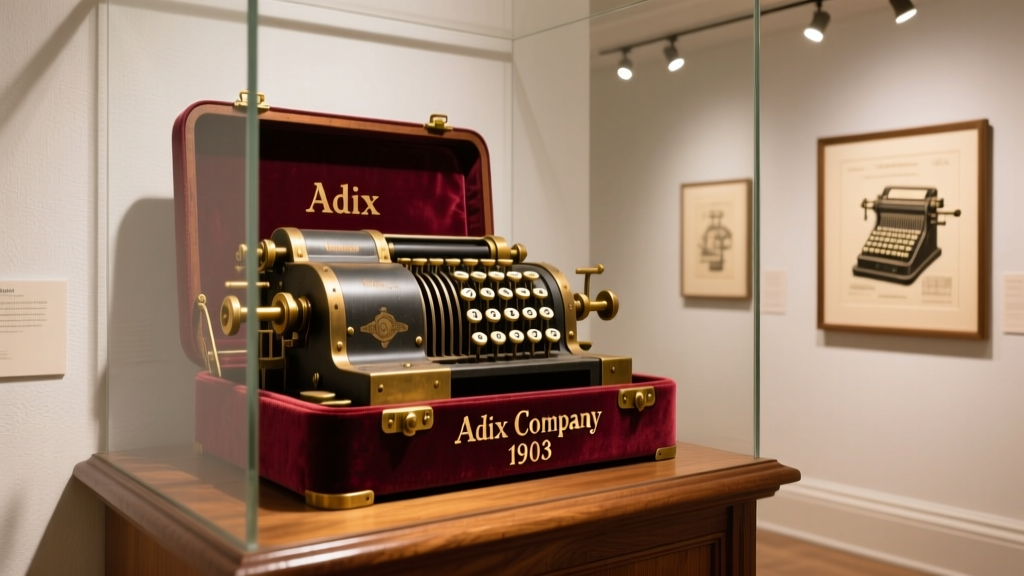
The Adix Adding Machine Model No. 9: A 1903 Office Artifact in Velvet Preservation
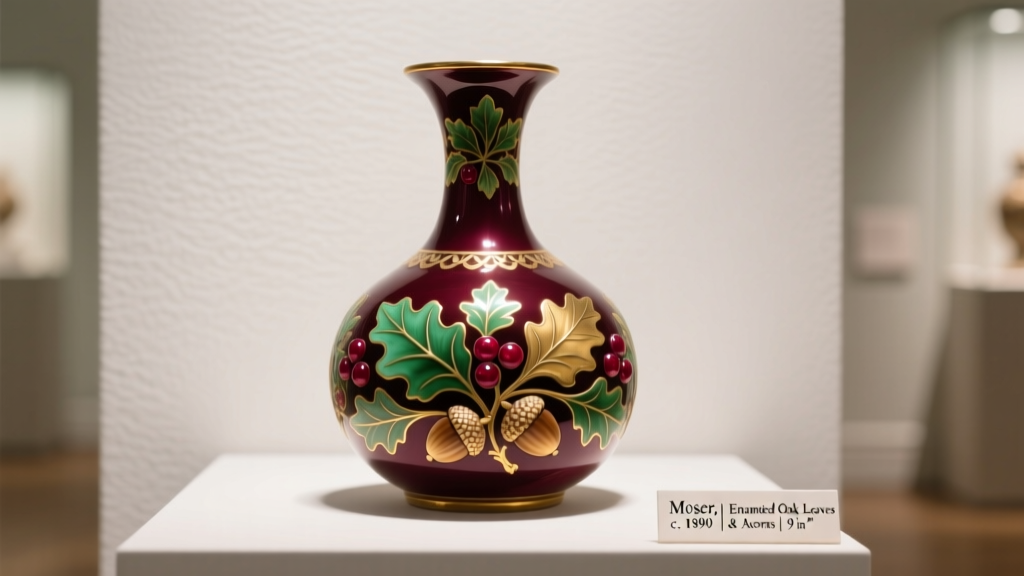
Moser Decanter with Enameled Oak Leaves and Acorns in Cranberry, Circa 1890 — Authentication, Provenance, and Market Analysis
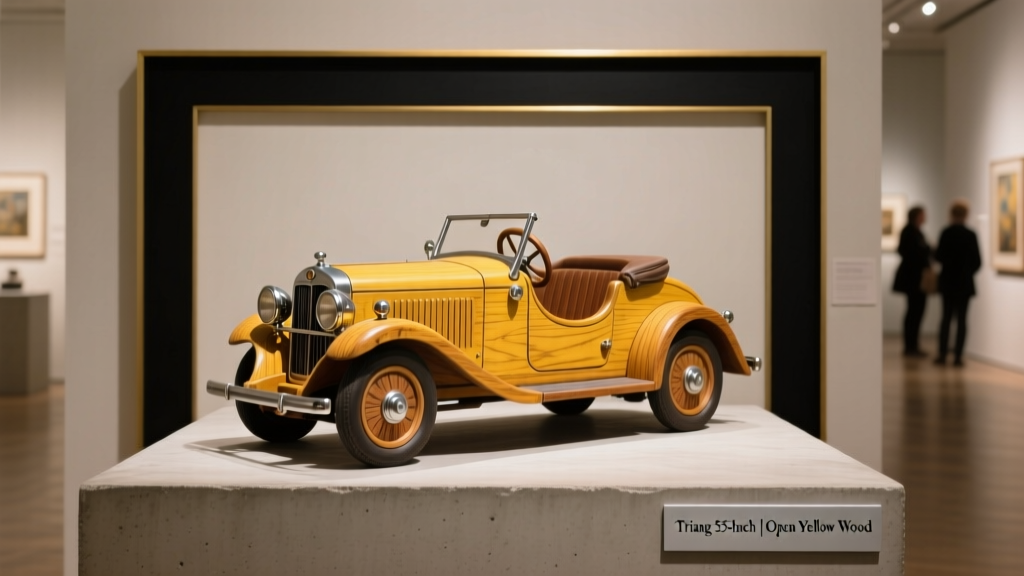
Toy Pedal Car Racing Open Yellow Wood Triang 55-Inch: Authentication, Provenance, and Market Analysis