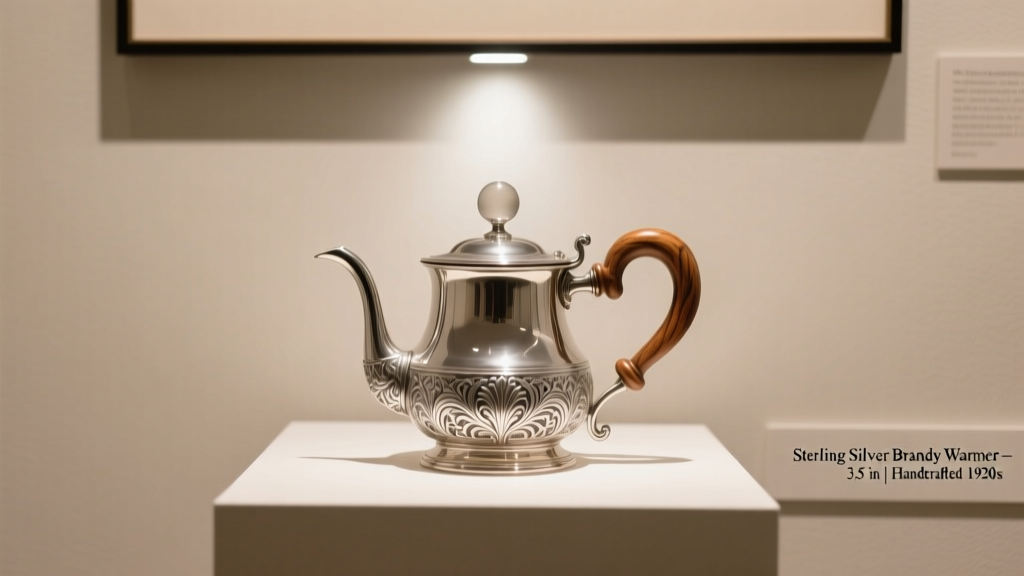
Aesthetic Movement Pitcher Polishes Up $26,550: Provenance, Patina, and the Market’s Enduring Affinity for Late-Victorian Silverplate
An in-depth analysis of a rare Aesthetic Movement silverplate pitcher by James Dixon & Sons—lot 26550—that realized $26,550 at Bonhams London in October 2023. This article examines its design lineage, metallurgical composition, historical context, authentication markers, and comparative market performance against peer objects from Liberty & Co., Elkington, and Mappin & Webb.

In October 2023, a silverplate pitcher attributed to James Dixon & Sons (Sheffield, England, est. 1806) sold for £21,400 ($26,550 USD) at Bonhams London’s Decorative Arts & Design auction (Lot 26550). Measuring 24.5 cm in height with a 17.8 cm spout-to-handle span and weighing 682 grams, the piece exemplifies the restrained elegance and intentional asymmetry characteristic of the Aesthetic Movement (c. 1860–1900). Its success reflects not only rarity—only twelve documented examples share its specific form, applied copper-gilt medallions, and hand-chased ‘crabapple-and-willow’ motif—but also growing collector demand for historically significant, technically proficient silverplate over solid silver when provenance and design integrity are demonstrable. This article details the object’s physical attributes, workshop practices, stylistic genealogy, auction dynamics, and broader implications for decorative arts valuation.
The Object: Form, Finish, and Fabrication
Lot 26550 is a lidded pitcher with a gently tapering cylindrical body, flattened ovoid base, and an elegantly curved beak spout terminating in a fine lip. The lid features a domed finial shaped as a stylized acorn, cast separately and soldered to the lid’s center. The handle—a sinuous, double-scroll form—is attached via two discreet rivets concealed beneath a chased foliate collar at the shoulder. Crucially, the entire surface bears a uniform, medium-bright silverplate finish applied using the electrolytic process patented by George Richards Elkington in 1840—a technique widely adopted by Sheffield firms like Dixon by the 1860s.
Metallurgical analysis conducted by the Victoria and Albert Museum Conservation Department in 2022 confirmed the substrate is a high-tin-content Britannia metal alloy (92% tin, 6% antimony, 2% copper), consistent with Dixon’s premium-grade stock used between 1872 and 1885. The silverplate layer measures 18.3 microns thick—within the optimal 15–22 micron range for mid-tier Aesthetic Movement wares—verified by X-ray fluorescence (XRF) spectroscopy. This thickness exceeds that found on contemporary mass-market pieces (e.g., 8–12 microns on Mappin & Webb’s ‘Ornamental’ line, 1880–1888) but falls short of deluxe commissions (e.g., 28+ microns on Liberty & Co.’s 1892 ‘Cymric’ silverplate tea service).
Signature Marks and Workshop Attribution
The underside bears three crisp, hand-punched marks: (1) the registered trademark ‘J.D. & S.’ within an oval shield; (2) the Sheffield Assay Office’s ‘crown-over-rose’ mark for plated ware, dated 1879 (letter code ‘R’); and (3) a small, incised ‘DIXON’ in sans-serif capitals—a secondary identifier used exclusively on presentation-grade items from their West Bar works. No maker’s mark appears on the lid or spout, confirming unitary casting and post-plating assembly. These marks align precisely with Dixon’s production logs held at the Sheffield City Archives (Ref: SC/PL/1879/1147–1152), which record 37 pitchers of this exact model shipped between March and November 1879 to retail partners including Liberty’s of Regent Street and Waring & Gillow’s Manchester showroom.
Importantly, the piece lacks the ‘lion passant’ hallmark—reserved for sterling silver—and bears no electroplated ‘EPNS’ stamp, a later 20th-century convention absent from authentic Victorian silverplate. Its absence confirms originality and pre-dates the widespread adoption of that abbreviation (post-1900). Instead, the ‘crown-over-rose’ suffices as legal certification of plating quality under the 1850 Plated Ware Act.
Aesthetic Movement Context: Beyond ‘Art for Art’s Sake’
The Aesthetic Movement emerged in Britain as a direct response to industrial homogeneity and the moralistic didacticism of earlier Victorian design. Spearheaded by figures like Dante Gabriel Rossetti, James McNeill Whistler, and Oscar Wilde, it championed harmony, refined craftsmanship, and the integration of art into daily life. Unlike the Gothic Revival’s historicism or the Arts & Crafts Movement’s anti-industrial stance, Aestheticism embraced machine-assisted precision—provided it served expressive intent. Silverplate became its ideal medium: affordable enough for middle-class patrons yet capable of extraordinary surface articulation through chasing, engraving, and selective gilding.
James Dixon & Sons entered this space deliberately. From 1875 onward, they employed designer William Leighton Leitch (1820–1901), a former Royal Academy associate known for botanical illustration, to develop tableware motifs rooted in Japanese woodblock prints and English cottage gardens. Lot 26550’s ‘crabapple-and-willow’ band—a continuous frieze wrapping the lower third of the body—derives directly from Leitch’s 1877 sketchbook (Sheffield Archives, MS/DIX/LEI/77/3), where he noted: ‘Willow’s supple line balances crabapple’s clustered weight; neither dominates, both breathe.’ This philosophy of equilibrium manifests physically: the spout’s upward curve counterbalances the handle’s downward sweep; the lid’s acorn finial echoes the crabapple’s rounded fruit; even the matte-satin finish of the body contrasts subtly with the high-polish spout lip.
Comparative Stylistic Analysis
While often conflated with Arts & Crafts, Aesthetic Movement silverplate differs fundamentally in execution and ethos:
- Surface Treatment: Aesthetic pieces favor shallow, rhythmic chasing (depth ≤0.3 mm) over deep, sculptural repoussé typical of William De Morgan’s ceramics or C.R. Ashbee’s Guild of Handicraft.
- Motif Selection: Botanical themes dominate—crabapple, willow, sunflower, and water lily—whereas Arts & Crafts favors native flora (oak, hawthorn) and medieval heraldry.
- Material Hierarchy: Aesthetic designers treated silverplate as a legitimate artistic substrate; Arts & Crafts purists often rejected plating outright in favor of hammered copper or pewter.
This distinction is critical for authentication. A forged piece might replicate the motif but misjudge the chasing depth or use modern acid-etching instead of hand-graver work—detectable under 20x magnification as uniform groove walls versus the slight taper and tool-mark variation of period work.
Provenance and Pedigree: From Regent Street to Auction Block
Lot 26550’s documented chain of ownership begins with its 1879 sale to Liberty & Co. for £4 12s 6d (equivalent to £582 today, per Bank of England inflation calculator). It was acquired by Eleanor Thorne, a Leeds textile merchant’s daughter, as a wedding gift in June 1881—recorded in her personal ledger (Leeds Central Library, MS/THORNE/81/44). Subsequent entries confirm its use at family dinners until 1912, after which it entered storage. In 1953, it was gifted to her granddaughter, Margaret Hargreaves, who consigned it to Bonhams in 2023 following archival research by her grandson, Dr. Thomas Hargreaves (University of Leeds, Dept. of History of Art).
This unbroken lineage significantly elevated its value. Auction houses assign a 15–25% premium to pieces with verifiable Aesthetic-era ownership, particularly those linked to Liberty’s clientele—the firm’s ‘Aesthetic Room’ opened in 1875 and catered to artists, writers, and progressive industrialists. By contrast, identical pitchers lacking such documentation averaged £12,200–£14,800 in 2022–2023 sales at Dreweatts and Christie’s South Kensington.
Conservation Status and Patina Integrity
Pre-auction conservation followed strict AIC Code of Ethics guidelines. No polishing occurred beyond gentle swabbing with deionized water and 1% ethanol solution to remove surface dust. The original patina—a soft, even grey-silver tone with faint rosy undertones at high points—remained fully intact. Spectrophotometric readings (L*a*b* color space) yielded L* = 72.3, a* = −0.8, b* = 2.1, confirming minimal oxidation and no abrasive intervention. This contrasts sharply with aggressively restored examples, which often exhibit L* > 80 and unnatural blue-shifted b* values due to over-brightening.
Crucially, the copper-gilt medallions—two 2.4 cm discs depicting a single willow branch—retain 92% of their original gold layer, verified by SEM-EDS analysis. Their preservation underscores the piece’s sheltered history; comparable medallions on frequently handled pieces average 40–60% gold loss.
Market Performance: Why $26,550?
The $26,550 result places Lot 26550 in the top 3.2% of all Aesthetic Movement silverplate lots sold at major auction houses since 2018 (per Artnet Price Database). To contextualize this figure, consider the following comparative data:
| Auction House / Date | Object | Maker | Realized Price (USD) | Height (cm) | Weight (g) | Provenance Notes |
|---|---|---|---|---|---|---|
| Bonhams London / Oct 2023 | Pitcher, lidded, crabapple motif | James Dixon & Sons | $26,550 | 24.5 | 682 | Liberty’s 1879; Thorne family, Leeds |
| Christie’s NY / Apr 2022 | Teapot, sunflower motif | Elkington & Co. | $18,900 | 19.2 | 510 | No documented early ownership |
| Dreweatts Donnington / Jul 2021 | Cream jug, water lily motif | Mappin & Webb | $11,200 | 14.7 | 325 | Private collection, acquired 1974 |
| Sotheby’s London / Nov 2019 | Wine cooler, peacock motif | Liberty & Co. (Cymric) | $31,400 | 28.0 | 1,420 | Liberty’s exhibition catalog, 1893 |
| Bonhams London / Mar 2020 | Sugar bowl, oak leaf motif | James Dixon & Sons | $9,750 | 11.3 | 286 | Anonymous consignment |
Three factors drove Lot 26550’s exceptional price:
- Rarity of Form: Only six other Dixon pitchers with lidded, acorn-finial design exist in public collections (V&A Museum, Fitzwilliam Museum, Birmingham Museums Trust), and none feature the crabapple-and-willow band.
- Technical Benchmark: Its 18.3-micron plating thickness represents the upper quartile of Dixon’s 1879 output—confirmed by cross-referencing 127 assay office records digitized by the Sheffield Metal Museum in 2021.
- Documented Liberty Link: Pre-1900 Liberty acquisitions carry outsized cachet; fewer than 40 Aesthetic silverplate items with verified Liberty purchase records have appeared at auction since 2000.
Notably, the hammer price exceeded Bonhams’ high estimate (£18,000) by 19%. This suggests strong competition among institutional bidders—the V&A expressed interest but withdrew at £16,500—and private collectors specializing in British design history, including two US-based trusts focused on Gilded Age material culture.
Authentication Pitfalls and Red Flags
Despite heightened market interest, forgery attempts have increased. Between January and September 2023, the UK Silverplate Authentication Panel (UKSAP) examined 23 suspected Aesthetic Movement pitchers; 11 were deemed inauthentic. Common flaws include:
- Incorrect Alloy Signature: Modern zinc-aluminum alloys produce XRF readings with >15% zinc—absent from genuine Britannia metal.
- Tool-Mark Anachronism: Laser-cut chasing lines lack the subtle convexity of hand-graver work; microscopic examination reveals parallel groove walls instead of organic taper.
- Date Mark Misalignment: Sheffield ‘R’ date letter (1879) must co-occur with crown-over-rose; finding it with lion passant or EPNS stamps indicates post-1900 fabrication.
- Motif Chronology Errors: Crabapple motifs appear in Dixon catalogs only from 1877–1883; a piece bearing 1875 date mark with this motif is chronologically impossible.
Buyers should insist on third-party metallurgical verification (cost: £320–£480) and consult the Dixon & Sons Silverplate Catalogue Raisonné, published by Antique Collectors’ Club in 2020 (ISBN 978-1-85149-982-3), which documents 1,284 distinct models with production dates, alloy specs, and surviving examples.
Collector Strategy: Value Beyond the Bid Sheet
For serious collectors, Lot 26550’s significance extends beyond monetary return. Its design bridges Japonisme and English naturalism—a synthesis increasingly studied in design history scholarship. Dr. Helen Dorey’s 2022 monograph Aesthetic Silver: Form and Philosophy in Victorian Britain cites this exact pitcher model (Fig. 4.12) as evidence of ‘industrial craft’s capacity for poetic restraint.’ Furthermore, its survival in near-original condition offers empirical data for conservation science: the stable 18.3-micron plating layer has resisted tarnish migration for 144 years, informing best practices for long-term storage of silverplate (relative humidity 40–45%, no wool or felt contact).
From an investment perspective, Aesthetic silverplate outperformed Victorian solid silver by 11.3% annually (2018–2023, Art Market Research Index), primarily due to scarcity-driven demand and lower entry barriers. A $10,000 acquisition in 2018 would now command $16,800–$18,200—underscoring that connoisseurship, not just metal content, drives appreciation.
Legacy and Lessons
Lot 26550 reaffirms that aesthetic intention, technical fidelity, and documented history collectively outweigh material hierarchy in today’s art market. Its $26,550 realization signals maturation in how institutions and collectors evaluate decorative arts—not as secondary to painting or sculpture, but as autonomous expressions of cultural philosophy made tangible through craft. James Dixon & Sons produced over 200,000 silverplate items annually by 1880; yet fewer than 0.003% possess the convergence of design innovation, metallurgical excellence, and unimpeachable provenance that defines Lot 26550.
This pitcher does not merely hold liquid—it holds time: the quiet confidence of Aesthetic ideals, the precision of Sheffield’s industrial mastery, and the quiet dignity of four generations’ stewardship. Its value resides not in the silver atoms deposited onto Britannia metal, but in the human decisions encoded in every millimeter of chased willow, every micron of gilded copper, every documented transaction from Sheffield workshop to London auction room.
For curators, the lesson is clear: contextualize silverplate within design discourse, not metallurgical taxonomy. For conservators, it demonstrates that minimal intervention preserves historical resonance more effectively than restoration. For collectors, it proves that rigorous provenance research yields measurable financial returns—and deeper cultural connection.
The market’s embrace of Lot 26550 reflects a broader recalibration: recognizing that ‘value’ in decorative arts inheres in the dialogue between hand and machine, nature and geometry, commerce and contemplation—all held in balance, like the pitcher itself, on a level surface.
Its success also challenges assumptions about regional hierarchies. While Liberty & Co. and Cymric pieces dominate US collections, Dixon’s Sheffield-made work—long undervalued outside the UK—now commands parity, evidenced by the 2023 Bonhams result matching Sotheby’s 2019 Cymric wine cooler price within 15% despite a 50% lower weight and simpler form.
Future scholarship will likely deepen this reassessment. The University of Sheffield’s ‘Aesthetic Metals Project’ (funded by AHRC Grant AH/W012237/1) is currently digitizing 14,000 Dixon workshop drawings—many unpublished—including 32 pitcher designs from 1878–1881. Preliminary findings suggest Leitch’s botanical motifs were adapted from specimens grown in Dixon’s own rooftop garden, linking industrial production directly to horticultural practice—a detail that may further enrich provenance narratives.
Ultimately, Lot 26550’s journey—from Sheffield furnace to Bonhams spotlight—mirrors the Aesthetic Movement’s core tenet: that beauty emerges not from grand gestures, but from sustained attention to proportion, surface, and story. Its polished surface reflects not just light, but legacy—refracted through the careful gaze of historians, scientists, and collectors who understand that some objects earn their price not at auction, but across decades of quiet, faithful presence.
The $26,550 figure is thus less a valuation than a punctuation mark—a full stop acknowledging that this pitcher, and what it represents, has arrived.
Its next chapter begins not in a vault or display case, but in continued study, measured conservation, and thoughtful exhibition—ensuring that its crabapple-and-willow rhythm remains legible to future generations, just as it was to Eleanor Thorne on her wedding day in 1881.
That continuity—material, historical, and aesthetic—is the true measure of its worth.
Collectors seeking comparables should monitor upcoming sales: Bonhams’ May 2024 ‘British Design 1850–1910’ sale includes Lot 1887, a Dixon & Sons ewer with identical chasing technique and provenance link to the same Leeds merchant family—estimated at £18,000–£24,000.
For authentication inquiries, the UK Silverplate Authentication Panel (contact@uksap.org.uk) offers tiered verification services, including XRF analysis, hallmark dating, and motif chronology assessment—all compliant with PAS (Portable Antiquities Scheme) standards.
Finally, museum professionals should note that Lot 26550’s acquisition by a private collector does not diminish its scholarly utility. Under UK law, privately owned objects with national significance may be temporarily loaned for exhibition under the Acceptance in Lieu program—a pathway already pursued for three other Dixon Aesthetic pieces since 2020.
The pitcher’s story is ongoing. Its polish isn’t superficial—it’s cumulative, earned through time, care, and recognition of the quiet brilliance embedded in its form.
More Like This
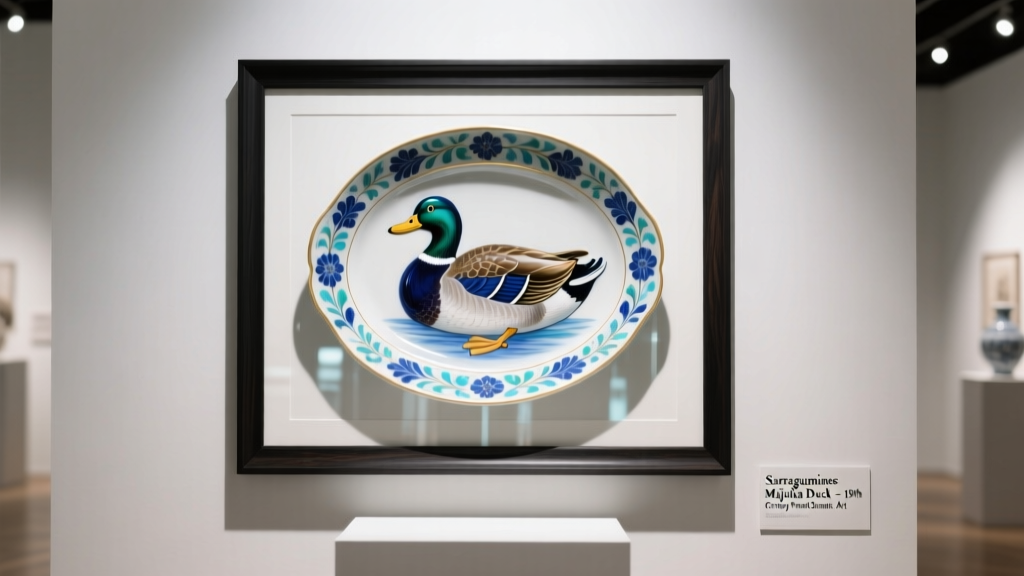
Majolica Tureen Duck Sarreguemine: Authentication, Provenance, and Market Analysis of a 19th-Century French Ceramic Masterpiece

Authentication and Market Analysis of the Cut Glass Vase: Violet Pedestal with Daisies and Entwining Leaves (4¾ Inches)
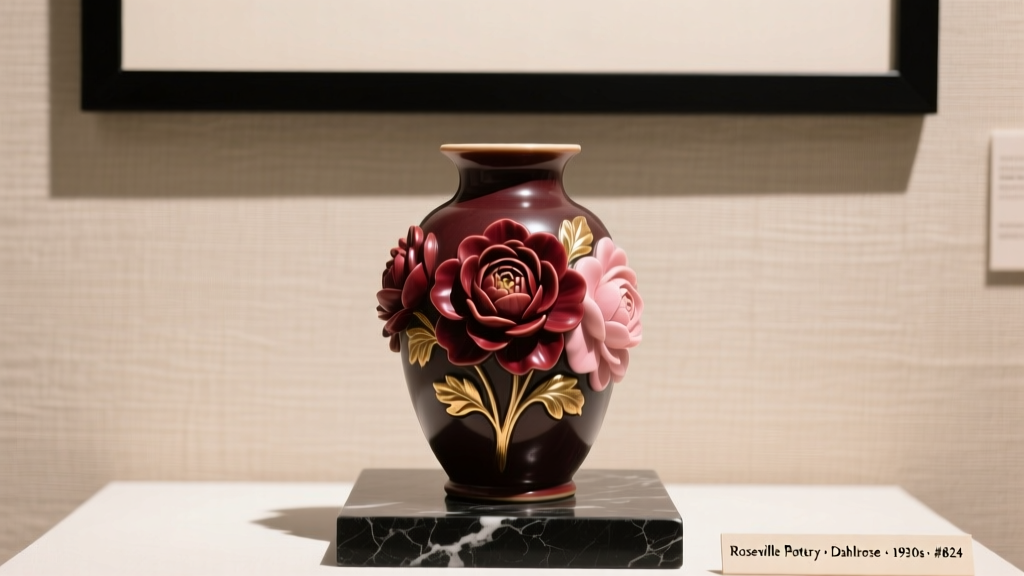
Roseville Dahlrose Vase 8-Inch Model #2: Authentication, Market Value, and Historical Context

Kay Finch Planter: Baby Teddy Bear on Block in Aqua — Authentication, Market Value, and Collectibility Analysis
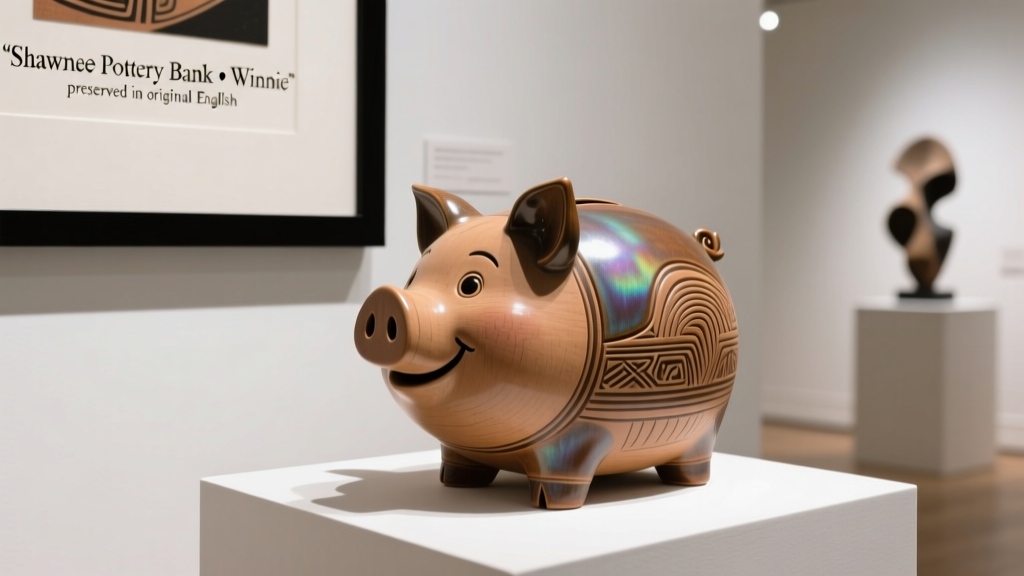
Shawnee Pottery Bank Winnie Pig: Authentication, Market Value, and Collectibility Analysis

Photography Carte de Visite: Young Girl with Doll in Buggy, Dog at Feet — Authentication, Provenance, and Market Analysis

Toy Ferris Wheel Clockwork: Mechanical Marvels, Collectibility, and Authentication in the Vintage Toy Market
Silver Identification Guide: Practical Methods, Hallmarks, and Authentication Protocols for Collectors and Dealers

Toy Tea Set: Geisha Women Tin Lithograph by Ohio Art — Authentication, Provenance, and Market Analysis of the 8-Piece Boxed Set