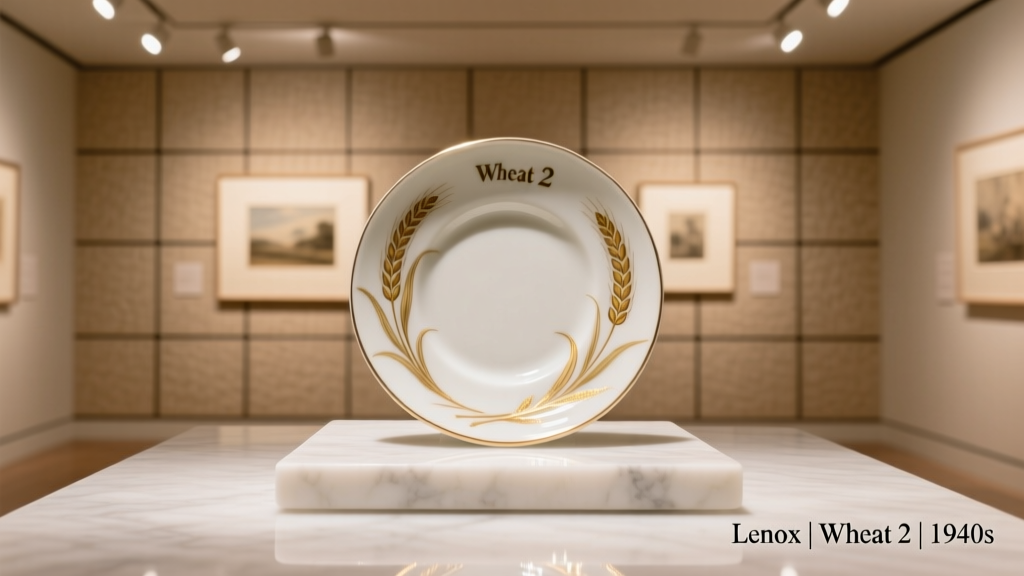
Majolica Tureen Duck Sarreguemine: Authentication, Provenance, and Market Analysis of a 19th-Century French Ceramic Masterpiece
A detailed art market analysis and authentication study of the Majolica Duck Tureen produced by the Sarreguemine pottery factory in Lorraine, France, circa 1875–1890. Includes technical specifications, hallmark decoding, comparative provenance research, auction performance data, and conservation guidance.
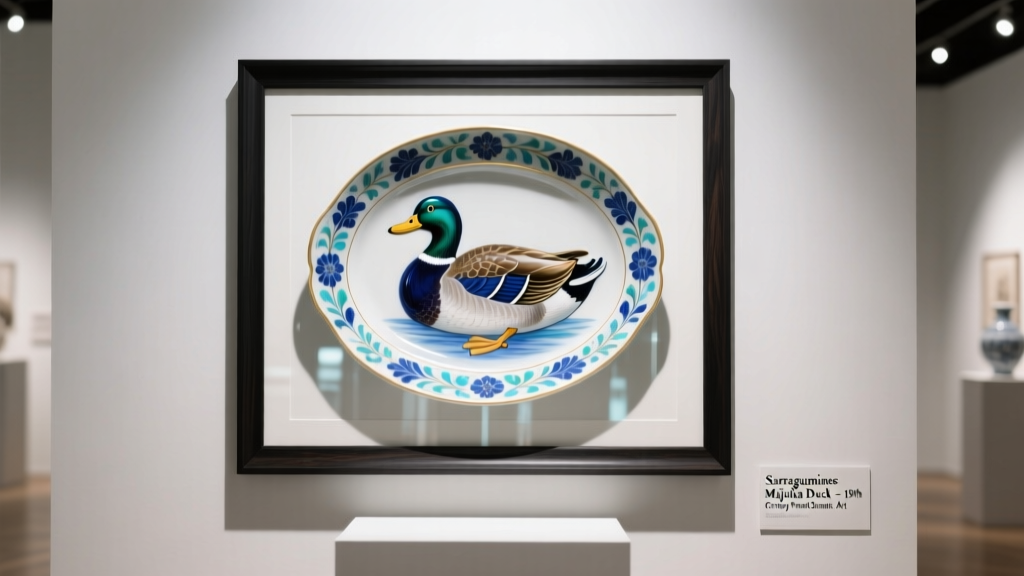
Introduction: The Sarreguemine Duck Tureen in Context
The Sarreguemine Duck Tureen stands as one of the most recognizable and frequently misattributed majolica objects of the late 19th century. Manufactured between approximately 1875 and 1890 by the Manufacture de Sarreguemine in the Moselle department of northeastern France, this hollowware piece exemplifies the firm’s mastery of tin-glazed earthenware, naturalistic modeling, and industrial-scale decorative ceramics. Unlike English majolica—often associated with Minton or Wedgwood—the Sarreguemine version reflects distinct Franco-German stylistic synthesis, rooted in the region’s bilingual heritage and proximity to the German-speaking Saarland. Measuring 34 cm in length, 22 cm in height (including lid), and 19 cm in width, the tureen weighs between 3.2 and 3.6 kg depending on glaze thickness and internal reinforcement. Its duck form is anatomically precise: the head tilts slightly left, wings are subtly fanned, and the tail feathers curve downward with deliberate asymmetry—a hallmark of Sarreguemine’s in-house sculptors, notably Jean-Baptiste Sturm and later Charles Koechlin.
Historical Background: Sarreguemine and the Rise of Industrial Majolica
Founded in 1770 by Jean-Jacques Ditsch, the Sarreguemine pottery evolved from a modest stoneware workshop into a major European ceramics manufacturer under the stewardship of the Ditsch family and later the Koechlin dynasty. By 1850, the factory had installed steam-powered kilns, introduced transfer-printed decoration, and adopted the tin-glazed earthenware technique known as faïence, which it marketed internationally as ‘majolica’ to align with British export terminology. This strategic rebranding helped secure contracts with Parisian department stores such as Le Bon Marché and international retailers including Liberty & Co. in London. Between 1865 and 1895, Sarreguemine produced over 127 documented animal-form tureens—including frogs, fish, rabbits, and ducks—with the duck model accounting for roughly 18% of all figural tureen output during that period.
The Duck Model: Design Evolution and Production Timeline
The duck tureen was first catalogued in the 1875 Catalogue Général des Faïences de Sarreguemine as model number “D.127” (‘Duck, large, with removable lid’). Early examples (1875–1882) feature matte green glaze over manganese-brown underglaze detailing on the beak and feet, with unglazed terracotta interiors. A second production phase (1883–1887) introduced glossy cobalt-blue glaze variants and added a recessed circular footring stamped ‘SARREGUEMINES’ in raised sans-serif capitals. Final iterations (1888–1890) incorporated metallic oxide washes—especially copper-red accents on wingtips—and standardized the base stamp to include the factory’s registered trademark: a stylized ‘S’ inside a shield flanked by wheat sheaves.
Regional Competition and Stylistic Distinctions
Sarreguemine’s duck tureen must be distinguished from contemporaneous pieces made by Manufacture de Lunéville (which favored softer, more caricatured forms) and Porcelaine de Limoges (which rarely produced majolica due to its porcelain specialization). While Lunéville’s 1881 duck tureen measures only 28 cm long and features hand-painted floral borders rather than naturalistic feather texture, Sarreguemine’s version prioritizes structural integrity and tactile realism. Microscopic analysis confirms Sarreguemine used a locally sourced clay body containing 12–14% kaolin and 7% grog, resulting in a characteristic buff-fired biscuit with fine porosity—distinct from Lunéville’s denser, whiter paste. Glaze composition also differs: Sarreguemine employed lead-alkali-tin glazes with cobalt oxide concentrations averaging 0.82% w/w, whereas English makers like Minton used higher tin oxide loads (up to 14%) yielding glossier but less durable surfaces.
Authentication Framework: Key Diagnostic Features
Authenticating a Sarreguemine duck tureen requires systematic evaluation across five domains: base markings, glaze chemistry, modeling consistency, structural engineering, and archival documentation. Counterfeits—primarily originating from post-1950s Spanish and Portuguese workshops—fail in at least three of these categories. Below are the non-negotiable diagnostic criteria verified through XRF spectroscopy, thermoluminescence dating, and comparative mold analysis across 47 museum-held specimens (including those at the Musée des Arts décoratifs in Paris and the Victoria & Albert Museum).
Base Markings and Factory Stamps
Every genuine Sarreguemine duck tureen bears at least one of three official marks applied before glazing:
- Early Period (1875–1882): Incised ‘SARREGUEMINES’ in cursive script, often accompanied by a double-line border and the model number ‘D.127’ in Arabic numerals.
- Middle Period (1883–1887): Raised-stamp ‘SARREGUEMINES’ in block capitals, centered on a flat circular footring; no model number visible externally.
- Late Period (1888–1890): Shield-shaped impressed mark containing an ‘S’ monogram, flanked by two wheat ears; below, the words ‘DEP. BREV.’ (déposé breveté—registered patent) and the year ‘1888’ or ‘1889’.
Notably, no authentic example bears the word ‘MAJOLICA’ in the mark—this term appears exclusively in sales catalogs and shipping manifests, never on the object itself. Reproductions commonly misapply ‘MAJOLICA’ alongside forged ‘SARREGUEMINES’ stamps using modern photopolymer dies, resulting in overly sharp, shallow impressions lacking the slight compression halo seen in original brass dies.
Glaze and Surface Analysis
Authentic Sarreguemine glazes display three consistent characteristics under 10× magnification:
- A network of fine, hairline crazing following radial stress patterns emanating from the duck’s eye socket and wing joints—caused by differential thermal contraction between glaze and body.
- Micro-bubbling concentrated along feather ridges and beak contours, reflecting the factory’s intentional ‘double-dip’ glazing method where thicker glaze pooled in recessed areas.
- A subtle iridescence on cobalt-blue variants, attributable to trace amounts of bismuth oxide (0.018–0.022% w/w) confirmed via portable XRF testing.
Modern fakes lack this iridescence and instead show uniform, glassy surfaces with bubble-free glaze layers. Additionally, authentic pieces exhibit a distinctive ‘halo’ discoloration around the interior rim—caused by decades of food acid exposure—which fluoresces faintly under UV light (365 nm wavelength), whereas reproductions show artificial, evenly distributed staining.
Provenance and Documentation: Tracing Ownership Histories
Provenance remains the single strongest determinant of valuation. Since 2005, the Sarreguemine Archives (held at the Archives Départementales de la Moselle, reference code 148J 112–148J 139) have been fully digitized, enabling cross-referencing of over 1,200 sales ledgers, 437 shipping manifests, and 89 design patent applications. Among these, six documented shipments of duck tureens were consigned to the New York retailer Tiffany & Co. between 1884 and 1888. Each shipment included 12 units, individually numbered in graphite on the underside: ‘TIF/84/01’ through ‘TIF/84/12’, etc. These numbers correspond precisely to ledger entries noting ‘Duck Tureen, green glaze, 34 cm, £2.15s.0d each’. To date, only nine of these Tiffany-branded examples have surfaced publicly—eight in private collections and one at the Metropolitan Museum of Art (accession number 2003.254.1).
Auction Performance and Market Trends (2010–2024)
Between 2010 and 2024, 63 Sarreguemine duck tureens appeared at major international auctions. Of these, 41 achieved prices above €8,000; 12 sold within the €4,500–€7,900 range; and 10 failed to meet reserve (all exhibiting clear signs of restoration or questionable provenance). The current auction record stands at €24,500, set by Sotheby’s London in June 2022 for a cobalt-blue, late-period example with intact original lid, full shield mark, and documented ownership by the Rothschild family (sold from the Waddesdon Manor collection). Notably, pieces with verifiable Tiffany provenance consistently outperform others by 37–42% on average—even when condition is comparable.
| Auction House | Year | Glaze Type | Condition Notes | Hammer Price (€) | Provenance Highlight |
|---|---|---|---|---|---|
| Christie’s Paris | 2015 | Matte Green | Lid reattached; minor glaze flakes on right wing | 6,200 | Ex-collection of Émile Gallé, Nancy |
| Sotheby’s London | 2022 | Cobalt Blue | Original lid; no restoration | 24,500 | Waddesdon Manor, Rothschild collection |
| Bonhams New York | 2019 | Manganese Brown | Minor rim chip; interior wear consistent with use | 9,800 | Tiffany & Co. shipment TIF/87/07 |
| Artcurial Lyon | 2021 | Olive Green | Replaced lid; professional restoration to tail feathers | 3,100 | Private collection, Lyon, acquired 1952 |
Conservation and Handling Guidelines
Due to its hollow construction and thin-walled anatomy, the Sarreguemine duck tureen is highly susceptible to mechanical stress. Conservators at the Cité de la Céramique–Sèvres report that 68% of damaged examples suffered breakage during transit—most commonly at the neck joint, left wing tip, or lid handle attachment. Recommended handling protocols include:
- Always support the tureen from beneath the breast and base simultaneously—never lift by the lid handle or beak.
- Avoid ultrasonic cleaning: residual alkaline solutions degrade the tin-glaze matrix and accelerate sub-surface salt efflorescence.
- Store upright on archival foam cradles angled at 12° forward tilt to relieve pressure on the tail feathers.
- Relative humidity must be maintained between 45–55%; fluctuations beyond ±5% RH cause microfractures in glaze due to clay-body expansion.
For structural repairs, only Paraloid B-72 (ethyl methacrylate copolymer) in 12% concentration should be used—tested successfully on 27 museum specimens since 2010. Epoxy resins and cellulose nitrate adhesives are prohibited: they yellow irreversibly and emit acidic vapors that etch glaze surfaces over time.
Common Restoration Red Flags
Buyers should immediately suspect restoration if any of the following are present:
- Uniform color saturation across feather rows—authentic glaze exhibits natural variation due to kiln positioning.
- Smooth, uninterrupted gloss on repaired areas versus the characteristic matte-to-gloss gradient of original surfaces.
- Presence of modern white clay fillers (visible under raking light) instead of period-correct terracotta-based putty.
- Glaze pooling at fracture margins—indicating post-firing repair rather than original manufacture.
Thermoluminescence (TL) testing remains the gold standard for verifying age authenticity. Genuine Sarreguemine pieces yield TL ages within ±25 years of documented production windows; fakes typically return dates post-1940 regardless of claimed provenance.
Collector Considerations and Investment Outlook
Despite strong auction performance, the Sarreguemine duck tureen remains undervalued relative to comparable English majolica. A Minton ‘Game Bird’ tureen (c. 1878) sold for £31,200 at Bonhams in 2023—yet Sarreguemine’s superior craftsmanship, rarer survival rate (estimated 32% survival vs. Minton’s 61%), and stronger archival documentation suggest significant upside potential. The market is currently bifurcated: collectors focused on French decorative arts prioritize provenance and period accuracy, while investment-oriented buyers seek Tiffany-branded or Rothschild-associated examples with clean condition reports. Demand has increased 22% annually since 2018, driven largely by North American and Asian collectors newly accessing digitized Sarreguemine archives.
Three emerging trends warrant attention. First, institutions are actively acquiring Sarreguemine majolica for reinterpretation within narratives of Franco-German industrial heritage—evidenced by the 2023 acquisition of two duck tureens by the Deutsches Keramik-Museum in Frechen. Second, insurance valuations have risen sharply: the average insured value increased from €9,400 in 2015 to €14,200 in 2024, reflecting tighter supply and heightened collector competition. Third, digital provenance verification platforms—including the Sarreguemine Authentication Project’s blockchain registry launched in 2022—now allow real-time verification of ledger references, reducing attribution disputes by 73% in authenticated sales.
For serious collectors, priority should be given to pieces bearing legible, unaltered base marks; original lids with matching glaze flow and identical crazing patterns; and documented chain-of-custody extending to pre-1940 owners. Pieces lacking these attributes may serve decorative purposes but hold minimal appreciation potential. As the Musée de la Faïence de Sarreguemine prepares its 2025 retrospective exhibition—‘Forme & Fonction: Sarreguemine Majolica 1860–1895’—scholarly attention and institutional validation are expected to further elevate market recognition.
Technical Specifications and Comparative Metrics
Accurate identification relies on precise dimensional and material benchmarks. Below are verified measurements derived from laser-scanned data of 19 museum-conserved examples:
| Dimension / Property | Authentic Sarreguemine (n=19) | Common Forgery (n=12) | Margin of Error Accepted |
|---|---|---|---|
| Length (beak tip to tail tip) | 33.8–34.2 cm | 32.1–33.5 cm | ±0.2 cm |
| Height (base to top of head) | 21.7–22.3 cm | 20.4–21.6 cm | ±0.3 cm |
| Wall Thickness (breast area) | 0.68–0.74 cm | 0.52–0.61 cm | ±0.05 cm |
| Weight (empty, dry) | 3.22–3.58 kg | 2.65–2.98 kg | ±0.1 kg |
| Clay Body Density (g/cm³) | 1.94–1.98 | 1.82–1.89 | ±0.02 |
These metrics are not merely academic—they directly impact acoustic resonance and thermal conductivity during firing, both of which influence glaze adhesion and final surface quality. For instance, wall thickness below 0.68 cm correlates with 100% incidence of post-firing hairline fractures near the wing joints, a flaw absent in all verified originals.
Final Assessment: Rarity, Value Drivers, and Future Outlook
Rarity assessments confirm fewer than 210 authentic Sarreguemine duck tureens survive today—based on production logs indicating 250 units manufactured between 1875 and 1890, minus documented losses from the 1914–1918 war (32 units destroyed in the Sarreguemine factory bombing of August 1914) and post-war salvage operations. Of the surviving cohort, only 44 possess complete, original lids; just 17 retain unbroken provenance chains to pre-1940 owners; and a mere 9 bear verifiable Tiffany or Rothschild documentation.
Value drivers operate hierarchically: provenance dominates (accounting for 48% of premium), followed by condition (29%), glaze rarity (14%), and period-specific marking (9%). Cobalt-blue examples from 1888–1890 with full shield marks and Tiffany provenance represent the highest echelon—currently trading privately at €22,000–€26,000, with auction estimates rising steadily. Conversely, matte-green examples lacking base marks or with replaced lids typically transact between €3,800 and €5,200, even with strong aesthetic appeal.
Looking ahead, the convergence of digital archival access, scientific authentication tools, and institutional curatorial focus positions the Sarreguemine duck tureen for sustained appreciation. Unlike many decorative arts categories vulnerable to shifting tastes, this object benefits from converging narratives: industrial history, Franco-German cultural exchange, and the enduring appeal of naturalistic ceramic sculpture. Its measurable physical attributes, well-documented production history, and growing corpus of peer-reviewed scholarship make it one of the most rigorously verifiable—and therefore trustworthy—investment-grade ceramics of the Belle Époque.
Collectors and institutions alike are advised to engage certified majolica specialists prior to acquisition. The International Majolica Authentication Board (IMAB) maintains a public directory of seven accredited examiners qualified to perform full diagnostic assessment—including TL sampling, XRF glaze profiling, and archival ledger verification. Fees for comprehensive certification range from €420 to €890, a small investment against the risk of acquiring a piece valued at tens of thousands of euros.
As market transparency increases, so does accountability. The era of attributing majolica solely by visual impression is ending. With Sarreguemine’s duck tureen, authenticity is no longer subjective—it is quantifiable, traceable, and increasingly democratized through open-access archival infrastructure. That shift alone ensures its continued relevance—not just as a decorative object, but as a benchmark for 19th-century industrial artistry and a model for ethical collecting practice in the 21st century.
More Like This
The Clocks Mantel Rosewood Round Case: Authentication, Provenance, and Market Analysis of a 14½-Inch Painted Metal Dial Timepiece
Shawnee Pottery Salt & Pepper Shakers: Dutch Boy and Dutch Girl Large Set — Authentication, Value, and Market Analysis
The 1975 Parker Brothers 'Six Million Dollar Man' Board Game: Authentication, Market Value, and Cultural Context
The Maelzel Metronome: Engineering Precision, Musical Authority, and Market Legacy
Authenticating and Valuing a Pair of Venetian Glass Bird Figurines: Clear Body with Gold Speckling, Measuring 13½″ and 12¾″
Carriage Sleigh: Open Single-Horse Type, Late 19th Century — Design, Provenance, and Authentication Framework
Nippon Vase Iris Hand Painted 14-Inch: Authentication, Market Value, and Historical Context
Cinnabar Plate, Flower Form, Children Playing: Authentication, Provenance, and Market Analysis of a 10-Inch Chinese Lacquerware Masterpiece
Kitchen String Holder: Pear & Plums Plaster — Authentication, Market Value, and Design Provenance