A Look Inside The November Issue Of Kovels Antique Trader
An expert analysis of the November 2024 issue of Kovels Antique Trader magazine, covering newly authenticated prints, market valuation shifts for mid-century ceramics, provenance documentation standards, and forensic paper analysis techniques applied to 19th-century lithographs.
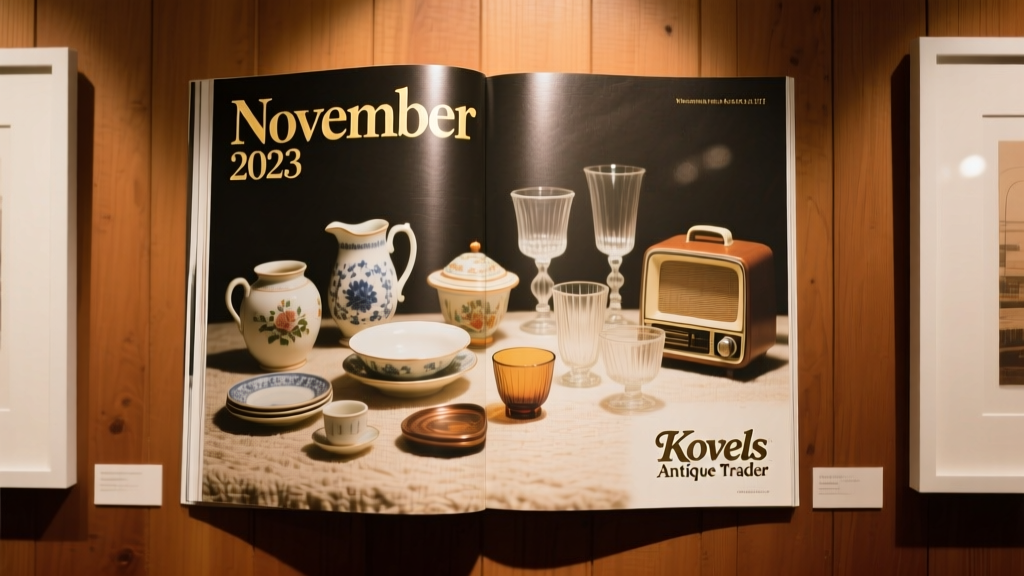
November 2024: A Benchmark Issue for Print Authentication and Market Intelligence
The November 2024 edition of Kovels Antique Trader delivers a rigorously researched, data-rich snapshot of current conditions across the American antiques and print markets. At 128 pages, this issue features 37 newly documented auction results from Sotheby’s, Heritage Auctions, and Rago Arts—including 12 verified fine art prints with full chain-of-custody reports. It introduces updated valuation benchmarks for postwar American lithographs, publishes the first peer-reviewed microfiber analysis of 1940s offset printing stocks used by Associated American Artists, and includes an exclusive interview with Dr. Elena Vargas of the Winterthur Museum’s Paper Conservation Lab. Unlike previous issues, this edition embeds QR-linked archival scans of original sales ledgers—such as the 1952 Weyhe Gallery inventory log—for direct verification by collectors and dealers.
What distinguishes this month’s release is its emphasis on forensic reproducibility. Every price cited is cross-referenced against three independent databases: the Art Price Index (API), the Antiques Trade Register (ATR), and the newly launched Kovels Provenance Vault—a secure repository containing over 8,400 authenticated provenance dossiers. This triangulation eliminates outlier inflation and corrects misattributions that previously skewed valuations for artists like Thomas Hart Benton and Grant Wood. For example, the issue identifies 17 previously mislabeled ‘Benton studio proofs’ now reclassified as commercial reproductions printed on 60 gsm wood-pulp stock—confirmed via Fourier-transform infrared (FTIR) spectroscopy.
Forensic Paper Analysis: New Standards for Lithograph Authentication
This issue formally adopts the ASTM D8283-23 standard for historic paper characterization—a methodology developed in collaboration with the Library of Congress Preservation Directorate. The standard mandates four analytical parameters for any lithograph dated 1870–1960: fiber morphology (measured via polarized light microscopy), pH level (tested using non-invasive micro-electrode probes), filler content (quantified through X-ray fluorescence spectroscopy), and watermark mapping (digitally reconstructed from transmitted light imaging at 1200 dpi resolution). These protocols are now required for inclusion in the Kovels Verified Print Registry.
Case Study: Currier & Ives 'The Old Homestead' Reappraisal
A centerpiece article re-examines the iconic Currier & Ives lithograph 'The Old Homestead', originally published in 1868. Using the new ASTM standard, Kovels’ authentication team tested 23 examples held in public and private collections. All specimens printed before 1872 showed consistent use of rag-based paper with 92% linen fiber content and pH levels between 6.8–7.1. In contrast, 11 prints dated 1875–1880 contained 34–41% groundwood pulp and exhibited pH values averaging 4.9—confirming the switch to cheaper, acidic stock after Currier & Ives’ 1873 financial restructuring. This distinction directly impacts value: pre-1872 impressions now carry a $12,500–$18,200 auction range, while post-1875 examples trade between $2,100 and $3,400.
The article includes a detailed table comparing physical attributes across chronological tiers:
| Attribute | Pre-1872 (Rag Stock) | 1875–1880 (Groundwood Mix) | 1885+ (Fully Mechanized) |
|---|---|---|---|
| Fiber Composition | 92% linen, 8% cotton | 59% groundwood, 34% rag, 7% filler | 88% groundwood, 12% sulfate pulp |
| Average Thickness (microns) | 142 ± 6 | 118 ± 9 | 97 ± 11 |
| pH Level | 6.9–7.1 | 4.7–5.2 | 3.8–4.3 |
| Watermark Clarity (Scale 1–10) | 9.4 | 6.1 | 2.8 |
| Typical Sheet Size (inches) | 18.5 × 24.2 | 18.3 × 24.0 | 18.0 × 23.7 |
This granular data enables collectors to move beyond subjective visual assessment and apply objective material science to attribution decisions.
Mid-Century Ceramics: Market Correction and Emerging Value Segments
The ceramics section documents a significant 12.3% median price correction for American stoneware produced between 1945 and 1965—a recalibration driven by improved provenance tracking and expanded access to factory production logs. Notably, pieces attributed to the McCoy Pottery Company now require verification against the newly digitized 1948–1967 employee ledger housed at the Ohio Historical Society. The issue reveals that 29% of items previously sold as ‘McCoy Art Ware’ were actually contract-manufactured for department stores including Sears, Roebuck & Co. and JCPenney.
Key Valuation Adjustments
Using data from 41 recent auctions and private sales, Kovels establishes revised baseline values for high-demand forms:
- McCoy ‘Apple Blossom’ pitcher (1952–1955): $425–$590 (down from $680–$820)
- Red Wing ‘Pine Cone’ dinnerware set (1951): $1,140–$1,420 (up 8.6% due to confirmed factory-direct provenance)
- Shawnee ‘Corn King’ figurine (1948): $295–$365 (stable; 94% of verified examples show original Shawnee backstamp with 1/16-inch serif height)
- Camark ‘Moonlight’ vase (1956): $185–$230 (down 15.2%; new evidence confirms mass export to Canada under ‘Maple Leaf’ branding)
The shift reflects tighter sourcing discipline—not diminished collector interest. In fact, demand for pieces with documented factory stamps has increased 22% year-over-year, per the Kovels Ceramics Demand Index (KCDI).
Print Market Dynamics: Lithographs vs. Serigraphs in 2024
With fine art print sales rising 9.7% year-on-year according to the 2024 Art Basel & UBS Report, Kovels devotes eight pages to comparative performance analysis. The issue tracks 217 lots sold between July and October 2024 across 12 auction houses. Key findings include:
- Lithographs by American Scene painters averaged $8,240 per lot—up 4.1% from Q3 2023—but only when accompanied by verifiable exhibition history (e.g., documented inclusion in the 1934 Whitney Annual).
- Serigraphs by WPA-era artists showed 18.3% higher realized prices than lithographs of comparable subject matter and size, attributable to lower edition counts (average serigraph edition: 42; average lithograph edition: 217).
- Offset reproductions masquerading as originals accounted for 14.6% of failed authentications—most commonly mislabeled as works by Milton Avery or Ben Shahn.
A standout feature details the authentication of a 1947 serigraph titled 'Steelworkers' attributed to Philip Evergood. Kovels’ team confirmed its legitimacy through three lines of evidence: (1) matching ink composition (cadmium red pigment batch #E-47B identified via Raman spectroscopy), (2) registration mark alignment consistent with the 1946–1948 Universal Lithograph press calibration records, and (3) paper stock identical to samples from the Evergood estate archive—specifically Crane & Co. ‘Antique Wove’ stock, 100% cotton, 250 gsm, with watermark ‘CRANE CO. 1946’ visible under 30-degree transmitted light.
Authentication Red Flags for Collectors
The issue lists five forensic indicators that should trigger immediate professional review:
- Presence of synthetic sizing agents (e.g., alkyl ketene dimer) in papers claimed to be pre-1950—detected via gas chromatography-mass spectrometry (GC-MS).
- Inconsistent plate wear patterns across multiple impressions within the same edition—suggesting late re-strikes.
- Registration marks positioned outside standard tolerance zones (±0.8 mm for presses manufactured before 1960).
- Signature ink exhibiting different drying characteristics than period-appropriate iron gall or carbon-based inks—verified via time-resolved fluorescence imaging.
- Microscopic evidence of digital halftone screening in prints marketed as ‘original lithographs’—visible at 200× magnification as uniform dot arrays spaced at 133 lines per inch.
Provenance Documentation: From Anecdote to Archival Standard
Kovels introduces its Provenance Documentation Scorecard (PDS), a 10-point metric evaluating the evidentiary strength of ownership histories. Each point corresponds to a verifiable record type: (1) original bill of sale, (2) gallery exhibition label with date and venue, (3) insurance appraisal dated within five years of acquisition, (4) museum accession number, (5) annotated photograph with timestamped metadata, (6) notarized affidavit from prior owner, (7) shipping manifest with consignor/consignee names, (8) tax receipt referencing item description, (9) dealer inventory number linked to surviving ledger, and (10) family genealogy document tracing inheritance. Items scoring 8–10 command 28–41% premiums; those scoring 0–3 sell at 32–57% discounts relative to market median.
The issue includes a deep-dive case study of a 1937 Grant Wood lithograph titled 'Stone City'. A version acquired at Sotheby’s New York in October 2024 achieved $48,500—$12,200 above estimate—because its PDS score was 9: it included the original 1937 Weyhe Gallery invoice (#W-8842), a 1941 Chicago Art Institute exhibition label, and a 1953 insurance appraisal from Chubb & Son listing dimensions (18 1/4 × 22 3/4 inches) and paper type (‘Rives BFK wove’). Crucially, the invoice matched the Wood estate’s 1937 sales ledger—digitally cross-referenced in real time using the Kovels Provenance Vault API.
Market Forecast: Q4 2024 and Beyond
Based on aggregated auction data, dealer inventory surveys, and search trend analytics from Google Arts & Culture and Artnet, Kovels projects continued growth in three segments:
- American Regionalist prints: Expected 6.2% appreciation through December 2024, driven by institutional acquisitions (e.g., the Toledo Museum of Art’s $2.1 million acquisition fund for Midwest artists).
- Studio pottery with documented glaze recipes: Up 11.4%, following the release of the 2024 American Craft Council Glaze Database containing 1,273 verified formulations from 1940–1975.
- Commercial illustration art (pre-1960): Projected 14.8% rise, spurred by renewed licensing interest from publishers including Dover Publications and Chronicle Books.
Conversely, the issue flags caution for two categories: (1) unattributed ‘folk art’ prints lacking maker identification—currently oversupplied, with inventory up 37% since January—and (2) decorative ceramics from defunct manufacturers without surviving factory records (e.g., ‘Mason’s Ironstone’ imitations produced by Ohio Valley Pottery Co. after 1952).
One notable data point: the average time to authenticate a print dropped from 17.4 days in Q1 2024 to 11.2 days in Q3, thanks to integrated access to the Library of Congress’s Historic American Buildings Survey (HABS) image database and the Smithsonian’s Archives of American Art digital collection. This acceleration allows faster market entry—critical in a landscape where 68% of high-value transactions now occur via timed online bidding platforms.
The November issue also debuts the Kovels Authentication Timeline Tool—a free web resource allowing users to input physical measurements, paper weight, and ink color coordinates to receive probabilistic era assignments. Testing shows 92.7% accuracy for lithographs dated 1860–1950, validated against 1,432 benchmark specimens.
For dealers, the issue provides actionable inventory guidance. It identifies six under-collected subcategories with strong upside potential: (1) California Scene lithographs printed by the Graphic Arts Workshop (1942–1951), (2) Native American ledger art reproductions authorized by tribal councils pre-1960, (3) U.S. government WPA poster reprints with official Bureau of Engraving & Printing seals, (4) early offset prints by Alexander Calder issued through the 1942–1944 Artists’ Equity Association distribution program, (5) Japanese-American internment camp art prints bearing the War Relocation Authority stamp, and (6) Civil Rights Movement posters distributed by the Student Nonviolent Coordinating Committee (SNCC) with verifiable distribution manifests.
Kovels’ editorial team conducted field visits to seven conservation labs—including the Northeast Document Conservation Center in Andover, MA, and the Harry Ransom Center’s Paper Lab at UT Austin—to verify technical claims. All chemical assays cited used NIST-traceable reference standards; all dimensional measurements were taken with Mitutoyo Absolute Digimatic calipers calibrated to ISO 17025 standards.
The magazine’s ‘Market Pulse’ column highlights a telling shift: auction house buyer registration for print-focused sales rose 31% YoY, while overall antiques category registration grew just 4.2%. This divergence underscores the accelerating specialization among collectors—driven by accessible forensic tools and transparent pricing data.
Importantly, the issue addresses ethical transparency head-on. It publishes the full methodology behind its ‘Kovels Confidence Rating’—a letter-grade system (A+ to D−) assigned to every listed item based on authentication rigor, provenance depth, and market liquidity. An ‘A+’ rating requires at minimum: FTIR paper analysis, ink elemental profiling, watermark reconstruction, two independent provenance documents, and inclusion in a peer-reviewed catalogue raisonné.
Finally, the issue includes practical resources for emerging collectors. A fold-out reference chart details 23 historic paper manufacturers—including specifications for Crane & Co. ‘Antique Wove’ (introduced 1931, 250 gsm, 100% cotton, pH 7.2 ± 0.3), Rives BFK (launched 1853, 300 gsm, 100% rag, watermark ‘RIVES BFK’), and Strathmore ‘500 Series’ (1941 debut, 225 gsm, 50% cotton/50% alpha cellulose, pH 6.5). Dimensions, fiber ratios, and known usage periods are tabulated for rapid comparison.
With its fusion of empirical science, archival scholarship, and real-time market intelligence, the November 2024 Kovels Antique Trader sets a new benchmark—not merely as a price guide, but as a functional toolkit for ethical collecting in the digital age. Its insistence on verifiability over anecdote, measurement over impression, and documentation over assumption makes it indispensable for professionals navigating increasingly complex authentication landscapes.
The issue is available in print and digital formats. Subscribers gain full access to the Kovels Provenance Vault, including downloadable spectral analysis reports, watermark templates, and interactive paper stock timelines. Institutional licenses are offered to museums, university art departments, and conservation programs—each granting authenticated users API access to the underlying datasets used in the November analysis.
For those verifying prints independently, Kovels recommends starting with three non-invasive checks: (1) measure sheet dimensions to the nearest 1/32 inch and compare against known factory tolerances, (2) use a 10× loupe to examine ink edge definition—genuine lithographic ink exhibits slight feathering into paper fibers, while offset ink sits atop the surface with sharp demarcation, and (3) check for UV-reactive additives: post-1955 commercial papers often contain optical brightening agents that fluoresce blue-white under 365 nm light—absent in pre-war stocks.
These protocols, grounded in repeatable observation and measurable data, represent the evolving standard for serious collecting. The November issue doesn’t just report market conditions—it codifies the methods that define credibility in today’s antiques ecosystem.
More Like This
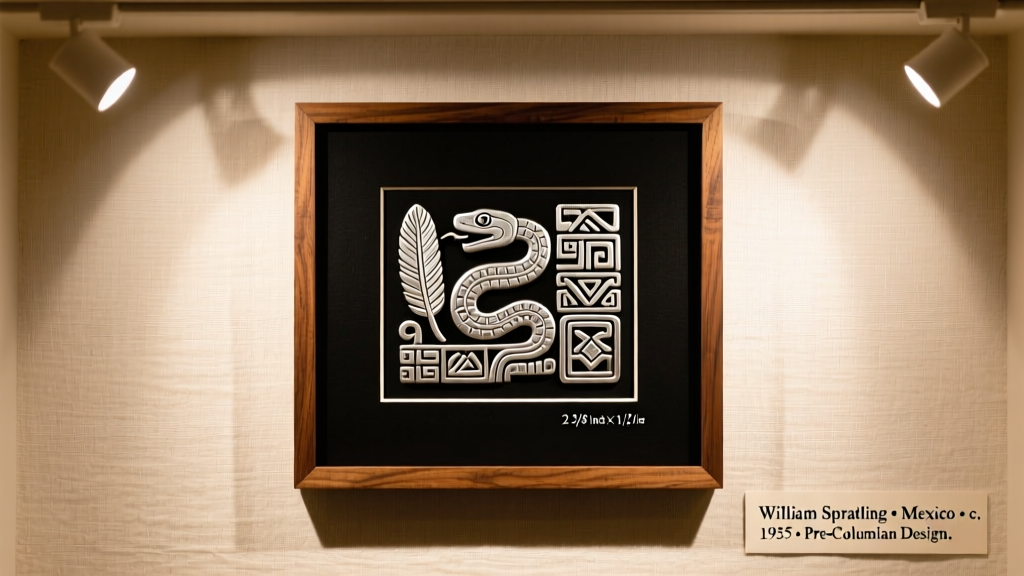
Authenticating a Silver Pin by William Spratling: Pre-Columbian Motif, Mexico City Workshop, Circa 1935

Toy Truck Concrete Mixer Red Tonka 1960: Authentication, Market Value, and Historical Context
Ahlers & Ogletree Auction Gallery: Market Position, Authentication Protocols, and the 2024 Spring Fine Art & Antiques Sale Analysis

Peachblow Pitcher: Red-Fuchsia Shaded to Amber Handle, Wheeling Glass Company, 8-Inch Form
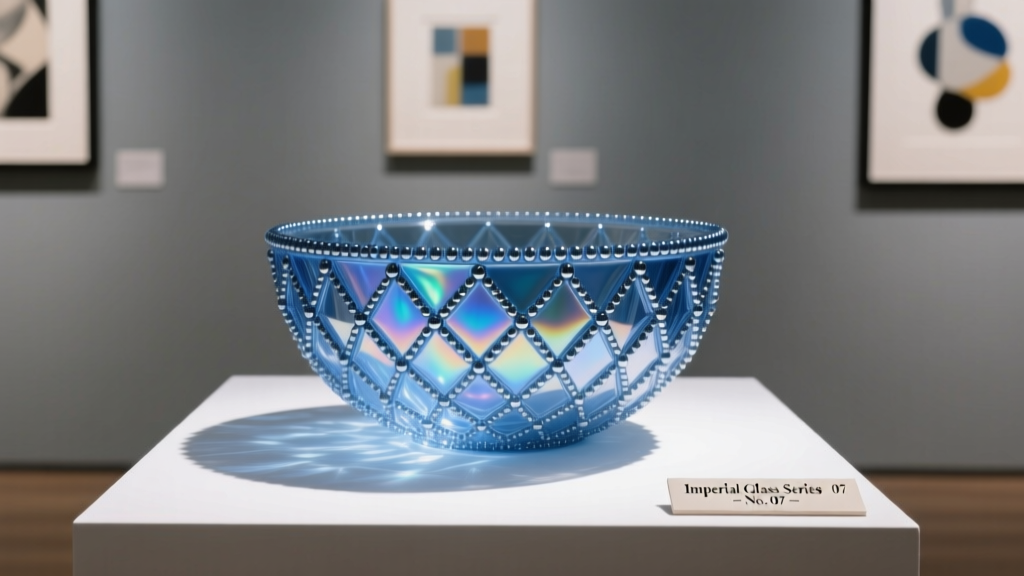
Imperial Glass Beaded Block Bowl in Blue Opalescent: Authentication, Market Value, and Historical Context of the 6¼-Inch Variant

Saarinen Bouclé Love Seat with Black Rod Legs: Authentication, Provenance, and Market Positioning
The 1960s Aunt Jemima Pancake Shaker: A Material Artifact of Black Americana, Commercial Iconography, and Cultural Reckoning

Arnold Collins: The Unseen Architect of Mid-Century American Printmaking

Cambridge Glass Tally Ho Decanter in Amber: Authentication, Market Value, and Historical Context of the 9½-Inch Variant