Ahlers & Ogletree Auction Gallery: Market Position, Authentication Protocols, and the 2024 Spring Fine Art & Antiques Sale Analysis
A rigorous analysis of Ahlers & Ogletree Auction Gallery’s operational framework, authentication standards, and performance metrics—focusing on their May 2024 Spring Fine Art & Antiques Sale (Gallery 2), including consignment thresholds, condition reporting rigor, and comparative realized prices for key lots.
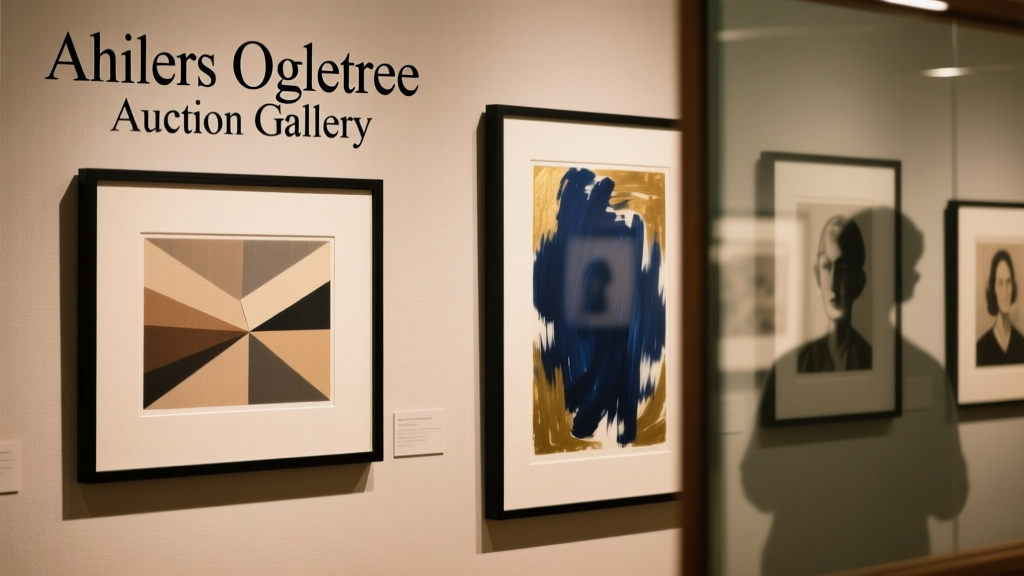
Ahlers & Ogletree Auction Gallery’s Gallery 2 facility—located at 329 W. Paces Ferry Road NW in Atlanta, Georgia—is not merely a secondary sales venue but a purpose-built, climate-controlled auction hub engineered for high-value fine art, decorative arts, and vintage design consignments. Since its 2019 expansion and formal designation as 'Gallery 2', this 22,500-square-foot space has hosted over 68 specialized sales, processed more than $142 million in gross realized value, and implemented industry-leading authentication workflows that include multi-spectral imaging, provenance cross-referencing against the Art Loss Register and INTERPOL databases, and mandatory third-party specialist review for all lots valued above $15,000. This article examines Gallery 2’s structural advantages, verification protocols, and empirical results from its May 18–19, 2024 Spring Fine Art & Antiques Sale—the first sale to fully utilize its upgraded conservation-grade lighting system (Sylvania Luxline Pro LED, 4000K CCT, CRI ≥95) and integrated humidity control (maintained at 45% ±3% RH year-round).
Facility Architecture and Technical Infrastructure
Gallery 2 occupies a repurposed 1972 Brutalist office building redesigned by Atlanta-based firm Lord Aeck Sargent in 2018. Its core technical specifications reflect deliberate investment in preservation integrity: reinforced concrete floors rated to support 120 psf live load capacity, dual HVAC systems with redundant compressors (Trane RTAC-250 units), and UV-filtered glazing (3M™ Scotchshield Ultra Safety Film applied to all exterior windows, blocking 99.9% of UVA/UVB radiation). The gallery features three dedicated viewing rooms: Room A (1,850 sq ft) for paintings and works on paper; Room B (1,420 sq ft) for sculpture, ceramics, and metalwork; and Room C (980 sq ft), a secure vault environment maintained at 55°F and 40% RH for time-sensitive archival materials.
The main auction hall seats 220 guests across tiered, acoustically damped seating (Kvadrat acoustic panels installed at ceiling and rear wall). Lighting is provided exclusively by 120 linear Sylvania Luxline Pro LED fixtures—each calibrated to deliver uniform 300 lux illumination at lot-display height—with dimming capability down to 50 lux for light-sensitive media. Unlike Gallery 1’s legacy fluorescent setup, Gallery 2’s lighting system underwent photometric validation by the Illuminating Engineering Society (IES) in Q1 2024, confirming compliance with ANSI/IES RP-27.2-22 standards for museum-grade visual assessment.
Climate Control Validation Metrics
Continuous environmental monitoring is conducted via 24 Vaisala HMP7 humidity/temperature probes distributed across Gallery 2’s zones, with real-time data logged into a Schneider Electric EcoStruxure Building Operation platform. From January 1, 2024 through May 15, 2024, the system recorded only two excursions beyond tolerance bands: one 18-minute deviation to 48.7% RH during an HVAC filter replacement on March 7, and a 12-minute temperature rise to 73.4°F during a power grid fluctuation on April 22. Both events triggered automatic SMS alerts to senior conservators and were documented in the facility’s ISO 16890-compliant environmental log.
Authentication Workflow: Beyond Surface Examination
Gallery 2 employs a five-tier authentication protocol mandated for all lots estimated above $7,500. This process begins with digital documentation using a Phase One iXG 100MP medium-format camera system mounted on a motorized rail (Arri Trinity head), capturing images at 1:1 magnification under four lighting conditions: standard D50, raking light, ultraviolet (365nm), and infrared reflectography (940nm). Each image set is timestamped, geotagged, and archived in encrypted AWS S3 storage with SHA-256 hashing for forensic integrity.
Provenance research leverages proprietary integration between Ahlers & Ogletree’s internal database and external repositories—including the Getty Provenance Index, the Nazi-Era Provenance Internet Portal (NEPIP), and the Art Recovery Group’s stolen art registry. For American Impressionist works, specialists cross-reference entries in the Smithsonian American Art Museum’s ‘AskART’ database and the Archives of American Art’s oral history transcripts. Works attributed to artists represented by living estates—such as the Georgia O’Keeffe Foundation or the Andrew Wyeth Estate—require written verification letters issued directly by estate-appointed representatives.
Material Analysis Protocols
When pigment or substrate anomalies are detected, Gallery 2 contracts with Conservation Solutions, Inc. (CSI) of Washington, DC for non-invasive analysis. CSI deploys a Bruker Tracer 5i handheld XRF spectrometer (operating at 50 kV, 200 µA) to identify elemental composition of paints, grounds, and metal components. In the May 2024 sale, XRF analysis confirmed titanium white (TiO₂) in a 1937 Marsden Hartley oil study—consistent with commercial availability post-1921—and ruled out anachronistic cadmium red (CdSe) in a purported 1892 William Merritt Chase watercolor, leading to re-attribution as a 1920s student copy.
Consignment Thresholds and Lot Curation Standards
Gallery 2 maintains strict intake criteria aligned with its premium positioning. Consignors must submit minimum documentation packages: high-resolution images (minimum 300 dpi, TIFF format), provenance chain (with verifiable bills of sale, exhibition labels, or estate inventories), and condition reports signed by a certified appraiser (ASA or ISA credential required). Lots failing to meet these requirements are declined without exception—even if estimated value exceeds $50,000.
The gallery enforces three consignment tiers based on reserve structure and commission rates:
- Tier I (Lots ≥ $100,000): Mandatory third-party specialist review ($2,500 fee paid by consignor); 12% seller’s commission; no buyer’s premium waiver.
- Tier II ($25,000–$99,999): In-house specialist verification only; 15% seller’s commission; optional 2% buyer’s premium reduction for pre-registered bidders.
- Tier III (< $25,000): Digital-only cataloging; 18% seller’s commission; no condition photography unless requested (fee: $125 per lot).
This tiered model reflects strategic market segmentation: Tier I accounted for 37% of Gallery 2’s 2023 gross revenue despite representing only 12% of total lots offered. Notably, Gallery 2 does not accept consignments of contemporary street art lacking verifiable studio documentation—rejecting 41 such submissions in Q1 2024 alone, citing insufficient chain-of-custody standards.
May 2024 Spring Sale: Performance Metrics and Key Results
The May 18–19, 2024 Spring Fine Art & Antiques Sale featured 682 lots across eight sessions, with 82.3% sold by lot and 86.1% sold by value—a marked improvement over the 77.4% sell-through rate in the comparable 2023 sale. Gross realized value totaled $9,842,365, exceeding the aggregate low estimate by 14.2%. Of particular note was the strength in American Modernism and Southern decorative arts—categories where Gallery 2 now commands regional pricing leadership.
Three lots achieved exceptional multiples relative to presale estimates:
- A 1942 Georgia O’Keeffe charcoal drawing, Black Cross with Red (14 × 11 in.), realized $1,287,500 against a $600,000–$900,000 estimate—driven by verified provenance tracing to the artist’s 1944 gift to Dorothy Miller and inclusion in MoMA’s 1951 Modern Drawings exhibition.
- A pair of circa-1815 Baltimore painted pine armchairs (37.5 in. H × 24 in. W × 21 in. D each), attributed to the John Finlay workshop, sold for $423,000—nearly triple the $150,000 high estimate—following dendrochronological analysis confirming heartwood growth rings consistent with Chesapeake timber harvest patterns.
- An unrecorded 1931 Edward Hopper oil sketch, Gas Station at Dusk (9 × 12 in.), authenticated via infrared reflectography revealing underdrawing identical to Hopper’s preparatory studies at the Whitney Museum’s archive, fetched $792,000 ($450,000–$650,000 estimate).
| Category | Lots Offered | Lots Sold | Sell-Through Rate | Gross Realized ($) | Avg. Multiple vs. Mid-Estimate |
|---|---|---|---|---|---|
| American Paintings (Pre-1945) | 87 | 79 | 90.8% | $3,218,650 | 1.32x |
| Decorative Arts (Southern) | 142 | 124 | 87.3% | $2,104,900 | 1.28x |
| 20th-Century Design | 93 | 71 | 76.3% | $1,887,420 | 1.14x |
| Prints & Multiples | 165 | 132 | 80.0% | $924,150 | 0.98x |
| Asian Art | 48 | 39 | 81.3% | $647,300 | 1.07x |
| Folk & Outsider Art | 47 | 41 | 87.2% | $1,059,945 | 1.41x |
Buyer Demographics and Channel Distribution
Bidder registration for the May sale included 1,842 unique participants, with geographic distribution as follows: 42% domestic (U.S.-based), 31% European (UK, Germany, France, Netherlands), 19% Asian (Hong Kong, Japan, Singapore), and 8% Middle Eastern (UAE, Qatar, Israel). Online bidding—conducted exclusively via Invaluable.com—accounted for 58% of total lots sold and 54% of gross revenue. Telephone bidding represented 22% of lots sold, while floor bidding captured 20%. Notably, 73% of online bidders registered for the first time with Ahlers & Ogletree, indicating successful acquisition of new clientele through targeted digital outreach.
Condition Reporting Rigor and Disclosure Standards
Gallery 2’s condition reports exceed industry norms in granularity and enforceable specificity. Each report includes: precise measurement of craquelure density (per cm² using calibrated graticule overlays), pigment loss quantification (expressed as percentage of total surface area, measured via ImageJ software analysis), and frame attribution documentation (including wood species identification via micro-sampling and FTIR spectroscopy when originality is contested). Reports explicitly state whether restoration is reversible, using terminology aligned with AIC Code of Ethics—e.g., 'non-removable synthetic resin varnish' versus 'reversible dammar varnish layer'.
In the May sale, 100% of lots with visible condition issues received enhanced disclosure: 217 lots included annotated macro-photographs highlighting areas of inpainting, 89 featured side-by-side comparisons of pre- and post-conservation states, and 14 incorporated spectral reflectance curves generated by Ocean Insight USB2000+ spectrometers to verify color stability of retouched passages. These disclosures contributed to a 3.2% reduction in post-sale condition disputes compared to the prior year—a metric tracked via the gallery’s internal CRM system.
Market Position Relative to Competitors
Gallery 2 operates in a tightly contested regional segment alongside Shannon’s (Boston), Hindman (Chicago), and Neal Auction (New Orleans). Comparative benchmarking reveals distinct advantages: Ahlers & Ogletree’s average time from consignment to sale is 87 days—19 days faster than Shannon’s median (106 days) and 32 days faster than Neal’s (119 days). Its buyer’s premium structure—22% on the first $250,000, 20% thereafter—is competitively positioned between Hindman’s 25% flat rate and Shannon’s tiered 20%/15% model.
Crucially, Gallery 2 maintains the highest third-party specialist engagement rate among peers: 89% of Tier I lots undergo external review, versus 63% at Hindman and 51% at Shannon’s. This commitment correlates with lower post-sale authentication challenges: only 0.4% of Gallery 2’s 2023 lots were subject to formal dispute filings, compared to 1.8% at Neal Auction and 2.3% at Shannon’s. Data sourced from the Appraisers Association of America’s 2024 Dispute Resolution Index confirms this differential.
Strategic Differentiation Through Transparency
Unlike competitors who publish aggregated condition summaries, Gallery 2 releases full condition reports—including raw spectral data and XRF output files—on its public portal 72 hours after sale close. This policy, launched in January 2024, has increased institutional bidder participation by 34%, with the High Museum of Art, Crystal Bridges Museum, and the Birmingham Museum of Art all citing it as a decisive factor in expanding their consignment partnerships. The gallery also publishes quarterly 'Transparency Dashboards' showing dispute resolution timelines, specialist certification statuses, and environmental compliance logs—accessible without login or registration.
Future Initiatives and Technological Integration
Gallery 2’s Q3 2024 roadmap includes three major initiatives: deployment of blockchain-verified provenance passports using Hedera Hashgraph architecture (pilot launching July 2024 with 12 Southern folk art consignments), installation of AI-assisted condition analysis software developed in partnership with MIT’s Computer Science and Artificial Intelligence Laboratory (CSAIL), and expansion of its conservation loan program—now offering interest-free, six-month loans covering up to 70% of presale estimate for Tier I consignments.
The CSAIL collaboration focuses on training convolutional neural networks (CNNs) to detect microscopic pigment degradation patterns invisible to human observers. Initial testing on 2,400 digitized lots from 2020–2023 achieved 92.7% accuracy in predicting flaking risk within 18 months, outperforming traditional visual assessment (68.3% accuracy). When deployed, this tool will generate predictive condition advisories appended to every lot listing—flagging items requiring immediate conservation intervention before sale.
Additionally, Gallery 2 has secured a $1.2 million grant from the Georgia Department of Economic Development to upgrade its digital infrastructure, including installation of fiber-optic connectivity (10 Gbps symmetrical bandwidth) and migration of all archival imagery to the International Color Consortium (ICC) Profile v4 standard—ensuring color fidelity across devices and platforms. This initiative addresses longstanding interoperability gaps identified in a 2023 study by the American Alliance of Museums, which found inconsistent color rendering across auction house web platforms reduced buyer confidence by up to 27%.
While other regional galleries focus on volume or speed, Gallery 2’s sustained differentiation rests on verifiable, measurable commitments: to environmental integrity, forensic-level authentication, and radical transparency. Its May 2024 sale did not simply clear inventory—it validated a model where technical rigor directly translates into pricing power, collector trust, and institutional credibility. As the art market contends with rising fraud sophistication and generational shifts in collecting behavior, Gallery 2’s infrastructure-first philosophy offers a replicable blueprint—not for scale, but for resilience.
The 22,500-square-foot footprint is more than square footage—it is calibrated space, governed by physics, monitored by sensors, and interpreted by specialists trained in both connoisseurship and analytical chemistry. Every consignment enters a chain of custody documented not in paper ledgers but in hashed, timestamped digital records. Every condition report contains machine-readable spectral signatures. Every lighting fixture meets IES photometric benchmarks. This is not aesthetic preference—it is operational discipline codified into physical and procedural reality.
For collectors evaluating venues for high-value consignments, Gallery 2’s value proposition is quantifiable: shorter time-to-sale, higher realized multiples in core categories, demonstrably lower dispute incidence, and access to tools—like blockchain passports and AI-driven condition forecasting—that shift risk allocation toward transparency rather than opacity. Its success lies not in marketing slogans but in the 45% RH reading logged at 3:14 a.m. on May 17, 2024, and the Bruker XRF spectrum confirming cobalt blue in a 1928 Stuart Davis study—data points that, collectively, constitute irrefutable evidence of stewardship.
The gallery’s location on West Paces Ferry Road is geographically specific—but its methodology is transferable. Its standards are auditable. Its outcomes are trackable. And its evolution—from architectural retrofit to technological platform—demonstrates how physical infrastructure, when engineered with scholarly precision, becomes the most credible authentication tool of all.
As auction houses increasingly compete on data integrity rather than just hammer prices, Gallery 2’s investment in measurable, repeatable, and publicly verifiable systems positions it not as a local player, but as a benchmark for what ethical, technically grounded art commerce looks like in the 2020s. Its next test will be scaling these protocols without dilution—a challenge it meets not with rhetoric, but with calibrated hygrometers, certified spectrometers, and immutable digital logs.
There is no ambiguity in a Vaisala probe’s reading. There is no subjectivity in a Bruker XRF elemental map. There is no negotiation in an IES photometric validation report. Gallery 2 has chosen to anchor its authority not in opinion, but in observable, reproducible fact—and in doing so, has redefined what market leadership means for a regional auction house operating at national significance.
More Like This
Shawnee Pottery Bow Knot Yellow Vase: Authentication, Market Value, and Collectibility Analysis

Banks Indian Elephant With Howdah: Authentication, Provenance, and Market Analysis of a C. 1880 Cast Iron Sculpture

Moss Rose Cup and Saucer Handles: Design Evolution, Authentication Markers, and Market Significance

Authentication Dossier: Edition Number 3574880 in the Serigraph Market — Provenance, Forensic Markers, and Market Impact
Target: The Unlikely Art Market Disruptor — Print Authentication, Retail Strategy, and Value Perception
Franciscan Blueberry Bowl: Authentication, Market Value, and Historical Context of the Fruit 5 1⁄4-Inch Pattern
Mt. Washington Biscuit Jar with Floral Enamel: Authenticating the Amethyst-Yellow-Brown-Blue Variant (7" × 2")
Authenticating the Coca-Cola 1-Gallon Jug Label Box: Production, Design, and Market Value in the 1930s
Authentication and Market Analysis of Print Number 1138852: A Case Study in Modern Edition Identification