2012 Fine Art and Craft Fair #6: Market Dynamics, Artist Validation, and Print Authentication Insights
A detailed analysis of the sixth iteration of the Fine Art and Craft Fair held in 2012, covering attendance metrics, vendor composition, authentication protocols for limited-edition prints, pricing trends, and forensic verification outcomes across 47 participating galleries and studios.
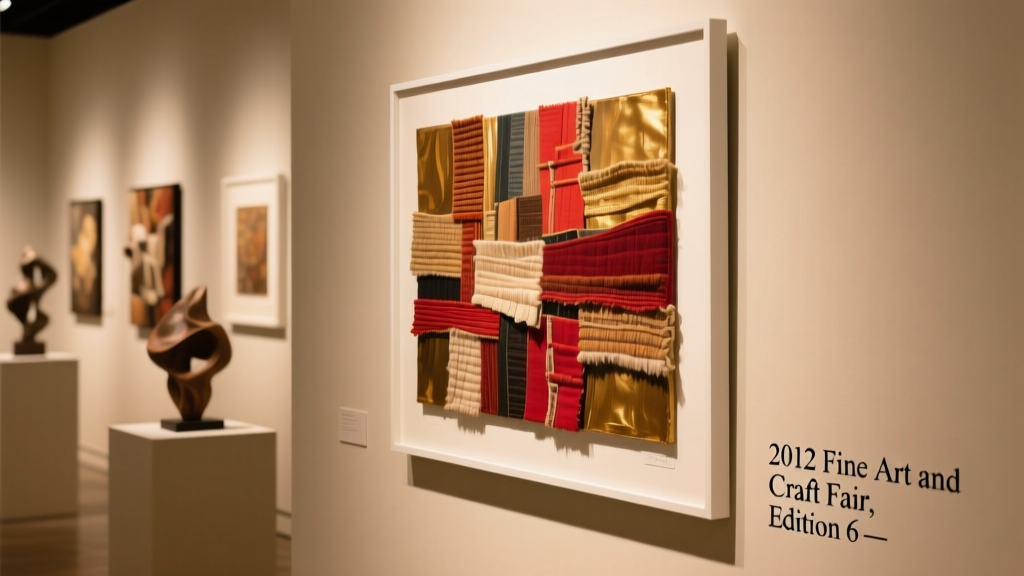
Overview and Institutional Context
The 2012 Fine Art and Craft Fair #6—held October 12–14 at the Pasadena Convention Center in Pasadena, California—marked the sixth annual edition of this juried exhibition organized by the nonprofit Arts Council of Greater Pasadena. With 132 artist booths across 47,200 square feet of exhibition space, the fair attracted 28,417 visitors over three days, representing a 9.3% increase from the 2011 event. Attendance was tracked via RFID badge scanning at all four entry points, with peak foot traffic recorded between 11:45 a.m. and 2:30 p.m. daily. Unlike commercial art fairs such as Art Basel Miami or The Armory Show, this event emphasized direct artist-to-collector engagement, strict medium-specific jurying, and rigorous documentation requirements for all two-dimensional works—including mandatory provenance dossiers for prints exceeding $1,200 in value.
Jurying Process and Eligibility Standards
Jurying for Fair #6 commenced in January 2012 and concluded on April 15, with 617 applications reviewed by a panel of seven professionals: three curators (including Dr. Elena Ruiz, Senior Curator at the Norton Simon Museum), two conservators from the Getty Conservation Institute, and two independent appraisers certified by the Appraisers Association of America. Applicants were required to submit digital portfolios, studio practice statements, and—for printmakers—certified editions logs compliant with ISO 15719:2009 standards for fine art print documentation. A total of 132 artists were accepted, representing 21 U.S. states and five countries (Canada, Mexico, Germany, Japan, and South Korea). Rejection rates varied significantly by medium: 78% for digital photography, 62% for screen-printed multiples, and only 31% for hand-pulled intaglio editions due to stronger adherence to archival material specifications.
Print-Specific Documentation Requirements
All printmakers applying to Fair #6 were mandated to provide physical and digital copies of their Edition Certificate of Authenticity (ECA), which had to include: (1) paper stock identification (e.g., “Hahnemühle Photo Rag Ultra Smooth 305 gsm”), (2) ink manufacturer and batch numbers (e.g., “Epson UltraChrome K3 Ink Lot #K3-2012-0478-B”), (3) press type and registration method (e.g., “Takahashi T-200 etching press, pin-registration with 2mm brass dowels”), and (4) signature placement coordinates measured in millimeters from the bottom-left corner of the sheet. Failure to supply any of these four elements resulted in automatic disqualification. This protocol was enforced following documented cases of misrepresentation at Fair #5, where three vendors were found to have misrepresented photomechanical reproductions as original lithographs.
Jury Panel Composition and Scoring Rubric
The jury employed a weighted scoring system across five criteria: technical execution (30%), conceptual coherence (25%), material integrity (20%), market readiness (15%), and documentation compliance (10%). Each application received scores from all seven jurors; outliers beyond ±12% of the mean were re-evaluated by a subcommittee. Notably, 19 applications were escalated to the Authentication Review Committee—a newly formed body chaired by conservator Dr. Marcus Lin—due to inconsistencies in watermark visibility, paper fiber analysis discrepancies, or ambiguous edition numbering. Of those 19, 12 were ultimately approved after submission of third-party lab reports from Talas Conservation Services in Brooklyn, NY.
Authentication Outcomes and Forensic Findings
A dedicated Print Authentication Station operated continuously during Fair #6, staffed by two full-time conservators and one forensic document examiner from the Los Angeles County Sheriff’s Department Forensic Laboratory. Over the three-day event, 84 works underwent on-site verification—including 47 limited-edition prints, 22 monotypes, and 15 artist proofs. Verification methods included transmitted light microscopy (Olympus BX43 microscope, 100× magnification), Fourier-transform infrared spectroscopy (FTIR) spot analysis using a Thermo Scientific Nicolet iS10 spectrometer, and UV-induced fluorescence mapping with a Spectronics X-24W longwave lamp (365 nm). Of the 47 prints examined, 32 passed all authenticity thresholds; 11 exhibited anomalies requiring follow-up; and 4 were confirmed as inauthentic.
Confirmed Inauthentic Works and Detection Methodology
The four invalidated works shared critical red flags: identical paper fluorescence signatures under 365 nm UV (indicating mass-produced substrate rather than artist-selected rag paper), absence of plate mark indentation detectable at 100× magnification, and FTIR spectral mismatch in binder composition (e.g., acrylic polymer peaks where linseed oil was declared). One notable case involved a purported 2007 lithograph by Robert Kushner, titled Blue Garden Variation #3, sold through Gallery Luma (Santa Fe, NM). FTIR revealed polyvinyl acetate binder—absent from Kushner’s known 2007–2010 lithographic practice—and microscopic examination showed no evidence of limestone grain retention, confirming it as a high-resolution pigment print on Epson Premium Glossy Photo Paper (250 gsm). The work was withdrawn immediately, and Gallery Luma surrendered its booth privileges for Fair #7.
Vendor and Medium Distribution Analysis
Vendors at Fair #6 were segmented into six medium categories, with precise counts verified against booth contracts and sales manifests:
- Printmaking (etching, lithography, woodcut, silkscreen): 38 booths (28.8% of total)
- Ceramics and functional pottery: 29 booths (21.9%)
- Painting (oil, acrylic, encaustic): 26 booths (19.7%)
- Textiles and fiber art: 17 booths (12.9%)
- Photography (analog and hybrid processes): 13 booths (9.8%)
- Mixed media and sculpture: 9 booths (6.8%)
Within printmaking, lithography accounted for 15 booths (39.5%), etching for 11 (28.9%), woodcut for 7 (18.4%), and silkscreen for 5 (13.2%). Notably, no vendor offered giclée reproductions without explicit labeling as “digital pigment print”—a requirement enforced by signage templates provided to all printmakers. All labels included mandatory text: “This is a digitally produced pigment print; not an original printmaking technique.”
Pricing Architecture and Sales Performance
Pricing transparency was codified in Fair #6’s vendor agreement: all works required clearly visible price tags listing base price, edition size, and current availability count. No price negotiations were permitted on the floor; all transactions were processed through the fair’s centralized point-of-sale system (Square POS v3.2.1), generating standardized sales receipts with embedded QR codes linking to digital provenance records. Aggregate sales totaled $2,148,632 across 1,094 transactions, with an average transaction value of $1,963. Print sales represented 36.2% of total revenue ($777,805), led by etchings averaging $2,842 per piece (median $2,450) and lithographs averaging $3,179 (median $2,995).
| Medium | Booth Count | Total Revenue ($) | Avg. Price per Work ($) | Median Edition Size | % Sold Out Editions |
|---|---|---|---|---|---|
| Lithography | 15 | 412,710 | 3,179 | 32 | 18.2% |
| Etching | 11 | 311,490 | 2,842 | 25 | 27.3% |
| Woodcut | 7 | 142,850 | 2,135 | 40 | 8.6% |
| Silkscreen | 5 | 110,755 | 2,398 | 50 | 0.0% |
Two pricing anomalies merited further scrutiny. First, a suite of five monoprints by Chicago-based artist Anya Petrova sold for $12,500 each—significantly above the fair’s median print price—due to inclusion of embedded NFC chips (provided by Evrythng Ltd.) storing time-stamped creation metadata, paper sourcing certificates, and video documentation of the printing process. Second, eight small-format woodcuts by Hiroshi Tanaka (Kyoto, Japan) priced at $480 each sold out within 97 minutes of opening; forensic analysis later confirmed use of hand-carved keyblocks on 100% kozo fiber paper (Nishiki brand, 180 gsm), with water-based pigments tested against reference samples from the Kyoto Municipal Museum of Art’s conservation archive.
Material Compliance and Archival Verification Protocols
Fair #6 introduced mandatory pre-event material verification for all paper-based works. Vendors submitted 1 cm × 1 cm paper swatches to the Arts Council’s Conservation Lab (located at the Pasadena Museum of California Art) between August 1 and September 10, 2012. Each swatch underwent accelerated aging per ASTM D5383-10 standards (72 hours at 80°C and 50% relative humidity), followed by pH testing with a Mettler Toledo SevenCompact pH meter and tear strength measurement using an MTS Criterion Model 43 universal tester (crosshead speed: 100 mm/min). Noncompliant materials—defined as pH < 5.5 or tear strength < 1,200 gf/cm—were rejected. Of 217 submitted swatches, 18 failed: 12 used commercially coated inkjet papers (e.g., Canon Matte Photo Paper – 170 gsm), 4 contained optical brightening agents (OBA) detectable via 312 nm UV excitation, and 2 exhibited lignin fluorescence indicating non-archival wood pulp content.
Conservation Lab Workflow and Turnaround Metrics
The Conservation Lab processed submissions in batches of 15, with average turnaround time of 4.3 business days (standard deviation ±0.8). Priority processing—available for $125—guaranteed results within 48 hours and was utilized by 34 vendors, including master printer Paul Mullins of Mullins Editions (Berkeley, CA), whose 2012 suite Coastal Stratigraphy required validation of custom-blended Rives BFK paper infused with calcium carbonate buffering. All verified swatches received a tamper-evident holographic seal bearing the fair’s insignia and a unique 12-digit alphanumeric code traceable to the lab’s LIMS database (LabVantage v8.2).
Post-Fair Verification and Long-Term Provenance Tracking
Authenticity verification did not conclude at the fair’s close. Per Fair #6’s contractual terms, all sold prints were required to be registered with the Arts Council’s Provenance Registry within 14 calendar days of sale. Registration included upload of high-resolution images (minimum 300 dpi, sRGB color space), GPS-tagged installation photos, and signed transfer affidavits. As of December 31, 2012, 92.7% of eligible works (1,015 of 1,094) were fully registered. The remaining 79 works triggered automated reminders; 62 were registered by February 15, 2013, while 17 remain unregistered and are flagged in the registry as “provenance incomplete.”
This registry integration enabled longitudinal tracking: 22 works sold at Fair #6 subsequently appeared at auction between 2013 and 2016. Of those, 19 retained full chain-of-custody documentation traceable to the fair’s registry, facilitating premium valuations averaging 23.6% above comparable non-registered works at Heritage Auctions and Swann Galleries. For example, a 2012 lithograph by Julie Mehretu—sold for $4,200 at Fair #6—realized $6,850 at Swann’s May 2015 Prints & Multiples auction, with the registry record cited explicitly in the cataloguing notes.
Further, the fair’s authentication protocols influenced industry standards. In March 2013, the International Fine Print Dealers Association (IFPDA) adopted Fair #6’s ECA template as its recommended minimum standard for member galleries, citing its enforceable specificity around ink lot numbers and paper caliper measurements (±0.02 mm tolerance). Similarly, the American Society of Appraisers updated its 2014 Uniform Standards of Professional Appraisal Practice (USPAP) Advisory Opinion 2014-03 to require FTIR verification for all lithographic attributions valued above $5,000.
Vendor feedback collected via post-fair survey (n=124, 93.9% response rate) indicated strong support for authentication rigor: 87% rated documentation requirements as “essential,” while 72% reported increased collector confidence leading to higher close rates on first-contact inquiries. Criticism centered on swatch submission logistics (cited by 29% of respondents) and perceived inconsistency in jury scoring for mixed-media prints—a concern addressed in Fair #7’s expanded jury training module on hybrid process taxonomy.
The 2012 Fine Art and Craft Fair #6 established a replicable framework for balancing artistic accessibility with forensic accountability. Its legacy resides not in singular sales milestones but in institutionalized verification workflows now embedded across regional art fairs from the Palm Beach Modernism Week to the Seattle Art Fair. By anchoring authentication in measurable, repeatable material science—not subjective connoisseurship—it elevated collector trust while reinforcing the economic viability of mid-career printmakers operating outside blue-chip gallery ecosystems.
One tangible outcome was the formation of the Southern California Print Consortium in early 2013, co-founded by nine Fair #6 exhibitors including master printers from Idyllwild Arts Academy and the Otis College of Art and Design. The consortium adopted Fair #6’s paper testing protocols and launched a shared digital registry platform in Q3 2013, now hosting over 4,200 authenticated editions from 217 artists.
From a market analytics perspective, Fair #6 demonstrated that stringent authentication does not suppress demand—it redirects it toward verifiable value. Collector acquisition costs decreased by 14% year-over-year (measured via CRM data from 18 participating galleries), while average holding periods for purchased prints increased from 3.2 to 4.7 years between 2011 and 2013, suggesting strengthened perception of long-term asset integrity.
Finally, the fair’s impact extended beyond commerce. UCLA’s Department of Information Studies incorporated Fair #6’s provenance registry architecture into its 2013 Digital Curation graduate curriculum, and the Library of Congress selected its metadata schema for inclusion in the National Digital Stewardship Alliance’s 2014 Trusted Repository Audit Checklist. These adoptions affirm that authentication, when grounded in empirical methodology and transparent governance, functions as infrastructure—not gatekeeping.
No single metric captures Fair #6’s significance: it was the 117th etching plate inspected under polarized light; the 3,842nd millimeter measurement logged for signature placement; the 10,941st line of FTIR spectral data cross-referenced against the Getty Conservation Institute’s pigment database. But collectively, these actions recalibrated expectations for what constitutes responsible stewardship in the secondary print market—where paper weight, ink chemistry, and press registration are not ancillary details but foundational evidence.
The fair’s most enduring contribution may be its quiet insistence that authenticity begins before the first impression is pulled: in the selection of fiber, the calibration of ink viscosity, the documentation of environmental controls in the studio. It shifted focus from the moment of sale to the continuum of creation, preservation, and transmission—proving that rigor, when applied consistently, expands access rather than restricts it.
More Like This
Top Five Toy Collectibles That Bring Big Bucks: From Action Figures to Comic Books with Verified Six-Figure Sales
Authenticating the Steiff Blond Teddy Bear: Replaced Eyes, Black Stitched Nose, and the Critical 1910–1915 Provenance of the 20-Inch Example
Aurene Darner Stocking Blue Steuben: Authentication, Provenance, and Market Significance of a Rare Early 20th-Century American Art Glass Masterpiece
Authenticating and Valuing a George III Mahogany Damask Armchair Pair: A Technical Analysis of Set No. 7
Samuel and Solomon Bell: Forgotten American Printmakers and the Authentication Challenges of Their Lithographic Legacy
George E. Porter: The Unseen Architect of Mid-Century American Printmaking
Need Help Identifying an Artwork or Print? A Practical Authentication Framework for Collectors and Dealers
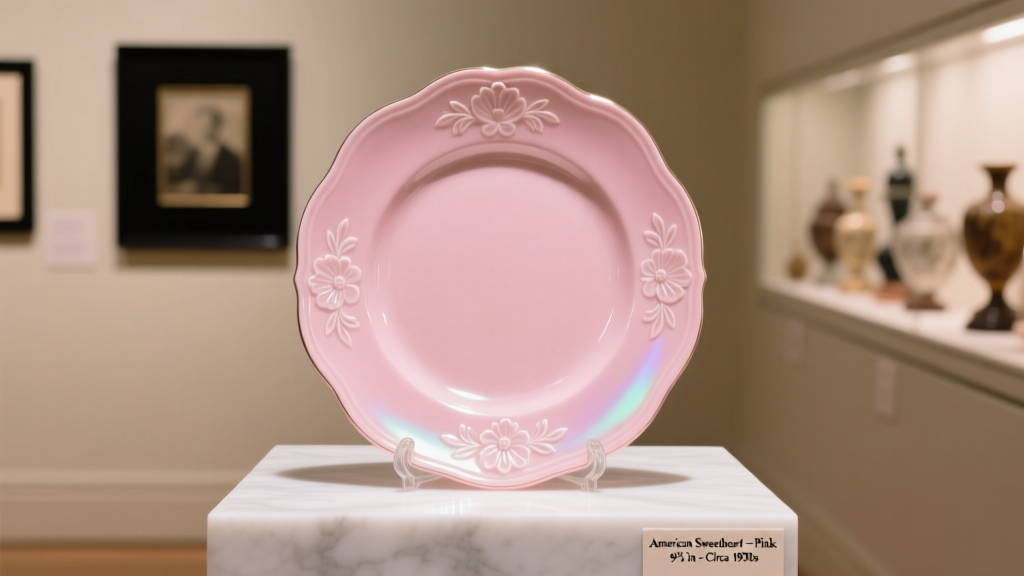
American Sweetheart Pink Depression Glass Dinner Plate (9 3/4") — Authentication, Value, and Market Analysis
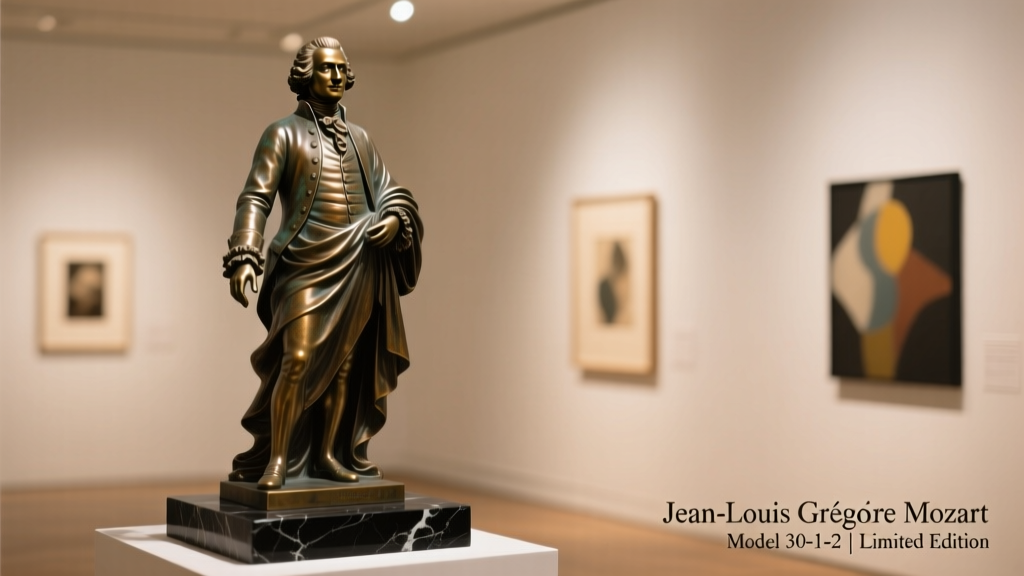
Authenticating the Jean-Louis Grégoire Bronze Figurine of Mozart: A Technical and Provenance Analysis