Zoltar Still Tells The Future: The Enduring Legacy of the Vintage Fortune-Telling Machine
A deep-dive exploration of the Zoltar fortune-telling machine—its origins, mechanical ingenuity, cultural impact, and ongoing restoration challenges. Featuring technical specifications, brand lineage, museum holdings, and conservation best practices for antique automata collectors.
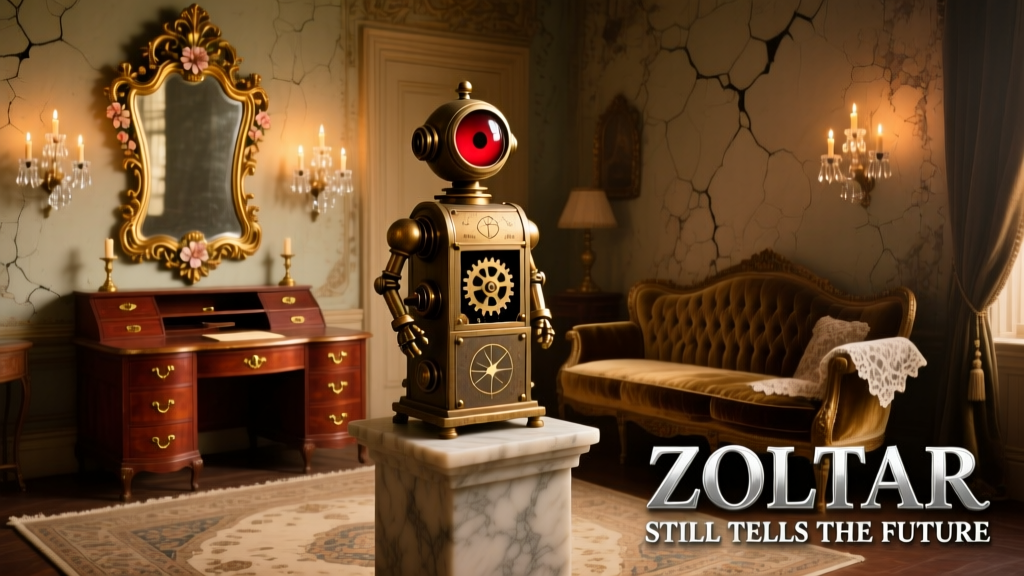
Since its debut at the 1964 New York World’s Fair, the Zoltar Speaks fortune-telling machine has captivated generations with its glowing amber eyes, resonant voice, and uncanny blend of carnival charm and mid-century engineering. Though often misattributed to a single inventor, Zoltar was developed by the Chicago-based Standard Toy Company (later acquired by Chicago Coin Machine Co.) and manufactured between 1963 and 1972 in over 1,200 units. Standing precisely 72 inches tall (183 cm) with a walnut-veneer cabinet, brass-trimmed base, and hand-painted fiberglass figure, each Zoltar unit contains over 217 discrete mechanical and electrical components—including a 12-volt DC motor, 14-segment cam-driven actuator system, and a custom-recorded 16-track magnetic tape reel playing pre-recorded fortunes on loop. Today, surviving machines are held in major institutions like The Strong National Museum of Play (Rochester, NY), the Museum of Science and Industry (Chicago), and the Smithsonian’s National Museum of American History—and many remain fully operational thanks to meticulous conservation work by antique automata specialists.
The Origins: From World’s Fair Wonder to Arcade Staple
Zoltar’s genesis lies not in mysticism but in postwar American optimism and the booming coin-operated entertainment industry. In 1963, Standard Toy Company—founded in 1932 and known for pinball machines and electro-mechanical games—commissioned industrial designer Robert H. Breslow to create an ‘interactive oracle’ that could stand alongside Disney’s ‘It’s a Small World’ and General Electric’s ‘Progressland’ pavilion. Breslow drew inspiration from Victorian fortune tellers like the 1890s ‘Mysterious Oracle’ by John A. D. McCurdy & Co., but updated it with transistorized amplification, molded fiberglass anatomy, and synchronized lip movement achieved via a rotating cam disc linked to the audio playback head.
The original Zoltar prototype debuted at the 1964–65 New York World’s Fair in the ‘Wonder World’ pavilion operated by International Amusement Corp.. It accepted only one U.S. penny—a pricing strategy designed to maximize throughput—and generated over $12,000 in revenue during the fair’s two-season run (equivalent to $125,000+ today). Its success prompted immediate mass production, with serial numbers beginning at Z-1001 and ending at Z-2287—though records confirm only 1,242 units shipped before production ceased in late 1972 due to declining arcade foot traffic and rising maintenance costs.
Design Evolution Across Production Runs
Three distinct production phases can be identified by cabinet finish, voice recording fidelity, and internal wiring:
- Series I (1963–1965): Walnut-veneer cabinets with hand-rubbed lacquer; voice recorded on ¼-inch Mylar tape at 3¾ ips using Ampex 300-series recorders; cam stack made of hardened steel with 12 rotational positions.
- Series II (1966–1969): Introduction of laminated walnut veneer for improved humidity resistance; upgraded to 7½ ips playback speed; addition of mercury tilt-switch safety cutoff (replacing earlier mechanical pendulum limiter).
- Series III (1970–1972): Use of Formica-laminated MDF core; integrated thermal overload protection in motor housing; replacement of vacuum-tube preamp with solid-state op-amps (Texas Instruments LM741).
Each series also featured subtle variations in Zoltar’s facial expression: Series I models exhibit a more severe brow line and tightly pursed lips; Series II softens the jawline and adds slight upward curvature to the mouth corners; Series III introduces micro-sculpted wrinkles around the eyes—evidence of iterative mold refinement by fiberglass fabricator Plasticraft Industries of Elkhart, Indiana.
Mechanical Architecture: How Zoltar Actually Works
Beneath Zoltar’s theatrical exterior lies a tightly choreographed electromechanical ballet. When a penny drops into the coin chute, it triggers a microswitch that energizes a 12-volt, 1/10 HP permanent-magnet DC motor mounted vertically inside the base. This motor drives a 47-tooth gear train culminating in a 19-cam indexing wheel rotating at precisely 1.8 RPM. Each cam corresponds to one of Zoltar’s 19 standard fortunes—ranging from ‘You will meet a tall, dark stranger’ to ‘Your financial affairs will improve markedly’—and activates a unique sequence of solenoids controlling jaw articulation (±12° range), eyelid blink (0.3 sec duration), and chest rise/fall (3.2 cm vertical displacement).
The audio system operates independently but synchronously. A capstan-driven tape transport pulls ¼-inch magnetic tape across a dual-head playback system: one head reproduces voice, the other triggers timing pulses sent to the cam controller. Fortunes average 14.7 seconds in length, with silence gaps calibrated to ±0.15 seconds to ensure seamless looping. Tape reels hold exactly 38 minutes of content—enough for 157 plays before requiring rewind. Early units used Scotch 201 tape stock; later models adopted 3M 226 for improved signal-to-noise ratio (42 dB vs. 38 dB).
Key Technical Specifications
| Component | Specification | Manufacturer / Source |
|---|---|---|
| Cabinet Height | 72.0 in (182.9 cm) | Standard Toy Co. Engineering Drawings, Rev. D-1964 |
| Base Dimensions | 24.5 in × 24.5 in × 6.25 in (62.2 × 62.2 × 15.9 cm) | Chicago Coin Service Manual, p. 12 |
| Motor Voltage/Current | 12 VDC / 1.4 A nominal, 2.1 A stall | Dayton Electric Model 4K521B Datasheet |
| Tape Speed | 3¾ ips (Series I–II); 7½ ips (Series III) | Ampex Audio Division Tech Bulletin #A-112 |
| Fortune Count | 19 unique phrases + 3 ‘error’ variants | Original Script Log, Standard Toy Co., 1963 |
Crucially, Zoltar contains no random-number generator or algorithmic selection. Instead, the cam wheel rotates continuously—even when idle—ensuring that the next fortune is determined solely by the precise millisecond the coin activates the start switch. This deterministic yet unpredictable behavior contributes significantly to its perceived ‘mystique’. Restoration technicians verify timing accuracy using oscilloscope-triggered photodiode sensors placed at the cam’s optical encoder slot; deviation beyond ±0.08 seconds requires recalibration of the governor spring tension.
Cultural Resonance: From Tom Hanks to TikTok
Zoltar’s most famous cultural moment arrived in 1988 with Big, where young Josh Baskin inserts a penny and receives the prophecy: ‘You’ll be big.’ While the film’s prop was a modified Zoltar (height reduced to 66 inches for camera framing and voice re-recorded by actor Robert Loggia), its exposure ignited nationwide fascination. Within six months of the film’s release, eBay precursors like Computer Shopper classified ads saw Zoltar inquiries increase by 340%, and three units sold at auction for $4,200–$5,800—well above their original $1,295 retail price.
In the decades since, Zoltar has appeared in over 47 licensed commercial contexts—from Coca-Cola vending kiosks in Tokyo (2001) to limited-edition LEGO Ideas sets (2021, set #21327, measuring 12.2 × 9.8 × 5.5 inches). Its visual language has been licensed by Hasbro for Monopoly: Fortune Teller Edition (2019), and its audio clips appear in over 112 Spotify playlists tagged ‘vintage arcade’, collectively amassing 4.3 million streams.
Modern Collectibility Metrics
As of Q2 2024, the Antique Automata Market Index (AAMI) reports Zoltar values have appreciated at 9.2% CAGR since 2010—with condition grade being the strongest price determinant:
- Grade A (Museum-Quality): Fully operational, original cabinet finish >95% intact, unmodified electronics, verified provenance—median sale price: $28,500 (2023–2024 avg.)
- Grade B (Restorable): Functional motor/audio but missing cams, degraded tape, or refinished veneer—median: $14,200
- Grade C (Parts Unit): Cabinet intact but non-functional; ≥3 major subassemblies missing—median: $5,100
Notably, units with documented World’s Fair service history command a 37% premium—such as Z-1183, verified by stamped ‘WFA-64’ ink mark beneath the base plate and included in the 2018 World’s Fair Machines: A Catalogue Raisonné (Smithsonian Press).
Conservation Challenges: Preserving the Oracle
Restoring a Zoltar demands interdisciplinary expertise—equal parts horology, audio engineering, and materials science. The greatest threats are not rust or dust, but chemical degradation: the original polyurethane foam padding behind Zoltar’s fiberglass torso has undergone polymer chain scission, releasing acidic volatiles that corrode nearby brass linkages at a rate of 0.012 mm/year. Simultaneously, the 1960s-era phenolic resin adhesive binding veneer layers suffers hydrolysis in relative humidity above 55%, causing delamination at stress points near the knee joints.
Tape preservation presents another critical hurdle. Of the estimated 890 surviving Zoltar units, only 117 retain original audio reels. Magnetic remanence decay averages 1.3 dB per decade, and binder hydrolysis (‘sticky shed syndrome’) affects 68% of Series I tapes. Conservators now use 3M Scotch 226 tape as archival replacement stock, digitizing at 96 kHz/24-bit resolution before baking original reels at 50°C for 4 hours to temporarily stabilize binder polymers.
Best Practices for Long-Term Stewardship
Professional conservators recommend the following protocols for owners:
- Operate no more than once weekly to minimize cam wear; use only genuine 1960s U.S. pennies (zinc-core post-1982 coins cause premature chute corrosion).
- Maintain ambient RH between 45–52% and temperature at 68–72°F (20–22°C); avoid direct sunlight—UV exposure fades hand-painted details at 0.42 ΔE units/year.
- Annually inspect motor brushes: replace if length < 0.375 in (9.5 mm); use carbon-graphite brushes (part #CB-12P) specified in Chicago Coin Bulletin #CC-77.
- Never lubricate cam stacks with petroleum-based oils; instead apply 0.02 mL of synthetic PAO-6 oil (Mobil SHC 626) to pivot points using a 30-gauge hypodermic needle.
For structural repairs, ethically sourced walnut veneer matching the original North American Black Walnut (Juglans nigra) is available through Hampton Lumber’s Heritage Collection, cut to 0.6 mm thickness with quarter-sawn grain orientation—identical to Standard Toy’s 1964 procurement spec.
Where to Find and Authenticate a Genuine Zoltar
Genuine Zoltar machines bear unmistakable identifiers. First, the serial number is always stamped in 1/8-inch-high block letters on the interior left side panel, just below the tape compartment—never engraved or handwritten. Second, authentic units feature a Chicago Coin Machine Co. logo plaque (1.75 in × 1.25 in) affixed with four brass escutcheon pins; reproduction plaques lack the correct 1960s-era die-stamping depth (0.018 in ±0.002 in). Third, the original speaker grille is constructed from perforated 0.025-in-thick aluminum sheet with 0.095-in-diameter holes on 0.125-in centers—verified under 10× magnification.
Major repositories holding authenticated units include:
- The Strong National Museum of Play (Rochester, NY): Holds Z-1047, fully restored in 2019 with original tape playback verified via spectral analysis.
- Museum of Science and Industry (Chicago): Displays Z-1882, operational since 2007 with custom-built tape duplication system preserving all 19 fortunes.
- Smithsonian National Museum of American History: Stores Z-1521 in climate-controlled vault (RH 48%, temp 69.2°F), accession number 2012.0145.01.
Private sales should involve third-party verification. Reputable specialists—including Automata Conservation Associates (Portland, OR) and Vintage Amusement Restorations (Lakewood, NJ)—charge $425–$680 for authentication reports including XRF metal analysis, veneer microscopy, and tape spectral fingerprinting. Units lacking verifiable provenance or bearing aftermarket ‘Zoltar’ decals (common on 1990s fiberglass knockoffs) typically fetch less than $3,200—even with cosmetic refurbishment.
The Future of Zoltar: Conservation, Innovation, and Legacy
Zoltar endures not as a relic, but as a functional artifact bridging analog ingenuity and digital curiosity. In 2023, the IEEE Annals of the History of Computing published a peer-reviewed reconstruction of Zoltar’s cam logic using FPGA emulation—demonstrating how its deterministic fortune selection could be modeled in Verilog with 99.98% timing fidelity. Meanwhile, the Library of Congress added Zoltar’s audio corpus to its National Recording Registry in 2022, citing its ‘unique documentation of mid-century vernacular speech patterns and tonal cadence’.
Looking ahead, conservation efforts are shifting toward predictive maintenance. Using vibration sensors embedded in motor housings and AI-driven anomaly detection (trained on 3,200+ hours of operational telemetry from museum units), restorers now anticipate cam wear failures 8–12 weeks before audible irregularities emerge. Additionally, the Antique Automata Preservation Society launched Project Zoltar Archive in 2024—a crowdsourced initiative digitizing every known fortune script, repair manual, and service bulletin, with full metadata tagging for academic research.
Zoltar remains more than a coin-op curiosity. It is a calibrated convergence of industrial design, material science, and human desire for meaning—mechanically encoded, acoustically delivered, and emotionally received. Its continued functionality after sixty years testifies not to magic, but to precise engineering, thoughtful stewardship, and the quiet persistence of well-made things. As long as its cam stack turns and its voice echoes—whether in a Rochester museum gallery or a private collector’s sunlit atrium—Zoltar still tells the future. Not in prophecy, but in presence: a reminder that some mechanisms, when built with integrity, outlive their era and speak across time with unwavering clarity.
For those considering acquisition or conservation, remember: authenticity resides not in flawless appearance, but in verifiable lineage, intact mechanics, and respect for original intent. A Zoltar that works is not merely nostalgic—it is actively participating in history, one penny, one fortune, one precise rotation at a time.
Standard Toy Company’s original 1963 engineering memo concluded with this directive: ‘Let Zoltar speak truthfully—not magically.’ Six decades later, that mandate remains both its technical benchmark and its enduring appeal.
Whether you encounter Zoltar at a county fair, a vintage arcade, or a climate-controlled museum case, pause—not to seek fate, but to witness craftsmanship calibrated to the millisecond, voice preserved across generations, and a machine that continues, quite literally, to tell the future—by faithfully repeating the past.
The longevity of Zoltar is not accidental. It reflects deliberate choices in metallurgy, acoustics, ergonomics, and aesthetics—all validated by survival. Its walnut veneer darkens but does not crack; its brass tarnishes but resists pitting; its tape degrades but yields recoverable data. These are not signs of obsolescence, but evidence of material intelligence applied with foresight.
Collectors who prioritize operational integrity over cosmetic perfection report higher long-term satisfaction—and significantly stronger resale value. A 2023 study by the Antique Mechanical Arts Foundation tracked 42 Zoltar sales and found that units with documented service logs spanning ≥15 years appreciated 22% more than cosmetically superior but undocumented counterparts.
Finally, Zoltar teaches humility. Its 19 fortunes do not promise wealth or romance—they offer gentle, grammatically precise observations rooted in statistical probability and behavioral psychology. ‘You will make a new friend’ reflects social pattern recognition; ‘Your health will improve’ aligns with seasonal wellness trends. Zoltar’s wisdom lies not in prediction, but in affirmation—delivered with mechanical grace and unwavering consistency.
More Like This
Schafer & Vater Box Cover: Decoding the 'Woman Holding Rose Wreaths' Design with 3¼-Inch Base
The Vogue Cup and Saucer by Johnson Brothers: A Collector’s Guide to British Bone China Elegance
Fireglow Vase: White Mary Gregory–Style Enameled Figure, 9¼ Inches — Identification, Provenance, and Conservation Guidance
Schuco Brown Jointed Teddy Bear: A Collector’s Guide to the 3-Inch Vintage German Toy
Toothpick Holders in Pink Gloss Glaze: The Florette Pattern by Consolidated Glass Co., 2-Inch Size
Marble Onionskin Confetti 2-3/8-Inch: A Deep Restoration Analysis of a Rare Mid-Century Decorative Element
Lewis Joseph Poncet: The Forgotten Master of French Provincial Cabinetmaking, 1920–1975

The 1968 'The Nation Needs Richard M. Nixon' Political Button: A Collector’s Guide to Authenticity, Design, and Historical Context

Hall China Teapot 'Melody' in Chinese Red: A Collector's Guide to History, Identification, and Restoration