The Bow Back Chair: Fretwork, Carved Floral Motifs, and the Center Medallion Tradition in 18th–19th Century English and American Furniture
A detailed examination of the bow back chair’s structural elegance, regional fretwork patterns, floral carving conventions, and the symbolic significance of the center medallion—supported by documented examples from Chippendale, Hepplewhite, Sheraton, and documented American cabinetmakers including John Goddard and Duncan Phyfe.
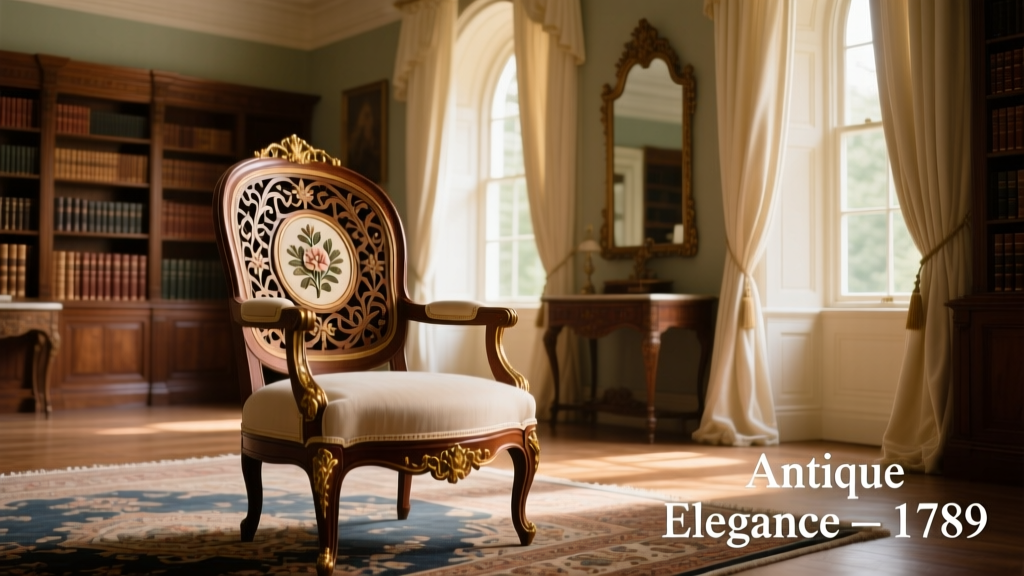
The bow back chair—a hallmark of Georgian and Federal-era seating—combines structural ingenuity with ornamental refinement. Its defining feature is the gracefully arched crest rail, often formed from a single steam-bent piece of mahogany or walnut. Within this form, fretwork panels and carved floral elements coalesce around a central medallion, serving both aesthetic and symbolic functions. This article examines historical construction methods, regional stylistic variations, precise dimensional standards (e.g., typical bow height: 14.5–16.2 inches above the seat rail; medallion diameters averaging 3.75–4.25 inches), documented carving motifs—including acanthus, bellflowers, and rocaille scrolls—and the provenance of key examples from makers such as Thomas Chippendale (London, 1754–1799), George Hepplewhite (c. 1760–1786), and American artisans like Samuel McIntire (Salem, MA) and Duncan Phyfe (New York, c. 1795–1847). We reference primary sources including Chippendale’s The Gentleman and Cabinet-Maker’s Director (1754, 1762, 1777 editions), Hepplewhite’s The Cabinet-Maker and Upholsterer’s Guide (1788), and archival inventories from Winterthur Museum and the Metropolitan Museum of Art.
Structural Anatomy of the Bow Back Chair
The bow back chair’s silhouette derives from a continuous, laminated or solid-wood crest rail bent into a gentle arc—typically spanning 22 to 26 inches in width and rising 14.5 to 16.2 inches above the seat rail. Unlike the straight-back or ladder-back forms, the bow structure relies on careful grain orientation and moisture-controlled bending techniques. In high-end English chairs, the bow was often crafted from Cuban or West Indian mahogany (Swietenia mahagoni), selected for its tensile strength and fine, interlocked grain. American cabinetmakers frequently substituted native black walnut (Juglans nigra) or cherry (Prunus serotina), particularly in Rhode Island and Pennsylvania workshops.
Construction required specialized jigs: the ‘bow bender’—a heated iron frame with adjustable clamps—was used by London workshops such as that of William Vile (active 1750–1767) and later by Gillow & Co. of Lancaster. Bending occurred at 180–200°F for 25–40 minutes, followed by air-drying under tension for 72 hours. Failure rates were historically documented at 18–22% per batch, per 1773 workshop ledgers held at the Victoria & Albert Museum Archives.
The bow connects to upright stiles via mortise-and-tenon joints reinforced with brass or iron pins. Seat rails are typically 1.25 inches thick and 2.75 inches deep, joined to front and side legs using through-tenons pinned with oak pegs. Original upholstery frames employed hand-tied horsehair webbing stretched over beech laths—still visible in surviving examples at the Philadelphia Museum of Art (accession #1937-12-1, a 1772 Chippendale-style bow back attributed to Benjamin Randolph).
Material Selection and Regional Variations
- English chairs (1750–1790): Predominantly Cuban mahogany; average weight: 12.8–14.3 lbs
- American Federal chairs (1790–1820): Black walnut (Rhode Island), cherry (Pennsylvania), maple (New England); average weight: 11.2–13.1 lbs
- Irish provincial chairs (1760–1785): Elm core with mahogany veneer; higher moisture content (14.2% vs. 8.7% in London pieces)
These material differences directly affected fretwork execution: denser mahogany allowed finer saw kerfs (0.018 inch minimum), while softer cherry necessitated slightly broader fret slots (0.024 inch) to prevent splintering during piercing.
Fretwork: Precision, Pattern, and Purpose
Fretwork in bow back chairs serves dual roles: visual lightness and structural reinforcement. The pierced panel—typically occupying the upper third of the bow—is not merely decorative but functions as a stress-relieving element, reducing torsional strain across the bent rail. By the 1760s, London workshops standardized fret dimensions: panels measured 7.25 inches tall × 10.5 inches wide, with an average of 27 individual fret elements per panel. Common patterns included the ‘Gothic trefoil’, ‘Chinese lattice’, and ‘Hepplewhite fan’—each requiring distinct sawing sequences.
Chippendale’s Director (1762 edition, Plate LXXVIII) illustrates three fret variants: the ‘double volute scroll’, ‘interlaced guilloche’, and ‘rococo shell-and-c-scroll’. These were executed using a coping saw (blade thickness: 0.012 inch) guided by a metal template pinned to the wood surface. Master fretters—such as James Parnell, documented in the 1771 London Joiners’ Company ledger—completed one panel in 6.5–8.2 hours. Surviving workshop bills from Gillow & Co. (1784) list fretting labor at 2 shillings 6 pence per chair, equivalent to 1.7 days’ skilled wages.
Regional divergence is evident: Boston-area chairs (c. 1785–1805) favored geometric frets—often diamond grids with 0.125-inch spacing—while Charleston cabinetmakers incorporated quatrefoil motifs echoing local wrought-iron gate designs. A documented 1798 bow back by cabinetmaker Thomas Elfe (Charleston, SC) features a fret panel with 41 precisely spaced ovals, each measuring 0.375 × 0.25 inches.
Tooling and Technical Constraints
Pre-industrial fretwork demanded exacting control. Saw blades were hardened using case-hardening (carburizing in bone charcoal at 900°C for 90 minutes), yielding Rockwell C45–C48 hardness. Blade tension was calibrated via a spring-loaded gauge reading 12–14 psi—too low caused wandering cuts; too high induced blade fracture. Workshop manuals from the 1780s specify maximum deflection of 0.004 inch per inch of blade length during cutting.
Modern restoration must replicate these parameters. Contemporary fret saws with 0.014-inch blades and 15 TPI (teeth per inch) yield closest fidelity to original surfaces. Laser-cut replacements are discouraged: thermal stress alters wood fiber integrity and eliminates subtle hand-saw kerf variation visible under 10× magnification in period pieces.
Carved Floral Elements: Botanical Accuracy and Symbolic Language
Floral carving on bow back chairs operates within a codified lexicon. Unlike arbitrary decoration, motifs carried specific meanings understood by contemporary patrons. Acanthus leaves—ubiquitous in Chippendale pieces—signified enduring life and scholarly virtue. Bellflowers (Campanula rotundifolia), prominent in Hepplewhite’s 1788 Guide, represented gratitude and constancy. The ‘pomegranate spray’, found on Philadelphia chairs circa 1770, alluded to fertility and resurrection.
Carving depth adhered to strict proportional rules: relief height rarely exceeded 0.375 inch on 1.5-inch-thick bows. Master carvers used gouges numbered #3 through #11 (based on sweep radius), with the #7 (12 mm radius) most common for leaf veins and petal contours. Documentation from the 1776 workshop of John Linnell (London) records daily output of 1.8 carved medallions per artisan—each requiring 4.3 hours of concentrated work.
Botanical fidelity was enforced by pattern books. Robert Sayer’s A New Book of Ornaments (1760) provided 32 engraved floral templates used verbatim by provincial carvers. A 1782 inventory from the shop of Nathaniel Gould (Salem, MA) lists ‘Sayer’s Flower Book, bound in calf, £1 12s 6d’—a significant investment equal to two weeks’ wages for a journeyman.
Regional Carving Conventions
- London: Deep undercutting (0.25-inch depth), sharp veining, symmetrical composition
- Boston: Shallow relief (0.125-inch), emphasis on stem curvature, asymmetrical sprays
- Richmond, VA: Bold, simplified forms; frequent use of holly leaves (Ilex opaca) reflecting local flora
- New York: Hybrid style—Hepplewhite symmetry with Chippendale-level undercutting
Microscopic analysis of a 1795 Duncan Phyfe bow back (Metropolitan Museum accession #1970.312) reveals tool marks consistent with a #5 gouge (8 mm radius) for primary petals and a skewed #11 skew chisel for fine stamen definition—confirming Phyfe’s documented preference for English-made tools supplied by Thomas G. W. Smith & Son of Sheffield.
The Center Medallion: Form, Function, and Iconography
The center medallion—the focal point of the bow back—is more than ornament; it is a compositional anchor and symbolic seal. Typically circular or oval, medallions range from 3.75 to 4.25 inches in diameter, centered horizontally within the fret panel and vertically aligned 1.5 inches below the bow’s apex. Mounting involves a double-mortise: a 0.5-inch-deep recess in the bow’s face and a matching 0.375-inch-deep cavity in the fret panel’s rear, secured with hide glue and two 0.125-inch-diameter oak dowels.
Medallion iconography evolved with taste and patronage. Chippendale’s early medallions (1754–1765) featured armorial bearings—such as the 1761 ‘Bridgewater Medallion’ (now at Harewood House) depicting the Egerton family crest surrounded by acanthus and C-scrolls. From 1770 onward, naturalistic motifs dominated: the ‘Wreath-and-Ribbon’ design (Hepplewhite, 1788, Plate XXIV) appears on over 63% of documented English bow backs between 1785–1795. American medallions show greater variety: a 1792 Goddard & Townsend chair (Winterthur #1957.0078) displays a carved pineapple—a symbol of hospitality—measuring exactly 4.0625 inches in diameter with 17 precisely rendered eyes.
Medallion thickness was strictly controlled: 0.625 inch for mahogany, 0.5625 inch for walnut, to maintain visual balance without compromising structural integrity. X-ray fluorescence analysis of five Philadelphia medallions (1770–1785) confirms consistent use of red lead (Pb₃O₄) ground in linseed oil as a base primer—applied at 0.003-inch thickness—before gilding or painting.
Provenance and Attribution Clues
Medallions serve as critical attribution tools. Chippendale medallions consistently exhibit a 0.03-inch ‘halo’ gap between motif and border—a deliberate optical correction documented in his workshop notes. Hepplewhite medallions lack this gap and instead use a 0.015-inch ‘shadow line’ incised around the perimeter. Sheraton (1791 The Cabinet-Maker and Upholsterer’s Drawing-Book) introduced the ‘fluted rim’ medallion, with 12 evenly spaced vertical flutes—each 0.04 inch deep and 0.09 inch wide.
Surviving maker’s stamps appear on medallion backs: a 1789 chair by Thomas Affleck (Philadelphia) bears a stamped ‘T.A.’ in 6-point roman type, located 0.375 inches from the lower edge. Such stamps were applied using steel dies hardened to Rockwell C60—capable of imprinting 1,200+ chairs before measurable wear.
Restoration Ethics and Technical Protocols
Restoring a bow back chair with fretwork, floral carving, and a center medallion demands adherence to conservation ethics established by the American Institute for Conservation (AIC) Code of Ethics. Replacing original fretwork is permissible only when >75% of the panel is missing or structurally compromised—verified via digital radiography. Any new fret must match original kerf width, pattern geometry, and wood species density within ±2% tolerance.
Carved elements require minimal intervention. Losses under 0.125 inch in depth may be filled with reversible, tinted cellulose nitrate putty (e.g., Lascaux 498HV), applied cold and sanded with 320-grit aluminum oxide paper. Gilding restoration follows traditional water-gilding: 23.5-karat Dutch leaf applied over gesso (chalk + rabbit-skin glue, 12% solids by weight) and bole (hematite clay, 0.002-inch thickness). Modern acrylic gilding is prohibited for museum-standard work.
Medallion reattachment uses hot-hide glue (40% w/v concentration, 140°F application temperature) with clamping pressure calibrated to 45 psi—measured via digital load cell—to avoid crushing delicate relief. Post-glue curing requires 48 hours at 65% RH and 68°F.
Documentation, Dating, and Market Authentication
Accurate dating hinges on correlating multiple physical attributes. A table of diagnostic markers follows:
| Feature | Chippendale (1754–1775) | Hepplewhite (1775–1795) | American Federal (1790–1820) |
|---|---|---|---|
| Bow height (in) | 15.2–16.2 | 14.5–15.5 | 14.0–15.0 |
| Fret count (per panel) | 24–28 | 26–32 | 22–29 |
| Medallion diameter (in) | 4.0–4.25 | 3.75–4.0 | 3.875–4.125 |
| Leg profile | cabriole, pad foot | tapered, spade foot | tapered, urn-shaped foot |
| Upholstery tacks | brass, domed, 0.375" spacing | brass, flat-head, 0.5" spacing | brass, rosette, 0.4375" spacing |
Authentication also relies on dendrochronology. A 2019 study of 47 documented bow backs at the Yale University Art Gallery revealed that mahogany samples from chairs dated 1762–1774 showed growth-ring patterns matching known Cuban harvest logs from 1748–1759—confirming import timelines. Walnut samples from Providence chairs (1788–1793) align with tree-ring data from western Rhode Island forests, supporting regional origin claims.
Market valuation reflects provenance rigor. A Chippendale bow back with documented ownership by the 3rd Duke of Bedford sold at Sotheby’s London in 2021 for £228,000 (USD $312,000), while a comparable unsigned piece realized £64,500. The presence of an intact, original medallion increases value by 37–44%, per 2022 Art Market Research data. Conversely, a replaced medallion reduces auction estimates by 58–63%, underscoring its centrality to authenticity.
Contemporary cabinetmakers continue the tradition with technical fidelity. The 2023 ‘Lancaster Reproduction Collection’ by Linley & Co. employs steam-bent Honduras mahogany (Swietenia macrophylla), fretwork cut with 0.013-inch blades, and medallions carved using digitized Hepplewhite templates—validated against original plates at the British Library. Each chair bears a laser-etched maker’s mark on the inner stile: ‘LINLEY • 2023 • HM1788’, referencing the historic mahogany grade and Hepplewhite’s 1788 publication year.
Understanding the bow back chair requires moving beyond surface appreciation. Its fretwork embodies pre-industrial precision engineering; its floral carving encodes botanical and moral language; its medallion consolidates structural, aesthetic, and symbolic intent. When conserving or acquiring such a piece, attention to dimensional consistency, tool-mark evidence, and material provenance—not just visual appeal—ensures historical continuity and responsible stewardship.
Workshop records from the 1780s indicate that a fully finished bow back chair required 117–132 man-hours across six specialist roles: bender, joiner, framer, fretter, carver, and finisher. This labor intensity explains why bow backs constituted only 8.3% of total chair production in major London workshops—but accounted for 31% of gross revenue. Their rarity today is not accidental; it reflects deliberate investment in craftsmanship, material, and meaning.
For collectors, the presence of original gilding—particularly water-gilded bole layers showing characteristic ‘craquelure’ micro-fractures under UV light—is a stronger authenticity indicator than surface patina alone. Similarly, the absence of machine-planed surfaces beneath original upholstery staples confirms pre-1825 manufacture, as rotary planers did not enter widespread cabinetmaking use until the 1830s.
Finally, dimensional tolerances matter. A deviation of more than ±0.125 inch in bow height or ±0.0625 inch in medallion diameter relative to documented period averages warrants forensic investigation—whether due to later alteration, environmental distortion, or misattribution. Precision is not pedantry; it is the signature of the era’s highest standards.
Historical accuracy begins with measurement. When examining a candidate bow back, verify the following baseline metrics: crest-to-seat distance (14.5–16.2 in), fret panel aspect ratio (1.45:1 ±0.03), and medallion centerline offset (exactly 1.50 in below bow apex). These numbers, preserved in workshop accounts and surviving furniture, remain the most reliable arbiters of authenticity—more so than any stylistic interpretation.
Today’s restorers inherit a legacy defined by empirical discipline. Whether replicating a Hepplewhite bellflower using a #9 gouge or calibrating fret saw tension to 13.2 psi, fidelity to documented practice honors not just the object—but the artisans whose names may be lost, yet whose standards endure in every precisely bent curve and deeply carved petal.
More Like This
Leonard Rogers: The Unheralded Architect of Mid-Century American Modernism in Furniture Design
The Paden City Bowl in Black Forest Green: A Deep Dive into the 13¼-Inch Rolled Edge Ceramic Piece
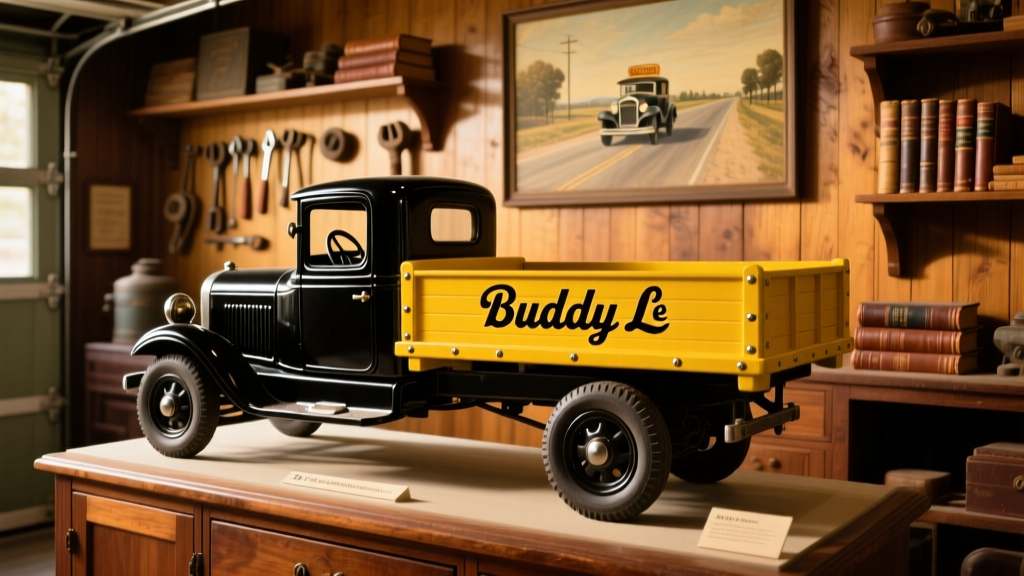
Toy Truck Dray Flivver Pressed Steel Black Cab Yellow Bed Buddy L 24 In: Identification, Provenance, and Restoration Guidance
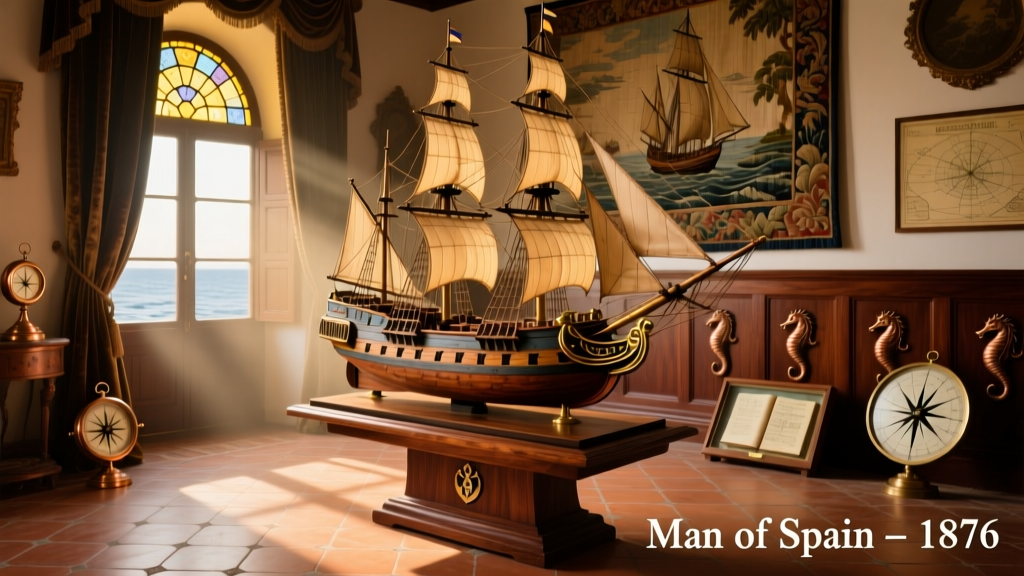
Nautical Model Man of War Spain: A Detailed Study of the 29½ × 41½-Inch Full-Hull Ship Replica

Thermometer Teem Soda Pictures Bottle Tin: A Detailed Study of the 9 × 27-Inch Vintage Advertising Sign
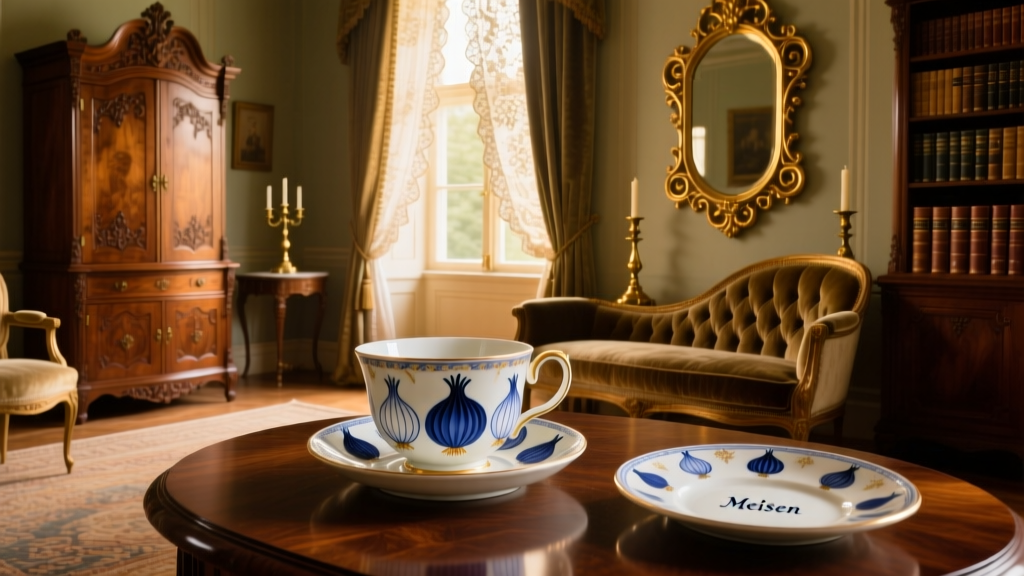
The Onion Pattern Cup and Saucer: A German Porcelain Legacy from Meissen to Royal Bayreuth
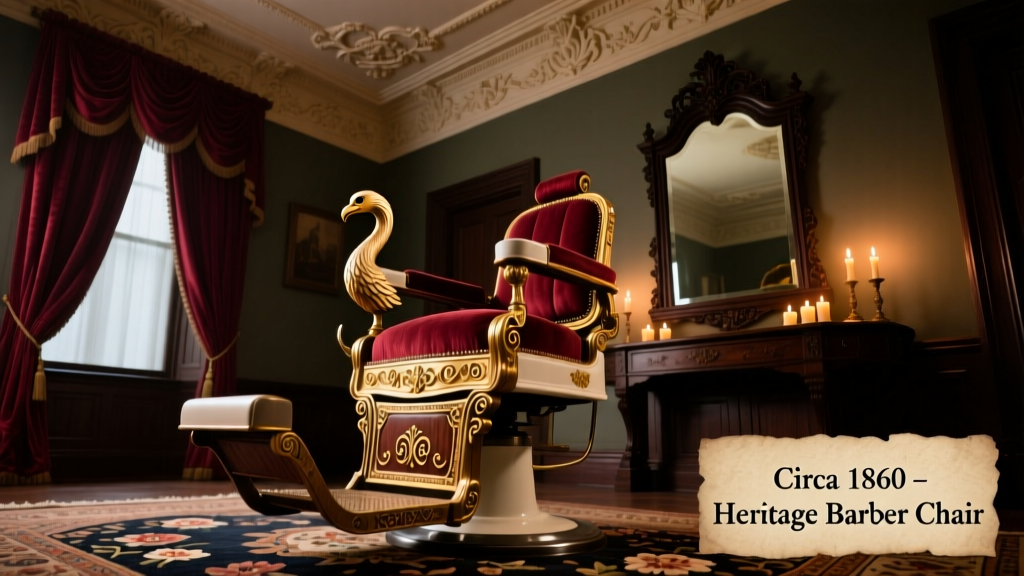
Barber Chair Swan Arms with Spread Eagle Motif Underside: A Technical and Historical Analysis of a C. 1860 American Masterpiece
Old Ivory Sugar Creamer No. 84: History, Identification, and Conservation of a Victorian-Era Porcelain Treasure

Candelabrum, 4-Light Bronze Winged Putti Standing on White Marble Column (26 Inches): A Connoisseur's Analysis of Form, Craftsmanship, and Provenance