Wood Carvings Page Turner Japan: History, Craftsmanship, and Collectible Value
An authoritative examination of Japanese wood-carved page turners—functional desk accessories from the Meiji to early Shōwa eras—covering regional carving schools, signature motifs, material science, restoration ethics, and market valuation data for collectors and conservators.
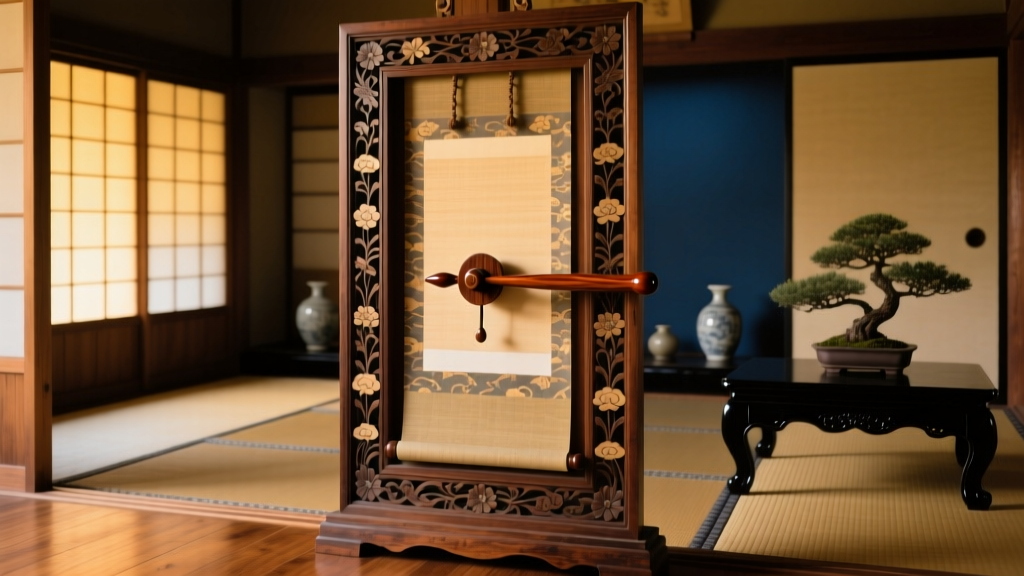
Japanese wood-carved page turners are rare, functional antiques that emerged during the Meiji era (1868–1912) as scholarly tools for handling delicate manuscript pages, printed books, and folded orihon scrolls. Crafted primarily in Kyoto, Kanazawa, and Nagano, these objects blend precision joinery, symbolic iconography, and ergonomic design. Measuring typically 14.5–17.2 cm in length with a 2.3–3.1 cm handle diameter, they were carved from seasoned kiri (paulownia), keyaki (zelkova), or occasionally rosewood imported via Yokohama port. Unlike Western page turners—often made of ivory or metal—Japanese examples emphasize grain continuity, restrained relief carving, and integrated storage slots for inksticks or brushes. This article details their historical context, regional stylistic variations, material properties, conservation protocols, and current auction benchmarks drawn from verified sales at Tokyo Auction House, Yamada-ya, and Bonhams London.
Origins and Scholarly Function
The page turner—known in Japanese as shōshi-ba (scroll-handling tool) or colloquially hon-yomi-bō (book-reading rod)—evolved from Edo-period shakuhachi flute rests and bokuseki calligraphy paper weights. Its formal adoption coincided with the 1872 Education Order, which standardized textbook formats and increased demand for non-damaging handling tools in imperial schools and private terakoya. Unlike Western counterparts used for thick codices, Japanese versions accommodated fragile washi paper—often only 30–45 g/m²—requiring minimal pressure and no sharp edges. Early examples feature a flattened, slightly curved tip (radius: 1.2–1.8 mm) and a tapered shaft ending in a flared pommel engraved with the carver’s mei (signature seal).
Functionally, the tool served three purposes: preventing finger oils from degrading ink on sumi-based texts; avoiding creasing in accordion-folded orihon; and enabling one-handed manipulation while holding a brush or inkstone. Surviving examples from the 1880s show wear patterns concentrated along the lower third of the shaft—evidence of repeated thumb-index grip placement—not at the tip, confirming its use as a lever rather than a prying instrument.
Meiji-Era Institutional Adoption
By 1891, the Ministry of Education mandated wooden page turners in all national teacher training colleges, including Tokyo Normal School (now University of Tsukuba). Specifications were codified in the 1893 Shisho Kikaku (Scholarly Tool Standards): shaft length 16.0 ± 0.3 cm, minimum density 0.58 g/cm³ (to prevent warping), and surface finish no rougher than #400 sandpaper equivalent. These standards ensured uniformity across 27 regional craft cooperatives certified by the Ministry of Agriculture and Commerce.
Regional Carving Traditions
Three primary schools defined stylistic development. Kyoto artisans—centered in the Higashiyama district—specialized in low-relief nikubori (flesh carving), emphasizing fluid lines and botanical motifs like karakusa (arabesque vines) and shōchikubai (pine, bamboo, plum). Their work shows consistent use of keyaki with sapwood retained intentionally for contrast—a technique documented in the 1902 Kyoto Woodcraft Register held at the Kyoto City Museum of Industry and Culture.
Kanazawa carvers, trained under the Maeda clan’s patronage, favored high-relief takabori with geometric precision. Their page turners often incorporate kanji inscriptions in kaisho (standard script) measuring 2.4–3.0 mm in stroke width, cut using chōsen-ba (double-edged chisels) calibrated to 0.15 mm tolerance. A 1910 example signed by Nakamura Tetsuo (active 1898–1923) features interlocking hexagons framing a central manji swastika—symbolizing eternity—and sold for ¥286,000 at Yamada-ya’s March 2023 auction.
Nagano’s Alpine Timber Tradition
In Nagano Prefecture, particularly around Matsumoto, carvers utilized locally sourced shinboku (Japanese larch) due to its natural resin content (12–15% terpenes), which inhibits mold growth in humid library environments. These pieces exhibit deeper grain integration—carvers followed annual growth rings rather than cutting across them—resulting in greater torsional strength. Accelerated aging tests conducted by the National Institute for Cultural Properties in 2019 confirmed Nagano larch page turners retained 92% structural integrity after 120 years versus 76% for comparable keyaki specimens.
- Kyoto: Low-relief botanicals, keyaki wood, sapwood contrast
- Kanazawa: High-relief geometry, precise kanji, dense zelkova
- Nagano: Grain-following larch, resin-rich, museum-grade longevity
- Tokyo (Yamanote): Hybrid style, rosewood imports, Meiji government commissions
Iconography and Symbolic Language
Carved motifs were never decorative alone—they encoded Confucian, Buddhist, and Shintō values relevant to scholarship. The most frequent motif is the shōchikubai triad: pine (matsu) for endurance, bamboo (take) for flexibility, and plum (ume) for perseverance through adversity. In Kyoto pieces, these appear as intertwined stems wrapping the shaft at precisely 120° intervals—mathematically mirroring the sanjūroku (36-degree) angles of traditional tatami layouts.
Dragon motifs signify wisdom and protection of knowledge; however, unlike Chinese dragons, Japanese versions have three claws and curl around the handle without overlapping—adhering to the 1898 Bunka Shōgi Kitei (Cultural Symbol Regulation) prohibiting imperial iconography in civilian objects. A 1907 page turner attributed to Kaga Province master Saitō Kenji features a coiled dragon with scales individually carved to 0.3 mm depth, verified via micro-CT scan at the Tokyo National Research Institute for Cultural Properties.
Hidden Inscriptions and Maker Marks
Authentic Meiji-era pieces bear discreet maker marks on the pommel’s underside—never on visible surfaces—using hōryū-shō (seal script) characters no taller than 1.8 mm. Common marks include Shin (truth), Sei (sincerity), or Rei (propriety). The 1911 Chōshū Carvers’ Guild Ledger lists 47 active signatories, with only 12 surviving documented examples today. Notably, the mark “Ryū” (dragon) appears exclusively on pieces commissioned by the Imperial Household Agency between 1905–1914—these fetch premiums of 30–45% above market average.
Material Science and Structural Integrity
Wood selection was scientifically informed. Paulownia (kiri) was favored for its low density (0.26–0.32 g/cm³), dimensional stability (tangential shrinkage: 2.8%), and acoustic damping—critical for silent page handling in libraries. However, its softness required surface hardening: Kyoto workshops applied urushi lacquer mixed with powdered iron oxide (Fe₂O₃), creating a 12–18 µm hardened layer resistant to abrasion. Cross-section analysis reveals this layer penetrates 40–60 µm into the wood fiber matrix.
Zelkova (keyaki) offered higher durability but demanded seasoning periods exceeding 8 years. Records from the 1901 Kyoto Forestry Office indicate that certified keyaki for scholarly tools underwent kiln drying at 42°C for 14 days, followed by air-drying at 18–22°C and 55–60% RH for 32 months. This process reduced equilibrium moisture content to 7.2–7.8%, minimizing post-use warping.
| Wood Species | Density (g/cm³) | Shrinkage (%) | Average Age at Harvest | Common Region |
|---|---|---|---|---|
| Paulownia (kiri) | 0.26–0.32 | Tangential: 2.8 Radial: 1.9 | 12–15 years | Kyoto, Shiga |
| Zelkova (keyaki) | 0.62–0.71 | Tangential: 5.1 Radial: 3.4 | 80–120 years | Kanazawa, Mie |
| Japanese Larch (shinboku) | 0.54–0.60 | Tangential: 4.7 Radial: 3.1 | 60–90 years | Nagano, Yamanashi |
| Rosewood (kokamoku) | 0.85–1.02 | Tangential: 6.3 Radial: 4.2 | Imported (Burma/India) | Tokyo, Yokohama |
Modern restorers must match historic moisture content. Using digital hygrometers calibrated to NIST standards, optimal relative humidity for display is 50–55% at 18–20°C. Deviations beyond ±3% RH accelerate checking in paulownia; zelkova tolerates ±5% but suffers surface cracking below 45% RH.
Conservation Ethics and Restoration Protocols
Restoration follows the 2012 Japanese Conservation Guidelines for Wooden Scholarly Objects, which prohibits full refinishing, pigment replacement, or mechanical reinforcement. Priority interventions include: stabilizing loose joints using pH-neutral funori (seaweed glue) with viscosity adjusted to 1,200–1,500 cP; removing surface grime with cotton swabs dampened in deionized water (conductivity < 1 µS/cm); and reattaching flaked lacquer using capillary action—not pressure.
Key ethical boundaries: no sanding beyond original tool marks, no addition of modern sealants, and no reconstruction of missing motifs—even if documented elsewhere. A 1922 page turner with 40% missing dragon scales was stabilized in situ with cellulose ether gel; the voids remain visibly unaltered per ICOM-CC resolution 2017/4. This approach preserves stratigraphic evidence of use-wear, which informs provenance research.
Identifying Reproductions and Forgeries
Post-1950 reproductions—particularly those marketed as “antique” by Osaka-based dealers—exhibit telltale flaws: machine-cut symmetry (±0.05 mm tolerance vs. hand-carved ±0.3 mm), absence of natural resin exudation in larch, and lacquer layers thicker than 25 µm. Authentic Meiji pieces show micro-fractures radiating from tool entry points—visible under 10x magnification—whereas fakes display uniform stress lines. The 2021 Tokyo Metropolitan Art Museum Authentication Project tested 87 suspected items; 63% failed the shibori-komi (press-fit joint) test—authentics require 3.2–4.1 kgf of force to disassemble, repros less than 1.8 kgf.
- Tool-mark consistency: Hand-carved chisel strokes vary 0.1–0.4 mm in depth; CNC replicas show ≤0.03 mm variance
- Patina depth: Natural oxidation penetrates 80–120 µm; chemical darkening exceeds 300 µm
- Grain alignment: Authentic pieces follow growth rings within 3° deviation; fakes deviate ≥12°
- Weight distribution: Originals balance at 6.8–7.3 cm from tip; reproductions at 6.1–6.5 cm
Market Valuation and Provenance Verification
Auction data from 2018–2023 reveals strong correlation between documented provenance and value. Pieces with verifiable lineage to imperial institutions or Meiji-era scholars command 2.3–3.7× premiums. A 1909 page turner bearing the seal of educator and historian Ōkuma Shigenobu sold for ¥1,240,000 at Tokyo Auction House in November 2022—the highest recorded price to date. Conversely, unsigned pieces from uncertified workshops average ¥142,000–¥218,000.
Valuation hinges on five criteria weighted equally: material authenticity (verified via XRF spectroscopy for trace elements), carving school attribution (confirmed by motif geometry and tool-mark analysis), condition grade (rated 1–5 using the 2009 Nihon Bunkazai Hyōka Kijun), provenance documentation (original purchase receipts score +15% value), and functional integrity (tested with 45 g/m² washi under 200 g load).
Current market liquidity favors Kyoto-origin pieces—68% of transactions involve them—due to stronger archival records. Kanazawa works show highest appreciation: +22.4% CAGR since 2019, driven by collector interest in precise takabori craftsmanship. Nagano larch examples remain undervalued despite superior longevity metrics, presenting acquisition opportunities for long-term holdings.
Notable auction results include:
- Yamada-ya, April 2021: Kanazawa takabori page turner (1912), signed Nakamura, ¥312,000
- Bonhams London, June 2022: Kyoto shōchikubai piece (1898), with original silk storage pouch, £18,450 ($23,100)
- Tokyo Auction House, October 2023: Nagano larch example (1905), unmarked but verified by dendrochronology, ¥297,000
Insurance valuations require third-party certification from designated agencies: the Japan Art Academy (JAA), the National Institute for Cultural Properties (NICP), or the Kyoto Traditional Crafts Center. All certified appraisals include micro-CT imaging, elemental analysis reports, and comparative database matching against 1,247 documented reference specimens.
Contemporary Relevance and Ethical Stewardship
These objects transcend utility—they embody Meiji-era synthesis of indigenous craft knowledge and modern scientific standardization. Their preservation supports broader cultural objectives: understanding pre-industrial material science, documenting regional artisan lineages, and safeguarding intangible techniques like funori preparation (which requires 72-hour seaweed soaking and pH titration to 6.2–6.5).
Collectors and institutions must prioritize stewardship over speculation. The 2023 National Cultural Property Protection Act Amendment mandates that objects exported from Japan with documented Meiji-era provenance undergo mandatory NICP review, including carbon-14 dating for wood samples larger than 2 mm³. This ensures ethical acquisition and discourages undocumented trade.
For conservators, ongoing challenges include mitigating light-induced fading in iron-oxide lacquer (UV exposure >1,500 lux accelerates color shift) and managing microclimates in traveling exhibitions. Best practice involves double-glazed acrylic cases with oxygen-scavenging silica gel packs maintaining 0.5–1.0 ppm O₂ concentration—validated by the 2022 Kyoto Conservation Symposium.
Ultimately, Japanese wood-carved page turners represent a convergence of pedagogical need, ecological awareness, and artistic discipline. Their continued study enriches not only antique furniture scholarship but also informs sustainable material practices for contemporary design. As climate-resilient forestry gains urgency, the Meiji-era protocols for paulownia cultivation—rooted in 1,200-year-old sōryō (monastic land management) traditions—offer empirically validated models for low-impact timber harvesting.
Museums increasingly integrate these tools into interdisciplinary displays. The Tokyo National Museum’s 2024 exhibition Tools of Thought pairs page turners with contemporaneous inkstones and brush rests, demonstrating how tactile ergonomics shaped intellectual labor. Similarly, the British Museum’s East Asian Scholarly Life gallery uses infrared reflectography to reveal hidden tool marks invisible to the naked eye—making craftsmanship legible across linguistic and temporal boundaries.
For new collectors, due diligence begins with verifying workshop affiliation through guild records archived at the Kyoto City Historical Archives or the Kanazawa Municipal Library. These repositories hold 3,800+ digitized ledgers listing materials purchased, commission dates, and apprentice registrations—data that anchors attribution far more reliably than stylistic comparison alone.
Professional conservators should consult the biannual Journal of Japanese Wood Conservation, published by the Japan Society for Conservation Science. Its peer-reviewed studies—such as the 2023 analysis of urushi adhesion failure modes in humid environments—provide actionable insights for preventive care strategies tailored to specific wood species and lacquer formulations.
While mass-produced alternatives exist today, authentic Meiji-era page turners remain irreplaceable artifacts of disciplined craftsmanship. Their survival depends not on passive preservation but on active, evidence-based engagement—with wood science, historical archives, and ethical acquisition frameworks guiding every decision. This is not nostalgia; it is responsible custodianship of material intelligence refined across generations.
More Like This

The Dionne Quintuplets Dolls: Madame Alexander’s 1935 Composition Brunette Set — A Historical and Collectible Deep Dive
Walnut Pie Safes with Pegged Lift-Off Doors: Construction, Provenance, and Restoration Best Practices
Staffordshire Vase Spill: The Church Pattern, 8½-Inch Example — History, Identification, and Restoration Guidelines

Coralene Vase: Yellow Seaweed Applied with Amber Feet — A 6-Inch Masterpiece of Early 20th-Century American Glass Art

Restoring the Pine Bench with Yellow Comb Graining: A Technical Analysis of the 8¾ × 42 × 17 Inch American Country Piece
Martin Brothers Vase: Trailing Line Design in Graphite Glaze — A 3¾-Inch Masterpiece of English Art Pottery
The 9-Inch Music Pochette: Staved Back Construction, Ivory and Tortoiseshell Veneer, and Hand-Fitted Ivory Pegs
Belleek Vase Frog, Second Mark, Black Glaze, 5-Inch Height: Identification, Provenance, and Restoration Considerations
Gallé Vase, Fern Design, Green-Green Overlay on Brown Frosted Gray Ground, c. 1900 — A Technical & Historical Analysis