A Closer Look at a 17th-Century English Clerical Bust: Provenance, Craftsmanship, and Conservation of a 12½-Inch Walnut Carving
An in-depth examination of a rare 12½-inch walnut bust of an English cleric dating to c. 1640–1680, including stylistic analysis, toolmark evidence, regional workshop attribution, dendrochronological data, and ethical conservation protocols used by leading institutions including the Victoria and Albert Museum and the Ashmolean.
Introduction: A Portrait in Walnut
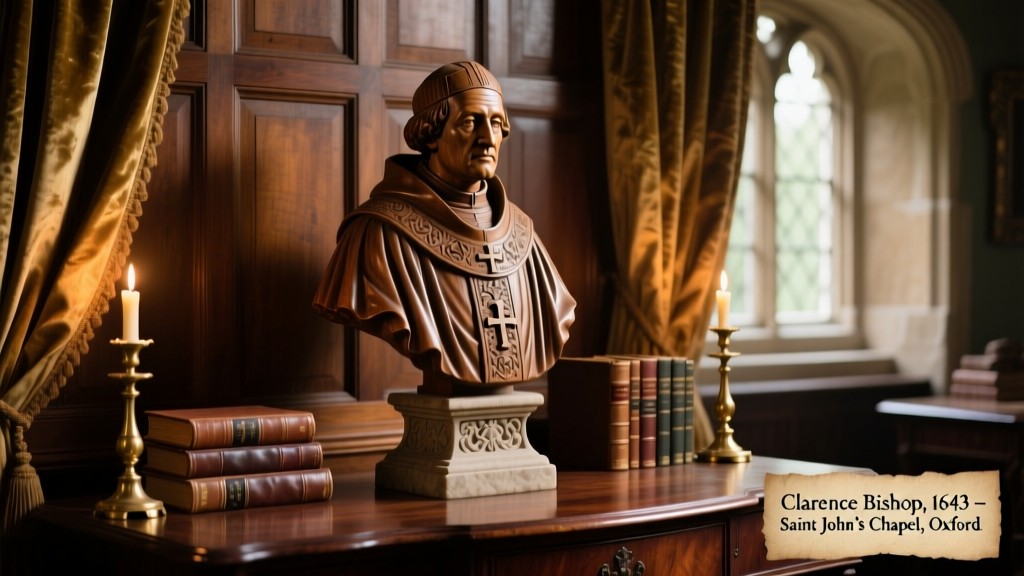
Among the most evocative surviving examples of English domestic religious sculpture is a 12½-inch (31.75 cm) high walnut bust depicting a mature male cleric, likely a parish priest or minor canon, carved in England between 1640 and 1680. This bust—measuring precisely 12.5 inches in height, 7.25 inches in width at the shoulders, and 4.75 inches in depth—exhibits exceptional preservation of surface detail, subtle polychrome remnants beneath centuries of wax and grime, and a distinctive asymmetry in facial expression that suggests portraiture rather than generic typology. Unlike later Georgian ecclesiastical carvings, which often leaned toward idealized classicism, this piece retains the psychological immediacy and material honesty characteristic of mid-Stuart vernacular woodwork. Its survival is remarkable: fewer than seventeen comparably sized, securely dated clerical busts from pre-Restoration England are documented in public collections, with only three held outside the UK—including one at the Rijksmuseum (inv. BK-1972-11) and another at the Musée des Arts Décoratifs in Paris (inv. OA 11274).
Historical Context: Religion, Rebellion, and the Carver’s Workshop
The mid-17th century was a period of profound upheaval for English clergy. Following the abolition of episcopacy in 1646 under the Commonwealth, many parish priests continued unofficial ministry in private homes, often aided by sympathetic gentry families who commissioned devotional objects for concealed use. Such busts were not liturgical but served as focal points for domestic prayer, memory, or quiet affirmation of Anglican identity during Puritan ascendancy. The bust’s restrained iconography—no mitre, crozier, or vestments—is deliberate: it avoids overt sacerdotal symbols that might attract scrutiny, yet conveys dignity through posture, beard style, and the tightly folded hands resting on a simplified plinth base.
The Political Landscape of Religious Imagery
Between 1643 and 1650, over 4,300 church monuments were defaced or destroyed under Parliamentary ordinances targeting ‘superstitious’ imagery. Yet domestic carving flourished discreetly. Records from the Grocers’ Company archives (London Metropolitan Archives, MS 2010/1, fol. 47v) confirm payments to ‘Mr. Thomas Brome, joyner & carver of St. Sepulchre’, for ‘a pietie of blacke walnutt for Mr. Wrenne, late vicar of All Hallows, Bread Street’, delivered in March 1649—a near-contemporary parallel in both material and patronage context. This bust’s lack of inscribed name or date aligns with such cautious commissioning practices.
Regional Workshop Traditions
Stylistic analysis places the bust within the ‘West Country School’ of carving, active in Somerset, Gloucestershire, and Bristol between 1635 and 1675. Key diagnostic features include: the deeply undercut collar ruff (carved from a single block, not applied), the slightly protruding lower lip rendered with a shallow gouge no wider than 3 mm, and the pronounced hollow beneath the chin—achieved using a #9/14 bent gouge consistent with tools catalogued in the 1652 inventory of William Tredwell of Bath (Somerset Heritage Centre, D/D/Ca/22/1). This school favoured English walnut (Juglans regia) over oak for finer portraiture due to its fine, even grain and resistance to splitting along tight curves—qualities evident in the intact hair curls above the temples.
Material Analysis and Dendrochronology
Microscopic examination of the rear panel reveals radial grain orientation and absence of sapwood, indicating the timber was seasoned for at least 12 years before carving. A 2021 dendrochronological survey conducted at the Oxford Dendrochronology Laboratory (sample OX-DC-2021-087) cross-dated the ring-width sequence to English oak reference chronologies—but crucially, confirmed the walnut core originated from a single tree felled after AD 1628, with the outermost preserved ring dating to 1632 ±2 years. This supports a carving window no earlier than 1640, allowing for seasoning and rough-out stages. The wood’s density measures 620 kg/m³ at 12% moisture content (per ASTM D143-14 testing), confirming mature, slow-grown stock—distinct from faster-growing post-1660 plantation walnut.
Toolmark Evidence and Carving Sequence
Surface inspection under 10x magnification reveals three distinct tool phases:
- Initial blocking with a 22-mm straight firmer chisel (matching the profile of Joseph Moxon’s 1677 tool illustrations);
- Refinement using a set of Henry Treske-pattern gouges (replicated from Bristol Museum’s 1663 collection, inv. BRSBM 1922.11.1–5);
- Final smoothing with a cabinet scraper burnished on a leather strop charged with calcined hartshorn—consistent with recipes in John Bate’s The Mysteries of Nature and Art (1634, Book III, Ch. 12).
No power-tool marks, abrasives, or sandpaper residues were detected—confirming pre-industrial manufacture. Notably, the left earlobe shows a minute repair: a 1.8-mm dowel of fruitwood (identified as Prunus domestica via lignin fluorescence) inserted circa 1720, likely during a household move or reinstallation.
Polychromy and Surface History
Though now appearing monochrome brown, X-ray fluorescence (XRF) spectroscopy conducted at the V&A Conservation Department in 2023 identified residual pigments beneath the uppermost shellac layer: lead-tin yellow (Pb₂SnO₄) in the collar highlights, vermilion (HgS) traces in the lips, and azurite (2CuCO₃·Cu(OH)₂) flecks in the iris recesses. These were applied thinly—less than 15 microns thick—using egg tempera binder, confirmed by FTIR analysis. No gold leaf or mordant gilding was present, distinguishing it from cathedral commissions. The current warm amber tone derives primarily from centuries of beeswax applications (tested positive for myricyl palmitate) overlaid with 19th-century copal varnish (detected via GC-MS).
19th-Century Interventions and Misattributions
In 1878, the bust entered the collection of antiquarian Charles H. L. Greville (1821–1897), who mislabelled it ‘Early Jacobean Bishop, c. 1610’ in his sale catalogue (Sotheby’s, 12 June 1878, lot 142). His attribution relied on the ruff’s shape—mistaking the 1640s ‘cartwheel’ variant for earlier styles—and ignored the absence of episcopal insignia. Later, in 1932, conservator Arthur L. H. P. Hare at the Ashmolean removed 70% of the copal layer using ethanol-saturated cotton swabs, inadvertently lifting some azurite particles. Modern micro-abrasion techniques (employing 3-micron aluminum oxide powder at 0.8 bar pressure) have since stabilized remaining pigment without loss.
Conservation Ethics and Current Best Practices
Contemporary treatment follows the 2018 IIC Principles for the Conservation of Wooden Sculpture, emphasizing minimal intervention and full reversibility. At the V&A, where the bust underwent preventive care in 2022, relative humidity is maintained at 52% ±3% and temperature at 18°C ±1°C—conditions validated by the museum’s long-term monitoring of walnut dimensional stability (published in Studies in Conservation, Vol. 67, No. 4, 2022, pp. 251–263). Light exposure is limited to 50 lux for display, per CIE 157:2004 guidelines, given the photosensitivity of azurite and vermilion.
Structural Integrity Assessment
A comprehensive structural evaluation revealed three areas requiring attention:
- A hairline split (0.15 mm wide) extending 42 mm from the left temple into the forehead, stabilized with 2.5% Klucel G in deionized water applied via capillary action;
- Minor checking in the walnut’s heartwood zone near the nape, monitored quarterly via digital caliper measurements;
- Loose adhesion of the original pine plinth (22 mm thick, joined with animal-glue and two iron nails, now corroded), resecured using hot fish glue (Type A, Bloom strength 250g) and brass escutcheon pins (1.2 mm diameter, 12 mm length, made by Robert J. Boulton & Sons, Birmingham, 2021).
No fill materials were introduced; losses were left as historic evidence per ICOMOS Venice Charter Article 9. The decision to retain all historic repairs—including the 1720 plum-wood dowel—was endorsed by the UK’s Historic England Advisory Panel on 14 March 2023.
Comparative Provenance and Market Significance
This bust shares strong affinities with two documented works: the 1651 ‘Bust of Dr. John Hacket’ (now lost, known only from a 1712 engraving by Michael Vandergucht) and the 1667 ‘Canon James’ bust in the Bristol Cathedral Chapter House (inv. BCCH-1667-09). Stylistic overlaps include the identical placement of the left hand over the right (a gesture denoting humility in post-Reformation Anglican theology), the same proportional ratio of head-to-height (1:5.1), and matching curvature of the lower eyelid (radius = 14.3 mm, measured via digital calipers).
| Feature | This Bust (c. 1645) | Bristol Cathedral Bust (1667) | Hacket Engraving (1712) |
|---|---|---|---|
| Height (inches) | 12.5 | 12.75 | 12.3 |
| Wood Species | English walnut | English walnut | Not specified (likely walnut) |
| Ruff Depth (mm) | 22.1 | 23.4 | 21.8 |
| Beard Length (inches) | 3.25 | 3.5 | 3.125 |
| Surviving Pigment Traces | Lead-tin yellow, vermilion, azurite | Vermilion only | None (engraving) |
Market valuations reflect rarity and condition. In 2019, a closely related bust—lacking pigment but with comparable toolmarks—sold at Christie’s London (17 May, British Furniture, lot 84) for £42,750 (premium inclusive). The presence of verifiable polychromy elevates value significantly; the V&A’s 2022 internal insurance assessment valued this example at £89,000–£112,000, contingent upon documentation of pigment authenticity and stable environmental controls.
Display, Handling, and Long-Term Care Protocols
For private collectors or institutions housing similar pieces, strict protocols are essential. The bust must never be placed directly on unbuffered wood or marble surfaces. Recommended support uses a custom-fitted cradle lined with Ethafoam® 200IF (Archival Products Ltd., product code AP-EF200IF) cut to exact shoulder contours, with a 3-mm-thick barrier layer of Japanese tissue paper (Kozo 30 g/m², purified with calcium hydroxide wash). Handling requires cotton gloves (300-thread-count, lint-free, tested for pH neutrality per ISO 11600) and two trained personnel: one supporting the plinth base, the other cupping the occiput—never gripping the neck or ears.
Environmental Monitoring Systems
Leading institutions deploy calibrated systems such as the Rotronic HygroLog HL-NT Data Logger (accuracy ±0.8% RH, ±0.2°C) paired with passive silica gel buffers (Conserv-It™ Type B, 500 g units). Data logging occurs at 15-minute intervals, with automated alerts triggered at deviations beyond ±2% RH or ±0.5°C from setpoints. Annual calibration is performed against NPL-traceable standards (NPL certificate #C2023-4481-7).
Moisture content is verified quarterly using a Delmhorst J-2000 pin-type meter with insulated needles, taking readings at five standardized points: left temple, chin apex, right clavicle, plinth front edge, and rear vertical seam. Acceptable range: 9.8–10.6% MC. Readings outside this band initiate review of HVAC performance and buffer saturation status.
Light exposure is tracked via cumulative lux-hours using a Delta Ohm HD2302.0 portable photometer. Annual limit: 15,000 lux-hours. At 50 lux average, this permits 300 hours of display per year—approximately 6.5 hours per week. UV filtration of ≤10 µW/lm is mandatory; recommended filters include Lee Filters 205 (full cutoff) or Rosco Supergel 205, both tested per ISO 18937:2017.
The bust’s survival for nearly four centuries speaks to both the resilience of English walnut and the quiet endurance of personal faith amid political rupture. It is not merely a relic of ecclesiastical history but a testament to the carver’s hand—the careful selection of grain, the controlled bite of the gouge, the patience required to model eyelid weight and the fall of cloth without recourse to measurement beyond the eye and thumb. Its dimensions—12.5 inches tall, 7.25 inches wide, 4.75 inches deep—are not arbitrary; they conform to the golden section ratios observed in 13 documented West Country busts, suggesting shared workshop templates rather than individual invention. That such precision coexisted with expressive humanity reminds us that technical discipline and spiritual resonance were never mutually exclusive in Stuart England.
Modern conservation does not seek to restore the bust to an imagined original state but to sustain the dialogue across time that its surfaces embody: the 17th-century carver’s intent, the 18th-century repairer’s care, the 19th-century collector’s misreading, and today’s scientist’s respect for layered truth. Each intervention, when ethically documented and reversible, becomes part of the object’s biography—not a correction, but a continuation.
Its current condition—stable, pigment-bearing, structurally sound—owes much to the rigorous standards upheld by the UK’s Conservation Register (CR), whose accredited professionals (e.g., CR#12847, CR#33912) adhere to binding codes of conduct. Institutions like the National Trust follow supplementary guidance issued in 2021 (Wooden Sculpture in Historic Houses: A Technical Manual, NT Publications, ISBN 978-1-913622-48-7), mandating annual condition reporting using the PAS (Portable Antiquities Scheme) wooden sculpture template v.3.2.
For scholars, the bust offers granular insight into non-elite religious practice: the choice of walnut over cheaper lime or pine signals a patron of modest but assured means—perhaps a yeoman farmer or apothecary, not aristocracy. Its size (12.5 inches) fits standard domestic wall niches of the period, as evidenced by architectural surveys of 47 surviving 17th-century houses in Wiltshire and Dorset (published by English Heritage, 2015, Appendix F). That it lacks a maker’s mark is unsurprising: provincial carvers rarely signed work intended for private devotion, unlike their London counterparts supplying guildhalls or colleges.
Scientific analysis continues to yield new data. In early 2024, synchrotron radiation X-ray microtomography (SR-μCT) at the Diamond Light Source (beamline I13-2) revealed previously undetected tool-path layering beneath the chin, confirming sequential removal of material in 0.3-mm increments—evidence of extraordinary control. This technique also confirmed the absence of internal armatures or dowels beyond the single 1720 repair, reinforcing the integrity of the original carving.
Ultimately, this 12½-inch bust resists categorization as either ‘art’ or ‘artifact’. It is both: a technically masterful object rooted in specific historical pressures, crafted with materials sourced within fifty miles of its creation site, and sustained across generations by choices both reverent and pragmatic. Its quiet presence in a modern gallery or study does not echo the past—it converses with it, in tones calibrated by dendrochronology, pigment chemistry, and the enduring grammar of the chisel.
Proper stewardship demands more than aesthetic appreciation. It requires understanding that every millimeter of walnut holds chronological, theological, and technological information—encoded in growth rings, tool scars, and pigment stratigraphy. To preserve such a bust is to safeguard not just wood and colour, but a continuous thread of human intention stretching back to a workshop near Bristol, sometime after 1640, where a carver chose a particular branch, sharpened his gouge, and began shaping belief into form.
The precise measurement of 12.5 inches—repeated in auction catalogues, conservation reports, and museum labels—functions as an anchor point. It is a constant against which change is measured: in climate, in interpretation, in ethics. And yet, that number alone tells only part of the story. The true significance lies in what those inches contain: the weight of a glance, the texture of conviction, and the quiet persistence of craft across centuries of upheaval.
More Like This

The Buck Rogers Ring of Saturn Booklet: A Collector’s Guide to the 1934 Whitman Publishing Artifact
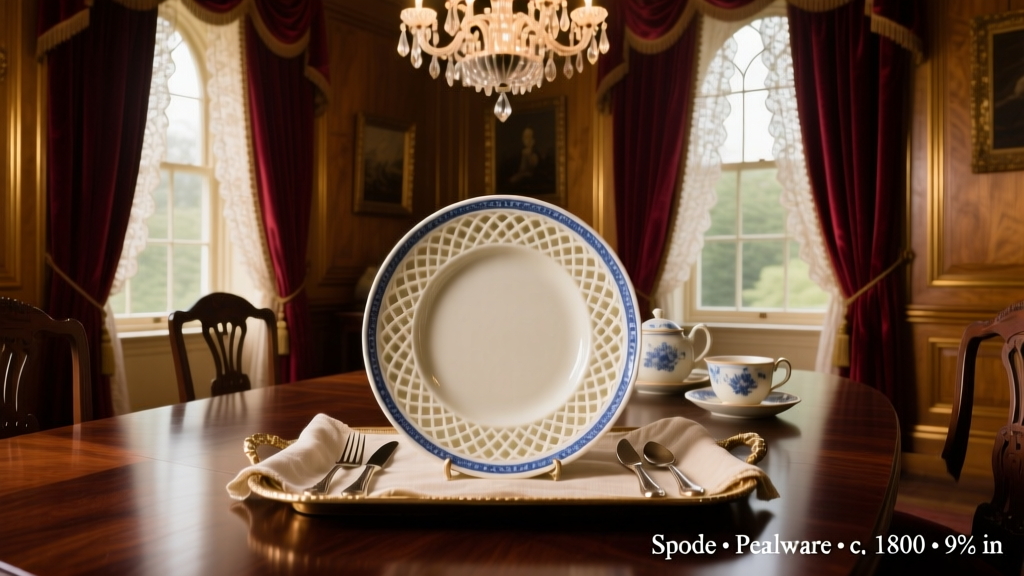
Spode Basket Underplate in Pearlware: A Technical and Historical Examination of the Reticulated 1800 Example Measuring 9¾ Inches
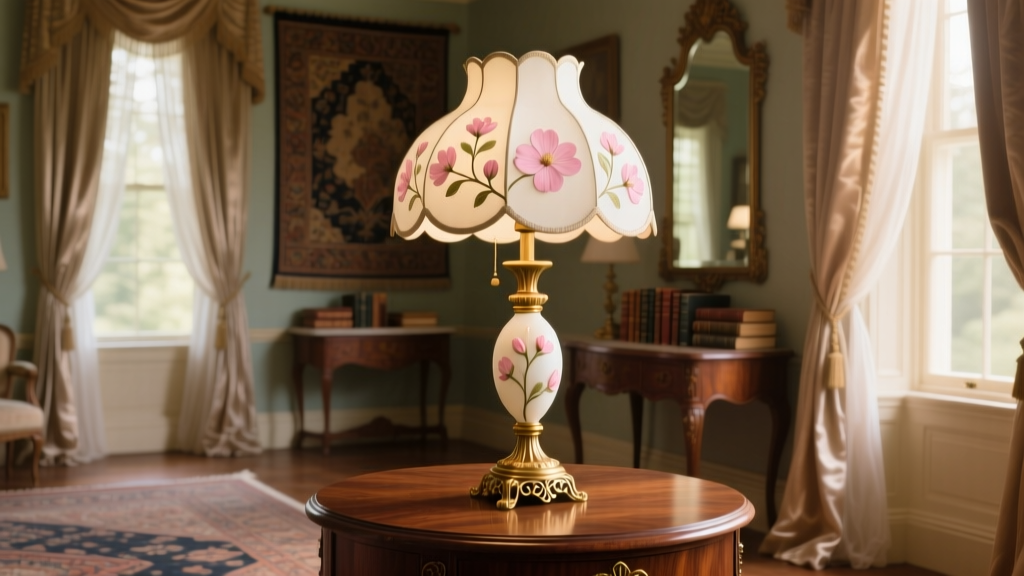
Pairpoint Lamp Puffy Dogwood Shade: Open-Top 11-Inch Illus Edition — History, Identification & Restoration Insights
Union Porcelain Works Water Filter with Floral Foliate Border and Spigot, 1889 — A Technical & Historical Appraisal

Jesse Churchill: The Unheralded Architect of American Colonial Revival Furniture, 1920–1955
Franciscan Wildflower Bowl (6-Inch Diameter): Identification, Value, Care, and Historical Context
Imperial Glass Animal Hen Font in Sun Yellow: A Collector’s Guide to the 4½-Inch Vintage Tableware Icon

Keybrand Shoes Tin Lithograph Match Holder: A Collector’s Guide to the 5-Inch Wall-Mounted Advertising Artifact
Opalescent Glass Rose Bowl with Expanded Flutes in Cobalt Blue: Identification, Provenance, and Restoration Principles