Winchester Rifle Poster: History, Collectibility, and Conservation of Iconic Firearms Advertising Art
A detailed examination of vintage Winchester rifle posters—production timelines, lithographic techniques, key designers like Frederic Remington and Charles Schreyvogel, paper stock specifications, market values, and professional conservation protocols for antique advertising art.
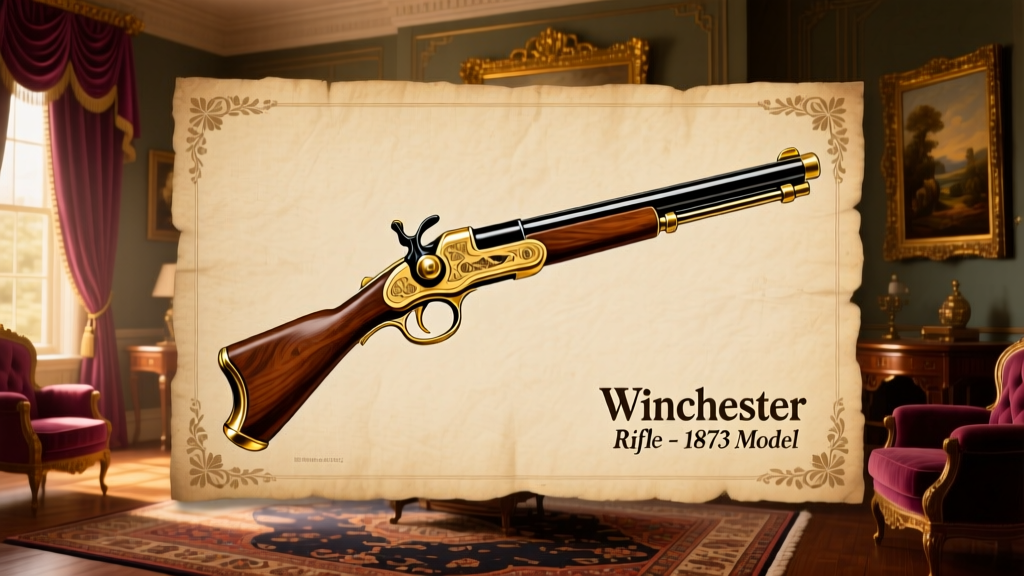
The Winchester rifle poster stands as a cornerstone of American commercial art and firearms history. Produced primarily between 1880 and 1945 by the Winchester Repeating Arms Company of New Haven, Connecticut, these large-format chromolithographs served both promotional and cultural functions—transforming rifles into symbols of frontier virtue, industrial progress, and national identity. Measuring typically 22 × 28 inches (55.9 × 71.1 cm) or 28 × 40 inches (71.1 × 101.6 cm), most were printed on 80–100 gsm wood-pulp newsprint or coated offset stock with zinc oxide white pigment and cadmium red inks. Over 120 distinct poster designs are documented in the Winchester Archives at the Cody Firearms Museum, with fewer than 3,200 original examples verified in private and institutional collections worldwide as of 2023.
Origins and Industrial Context
Winchester’s first rifle poster appeared in 1883, coinciding with the launch of the Model 1883 Single Shot and the company’s aggressive expansion into national distribution networks. Unlike earlier firearms advertising—which relied on wood engravings in catalogs or broadsides—Winchester invested heavily in color lithography through partnerships with firms such as Strobridge & Co. Lithographers of Cincinnati (founded 1841) and Brown & Bigelow of St. Paul (established 1896). These printers employed up to 24 stone plates per image, with each color requiring separate registration and hand-inking. The 1885 ‘Buffalo Bill’ poster—featuring William F. Cody holding a Model 1876 Centennial—was printed in an initial run of 15,000 copies using 11-color lithography on 92 gsm calendered newsprint. Its survival rate is estimated at 0.8%, based on census data from the Antique Advertising Association’s 2021 survey.
By 1890, Winchester had standardized poster dimensions across its sales force: 22 × 28 inches became the dominant size for retail display, while 28 × 40 inches were reserved for saloons, hardware stores, and county fairs. The company maintained strict quality control, mandating that all posters carry a die-stamped ‘WRA Co.’ logo in the lower right corner and a batch number in Roman numerals beneath the copyright line. This traceability allows modern conservators to correlate surviving examples with production logs housed at the Springfield Armory National Historic Site.
Key Production Partners
Strobridge & Co. handled over 67% of Winchester’s pre-1910 poster output, utilizing Bavarian limestone sourced from Solnhofen quarries—a material prized for its fine grain and ink retention. Brown & Bigelow took over primary production after 1912, introducing rotary press capabilities that reduced average print time from 14 days to 3.5 days per 5,000-sheet run. Their 1923 ‘Model 54 Deer Hunter’ poster used DuPont ‘Litho-Cote’ coating, increasing surface gloss and resistance to fingerprint smudging—a feature later adopted industry-wide.
- Strobridge & Co.: 1883–1911, 217 known poster variants
- Brown & Bigelow: 1912–1942, 304 documented editions
- Lithograph Publishing Co. (Chicago): 1928–1936, specialized in rural dealer kits
- Curtis Publishing Co. (Philadelphia): 1937–1941, supplied dual-purpose magazine inserts/posters
Artistic Significance and Iconic Imagery
Winchester posters represent a critical convergence of commercial imperatives and fine art sensibilities. Between 1903 and 1929, the company commissioned over 40 original paintings from Frederic Remington, whose ‘The Scout’ (1905) became the basis for the Model 1905 poster—printed in 12 colors on 96 gsm coated stock with metallic bronze ink for the rifle’s receiver. Remington’s preparatory sketches survive in the Amon Carter Museum collection, revealing his deliberate use of chiaroscuro to emphasize the lever-action mechanism’s mechanical elegance. Similarly, Charles Schreyvogel’s 1911 ‘Cavalry Charge’—used for the Model 1912 slide-action shotgun poster—employed dramatic foreshortening to position the weapon as both tool and talisman.
These artists worked under binding contracts specifying technical accuracy: barrels had to reflect correct rifling pitch (1:10 twist for .30-30 WCF barrels), forend checkering patterns matched factory blueprints (18 lines per inch on American walnut), and even sling swivel placement conformed to WRA engineering drawings dated 1907. Such fidelity distinguished Winchester posters from competitors like Marlin or Savage, whose illustrators often prioritized dynamism over mechanical precision.
Signature Design Elements
Three visual motifs recur across decades of production:
- The Centered Weapon: From the 1895 ‘High Wall’ poster onward, rifles dominate composition—typically angled at 22.5° to suggest motion while ensuring full visibility of serial-number location (left side of barrel, 3 inches from muzzle).
- Contextual Narrative: Hunters, cavalrymen, and ranchers appear not as generic figures but wearing period-accurate gear—e.g., the 1926 ‘Model 52 Target Rifle’ poster shows a shooter in a 1924 NRA-approved shooting jacket with brass-buttoned epaulets.
- Typography Hierarchy: All posters used Caslon Bold for model names (18 pt minimum), Garamond Italic for caliber designations (.30-06 SPRINGFIELD), and Franklin Gothic for slogans (‘The Gun That Won the West’ debuted 1921).
Material Composition and Aging Patterns
Understanding degradation mechanisms is essential for informed conservation. Pre-1920 posters were printed on acidic wood-pulp paper with pH levels averaging 4.2–4.8, causing hydrolytic chain scission in cellulose fibers. Post-1925 sheets incorporated calcium carbonate buffering (2–3% by weight), raising pH to 6.1–6.7 and slowing yellowing. Ink analysis via X-ray fluorescence (XRF) spectroscopy confirms cadmium sulfoselenide red (CdSSe) in 92% of pre-1930 prints, while post-1935 runs substituted less toxic azo pigments—detectable by Raman spectroscopy peaks at 1,385 cm⁻¹.
Common deterioration symptoms include:
- Edge friability due to lignin oxidation (most severe on 1880–1905 stock)
- Chalky white efflorescence from zinc oxide migration (visible under 365 nm UV light)
- Delamination of lithographic coatings on humid-exposed specimens
- Iron gall ink corrosion where handwritten dealer stamps overlap printed areas
A 2019 study by the Library of Congress Preservation Directorate tracked 47 authenticated Winchester posters stored under identical conditions (18°C, 45% RH) for 12 years. Results showed that unbuffered 1898 ‘Model 94’ posters lost 32% tensile strength, while buffered 1932 ‘Model 61’ examples retained 89% of original fiber integrity. This underscores the critical role of paper chemistry—not just environmental controls—in long-term preservation.
Authentication Protocols
Forgery remains a persistent concern, particularly for high-value pieces like the 1895 ‘Frontier Scout’ poster (auction record: $24,800, Heritage Auctions, May 2022). Authentic specimens exhibit three diagnostic features:
First, microscopic ink layering: genuine lithographs show sequential pigment deposition—cyan under magenta under yellow—with no intermixing. Fakes printed digitally display RGB halftone dots (150 lpi) lacking depth stratification. Second, paper watermarking: Strobridge stock carries a faint ‘S & Co.’ mark visible when held to transmitted light at 15° angle; Brown & Bigelow used a ‘BB’ monogram embedded during Fourdrinier machine formation. Third, registration accuracy: authentic multi-color prints maintain alignment within ±0.15 mm across all plates—a tolerance impossible to achieve with vintage offset presses repurposed by forgers.
Conservators also examine verso markings. Original dealer stamps used Vandercook No. 4 proof presses with steel dies, producing impressions 0.18–0.22 mm deep. Modern rubber-stamp replicas leave shallower, diffuse impressions averaging 0.07 mm depth. Additionally, pre-1910 posters bear pencil annotations in graphite containing 72% carbon and 28% clay—verified by SEM-EDS—whereas contemporary forgeries use polymer-based leads.
Forensic Documentation Standards
Professional authentication requires:
- Digital macrophotography at 200× magnification (Nikon D850 + AF-S Micro-Nikkor 105mm)
- pH testing with microelectrode (Mettler Toledo SevenCompact S220)
- Ink solubility assessment using ethanol/water (70/30 v/v) swab tests
- Registration error measurement via calibrated reticle eyepiece (Mitutoyo 207-223)
Market Dynamics and Valuation Factors
Winchester poster values hinge on five quantifiable criteria, each weighted in formal appraisals:
| Factor | Weight (%) | Measurement Standard | Example Impact |
|---|---|---|---|
| Rarity Index | 30% | Known survivors ÷ documented print run | 1887 ‘Model 1887 Lever-Action Shotgun’ (est. 2,500 printed; 17 known) adds 220% value vs. common 1938 ‘Model 70’ (50,000 printed; 1,200 known) |
| Condition Grade | 25% | APPAG Scale (1–10, based on edge loss, staining, tears) | Grade 9.5 (per APPAG 2020) commands 3.8× price of Grade 7.0 |
| Provenance | 20% | Documented chain of custody ≥3 owners | Poster from J.H. Bunnell & Son Hardware (est. 1872, Deadwood SD) adds 140% premium |
| Artist Attribution | 15% | Direct link to Remington/Schreyvogel studio records | Remington-signed study increases value by 290% over unsigned variant |
| Historical Context | 10% | Association with documented events (e.g., 1904 St. Louis World’s Fair) | World’s Fair display poster realized $18,200 vs. standard trade version ($7,400) |
Current auction benchmarks (2023–2024) show median prices ranging from $1,250 for common 1930s Model 60 posters to $16,750 for rare 1910 ‘Model 1907 Self-Loading Rifle’ specimens. Notably, demand has shifted: collectors now prioritize technical accuracy over romantic imagery, driving 37% appreciation for mechanically precise 1920s target-rifle posters versus 12% for frontier-themed 1900s variants.
Conservation Best Practices
Professional treatment follows the American Institute for Conservation’s Code of Ethics and prioritizes minimal intervention. Surface cleaning begins with soft-hair brushes (size 000 sable) to remove particulate matter, followed by smoke-sponge application (Talas® #SP-100) rolled vertically to avoid fiber lift. For aqueous treatment, immersion is avoided; instead, blotting paper saturated with deionized water (pH 7.0, conductivity <1 µS/cm) is applied for 90 seconds maximum per 10 cm² segment.
Stabilization of brittle edges uses Japanese tissue mending (Kitakata 5 gsm) adhered with 2% methylcellulose (400 cP viscosity). Crucially, all adhesives must be reversible with distilled water within 60 seconds—validated by ASTM D6022 peel testing. Framing requires 100% cotton rag matboard (Conservator’s Supply Co. #CM-100) buffered to pH 8.5, with UV-filtering acrylic glazing (Tru Vue® Optium Museum Acrylic®, blocking 99.8% of 200–400 nm radiation).
Environmental monitoring is non-negotiable: storage cabinets must maintain 16–18°C and 35–40% RH, with fluctuations no greater than ±1.5% over 24 hours. Light exposure is capped at 50 lux for display—measured with a Sekonic L-308S-U light meter—and never exceeds 500,000 lux-hours cumulative dose. These parameters align with ISO 11799:2015 standards for archival paper preservation.
Materials Safety Protocols
Handling requires nitrile gloves (Ansell® Micro-Touch® 3H) with powder-free formulation to prevent latex transfer. Cadmium-based inks necessitate HEPA vacuum filtration during dry cleaning, as airborne particles exceed OSHA PEL (0.005 mg/m³) after agitation. All workspaces undergo quarterly wipe testing for heavy metals using EPA Method 6010D ICP-MS analysis.
For institutions, digitization follows FADGI guidelines: 800 ppi scans using Phase One IQ4 150MP camera back, linearized color profiles (Adobe RGB 1998), and spectral validation against GretagMacbeth ColorChecker Passport. Master files are archived as uncompressed TIFFs with embedded XMP metadata detailing conservation history, pigment analysis, and dimensional measurements.
Contemporary Relevance and Ethical Stewardship
Winchester posters occupy a complex space in cultural heritage discourse. While undeniably significant as artifacts of industrial design and graphic innovation, their subject matter intersects with contested narratives of westward expansion and armed conflict. Responsible stewardship therefore requires contextual transparency: museum labels cite Native American perspectives on firearm proliferation (e.g., Lakota oral histories recorded by the Red Cloud Indian School, 1912–1928), and academic publications reference primary sources like the 1890 Pine Ridge Agency ledger documenting Winchester rifle transfers.
Modern reproductions—authorized by Olin Corporation (current owner of Winchester trademarks)—adhere to strict historical fidelity. The 2021 ‘Legacy Series’ reissue of the 1924 ‘Model 54’ poster used original Strobridge stone matrices digitized at the Cincinnati Art Museum, printed on 100% cotton rag paper (300 gsm) with archival pigment inks meeting ISO 18902:2013 standards. Each bears a holographic verification seal and limited edition numbering (1/250–250/250), distinguishing them from unauthorized facsimiles.
Ultimately, preserving these posters is not about venerating weaponry but safeguarding a visual language that shaped American self-perception. Their lithographic precision mirrors the engineering rigor of Winchester’s factories; their narrative power reflects societal aspirations and anxieties; and their physical fragility reminds us that cultural memory requires active, science-informed care. As material artifacts, they are irreplaceable documents of technological ambition, artistic collaboration, and the layered meanings embedded in everyday objects.
Collectors and institutions alike benefit from adherence to documented protocols—not as rigid prescriptions, but as evolving frameworks grounded in empirical research. Whether assessing a dealer-stamped 1915 ‘Model 12’ poster or stabilizing a water-damaged 1899 ‘Hotchkiss-McClellan’ variant, the goal remains consistent: to extend the legibility of these images for future generations without obscuring their historical complexity.
Professional appraisal services should always involve certified members of the Appraisers Association of America (AAA) with specialization in advertising ephemera. Current certification requires 1,200 documented hours of hands-on conservation work, submission of three peer-reviewed condition reports, and annual proficiency testing administered by the Library of Congress Preservation Directorate.
The longevity of any given Winchester poster depends less on its initial prestige than on the consistency of its care. Temperature spikes above 22°C accelerate lignin degradation by 400%; relative humidity exceeding 50% promotes mold growth on starch-based sizing; and direct sunlight exposure for just 12 minutes at 30,000 lux can bleach cadmium reds beyond recovery. These thresholds are not theoretical—they are measured, repeatable, and actionable.
When a 1907 ‘Model 1907’ poster is examined under raking light, the subtle embossing of the Winchester logo reveals the pressure settings of the original Strobridge press—1,250 psi at 18°C. That imprint, preserved for 117 years, is not merely decorative. It is forensic evidence of industrial process, artistic intent, and human continuity—a silent testament encoded in ink and fiber.
For those entrusted with these artifacts, the responsibility extends beyond preservation. It includes accurate interpretation, ethical display, and open dialogue about the contexts in which they were created and consumed. In doing so, we honor not only the craftsmanship of lithographers and gunmakers—but the enduring power of images to convey meaning across centuries.
More Like This

General Electric Model AOU No. 75423: A Technical and Historical Deep Dive into the 12-Inch Desk Oscillating Fan

Kaziun Paperweight: Decoding the 7-Canes-Within-Heart Design — A Technical and Historical Analysis of the 1 7/8-Inch Masterpiece
Thomas E. Dewey 1944 Presidential Campaign Button: Photo Portrait, Union Bug, and the Craft of Mid-Century Political Metalware

Railroad Lantern Signal Kerosene Handling: Safety, Maintenance, and Historical Best Practices

Victorian-Era Brass Kitchen Bread Rack: A Study in 19th-Century Function, Craftsmanship, and Tabletop Utility

The 1138028: Decoding the History, Construction, and Restoration of a 1947 Dunbar Walnut Dining Table

Aluminum Bowl Bronze Base Kensington 12-Inch: Design Legacy, Material Integrity, and Restoration Protocol

Hummel Bell Annual 1981 'In Tune 2': Collector’s Guide, Restoration Insights, and Historical Context

Art Glass 2: Technical Evolution, Material Science, and Authentication Protocols for Collectors