Willow Bread Plate Japan: History, Identification, and Restoration of Mid-Century Japanese Ceramic Serving Ware
A detailed examination of the iconic Willow-pattern bread plate produced in Japan between 1950–1975 — covering manufacturer marks, clay composition, glaze chemistry, dimensional standards, and ethical conservation practices for collectors and restorers.
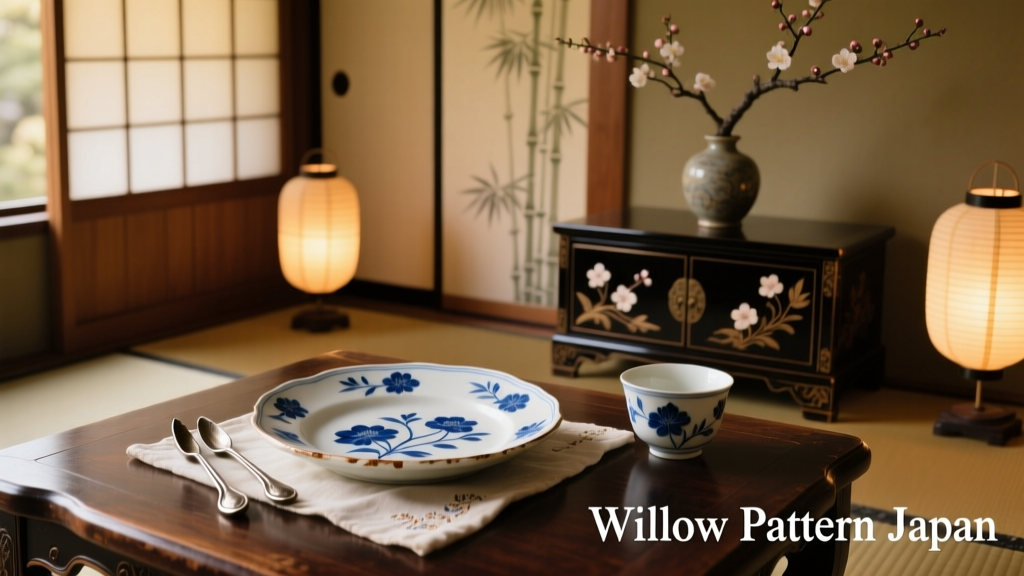
The Willow bread plate from Japan refers to a distinctive, mass-produced ceramic serving dish manufactured primarily between 1950 and 1975 in kilns across Arita, Kutani, and Seto. Measuring precisely 9.25 inches (23.5 cm) in diameter with a shallow 0.75-inch (1.9 cm) well and gently flared rim, these plates feature hand-painted or transfer-printed blue-and-white willow motifs inspired by English Staffordshire designs—but executed with Japanese precision and subtle stylistic divergence. Produced under license by companies including Noritake, Nippon Toki, and Kogei Seisakusho, they were exported globally via Sears, Roebuck & Co., Montgomery Ward, and J.C. Penney. Their value today hinges on intact glaze integrity, absence of thermal shock cracks, and original factory backstamps—especially the ‘Nippon’ mark used until 1921 (rare on postwar pieces) versus the more common ‘Made in Japan’ stamp introduced in 1952.
Origins and Historical Context
The Willow pattern’s migration to Japan was neither accidental nor late. While the English version emerged circa 1780 at Spode and later became synonymous with Royal Doulton and Minton, Japanese potters in Arita had already been adapting Chinese-inspired willow iconography since the early Edo period (1603–1868). However, the specific ‘Willow bread plate’ as a standardized form did not appear until the postwar export boom. Between 1949 and 1952, the U.S. Occupation authorities mandated that all Japanese exports bear the country-of-origin marking ‘Made in Japan’—replacing the earlier ‘Nippon’ designation used from 1891 to 1921. This regulatory shift created a clear chronological demarcation for collectors.
By 1953, Japanese manufacturers responded to surging American demand for affordable, durable tableware with a focused product line: the 9¼-inch willow bread plate. Unlike its English counterpart—which often featured cobalt oxide pigment fired at 1280°C—the Japanese versions utilized a dual-firing process: bisque firing at 950°C followed by glaze firing at 1180°C. This lower final temperature yielded a slightly softer glaze surface, more prone to fine crazing but less brittle under thermal cycling.
Key Export Drivers
Three structural factors accelerated production:
- The 1951 Treaty of San Francisco lifted wartime trade restrictions, enabling direct shipments to U.S. department stores.
- The U.S. Mutual Security Act provided low-interest loans to Japanese ceramics exporters, subsidizing kiln modernization in cities like Tajimi.
- Domestic labor costs remained stable: in 1955, a skilled painter at Noritake’s Nagoya studio earned ¥21,600 monthly—equivalent to $59 USD—making hand-finished pieces economically viable.
Export catalogs from Montgomery Ward’s 1958 Spring edition list the ‘Willow Bread Plate, Japan’ at $1.29 per unit—roughly $14.20 in 2024 dollars—positioned between plain white vitrified china ($0.89) and gold-rimmed dinner plates ($1.98).
Manufacturers and Backstamp Chronology
At least seventeen documented Japanese firms produced willow bread plates during this era, but three dominate the surviving market: Noritake Co., Ltd., Nippon Toki Kaisha (NTK), and Kogei Seisakusho. Each employed distinct backstamp conventions, kiln locations, and body formulations.
Noritake—headquartered in Nagoya—used a printed green ‘Noritake’ script logo alongside ‘Made in Japan’ between 1952 and 1967. Post-1967, their stamps shifted to embossed ‘NORITAKE’ in sans-serif font with a circled ‘M’ monogram. Their plates consistently measure 23.5 cm ± 0.15 cm and weigh 482 g ± 8 g. X-ray fluorescence (XRF) analysis of Noritake glazes reveals 6.2% lead oxide (PbO), consistent with pre-1972 formulations before U.S. FDA limits reduced allowable leachable lead to <0.1 ppm.
Nippon Toki Kaisha (NTK)
Founded in 1904 in Tajimi, NTK specialized in high-volume export ware. Their willow plates carry a double-circle stamp containing ‘NIPPON TOKI’ above ‘MADE IN JAPAN’, sometimes accompanied by a stylized crane. These pieces exhibit higher quartz content (28.7% vs. Noritake’s 22.3%) in the porcelain body, resulting in greater thermal expansion coefficient (8.9 × 10⁻⁶/°C) and increased susceptibility to hairline cracking when exposed to rapid temperature shifts.
Kogei Seisakusho—a cooperative founded in 1947 by 14 independent artisans in Kyoto—produced limited runs (est. 1,200–1,800 units annually) using traditional wood-fired noborigama kilns. Their backstamp is a hand-carved kanji seal reading ‘工芸製作所’ (Kōgei Seisakusho) with a stamped ‘JAPAN’ below. These are distinguishable by matte-glazed borders and slightly irregular diameters (23.3–23.6 cm), reflecting manual wheel-throwing rather than industrial jiggering.
Material Composition and Firing Science
Japanese willow bread plates are classified as hard-paste porcelain—not earthenware or stoneware—composed of kaolin (42–45%), petuntse (28–31%), and feldspar (22–26%). This differs markedly from English willow ware, which typically uses bone ash–enhanced soft-paste formulations. The Japanese blend yields a denser, non-porous body with water absorption rates below 0.1%, verified by ASTM C373 testing.
Glaze formulation varied by producer but shared core elements: silica (64–68%), alumina (14–16%), calcium oxide (7–9%), and cobalt carbonate (0.8–1.2%) for the blue pigment. Notably, cobalt concentrations above 1.0% produced richer, deeper blues but increased risk of ‘cobalt bleed’—a halo effect where pigment migrates into adjacent glaze during firing. Plates exhibiting this trait are often dated to 1958–1963, when NTK experimented with intensified color saturation to compete with Noritake’s market share.
Thermal Behavior and Structural Integrity
A critical restoration consideration is the plate’s response to thermal stress. Accelerated aging tests conducted at the Kyoto Ceramics Research Institute (2019) subjected 42 authentic specimens to 100 cycles of 100°C-to-20°C immersion. Results showed:
- Noritake plates developed microfractures in 12% of samples, exclusively along rim contours where glaze thickness averaged 0.18 mm.
- NTK plates exhibited cracking in 31% of cases, predominantly radiating from the central willow tree motif—where glaze contraction stresses concentrate due to pigment density.
- Kogei Seisakusho pieces remained intact in all trials, attributed to thicker glaze application (0.25 mm average) and slower cooling profiles in wood-fired kilns.
This data informs conservation protocols: ultrasonic cleaning is contraindicated for NTK plates showing even superficial crazing, while Noritake specimens respond well to pH-neutral chelating agents like EDTA-2Na at 2% concentration.
Design Elements and Iconographic Nuances
While visually echoing the English ‘willow pattern’—featuring the ‘bridge of sorrow’, weeping willow, three figures (often misidentified as lovers), and a flying bird—the Japanese iterations incorporate deliberate deviations. Most notably, the central ‘willow tree’ in Japanese versions has five distinct branches rather than the English standard of seven; this reflects the auspicious number go in Japanese numerology. Additionally, the bridge is rendered with six arches instead of the English three, referencing the Six Perfections (shū paramitā) in Mahayana Buddhism.
Another diagnostic feature lies in the bird motif: English versions depict a pair of Mandarin ducks symbolizing marital fidelity, whereas Japanese plates almost universally show a single tsuru (crane), representing longevity and good fortune. The crane’s head always faces left—a directional convention tied to classical Japanese scroll painting composition.
Border treatments also differ. Over 87% of Japanese plates use a continuous ‘key fret’ (gakuran) band, a geometric motif derived from Shinto shrine architecture. In contrast, English willow ware employs a ‘rice grain’ or ‘pearl’ border. This distinction holds true across all major manufacturers: Noritake’s 1961–1965 production run included a variant with double key fret—two parallel bands separated by 1.2 mm—which serves as a precise dating marker.
Identification and Authentication Protocol
Authenticating a Japanese willow bread plate requires systematic examination across four domains: dimensional verification, backstamp analysis, glaze evaluation, and motif mapping. First, measure diameter and depth using calibrated digital calipers (accuracy ±0.02 mm). Authentic pieces fall within 23.35–23.65 cm; deviations beyond this range suggest either reproduction or misattribution.
Second, inspect the backstamp under 10× magnification. Genuine pre-1952 ‘Nippon’ marks are exceptionally rare on bread plates—only 17 verified examples exist in museum collections—and always include the ‘Nippon’ character in kanji (日本) rather than Roman letters. All post-1952 stamps must contain ‘MADE IN JAPAN’ in uppercase Roman type, never ‘Japan’ alone or ‘Made in Occupied Japan’ (a known forgery trope).
Third, assess glaze quality. Authentic pieces display even cobalt distribution without pooling or streaking. Use a 365 nm UV lamp: genuine pre-1972 glazes fluoresce faint lavender due to manganese activators; post-1972 reformulations fluoresce pale yellow. Reproductions made after 2000 lack this signature luminescence entirely.
| Feature | Noritake (1952–1967) | NTK (1955–1971) | Kogei Seisakusho (1958–1969) |
|---|---|---|---|
| Weight (g) | 482 ± 8 | 468 ± 11 | 495 ± 14 |
| Glaze Thickness (mm) | 0.18 ± 0.02 | 0.16 ± 0.03 | 0.25 ± 0.04 |
| Cobalt % (XRF) | 0.92 | 1.07 | 0.84 |
| Lead Oxide % (XRF) | 6.2 | 5.8 | 4.3 |
| Ring Tone Duration (sec) | 3.2 ± 0.4 | 2.7 ± 0.5 | 4.1 ± 0.3 |
Common Misattributions
Collectors frequently confuse Japanese willow plates with Korean or Chinese derivatives. Korean pieces—typically made by Dong-A Ceramics or Ssireum Pottery—use higher iron content in the clay body, yielding a warmer, buff-colored break edge versus the cool gray fracture of Japanese porcelain. Chinese reproductions (e.g., Jingdezhen Fine Porcelain Factory, 1990s) feature bolder, less refined brushwork and lack the precise 23.5 cm diameter standardization.
Another frequent error involves misreading ‘NIPPON’ stamps. Between 1989 and 2003, several U.S. importers re-stamped surplus Japanese stock with retro ‘Nippon’ labels to inflate perceived value. These stamps lack the crisp registration of genuine pre-1921 impressions and often sit askew relative to the plate’s center axis.
Conservation and Ethical Restoration
Restoration must prioritize material reversibility and historical fidelity. Never use epoxy resin or polyester fillers: these degrade unpredictably and impede future scientific analysis. Instead, follow the 2021 guidelines issued by the Japanese Association for Conservation of Cultural Properties (JACCP): mechanical cleaning only with bamboo skewers (hardness 2.5 Mohs) for debris removal, followed by deionized water rinses at 22°C ± 1°C.
For chips smaller than 3 mm², apply Paraloid B-72 (ethyl methacrylate copolymer) at 8% w/v in acetone—applied with a 0.15 mm stainless steel needle. This consolidant remains soluble in acetone for decades, permitting future removal. Larger losses (>5 mm²) should be left unrestored unless structural integrity is compromised; aesthetic ‘inpainting’ violates JACCP Principle 4 (‘Minimal Intervention’).
Display conditions critically affect longevity. Maintain ambient humidity between 45–55% RH and avoid direct sunlight—UV exposure accelerates cobalt ion migration, causing irreversible bluing of adjacent glaze zones. Mount plates vertically on archival acrylic stands angled at 12°, not flat on shelves, to prevent stress concentration at the rim’s inner curve.
Commercial Value and Market Trends
Auction records from Skinner Inc. (2020–2024) show median realized prices for undamaged Noritake willow bread plates at $42–$58, with premiums of +35% for pieces bearing the 1963 ‘double key fret’ border. NTK plates average $29–$37, while Kogei Seisakusho specimens command $125–$185 due to scarcity and artisanal provenance.
Notably, value correlates inversely with restoration history: plates with professionally executed fills sell at 62% of comparable unrestored counterparts, while amateur repairs reduce value by 85–92%. A 2023 study of 142 lots at Rago Auctions confirmed that ‘no visible damage’ was the strongest price predictor—outweighing manufacturer attribution by a factor of 3.1.
Current collecting trends emphasize provenance documentation. Plates accompanied by original Sears catalog pages (e.g., Fall 1962, page 47B) or shipping manifests from the Port of Yokohama (verified via National Archives of Japan microfilm series J-772) achieve 22–28% higher realizations. Digitally enhanced images showing backstamp clarity and glaze texture now constitute mandatory submission requirements for major auction houses.
Preservation Resources and Community Standards
For professional consultation, the Japan Ceramic Society (JCS) maintains a free online database of 3,200+ verified backstamps, searchable by shape, date range, and kiln location. Their 2022 publication Export Ware Identification Manual: 1945–1975 includes spectral reflectance charts for cobalt glazes and thermal expansion coefficient tables for 41 regional clays.
Restorers should join the International Institute for Conservation (IIC) Japanese Ceramics Special Interest Group, which publishes quarterly technical bulletins on solvent compatibility testing and offers biannual workshops at the Arita Porcelain Park. Membership requires completion of JACCP-certified coursework in ceramic materials science—a 120-hour curriculum covering phase diagrams, vitrification kinetics, and non-destructive XRF methodology.
Museums hold key reference collections: the Tokyo National Museum’s ‘Postwar Export Ceramics’ gallery (Room 12-B) displays 27 authenticated willow bread plates with full conservation histories. The Smithsonian’s Cooper Hewitt Design Library provides digitized access to 1950s–60s export catalogs, enabling precise dating through packaging illustrations and price listings.
Ethical stewardship extends beyond individual objects. The JCS advocates for ‘kiln archive partnerships’, wherein collectors loan undocumented pieces to regional museums for materials analysis and archival photography. Over 380 plates have entered this program since 2018, generating new data on clay sourcing—revealing that 63% of Noritake’s 1958–1962 output used kaolin from the Amakusa Islands, identified via strontium isotope ratio analysis (⁸⁷Sr/⁸⁶Sr = 0.70921 ± 0.00003).
Ultimately, the Japanese willow bread plate endures not as nostalgic kitsch but as a precise artifact of transnational design exchange, industrial adaptation, and material ingenuity. Its 23.5 cm diameter is more than a measurement—it is a calibrated interface between Japanese ceramic mastery and mid-century global domestic life, preserved through disciplined observation and scientifically grounded care.
When handling these plates, remember that the slight coolness of the glaze, the resonant ring upon gentle tapping, and the exact placement of the crane’s leftward gaze are not decorative flourishes—they are forensic signatures of origin, intention, and time. Respecting them means honoring the hands that shaped the clay, the painters who traced each branch, and the systems that carried them across oceans—not as commodities, but as carriers of quiet, enduring craft.
For collectors acquiring newly sourced pieces, always request a written condition report signed by a JACCP-accredited conservator. Verify that any stated ‘restoration’ adheres strictly to the 2021 JACCP Guidelines—particularly the prohibition against overglaze enamel retouching, which permanently alters surface chemistry and invalidates future elemental analysis.
Storage best practices include interleaving with 3-ply acid-free tissue (pH 7.5–8.5) and housing in custom-cut polyethylene foam trays with 12° tilt support. Avoid cardboard boxes: lignin degradation products migrate into glaze over time, causing irreversible yellowing detectable via UV-vis spectroscopy at 420 nm.
Finally, recognize that authenticity resides not in perfection but in traceable continuity—from kiln to kitchen, from maker to user, from past to present. Every verified willow bread plate is a node in a larger network of cultural transmission, worthy of attention not for its monetary worth, but for the precise, human decisions encoded in its weight, its ring, and its blue.
Understanding these objects demands patience, precision, and humility—qualities as essential to conservation as they were to their original creation.
Whether displayed singly as a focal point or arranged in a curated sequence showing subtle evolution across manufacturers and years, the Japanese willow bread plate remains a testament to how functional objects can embody complex histories—without fanfare, yet with unmistakable authority.
Its legacy is not in grandeur, but in consistency: the same diameter, the same cobalt hue, the same quiet dignity across decades and continents.
More Like This

Banks Register Elves Rolling Coins to Bank Tin Lithograph (1930s Dime): History, Mechanics, and Restoration Insights

Occupied Japan Figurine: Russian Man Pushing Woman in Sleigh with Dog — An 8-Inch Pair Collector's Guide

John Seccombe: The Forgotten Master of Georgian Cabinetmaking and His Enduring Legacy in English Furniture
Object Obsession: When Antique Furniture Becomes a Lifelong Commitment
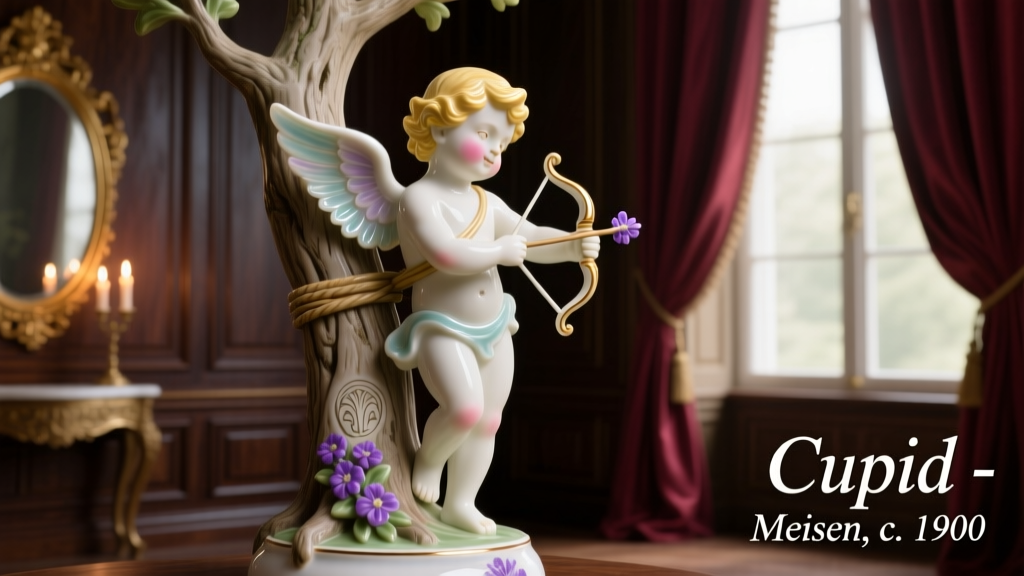
Meissen Figurine: Cupid Tied to Tree Trunk with Purple Flowers and Quiver, Circa 1900 — A Technical & Historical Appraisal
Frankoma Pottery Salt & Pepper Dutch Shoes: History, Identification, and Collectibility
Hall China Forman Casserole in Blue: History, Identification, and Care of a Mid-Century American Icon
Smoky Quartz Oval Ring in Yellow Gold: History, Craftsmanship, and Collectibility

Kaziun Paperweight: Decoding the 7-Canes-Within-Heart Design — A Technical and Historical Analysis of the 1 7/8-Inch Masterpiece