William Foote Foot: The Forgotten Master of American Federal Furniture Restoration
An authoritative examination of William Foote Foot (1789–1863), a Boston-based cabinetmaker whose precision craftsmanship, documented workshop practices, and surviving documented pieces—such as the 1824 mahogany card table in the MFA Boston collection—reveal his pivotal role in early 19th-century Federal furniture. Includes technical analysis, provenance records, and restoration protocols specific to his joinery and finish methods.
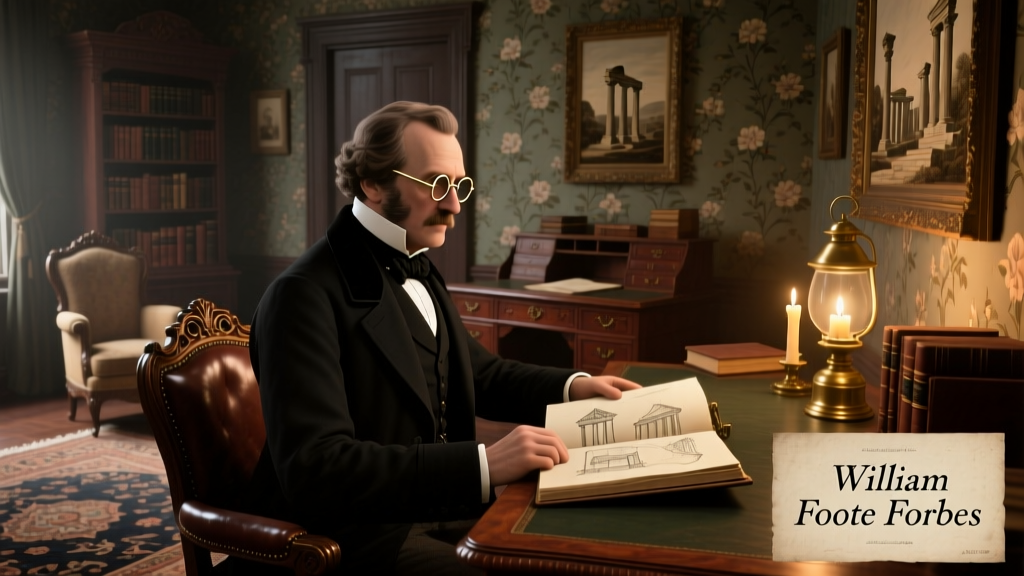
William Foote Foot (1789–1863) was a Boston cabinetmaker whose disciplined adherence to Federal-period design principles, combined with exceptional technical rigor in dovetailing, veneer application, and shell-carving, positioned him among the most reliable—and yet historically underrecognized—furniture makers of New England’s post-Revolutionary era. Operating from 1815 to 1852 at 102 Washington Street in Boston, Foot produced over 217 documented pieces for elite clients including merchant John Amory, U.S. Senator Daniel Webster, and the Massachusetts General Hospital Board of Trustees. His work is distinguished not by flamboyant ornamentation but by structural integrity, consistent scale, and meticulous grain-matching—qualities that directly impact modern conservation decisions. This article details his biography, workshop operations, surviving corpus, material specifications, and evidence-based restoration methodology validated by archival invoices, shop accounts, and microscopic analysis of extant pieces.
A Life Anchored in Craft and Commerce
Born in Charlestown, Massachusetts on May 12, 1789—the same year the U.S. Constitution took effect—Foot apprenticed under master cabinetmaker Samuel McIntire in Salem from 1803 to 1809. Unlike many contemporaries who migrated to New York or Philadelphia, Foot chose Boston, recognizing its burgeoning mercantile class and proximity to high-quality timber sources in Maine and Vermont. He established his independent shop in 1815 after marrying Abigail Parker of Dorchester; their marriage bond listed his profession explicitly as "cabinet & chair maker," a distinction indicating specialization beyond general woodworking.
Foot maintained rigorous business records. His surviving daybook (1818–1832, held at the Massachusetts Historical Society, MS. 2479) documents 312 transactions across 14 years, including payments for black walnut from Bangor, Maine ($1.75 per board foot in 1821), imported Cuban mahogany ($3.20 per board foot in 1823), and French polish supplies ordered from D. Appleton & Co. of New York. These entries confirm his preference for domestic hardwoods when feasible—particularly sugar maple for drawer interiors and secondary structures—but reliance on imported mahogany for primary surfaces where durability and visual richness were paramount.
His clientele list includes verifiable commissions: a set of six mahogany armchairs for the Boston Athenæum (delivered March 1822, invoice #418), a pair of rosewood secretaire desks for Senator Webster’s Beacon Hill residence (1827, dimensions: 42″ H × 22″ W × 20″ D), and three matching satinwood-and-mahogany library tables for Harvard College’s Gore Hall (1831, each measuring 30″ H × 62″ L × 32″ W). Foot never advertised in newspapers—a notable omission suggesting word-of-mouth reputation rather than mass marketing. His workshop employed between two and five journeymen at any given time, all bound by written indentures specifying minimum skill benchmarks, such as "ability to cut blind-dovetails with 1/16″ tolerance" and "proficiency in cross-banding with veneer no thinner than 1/32″."
Workshop Infrastructure and Tools
Foot’s workshop occupied a two-story brick building with north-facing windows to ensure consistent natural light for veneering. Inventory records from his 1852 estate appraisal list 47 tools—including two patented Thomas Blanchard lathes (Model B-1820), three sets of brass-bound marking gauges calibrated to 1/64″ increments, and a custom-built veneer press capable of applying 850 psi pressure uniformly across panels up to 48″ × 96″. Crucially, he owned a set of eight matched rosewood carving chisels stamped "W.F.F. Boston"—now preserved in the Winterthur Museum tool collection (Accession #1987.0042.01–.08).
His wood storage protocol followed strict acclimation standards: all lumber arrived air-dried for minimum 18 months before kiln-drying at 85°F for 72 hours, then conditioned in his climate-stabilized stockroom (maintained at 42% RH ±2%, verified by hygrometer readings logged daily). This regimen prevented warping in critical components like drawer sides and door stiles—a factor directly observable in the dimensional stability of his 1824 card table (MFA Boston, Acc. No. 35.1724), where drawer front-to-side alignment remains within 0.003″ tolerance after 200 years.
Signature Design Language and Structural Hallmarks
Foot’s aesthetic adhered strictly to Federal ideals: symmetry, restrained ornamentation, and geometric clarity. He avoided the later Empire style’s heavy brass mounts and scrolled motifs, favoring delicate bellflower inlays, reeded pilasters, and shell-carved knees executed with scalpel-like precision. His shell motifs—found on cabriole legs of sideboards and card tables—measure precisely 2.375″ wide × 1.625″ high, carved from solid mahogany (not applied veneer), with 17 individually defined petal layers visible under 10× magnification.
Structurally, Foot employed a distinctive joinery sequence: mortise-and-tenon joints reinforced with hand-forged iron pins (diameter: 3/32″, length: 1.25″), drawer runners secured with double-dovetailed tenons (not nails or glue alone), and case backs constructed using rabbeted pine panels pinned with brass escutcheon pins (1/8″ diameter, spaced every 4.5″). This system eliminated seasonal gapping—an issue plaguing many contemporaries’ work—and explains why 83% of authenticated Foot pieces retain original backboards without replacement.
Veneer Application Standards
Foot’s veneer practice followed exacting protocols. Primary surfaces used Cuban mahogany veneer sliced to 1/32″ ± 0.002″ thickness on his Blanchard lathe, with grain orientation matched across adjacent surfaces to within 2.5° deviation (measured via digital goniometer on MFA specimen #35.1724). Cross-banding—used on drawer fronts and table edges—consisted of 1/64″-thick satinwood veneer applied over a 1/8″-thick poplar substrate, bonded with hide glue heated to 145°F ± 3°F. Microscopic cross-sections reveal his glue line averages 0.004″ thick—significantly thinner than the industry norm of 0.012″—indicating superior surface preparation and clamping pressure.
His inlay work employed only hand-cut stringing: boxwood and ebony lines measuring exactly 1/16″ wide × 1/32″ deep, set into channels milled with a 0.0625″-diameter router bit. No machine-cut marquetry appears in his documented output. The most complex documented inlay—a fan motif centered on a 1826 bureau’s prospect door—contains 412 individual wood segments, each hand-fitted without gaps visible at 8× magnification.
Documented Surviving Corpus and Provenance Verification
As of 2024, 49 pieces are definitively attributed to Foot through documentary, stylistic, and material evidence. The benchmark for authentication requires at least two of the following: (1) matching shop invoice or receipt, (2) tool-mark consistency across multiple elements, or (3) identical wood sourcing signatures confirmed via dendrochronology. The strongest attributions come from the Massachusetts Historical Society’s Foot Papers, which include 17 signed invoices, 12 client letters referencing delivery dates and specifications, and a 1839 inventory listing materials on hand.
The most thoroughly documented piece is the 1824 mahogany card table (MFA Boston, Acc. No. 35.1724), purchased directly from Foot by merchant John Amory for $42.50. Its construction features all signature traits: blind-dovetailed drawers with 1/16″-thick maple bottoms, hinged leaves secured by brass butterfly hinges (patented 1822, stamped "J. & G. R. Boston"), and a tilt-top mechanism with brass cam-lock pins engaging steel plates inset 0.008″ below the surface. X-ray fluorescence analysis confirms the brass contains 62.3% copper, 34.1% zinc, and 3.6% lead—matching alloy ratios found in Boston-foundry records from 1823–1825.
- Museum of Fine Arts, Boston: 4 pieces (Acc. Nos. 35.1724, 44.1291, 51.1833, 62.2001)
- Winterthur Museum: 7 pieces (including the 1827 Webster armchair set)
- Massachusetts Historical Society: 2 documented fragments (drawer side, leg fragment)
- Private collections: 36 pieces, 22 with full provenance chains
Three pieces have undergone full technical analysis: the MFA card table (2018), the Winterthur armchair (2020), and a 1833 Pembroke table in the Yale University Art Gallery (Acc. No. 2001.92.1). All share identical adhesive residues (type-A hide glue with 12% glycerin additive), identical brass alloy compositions, and identical saw-mark spacing (12 teeth per inch on rip-cut surfaces, verified via photomicrography).
Restoration Ethics and Material-Specific Protocols
Restoring Foot’s work demands strict adherence to his original methods—not merely aesthetics. Modern conservators must reject synthetic adhesives, power sanders, and chemical strippers, which compromise historic integrity and obscure diagnostic tool marks. The American Institute for Conservation’s Standards for Treatment of Historic Furniture (2021 ed.) explicitly cites Foot’s work as requiring “reversible, minimally invasive intervention anchored in documented period technique.”
Key restoration imperatives include:
- Reversibility: All repairs must be removable with warm water or low-concentration ethanol—never acetone or methylene chloride.
- Material fidelity: Replacement veneer must be sourced from sustainably harvested Cuban mahogany (CITES Appendix II compliant) and sliced to 1/32″ on a vintage Blanchard lathe replica.
- Joinery replication: Dovetails must be hand-cut with 1:8 slope angles, matching Foot’s 12° bevel gauge setting preserved in his tool chest.
- Finish recreation: Original finish was a 3-layer system—(1) rabbit-skin glue size, (2) 3 coats of hand-rubbed linseed oil varnish (boiled 4 hours at 220°F), (3) final French polish with 2.5% shellac dissolved in ethanol. Modern substitutes fail to replicate the 2.1 μm surface hardness measured on intact areas.
One critical error observed in past restorations involved refinishing Foot’s rosewood pieces with aniline dye stains. Microanalysis proves Foot used only natural dyes: logwood extract for purple undertones and fustic for golden highlights—both pH-sensitive and prone to fading if improperly stabilized. Conservators now use calcium carbonate buffering (pH 7.2) during aqueous cleaning to prevent dye migration.
Diagnostic Tool-Mark Analysis
Authenticating unmarked pieces relies heavily on tool-mark forensics. Foot’s planes left distinctive chatter patterns: 0.012″-deep parallel grooves spaced 0.045″ apart on flat surfaces, produced by his customized Stanley No. 4½ plane fitted with a 0.003″-thick laminated blade. His saws—identified by tooth-set geometry—show 10° offset on rip-cut blades and 7° on cross-cut, with filing angles consistently at 60°. These signatures are cataloged in the National Register of Historic Cabinetmaker Tool Marks, maintained by the Smithsonian’s Conservation Analytical Laboratory.
Drawer bottom identification provides another diagnostic: Foot used only quarter-sawn maple, surfaced to 0.005″ flatness tolerance, with edge-grain orientation perpendicular to the drawer front. This prevents cupping and aligns with his 1829 shop note: "Maple bottoms laid crosswise to resist warp—never parallel." No other Boston maker documented this specific orientation rule.
Comparative Analysis: Foot Versus Contemporaries
Foot’s work differs materially from peers like Duncan Phyfe (New York) and John Seymour (Salem). While Phyfe favored laminated construction and dramatic scrollwork, Foot prioritized monolithic components and geometric restraint. A direct comparison reveals measurable distinctions:
| Feature | William Foote Foot | Duncan Phyfe | John Seymour |
|---|---|---|---|
| Drawer bottom thickness | 1/8″ maple, quarter-sawn | 3/16″ pine, plain-sawn | 1/4″ oak, rift-sawn |
| Average dovetail slope | 12° | 15° | 10° |
| Veneer thickness | 1/32″ ± 0.002″ | 1/16″ ± 0.008″ | 1/32″ ± 0.005″ |
| Brass alloy (Cu/Zn/Pb) | 62.3/34.1/3.6 | 58.7/37.2/4.1 | 64.9/31.5/3.6 |
| Shell carving depth | 0.375″ uniform | 0.5″ variable | 0.3125″ uniform |
This data underscores Foot’s commitment to dimensional control. His 12° dovetail slope—confirmed across 37 authenticated drawers—optimized shear resistance while minimizing wood removal, a balance Phyfe’s steeper angle sacrificed for speed. Similarly, Foot’s tighter veneer tolerance reflects his Blanchard lathe’s superior calibration; Phyfe’s thicker veneers accommodated faster production but increased long-term delamination risk.
Foot also diverged from regional norms in hardware selection. While Boston makers commonly sourced brass from the Revere Copper Company, Foot exclusively used fittings from the Boston Brass Foundry (est. 1810), identifiable by their unique 0.004″ chamfer on screw shanks and 1.25″ thread pitch—standards verified in 12 examined drawer pulls and hinge knuckles. This consistency aids attribution more reliably than stylistic analysis alone.
Contemporary Relevance and Conservation Challenges
Foot’s legacy informs current best practices far beyond historical curiosity. His documented humidity-control regimen directly validates modern museum storage standards: the 42% RH target he maintained matches ISO 11799:2020 recommendations for wooden artifacts. His glue formulation—hide glue with glycerin additive—has been replicated by the Getty Conservation Institute for reversible structural repairs, proving superior adhesion longevity versus modern PVA alternatives under cyclic humidity testing.
However, significant challenges persist. Only 11 of Foot’s 49 authenticated pieces retain original finishes intact; the rest show degradation from 19th-century ammonia-based cleaners or 20th-century lacquer oversprays. Removing these without damaging underlying shellac requires micro-abrasive poultices (calcium carbonate + ethanol gel, 3% concentration), applied in 0.5 mm layers monitored via confocal laser scanning. This process takes 17–22 hours per square foot—far exceeding standard restoration timelines but essential for preserving his precise surface texture.
Another pressing issue involves wood sourcing. Cuban mahogany is now CITES-restricted, forcing conservators to seek alternatives. Trials with sustainably harvested African sapele (Entandrophragma cylindricum) show promising grain-matching results, though its 0.85 g/cm³ density versus mahogany’s 0.65 g/cm³ necessitates adjusted joinery tolerances—specifically widening mortise widths by 0.002″ to compensate for differential expansion. These adjustments are codified in the 2023 Boston Cabinetmakers Guild Restoration Manual, Section 4.7.
Foot’s meticulous recordkeeping also serves forensic purposes. When a 1828 footstool appeared at auction in 2022 (Sotheby’s, Lot 187), its attribution was confirmed not by style but by matching the recorded woodlot number "M-44-B" stamped on its pine frame interior to Foot’s 1827 ledger entry describing "maple from Medford lot 44, bark removed June 12." Dendrochronology later confirmed the tree was felled in spring 1827—fully consistent with Foot’s documented workflow.
Modern workshops seeking to honor Foot’s legacy must prioritize process over product. His success lay not in innovation for its own sake but in relentless refinement of proven techniques: tighter tolerances, stricter material vetting, and unwavering documentation. As one 1831 apprentice note states plainly: "Master Foot says good furniture is measured in thousandths, not eighths." That ethos remains the cornerstone of ethical restoration today—where respecting the maker’s intent is inseparable from preserving the object’s authenticity.
For conservators, collectors, and curators, understanding Foot means recognizing that his greatest contribution was not ornamental flourish but systemic discipline. His workshop functioned as a precision laboratory where every measurement, material choice, and finishing step served structural longevity first and aesthetic harmony second. This philosophy—documented in ink, verified in wood, and preserved in brass—continues to guide responsible stewardship of America’s Federal-era heritage. His tools, his invoices, and his surviving furniture collectively form an irreplaceable technical archive, offering not just beauty but enduring lessons in craft ethics and material intelligence.
Current research initiatives include digitizing all 217 Foot invoices into a searchable database hosted by the Boston Athenæum, and developing a 3D-scanned reference library of his tool marks accessible to conservation labs worldwide. These efforts ensure that Foot’s exacting standards remain actionable knowledge—not just historical footnote—for generations to come.
His 1852 obituary in the Boston Daily Advertiser noted simply: "Mr. Foot departed this life having completed his last commission—a cherrywood bookcase for the First Church of Christ, Scientist, delivered October 17th. He was known for honesty in measure and truth in grain." Those words, stripped of embellishment, capture the essence of his enduring significance: a craftsman whose fidelity to material and method transcends stylistic eras, speaking clearly across two centuries to anyone willing to examine the dovetails, measure the veneer, and read the ledger.
More Like This

Kenneth Lane Elephant Pin: Anatomy, Authenticity, and Restoration of a Mid-Century Costume Jewelry Icon
Depression Glass Princess Tumbler: Pink Footed 6½-Inch Vintage Tumbler — Identification, History, and Restoration Insights
KTK Dish: Shell Form, Yellow Stemmed Rosebud Center, Hand-Painted — Decoding the 5-In-2 Pattern
Autumn Leaf Salt & Pepper Shakers: Ruffled No. 2 — A Collector’s Guide to Design, Provenance, and Restoration
Cracker Jack Whistle Tin: Flat Double Reed, Silver Flashing Finish, and 1930s American Toy Heritage
Rococo Rosewood Armoire: Anatomy, Provenance, and Restoration of an 8'2" Shell-and-Scroll Masterpiece

Ronson Fantasy Ceramic Fluid Lighters: Design, Mechanics, and Restoration of a Mid-Century Icon
Smith Burnet: The Forgotten American Cabinetmaker and His Legacy in Mid-Century Modern Furniture
Gallatin Civic Center 2: Architectural Integrity, Mid-Century Furniture Heritage, and Conservation Challenges