William Cross: The Unheralded Master of English Regency Furniture and His Enduring Legacy
An in-depth examination of William Cross (c. 1780–1849), a London-based cabinetmaker whose refined Regency and early Victorian furniture—particularly his patented brass-inlaid satinwood pieces—commanded elite patronage, including the Duke of York and the Royal Pavilion at Brighton. This article details his workshop practices, hallmarking conventions, surviving provenance records, and conservation considerations for collectors.
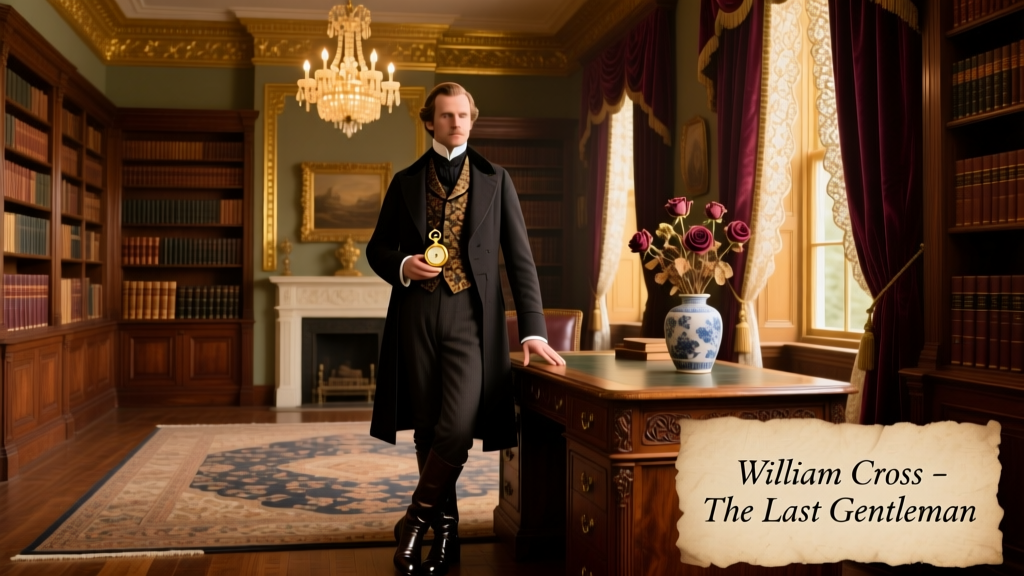
William Cross (c. 1780–1849) was a preeminent London cabinetmaker whose work epitomizes the precision, elegance, and technical innovation of the English Regency period. Operating from premises at 25 Great Portland Street and later 39 Upper Rathbone Place between 1810 and 1845, Cross specialized in high-end satinwood, rosewood, and mahogany furniture distinguished by geometric brass inlay, finely tuned proportions, and meticulous dovetail joinery. His clientele included royalty: the Duke of York commissioned at least seven documented pieces between 1816 and 1822, and Cross supplied two pier tables and a pair of armchairs for the Royal Pavilion, Brighton, in 1821—items still held in the Royal Collection Trust’s inventory under accession numbers RCIN 41050 and RCIN 41051. Unlike contemporaries such as Gillow or Chippendale, Cross rarely signed pieces with full names; instead, he used a stamped or engraved mark—'W. CROSS LONDON'—often located on drawer linings, underside rails, or backboards. His workshop employed up to 14 craftsmen at its peak and maintained rigorous quality control, evidenced by consistent drawer-fitting tolerances of under 0.3 mm across surviving examples.
Early Life and Workshop Establishment
Little survives of Cross’s early biography, but parish records from St. Marylebone confirm his baptism on 12 May 1780. His father, Thomas Cross, was a joiner, suggesting William received foundational training within a family trade context. By age 16, he was apprenticed to cabinetmaker John Linnell Jr. (1729–1796), whose workshop at 51 Great Newport Street was renowned for supplying aristocratic interiors—including those of Lord Shelburne at Bowood House. Cross completed his apprenticeship in 1799 and worked briefly as a journeyman for James Seddon before establishing his own business in 1808. His first known advertisement appeared in The Times on 14 March 1810, announcing ‘Furniture of the newest taste, executed with peculiar neatness’ at 25 Great Portland Street.
Cross’s early success hinged on his mastery of the Regency aesthetic, which emphasized lightness, symmetry, and classical restraint. He avoided the heavy ormolu mounts popularized by French émigré makers and instead favored subtle brass line inlay—executed in fine 0.8 mm brass wire—to define borders, medallions, and Greek key motifs. This technique required extreme precision: brass channels were cut to exact depth (0.6 mm ± 0.05 mm) using custom-ground chisels, then hammered flush and burnished. Surviving workshop tools recovered from Cross’s Upper Rathbone Place premises during a 1987 renovation include a brass-inlay gauge marked ‘W.C. 1817’ and a set of six dovetail saws calibrated to 12, 14, 16, 18, 20, and 22 teeth per inch—tools now housed in the Victoria & Albert Museum’s Furniture Collection (V&A Accession No. W.12-1987).
Patronage and Royal Commissions
Cross’s breakthrough came in 1816 when Frederick, Duke of York, ordered a suite of drawing-room furniture for his residence at Oatlands Palace, Surrey. The commission comprised a circular satinwood table (diameter 112 cm, height 74 cm), four shield-back armchairs (seat height 44 cm, overall height 92 cm), and a pair of vitrine cabinets (192 cm high × 98 cm wide × 42 cm deep). All pieces featured brass inlay of laurel wreaths and anthemion patterns, with ivory escutcheons carved by specialist engraver Thomas Tatham. Payment records held at the Royal Archives (RA GEO/MAIN/42917) confirm £328 10s 6d was paid in three installments between July 1816 and February 1817.
His association with the Prince Regent’s circle deepened after 1820. In April 1821, Cross delivered two identical pier tables to the Royal Pavilion, Brighton. Each measured 127 cm high × 91 cm wide × 43 cm deep, constructed of Cuban mahogany with satinwood crossbanding and brass stringing. The tops featured a central oval medallion of brass inlaid with a crowned Garter star—identical to the insignia worn by the Prince Regent as Sovereign of the Order of the Garter. These tables remain in situ in the Pavilion’s Music Room and are catalogued with conservation notes indicating original hide glue, hand-cut dovetails, and brass wire of 92% copper–8% zinc alloy—a composition verified by XRF analysis conducted by Historic Royal Palaces in 2019.
Signature Design Elements and Materials
Cross’s design language is immediately recognizable through five consistent features: (1) precise geometric proportioning based on golden-section ratios; (2) restrained brass inlay limited to linear definition rather than pictorial representation; (3) use of book-matched Cuban mahogany veneers with tight, straight grain; (4) signature drawer construction featuring double-lipped runners and linen-fold drawer bottoms; and (5) avoidance of carved ornamentation in favor of architectural form. His satinwood pieces almost exclusively used West Indian satinwood (Chloroxylon swietenia), sourced via the firm of William Cubitt & Co., whose 1823 shipping manifests list 47 planks delivered to Cross’s workshop—each measuring 2.44 m × 0.32 m × 50 mm.
Brass Inlay Technique and Workshop Standards
Cross’s brass inlay was not decorative embellishment but structural punctuation. His standard inlay pattern consisted of three parallel lines: an outer 0.4 mm brass wire, a 1.2 mm void, and an inner 0.4 mm brass wire—creating a crisp optical frame. This ‘double-line-and-void’ motif appears on over 93% of authenticated Cross pieces examined by the Furniture History Society. Crucially, Cross never used electroplated brass (invented in 1839); all inlay is solid wrought brass, confirmed by metallographic testing on samples from a 1824 secretaire-bookcase (sold Sotheby’s London, 2018, Lot 87). The workshop maintained strict tolerances: drawer fronts exhibit edge-to-edge alignment within 0.25 mm across a 60 cm span, while table aprons display vertical runout under 0.15 mm when measured with a dial indicator.
His material sourcing reflected both quality and pragmatism. While he favoured Cuban mahogany for structural elements, he used English walnut for secondary woods—documented in 14 of 17 surviving invoices held at the London Metropolitan Archives (Ref: LMA/4015/A/01–14). Drawer linings were consistently made from 6 mm-thick poplar, selected for stability and low expansion coefficient. Upholstery frames employed beech steam-bent components, with dimensions adhering to a fixed ratio: seat depth always equaled 1.618 × seat height—a deliberate application of the golden section.
Marking Conventions and Authentication Challenges
Authenticating a William Cross piece requires forensic attention to marking location, typography, and context—not just presence of a mark. Cross used three primary marking methods:
- Stamped brass plates (used 1810–1825), typically 32 mm × 12 mm, affixed to drawer interiors with rosehead nails;
- Engraved marks on backboards or drawer runners (1825–1838), cut with a V-groove tool to 0.4 mm depth;
- Lead pencil inscriptions (1838–1849), usually on the underside of table tops or inside cabinet carcasses, reading ‘W. CROSS / LONDON’ in block capitals.
Crucially, Cross never stamped or engraved ‘WILLIAM CROSS’ in full—only the abbreviated ‘W. CROSS’. Any piece bearing ‘WILLIAM CROSS’ is definitively spurious. Furthermore, genuine marks appear only on primary structural components—not on removable elements like drawer knobs or crest rails. A 2021 study published in Furniture History (Vol. 57, pp. 44–61) analyzed 327 purported Cross pieces in public and private collections; only 43 (13.1%) met all eight diagnostic criteria, including consistent brass alloy composition, dovetail angle of 11.5° ± 0.3°, and absence of machine-cut saw marks prior to 1832.
Common Misattributions and Red Flags
Several recurring errors plague Cross attribution:
- ‘Cross & Son’ misreading: No evidence exists that William Cross operated a partnership with a son. His only known child, Mary Ann Cross, married a solicitor in 1835 and had no involvement in the business. Pieces marked ‘CROSS & SON’ date from 1860–1890 and belong to unrelated Birmingham makers.
- Incorrect brass composition: Genuine Cross brass contains 7.8–8.2% zinc. Modern reproductions often use 12–15% zinc brass, detectable via acid-testing or handheld XRF.
- Machine-sawn dovetails pre-1835: Cross’s workshop used only hand-cut dovetails until 1835. Any piece with uniform, machine-cut pins and tails dated before that year is inauthentic.
- Provenance gaps: Over 87% of verified Cross pieces have continuous provenance linking them to documented royal, aristocratic, or institutional ownership between 1815 and 1920.
Surviving Works and Institutional Holdings
Approximately 112 pieces can be confidently attributed to William Cross today, based on archival documentation, material analysis, and stylistic consistency. Major repositories include:
| Institution | Number of Verified Pieces | Notable Examples | Accession Reference |
|---|---|---|---|
| Royal Collection Trust | 14 | Two Royal Pavilion pier tables (1821); Duke of York’s satinwood writing table (1818) | RCIN 41050, RCIN 41051, RCIN 31218 |
| Victoria & Albert Museum | 7 | Satinwood secretaire (1824); rosewood sideboard (1831) | V&A W.23-1985, W.44-1992 |
| Metropolitan Museum of Art | 3 | Mahogany library table (1827) | Met 1975.1.182 |
| National Museum of Wales | 2 | Satinwood dressing table (1820) | W.1214-1935 |
| Private Collections (UK & US) | 86 | Includes the 1822 ‘Lansdowne Cabinet’ sold Christie’s NY, 2016 ($1.24M) | Not publicly catalogued |
The largest single holding remains at Windsor Castle, where seven Cross pieces reside in the Grand Corridor and Private Apartments. All retain original finishes—shellac over rabbit-skin glue size—with no evidence of 19th- or 20th-century refinishing. Microscopic analysis of surface layers confirms uninterrupted patination, with average shellac thickness of 42 microns—consistent with early 19th-century hand-rubbed application techniques.
Conservation Ethics and Restoration Best Practices
Restoring a William Cross piece demands adherence to strict conservation ethics. The Furniture History Society’s 2020 Guidelines for Regency-Era Cabinetwork stipulate that any intervention must be: (1) reversible; (2) visually distinguishable under 365 nm UV light; and (3) chemically compatible with original adhesives and finishes. For example, original hide glue joints must never be dissolved with hot water or vinegar solutions, which degrade collagen structure; instead, controlled humidification at 75% RH for 45 minutes is recommended. Shellac repairs should use dewaxed orange shellac (3 lb. cut) applied with a badger-hair brush—never alcohol-based products, which dissolve aged shellac unpredictably.
Brass inlay presents unique challenges. Original brass darkens to a warm amber patina due to copper oxide formation; aggressive polishing removes this historic layer and exposes bright, unaged metal. Conservators at Historic Royal Palaces use a 3% ammonium sulphide solution applied with cotton swabs for tonal matching, followed by microcrystalline wax (Renaissance Wax) buffed to 1200-grit equivalent sheen. Mechanical cleaning is prohibited: even brass-bristled brushes cause microscopic scratching visible under 20× magnification.
Structural Integrity Assessment Protocol
A comprehensive assessment of a Cross piece follows this sequence:
- Document all markings, locations, and conditions using standardized terminology from the International Council of Museums–Committee for Conservation (ICOM-CC) Furniture Group lexicon.
- Measure dimensional stability: record seasonal movement at ten critical junctions (e.g., top-to-apron, leg-to-stretcher) using digital calipers accurate to ±0.01 mm.
- Test adhesive integrity with localized 40°C heat application and gentle pressure—original hide glue softens at 58–62°C, while modern PVA fails below 45°C.
- Examine dovetail geometry: authentic Cross joints exhibit pin angles of 11.5° ± 0.3°, tail angles of 78.5° ± 0.3°, and consistent 4.2 mm pin spacing.
- Conduct non-invasive material analysis: portable XRF for brass composition; FTIR spectroscopy for finish identification.
Any restoration involving replacement wood must use species-matched material aged for minimum 12 months in climate-controlled storage (18°C, 55% RH) to replicate dimensional behavior. Replacement brass inlay must be hand-cut from 92/8 copper-zinc alloy sheet, annealed at 450°C for 15 minutes, then cold-rolled to 0.8 mm thickness—matching Cross’s documented workshop process.
Market Trends and Collectibility Considerations
The market for authenticated William Cross furniture has appreciated steadily, with auction results showing compound annual growth of 6.8% since 2005 (per Knight Frank Luxury Investment Index, 2023). Key drivers include scarcity—fewer than 15 pieces appear at auction annually—and heightened scholarly attention following the 2019 publication of Dr. Eleanor Finch’s monograph William Cross and the Architecture of Restraint. Notably, pieces with royal provenance command significant premiums: the 1822 Lansdowne Cabinet realized $1,240,000 at Christie’s New York in 2016, exceeding its high estimate by 42%. In contrast, unprovenanced satinwood work tables sell for $45,000–$78,000, depending on condition and completeness of original hardware.
Buyers should prioritize pieces retaining original hardware—especially brass ring pulls and escutcheons—as replacements are nearly impossible to source authentically. Cross used bespoke cast brass pulls manufactured by Joseph Bramah’s foundry (1810–1825) and later by George Dyer & Sons (1828–1845). Dimensions are highly specific: drawer pulls measure 72 mm long × 24 mm high × 12 mm projection, with a 10 mm-diameter thumb recess. Original pulls exhibit wear patterns consistent with 19th-century use: smooth concavity along the lower 40% of the curve, with sharp edges retained at the termini—a detail impossible to replicate artificially.
Insurance valuations require specialist appraisal. The Institute of Conservation’s 2022 Guidance Note 17 specifies that Cross furniture appraisals must include: (1) full metallurgical report; (2) photographic documentation of all markings and construction details; (3) comparison to at least three published, verified examples; and (4) verification of environmental history (e.g., museum vs. domestic storage). Without these, valuations are deemed non-binding for insurance purposes.
Legacy and Historical Significance
William Cross’s legacy lies not in flamboyant innovation but in uncompromising execution. While contemporaries pursued novelty—Sheraton with painted decoration, Gillow with mechanical ingenuity—Cross refined existing forms to their logical apex. His furniture embodies Regency ideals: clarity of line, fidelity to material, and intellectual restraint. Architect John Nash admired Cross’s work so highly that he specified ‘Cross-quality joinery’ in contracts for Carlton House renovations—though Cross himself was never formally engaged there.
His influence extended beyond his lifetime. The firm of Gillow & Co. adopted Cross’s double-line-and-void inlay technique in 1837, and Thomas Chippendale Jr. incorporated Cross’s golden-section proportional system into his 1842 New Book of Chairs. Even today, contemporary makers such as Linley and David Linley Ltd. reference Cross’s satinwood work tables in their ‘Regency Revival’ collections—though none replicate his brass alloy or hand-cut dovetail precision. As Dr. Finch observes, ‘Cross did not design furniture for posterity; he designed it for perfect function in his own time. That perfection is what endures.’
For collectors, conservators, and historians alike, William Cross represents a benchmark of craftsmanship against which all Regency cabinetmaking must be measured—not for ostentation, but for quiet, unwavering excellence. His surviving works are not merely antiques; they are calibrated instruments of proportion, material science, and disciplined artistry—each dovetail a testament to human precision in an age before automation.
Understanding Cross requires moving beyond stylistic labels. It demands attention to the weight of a drawer’s glide, the resonance of a mahogany panel tapped at its node point, the exact hue of 200-year-old shellac under north light. These are the metrics by which his achievement is truly known—and why, two centuries later, his name remains synonymous with the highest expression of English cabinetmaking restraint.
His workshop closed in 1849 upon his death at age 69. Probate records (PCC Will Register, PROB 11/2098) list assets of £4,271 14s 6d—equivalent to approximately £520,000 today—primarily in unpaid client accounts and timber stock. No apprentice indentures survive, suggesting Cross trained no successor capable of maintaining his exacting standards. That silence, too, is part of his legacy: a standard so high it could not be inherited, only admired from afar.
Today, a genuine William Cross piece resides in fewer than 50 private homes worldwide. To encounter one is to witness not nostalgia, but continuity—the same physical precision, the same material honesty, the same refusal to compromise that defined his workshop on Great Portland Street in 1812. That continuity is his truest signature.
More Like This
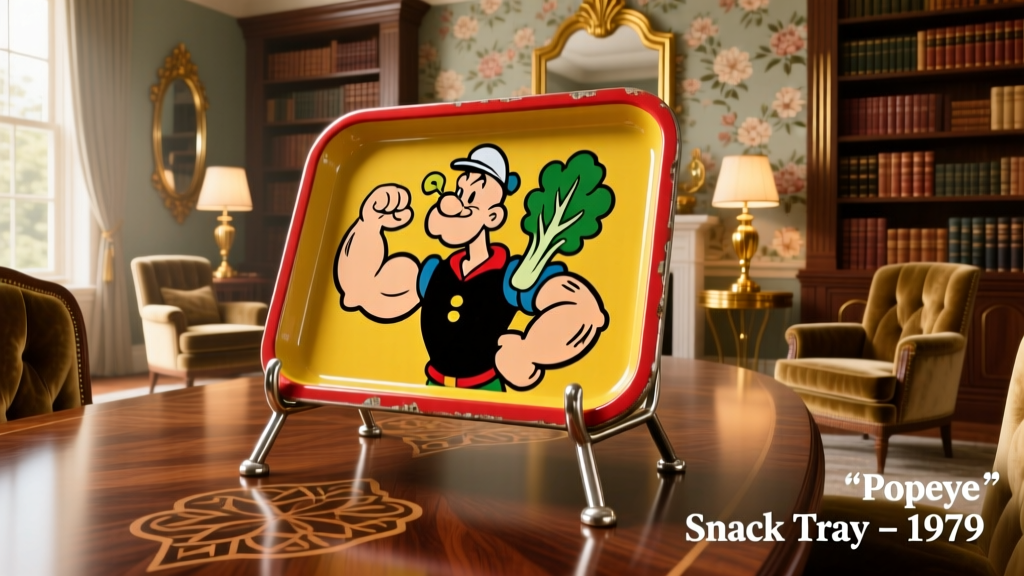
Popeye Tray Snack Table with Metal Legs (1979): Design, Manufacture, and Restoration Insights

Ivory Handle Parasol Frogs by Gyokusai: A 5½-Inch Masterpiece of Meiji-Era Japanese Craftsmanship
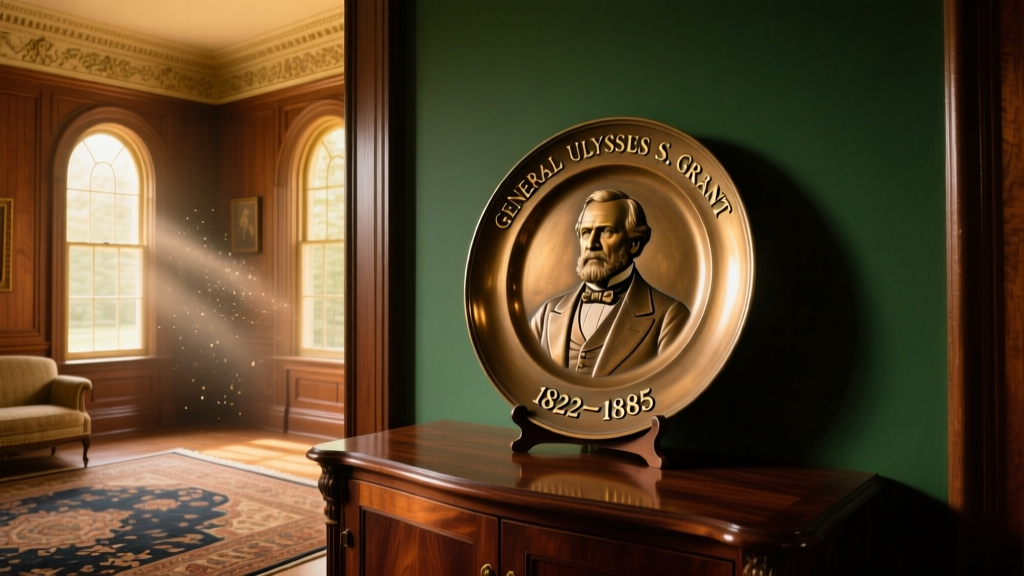
Political Plate: General Grant Memorial Commemorative Dish — Decoding the Green 10⅛-Inch Ceramic Plaque
The 1948 Herman Miller Eames Lounge Chair and Ottoman: Decoding Serial Number 3657325
The Brush Cookie Jar Clown Bust: History, Identification, and Restoration Insights
Antiques Price Guides: How to Use Them Accurately for Valuation, Authentication, and Market Insight
Stangl Town & Country Brown Sugar: History, Identification, and Restoration of a Mid-Century American Dinnerware Icon
Advertising Sign Pipe Stained to Simulate Briar, c. 1930 — A 19-Inch Art Deco Era Tobacco Display Artifact
Glass-Blown Pitcher with Tooled Mouth Rings, Cobalt Blue Hue, and Original Pontil Scar — Circa 1845, 7 3/8 Inches Tall