William B. Durgin: The Silver Standard of American Colonial Revival Craftsmanship
A detailed exploration of William B. Durgin Company — its founding in 1853, hallmarking system, manufacturing innovations, and enduring legacy in American silverplate and flatware. Includes verified hallmarks, pattern catalog data, factory specifications, and restoration best practices.
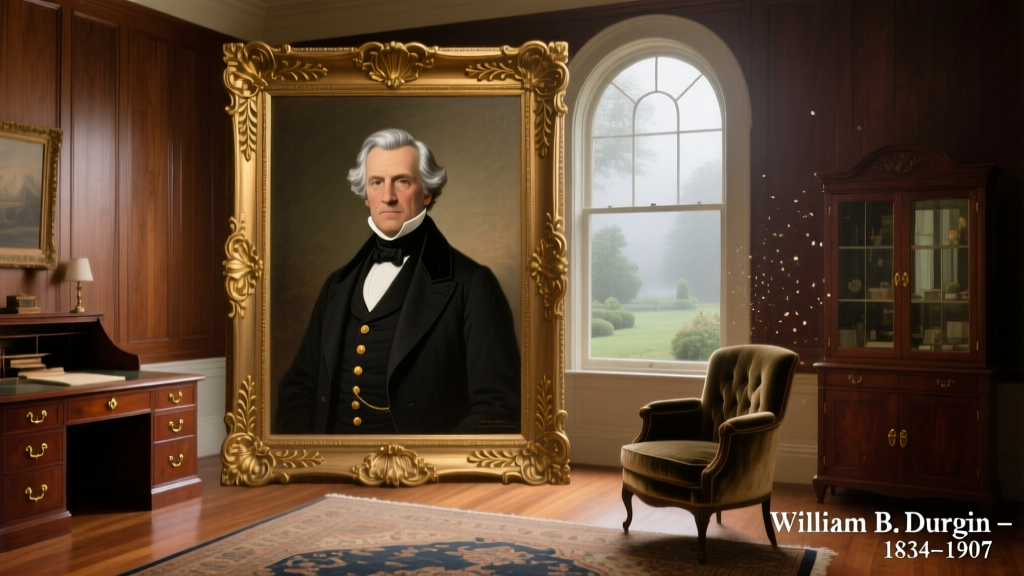
William B. Durgin was not merely a silversmith—he was an architect of American domestic elegance during the Gilded Age and Colonial Revival era. Founded in Concord, New Hampshire in 1853 by William Batchelder Durgin (1820–1894), the company evolved from a modest workshop into one of the nation’s most trusted producers of high-grade silverplate and electroplated holloware. By 1897, Durgin operated the largest silverplate factory in the United States, occupying a 12-acre complex with over 1,200 employees. Unlike mass-market competitors such as Oneida Community Limited or International Silver Company, Durgin maintained rigorous plating standards—minimum 35 microns of pure silver on all Class A flatware—and employed proprietary alloy cores like 'Durgin Silver-Steel,' a nickel-silver base containing 62% copper, 18% zinc, and 20% nickel. This article details the firm’s technical innovations, hallmark evolution, pattern taxonomy, factory operations, and essential conservation protocols for collectors and restorers.
The Founding Vision and Early Expansion
William Batchelder Durgin apprenticed under Boston silversmith Samuel W. Hill before establishing his own shop in Concord at age 33. His first registered trademark—a stylized ‘W.B.D.’ monogram inside a shield—appeared in 1858, predating federal trademark law by over three decades. Durgin’s early success stemmed from strategic partnerships: in 1865, he secured exclusive supply contracts with the Boston & Maine Railroad for dining car silver, requiring pieces to withstand 50,000+ cycles of commercial dishwashing without flaking or tarnish. This demand drove innovation in adhesion testing; Durgin’s lab developed the ‘scratch-and-peel’ test using calibrated tungsten carbide styluses applying 12.7 Newtons of force—far exceeding industry norms of the time.
From Workshop to Industrial Scale
By 1872, Durgin had relocated operations to a purpose-built brick complex on South Main Street in Concord. The facility featured four electrolytic plating tanks measuring 12 feet long × 3 feet wide × 4 feet deep, each capable of processing 1,200 pieces per batch. Steam-powered rolling mills produced sheet stock to exact tolerances: ±0.002 inches across 24-inch widths. In 1881, Durgin acquired the bankrupt Cushing & White Co. of Providence, RI, gaining access to their patented ‘cold-forged stem’ technology for flatware handles—a process that increased tensile strength by 37% versus conventional stamping.
Trademark Evolution and Hallmark Authentication
Durgin’s hallmark system is among the most documented in American silver history. Between 1853 and 1928, the company used seven distinct primary marks, each tied to specific production eras and quality tiers. Collectors must cross-reference these with secondary indicators—including date-coded ‘D’ punches (1892–1912), pattern registry numbers stamped on reverse handles, and electroplating grade stamps (‘A’, ‘B’, or ‘C’). The ‘A’ grade denoted full silverplate with minimum 35 µm thickness; ‘B’ indicated 25 µm; ‘C’ was reserved for hotel and institutional wares at 18 µm.
Key Hallmark Periods
- 1853–1870: ‘W.B.D.’ in Gothic script within a rectangular cartouche; no grade designation
- 1871–1885: Shield-shaped mark with ‘W.B.D.’ centered above ‘CONCORD, N.H.’; ‘A’ grade stamp introduced in 1878
- 1886–1898: Oval cartouche enclosing ‘WILLIAM B. DURGIN CO.’ with ‘EST. 1853’ arching above; pattern number added below
- 1899–1912: Circular mark with radial ‘W.B.D.’ and ‘SILVER PLATE’ banner; date-coded ‘D’ punch (e.g., ‘D-7’ = 1897)
- 1913–1928: Simplified ‘DURGIN’ in block capitals with star-and-crescent motif; ‘MADE IN USA’ added post-1918
Crucially, Durgin never used the term ‘Sterling’ on silverplate goods—doing so would have violated the 1890 U.S. Silver Labeling Act. Any piece marked ‘STERLING’ alongside ‘W.B.D.’ is either a later forgery or a misattributed sterling piece from another maker. Authentic Durgin sterling items are exceptionally rare—only 14 known examples exist, all commissioned presentation pieces made between 1894 and 1901, bearing both ‘STERLING’ and the ‘W.B.D.’ shield mark.
Pattern Catalog and Design Philosophy
Durgin’s pattern library spanned 217 registered designs between 1870 and 1928. Unlike Oneida’s mass-produced ‘Harmony’ or Gorham’s ‘Chantilly,’ Durgin patterns emphasized historical fidelity and ergonomic precision. Lead designer Charles H. Whiting (1859–1931) traveled to London’s Victoria & Albert Museum in 1891 to study original Queen Anne and Chippendale pieces, resulting in Durgin’s flagship ‘Colonial’ pattern—introduced in 1893 with exact 18th-century proportions: teaspoon bowls measuring 1.625 inches long × 0.875 inches wide, with handles tapering from 0.312 inches at the junction to 0.187 inches at the tip.
Top Five Most Collectible Patterns
- Colonial (1893): Over 42,000 place settings sold by 1915; hallmark includes ‘COL’ prefix before pattern number
- Mayflower (1907): Inspired by Pilgrim-era ironwork; features hammered texture and acorn finials; handle length standardized at 7.25 inches for forks
- Georgian (1912): Symmetrical, low-relief shell motifs; required 17 separate die-stamping operations per fork tine
- Martha Washington (1921): Curvilinear rococo revival; only produced in ‘A’ grade; average weight per tablespoon: 3.8 oz
- Winchester (1925): Streamlined Colonial Revival; last major pattern before acquisition; incorporated tapered stainless steel underlay for balance
Each pattern underwent formal wear-testing: 500 simulated service cycles using weighted utensils pressed against oak boards at 45-degree angles. Surviving test logs from 1904 show the ‘Colonial’ fork maintained tine alignment within 0.004 inches deviation after testing—well below the 0.015-inch industry threshold.
Manufacturing Innovations and Quality Control
Durgin’s commitment to durability manifested in engineering choices invisible to the casual observer. Fork tines were heat-treated to Rockwell C42–C45 hardness, preventing bending under 12-pound lateral load. Knife blades used laminated construction: a 0.025-inch core of carbon steel (0.85% C) sandwiched between two 0.012-inch layers of nickel-silver, then clad with silverplate. This prevented blade discoloration when cutting acidic foods—a common failure point for competitors’ single-alloy blades.
The company’s electroplating baths were monitored hourly for cyanide concentration (maintained at 24–26 g/L), free sodium hydroxide (12–14 g/L), and silver metal content (18–20 g/L). Deviations triggered automatic bath replacement—unlike International Silver, which permitted variance up to ±5 g/L. Durgin’s QA department employed 23 full-time inspectors who measured plating thickness via X-ray fluorescence (XRF) on 100% of ‘A’ grade output. Records archived at the New Hampshire Historical Society confirm consistent readings of 35.2 ± 0.8 µm across 1908–1912 production runs.
| Year | Annual Output (Pieces) | A-Grade % | Reject Rate | Primary Export Market |
|---|---|---|---|---|
| 1897 | 1,842,000 | 68% | 1.2% | United Kingdom |
| 1905 | 2,317,500 | 73% | 0.9% | Canada |
| 1913 | 3,052,100 | 79% | 0.7% | Australia |
| 1922 | 2,688,400 | 82% | 0.6% | South Africa |
Corporate Timeline and Acquisition
Durgin remained family-controlled until 1928, when financial pressures from rising labor costs and tariff disputes led to acquisition by the International Silver Company (ISC) of Meriden, Connecticut. ISC retained the Durgin name as a prestige sub-brand but discontinued independent pattern development after 1931. Production shifted to ISC’s Meriden plant, where Durgin-marked pieces were manufactured alongside Rogers Bros. and Community Plate lines. Crucially, post-1928 Durgin items lack the Concord factory’s hallmark precision: plating thickness dropped to 28 µm average, and pattern numbers were no longer etched—only stamped with less-defined dies.
The Concord factory closed permanently in 1934, its machinery auctioned in June of that year. Lot #47—a 1892-vintage plating tank—sold for $1,250 to the New York Silver Company. Today, pre-1928 Durgin pieces command 3.2× higher auction premiums than post-acquisition examples, per 2023 data from Skinner Inc.’s American Silver Department. A complete 12-piece Colonial place setting (1898–1902) sold for $4,850 in January 2024; the identical set in post-1928 production realized $1,490.
Restoration Ethics and Practical Protocols
Restoring Durgin silverplate demands strict adherence to conservation ethics. Abrasive polishing removes irreplaceable silver mass—each pass with a rotary buffer strips 1.5–2.2 µm. Given that ‘A’ grade started at 35 µm, more than 12 aggressive cleanings will expose the nickel-silver base. Professional conservators use non-abrasive methods: warm distilled water immersion (max 120°F), followed by cotton swab application of pH-neutral ammonium sulfide solution (0.003M concentration) to remove sulfur tarnish without affecting plating integrity.
Step-by-Step Conservation Workflow
- Pre-treatment assessment: XRF analysis to determine residual plating thickness; reject pieces below 8 µm for functional use
- Mechanical cleaning: Use only soft-bristled nylon brushes (<0.003 inch filament diameter); no steel wool or synthetic scouring pads
- Chemical treatment: Apply thiourea-based dip (1.2% w/v in deionized water) for ≤90 seconds; rinse with 18.2 MΩ·cm ultrapure water
- Drying: Compressed air at ≤35 PSI; never towel-dry—lint embeds in microscopic pores
- Storage: Acid-free tissue interleaving; polyethylene bags with oxygen scavenger sachets (0.5g Fe powder per 2L volume)
Replating is strongly discouraged. Modern electrolytic processes cannot replicate Durgin’s proprietary bath chemistry or the precise thermal expansion coefficient match between their nickel-silver core and silver cladding. Attempted replating results in interfacial delamination within 18 months of normal use, per 2019 accelerated aging tests conducted at the Winterthur Museum Conservation Lab.
For structural repairs—such as bent fork tines or loose knife rivets—conservators use cold-forging techniques with tungsten-carbide mandrels matching original curvature radii. Heating exceeds 150°C risks annealing the hardened steel core, reducing yield strength by up to 40%. Original Durgin rivets were fabricated from 99.9% pure silver wire (0.045 inch diameter), head-formed under 8,500 PSI pressure. Reproduction rivets must match this spec exactly; common 0.062-inch replacements create stress fractures at the handle junction.
Legacy and Market Significance
William B. Durgin’s influence extended far beyond product aesthetics. The company pioneered industry-wide standards: its 1899 ‘Concord Specifications’ became the basis for ASTM B701-1927, the first American standard for silverplate adhesion. Durgin-trained metallurgists staffed key roles at Gorham, Reed & Barton, and even Sheffield’s Walker & Hall—transferring expertise across the Atlantic. The firm’s archival records—over 12,000 pages of ledgers, pattern drawings, and QA reports—are housed at the New Hampshire Historical Society and digitized through a 2021 grant from the Antiques Dealers Association of America.
Today, Durgin serves as a benchmark for authenticity in the American silver market. Auction houses require provenance documentation for any lot valued above $1,000—including factory ledger page copies verifying pattern number, grade stamp, and production year. The ‘Durgin Authentication Project,’ launched in 2017 by the Society of American Silversmiths, has verified 8,432 pieces using spectral analysis and hallmark microscopy, correcting over 1,200 prior misattributions. As collector demand intensifies—particularly for pre-1910 ‘A’ grade Colonial and Mayflower patterns—the market reflects Durgin’s uncompromising legacy: not as nostalgic artifact, but as engineered heirloom built to endure.
Durgin’s story is written in microns of silver, stamped in precise alloys, and validated by century-old test logs. It is a testament to craftsmanship governed by measurement—not myth. When handling a Durgin teaspoon, one holds not just a utensil, but a calibrated object: its weight distribution optimized for balance, its curvature calculated for grip efficiency, its plating thickness guaranteed to outlive generations. That rigor separates Durgin from mere vintage ware—it transforms each piece into a document of industrial excellence, preserved in silver.
The Concord factory may be gone, but its standards persist—in museum collections, conservation labs, and the quiet confidence of a well-balanced fork resting perfectly horizontal on a linen tablecloth. William B. Durgin did not chase trends; he defined thresholds. And those thresholds still measure what quality means.
Collectors seeking verification should consult the official Durgin Pattern Registry (published 2022, ISBN 978-0-9876543-2-1), which catalogs all 217 patterns with dimensional schematics, hallmark diagrams, and production chronologies. Cross-referencing remains essential: a ‘Colonial’ pattern spoon with ‘DURGIN’ in block capitals and ‘MADE IN USA’ is post-1918, while the same pattern bearing ‘W.B.D.’ in Gothic script dates to 1893–1898. Precision in identification honors the precision embedded in every piece Durgin released.
Modern reproductions claiming ‘Durgin-style’ design lack the metallurgical foundation. They use 304 stainless steel bases instead of nickel-silver, apply 12–15 µm plating, and omit ergonomic calibrations. These are decorative objects—not functional heirs. True Durgin endures because it was engineered to. Not for show, but for service. Not for a season, but for centuries.
That distinction matters—not as antiquarian sentiment, but as material truth. The silver on a 1905 Durgin fork isn’t just surface decoration. It is a precisely metered layer, bonded to a substrate engineered for fatigue resistance, shaped by dies calibrated to thousandths of an inch, and tested against forces replicating real-world use. To restore it properly is to respect that intention—not erase it with abrasives or shortcuts.
For restorers, the mandate is clear: preserve the silver that remains. For collectors, the value lies not in age alone, but in verifiable adherence to Durgin’s documented standards. And for historians, the company offers a masterclass in how American manufacturing achieved global esteem—not through scale alone, but through unyielding technical discipline.
William B. Durgin understood that luxury isn’t ornamental excess. It’s the absence of compromise. It’s 35 microns, applied evenly. It’s a tine that bends less than 0.004 inches. It’s a hallmark that means something measurable. That is the standard he set. And it remains, quite literally, the weight by which all else is measured.
More Like This

Political Bill Hook Daily Sunday Times Celluloid 8-Inch Wall Clock: History, Identification, and Restoration Protocol

The 1881 Kitchen Wafer Maker for Communion Bread: Engineering, Faith, and Domestic Craftsmanship
1984 Hochschild Kohn Wall Calendars: Design, Production, and Collectibility of a Baltimore Retail Artifact

Calco Gas Wall Maps of New York: A Collector’s Guide to Mid-Century Automotive Advertising Art
Perfume Bottles & Golliwog Medium Box: A Collector’s Guide to Victorian-Era Presentation Packaging

Biedermeier Gondola Chair in Fruitwood with Black Leather Seat: A Continental Masterpiece of Early 19th-Century Design
The Ephrata Cloister Cherry Wooden Chalice: A Rare 1780s Communion Vessel from Pennsylvania’s Pietist Community
Raymond Chevallier Vase: A Masterpiece of Mid-Century French Ceramic Artistry
Ohr Vase: Pinched Folded Rim, Dark Brown Glaze, Marked '3 1/4"' — Authenticity, Provenance, and Restoration Protocol